
A practical, expert guide to how artificial intelligence firms scale revenue, build talent, and ship product innovation that customers actually want and pay for.
Artificial Intelligence Firm Growth and Product Innovation

Building an artificial intelligence firm is no longer about having the most advanced model. It is about turning that capability into durable revenue, defensible products, and a team that can ship faster than competitors. Having advised and observed dozens of AI startups move from prototype to paying customers, I can tell you the firms that win treat growth and product innovation as one connected system, not two separate departments. This guide breaks down exactly how that system works and what you can apply this quarter.
Quick Answer: Artificial intelligence firms grow by pairing disciplined go-to-market execution with continuous product innovation. They turn proprietary data and real customer problems into shippable features, scale revenue through clear ROI, hire specialized talent early, and reinvest cash flow into research that compounds their competitive advantage over time.
What Drives Growth in an Artificial Intelligence Firm?
Growth in an AI firm is driven by the speed at which it converts technical capability into measurable customer value. Many founders assume model accuracy alone sells. In practice, buyers pay for outcomes: hours saved, revenue gained, or risk reduced. The fastest-growing AI firms anchor every feature to a quantifiable business result.
According to McKinsey's 2024 State of AI report, organizations that scaled AI saw the highest returns when they focused on specific, high-value use cases rather than broad experimentation. This is the single most important lesson for any AI firm: depth beats breadth. A narrow tool that solves one painful workflow extraordinarily well grows faster than a general platform that does ten things adequately.

Define Your Wedge Before You Scale
A wedge is the single, sharp use case you dominate before expanding. Define it by answering three questions: Who feels this pain most acutely? How are they solving it badly today? What does a 10x better outcome look like? Once your wedge generates repeatable, referenceable wins, expansion becomes a sales motion rather than a gamble. Firms like ZoneTechify consistently advise clients to validate one wedge with paying customers before broadening the roadmap.
How Product Innovation Fuels Sustainable Growth
Product innovation is the engine that keeps AI firms ahead of rapidly commoditizing technology. Foundation models improve monthly, which means any feature built only on a public model is replicable. Sustainable innovation comes from layers competitors cannot easily copy: proprietary data, workflow integration, and accumulated user feedback.
The most defensible AI products create a data flywheel. Every user interaction generates signal that improves the product, which attracts more users, which generates more signal. This compounding loop is why early movers with real usage often stay ahead even when rivals have similar technical talent.

The Three Layers of Defensible AI Products
- Data layer: Proprietary or hard-to-collect datasets that improve model performance for your specific domain.
- Workflow layer: Deep integration into how customers actually work, making the product painful to remove.
- Trust layer: Reliability, compliance, security, and explainability that enterprise buyers require before adoption.
Firms that invest in all three layers build moats. Those that rely solely on a wrapper around a public API rarely survive the next model release.
Building the Right Team for AI Innovation
Talent density determines how fast an AI firm can innovate. Unlike traditional software, AI products require a tight collaboration between machine learning engineers, data specialists, product managers, and domain experts who understand the customer's real workflow. Hiring only researchers produces impressive demos that never ship. Hiring only generalists produces products that lack technical depth.

The best early hires are versatile builders who can move between research and shipping. As the firm matures, specialization increases. A practical hiring sequence that works:
- Stage 1 (0-10 people): Full-stack ML builders who can prototype and deploy.
- Stage 2 (10-40 people): Dedicated product, data engineering, and customer success roles.
- Stage 3 (40+ people): Specialized research, MLOps, security, and enterprise sales functions.
Culture matters as much as credentials. AI firms that ship fast maintain a bias toward small teams, short feedback loops, and direct customer contact for engineers. When builders talk to users weekly, innovation stays grounded in real problems.
Scaling Revenue With AI-Driven Products
Revenue scales when pricing reflects the value the AI delivers, not just the cost to serve. Many AI firms underprice early because they benchmark against traditional SaaS. The correct anchor is the outcome value: if your tool saves a customer 20 hours a week, price against that saving, not against server costs.

According to Gartner, by 2026 more than 80% of enterprises will have used generative AI APIs or deployed AI applications, up from less than 5% in 2023. This rapid adoption means budgets are shifting toward AI tools that prove ROI quickly. The firms capturing this spend share a common trait: they make value visible. Dashboards that show hours saved or revenue influenced turn renewals into easy decisions.
Pricing Models Compared
| Pricing Model | Best For | Advantage | Risk |
|---|---|---|---|
| Per-seat | Collaboration tools | Predictable revenue | Caps growth if usage varies |
| Usage-based | API and infrastructure | Scales with value | Hard to forecast |
| Outcome-based | High-ROI workflows | Aligns price with value | Requires clear measurement |
| Hybrid | Mature platforms | Balances stability and upside | More complex to communicate |
Most growing AI firms eventually adopt a hybrid model: a platform fee for stability plus usage or outcome components that grow with the customer. This protects margins while letting revenue expand naturally with adoption.
Using Automation to Improve Customer Experience
Automation is where many AI firms find their fastest internal growth lever. Applying your own AI to support, onboarding, and customer success reduces cost to serve while improving retention. A firm that automates routine support questions frees its experts to handle high-value conversations that drive expansion revenue.
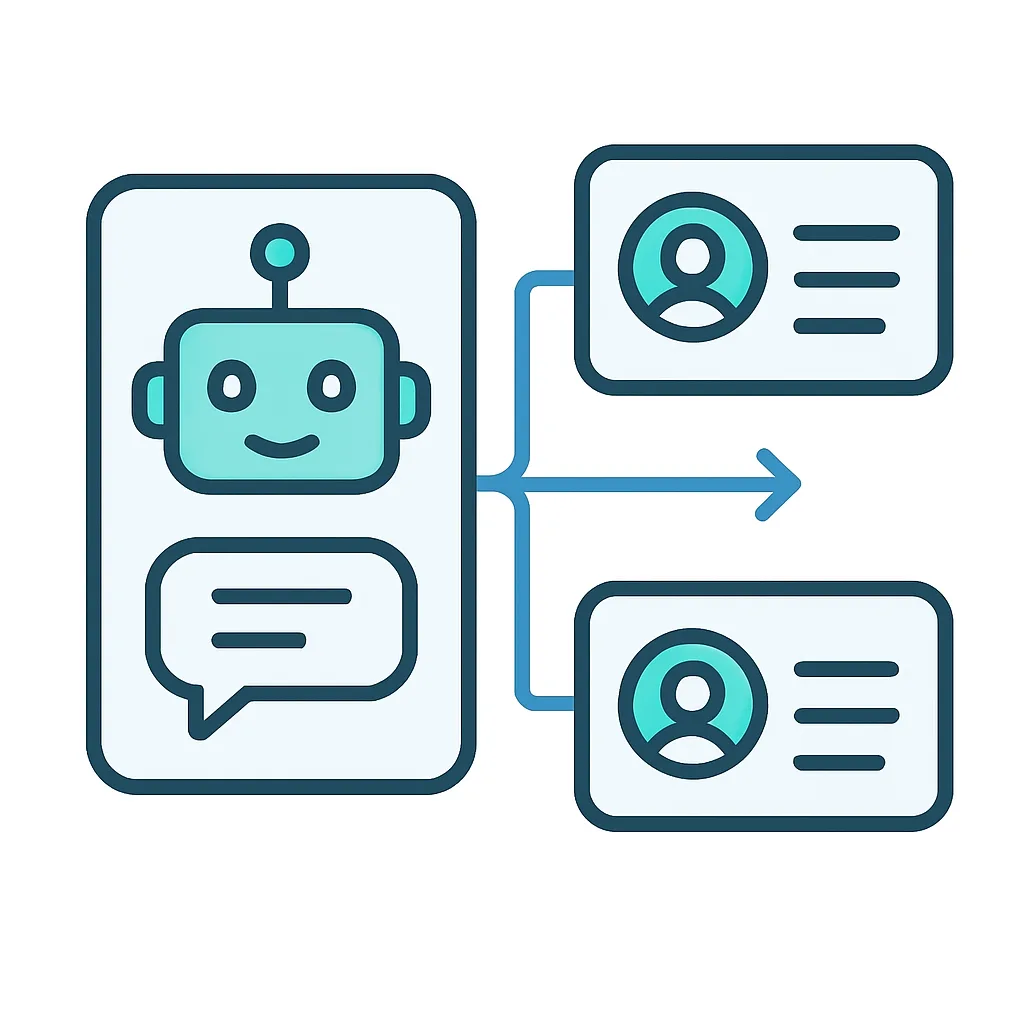
The principle is simple: dogfood your own technology. If your AI cannot improve your own operations, customers will question whether it can improve theirs. Teams that automate internally also surface product gaps faster, feeding the innovation loop. Partners such as WebPeak and specialized artificial intelligence services help firms identify which workflows deliver the highest automation ROI before investing engineering time.
A Practical Automation Checklist
- Map repetitive tasks that consume expert time.
- Measure the hours and cost each task currently requires.
- Automate the highest-volume, lowest-complexity tasks first.
- Keep a human review step for sensitive or high-stakes outputs.
- Track quality metrics so automation never degrades trust.
Balancing Research and Shipping
The hardest tension in any AI firm is balancing long-horizon research with the need to ship revenue-generating features now. Pure research firms run out of money. Pure shipping firms lose their technical edge. The answer is a portfolio approach: dedicate the majority of engineering capacity to product work that pays the bills, and a protected minority to research bets that could create the next moat.
A useful rule many successful teams follow is roughly 70% shipping, 20% optimization, and 10% exploratory research. This keeps revenue growing while ensuring the firm is not blindsided by a technical shift. Crucially, research projects should have a path to product, not exist in isolation.

The Future of AI Firm Growth
The next phase of AI firm growth will reward specialization, trust, and integration over raw capability. As foundation models become cheaper and more capable, differentiation moves up the stack toward vertical expertise, regulatory compliance, and seamless workflow embedding. Firms that own a specific industry's data and trust will outperform horizontal generalists.

Expect three shifts: agentic products that complete multi-step tasks autonomously, stronger demand for explainability as regulation tightens, and a premium on firms that can prove safety and reliability. The winners will combine ambitious product innovation with disciplined, value-anchored growth.
Key Takeaways
- AI firms grow fastest by dominating one sharp use case before expanding.
- Defensible products are built on proprietary data, workflow integration, and trust, not just model access.
- According to McKinsey, focused high-value use cases deliver the strongest AI returns.
- Gartner projects over 80% of enterprises will use generative AI by 2026, shifting budgets toward proven ROI tools.
- Price against customer outcomes, not server costs, and adopt hybrid models as you mature.
- Use a 70/20/10 split across shipping, optimization, and research to balance revenue with long-term edge.
- Dogfood your own AI to cut costs, improve retention, and surface product gaps.
Frequently Asked Questions (FAQ)
How do artificial intelligence firms actually make money?
AI firms make money primarily through subscriptions, usage-based API fees, and outcome-based pricing tied to measurable results. The most profitable firms price against the value delivered, such as hours saved or revenue gained, rather than the cost of compute, which lets revenue expand as customer adoption deepens.
What makes an AI product hard for competitors to copy?
An AI product becomes defensible through proprietary data, deep workflow integration, and a trust layer of security and reliability. Public models are replicable, but accumulated user data, embedded processes, and enterprise-grade compliance create a moat that competitors cannot quickly reproduce, even with similar technical talent.
Should an AI startup focus on research or shipping products first?
Most AI startups should prioritize shipping a product that solves a real, painful problem and generates revenue. A practical balance is roughly 70% shipping, 20% optimization, and 10% research. Pure research without product runs out of money, while pure shipping eventually loses its technical edge.
How important is data for AI firm growth?
Data is often the single most important growth asset for an AI firm. Proprietary or hard-to-collect data improves model performance for your specific domain and powers a flywheel where usage generates signal that improves the product, attracts more users, and compounds your advantage over time.
When should an AI firm start automating its own operations?
An AI firm should automate its own operations as early as repetitive tasks begin consuming expert time. Start with high-volume, low-complexity work like routine support and onboarding. Dogfooding your technology cuts cost to serve, improves retention, and reveals product gaps that feed faster innovation.