A practical guide to Python web application development services, covering framework selection, architecture, timelines, costs, security, and how to vet a development partner.
Python Web Application Development Services
Python powers a disproportionate share of the web applications businesses depend on every day, from internal dashboards to payment reconciliation systems to AI-backed customer portals. Yet most buyers of Python web application development services do not struggle with the language choice. They struggle with scoping: which framework fits, what architecture will survive growth, how long a build honestly takes, and how to tell a competent engineering team from a convincing sales deck. This guide answers those questions with specifics you can act on this week.
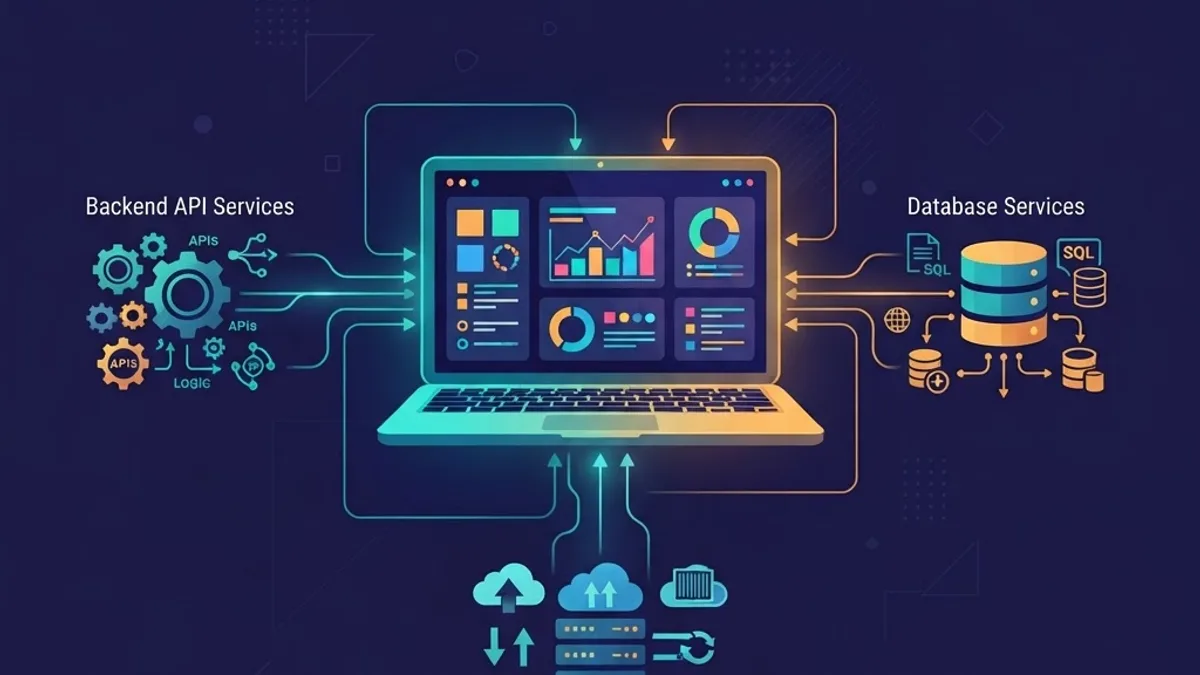
Quick Answer: Python web application development services cover architecture, backend engineering, API design, database modeling, testing, and deployment of production web apps using frameworks like Django, FastAPI, or Flask. Typical projects run six to sixteen weeks, cost between 8,000 and 90,000 dollars, and succeed or fail on scoping discipline rather than language choice.
What Python Web Application Development Services Actually Include
A legitimate service engagement is broader than writing views and models. Define the term precisely before you sign anything.
Python web application development is the end-to-end process of building server-rendered or API-driven web software where Python handles business logic, data access, authentication, and integrations, while the browser layer is rendered by templates or a JavaScript frontend.
A complete scope should name all seven of these deliverables:
- Discovery and technical specification, including a written data model.
- Framework and infrastructure selection with documented reasoning.
- Backend implementation: models, business logic, background jobs.
- API layer with versioning and typed request and response schemas.
- Automated tests covering critical paths, not just a coverage percentage.
- Deployment pipeline with staging, rollback, and monitoring.
- Handover documentation and a maintenance agreement.
If a proposal omits items five through seven, you are not buying a product. You are buying a prototype that will need rebuilding.
Choosing Between Django, FastAPI, and Flask
Framework choice is the single decision that most constrains your next two years. Choose based on the shape of your application, not on developer preference.

Django is the correct default when your app is data-heavy and permission-heavy: a marketplace, a CRM, a booking platform, an internal operations tool. You inherit an ORM, migrations, an admin interface, authentication, and a security posture that has been hardened by a decade of public audits. Teams routinely ship a working admin backend in days rather than weeks because roughly 60 percent of standard CRUD scaffolding already exists.
FastAPI is the correct default when your app is primarily an API consumed by a JavaScript frontend, a mobile client, or an AI service. Its Pydantic-based validation and native async support make it strong for high-concurrency I/O work such as calling third-party APIs or streaming model responses. Independent benchmarks consistently place ASGI frameworks like FastAPI several times ahead of traditional WSGI setups on request throughput for I/O-bound endpoints, largely because async workers do not block while waiting on network calls.
Flask remains the right pick for narrow, single-purpose services: a webhook receiver, a reporting endpoint, a lightweight microservice. Its minimalism is an asset only when the surface area stays small. Flask projects fail when teams reimplement Django feature by feature over eighteen months.
| Criterion | Django | FastAPI | Flask |
|---|---|---|---|
| Best fit | Full data-driven apps | API-first and AI backends | Small focused services |
| Built-in admin | Yes | No | No |
| ORM included | Yes | No, pair with SQLAlchemy | No |
| Async support | Partial and improving | Native | Limited |
| Auto API docs | Add-on required | Built in | Add-on required |
| Time to first release | Fastest for CRUD | Fast for APIs | Fast, then slows |
| Learning curve | Moderate | Low to moderate | Low |
One honest counterpoint that vendors rarely raise: mixing frameworks is often the best answer. A Django core for admin and data integrity, with a FastAPI service for high-throughput or AI endpoints, is a common and defensible production pattern.
Architecture Decisions That Determine Long-Term Cost
Architecture is where budgets are quietly won or lost, and where inexperienced teams cause the most damage.
Keep Business Logic Out of Views
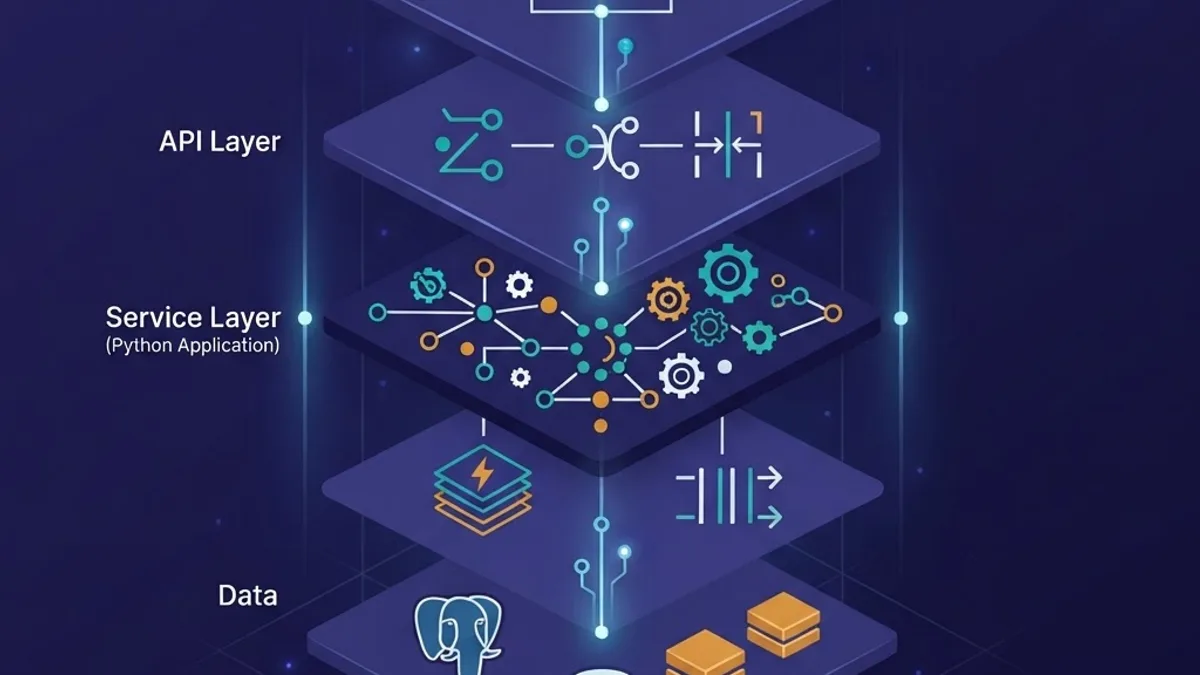
Put domain rules in a dedicated service layer that takes plain arguments and returns plain results. Views should validate input, call a service, and format output. This one habit makes logic testable without HTTP, and it is the clearest signal of engineering maturity when you review a codebase.
Model the Database Before Writing Endpoints
Relational integrity is cheap to add on day one and expensive on day two hundred. Insist on foreign keys, unique constraints, and explicit indexes on every column used in a filter or join. Missing indexes are the most common cause of applications that feel fine in demo and collapse at ten thousand rows.
Move Slow Work Off the Request Cycle
Email sending, PDF generation, report exports, third-party syncs, and model inference belong in a background queue using Celery, RQ, or a managed task runner. Any request that regularly exceeds 500 milliseconds is a candidate for asynchronous handling. Teams building richer interactive tooling on top of this pattern often start from the reference set of web app development capabilities and then adapt the queue design to their own traffic profile.
Decide Your Frontend Boundary Early
Server-rendered templates plus a light interactivity layer will out-deliver a full single-page application for most internal and content-driven products. Reserve a decoupled frontend for genuinely app-like interfaces. If you are still evaluating that language and stack boundary, the breakdowns in python vs javascript for beginners and the practical comparison in javascript or python frame the tradeoffs without vendor spin.
How a Professional Engagement Runs, Week by Week
Strong delivery teams follow a visible cadence. Ask any vendor to map their process onto this structure.
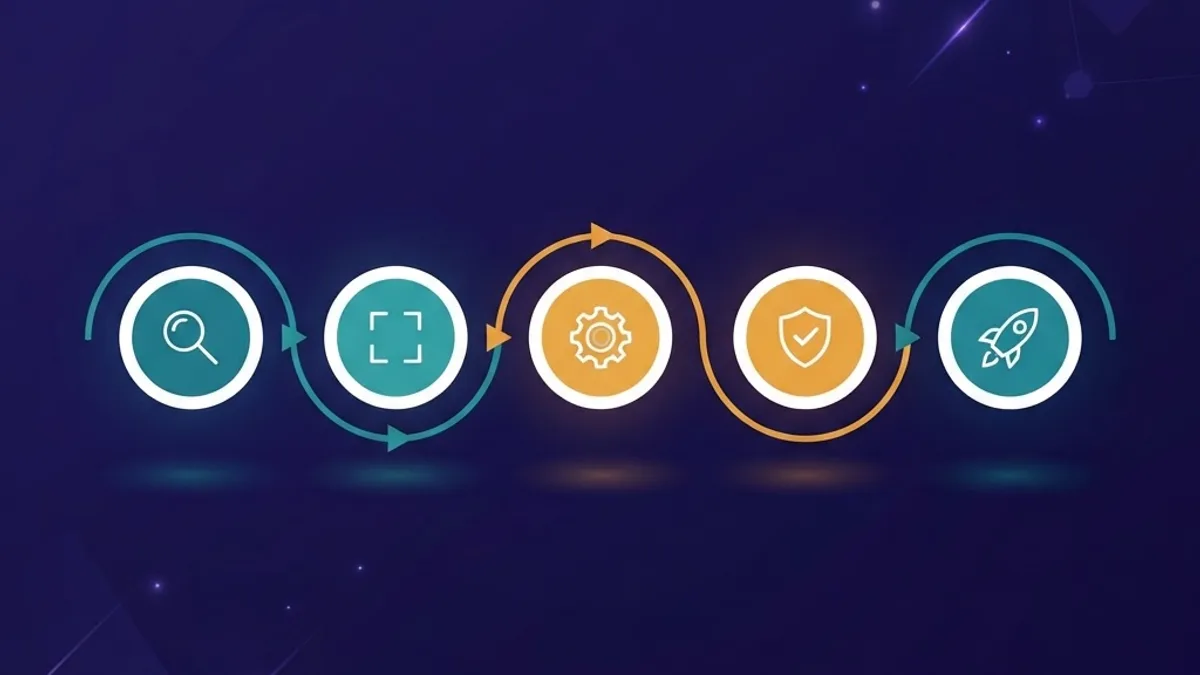
- Weeks one to two, discovery. User roles, data model, integration list, and a written definition of done for the first release. No code until this exists.
- Weeks two to four, foundation. Repository, environments, CI, authentication, base schema, and one thin end-to-end feature deployed to staging. Seeing a real deployed slice this early is the best available predictor of on-time delivery.
- Weeks four to ten, feature build. Weekly demos on staging, not screenshots. Each demo should be something you can click.
- Weeks ten to twelve, hardening. Load testing, security review, error tracking, backup verification, and performance tuning against realistic data volumes.
- Weeks twelve onward, launch and iterate. Production release, monitoring baselines, then a fixed monthly maintenance window.
A useful contract mechanic: tie payment milestones to deployed staging functionality rather than to calendar dates. It aligns incentives immediately and exposes stalled work within one sprint.
Scalability and Performance: What Actually Moves the Needle
Most Python performance complaints are database problems wearing a language costume.
Work through this order before considering a rewrite:
- Fix N plus one queries. A single list page issuing hundreds of queries is the most frequent real-world bottleneck. Eager loading typically cuts response times by an order of magnitude.
- Add the missing indexes. Read your slow query log, not your intuition.
- Cache the expensive and stable. Redis-backed caching on aggregate queries and rendered fragments delivers the largest gain per hour of engineering effort.
- Right-size your workers. For I/O-bound workloads, async workers or more worker processes usually beat larger instances.
- Scale horizontally with stateless app servers. Keep sessions and uploads in external stores so any instance can serve any request.
Performance also has a direct commercial consequence. Google field data has repeatedly shown that the probability of a bounce rises sharply as page load time grows past three seconds, and server response time is a large, controllable share of that budget. Agencies that treat performance as an engineering discipline rather than a launch checkbox, including specialists in scalable web solutions, tend to bake load testing into the build phase instead of after go-live.
Security, Compliance, and Maintenance Realities
Security work is not a phase. It is a set of defaults you either have or do not have.

Non-negotiable baseline for any Python web application handling real user data:
- Parameterized queries or ORM query building everywhere, with zero string-concatenated SQL.
- Server-side authorization checks on every endpoint, never trusting client-supplied role claims.
- Password hashing with a modern algorithm, plus rate limiting on all authentication routes.
- Secrets in environment variables or a secret manager, never in the repository.
- Dependency scanning in CI, because published advisories against popular Python packages appear continuously and unpatched dependencies are a leading breach vector.
- Security response headers, including a content security policy rolled out in report-only mode first.
- Verified, restorable backups. An untested backup is a belief, not a control.
Maintenance deserves its own line item. Budget 15 to 20 percent of the original build cost annually for dependency upgrades, framework version migrations, monitoring, and small improvements. Projects that skip this line arrive two years later needing a rewrite that costs more than the original build.
Budget, Timeline, and Vetting Your Development Partner
Price ranges vary by region and seniority, but scope shape is a reliable predictor of effort.

| Project type | Typical scope | Timeline | Indicative range |
|---|---|---|---|
| Internal tool or dashboard | Auth, CRUD, reporting | 4 to 8 weeks | 8,000 to 20,000 USD |
| Customer-facing SaaS MVP | Billing, roles, API, email | 8 to 14 weeks | 25,000 to 60,000 USD |
| Data or AI-backed platform | Pipelines, queues, model APIs | 12 to 24 weeks | 50,000 to 120,000 USD |
| Legacy modernization | Migration, parity, cutover | 16 to 32 weeks | 60,000 to 150,000 USD |
Use these five questions to evaluate a vendor, and weigh the reasoning behind each answer more than the answer itself:
- Show me a staging environment from a recent project and walk me through the deployment pipeline.
- Which framework would you pick for my use case, and what would change your mind?
- How do you handle database migrations with zero downtime?
- What is in your test suite, and what do you deliberately not test?
- Who owns the code and infrastructure accounts on day one?
A team that answers question two with a single framework in every scenario is selling a habit, not an assessment. Teams that occasionally get stuck on setup and tooling issues rather than architecture are also worth watching, though even strong engineers hit environment friction, as anyone who has followed a guide on how to install missing libraries for Python in VS Code can confirm. For a concrete example of what a delivered Python application scope looks like in practice, the documented python QA web application features breakdown is a useful benchmark against your own requirements list.
Key Takeaways
- Python web application development services span discovery, architecture, backend build, testing, deployment, and maintenance, not just coding.
- Django suits data-heavy and permission-heavy applications, FastAPI suits API-first and AI-backed systems, and Flask suits small focused services.
- Mixing Django for core data with FastAPI for high-throughput endpoints is a legitimate production pattern, not a compromise.
- Most Python performance problems are database issues: N plus one queries and missing indexes come before any rewrite discussion.
- Typical projects run 4 to 24 weeks and 8,000 to 120,000 USD depending on scope shape.
- Budget 15 to 20 percent of build cost annually for maintenance to avoid a forced rewrite.
- Tie payment milestones to deployed staging functionality rather than calendar dates.
Frequently Asked Questions (FAQ)
Is Python good for web application development in 2026?
Yes. Python remains one of the most widely used backend languages for web applications, with mature frameworks, a very deep library ecosystem, and unmatched integration with data and AI tooling. It is especially strong when your application needs analytics, machine learning, or heavy third-party integrations alongside standard web features.
How long does it take to build a Python web application?
A focused internal tool typically takes four to eight weeks. A customer-facing SaaS MVP with billing, roles, and an API usually takes eight to fourteen weeks. Data-heavy or AI-backed platforms run twelve to twenty-four weeks. Timelines slip most often from unclear requirements, not from slow engineering.
Should I choose Django or FastAPI for my project?
Choose Django when your app is data-heavy with complex permissions, admin needs, and standard CRUD workflows. Choose FastAPI when you are building an API consumed by a separate frontend, mobile app, or AI service, especially with high concurrency. Many production systems successfully run both together.
How much do Python web application development services cost?
Expect 8,000 to 20,000 dollars for an internal dashboard, 25,000 to 60,000 dollars for a SaaS MVP, and 50,000 dollars or more for data or AI platforms. Rates vary by region and seniority, so compare scope depth, testing, and deployment maturity rather than headline hourly rates.
Can a Python web application handle high traffic?
Yes. Stateless application servers behind a load balancer, Redis caching, tuned database indexes, and background queues let Python applications serve very large workloads. Scaling problems almost always trace back to database query patterns or synchronous slow work, not to the language itself.
What should I get at project handover?
You should receive full repository ownership, infrastructure account ownership, environment configuration documentation, a runnable local setup guide, the test suite, deployment and rollback instructions, and a written maintenance plan. Anything less leaves you dependent on a single vendor for routine changes.