
Learn how artificial intelligence strategic cost management helps businesses cut waste, forecast budgets, and turn spending data into measurable savings and ROI.
Artificial Intelligence Strategic Cost Management

Most businesses do not overspend because they lack budgets. They overspend because they lack visibility. By the time a finance team spots a runaway cloud bill, a bloated software subscription, or an underperforming ad campaign, the money is already gone. Artificial intelligence strategic cost management flips that reactive cycle into a proactive one, using data, prediction, and automation to control spending before it spirals.
This guide explains exactly how AI-driven cost management works, where it delivers the biggest returns, and how to implement it without disrupting your operations. Everything here is drawn from real deployment patterns across cloud, marketing, and operational budgets, so you leave with an approach you can act on today.
Quick Answer: Artificial intelligence strategic cost management uses machine learning to analyze spending in real time, forecast future costs, detect waste, and automate optimization decisions. It replaces reactive budget cuts with continuous, data-driven control, helping businesses reduce costs while protecting performance and long-term ROI.
What Is AI Strategic Cost Management?
AI strategic cost management is the practice of using machine learning and automation to continuously monitor, predict, and optimize an organization's costs against its strategic goals. Instead of reviewing expenses monthly through static spreadsheets, AI systems ingest live data from cloud platforms, procurement tools, payroll, and marketing dashboards to surface savings opportunities as they emerge.
The key word is strategic. Traditional cost cutting slashes budgets uniformly and often damages growth. AI, by contrast, distinguishes between spending that drives value and spending that only drains it. It might flag idle cloud servers for shutdown while recommending you increase investment in a channel quietly generating strong returns.

At agencies like ZoneTechify and WebPeak, this shift matters because clients no longer accept guesswork. They want defensible, data-backed decisions about where every dollar goes and why.
Why Traditional Cost Control Fails
Manual cost management fails for three predictable reasons, and understanding them clarifies why AI is now essential.
- It is backward-looking. Spreadsheets report what already happened. You cannot cut a cost you only discover 30 days later.
- It cannot process modern data volumes. A mid-sized company generates millions of transactional data points monthly across cloud, SaaS, and vendor systems. Humans simply cannot audit that scale.
- It treats all spending equally. Blanket cuts remove waste and value together, which is why so many cost-cutting drives quietly harm revenue.
According to Gartner, organizations waste an estimated 30% of their cloud spend through overprovisioning and idle resources. That single statistic explains why AI-powered optimization has moved from a luxury to a competitive necessity.
How AI Reduces Costs in Real Time
AI reduces costs by combining four capabilities that no manual process can match at scale: anomaly detection, predictive forecasting, automated optimization, and continuous benchmarking. Together they create a closed feedback loop that improves over time.
1. Anomaly Detection
Machine learning models learn your normal spending patterns and flag deviations instantly. A sudden 40% spike in API usage or a duplicated vendor invoice is caught within hours, not billing cycles. This alone can recover significant amounts that would otherwise leak away unnoticed.
2. Predictive Forecasting

Rather than guessing next quarter's budget, AI models forecast costs based on historical trends, seasonality, and growth signals. This lets finance teams plan with confidence and avoid the twin dangers of overspending and starving growth initiatives of resources.
3. Automated Optimization
AI does not just recommend, it can act. It can automatically right-size cloud instances, pause idle resources overnight, or reallocate ad budget toward the best-performing campaigns, all governed by rules you define.
4. Continuous Benchmarking
AI compares your unit costs against historical baselines and industry norms, so you always know whether a price is competitive or whether a vendor renewal deserves renegotiation.
Where AI Cost Management Delivers the Biggest Wins
Some categories of spending respond to AI optimization far better than others. Focus your first efforts where the return is fastest.

- Cloud infrastructure: Right-sizing, auto-scaling, and reserved-instance planning routinely cut cloud bills by 20 to 40%.
- SaaS subscriptions: AI identifies unused licenses and duplicate tools that quietly compound every month.
- Digital advertising: Budget is shifted in real time toward campaigns with the strongest return, reducing wasted ad spend.
- Procurement: Contract analysis surfaces auto-renewals, price creep, and consolidation opportunities.
- Energy and operations: Predictive models optimize usage in facilities and logistics.
For organizations that want to build these capabilities into their broader technology stack, ZoneTechify's artificial intelligence services provide a practical starting point for implementation.
AI vs Traditional Cost Management: A Direct Comparison
The table below summarizes the practical differences that decision-makers care about most.
| Factor | Traditional Cost Management | AI Strategic Cost Management |
|---|---|---|
| Speed of insight | Weekly or monthly | Real time |
| Data capacity | Limited, manual review | Millions of data points |
| Waste detection | Reactive, after the fact | Proactive, predictive |
| Forecasting accuracy | Estimates and guesswork | Data-driven predictions |
| Optimization | Manual, blanket cuts | Automated, value-aware |
| Scalability | Poor | High |
The contrast makes the direction of travel obvious: AI does not merely do the same job faster, it does a fundamentally more intelligent job.
Building an AI Cost Management Strategy

Adopting AI cost management works best as a phased strategy rather than a single overwhelming project. The following sequence has proven reliable across implementations.
Step 1: Consolidate Your Data
AI is only as good as the data it sees. Connect your cloud accounts, accounting software, procurement tools, and marketing platforms into a unified data layer. Fragmented data produces fragmented insight.
Step 2: Establish Baselines
Before optimizing, let the system learn what normal looks like. Baselines give the model a reference point for anomalies and make savings measurable later.
Step 3: Start With Monitoring, Not Automation
Begin in observe-and-recommend mode. Let the AI surface opportunities while your team validates them. This builds trust and prevents disruptive automated actions early on.
Step 4: Introduce Governance and Guardrails
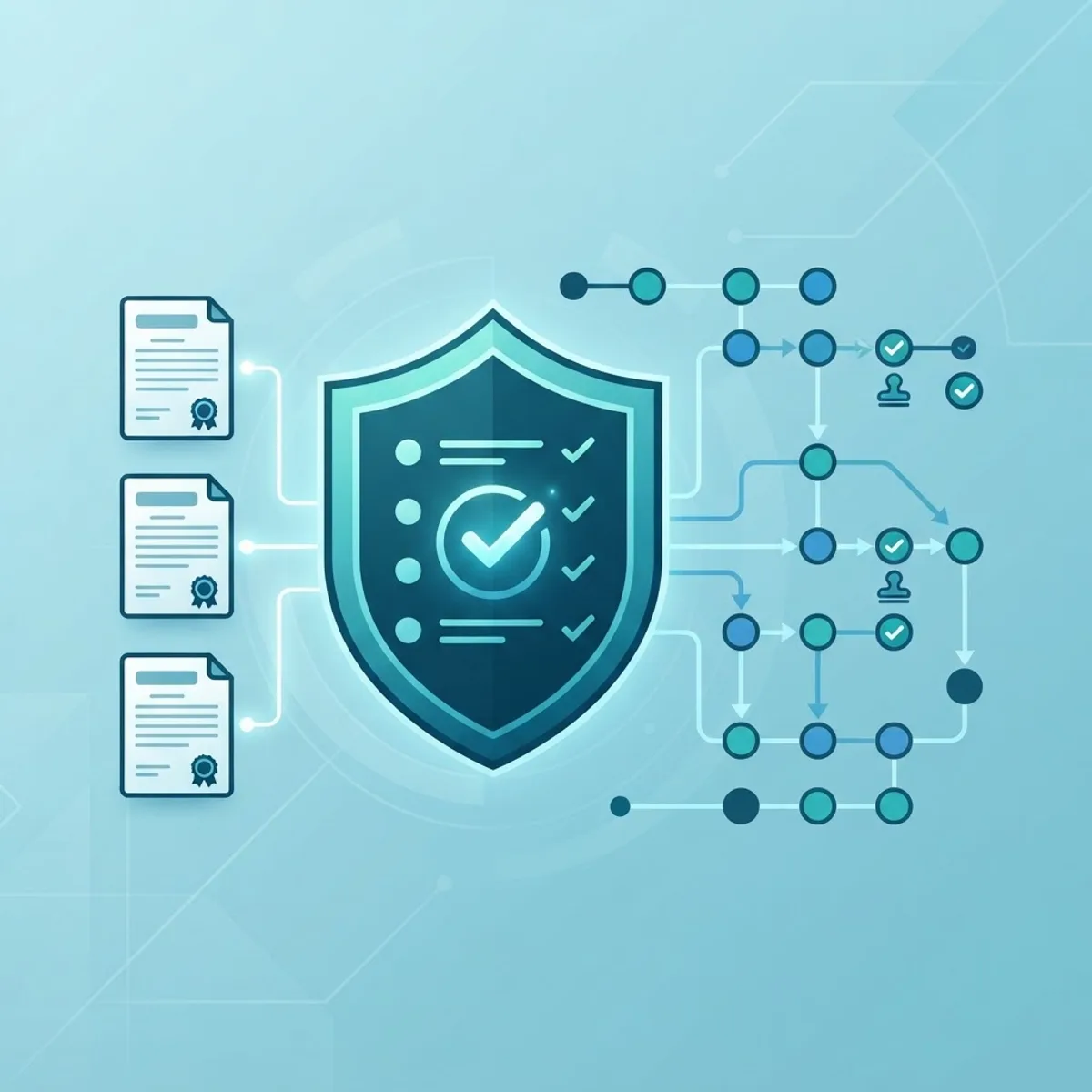
Define which decisions AI can make autonomously and which require human approval. A shutdown of idle test servers might be automatic, while cancelling a vendor contract stays a human call. Clear governance is what separates safe automation from risky automation.
Step 5: Automate and Scale
Once the system proves accurate, gradually expand automated actions. This is where efficiency compounds and your team is freed from repetitive monitoring.

Measuring ROI From AI Cost Management
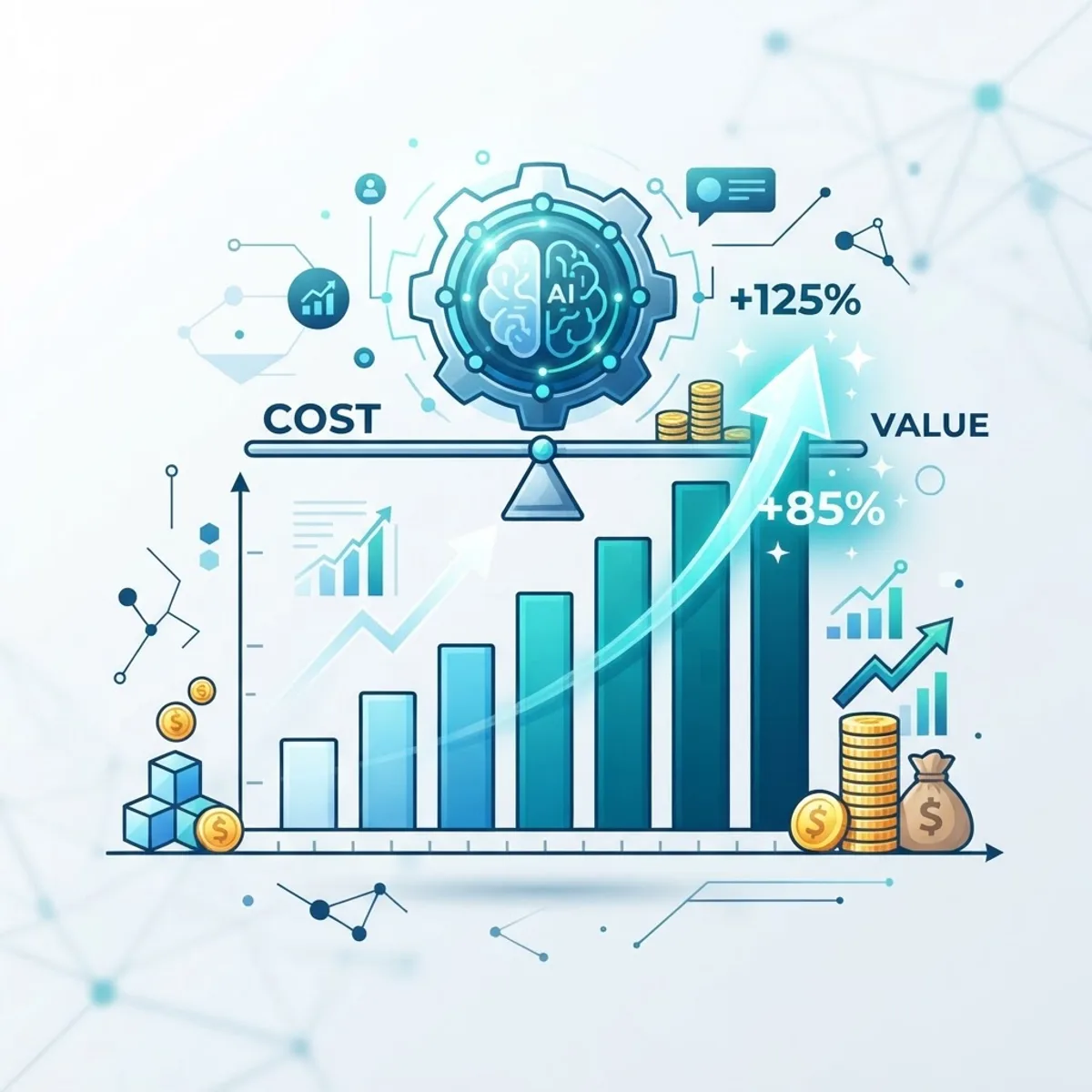
The goal is never cost reduction for its own sake, it is improved return on every dollar. Track these metrics to prove value:
- Net savings: Total costs eliminated minus the cost of the AI system.
- Cost avoidance: Spending prevented by early anomaly detection.
- Forecast accuracy: How closely predictions match actual spend.
- Value retention: Confirmation that revenue-driving spend was protected, not cut.
According to McKinsey research, companies that apply AI to financial operations frequently report double-digit percentage improvements in efficiency, and crucially, those gains persist because the system keeps learning. Unlike one-time cost cuts, AI cost management delivers a compounding advantage.
Common Mistakes to Avoid
Experience shows that most failures stem from process, not technology. Avoid these traps:
- Automating too fast before the model is trusted and accurate.
- Ignoring data quality, which produces misleading recommendations.
- Cutting strategically important spend because the model was not aligned to business goals.
- Treating it as a one-off project rather than an ongoing capability.
Key Takeaways
- AI strategic cost management uses machine learning to monitor, forecast, and optimize spending in real time rather than reactively.
- Gartner estimates roughly 30% of cloud spend is wasted, which AI right-sizing and automation directly address.
- The biggest early wins come from cloud infrastructure, SaaS licenses, and digital advertising budgets.
- A phased rollout, monitor first, automate later, with clear governance, is the safest path to results.
- Success is measured by ROI and value retention, not just raw cost reduction.
Frequently Asked Questions (FAQ)
What is artificial intelligence strategic cost management?
It is the use of machine learning and automation to continuously track, predict, and optimize business spending against strategic goals. Instead of monthly manual reviews, AI analyzes live data to catch waste early, forecast budgets, and automate savings while protecting the spending that drives real growth.
How does AI actually reduce business costs?
AI reduces costs through four mechanisms: detecting spending anomalies instantly, forecasting future budgets accurately, automatically optimizing resources like cloud servers, and benchmarking prices against baselines. This closed feedback loop finds and eliminates waste continuously, recovering money that manual monthly reviews would typically miss entirely.
Is AI cost management only useful for large enterprises?
No. Small and mid-sized businesses often benefit most because they lack dedicated finance teams to audit spending manually. AI scales down effectively, monitoring cloud bills, SaaS subscriptions, and ad budgets automatically, giving smaller companies enterprise-grade cost visibility without hiring additional analysts or building complex internal systems.
How long before AI cost management shows results?
Most organizations see meaningful anomaly detection and savings recommendations within the first few weeks, once baseline data is established. Automated optimization delivers larger, compounding returns over subsequent months. Because the models keep learning, accuracy and savings typically improve steadily rather than plateauing after initial implementation.
Will AI make risky cost decisions on its own?
Only if you allow it to. Well-designed systems use governance guardrails that define which actions run automatically and which require human approval. Routine tasks like pausing idle servers can be automated safely, while major decisions such as cancelling vendor contracts stay firmly under human control.
Do I need technical expertise to adopt it?
Basic strategy helps, but you do not need in-house data scientists. Specialists such as WebPeak's AI services handle data integration, model setup, and governance. Your role is defining goals and approving automation rules, while the technical implementation is managed by an experienced partner.