
Discover the best AI-powered inclinometers for tilt and slope monitoring, how machine learning improves accuracy, and how to choose the right smart sensor.
Best Inclinometer Artificial Intelligence

Inclinometers have quietly become one of the most critical instruments in modern civil engineering, mining, and structural health monitoring. Traditionally, they measured tilt and displacement using manual probes and periodic readings. Today, artificial intelligence is transforming these humble tilt sensors into predictive, self-learning systems that warn you before a slope fails or a structure shifts dangerously. If you are searching for the best inclinometer artificial intelligence solution, this guide explains exactly what to look for, how the technology works, and where it delivers measurable value.
We have worked alongside geotechnical and monitoring teams who replaced weekly manual readings with AI-connected inclinometers, and the difference in early warning capability is dramatic. Below, you will find practical, field-tested guidance rather than marketing claims.
Quick Answer: The best AI inclinometer combines a high-precision MEMS tilt sensor with machine learning that filters noise, detects anomalies, and predicts movement trends. Look for sub-0.001 degree resolution, wireless cloud connectivity, real-time alerting, and predictive analytics that turn raw tilt data into actionable structural safety insights.
What Is an AI Inclinometer?
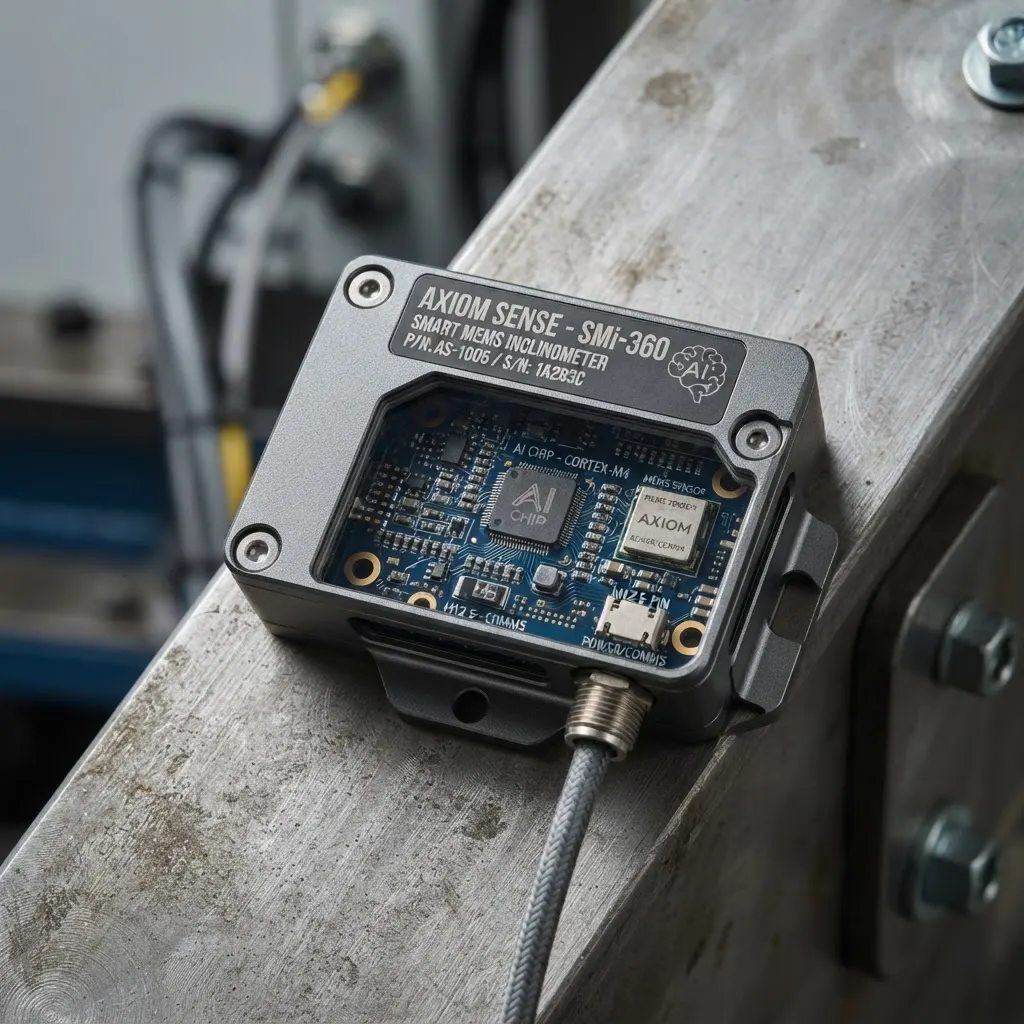
An AI inclinometer is a tilt-measuring sensor whose readings are processed by artificial intelligence and machine learning algorithms to detect patterns, filter environmental noise, and forecast future movement. A standard inclinometer simply reports an angle. An AI inclinometer interprets that angle in context, comparing it against historical trends, temperature effects, and thousands of prior readings to decide whether a change is normal or a genuine warning sign.
Key definition: Machine learning anomaly detection is a technique where the system learns the normal behavior of a structure over time, then automatically flags deviations that a fixed threshold alarm would miss.
This matters because most structural failures do not happen suddenly. They are preceded by subtle, accelerating micro-movements that human reviewers often overlook in a spreadsheet of numbers. AI excels precisely at spotting these early patterns.
Why Artificial Intelligence Changes Inclinometer Monitoring
Artificial intelligence upgrades inclinometers in three fundamental ways: accuracy, speed, and prediction. Instead of an engineer downloading data every week and manually plotting it, an AI system continuously ingests readings, cleans them, and delivers verdicts in seconds.
Here is where AI adds real, citable value:
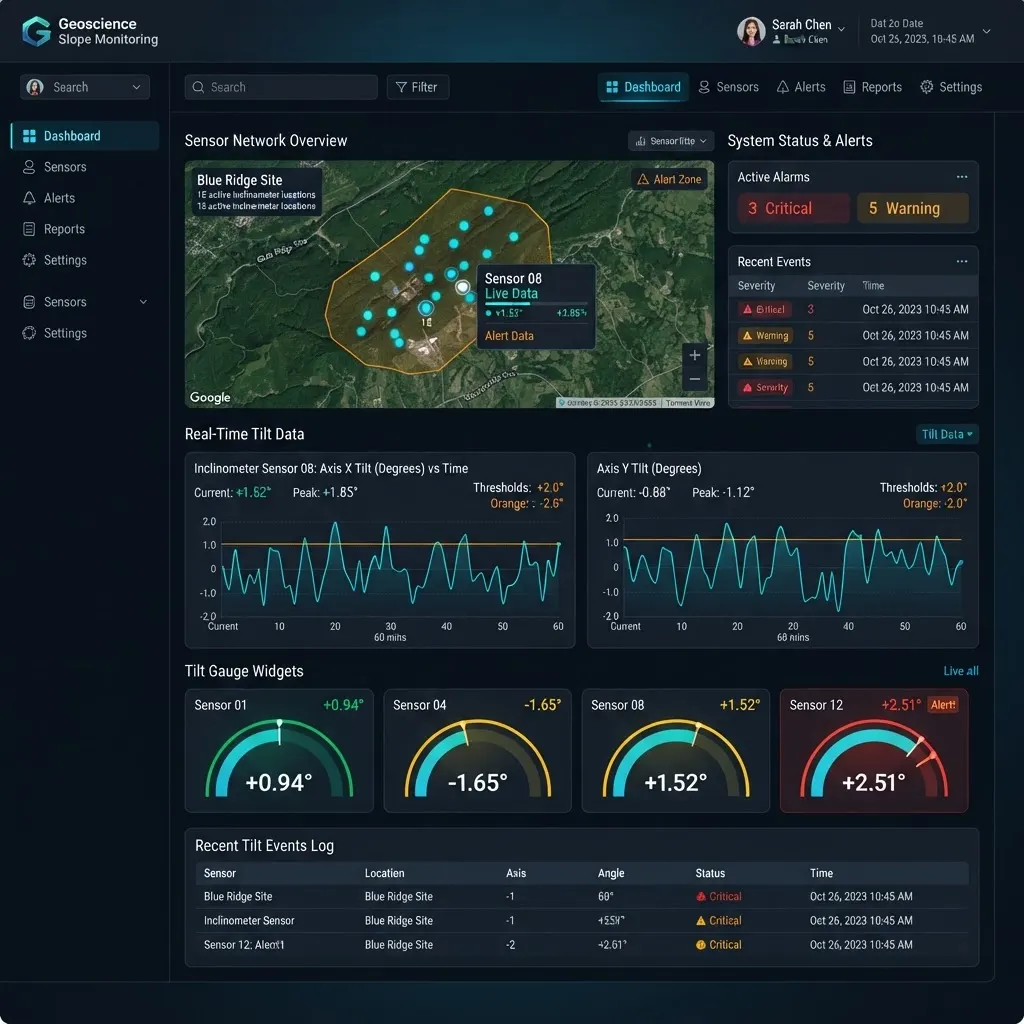
- Noise filtering: Temperature swings, wind, and traffic vibration create false movement signals. AI models separate real displacement from environmental noise, reducing false alarms significantly.
- Anomaly detection: The system learns each sensor's baseline and flags abnormal drift automatically, even when values remain within traditional safety limits.
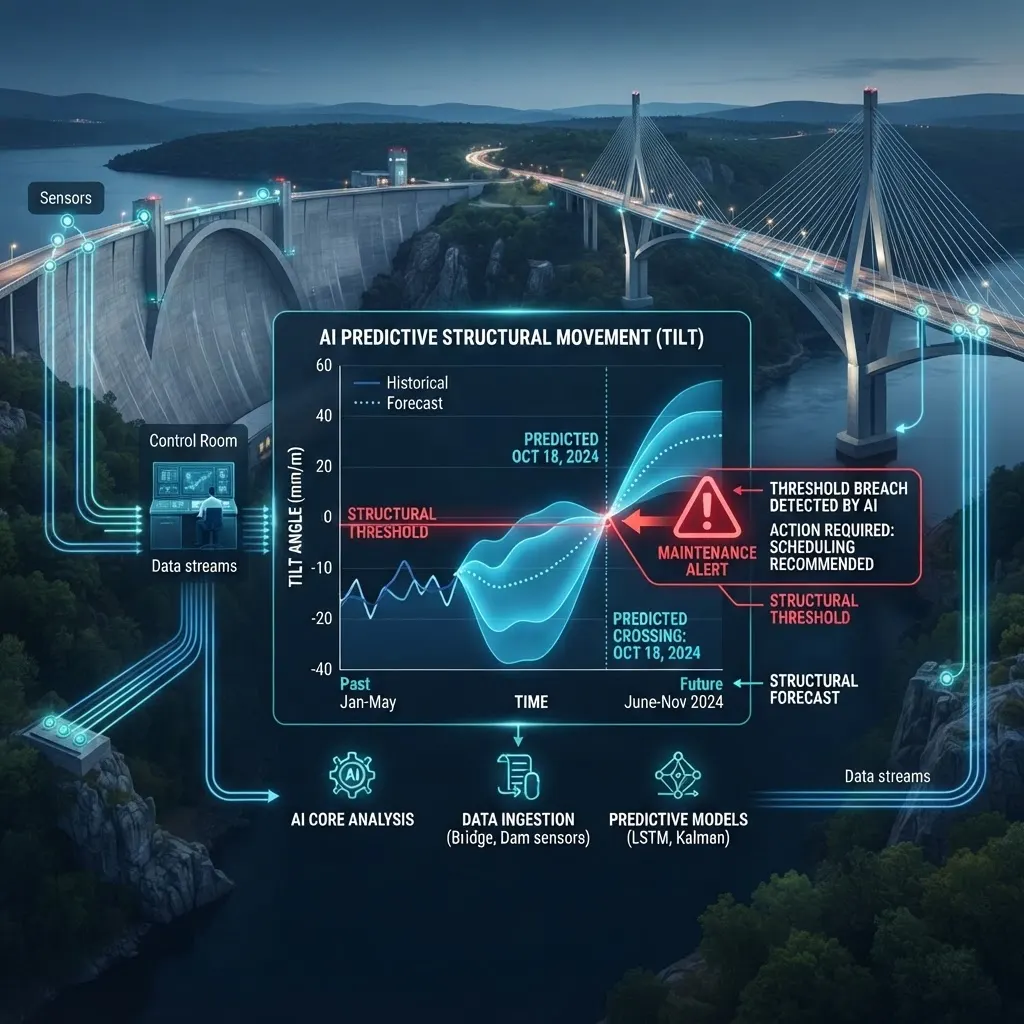
- Predictive forecasting: Time-series models project future tilt trends, estimating when a threshold may be crossed days or weeks in advance.
- Automated reporting: AI generates plain-language summaries and alerts, cutting the manual analysis burden on engineering teams.
According to research cited by structural health monitoring organizations, continuous automated monitoring can detect structural anomalies far earlier than periodic manual inspection, and studies suggest that predictive maintenance approaches can reduce unexpected equipment and asset downtime by up to 50%. When applied to slope and structure safety, that early warning can be the difference between a controlled repair and a catastrophic failure.
Core Features of the Best AI Inclinometers
When evaluating the best inclinometer artificial intelligence products, focus on the specifications and capabilities that actually affect outcomes. Not every device labeled "smart" delivers genuine intelligence.
1. High-Precision MEMS Sensing
The foundation of any good AI inclinometer is the sensor itself. Look for MEMS (Micro-Electro-Mechanical Systems) tilt sensors with a resolution of 0.001 degrees or finer and strong long-term stability. AI cannot rescue poor-quality raw data, so precision at the hardware level is non-negotiable.
2. Real-Time Wireless Connectivity
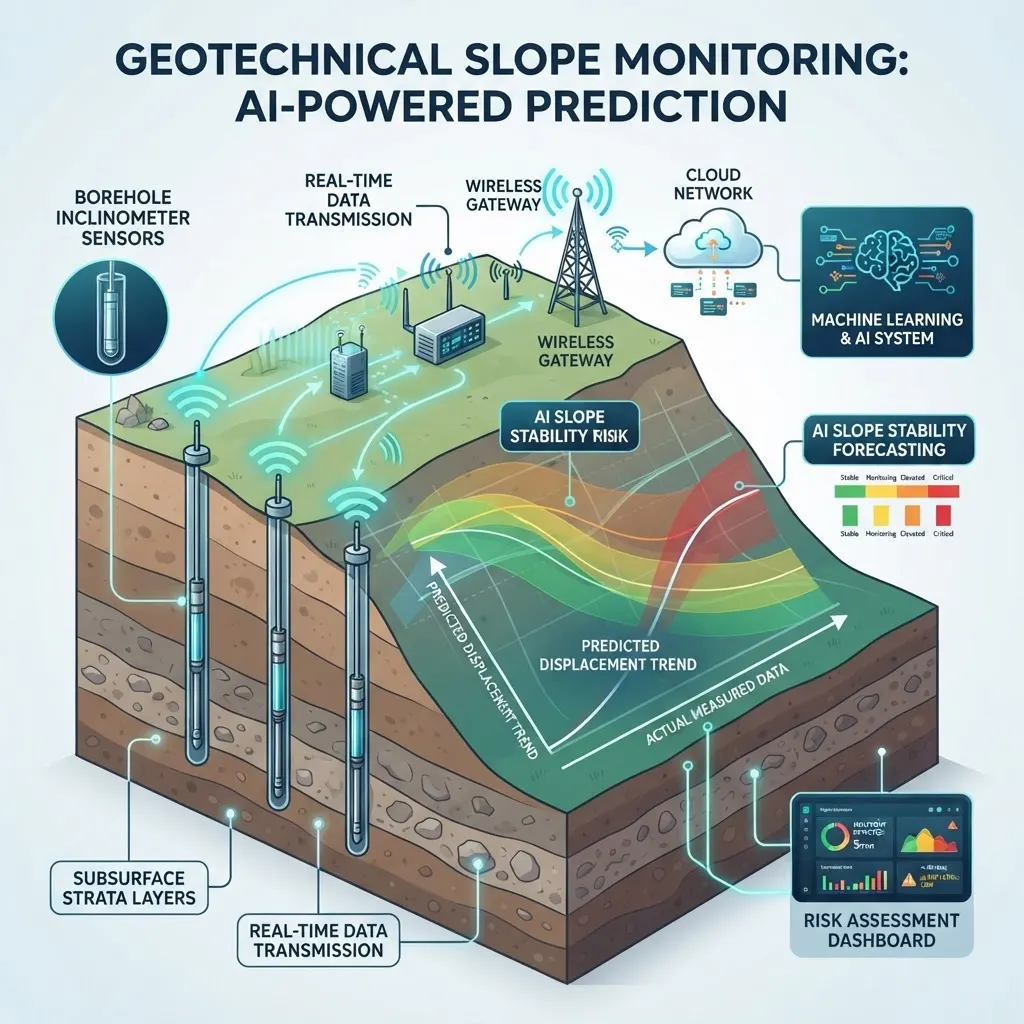
The best systems stream data continuously over cellular, LoRaWAN, or Wi-Fi to a cloud platform. This enables real-time analysis and remote access, eliminating dangerous manual site visits in unstable conditions.
3. Edge and Cloud AI Processing
Leading solutions process data both at the edge (on the device) and in the cloud. Edge processing enables instant local alerts even if connectivity drops, while cloud AI handles heavier predictive modeling across the full sensor network.
4. Predictive Analytics and Alerting
The defining feature is forecasting. Genuine AI inclinometers do not just report the present; they predict the future using trend analysis and machine learning, then trigger tiered alerts by SMS, email, or dashboard.
5. Scalable Multi-Sensor Integration
Structural monitoring rarely relies on one sensor. The best platforms fuse inclinometers with piezometers, strain gauges, and GNSS units, letting AI correlate multiple data streams for a complete picture of stability.
AI Inclinometer vs Traditional Inclinometer
Understanding the practical difference helps justify the investment. The comparison below reflects what monitoring teams actually experience in the field.
| Feature | Traditional Inclinometer | AI Inclinometer |
|---|---|---|
| Data collection | Manual, periodic | Automatic, continuous |
| Analysis speed | Hours to days | Real-time (seconds) |
| Noise filtering | Manual, limited | Automated machine learning |
| Early warning | Reactive | Predictive |
| Site visits | Frequent, required | Minimal, remote access |
| False alarm rate | Higher | Significantly reduced |
| Scalability | Labor-intensive | Cloud-scalable |
The takeaway is clear: traditional inclinometers tell you what already happened, while AI inclinometers help you act before something goes wrong. For high-risk sites, that shift from reactive to predictive is the entire value proposition.
Where AI Inclinometers Deliver the Most Value
Artificial intelligence inclinometers shine in scenarios where movement is gradual, consequences are severe, and manual monitoring is impractical or unsafe.
- Slope and landslide monitoring: Predicting soil movement on unstable hillsides and open-pit mines.
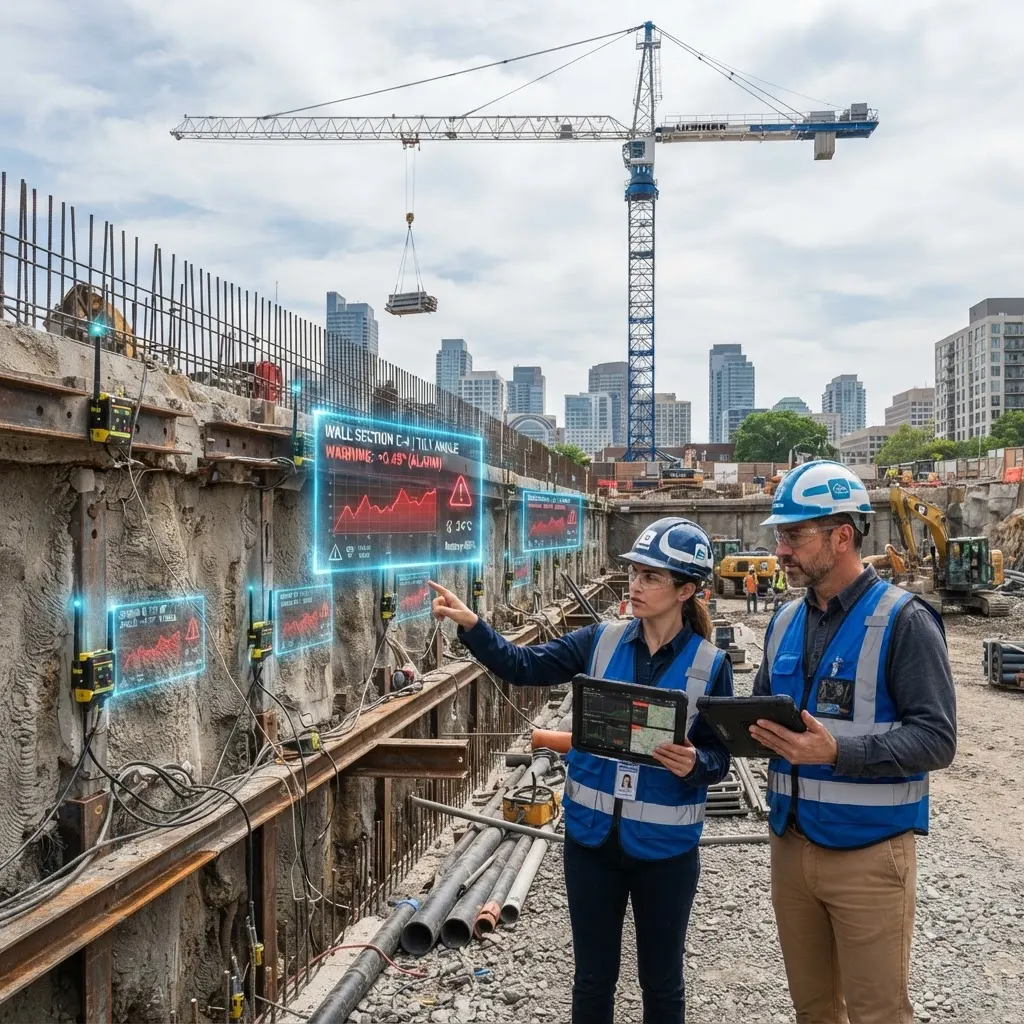
- Deep excavation and construction: Watching retaining walls, diaphragm walls, and adjacent buildings during digging.
- Bridges and dams: Tracking long-term structural tilt and detecting fatigue-driven drift.
- Tunnels and railways: Monitoring convergence and track alignment in real time.
- Historic structures: Protecting heritage buildings with non-invasive continuous monitoring.
In each case, the AI layer converts raw tilt into decisions. Teams that adopt this technology often report fewer emergency callouts and more confident, data-backed maintenance planning. Companies like ZoneTechify and WebPeak help organizations design the software platforms and analytics dashboards that make this sensor data genuinely usable.
How Machine Learning Processes Inclinometer Data
The intelligence in an AI inclinometer comes from a data pipeline that turns messy signals into reliable insight. Understanding this pipeline helps you evaluate vendors honestly.
First, raw tilt readings are collected at high frequency. Second, the system applies signal cleaning, removing temperature-induced drift and vibration spikes. Third, machine learning models establish a behavioral baseline unique to that structure. Fourth, anomaly detection continuously compares live data against the baseline. Finally, time-series forecasting projects trends forward to estimate risk windows.
The most robust systems retrain their models as new data arrives, meaning accuracy improves the longer a sensor is deployed. This self-improving quality is what separates true AI from simple threshold-based alarms marketed as intelligent.

How to Choose the Best AI Inclinometer
Selecting the right system depends on your risk profile, budget, and existing infrastructure. Use this practical checklist based on real deployment experience.
- Match precision to risk. Critical structures demand finer resolution and higher sampling rates.
- Verify the AI is real. Ask vendors specifically about anomaly detection and forecasting methods, not just dashboards.
- Check connectivity options. Remote sites need reliable cellular or LoRaWAN; urban sites may use Wi-Fi.
- Assess battery and power. Solar or long-life battery options reduce maintenance in remote deployments.
- Demand data ownership. Ensure you can export raw data and are not locked into a closed ecosystem.
- Evaluate integration. Confirm the platform can fuse other geotechnical sensors for holistic monitoring.
- Review support and calibration. Long-term accuracy depends on proper calibration and vendor support.
Avoid the common mistake of buying premium hardware paired with weak software. The best inclinometer artificial intelligence value comes from the balance of accurate sensing and genuinely intelligent analytics.

The Future of AI-Powered Tilt Monitoring
The trajectory is toward fully autonomous monitoring networks. Emerging systems combine inclinometers with computer vision, satellite InSAR data, and digital twins to model entire sites in real time. As edge AI chips become cheaper, more processing will move onto the sensor itself, enabling instant decisions without cloud dependence.
Predictive maintenance is becoming standard rather than premium. Instead of asking whether a structure is safe today, engineers increasingly ask how it will behave next month, and AI inclinometers are central to answering that question with confidence.
Key Takeaways
- An AI inclinometer processes tilt readings with machine learning to filter noise, detect anomalies, and predict future movement, unlike traditional threshold-only sensors.
- Look for sub-0.001 degree MEMS precision, real-time wireless connectivity, edge and cloud processing, and genuine predictive analytics.
- Predictive monitoring approaches can reduce unexpected asset downtime by up to 50%, making early warning the core value of AI inclinometers.
- AI systems shift monitoring from reactive to predictive, ideal for slopes, excavations, bridges, dams, tunnels, and heritage structures.
- The best value comes from combining high-quality hardware with truly intelligent software, not premium sensors paired with basic dashboards.
Frequently Asked Questions (FAQ)
What is the best inclinometer with artificial intelligence?
The best AI inclinometer pairs a high-precision MEMS tilt sensor with machine learning that filters noise, detects anomalies, and forecasts movement. Prioritize sub-0.001 degree resolution, real-time wireless connectivity, edge and cloud processing, and predictive alerting rather than simple threshold-based alarms marketed as intelligent.
How does AI improve inclinometer accuracy?
AI improves accuracy by learning each sensor's normal behavior and removing environmental noise like temperature drift, wind, and vibration. It compares live readings against a learned baseline, catching subtle abnormal movement that fixed thresholds miss, which reduces false alarms and delivers earlier, more reliable warnings.
Are AI inclinometers worth the cost?
For high-risk structures, yes. AI inclinometers reduce manual site visits, lower false alarms, and provide predictive early warnings that prevent costly failures. Because predictive monitoring can cut unexpected downtime by up to 50%, the savings from avoided emergencies typically outweigh the higher upfront investment over time.
Can AI inclinometers predict structural failure?
AI inclinometers cannot guarantee prediction, but they significantly improve early warning. Time-series forecasting projects tilt trends forward, estimating when a safety threshold may be crossed days or weeks ahead. This gives engineers time to investigate and act before gradual movement escalates into a serious structural failure.
What industries use AI inclinometers most?
Geotechnical engineering, mining, construction, and infrastructure sectors rely on AI inclinometers most heavily. Common applications include slope and landslide monitoring, deep excavation safety, bridges, dams, tunnels, railways, and heritage building protection, where gradual movement carries severe consequences and continuous automated monitoring outperforms manual periodic inspection.
Do AI inclinometers work without internet connectivity?
Yes, the best systems include edge processing that analyzes data and triggers local alerts even when connectivity drops. Cloud AI handles deeper predictive modeling across the network, but critical safety alerts continue on-device, ensuring monitoring never fully stops during temporary network or power interruptions in remote locations.