
Discover how DLA Piper approaches artificial intelligence law, covering AI governance, EU AI Act compliance, risk management, and legal tech for businesses.
DLA Piper Artificial Intelligence
DLA Piper is one of the world's largest law firms, operating across more than 40 countries, and it has become a leading authority on the legal, ethical, and regulatory questions raised by artificial intelligence. As organisations race to deploy AI, many now turn to global firms like DLA Piper to understand exactly where innovation ends and legal liability begins.
This guide explains what DLA Piper's artificial intelligence work actually involves, why it matters for businesses of every size, and how its approach to AI governance, regulation, and risk can help you deploy AI responsibly. Whether you are a startup founder or an enterprise compliance officer, understanding this landscape is no longer optional.
Quick Answer: DLA Piper's artificial intelligence practice helps organisations deploy AI lawfully by advising on AI governance, regulatory compliance including the EU AI Act, data protection, intellectual property, and risk management, combining legal expertise with practical frameworks so businesses can innovate without exposing themselves to legal liability.
What Is DLA Piper's Artificial Intelligence Practice?
DLA Piper's artificial intelligence practice is a multidisciplinary legal team that advises clients across the entire lifecycle of AI adoption. AI governance is the umbrella term for the policies, controls, and accountability structures an organisation uses to develop and deploy AI safely and legally.
Rather than treating AI as a single legal issue, the firm connects data privacy, intellectual property, employment, product liability, and regulatory law into one coherent advisory service. This matters because a single AI deployment, such as an automated hiring tool, can simultaneously touch discrimination law, GDPR, and consumer protection rules.
The practice serves clients ranging from technology developers building foundation models to traditional enterprises embedding AI into existing products. Their guidance typically starts with mapping where AI is used inside a business, then identifying the specific legal exposures each use case creates.

Why AI Governance Matters for Modern Businesses
AI governance matters because unmanaged AI systems create measurable legal, financial, and reputational risk. According to a 2024 McKinsey survey, 65% of organisations reported regularly using generative AI, nearly double the figure from the previous year, yet far fewer had formal governance controls in place.
That gap between adoption and oversight is precisely where firms like DLA Piper add value. When companies deploy AI faster than they can govern it, they accumulate hidden liabilities, biased outputs, unlicensed training data, or decisions that cannot be explained to a regulator.
Core Pillars of AI Governance
- Accountability: Clearly defined ownership for every AI system and its outcomes.
- Transparency: The ability to explain how and why an AI system makes decisions.
- Fairness: Testing for and mitigating discriminatory or biased outputs.
- Security: Protecting models and training data from misuse or attack.
- Compliance: Meeting the specific laws that apply in each jurisdiction.
Well-structured governance is not a barrier to innovation. It is what allows businesses to scale AI confidently, and it is a practice that specialist teams such as those at ZoneTechify increasingly build into digital projects from day one.
How DLA Piper Advises on AI Regulation and Compliance
DLA Piper advises on AI regulation by tracking the fast-moving global legal landscape and translating it into practical steps clients can act on. The firm is well known for publishing regularly updated resources that map AI laws and enforcement trends across multiple jurisdictions.
This is genuinely difficult work because AI regulation is fragmented. The European Union has adopted a comprehensive, risk-based statute, the United States relies on a patchwork of sector rules and state laws, and countries such as China and the UK have taken markedly different approaches. A tool compliant in one region may be unlawful in another.
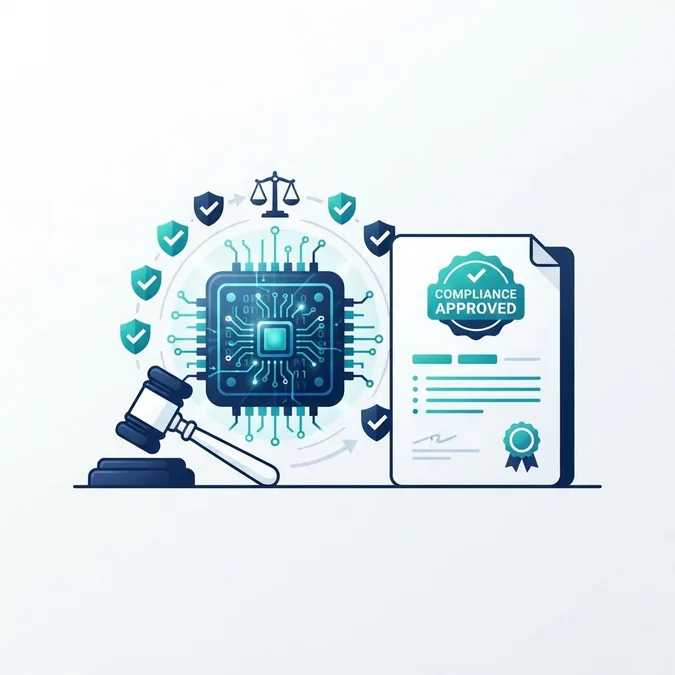
In practice, compliance advice usually covers three questions: Which laws apply to this specific AI use case? What documentation and testing must we produce? And how do we prove compliance if a regulator asks? Answering these before launch is far cheaper than defending an investigation afterwards.

The EU AI Act: What Businesses Need to Know
The EU AI Act is the world's first comprehensive artificial intelligence law, and it uses a risk-based framework to classify AI systems into tiers, from minimal risk to unacceptable risk. Systems deemed unacceptable, such as government social scoring, are banned outright, while high-risk systems face strict obligations.
This is central to DLA Piper's AI advisory work because the Act has extraterritorial reach. Like the GDPR before it, it can apply to companies outside the EU if their AI systems affect people within the bloc. Penalties are significant, with fines reaching up to 35 million euros or 7% of global annual turnover for the most serious breaches.

For high-risk systems, obligations include risk management processes, high-quality training data, technical documentation, human oversight, and transparency to users. Businesses are advised to classify their AI systems early, because retrofitting compliance into a live product is expensive and slow.
AI Risk Management: A Practical Framework
AI risk management is the ongoing process of identifying, assessing, and mitigating the harms an AI system could cause. DLA Piper's approach treats risk as a continuous cycle rather than a one-time checklist, because AI models drift and regulations evolve.
A practical framework typically follows four steps:
- Inventory: Catalogue every AI system in use, including third-party tools.
- Assess: Rank each system by legal, ethical, and operational risk.
- Mitigate: Apply controls such as bias testing, human review, and clear contracts.
- Monitor: Continuously audit outputs and update controls as laws change.

The strongest programmes assign clear human accountability for each system. Regulators consistently signal that "the algorithm did it" is not a defence. This is where legal counsel and technical teams must work together, a collaboration that specialist providers like WebPeak and its artificial intelligence services help operationalise for growing companies.
AI in Legal Operations: Contract Review and Automation
Beyond advising clients, large firms are also using AI internally to work faster. AI-assisted contract review uses machine learning to scan agreements, flag risky clauses, and surface obligations in a fraction of the time manual review takes.
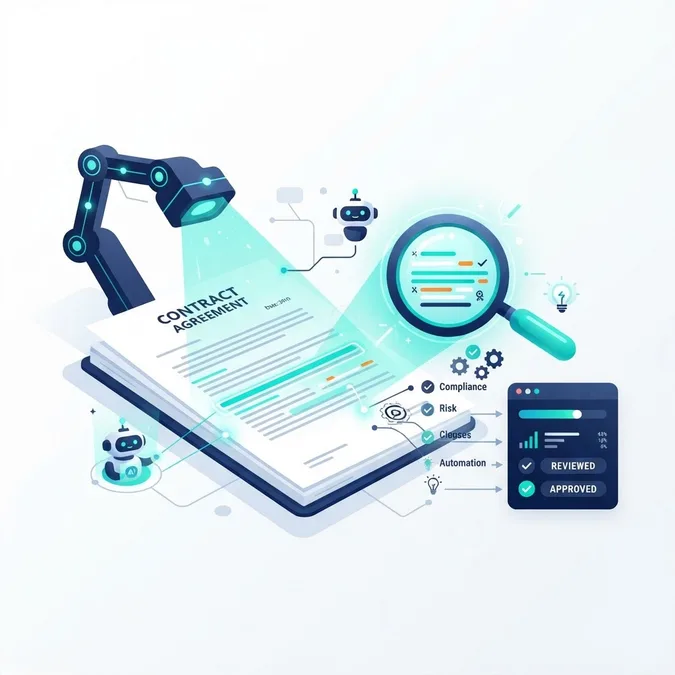
These tools do not replace lawyers. Instead, they handle high-volume, repetitive analysis so legal professionals can focus on judgment, negotiation, and strategy. The key legal caution is that AI outputs must always be verified, because generative models can produce confident but incorrect results, a phenomenon known as hallucination that has already led to court sanctions against lawyers who filed fabricated citations.
For businesses, the lesson is clear: AI can dramatically improve efficiency in legal and administrative operations, but only when paired with human oversight and clear internal policies governing its use.
DLA Piper vs Traditional Legal Approaches to AI
The table below compares a modern, governance-led approach to AI legal work against a reactive traditional model.
| Factor | Governance-Led Approach | Reactive Traditional Approach |
|---|---|---|
| Timing | Advice given before deployment | Advice sought after a problem arises |
| Scope | Cross-disciplinary and lifecycle-wide | Narrow and issue-specific |
| Regulation | Proactive tracking of global laws | Responds only to enforcement |
| Risk posture | Continuous monitoring | One-time review |
| Cost outcome | Lower long-term liability | Higher remediation costs |
| Business impact | Enables confident scaling | Slows or halts projects |
The comparison shows why proactive AI governance has become the standard expectation. Waiting for a legal problem to surface almost always costs more than preventing it.
The Future of AI in Law
The future of AI in law will be defined by tighter regulation, greater transparency requirements, and deeper integration of AI into legal workflows. As more jurisdictions follow the EU's lead, businesses will face a growing patchwork of overlapping rules that demand specialist guidance.

At the same time, AI will keep transforming how legal services are delivered, from automated due diligence to predictive case analysis. The firms and businesses that thrive will be those that treat AI governance as a strategic advantage rather than a compliance burden. Building responsible AI practices now positions organisations to move faster, not slower, as the rules mature.
Key Takeaways
- DLA Piper's artificial intelligence practice offers cross-disciplinary advice covering governance, regulation, IP, data protection, and risk.
- AI governance is now essential: 65% of organisations use generative AI, but far fewer have formal controls in place.
- The EU AI Act is the world's first comprehensive AI law, with fines up to 35 million euros or 7% of global turnover.
- Effective AI risk management is a continuous cycle of inventory, assessment, mitigation, and monitoring.
- AI tools boost legal efficiency but require human oversight to avoid hallucinations and legal sanctions.
- Proactive, governance-led approaches cost less and enable faster, more confident AI adoption.
Frequently Asked Questions (FAQ)
What does DLA Piper do with artificial intelligence?
DLA Piper advises businesses on the legal aspects of artificial intelligence, including AI governance, regulatory compliance, data protection, and intellectual property. The firm helps organisations deploy AI lawfully, manage risk, and prepare for laws such as the EU AI Act, while also using AI tools to improve its own legal work.
Why is AI governance important for companies?
AI governance is important because unmanaged AI creates legal, financial, and reputational risk. It ensures AI systems are accountable, transparent, fair, and compliant with the law. Strong governance prevents biased outputs, data misuse, and regulatory penalties, allowing companies to scale AI confidently instead of pausing projects when problems appear.
Who does the EU AI Act apply to?
The EU AI Act applies to organisations that develop, deploy, or distribute AI systems affecting people in the European Union, even if the company is based elsewhere. This extraterritorial reach means many global businesses must comply, classifying their AI by risk level and meeting strict obligations for high-risk systems.
Can AI replace lawyers?
No, AI cannot replace lawyers, but it changes how they work. AI excels at high-volume tasks like contract review, document analysis, and research. However, legal judgment, negotiation, strategy, and accountability still require human expertise. AI outputs must always be verified, since models can produce confident but incorrect results known as hallucinations.
How do businesses start managing AI legal risk?
Businesses should start by creating an inventory of every AI system they use, including third-party tools. Next, assess each system by legal and ethical risk, apply controls such as bias testing and human review, and monitor outputs continuously. Seeking specialist legal and technical advice early prevents far costlier problems later.
Ready to build AI responsibly? Explore expert artificial intelligence services from ZoneTechify to align innovation with compliance from day one.