
Learn what white label digital marketing is, how it works, its pricing models, benefits, and how agencies use it to scale services under their own brand.
What Is White Label Digital Marketing

If you run an agency, a consultancy, or any client-facing business, you have probably hit the same wall we see constantly at ZoneTechify: a client asks for a service you do not offer in-house, and you either turn away revenue or scramble to hire. White label digital marketing exists to solve exactly that problem. After years of both providing and buying white label services, we can tell you the model works — but only when you understand how it is structured, what it costs, and where it goes wrong.
Quick Answer: White label digital marketing is when a specialized provider delivers marketing services — such as SEO, PPC, content, or social media — that another agency resells to its clients under its own brand name. The provider stays invisible, the reselling agency keeps the client relationship, and both split the revenue through wholesale pricing.
White Label Digital Marketing Defined

White label digital marketing is a business arrangement in which one company (the fulfillment provider) produces marketing deliverables that a second company (the reseller, usually an agency) rebrands and sells as its own. The term comes from physical retail, where manufacturers shipped products with blank white labels so retailers could apply their own branding.
The defining characteristic is invisibility. The end client signs a contract with the agency, communicates with the agency, and receives reports carrying the agency's logo — while the actual keyword research, ad management, or content production happens elsewhere. This differs from a referral, where you hand the client to another company, and from subcontracting, where the third party may be disclosed.
The market behind this model is enormous. According to Statista, global digital advertising spend surpassed 740 billion dollars in 2024 and continues to climb, which means demand for execution capacity consistently outpaces the talent most agencies can hire. That gap is precisely what white label providers fill.
How Does White Label Digital Marketing Work?
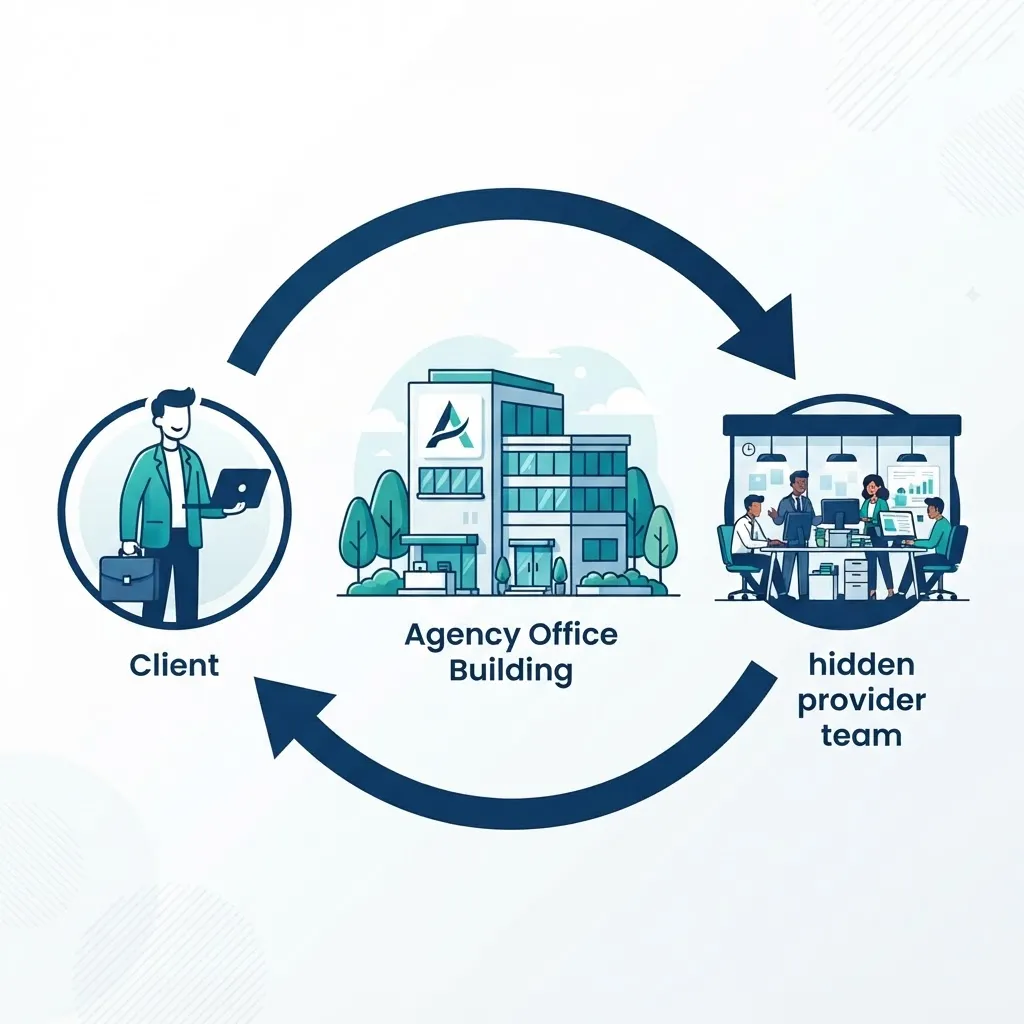
The operational flow follows a repeatable four-step cycle. Here is how it works in practice:
- The agency sells the service. The agency pitches SEO, PPC, or content marketing to its client at retail price and owns the contract.
- The agency briefs the white label provider. Goals, budgets, brand guidelines, and access credentials are passed to the fulfillment team through a project portal or account manager.
- The provider executes the work. Campaigns are built, content is written, links are earned, and ads are optimized — all documented under the agency's branding.
- The agency delivers branded results. White-labeled dashboards and reports go to the client with the agency's logo, and the agency handles all client communication.
In our experience, the agencies that succeed with this model treat the provider like an internal department: weekly syncs, shared Slack channels, and documented processes. The ones that fail treat it like a vending machine and get generic output back.
Which Services Are Commonly White Labeled?

Almost every digital marketing discipline can be white labeled, but some travel better than others. The most commonly resold services are:
- SEO — technical audits, on-page optimization, link building, and local SEO. This is the highest-volume white label category because results are process-driven and reportable.
- PPC management — Google Ads and Meta Ads campaign setup, optimization, and reporting.
- Content marketing — blog posts, landing pages, and email sequences produced to the agency's editorial standards.
- Social media management — calendars, creative, publishing, and community management.
- Web design and development — client sites built by the provider and delivered under the agency's name.
- Email marketing — automation builds, list segmentation, and campaign management.
Services that depend on deep, daily brand immersion — such as brand strategy or PR crisis management — white label poorly, because the provider's distance from the client becomes visible in the output. If you want to see how a full-service team structures these offerings, the digital marketing services at ZoneTechify show the typical scope agencies resell or fulfill.
White Label vs. In-House vs. Freelancers: Which Is Right for You?

The real decision most agency owners face is not whether white labeling is good — it is whether it beats the alternatives for a specific service line. Here is the honest comparison we walk clients through:
| Factor | White Label Partner | In-House Team | Freelancers |
|---|---|---|---|
| Upfront cost | Low | High | Low |
| Speed to launch | Days | Months | Days to weeks |
| Scalability | High | Limited by hiring | Inconsistent |
| Quality control | Medium to high | High | Variable |
| Brand consistency | High (branded output) | Highest | Low |
| Long-term margin | Medium | High at scale | Medium |
| Management overhead | Low | High | High |
The pattern we have observed: agencies under roughly 1 million dollars in annual revenue almost always net more profit with white label fulfillment, because a single senior SEO hire can cost 70,000 to 100,000 dollars per year before tools and management time. Above that revenue threshold, bringing your top one or two service lines in-house usually improves margin — while keeping secondary services white labeled.
What Are the Benefits of White Label Digital Marketing?

The advantages are concrete and measurable when the model is applied correctly:
- Expanded service menu without hiring. You can say yes to SEO, PPC, and content requests the same week a client asks, instead of losing the deal to a full-service competitor.
- Predictable wholesale economics. You buy at a fixed wholesale rate and sell at retail, typically earning a 30 to 50 percent gross margin on resold services.
- Faster delivery. Established providers have templated onboarding, so campaigns launch in days rather than the months an internal build-out requires.
- Reduced payroll risk. If a client churns, you cancel the wholesale engagement instead of carrying idle salaries.
- Access to specialists. Providers run dozens of similar campaigns simultaneously, so they spot algorithm shifts and ad platform changes faster than a generalist team can.
There is also a client-retention effect that rarely gets mentioned. Research consistently shows that the more services a client buys from one agency, the lower the churn — HubSpot's agency data has long indicated that multi-service clients stay significantly longer than single-service clients. White labeling is the fastest route to becoming that multi-service agency.
How Is White Label Marketing Priced?
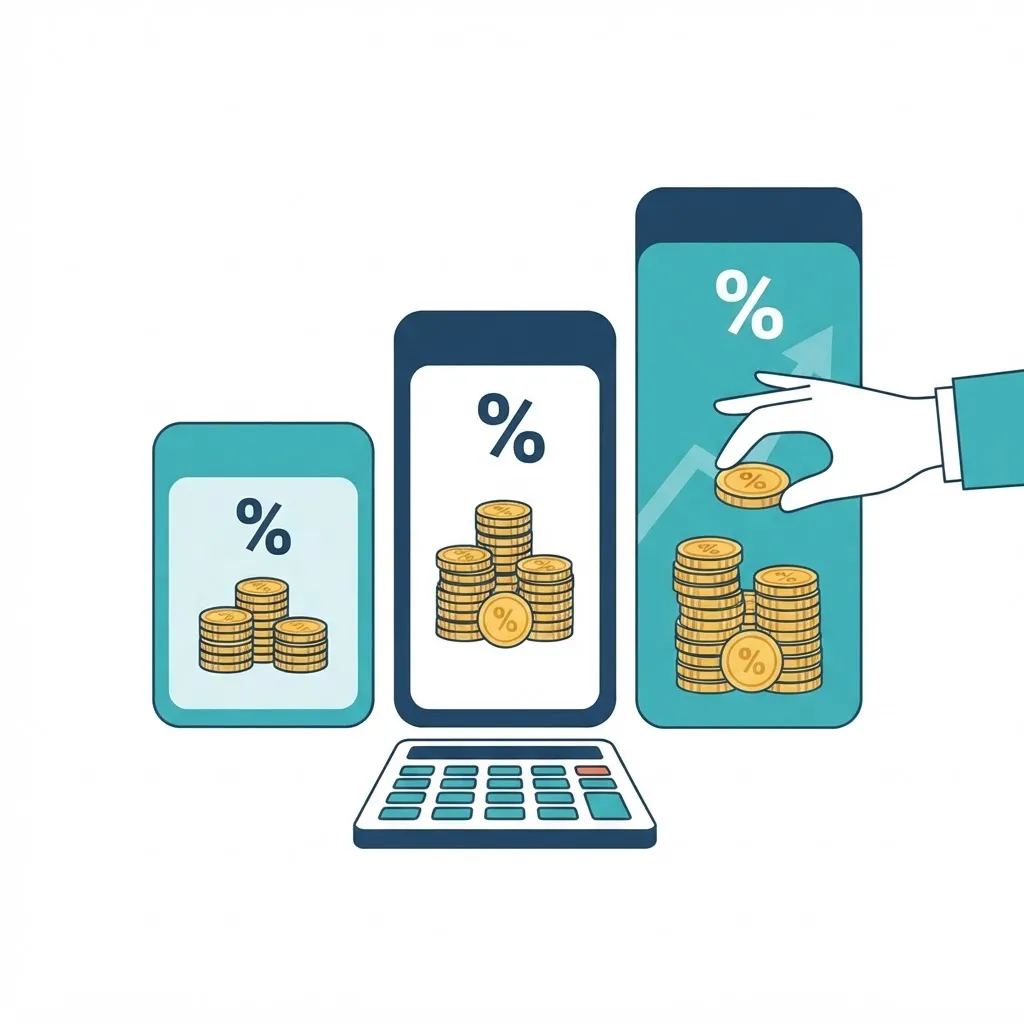
Pricing structure determines whether reselling is actually profitable, so understand the three dominant models before signing anything:
- Flat wholesale packages. You pay a fixed monthly fee per client — for example, 500 dollars wholesale for a local SEO package you resell at 1,000 to 1,500 dollars. This is the simplest model and the best starting point.
- Percentage of ad spend. Common for PPC, where the provider charges 10 to 20 percent of managed spend. Watch this one: your retail markup must sit on top without making the total fee uncompetitive.
- Hourly or project blocks. You purchase blocks of specialist hours and allocate them across clients. This offers flexibility but demands careful tracking to protect margin.
A practical rule from our own engagements: never resell at less than a 40 percent gross margin. Client communication, project management, and revision cycles will consume 15 to 20 percent of the retail price in your own labor, and anything thinner leaves no room for a difficult client or a redo.
How Do You Choose a White Label Partner?

Vetting the provider is the single highest-leverage decision in this entire model. Use this checklist before committing:
- Ask for anonymized case studies in your niche. A provider who has ranked twenty dental practices will outperform a generalist for your dental client.
- Test with one paid pilot project. Judge communication speed, revision quality, and deadline discipline on a small engagement before migrating a book of clients.
- Verify their reporting is truly brandable. Reports should carry your logo, your domain, and no metadata that reveals the provider.
- Confirm SLAs in writing. Turnaround times, revision limits, and escalation paths belong in the contract, not in a sales call.
- Check who owns the accounts. Ad accounts, analytics properties, and content should be owned by you or your client — never held hostage by the provider.
Teams like WebPeak publish their delivery standards openly, which is exactly the transparency you should demand from any fulfillment partner you evaluate.
Common Mistakes to Avoid

We have watched agencies burn client trust with avoidable errors. The four most damaging:
- Reselling without understanding the service. If you cannot explain why a campaign underperformed, the client will sense it. Learn the fundamentals of anything you resell.
- Skipping the quality review. Every deliverable should pass through your eyes before the client sees it. The provider's mistake becomes your reputation.
- Underpricing to win deals. Thin margins collapse the first time a client demands extra revisions or weekly calls.
- Relying on a single provider. Keep a vetted backup for every core service, because provider capacity problems become your delivery crisis overnight.
Key Takeaways
- White label digital marketing lets agencies resell SEO, PPC, content, social, and web services under their own brand while a hidden provider fulfills the work.
- Global digital ad spend exceeded 740 billion dollars in 2024 (Statista), driving persistent demand for outsourced fulfillment capacity.
- Typical reseller gross margins run 30 to 50 percent; a 40 percent floor protects profitability after management overhead.
- Agencies under roughly 1 million dollars in revenue generally profit more from white labeling than from hiring, since a senior specialist costs 70,000 to 100,000 dollars annually.
- The three standard pricing models are flat wholesale packages, percentage of ad spend, and hourly blocks.
- Multi-service clients churn less than single-service clients, making white labeling a retention strategy as much as a revenue strategy.
Frequently Asked Questions (FAQ)
What does white label mean in digital marketing?
White label means a specialized provider performs marketing work — like SEO or ad management — that another agency sells under its own brand. The end client never sees the provider. The agency keeps the client relationship and branding, while the provider handles fulfillment behind the scenes at a wholesale rate.
Is white label digital marketing legal and ethical?
Yes, it is legal and widely practiced across the industry. Ethically, the agency remains fully responsible for quality and results delivered to the client. Problems only arise when agencies misrepresent capabilities they cannot supervise, so responsible resellers review every deliverable and understand the services they sell.
How much does white label digital marketing cost?
Wholesale pricing varies by service. Local SEO packages typically run 300 to 800 dollars monthly, PPC management costs 10 to 20 percent of ad spend, and articles range from 50 to 300 dollars each. Agencies usually resell these at two to three times the wholesale rate.
Can a small agency use white label services?
Absolutely — small agencies benefit most. White labeling lets a two-person shop offer a full-service menu without payroll risk, launch new services in days, and compete with larger firms. Start with one service and one pilot client, then expand as your quality-control process matures.
What is the difference between white label and reseller programs?
They overlap heavily, but white label specifically means the deliverables carry your branding with the provider invisible. Some reseller programs disclose the original provider or use co-branding. In a true white label arrangement, reports, dashboards, and communication all appear to come exclusively from your agency.
How do I start offering white label marketing services?
Pick one high-demand service such as SEO or PPC, vet two or three providers with paid pilot projects, set retail pricing at a minimum 40 percent gross margin, and build a quality-review step before anything reaches clients. Sign written SLAs covering turnaround times and account ownership first.