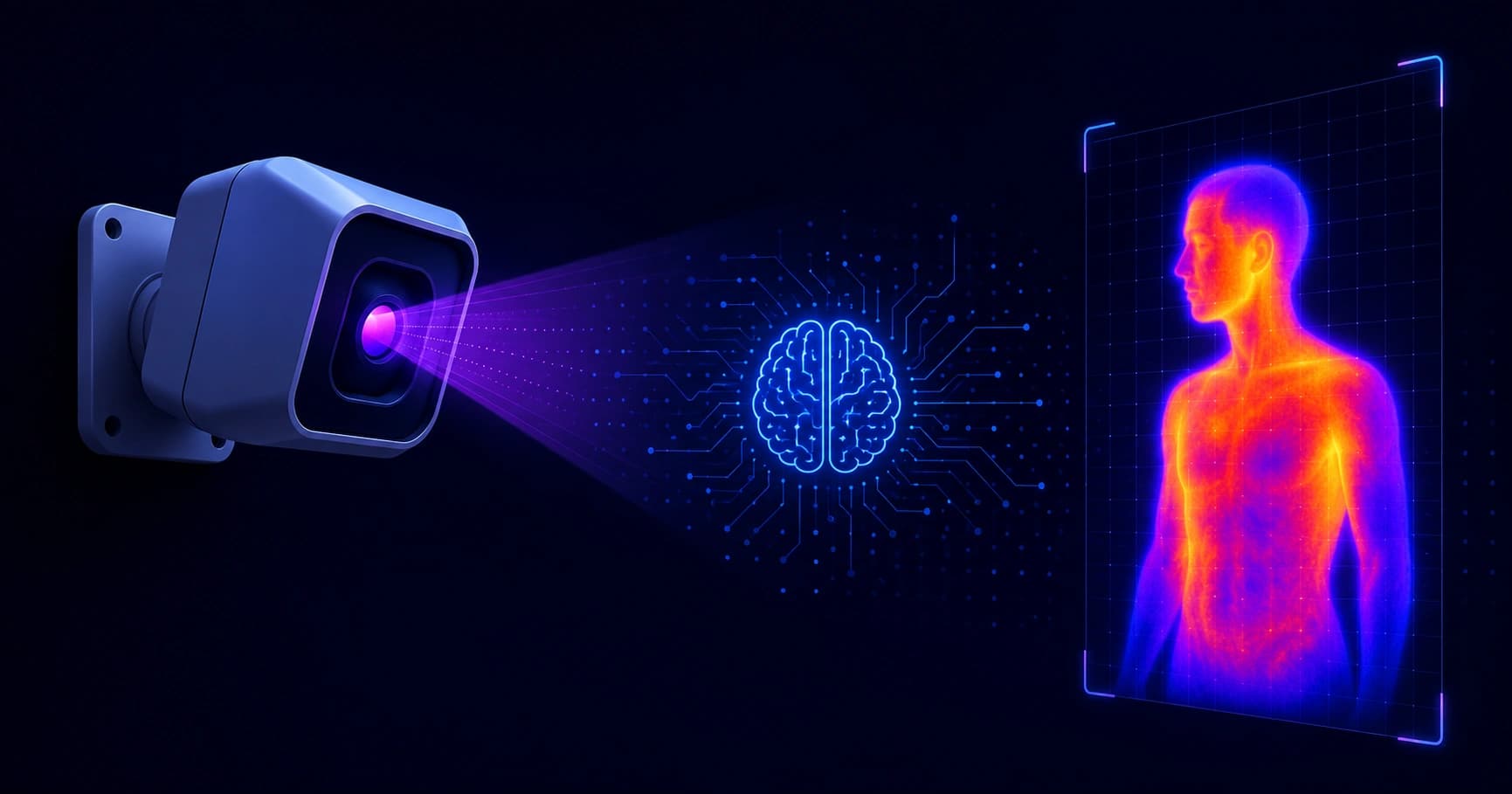
Discover how thermal sensor artificial intelligence works, where it is used, and how to deploy AI-powered thermal imaging for smarter detection and automation.
Thermal Sensor Artificial Intelligence
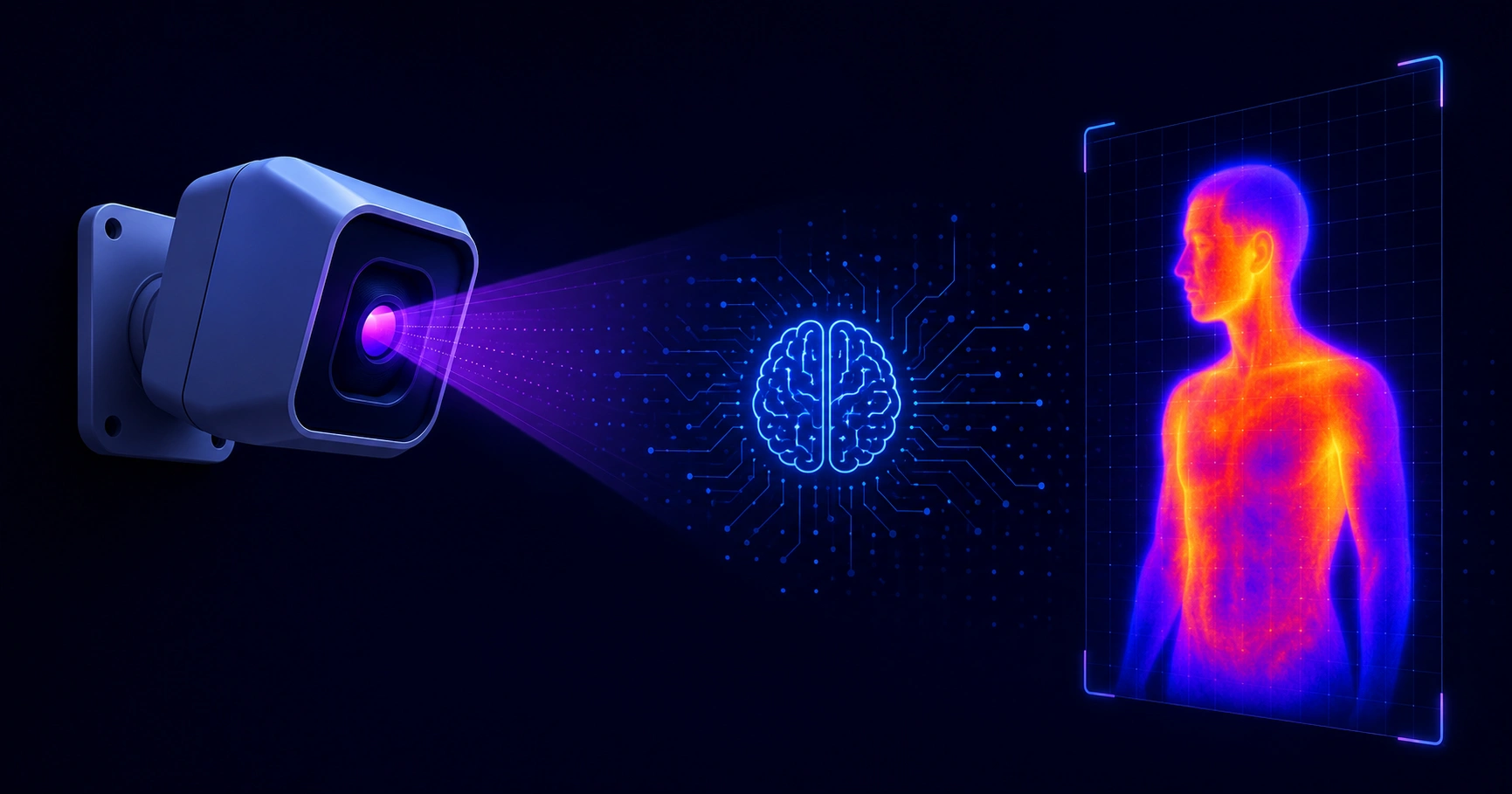
Thermal sensor artificial intelligence is quietly reshaping how machines see the world. Instead of relying on visible light, thermal sensors read heat, and when you pair that heat data with AI, you get systems that can detect a fever in a crowd, spot an overheating motor before it fails, or find a person in total darkness. This guide explains exactly how the technology works, where it delivers measurable value, and how to implement it without wasting budget on hype.
We have worked alongside engineering teams deploying thermal-plus-AI systems in manufacturing plants and security installations, so the guidance below reflects what actually happens in the field, not just theory.
Quick Answer: Thermal sensor artificial intelligence combines infrared heat-detecting sensors with machine learning models that interpret temperature patterns. The AI classifies objects, detects anomalies, and predicts failures from thermal data, enabling automated inspection, security, and health monitoring in darkness, smoke, or challenging conditions where standard cameras fail.
What Is Thermal Sensor Artificial Intelligence?
Thermal sensor artificial intelligence is the fusion of infrared thermography with machine learning. A thermal sensor captures the infrared radiation every object emits and converts it into a temperature map. The AI layer then analyzes that map to recognize objects, measure precise temperatures, and flag anomalies automatically.
Key definition: A thermal sensor is a device that detects infrared radiation (heat) and converts it into an electrical signal, producing a temperature image known as a thermogram. When AI processes these thermograms, it moves beyond simple visualization to genuine decision-making.
The difference matters. A raw thermal camera shows you a colorful heat picture, but a human still has to interpret it. Thermal sensor AI removes that bottleneck by learning what "normal" looks like and alerting you the instant something drifts outside expected thermal patterns.
How Thermal Sensors and AI Work Together
The pipeline is straightforward once you break it down into stages. Understanding each step helps you diagnose where accuracy problems come from.
The Four-Stage Pipeline
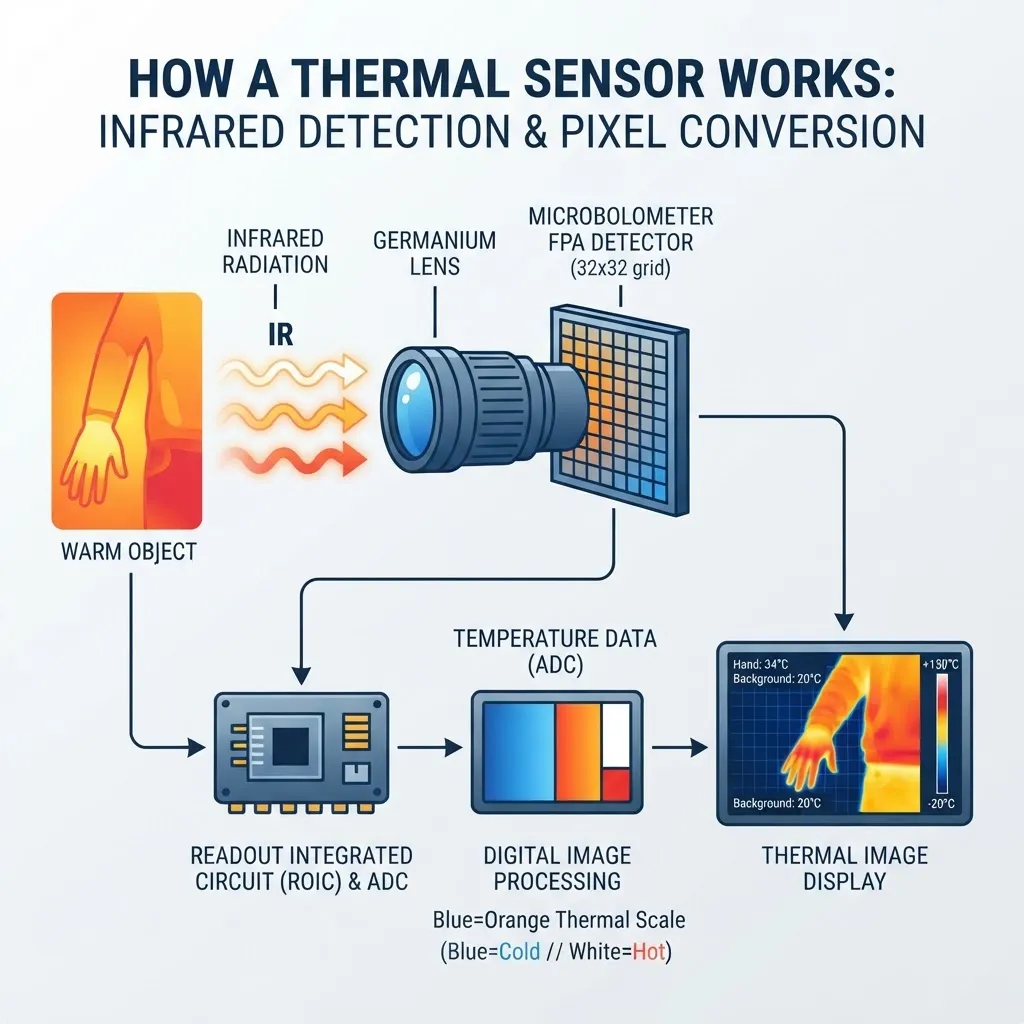
- Capture: The infrared sensor (typically a microbolometer array) detects heat and generates a thermogram, often at 8 to 60 frames per second.
- Preprocessing: Software calibrates temperature values, reduces noise, and normalizes the image so lighting and distance do not distort readings.
- Inference: A trained neural network, usually a convolutional model, classifies objects, draws bounding boxes, and measures temperature within regions of interest.
- Action: The system triggers an alert, logs data, or feeds a control loop, for example shutting down a machine that crosses a temperature threshold.
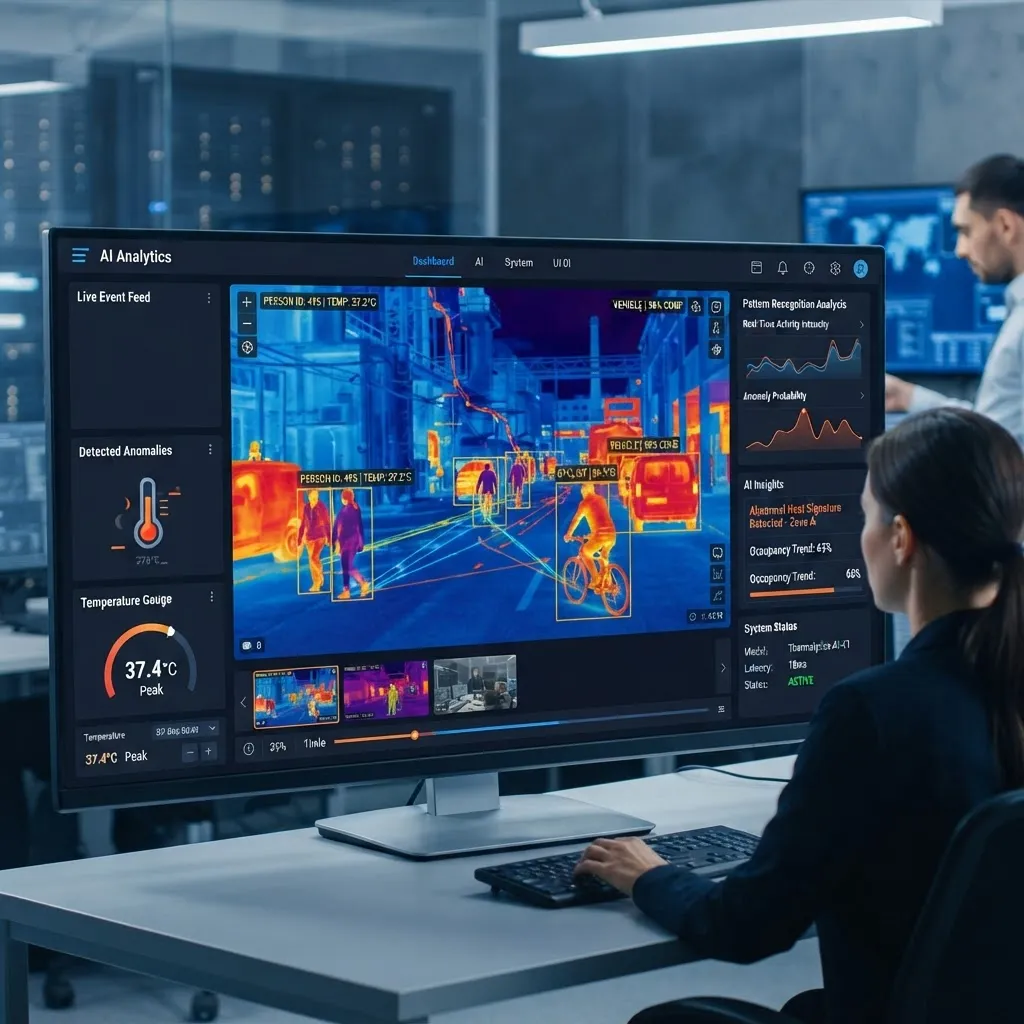
Because thermal data has far fewer visual details than an RGB photo, models can run efficiently on edge devices. This is why thermal AI often works on low-power hardware without a cloud connection, which improves privacy and reduces latency.
Why Thermal Data Is Ideal for AI
Thermal imaging solves problems standard cameras cannot. Heat is a physical property that does not depend on ambient light, so thermal sensor AI performs consistently in total darkness, fog, smoke, and glare.
There is also a privacy advantage that is easy to overlook. Because thermal images show heat outlines rather than identifiable faces, they enable people-counting and occupancy analytics without capturing personal biometric detail, which simplifies compliance in regions with strict data rules.
From a machine learning standpoint, thermal images are lower in dimensionality and contain less background clutter. This frequently leads to faster training and smaller models compared to full-color computer vision, though it also means datasets are harder to source and label.
Real-World Applications Across Industries
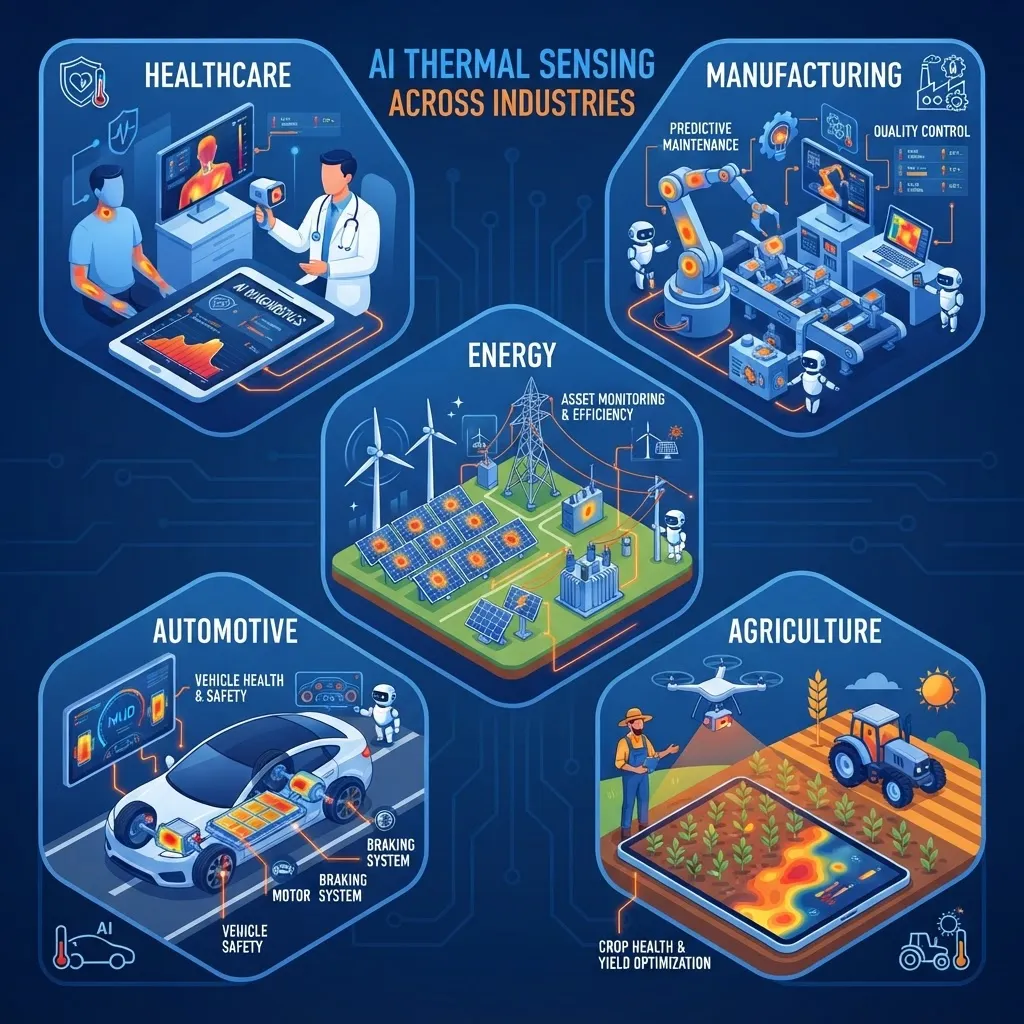
Thermal sensor artificial intelligence is already generating measurable returns in several sectors. According to MarketsandMarkets research, the infrared thermal imaging market is projected to grow from roughly USD 4.1 billion in 2024 toward USD 5.9 billion by 2029, and AI-driven analytics is a major driver of that expansion.
Manufacturing and Predictive Maintenance
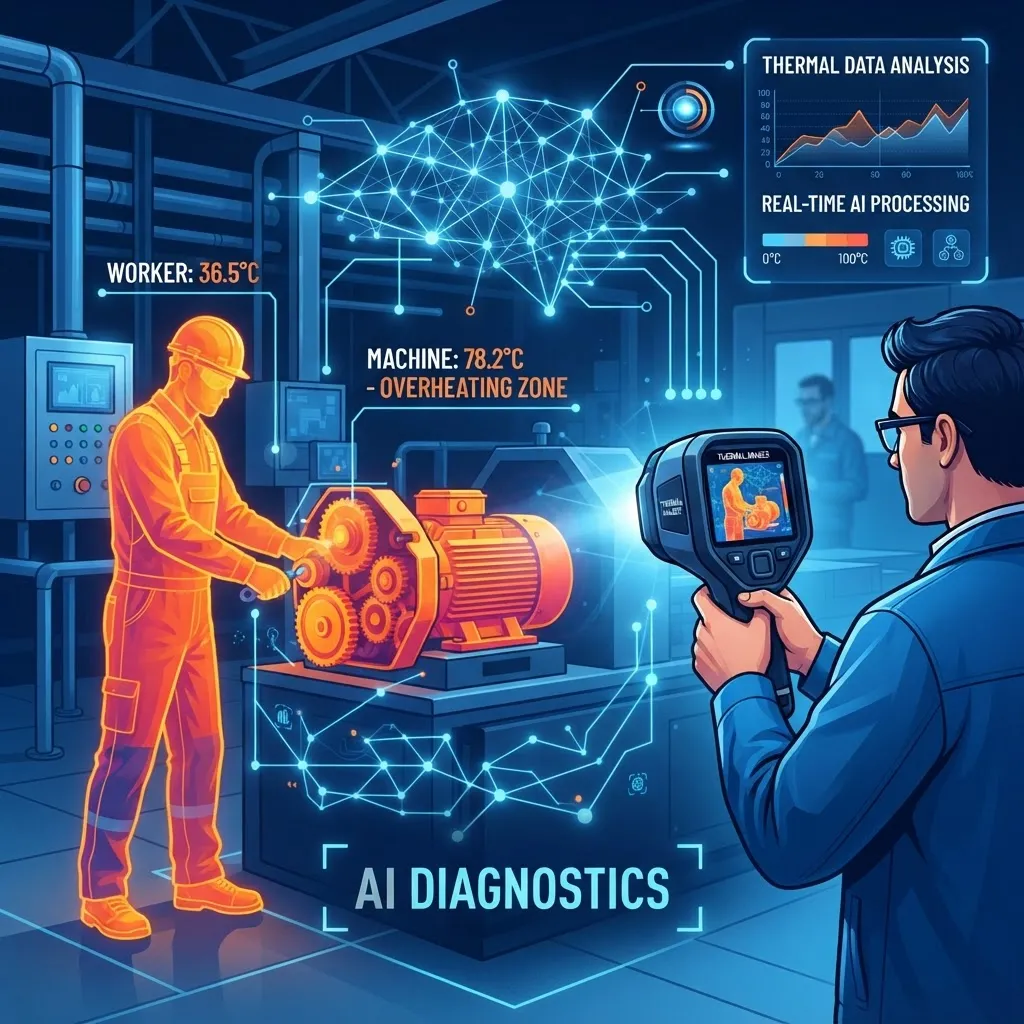
Overheating is one of the earliest signs of mechanical or electrical failure. Thermal AI continuously scans motors, bearings, and switchgear, learning each asset's normal thermal signature and flagging deviations before a breakdown occurs. The U.S. Department of Energy has reported that predictive maintenance programs can reduce maintenance costs by 25 to 30 percent and cut unplanned downtime significantly.
Healthcare and Fever Screening
During the COVID-19 period, AI-assisted thermal cameras became a common tool for elevated skin-temperature screening in airports and offices. Modern systems use AI to isolate the inner-eye region, the most reliable indicator of core temperature, improving accuracy over crude full-face averaging.
Security and Surveillance
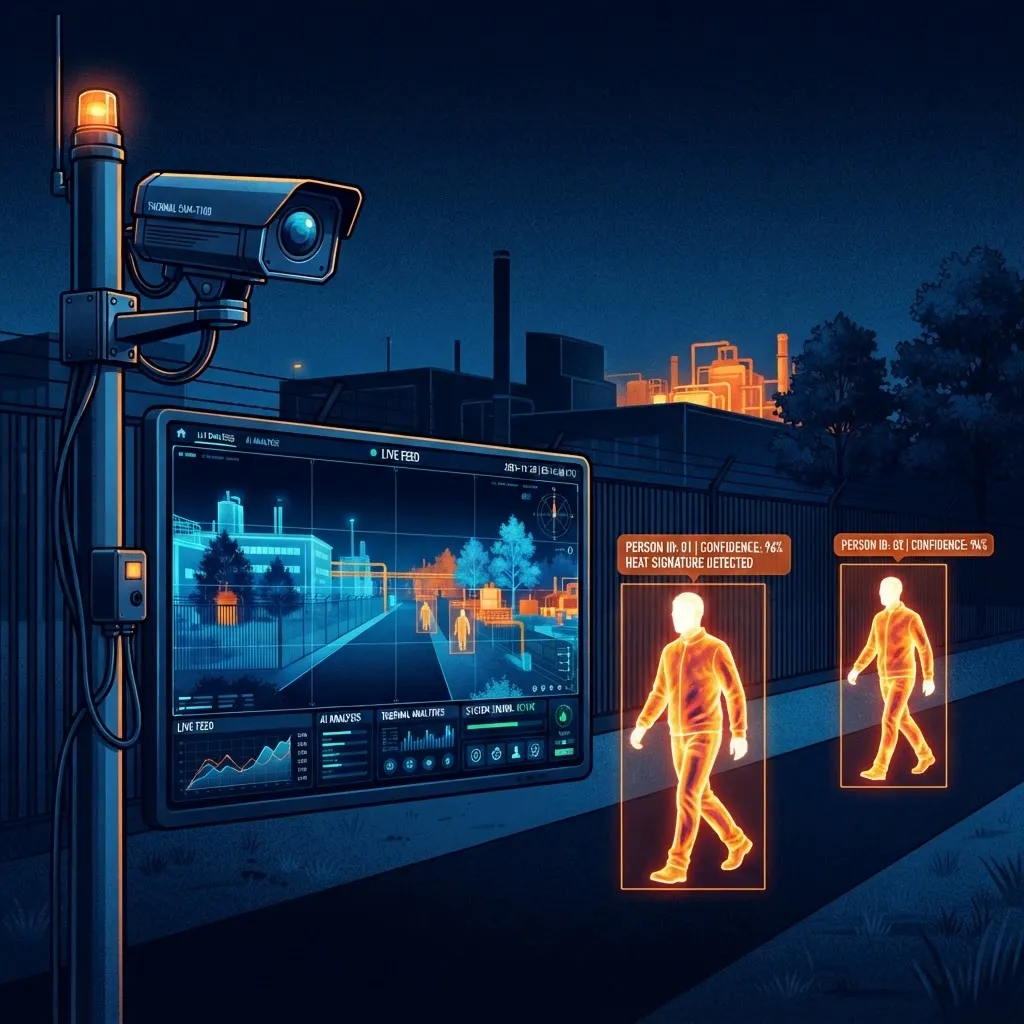
Thermal AI detects intruders in complete darkness and ignores headlights or reflections that fool visible cameras. This makes it a favorite for perimeter security, critical infrastructure, and wildlife-protection projects.
Automotive and Autonomous Systems
Thermal sensors help self-driving and driver-assistance systems detect pedestrians and animals at night far earlier than headlights allow, adding a critical safety layer that complements radar and lidar.
Energy and Building Efficiency
AI-driven thermal audits pinpoint heat loss, insulation gaps, and solar-panel defects across large facilities in minutes, work that once required manual inspection.
Predictive Maintenance: The Highest-ROI Use Case
If you only adopt thermal sensor AI for one purpose, predictive maintenance usually delivers the fastest payback. A single prevented failure on a production line can cover the entire cost of a monitoring installation.
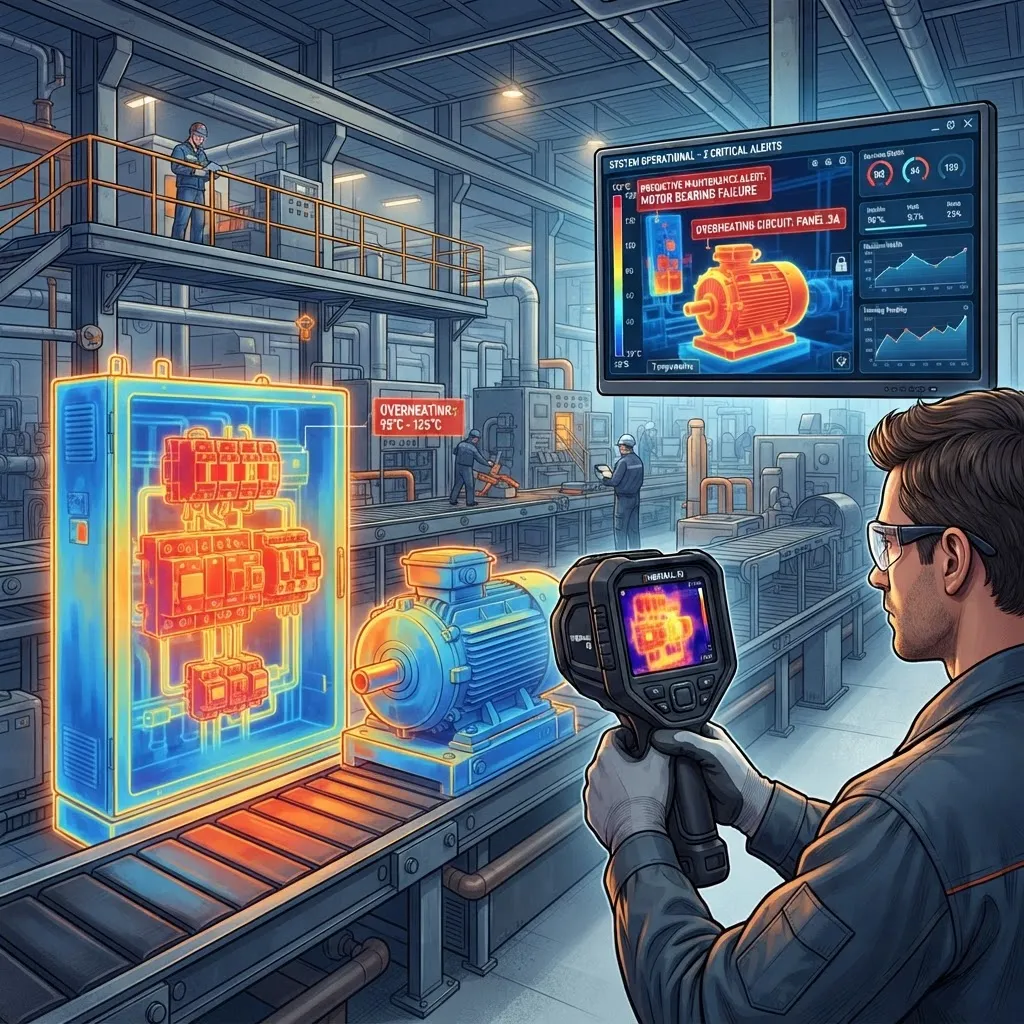
The reason is compounding value. Traditional maintenance is either reactive (fix it after it breaks) or scheduled (replace parts on a fixed calendar whether or not they need it). Thermal AI enables condition-based maintenance, where you act only when real thermal evidence shows a component degrading. Teams building custom monitoring platforms often pair this with a data dashboard, and specialists in AI services at WebPeak or ZoneTechify's artificial intelligence solutions can help design the model and pipeline around your specific assets.
Thermal AI vs. Traditional Camera AI
Choosing between thermal and visible-light computer vision depends on your environment and goal. The comparison below highlights the practical trade-offs.
| Factor | Thermal Sensor AI | Traditional Camera AI |
|---|---|---|
| Works in darkness | Yes | No (needs light) |
| Sees through smoke or fog | Partially | No |
| Reads exact temperature | Yes | No |
| Facial recognition detail | No | Yes |
| Privacy friendly | Yes | Limited |
| Hardware cost | Higher | Lower |
| Dataset availability | Limited | Abundant |
The takeaway: thermal AI wins when temperature, darkness, or privacy matter, while traditional camera AI wins when fine visual detail and low cost are priorities. Many advanced systems fuse both.
How to Implement Thermal Sensor AI: A Practical Roadmap
Deploying thermal AI successfully is less about the model and more about disciplined data and calibration. Follow these steps to avoid the most common failures.
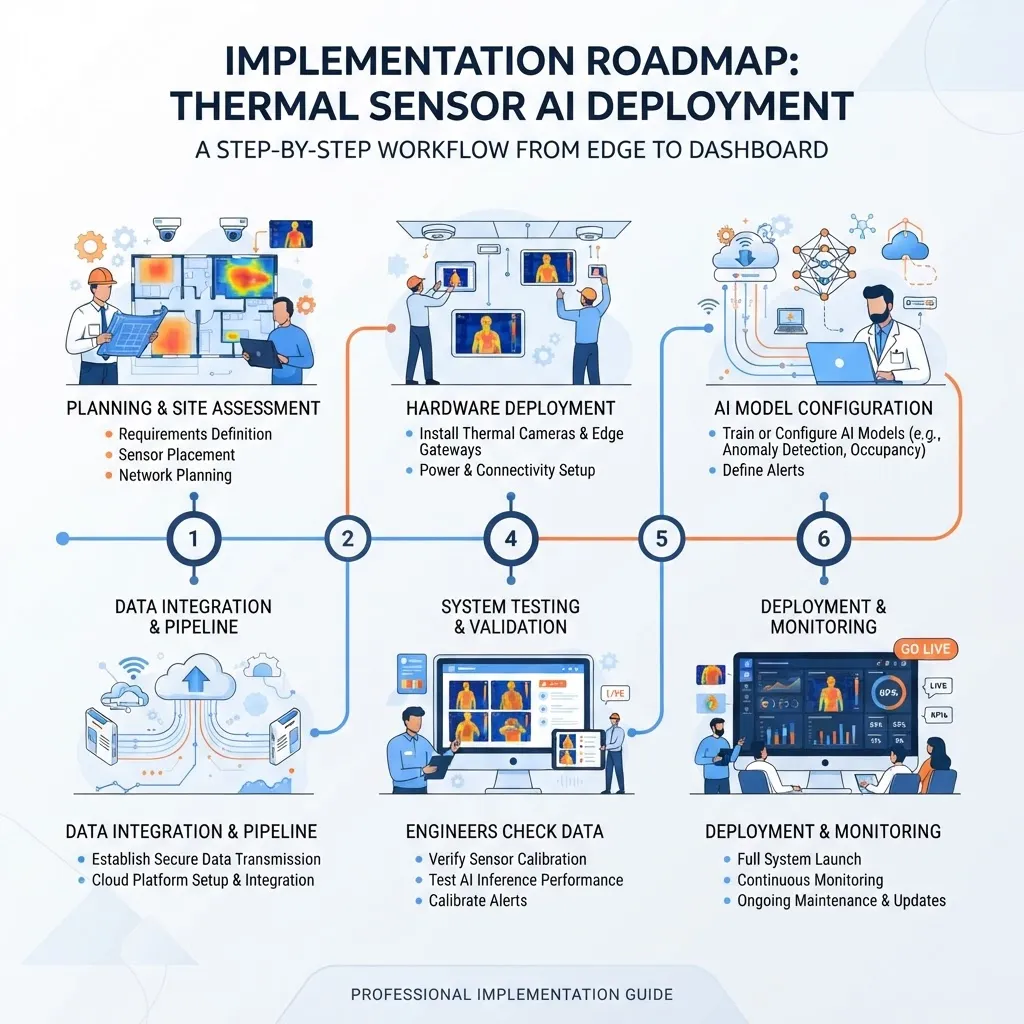
- Define the decision, not the demo. Decide the exact action the AI must trigger, such as "alert when a bearing exceeds its baseline by 15 degrees." This shapes every later choice.
- Choose the right sensor resolution. Higher pixel counts detect smaller or more distant targets. Match resolution to the smallest object you must identify.
- Calibrate rigorously. Emissivity, distance, and reflected temperature all affect readings. Poor calibration produces confident but wrong AI outputs.
- Build a labeled thermal dataset. Collect real footage across seasons, times, and conditions. Thermal datasets are scarce, so this is often the hardest step.
- Train and validate on edge conditions. Test against the difficult cases: cold starts, reflective surfaces, and crowded scenes.
- Deploy on the edge where possible. Local inference reduces latency and protects privacy.
- Monitor and retrain. Thermal signatures drift as equipment ages, so schedule periodic retraining.
Key Terms Defined
- Thermogram: A visual temperature map produced by a thermal sensor.
- Microbolometer: The uncooled sensor element in most commercial thermal cameras.
- Emissivity: How efficiently a surface emits infrared energy, a critical calibration factor.
- Edge inference: Running the AI model directly on the device rather than in the cloud.
Key Takeaways
- Thermal sensor AI merges infrared heat detection with machine learning to classify objects and detect anomalies automatically.
- It performs in darkness, smoke, and glare where standard cameras fail, and is inherently more privacy friendly.
- The infrared thermal imaging market is projected to reach roughly USD 5.9 billion by 2029, driven heavily by AI analytics.
- Predictive maintenance is typically the highest-ROI use case, with maintenance cost reductions of 25 to 30 percent reported.
- Accurate calibration and a quality thermal dataset matter more than model complexity.
For more expert guides on AI and emerging technology, visit ZoneTechify and WebPeak.
Frequently Asked Questions (FAQ)
What is thermal sensor artificial intelligence used for?
It is used for predictive maintenance, fever screening, night-time security, autonomous vehicle safety, and building energy audits. The AI reads heat patterns from infrared sensors and automatically detects anomalies, measures temperatures, or identifies people and objects in conditions where ordinary cameras cannot see clearly.
Can thermal AI cameras work in complete darkness?
Yes. Thermal sensors detect heat, not visible light, so they work perfectly in total darkness. This is why thermal sensor AI is trusted for perimeter security, search and rescue, and wildlife monitoring, delivering reliable detection at night, through glare, and even partially through smoke or light fog.
Is thermal imaging AI a privacy risk?
Generally less than standard cameras. Thermal images show heat outlines rather than detailed faces, so people-counting and occupancy analytics can run without capturing biometric facial data. This makes thermal sensor AI a strong choice for privacy-sensitive spaces, though local edge processing further strengthens data protection.
How accurate is AI-based thermal temperature detection?
Accuracy depends on calibration. With proper emissivity, distance, and reflected-temperature settings, quality systems reach roughly plus or minus 0.3 to 0.5 degrees Celsius. Poor calibration, however, produces confident but incorrect readings, so professional setup and periodic recalibration are essential for dependable results in real deployments.
Do I need the cloud to run thermal sensor AI?
No. Because thermal images are low in visual complexity, models run efficiently on edge devices without a cloud connection. Edge inference lowers latency, keeps data local for privacy, and enables real-time alerts, making thermal AI practical even in remote sites with limited internet connectivity.
How much does a thermal sensor AI system cost?
Costs vary widely with resolution and scale. Entry-level thermal AI cameras start in the low thousands, while high-resolution industrial arrays cost significantly more. For most businesses, a single prevented equipment failure through predictive maintenance offsets the investment quickly, making ROI the more useful metric than upfront price.