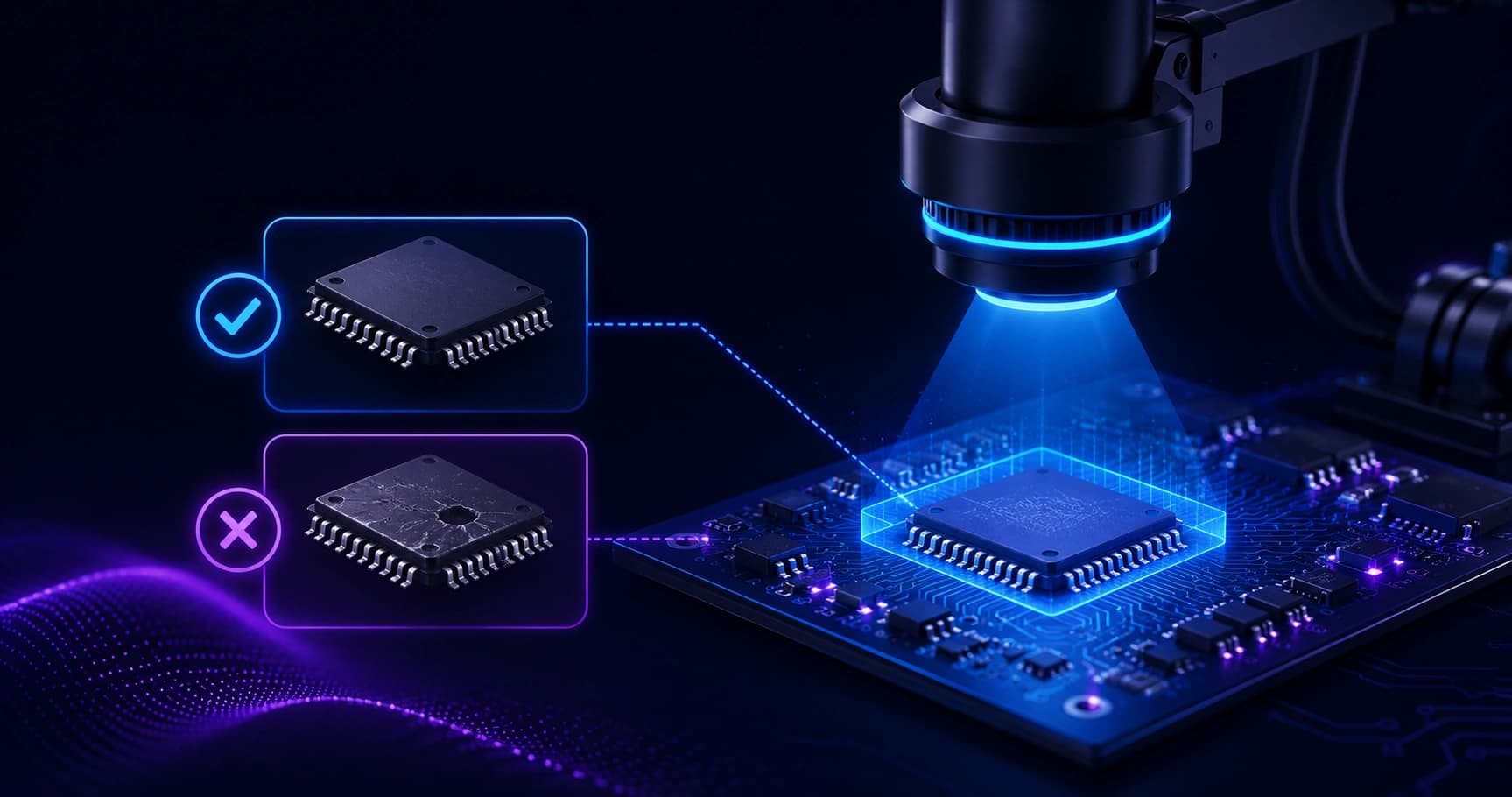
Learn how artificial intelligence detects counterfeit electronic components using computer vision, machine learning, and X-ray analysis to protect modern supply chains.
Counterfeit Component Detection Using Artificial Intelligence
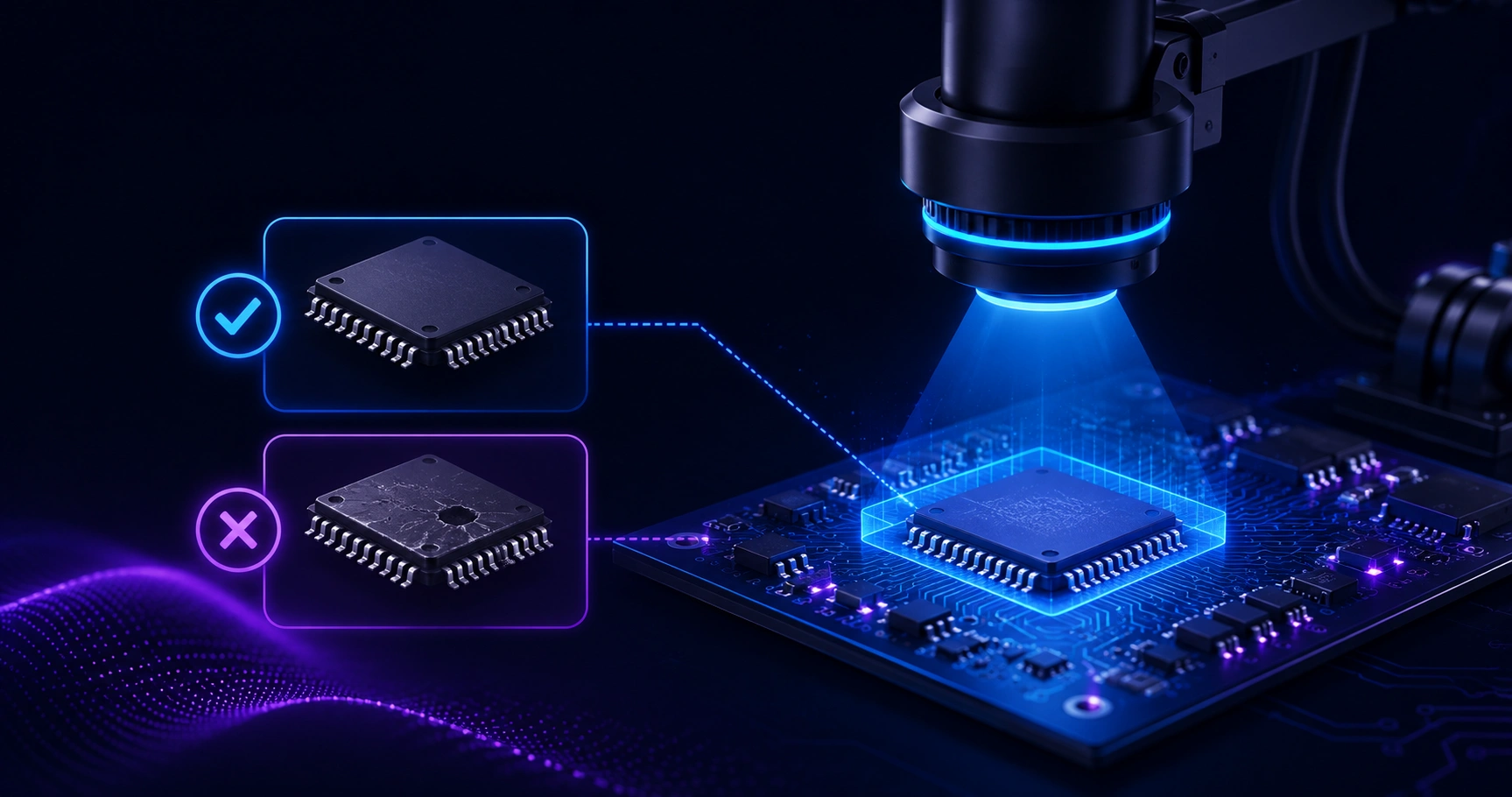
Counterfeit electronic components are not just a manufacturing nuisance. They are a genuine threat to aerospace systems, medical devices, defense hardware, and consumer electronics. A single fake capacitor or relabeled microcontroller can trigger field failures that cost millions and, in critical systems, put lives at risk. Artificial intelligence has become the most reliable line of defense against this problem, because it can inspect components faster, more consistently, and at a finer level of detail than any human technician working under a microscope.
In this guide, we explain exactly how AI-based counterfeit component detection works, why it outperforms traditional methods, and how manufacturers and distributors can deploy it. Everything here reflects how detection actually runs on real inspection lines today, not marketing theory.
Quick Answer: Counterfeit component detection using artificial intelligence combines computer vision, machine learning, and imaging like X-ray and acoustic scans to compare parts against authentic references. AI flags relabeled, recycled, or cloned components by spotting anomalies in markings, packaging, and internal structure with far greater speed and accuracy than manual inspection.
What Counterfeit Components Actually Are
A counterfeit component is any electronic part that is misrepresented in origin, grade, or authenticity. This definition matters because counterfeiting takes many forms, and each requires a different detection strategy.
The most common types include:
- Recycled parts pulled from scrapped boards, cleaned, and resold as new.
- Relabeled parts with sanded-off markings replaced by higher-grade or higher-value part numbers.
- Cloned parts manufactured illegally to mimic a genuine design without meeting its specifications.
- Overproduced parts made in unauthorized factory runs outside contractual limits.
- Out-of-spec parts that failed quality control but were diverted into the gray market.
According to the Semiconductor Industry Association, counterfeiting costs U.S. semiconductor companies more than $7.5 billion in revenue annually. That figure only captures direct losses, not the downstream cost of failures, recalls, and reputational damage.
Why Traditional Detection Methods Fall Short
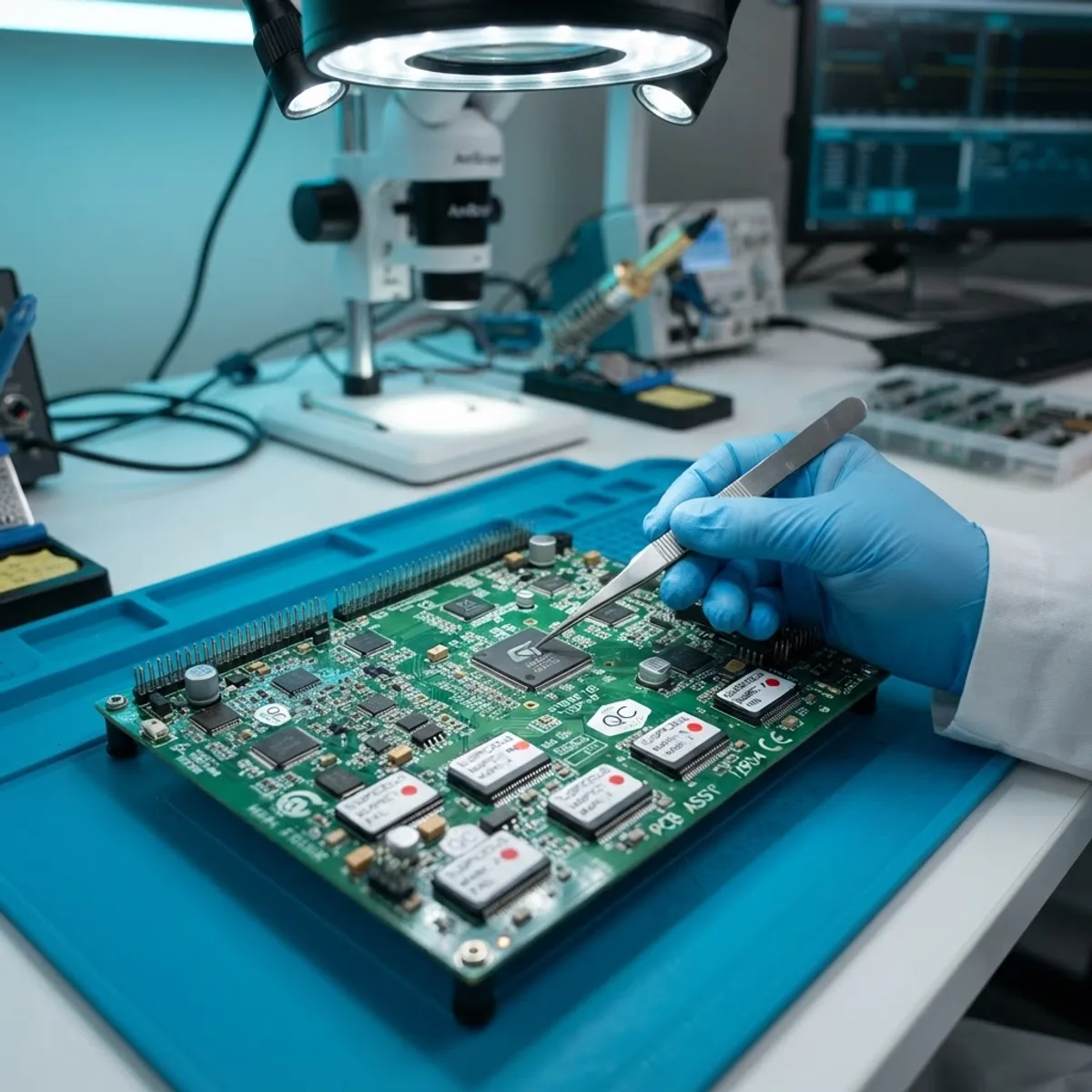
Manual and rules-based inspection cannot keep pace with modern counterfeiting. Human inspectors rely on visual comparison, sample testing, and experience, but counterfeiters have grown sophisticated enough to fool the naked eye.
Three limitations stand out:
- Human fatigue and inconsistency. An inspector reviewing thousands of parts per shift will miss subtle defects that appear late in the day.
- Sampling gaps. Traditional testing often inspects a small statistical sample, so counterfeits mixed into a reel can slip through untested.
- Evolving fakes. Rules written for last year's counterfeits do not catch this year's improved forgeries.
Artificial intelligence solves these problems because it does not tire, it can inspect every single unit rather than a sample, and it learns continuously from new counterfeit examples. This is where a well-built artificial intelligence solution changes the economics of quality control.
How AI Detects Counterfeit Components
AI detection works by teaching models what authentic components look like, then flagging anything that deviates. The process combines several imaging methods with machine learning models trained on large datasets of genuine and fake parts.

Computer Vision and Surface Inspection
Computer vision is the front line of AI counterfeit detection. High-resolution cameras capture the component surface, and a convolutional neural network analyzes markings, font consistency, logo geometry, laser etching depth, and texture.
The model detects red flags that humans miss: microscopic sanding marks left by relabeling, inconsistent character spacing in part numbers, or paint fill used to hide resurfacing. Because the network compares each part against thousands of authentic reference images, it can assign a confidence score to every unit in seconds.
Machine Learning Anomaly Detection
Machine learning models identify statistical anomalies that indicate tampering. Rather than looking only for known counterfeit signatures, unsupervised learning flags parts that simply do not match the distribution of genuine components.
This matters because it catches novel counterfeits the model has never explicitly seen. A part with an unusual solder profile, unexpected weight, or off-spec dimensional reading gets flagged for deeper review even without a matching fake in the training set.

X-Ray and Internal Structure Analysis
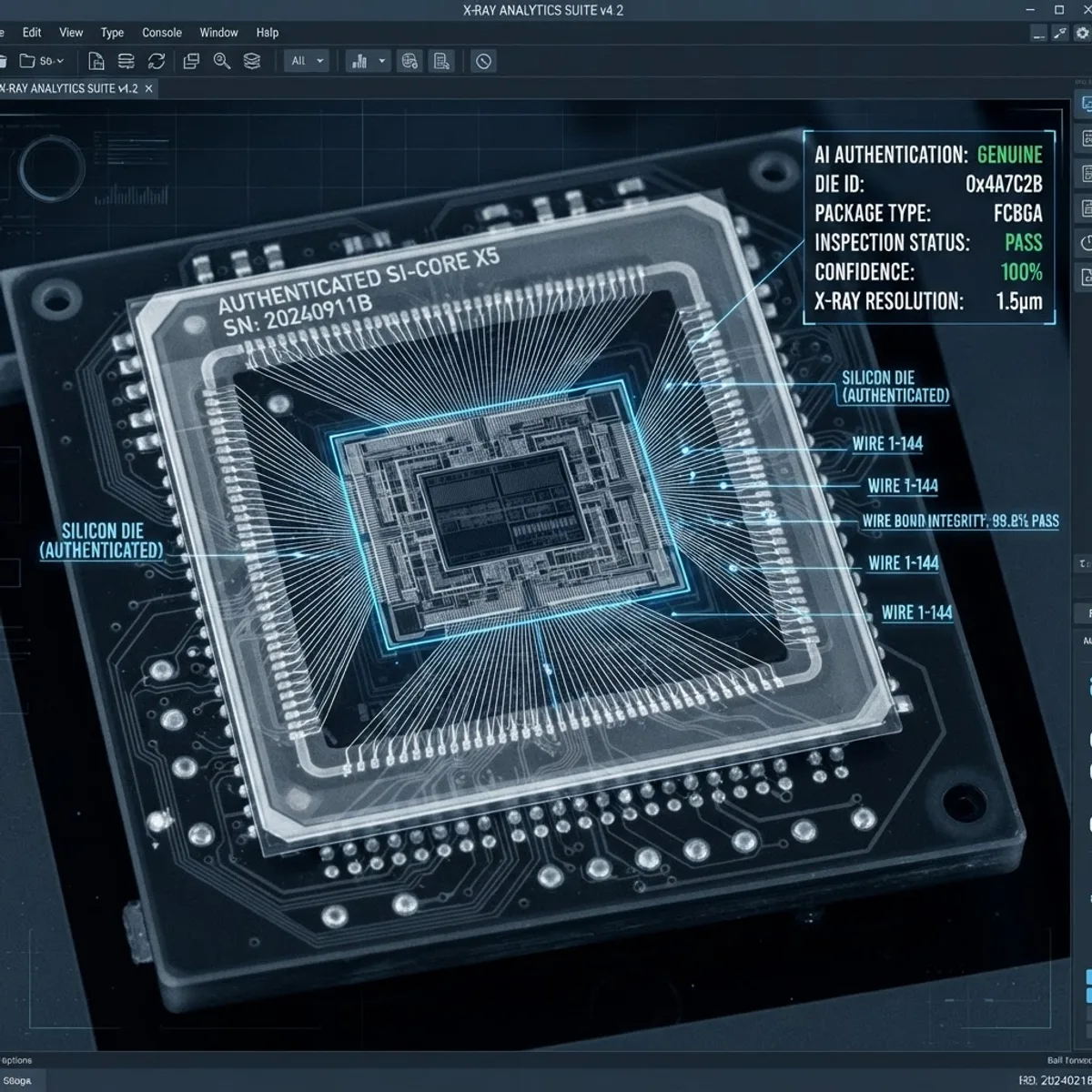
AI-assisted X-ray imaging reveals what surface inspection cannot. Counterfeiters can perfectly replicate external markings, but the internal die, bond wires, and lead frame are far harder to fake.
AI models trained on radiographic images compare the internal layout against the expected geometry for that part number. If a supposed high-end microcontroller contains a smaller die or missing bond wires, the model detects the mismatch immediately. This method is decisive for cloned and empty-package counterfeits.
Deep Learning Classification
Deep learning ties every signal together into a single verdict. A trained classification network ingests surface images, X-ray data, dimensional measurements, and electrical test results, then outputs a clear authentic-versus-counterfeit decision with a confidence percentage.
The strength of deep learning is fusion: no single feature has to be conclusive. A part with slightly suspicious markings but perfect internal structure may pass, while one with borderline signals across multiple dimensions gets rejected. This mirrors how expert engineers reason, but at machine speed and scale.

AI vs. Traditional Counterfeit Detection
The table below compares the two approaches across the factors that matter most to quality and procurement teams.
| Factor | Traditional Inspection | AI-Based Detection |
|---|---|---|
| Coverage | Sample-based | 100 percent of units |
| Speed | Slow, manual | Real-time, automated |
| Consistency | Varies by inspector | Uniform every time |
| Novel counterfeits | Often missed | Flagged via anomaly detection |
| Internal defects | Requires manual X-ray review | Automated X-ray analysis |
| Learning over time | Manual retraining | Continuous model improvement |
| Cost per unit at scale | High | Low |
Building an AI Counterfeit Detection Workflow
A practical detection pipeline moves each component through staged AI checks before a verdict. The goal is to filter cheaply first and reserve expensive imaging for parts that need it.
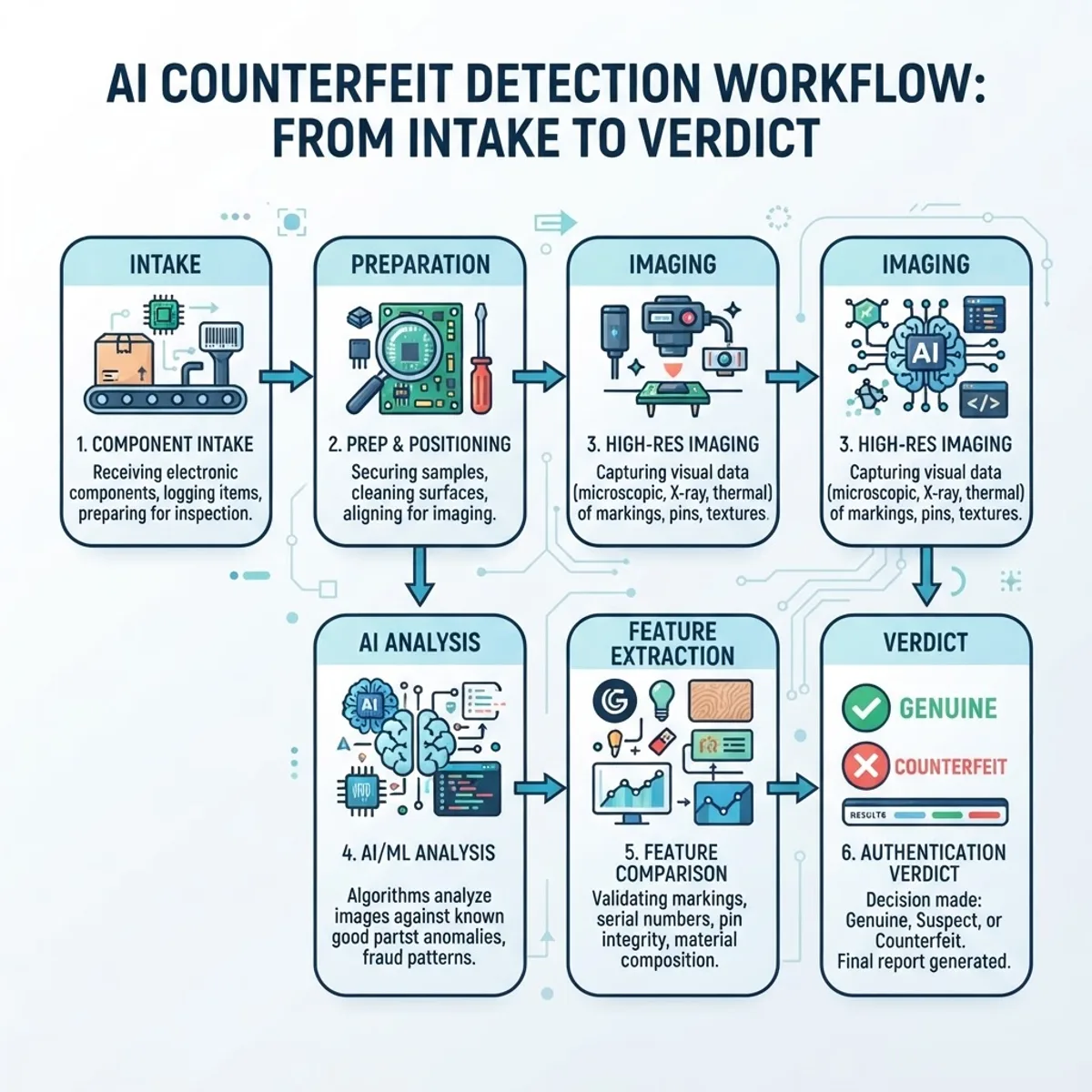
A typical workflow follows these steps:
- Intake and traceability. Log the component with its supplier, lot code, and date code to establish provenance.
- Automated visual scan. Run computer vision surface inspection on every unit to catch obvious relabeling and resurfacing.
- Anomaly screening. Apply machine learning to flag units that deviate statistically from authentic references.
- Deep imaging on flagged parts. Send suspicious units to AI-assisted X-ray or acoustic microscopy for internal verification.
- Fusion and verdict. Combine all signals in a deep learning classifier to produce a final authenticity score.
- Feedback loop. Add confirmed counterfeits back into the training set so the model keeps improving.
Organizations that want to integrate this kind of pipeline into their operations often partner with specialists in AI and automation services to build models tuned to their specific component mix.
Real-World Impact and Accuracy
Modern AI vision systems routinely achieve detection accuracy above 95 percent on trained component categories. Peer-reviewed research on convolutional neural networks applied to counterfeit IC detection has reported accuracy exceeding 98 percent when surface imaging is combined with internal structural analysis.
The practical payoff is measurable. Distributors deploying automated visual inspection report inspecting entire reels rather than statistical samples, cutting escaped counterfeits dramatically while reducing inspection labor. In high-reliability sectors like aerospace and medical devices, that shift from sampling to full coverage is the difference between catching a fake and shipping it into a critical system.
Limitations You Should Plan For
AI detection is powerful but not infallible, and honest deployment accounts for its limits. Models are only as good as their training data, so a part number the model has never seen may produce unreliable scores until reference data is collected.
Counterfeiters also adapt, which means models require periodic retraining to stay ahead. Finally, edge cases like legitimately reworked parts can trigger false positives, so human experts should always review borderline verdicts rather than trusting automation blindly. The strongest programs treat AI as a force multiplier for skilled engineers, not a replacement.

Key Takeaways
- Counterfeit components cost the semiconductor industry over $7.5 billion annually, making detection a financial and safety priority.
- AI inspects 100 percent of units rather than statistical samples, closing the biggest gap in traditional methods.
- Computer vision, machine learning anomaly detection, X-ray analysis, and deep learning classification work together for reliable verdicts.
- Detection accuracy commonly exceeds 95 percent and can surpass 98 percent when surface and internal analysis are combined.
- Continuous retraining and human review of borderline cases keep detection ahead of evolving counterfeits.
Frequently Asked Questions (FAQ)
How does AI detect counterfeit electronic components?
AI captures high-resolution surface images, X-ray scans, and measurements of each component, then compares them against authentic references using computer vision and machine learning. It flags relabeled, recycled, or cloned parts by detecting anomalies in markings, dimensions, and internal die structure with high accuracy.
Is AI counterfeit detection more accurate than manual inspection?
Yes. AI inspects every single unit instead of a small sample, never tires, and applies identical criteria to each part. Trained models regularly exceed 95 percent accuracy, catching subtle sanding marks, font inconsistencies, and internal mismatches that human inspectors working under time pressure frequently miss.
What types of counterfeit components can AI identify?
AI can identify recycled parts, relabeled parts with altered markings, cloned components that mimic genuine designs, overproduced units, and out-of-spec parts diverted from failed batches. By fusing surface imaging with X-ray internal analysis, it detects both external forgery and hidden structural fakes reliably.
Can AI catch counterfeits it has never seen before?
Yes, through unsupervised anomaly detection. Instead of matching only known counterfeit signatures, the model learns the statistical profile of authentic components and flags anything that deviates. This allows it to identify novel forgeries that were never included in its original training dataset for further review.
Does AI counterfeit detection replace human experts?
No. AI handles high-volume, high-speed inspection and flags suspicious units, but skilled engineers still review borderline verdicts and confirmed rejections. The best programs pair AI's consistency and scale with human judgment on edge cases like legitimately reworked parts, avoiding both missed fakes and false rejections.
Counterfeit component detection using artificial intelligence is no longer experimental. It is a proven, scalable defense that every serious electronics supply chain should adopt. To explore building or integrating detection into your workflow, visit ZoneTechify or WebPeak for expert guidance.