
A clear, research-backed guide to Ideon AI in 2026: what Ideon Technologies actually does, how cosmic-ray muon tomography works, and where AI sits in its REVEAL platform.
What is Ideon AI? Everything You Need to Know in 2026
Search for "Ideon AI" and you will find at least three unrelated companies wearing the same name. Only one of them owns the ideon.ai domain, and it is not a chatbot startup. It is Ideon Technologies, a Canadian deep tech company that uses subatomic particles born in supernova explosions to image rock a kilometre below the surface. This guide separates the products, explains the science in plain language, and shows exactly where artificial intelligence fits in.
Quick Answer: Ideon AI usually refers to Ideon Technologies, the Canadian subsurface intelligence company at ideon.ai. It combines cosmic-ray muon tomography with AI-driven multiphysics modelling in its REVEAL platform to produce 3D density maps of deep rock, helping mining companies locate critical minerals while drilling far fewer holes.
What Ideon AI Actually Is
Ideon Technologies grew out of TRIUMF, Canada's national particle physics laboratory, and is the world pioneer in commercial cosmic-ray muon tomography. Three definitions make the rest of this article easy.
A muon is a heavy, naturally occurring subatomic particle created when cosmic rays strike the upper atmosphere. Muons travel through solid rock in straight lines, and denser rock absorbs more of them.
Tomography means reconstructing a 3D interior from many directional measurements, the same principle behind a medical CT scan.
Subsurface intelligence is Ideon's term for converting those measurements into decision-ready geological models instead of raw data files.
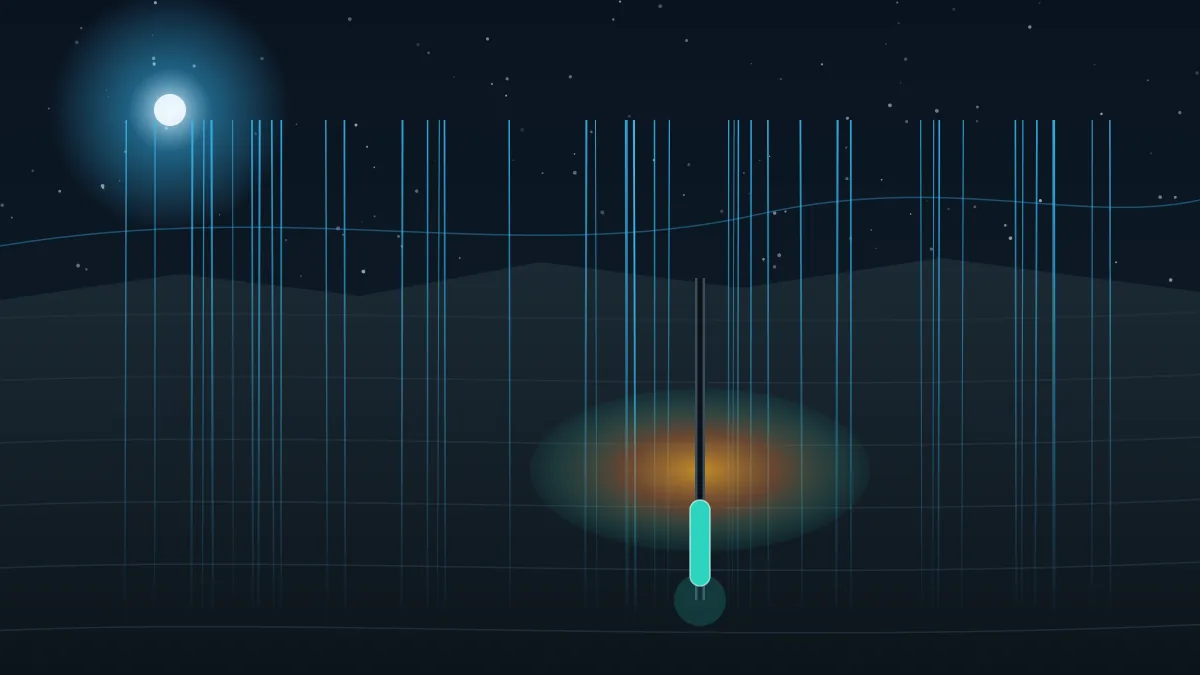
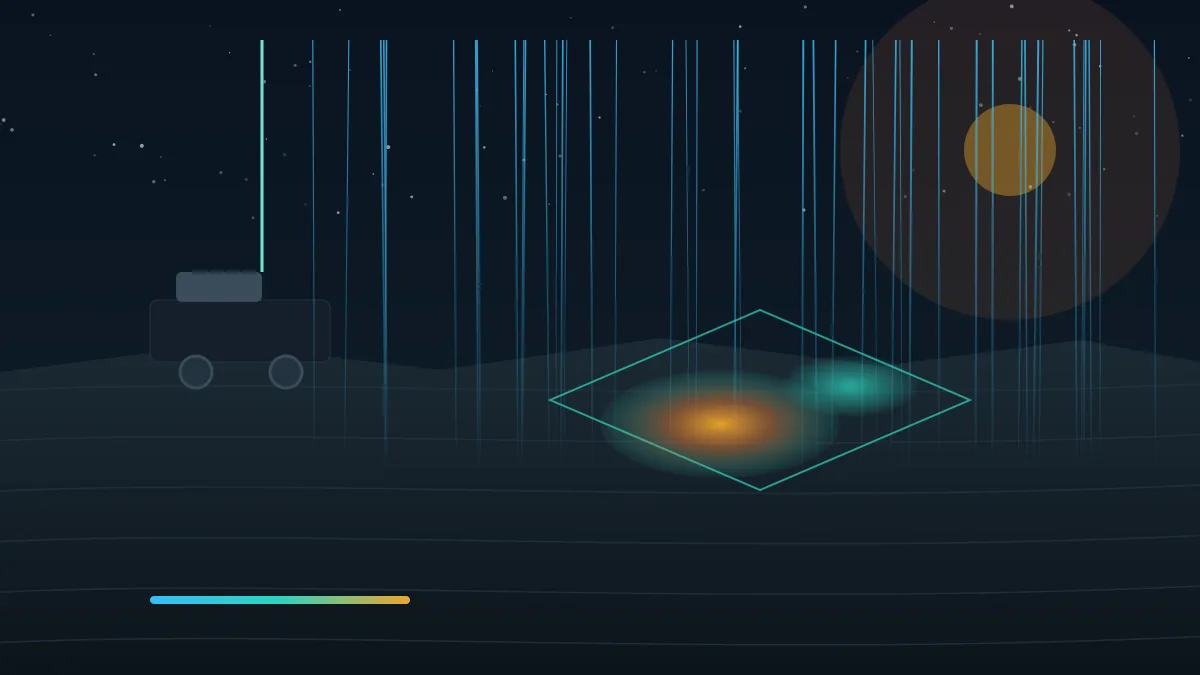
Put together, Ideon places proprietary muon detectors in boreholes or underground workings, counts how many muons arrive from each direction over days or weeks, and reconstructs the density of everything above the sensor. Dense ore blocks more muons and voids block fewer, producing an X-ray-like 3D density map.
The Three Products People Call Ideon AI
- Ideon Technologies (ideon.ai): muon tomography and subsurface intelligence for mining. This is the company that holds the .ai domain.
- IDEON (ideon.cloud): an Australian strategic business platform offering 52 structured marketing and operations capabilities, with three free capabilities and paid tiers.
- Ideon (ideonapi.com): a United States health insurance data API priced per API hit.
Two iOS apps also use the Ideon name for idea capture and daily idea scoring. Quick test: if a result does not mention muons, mining, or REVEAL, you are reading about a different company.
The Problem Ideon AI Was Built to Solve
Exploration economics have deteriorated sharply. Using Ideon's published figures, over the last ten years mineral discoveries and ore grade have declined by 75 percent, metres drilled per discovery are up nearly 200 percent, cost per discovery has risen 400 percent, and exploration carbon emissions are up more than 40 percent. The company also cites a 12 trillion dollar shortfall in metals supply against global climate goals.
Demand explains the urgency. An average electric vehicle needs more than 45 kilograms of nickel and lithium, a wind farm requires over 4 tonnes of zinc, and solar arrays consume more than 5.5 tonnes of copper.
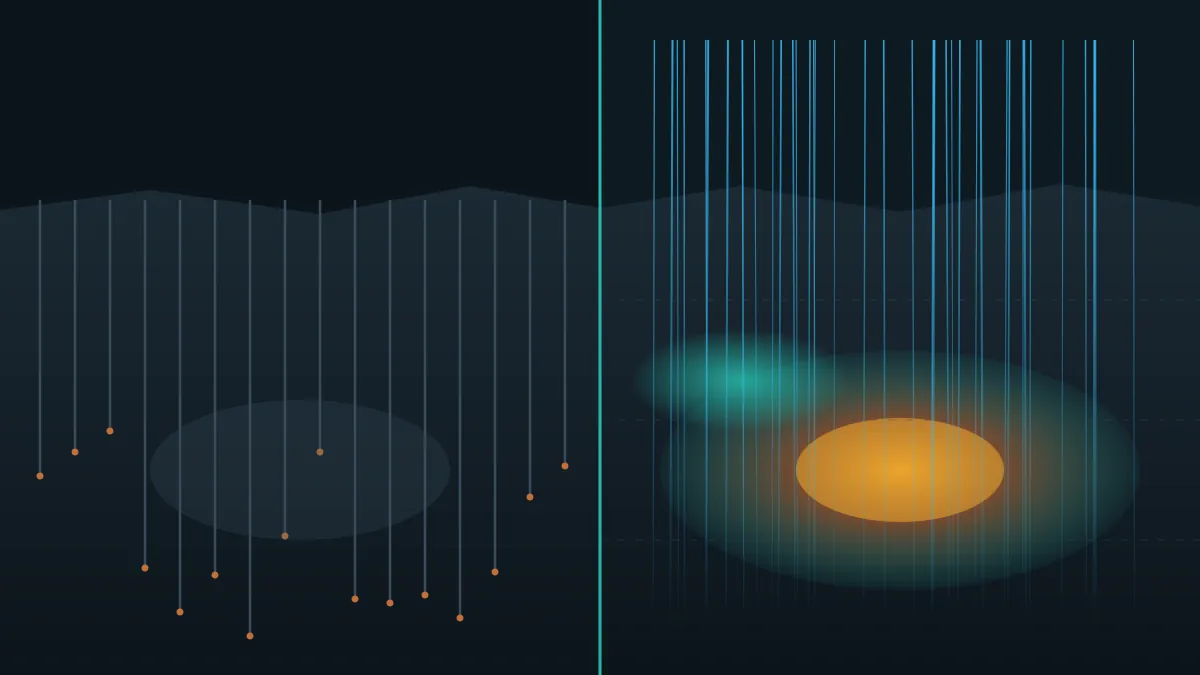
The root cause is geologic uncertainty. Most near-surface deposits are already found, so companies drill hundreds of narrow holes and infer what lies between them. Ideon frames the consequence bluntly: billion dollar decisions get made on roughly 1 percent of 1 percent of real ore body knowledge.
How Ideon AI Works, Step by Step
- Survey design. Geologists define the target volume and the detector positions needed to view it from enough angles.
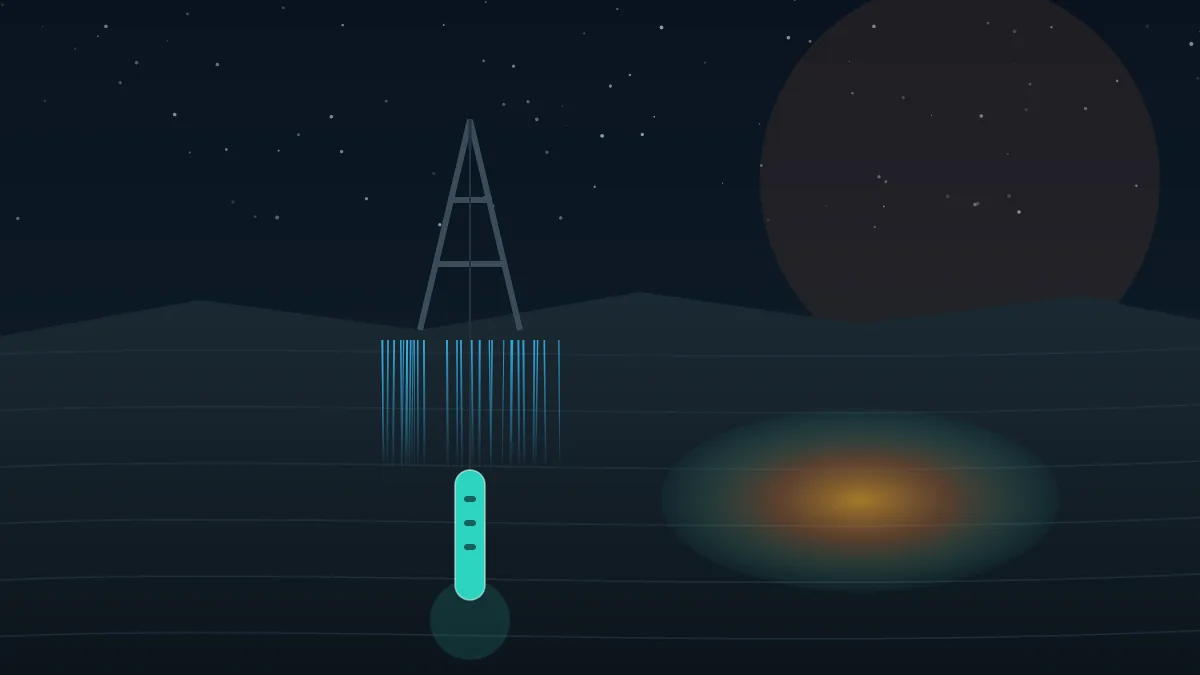
- Sensor deployment. Slim muon detectors are lowered into existing boreholes or placed in underground drifts, so no new large-diameter drilling is needed.
- Continuous passive capture. Detectors record muon arrivals around the clock, and resolution improves the longer a survey runs because the statistical sample keeps growing.
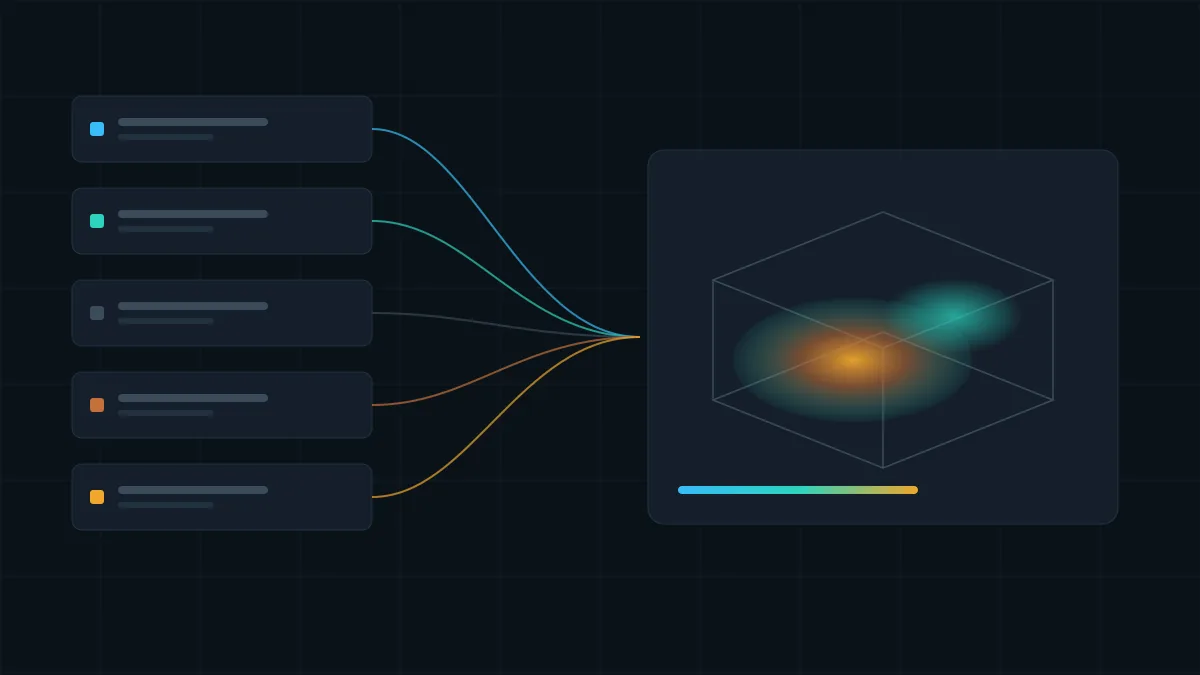
- Inversion and fusion. Algorithms convert directional muon counts into a density model, then fuse it with existing gravity, magnetic, seismic, resistivity, geochemistry, and drill core data.
- Delivery. Output arrives as 3D, 4D, and extended reality visualisations with quantified uncertainty attached to each region of the model.
Where the AI Actually Sits in Ideon's Stack
This is the part most write-ups get wrong. Ideon is not a large language model company. Its published technology stack describes focused artificial intelligence in three specific places: high precision targeting from muon tomography, generative data inversion models constrained by a comprehensive geological framework, and 3D prospectivity mapping that ranks where mineralisation is most likely.
That distinction matters to anyone evaluating industrial AI. The intelligence here is narrow, physics-constrained, and validated against ground truth from drill core, which is exactly why mining companies trust it with capital allocation. The modelling work is reinforced by academic collaborations with Stanford University's Mineral X program, the University of British Columbia's Mineral Deposit Research Unit, and Simon Fraser University.
Teams building comparable domain systems converge on the same pattern: wrap the model in physics or business rules, quantify uncertainty, and keep a human expert in the loop. That is the approach the AI workflow solutions team applies to production deployments. If you want a practical on-ramp to the same discipline, check this out for beginner-level AI project ideas that teach constrained modelling properly.

Ideon AI vs Traditional Exploration Methods
| Factor | Traditional drilling and geophysics | Ideon AI muon tomography |
|---|---|---|
| Data coverage | Narrow samples along each hole | Continuous density across the imaged volume |
| Resolution at depth | Degrades quickly with depth | Highest available resolution via straight-line paths |
| Noisy or conductive ground | Often unusable | Works in conductive and electrically noisy settings |
| Time to first insight | Weeks to months per drill campaign | Days to weeks of passive capture, improving continuously |
| Surface disturbance | New pads, roads, and holes | Reuses existing boreholes and underground access |
| What it measures | Chemistry, grade, and structure | Density contrast only |
| Main cost driver | Metres drilled | Sensor days and analysis |
Who Is Actually Using Ideon AI
The client list is the strongest credibility signal. Mark Paine, Senior Manager of Orebody Knowledge at Rio Tinto Innovation, has said the density contrast within skarns makes muon tomography a potentially revolutionary tool for ore characterisation at Kennecott. Darren Hodder, Global Head of Brownfield Exploration at Vale Base Metals, values understanding large target zones quickly and moving straight to validation. Jack Milton, VP Exploration at Fireweed Metals, describes the method as validated against known geology.
Published case studies cover drill target validation at Fireweed's Macmillan Pass project, full cave visibility at Evolution's Northparkes operations, and high-resolution mineralisation imaging at Nuvau Minerals' Caber Nord mine.
Staffing this kind of work is its own bottleneck. If you are hiring specialists, this guide for an AI agency for startups covers where that talent is actually sourced.
What Changed for Ideon AI in 2026
Ideon has raised roughly 25 million United States dollars in total, anchored by a 16 million dollar (21 million Canadian dollar) Series A that closed in August 2022 led by Playground Global, following a 1.3 million Canadian dollar seed round in 2020.
Three 2026 developments matter more than the funding. In August 2026 a Berkeley Lab-led project secured ARPA-E funding to develop a transportable muon imager with Ideon. Days earlier, Ideon joined a global consortium formed to demonstrate high-resolution laser-driven muon imaging. The company also appointed Anirban Basu as Vice-President, Software Engineering.
Read together, the direction is clear. Passive cosmic muons are free but slow, so active and laser-driven sources would compress survey times. A transportable imager frees the technology from fixed borehole campaigns. And a dedicated software engineering leader signals that the platform layer, not only the sensor, is becoming the product.
Honest Limitations You Should Know
- Muons arrive from above, so a detector generally needs to sit below or beside the target. No existing underground access means added cost.
- Surveys take time. Statistical resolution accumulates over days and weeks rather than hours.
- It measures density, not chemistry. Muon tomography narrows where to drill, but assays still confirm grade.
- It is an enterprise engagement, not a self-serve tool, and pricing is not published.
Key Takeaways
- Ideon AI most commonly means Ideon Technologies, owner of ideon.ai, not the ideon.cloud marketing platform or the ideonapi.com insurance API.
- Its core technology is cosmic-ray muon tomography, the only straight-line subsurface imaging method commercially available today.
- AI is used in three targeted ways: precision targeting, generative data inversion, and 3D prospectivity mapping.
- Ideon has raised about 25 million dollars, including a 16 million dollar Series A led by Playground Global in 2022.
- Rio Tinto, Vale Base Metals, Fireweed Metals, Evolution, and Nuvau Minerals are named users or case study partners.
Frequently Asked Questions (FAQ)
What is Ideon AI used for?
Ideon AI is used by mining companies to image rock beneath the surface without drilling it first. Its REVEAL platform builds 3D density maps that help geologists identify, map, characterise, and monitor mineral deposits, cave progression, and other subsurface anomalies before committing to expensive drill programmes.
Is Ideon AI the same as the Ideon marketing platform?
No. They are unrelated companies sharing a name. Ideon AI at ideon.ai is Canadian subsurface imaging technology for mining. IDEON at ideon.cloud is an Australian business platform with 52 marketing and operations capabilities. A third Ideon sells health insurance data APIs in the United States.
How deep can Ideon AI see underground?
Muon tomography reaches depths that conventional geophysics struggles with, because muons penetrate hundreds of metres of rock in straight lines. Practical depth depends on sensor placement, rock density, and survey duration, so Ideon scopes achievable resolution and depth per project rather than quoting one universal figure.
How much does Ideon AI cost?
Ideon does not publish pricing. Engagements are enterprise projects scoped by target volume, number of sensor positions, survey duration, and modelling depth. The relevant comparison is not sticker price but cost per confident decision, measured against the drilling metres and delays the survey helps you avoid.
Does Ideon AI replace drilling completely?
No, and Ideon does not claim it does. Muon tomography measures density contrast, not chemistry, so drilling remains necessary to confirm grade and metallurgy. The value is in reducing wasted holes by pointing drills at validated targets, which lowers cost, time, and environmental footprint.
Can I invest in Ideon AI in 2026?
Ideon Technologies is privately held and venture backed, with Playground Global leading its Series A. There is no public ticker, so retail investment is not available. Exposure would come indirectly through public mining companies adopting the technology or through private market vehicles holding a stake.
Final Thoughts
The most valuable AI in 2026 is often invisible: narrow models bounded by physics, measured against ground truth, and answerable to an expert. Ideon AI is a strong example, and the lesson transfers directly to software. If you are turning that principle into a product, the smart digital experiences team and purpose-built AI automation services are a sensible place to start.