
AI chatbots vs human support: see which drives more conversions, when to use each, and how a hybrid handoff model lifts revenue without hurting CX or margins.
AI Chatbots vs Human Support: Which One Boosts Conversions?
Support teams are usually judged on satisfaction scores, but revenue teams care about a different number: how many conversations end in a purchase, a booked demo, or a renewal. That is where the AI chatbot versus human support debate gets genuinely interesting. Automation replies in under a second and never sleeps. Humans hear hesitation in a sentence, handle objections, and close complicated deals. After auditing dozens of support-to-sales funnels, the pattern is consistent: neither channel wins everywhere. The companies compounding revenue have stopped picking a side and started routing conversations by intent and order value.
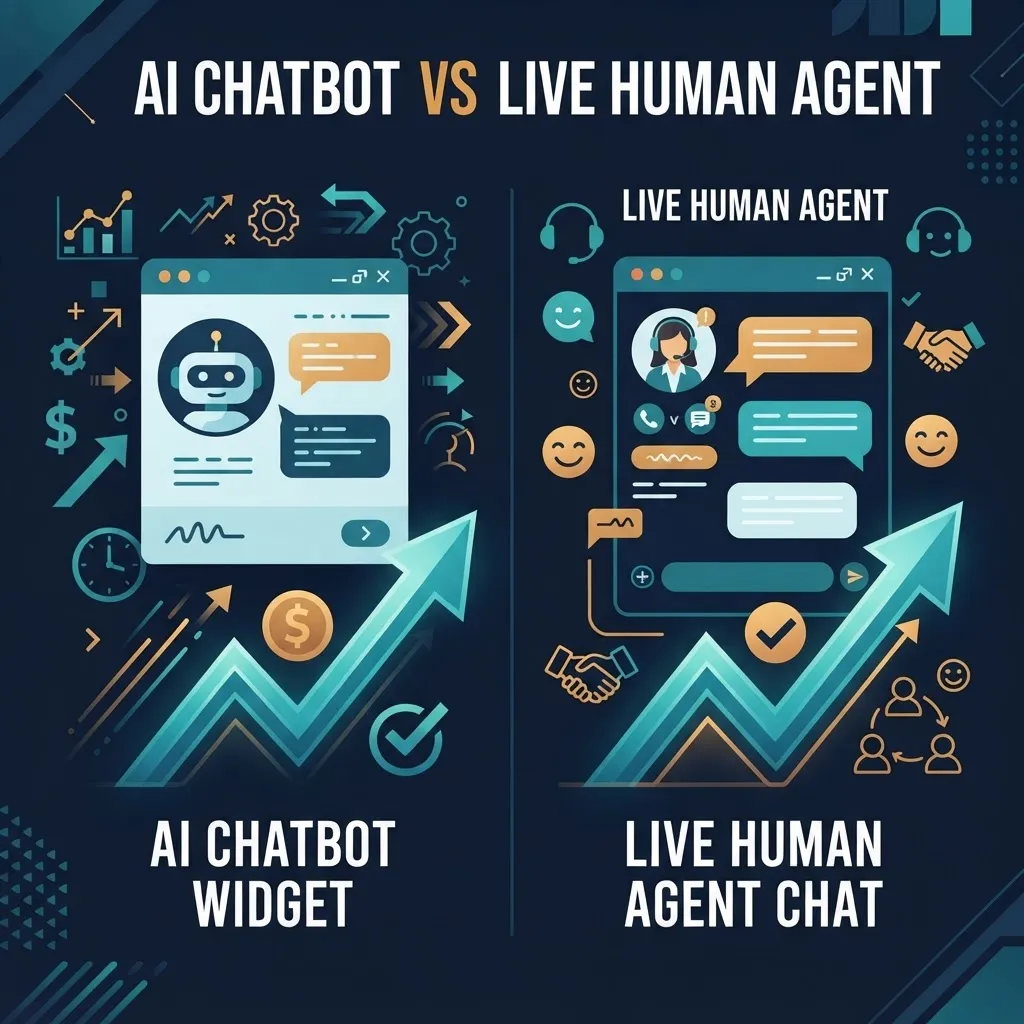
Quick Answer: AI chatbots convert better on high-volume, low-complexity intents such as sizing, shipping, pricing and lead capture, because instant answers stop drop-off. Human agents convert better on high-value, high-doubt purchases that need trust and negotiation. A hybrid model, where AI answers first and escalates on buying signals, usually produces the highest overall conversion rate.
What Conversion Really Means in a Support Conversation
Before comparing channels, define the metric properly, because most teams measure the wrong thing. Support-assisted conversion is the percentage of conversations that lead to a tracked revenue event within an attribution window, normally seven days. It is not deflection rate, and it is not CSAT.
Three definitions matter for the rest of this article:
- Containment rate: the share of conversations fully resolved by AI with no human involvement.
- Assisted conversion rate: conversations that touch support and end in a purchase, signup, or booked call.
- Escalation quality: the conversion rate of conversations a bot hands to a human, which is the single best signal that your routing logic works.
A chatbot with 80 percent containment and a falling assisted conversion rate is quietly costing money. That distinction is the core insight most vendor comparisons skip.
Where AI Chatbots Win Conversions
AI chatbots win wherever speed and availability decide the outcome. Buyers rarely wait. Research on lead response time published by Harvard Business Review found that companies replying to inbound leads within an hour were roughly seven times more likely to qualify that lead than those replying later, and the advantage collapses further after 24 hours. A chatbot compresses that response window to seconds, at 2 a.m., on every device.
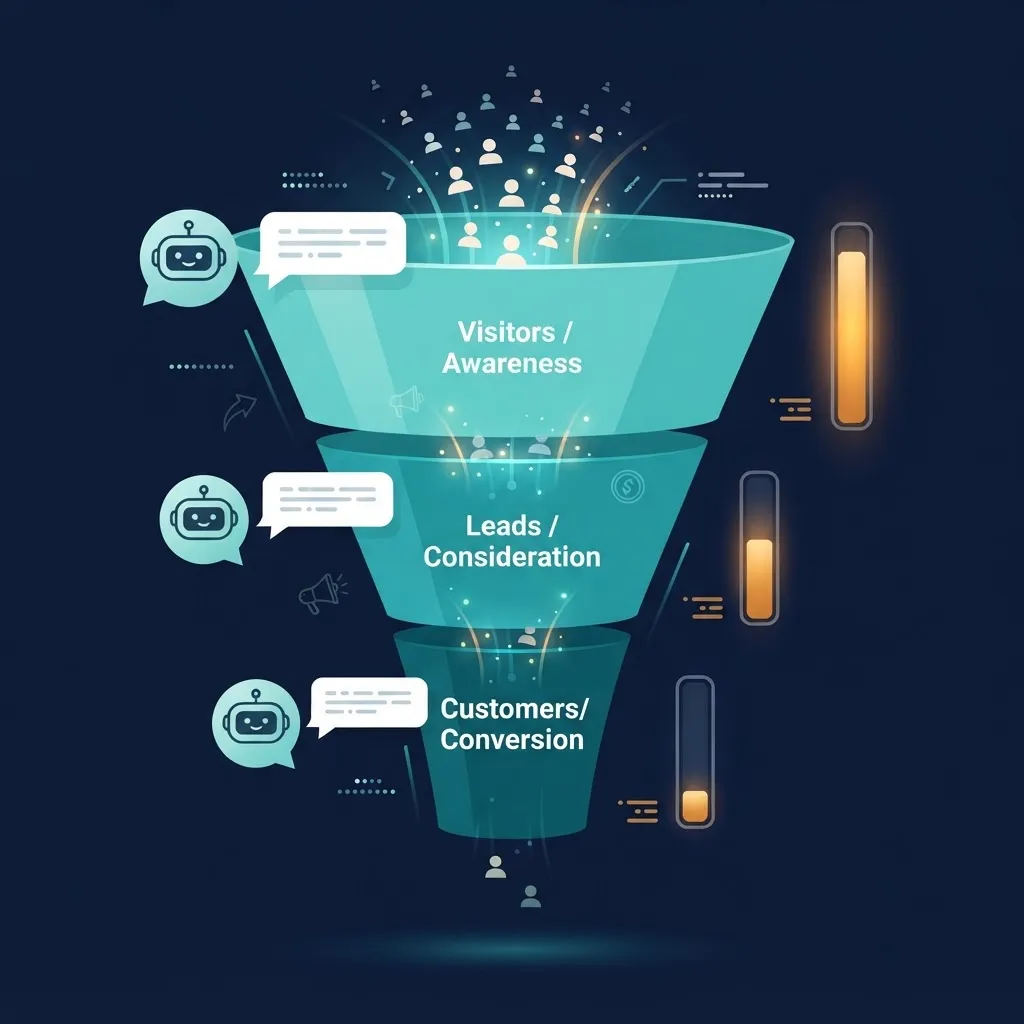
The intents where automation reliably outperforms humans on conversion:
- Pre-purchase micro-friction. Shipping timelines, return windows, size charts, compatibility, stock status. These are yes or no answers standing between a browser and a checkout.
- Off-hours demand. For most consumer brands, a meaningful slice of traffic arrives outside staffed hours. Every unanswered question at that time is an abandoned session, not a ticket.
- Qualification and routing. A bot that asks three structured questions and books a call converts better than a form, because it collects data while intent is still hot.
- Repeat-purchase nudges. Reorders, subscription changes, and plan upgrades are transactional and benefit from zero-wait resolution.
- Multilingual demand. Modern language models let a small team serve buyers in markets they could never staff.
The unglamorous truth: most chatbot conversion lift does not come from clever persuasion. It comes from removing a five-minute wait at the exact second doubt appears.
Where Human Support Wins Conversions
Human agents win wherever the decision is emotional, expensive, or ambiguous. When average order value climbs, the buyer is not looking for information. They are looking for reassurance from someone accountable.

Situations where a person consistently outperforms automation:
- High-ticket and considered purchases. Custom quotes, B2B contracts, furniture, medical or financial products. A human can reframe price against outcome. A bot can only restate it.
- Objection handling. Real objections are layered. When a buyer says a product is expensive, the actual concern is often risk, timing, or internal approval. Detecting that requires reading tone and asking an unscripted follow-up.
- Recovery moments. A late delivery or billing error is a churn fork. Human ownership plus a small concession retains customers that a scripted apology loses.
- Ambiguous or novel requests. Anything outside the knowledge base becomes a hallucination risk for AI and a relationship opportunity for a person.
- Negotiation and bundling. Discount authority, payment terms, and creative packaging need judgement no policy tree fully captures.
One pattern worth naming: humans do not just convert more on these conversations, they convert at higher order value, because they upsell contextually rather than by rule.
AI Chatbots vs Human Support: Side-by-Side Comparison
| Factor | AI Chatbots | Human Support |
|---|---|---|
| First response time | Under 5 seconds, always on | Minutes to hours, staffed hours only |
| Best converting intents | Simple pre-purchase questions, lead capture, reorders | High-value, complex, emotional, negotiated sales |
| Cost per conversation | Very low and flat as volume grows | Higher and scales linearly with volume |
| Average order value impact | Neutral to slightly positive | Strongest lift on considered purchases |
| Consistency | Identical answer every time | Varies by agent skill and workload |
| Empathy and trust | Limited, improving but detectable | Highest, decisive in refunds and churn saves |
| Scalability during spikes | Effectively unlimited | Constrained by headcount |
| Failure mode | Confident wrong answers, loops | Slow replies, queues, inconsistency |
| Data capture | Structured, complete, instantly analyzable | Rich but often unlogged |
Read the table as a routing map, not a scoreboard. Each row tells you which conversation types belong in which lane.
The Hybrid Model That Actually Wins
The highest-converting setup is not AI or humans. It is AI first, humans on signal. The bot handles volume and captures structured context, then hands off with a full transcript the moment value or risk crosses a threshold.
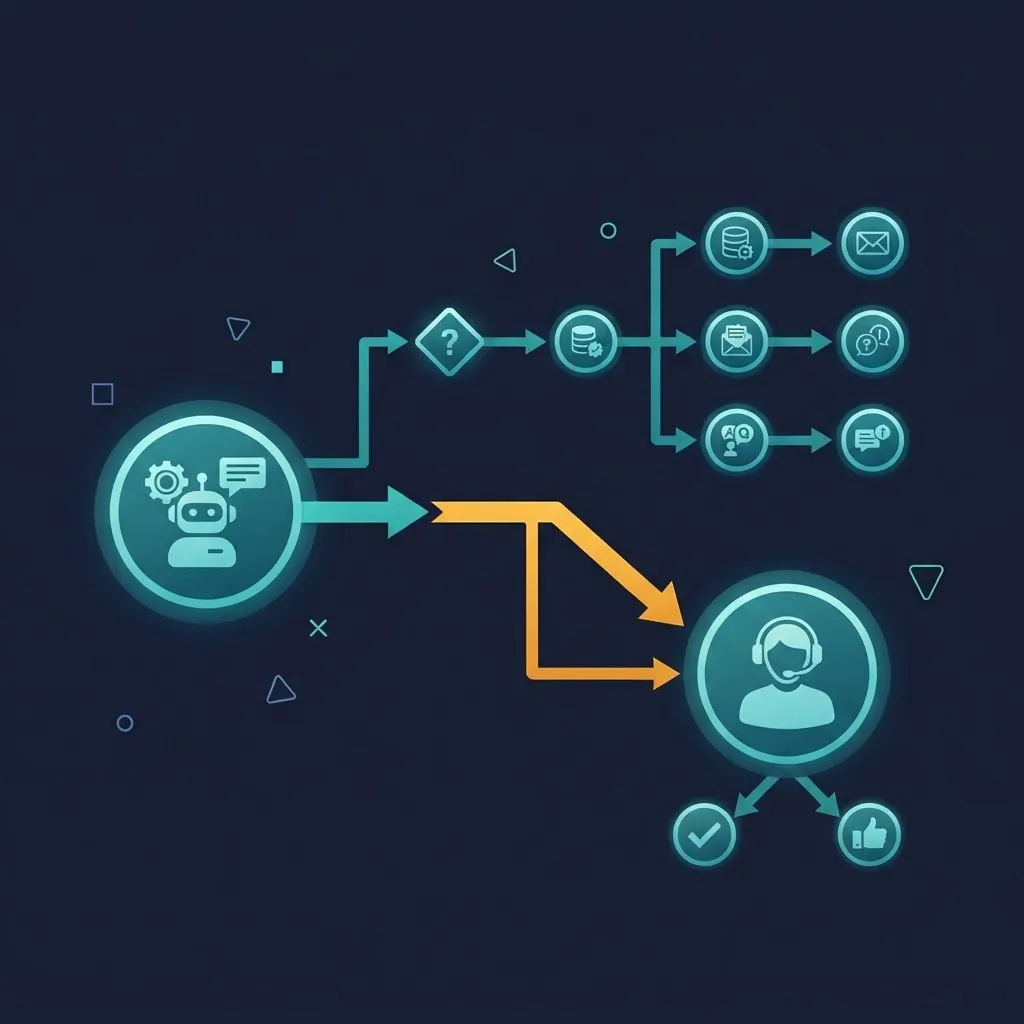
The Three-Trigger Handoff Rule
Escalate immediately when any one of these fires:
- Value trigger. Cart or contract value exceeds your defined threshold, commonly two to three times average order value.
- Intent trigger. The buyer uses purchase or friction language such as discount, invoice, cancel, refund, or compare with a competitor.
- Confusion trigger. The bot repeats itself, confidence drops, or the user rephrases the same question twice.
Two design rules make this work. First, never make a customer repeat themselves. The agent inherits the transcript, cart, and account history. Second, never hide the exit. A visible option to reach a person raises trust, and the teams that hide it usually see abandonment rise even while containment looks healthy. Building that routing logic well is engineering work, not a settings toggle, which is why it pays to plan it with a partner offering AI automation services before you scale volume through it.
Speed Is the Hidden Conversion Lever
Most teams debate personality when they should be fixing latency. Response time is the variable with the clearest causal link to conversion, and it is the one AI improves by an order of magnitude.
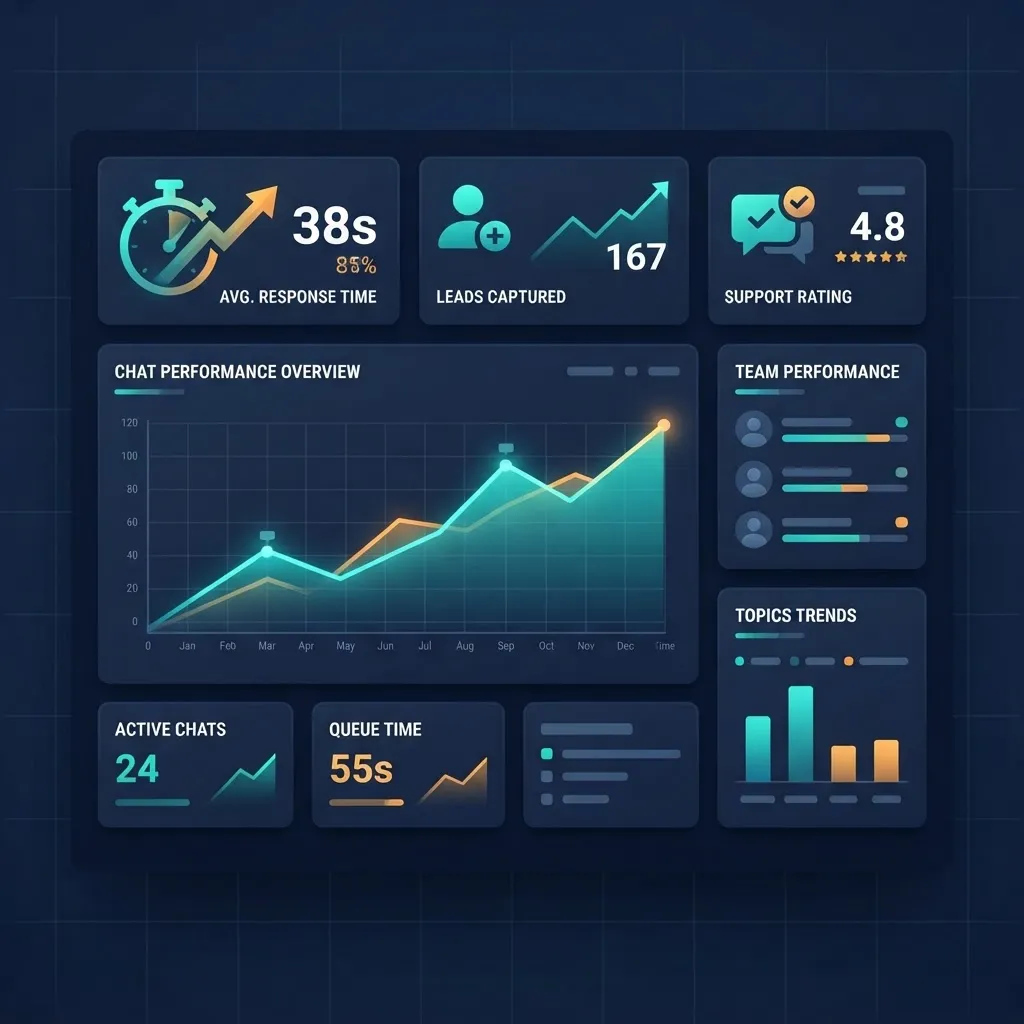
Track these four numbers weekly:
- First response time, split by bot and human.
- Time to resolution for converting versus non-converting chats.
- Handoff wait time, the gap between escalation and the first human message. This is where hybrid setups leak most revenue.
- Abandonment during wait, the share of users who close the window before a reply.
If handoff wait exceeds about 60 seconds during business hours, your AI layer is generating qualified intent that your human layer is dropping.
How to Test Which Channel Converts Better for You
Benchmarks are direction, not evidence. Run your own test with a clean design.
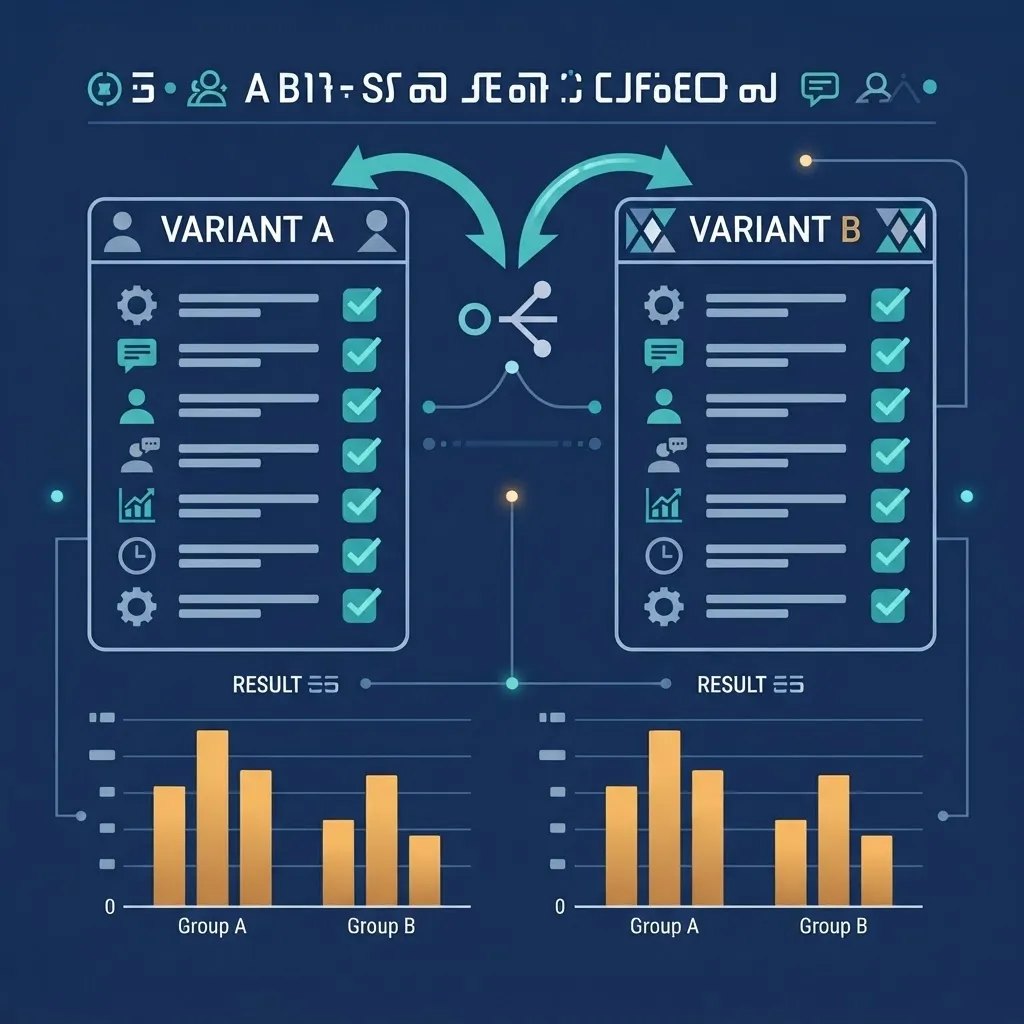
- Pick one page family. Product detail pages or pricing, never the whole site at once.
- Split traffic 50/50 between bot-first and human-first entry for at least two full weeks to cover weekly cycles.
- Hold the offer constant. No new discounts or campaigns mid-test.
- Track revenue per conversation, not conversion rate alone, so order value differences surface.
- Segment by order value band. The crossover point where humans start winning is your handoff threshold.
- Read verbatims from lost chats. The reason people leave is written in plain language in your transcripts.
Most teams discover their crossover sits lower than expected, which usually means adding a human trigger rather than more automation.
Ecommerce Pattern: Cart Recovery and Conversion Lift
Ecommerce shows the clearest split. Baymard Institute research puts average documented cart abandonment near 70 percent, and its studies attribute a large share to friction such as unclear shipping cost, forced account creation, and payment doubt. Those are exactly the questions a bot answers instantly and correctly.
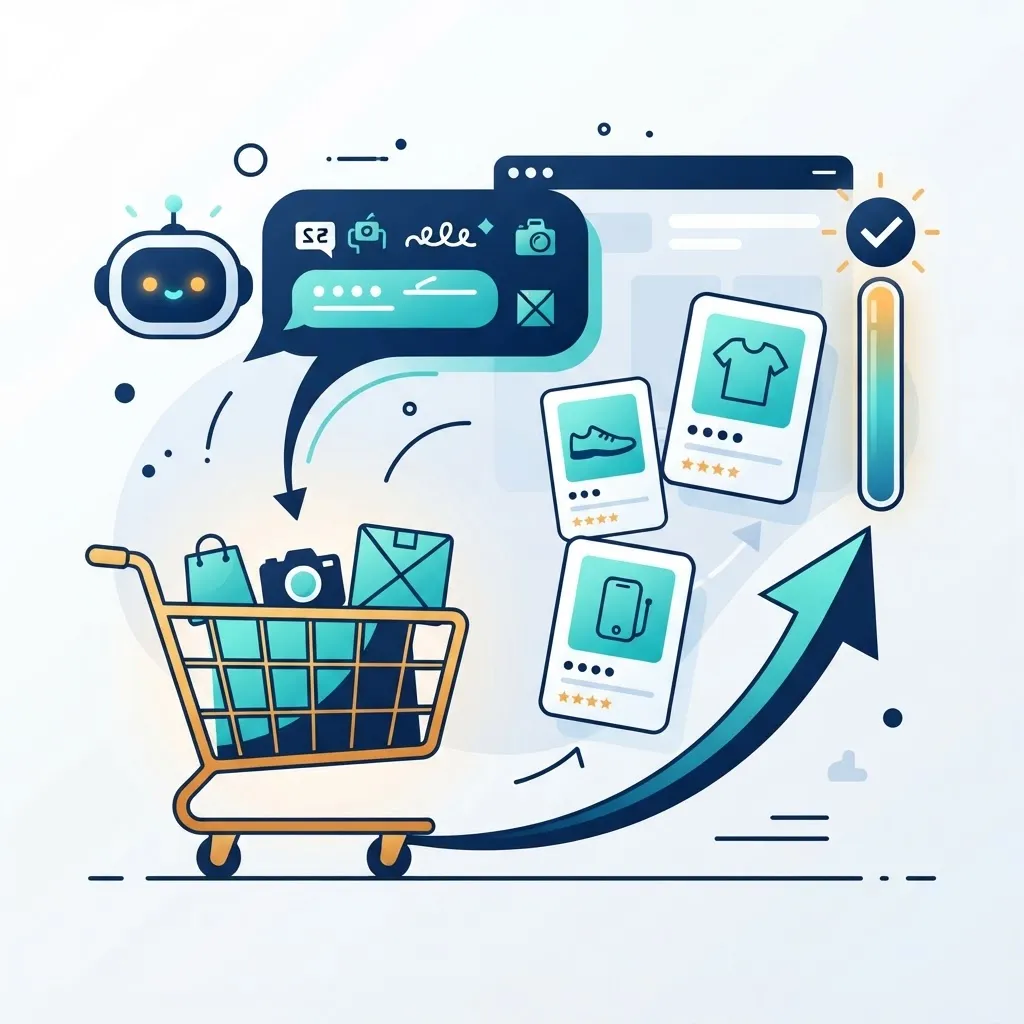
A practical structure that works: proactive chat triggered on checkout hesitation, answering shipping and returns in one message with no upsell attempt, then routing any order above your value threshold to a human. Automation removes the objection; a person protects the margin on baskets worth protecting. Teams that need both layers built together often work with an AI digital agency rather than stitching two disconnected tools.
Costs, Margins, and the Real Trade-off
Cost per conversation favours AI decisively, and that is the reason it spreads. But cost per conversation is the wrong optimisation target. Optimise revenue per conversation minus cost to serve. A human conversation that costs several dollars and closes a large order beats twenty cheap deflections that end in silence. Equally, paying an agent to answer a shipping question is margin thrown away. The winning economics come from matching cost of service to expected value, conversation by conversation.
Key Takeaways
- AI chatbots lift conversions mainly by eliminating wait time on simple pre-purchase questions and off-hours traffic.
- Human agents lift conversions on high-value, emotional, and negotiated purchases, and typically raise average order value.
- Harvard Business Review research on lead response found replies within an hour made lead qualification roughly seven times more likely.
- Baymard Institute data places average cart abandonment near 70 percent, much of it caused by unanswered friction questions.
- Containment rate is a cost metric. Assisted conversion and revenue per conversation are the growth metrics.
- Escalate on value, intent, or confusion triggers, and keep handoff wait under 60 seconds.
- Measure with a two-week 50/50 split test segmented by order value to find your own crossover point.
Frequently Asked Questions (FAQ)
Do AI chatbots increase conversions or just reduce support costs?
They do both, but through different mechanisms. Cost savings come from containment, while conversion lift comes from answering purchase-blocking questions instantly. If your bot only deflects tickets and never captures leads or resolves pre-purchase doubt, you are getting the savings without the revenue upside.
When should a chatbot hand a conversation to a human?
Escalate on three triggers: cart or deal value above your threshold, purchase or friction language such as discount, invoice, refund or cancel, and repeated confusion where the bot loops or the user rephrases twice. Pass the full transcript across so the customer never repeats themselves.
Is human support still worth the cost for small businesses?
Yes, but only where it changes outcomes. Keep humans on high-value orders, refunds, complaints, and complex questions, and let AI absorb routine volume. That mix lets a two-person team serve the request load of a much larger department without losing the conversations that carry real margin.
Do customers dislike talking to AI chatbots?
Most buyers accept AI when it is fast, accurate, and honest about being automated. Frustration comes from three things: wrong answers delivered confidently, endless loops, and a hidden route to a human. Keep the escalation option visible and satisfaction usually stays level or improves.
Which converts better on high-ticket products, AI or humans?
Humans, consistently. High-ticket buyers need reassurance, risk reduction, and negotiation, which requires reading tone and improvising. The best pattern is AI qualifying and booking the conversation within seconds, then a person handling the close, so you get speed and persuasion instead of choosing one.
How long before I see conversion results from a support chatbot?
Expect early signal in two to four weeks on high-traffic pages, provided you track revenue per conversation from day one. The first month usually improves through knowledge-base fixes and better triggers rather than model changes, because most losses trace back to missing or outdated answers.
Final Verdict
Stop asking which channel converts better and start asking which conversation belongs where. Route by intent and value, escalate on clear signals, and judge both layers on revenue per conversation instead of vanity metrics. Do that, and the AI chatbot versus human support question answers itself in your own dashboard.