
A practical, policy-accurate guide to bidding on competitor brand keywords in Google Ads, including trademark rules, legal risk, campaign structure, and profitability benchmarks.
Can I Use Competitor Brand Keywords in Google Ads
Bidding on a competitor's brand name is one of the most common questions in paid search, and one of the most misunderstood. Advertisers hear conflicting advice: some say it is illegal, others say everyone does it. The truth sits in the middle and depends on two separate systems that most marketers confuse with each other: Google's advertising policy and trademark law in your country.
This guide separates those two systems, explains exactly what you can and cannot do, and shows how to run competitor campaigns that actually return profit instead of quietly draining budget.
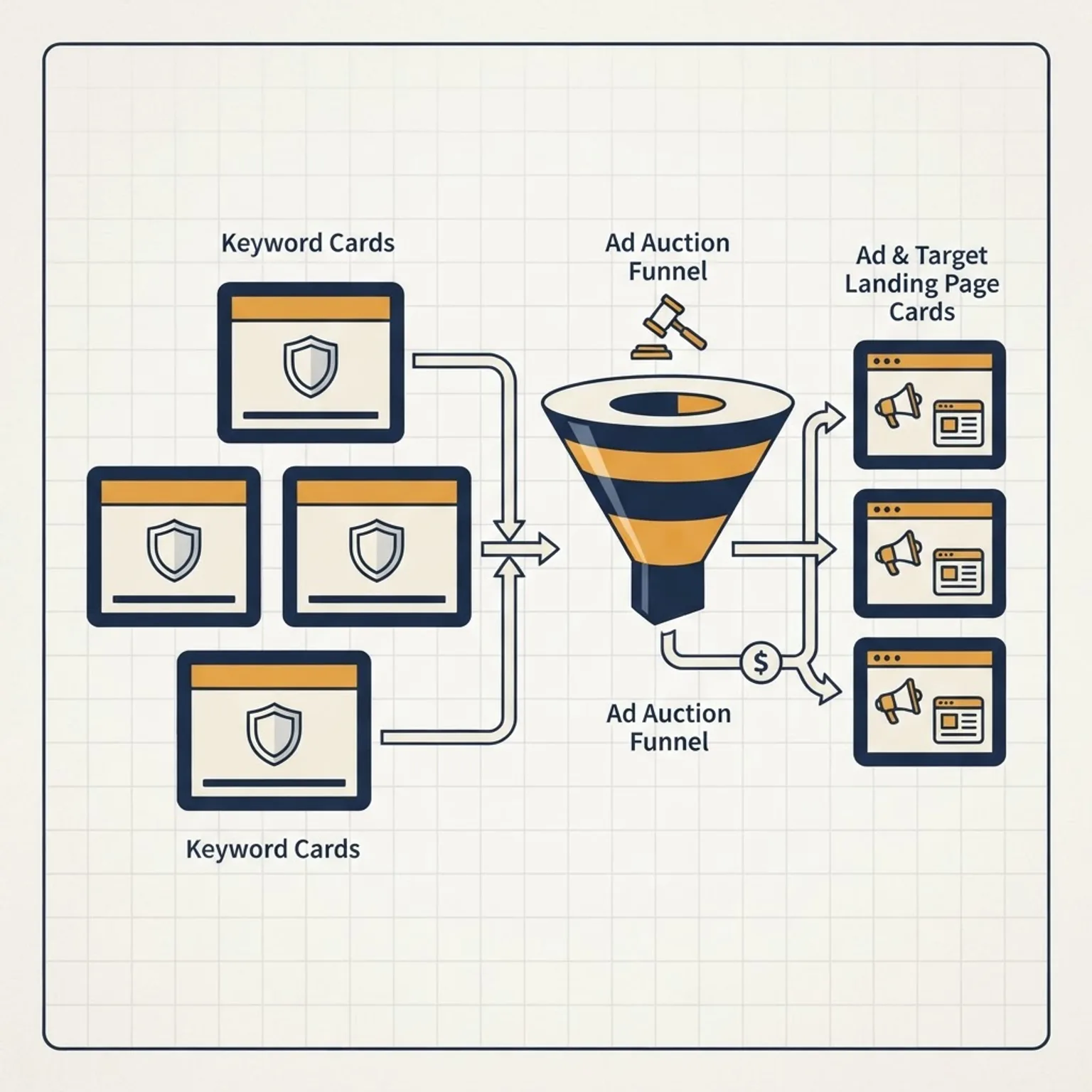
Quick Answer: Yes. Google Ads permits bidding on competitor brand names as keywords in most countries, including the US, UK, and Canada. What Google restricts is using a trademarked brand name inside your ad text or display URL. Keyword targeting is allowed; misleading ad copy that implies affiliation is not.
The Two Rules You Must Separate
Almost every wrong answer on this topic comes from merging two independent rules into one.
Rule one is Google's keyword policy. Google does not restrict trademarked terms as keywords. You can add a competitor's brand name to a campaign and Google will serve your ad. Google has held this position since 2004 in the US and expanded it globally in 2010. Trademark owners cannot file a complaint to block competitors from bidding on their name as a keyword.
Rule two is Google's ad text policy. Trademark owners can file a trademark complaint that stops other advertisers from using the protected term in headlines, descriptions, and display URLs. If a complaint is on file, your ad is disapproved the moment the term appears in copy.
The practical outcome: target the keyword, never write the brand name in the ad.
Definitions That Matter
- Conquesting: paid search targeting of competitor brand terms to intercept demand that is already brand-aware.
- Brand defense: bidding on your own brand terms to hold the top position and control the click.
- Trademark complaint: a formal filing with Google that restricts use of a mark in ad text, not in keyword targeting.
What Google's Policy Actually Allows
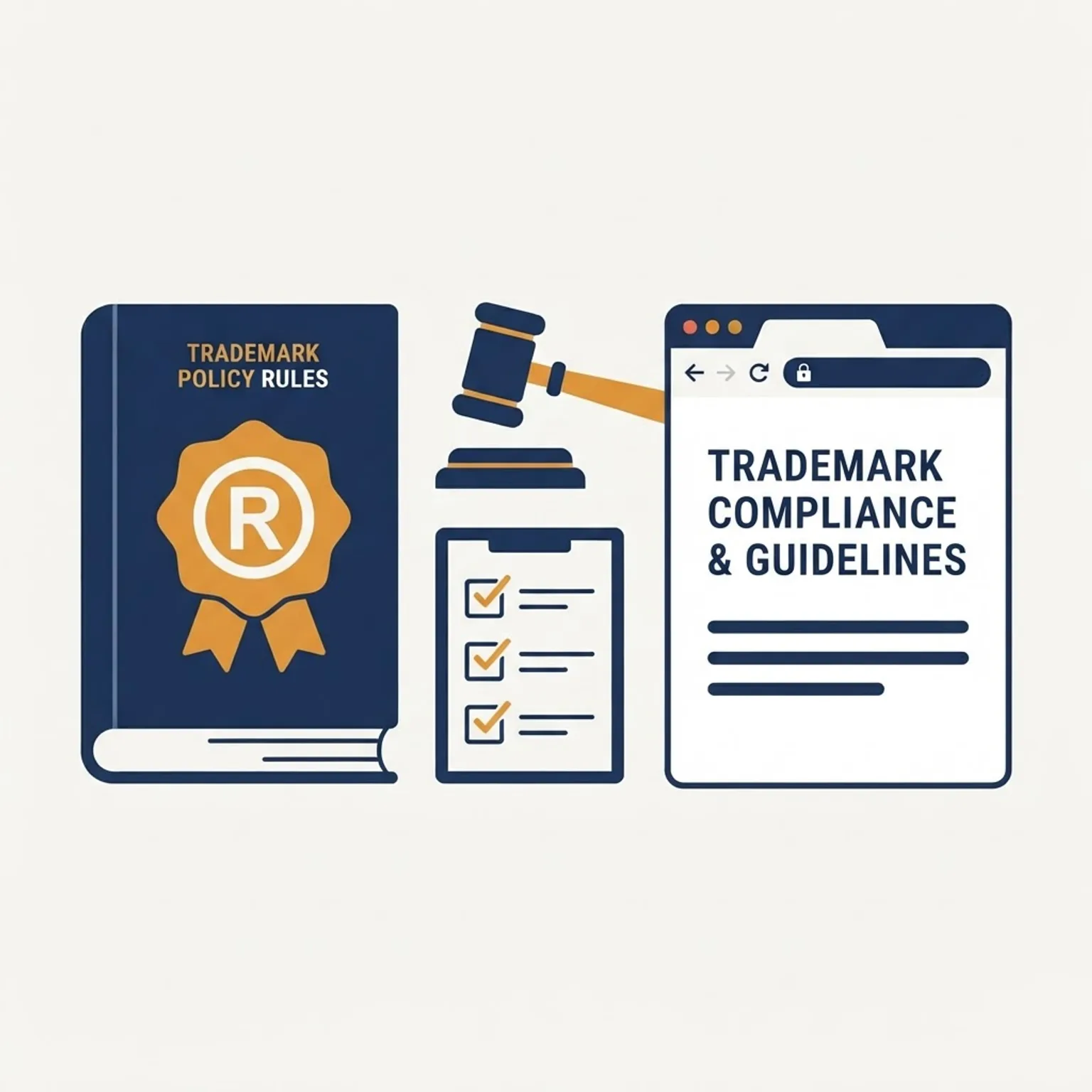
Google's trademark policy is enforced by automated review plus manual complaint handling. Here is the operational breakdown.
Allowed without restriction:
- Adding competitor brand names as keywords in Search campaigns.
- Using generic, non-trademarked descriptors in ad copy, such as "alternative" or "switch and save".
- Landing pages that make factual, verifiable comparisons.
- Sitelinks and callouts that promote your own differentiators.
Restricted or disapproved:
- The trademarked term in headlines or descriptions when a complaint is on file.
- Display URLs or subdomains containing the competitor mark.
- Any implication of partnership, endorsement, or authorized reseller status that is untrue.
- Resale or informational claims you cannot substantiate on the landing page.
One nuance worth knowing: reseller and informational-site exceptions exist. If your site genuinely sells the trademarked product or provides substantive informational content about it, Google may permit the term in ad text. The bar is factual accuracy, and enforcement is inconsistent enough that you should not build a strategy on it.
Is It Legal? The Trademark Question
Policy compliance is not the same as legal safety. Trademark infringement in most jurisdictions turns on likelihood of confusion: would a reasonable consumer believe your ad came from, or was endorsed by, the brand they searched for?
Courts in the US have consistently found that keyword purchase alone rarely creates confusion. The pivotal 2011 decision in Network Automation v. Advanced Systems Concepts established that sophisticated online consumers can distinguish sponsored results, and that keyword bidding is not automatically infringement. Confusion is created by the ad and landing page, not the keyword.
That is why risk concentrates in specific behaviors:
- Copying the competitor's logo, colors, or visual identity on your landing page.
- Using the brand name in your display path so the ad looks official.
- Claiming to be the brand's support desk, login page, or official store.
- Making unverifiable superiority claims about the competitor's product.

Regional differences are real. The EU applies a stricter reading under the Google France cases, where confusion about origin is assessed more readily. In several EU markets, an ad that does not make the advertiser's identity clear can be treated as infringing even when the keyword itself is lawful. If you advertise across borders, run country-level campaigns and vary the copy discipline accordingly.
None of this is legal advice. If your category is regulated, or the competitor is litigious, get a trademark attorney to review your ad set before launch. That review typically costs less than one month of wasted conquesting spend.
Does It Actually Work? The Economics
Competitor keywords behave differently from every other keyword type, and the numbers explain why so many accounts abandon them.
Typical performance patterns across search accounts:
- Quality Score on competitor terms usually lands between 3 and 5, because your landing page cannot be relevant to another company's brand name.
- Low Quality Score raises the required bid, so cost per click on competitor terms commonly runs two to three times higher than on your own brand terms.
- Conversion rate is usually lower than brand traffic but higher than broad generic traffic, because the searcher already has purchase intent.

| Keyword Type | Typical CPC | Intent Level | Quality Score Range | Best Use |
|---|---|---|---|---|
| Own brand terms | Lowest | Very high | 8 to 10 | Defend position, protect margin |
| Competitor brand terms | High | High | 3 to 5 | Intercept switchers, test messaging |
| Category generic terms | Medium to high | Medium | 5 to 7 | Volume and prospecting |
| Long-tail comparison terms | Low to medium | High | 6 to 8 | Highest efficiency conquesting |
The most overlooked insight: comparison long-tail terms outperform head brand terms. Queries structured as "competitor alternative", "competitor vs", or "competitor pricing" carry the same switching intent at a fraction of the cost, and your landing page can be genuinely relevant to them. Teams that build conquesting around these modifiers routinely see materially better cost per acquisition than teams bidding the bare brand name.
Agencies that manage this well treat conquesting as a measured experiment with a kill threshold, not a permanent line item. A disciplined performance marketing approach sets the acceptable cost per acquisition before launch and shuts the campaign down when it is breached, rather than rationalizing the spend month after month.
How to Structure a Competitor Campaign Correctly
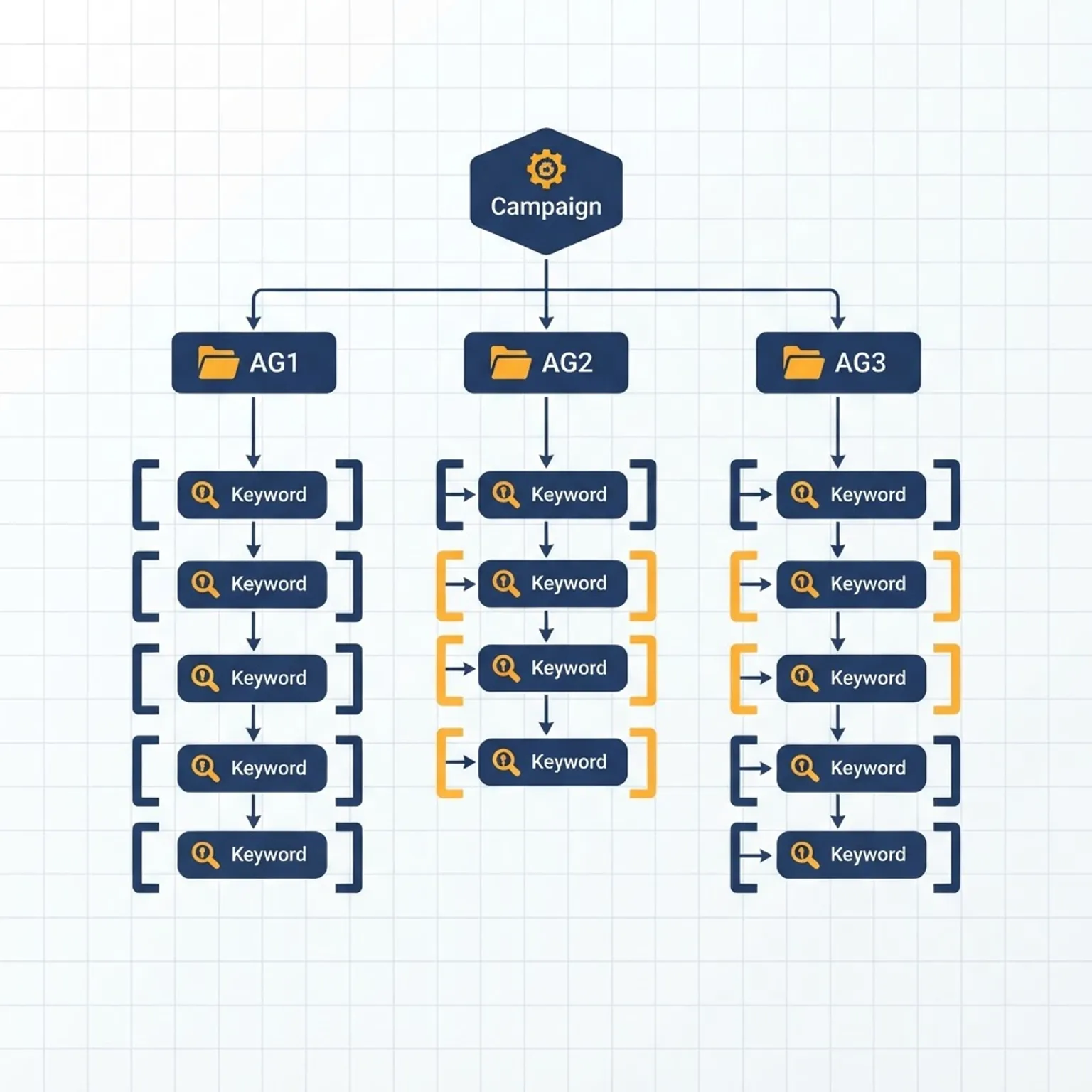
Structure determines whether competitor traffic is measurable or just noise inside your account.
- Create a separate campaign. Never mix competitor terms with your own brand or generic campaigns. Isolation protects your account-level metrics and lets you set an independent budget cap.
- Use one competitor per ad group. This lets you write differentiated copy and track each rival's traffic quality separately.
- Use phrase and exact match only. Broad match on brand terms pulls in support queries, job searches, and login intent that will never convert.
- Add aggressive negatives. Block login, support, careers, refund, cancel, contact, download, and app store queries at minimum.
- Start with manual CPC or a capped target CPA. Automated bidding on low Quality Score terms escalates cost before it gathers enough conversion data to correct.
- Build a dedicated comparison landing page. Not your homepage. A page that answers the actual question the searcher has.
- Set a review date at 30 days. Judge on cost per qualified lead, not clicks or impression share.
Step six is where most campaigns are won or lost. A searcher typing a competitor name wants to evaluate, not be sold. A page with an honest feature table, transparent pricing, and a migration path converts far better than a generic product page.
Ad Copy That Stays Compliant and Still Converts
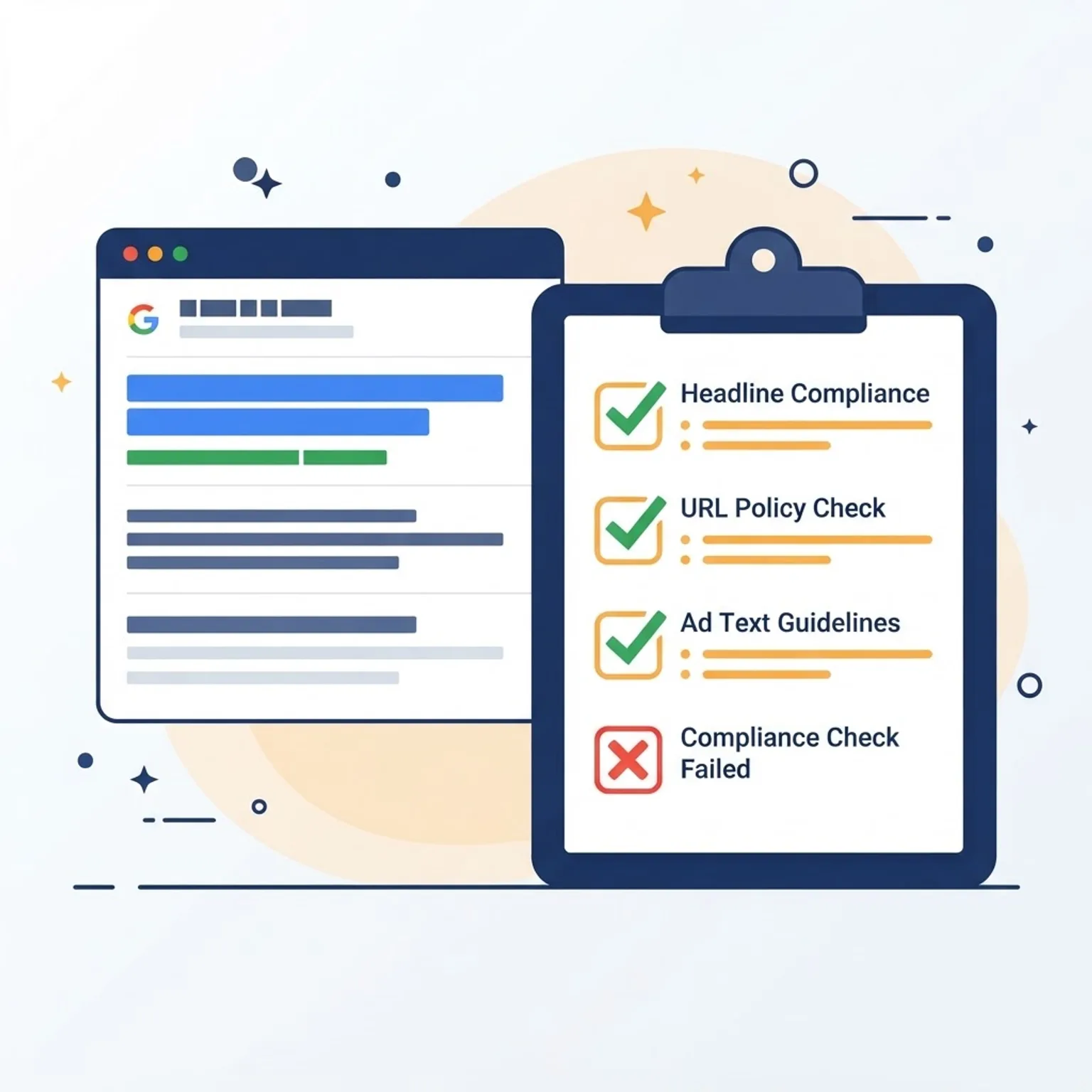
You cannot name the competitor, but you can absolutely speak to the searcher's frustration. Compliant angles that work:
- Switching friction: "Migrate in one afternoon. Free data import included."
- Pricing transparency: "Flat monthly pricing. No per-seat surcharge."
- Specific differentiator: "Same reporting depth, half the setup time."
- Social proof with numbers: "Trusted by 1,200 teams that outgrew their old tool."
Avoid vague superiority language such as "the best alternative" with nothing behind it. Google's disapproval systems and your own conversion rate both punish claims the landing page does not support. Specificity is the compliance strategy and the persuasion strategy at the same time.
Advertisers who want the account-structure and negative-keyword layer handled by specialists often work with a ROI marketing agency rather than learning the enforcement patterns through disapprovals.
Defending Your Own Brand Terms

If competitors can bid on you, defense is not optional.
- Always run a brand campaign. Brand CPCs are typically the cheapest in the account, and the ad occupies space a rival would otherwise take.
- File a trademark complaint with Google. This will not stop keyword bidding, but it removes your mark from competitor ad text, which is where confusion is created.
- Register your mark properly. Google requires evidence of a valid registration to act on a complaint.
- Monitor the auction insights report monthly. It shows which competitors are appearing on your terms and how often.
- Use ad extensions heavily. Sitelinks, callouts, and structured snippets increase your ad's vertical space and push rivals further down.
Teams that pair defense with disciplined measurement, an approach the ZoneTechify team applies across paid search accounts, tend to keep brand acquisition costs stable even when a competitor starts conquesting aggressively.
Key Takeaways
- Google Ads allows competitor brand names as keywords in most countries, including the US, UK, and Canada.
- Google restricts trademarked terms in ad headlines, descriptions, and display URLs when a trademark complaint is on file.
- Keyword bidding alone is rarely trademark infringement; confusion is created by ad copy and landing pages.
- The 2011 Network Automation v. Advanced Systems Concepts ruling confirmed keyword purchase is not automatically infringement in the US.
- EU jurisdictions apply stricter origin-confusion standards, so localize ad copy discipline by country.
- Competitor keywords typically score 3 to 5 on Quality Score and cost two to three times more per click than own-brand terms.
- Long-tail comparison queries deliver better cost per acquisition than bare competitor brand terms.
- Filing a trademark complaint with Google protects your ad text but never blocks competitor keyword targeting.
Frequently Asked Questions (FAQ)
Can I bid on my competitor's brand name in Google Ads?
Yes. Google permits competitor brand names as keywords in most countries, including the US, UK, and Canada. Trademark owners cannot block keyword targeting. The restriction applies only to using the trademarked term inside your ad headlines, descriptions, or display URL when a complaint is filed.
Is bidding on competitor keywords illegal?
Generally no. Courts in most jurisdictions have found that buying a keyword alone does not create consumer confusion. Legal risk appears when your ad or landing page implies affiliation, copies brand visuals, or misleads users about who they are dealing with. Keep identity and claims clear.
Why are competitor keywords so expensive?
Your landing page cannot be relevant to another company's brand name, so Quality Score usually falls between 3 and 5. Google compensates for low relevance by requiring higher bids to enter the auction, which commonly pushes cost per click to two or three times your own brand rate.
Can I stop competitors from bidding on my brand name?
No. Google does not allow trademark owners to block keyword targeting. You can file a trademark complaint to remove your mark from competitor ad text, run your own brand campaign to hold the top position, and use extensions to occupy more search results space.
What should my landing page say for competitor traffic?
Build a dedicated comparison page, never your homepage. Include an honest feature table, transparent pricing, migration steps, and verifiable proof points. Visitors arriving from a competitor search are evaluating options, so factual comparison converts significantly better than generic sales messaging.
How long should I test a competitor campaign?
Run it for 30 days with an isolated budget cap and a predefined cost per acquisition threshold. Judge results on qualified leads or revenue, not clicks or impression share. If the threshold is breached with sufficient data, pause the campaign and shift budget to comparison long-tail terms.
Final Word
Competitor keyword bidding is legal, policy-compliant, and frequently unprofitable, all at the same time. The advertisers who make it work do three things consistently: they keep the trademark out of ad copy, they build genuine comparison landing pages, and they enforce a hard cost threshold instead of hoping the numbers improve. Treat conquesting as a measured experiment with a defined exit, and it becomes a useful channel rather than an expensive habit.