
A practical, expert guide to tilt sensing artificial intelligence, covering how it works, real-world applications, implementation steps, and where the technology is headed next.
Tilt Sensing Artificial Intelligence

Tilt sensing artificial intelligence is quietly powering the devices you touch every day, from the phone that rotates your screen to the robot vacuum that climbs over a rug without tipping. Yet most people never think about the invisible layer of intelligence interpreting those angles in real time. After years of building sensor-driven applications, I have seen how combining motion hardware with machine learning turns raw orientation data into decisions that feel almost human. This guide explains what tilt sensing AI actually is, how it works, where it is used, and how you can implement it without drowning in jargon.
Quick Answer: Tilt sensing artificial intelligence combines orientation sensors like accelerometers and gyroscopes with machine learning to interpret a device's angle and motion in real time. It enables smarter automation, gesture control, fall detection, stabilization, and context-aware responses across phones, wearables, robotics, and industrial systems.
What Is Tilt Sensing Artificial Intelligence?
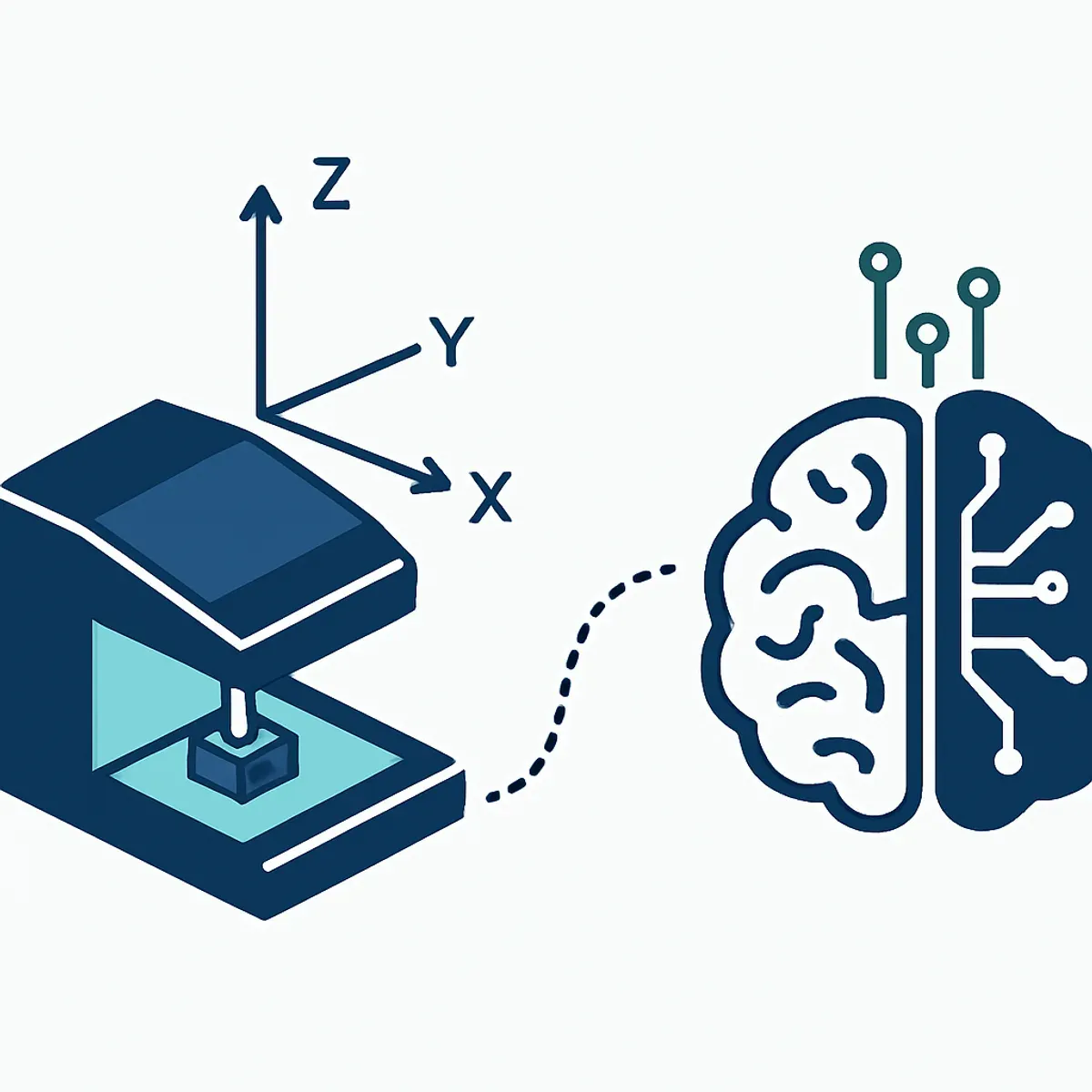
Tilt sensing artificial intelligence is the practice of feeding orientation and motion data from physical sensors into AI models that classify, predict, or react to how a device is positioned. A traditional tilt sensor only reports a raw angle. When you add AI, the system learns patterns, filters noise, and makes context-aware decisions, such as distinguishing a deliberate wrist flick from accidental movement.
Key definition: A tilt sensor measures the inclination of an object relative to gravity. Pair it with AI and the system no longer just reports angles, it interprets intent and context from those angles.
This distinction matters. A motion-controlled game, a fall-detecting smartwatch, and a self-balancing delivery robot all read the same type of data, but the intelligence layer is what makes each one useful. If you are exploring how this fits into a broader product, teams at ZoneTechify and WebPeak frequently build these sensor-plus-model pipelines into real applications.
The Core Sensors Behind Tilt Detection
Tilt sensing relies on a small family of hardware components, each measuring a different aspect of movement. Understanding them helps you choose the right setup for your project.
- Accelerometer: Measures linear acceleration and the constant pull of gravity, making it ideal for detecting static tilt and orientation.
- Gyroscope: Measures angular velocity, capturing how fast and in what direction a device rotates.
- Magnetometer: Acts like a digital compass, providing heading data that corrects long-term drift.
- IMU (Inertial Measurement Unit): Combines all three into one chip, giving a complete picture of motion across nine axes.
Most modern smartphones contain a MEMS-based IMU costing only a few dollars, which is why tilt-aware features have become standard rather than premium. According to industry analysts at Yole Group, the MEMS sensor market surpassed 14 billion US dollars, driven largely by motion sensing in consumer and automotive devices.
How Tilt Sensing AI Actually Works
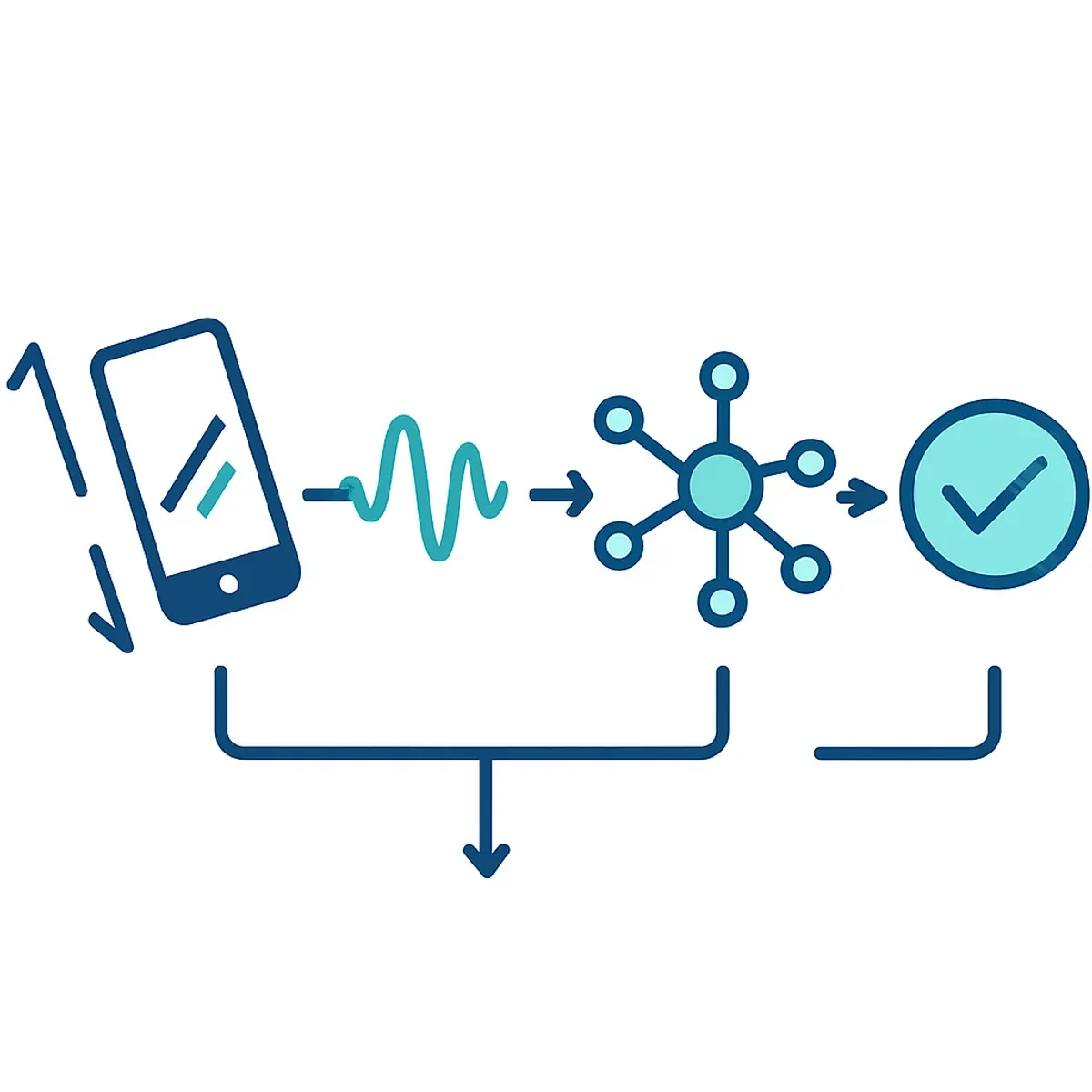
Tilt sensing AI works by transforming noisy raw sensor signals into clean, labeled decisions through a repeatable pipeline. The process is more about disciplined data handling than complex math.
- Data capture: The IMU streams continuous readings, often 50 to 200 times per second.
- Sensor fusion: Algorithms like the Kalman filter or complementary filter merge accelerometer and gyroscope data to cancel out individual weaknesses.
- Feature extraction: The system calculates meaningful values such as pitch, roll, and movement variance over short time windows.
- Model inference: A trained machine learning model classifies the motion, for example labeling it as walking, falling, or idle.
- Action: The application responds, whether that means rotating a screen, triggering an alert, or correcting a motor.
The AI layer shines in step four. Rules-based systems break when real-world movement gets messy, but a model trained on thousands of labeled samples generalizes far better. This is exactly where AI-focused development services, such as ZoneTechify's artificial intelligence solutions, help teams move from a fragile prototype to a reliable product.
Real-World Applications of Tilt Sensing AI
Tilt sensing AI appears across far more industries than most people realize. Below are the most impactful use cases I have encountered in real deployments.
Consumer Electronics and Gaming
Smartphones use tilt AI for screen rotation, image stabilization, and step counting. Gaming controllers and VR headsets rely on it for immersive motion control, where even a few milliseconds of latency can break the experience. AI smooths jitter and predicts motion to keep interactions fluid.
Health, Safety, and Wearables
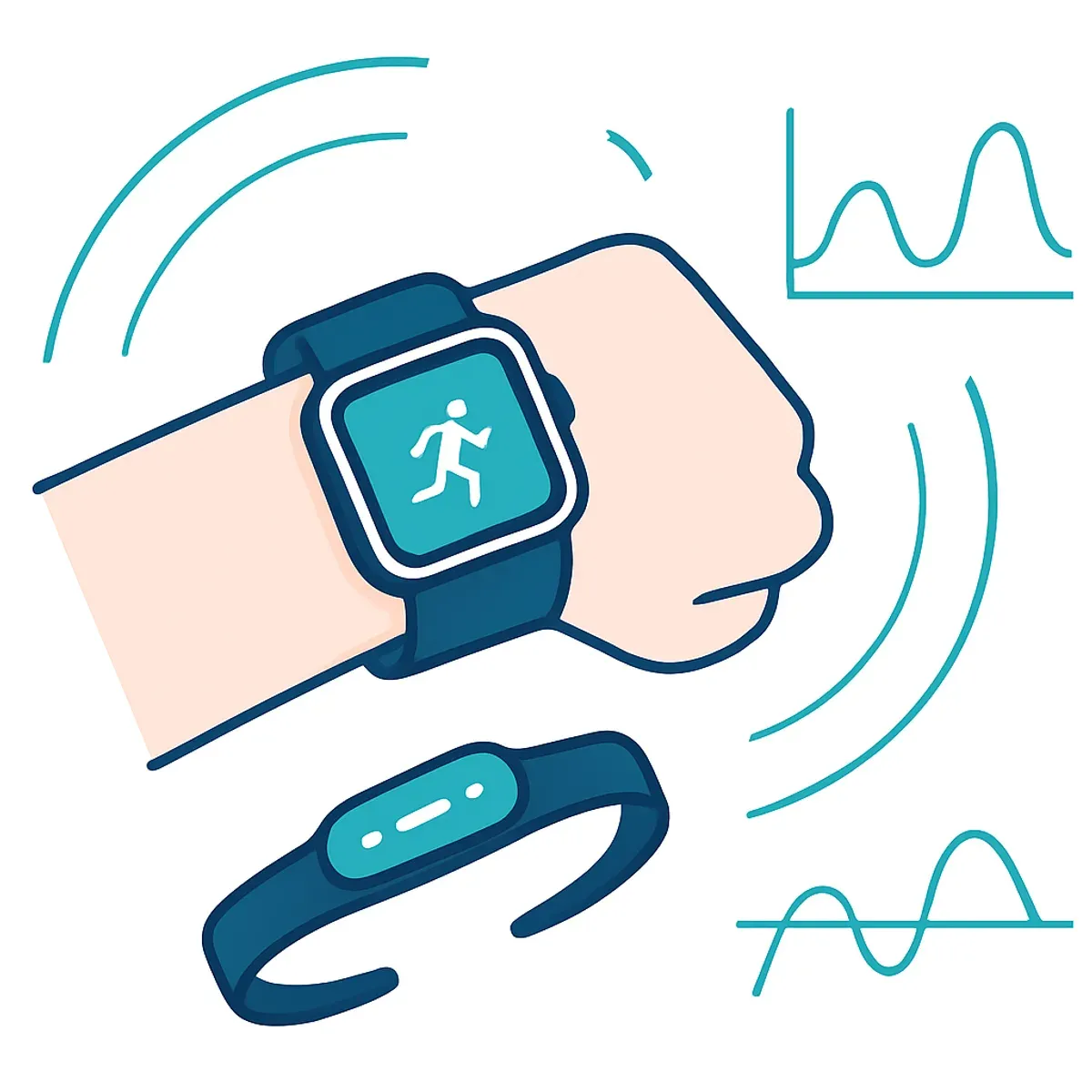
This is where tilt sensing AI saves lives. Smartwatches detect hard falls by recognizing the specific acceleration signature of a person hitting the ground, then automatically call for help. According to the World Health Organization, falls are the second leading cause of unintentional injury deaths globally, which makes accurate AI-driven detection genuinely valuable rather than a gimmick.
Robotics and Industrial Automation
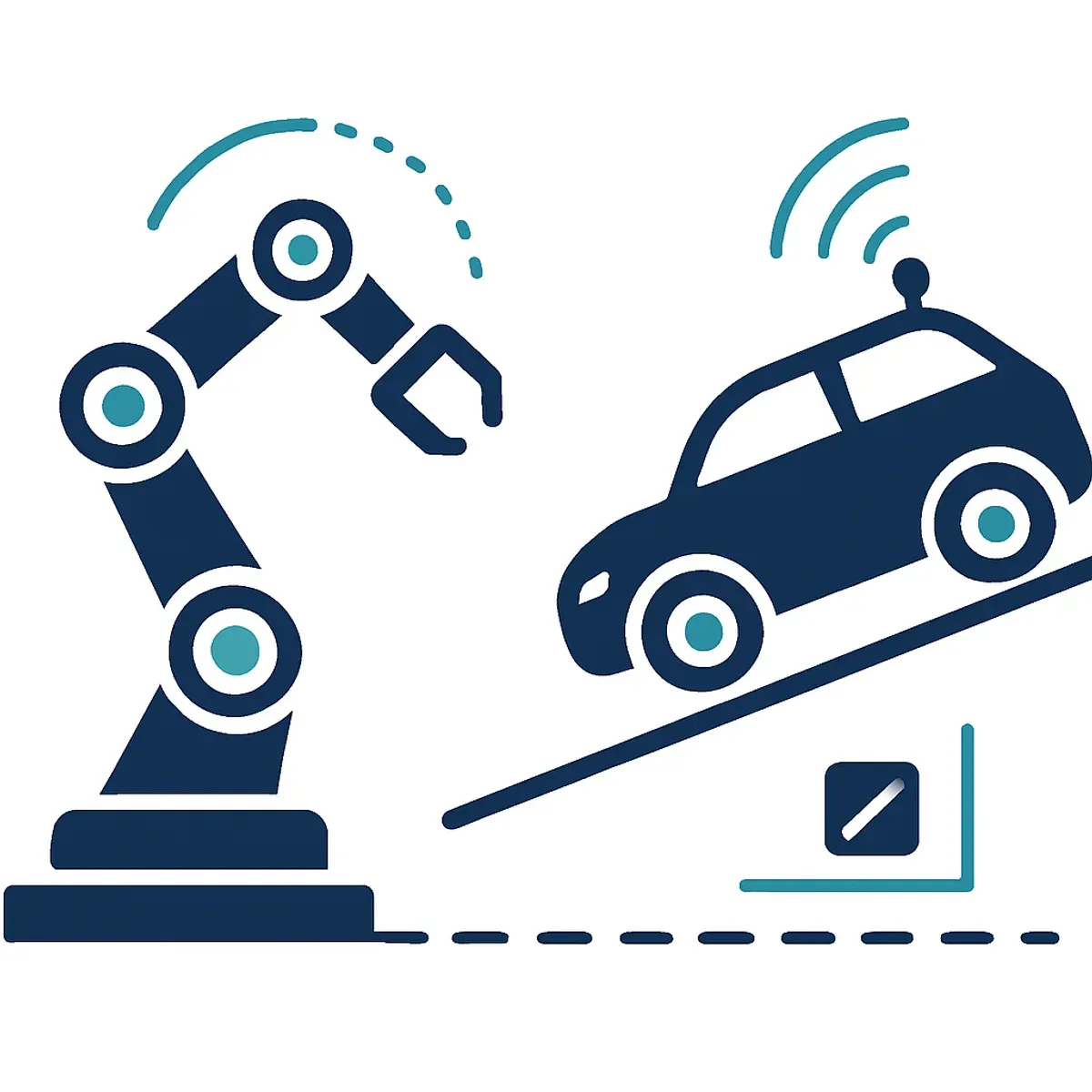
Self-balancing robots, drones, and autonomous vehicles depend on tilt sensing AI for stability. The model continuously predicts how the body is tipping and adjusts motors hundreds of times per second. In manufacturing, tilt-aware AI monitors machinery vibration and inclination to flag equipment failures before they happen, a practice known as predictive maintenance.
Tilt Sensing AI vs Traditional Tilt Sensors
The difference between a plain sensor and an AI-enhanced one becomes obvious when you compare them side by side. The table below summarizes the practical trade-offs.
| Capability | Traditional Tilt Sensor | Tilt Sensing AI |
|---|---|---|
| Output | Raw angle only | Interpreted intent and context |
| Noise handling | Manual filtering | Learned noise rejection |
| Adapts to new patterns | No | Yes |
| Gesture recognition | Limited | Strong |
| Setup complexity | Low | Moderate |
| Accuracy in real conditions | Variable | High |
The takeaway is simple: traditional sensors are cheaper and easier to deploy, but AI is essential whenever movement is unpredictable or the cost of a wrong decision is high.
How to Implement Tilt Sensing AI in Your Project
Implementing tilt sensing AI follows a clear path, and you do not need a research lab to get started. Here is the approach I recommend based on shipped projects.
- Define the decision: Decide exactly what the system must detect, such as a fall, a gesture, or an unsafe incline. A narrow goal produces a far more accurate model.
- Choose hardware: A standard 6-axis IMU covers most needs; add a magnetometer only if you need absolute heading.
- Collect labeled data: Record real movement across many users and conditions. Diversity here matters more than raw volume.
- Apply sensor fusion: Use a Kalman or complementary filter to stabilize readings before training.
- Train a lightweight model: Decision trees, random forests, or small neural networks often outperform heavy models for motion tasks and run on-device.
- Deploy on the edge: Run inference directly on the device to cut latency, protect privacy, and remove cloud dependency.
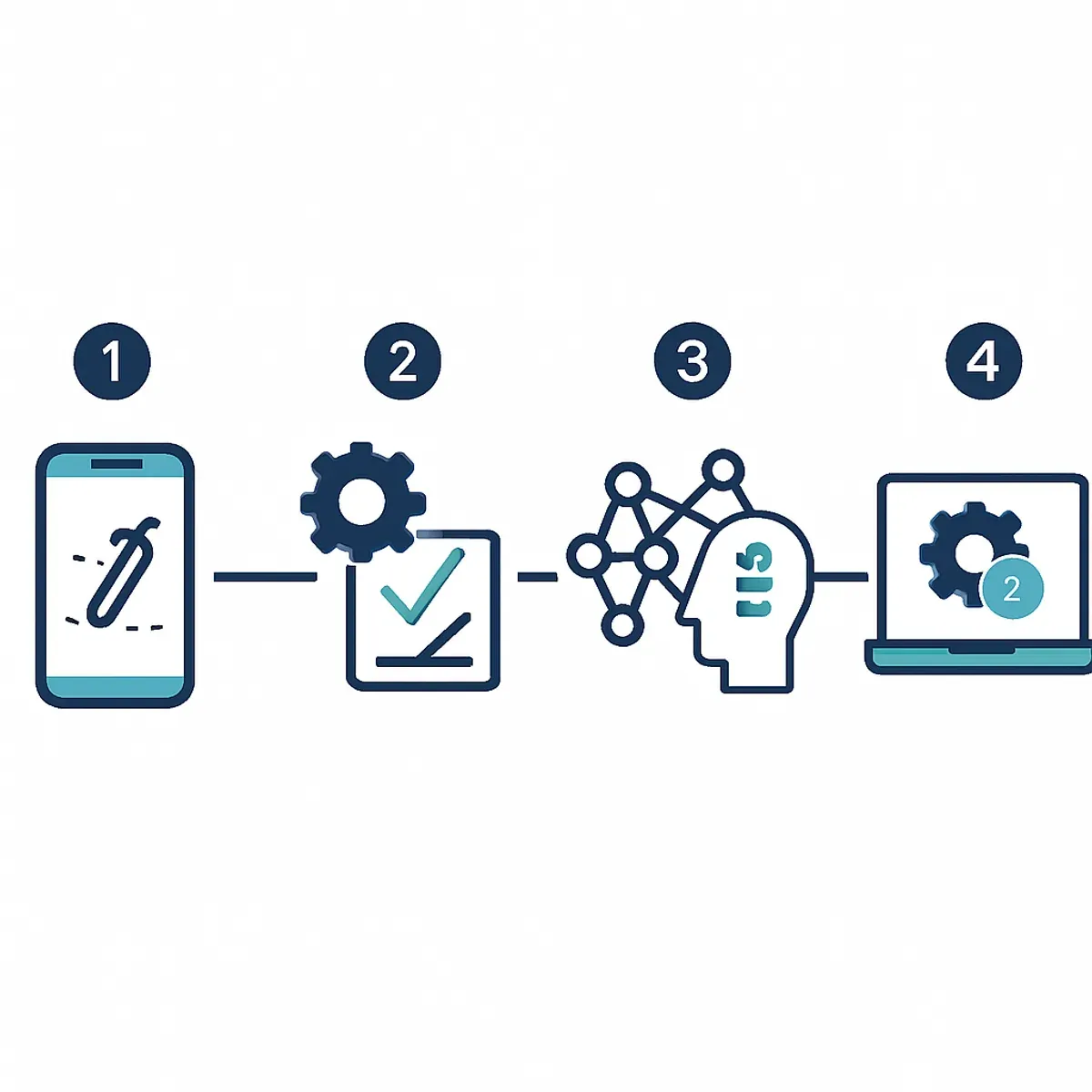
Edge deployment deserves emphasis. Running models locally means orientation decisions happen in milliseconds without sending sensitive movement data to a server, which both improves responsiveness and strengthens user trust.
Common Challenges and How to Solve Them
Even well-funded teams hit predictable obstacles with tilt sensing AI. Knowing them early saves months.
- Sensor drift: Gyroscopes accumulate error over time. Solve it with sensor fusion and periodic recalibration against the accelerometer.
- Overfitting to one user: A model trained on a single person fails in the wild. Collect diverse data across body types and habits.
- Battery drain: High sampling rates consume power. Use adaptive sampling that speeds up only when motion is detected.
- False positives: A jumpy fall detector erodes trust. Tune thresholds and add a confirmation window before triggering alerts.
The Future of Tilt Sensing AI
Tilt sensing AI is moving toward smaller, smarter, and more autonomous systems. The biggest shift is the rise of TinyML, where capable models run on microcontrollers using milliwatts of power. This unlocks tilt intelligence in disposable medical patches, smart packaging, and always-on wearables that last weeks on a single charge.
We are also seeing tilt data fused with other AI modalities, such as combining motion with audio or vision for richer context. A device might soon understand not just that you fell, but whether you got back up. For teams planning ahead, specialized partners like WebPeak's artificial intelligence services can help architect these multi-sensor systems from the ground up.

Key Takeaways
- Tilt sensing artificial intelligence pairs orientation sensors with machine learning to interpret movement intent, not just raw angles.
- The core hardware includes accelerometers, gyroscopes, and magnetometers, often combined into a single IMU chip.
- Sensor fusion and on-device edge inference are critical for accuracy, speed, and privacy.
- The MEMS sensor market exceeds 14 billion US dollars, reflecting how mainstream motion intelligence has become.
- Real applications span gaming, fall detection, robotics, and predictive maintenance, with falls being the second leading cause of unintentional injury deaths per the WHO.
- The future points toward TinyML and multi-sensor fusion for richer, always-on context.
Frequently Asked Questions (FAQ)
What is tilt sensing artificial intelligence in simple terms?
It is technology that reads how a device is tilted or moving using sensors, then uses AI to understand what that movement means. Instead of just reporting an angle, it decides whether you are walking, gesturing, falling, or holding still, and reacts accordingly in real time.
What sensors are used for tilt sensing AI?
The main sensors are accelerometers, which detect tilt relative to gravity, and gyroscopes, which measure rotation speed. Many devices add a magnetometer for heading and combine all three into an IMU chip. The AI model then interprets this fused data into meaningful, context-aware decisions.
Is tilt sensing AI accurate enough for safety applications?
Yes, when built correctly. Modern fall-detection systems in smartwatches achieve high accuracy by training on diverse real-world data and using sensor fusion to reduce false alarms. Accuracy depends heavily on quality training data, proper calibration, and a confirmation window before triggering critical alerts.
Can tilt sensing AI run without an internet connection?
Absolutely. Most tilt sensing AI runs directly on the device through edge computing, requiring no cloud or internet. This local processing delivers millisecond responses, preserves battery, and keeps your movement data private, which is essential for wearables and safety-critical devices.
How do I start building a tilt sensing AI project?
Start by defining one clear decision to detect, then pick a 6-axis IMU sensor. Collect diverse labeled motion data, apply sensor fusion to clean it, train a lightweight model, and deploy it on-device. Begin narrow, validate with real users, and expand from there.