A clear, expert breakdown of the Medit i900 artificial intelligence features, from real-time scan cleanup and smart margin detection to AI-driven accuracy and faster digital dental workflows.
Medit i900 Artificial Intelligence Features
The Medit i900 is one of the most talked-about intraoral scanners in modern dentistry, and most of that attention comes down to one thing: its artificial intelligence. After years of watching clinics struggle with slow scans, messy soft-tissue data, and re-takes, the AI built into the i900 represents a genuine shift in how digital impressions are captured. This guide explains exactly what those AI features do, why they matter for real clinical work, and how they compare to scanning without them.
We write a lot about practical technology at ZoneTechify, and the i900 is a textbook example of AI solving a real, repetitive human problem rather than being a marketing buzzword. Let's break it down honestly.
Quick Answer: The Medit i900 uses artificial intelligence to automatically clean scans in real time, remove soft tissue and saliva artifacts, detect preparation margins, fill data gaps, and speed up alignment. These AI features reduce re-scans, improve accuracy, and shorten the time from impression to final restoration design.
What Is the Medit i900 and Why Does AI Matter Here?
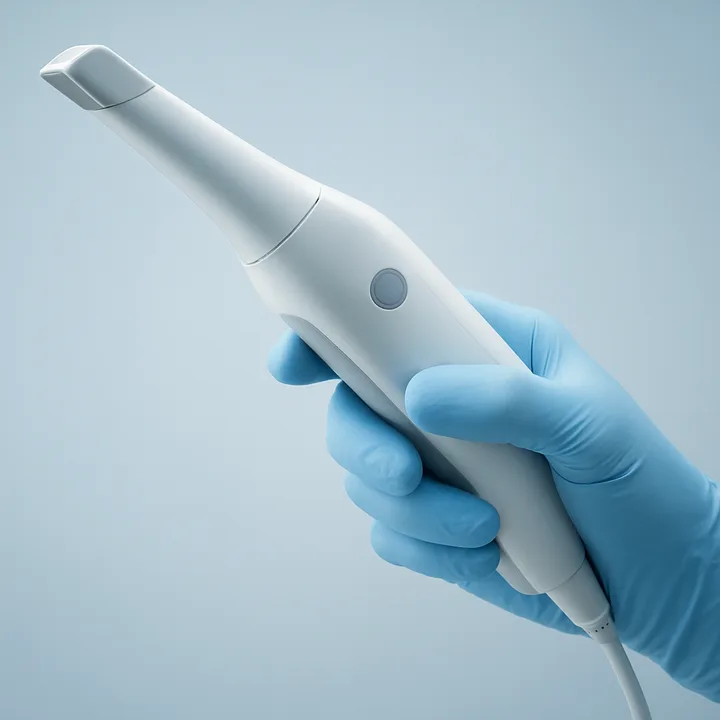
The Medit i900 is a high-speed handheld intraoral scanner used to capture 3D digital impressions of a patient's teeth and gums. Instead of traditional putty trays, it builds a precise digital model that flows directly into CAD/CAM and lab software.
Artificial intelligence matters because raw intraoral data is messy. During scanning, the camera picks up the tongue, cheeks, fingers, blood, and saliva. Historically, the clinician had to manually delete this junk, smooth surfaces, and re-scan gaps. The i900's AI handles most of this automatically, which is the difference between a 90-second scan and a frustrating five-minute one.
Definition: In intraoral scanning, artificial intelligence refers to trained algorithms that interpret, clean, and reconstruct 3D scan data automatically, without the operator manually editing every frame.
The Core Medit i900 Artificial Intelligence Features
The i900's intelligence is not a single feature but a stack of AI-driven capabilities working together during and after the scan. Here are the ones that genuinely change daily workflow.
1. Real-Time AI Scan Cleanup
The headline feature is real-time data processing. As you sweep the scanner across the arch, AI continuously removes unwanted soft tissue, the tongue, lips, and instruments from the live model.
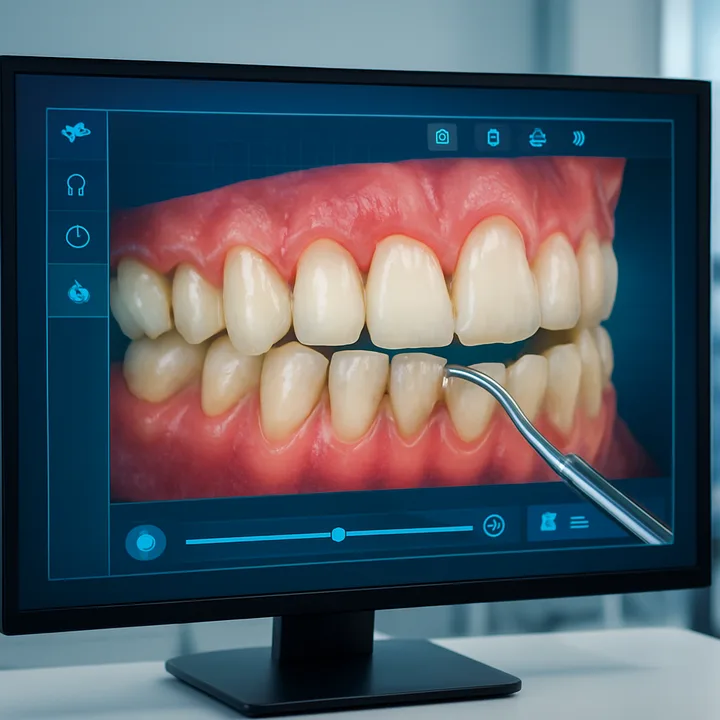
In practice, this means the model you see on screen is already close to final. You are not capturing a cloud of noise to clean up later, you are watching a clean arch build itself. This single feature is responsible for most of the time savings clinicians report, because manual trimming is the slowest part of legacy digital impressions.
2. AI-Powered Artifact and Saliva Removal
Saliva, bubbles, and movement create false surfaces that distort restorations. The i900's algorithms recognize these artifacts as non-anatomical and discard them before they corrupt the model.
The clinical payoff is reliability. A margin contaminated by a saliva artifact can lead to an ill-fitting crown and a remake. By filtering these out at capture, the AI protects the accuracy of the most critical areas of the scan.
3. Smart Margin Detection
For crown and bridge work, the preparation margin is everything. The i900 leverages AI-assisted margin detection to help identify and highlight the finish line on a prepared tooth.
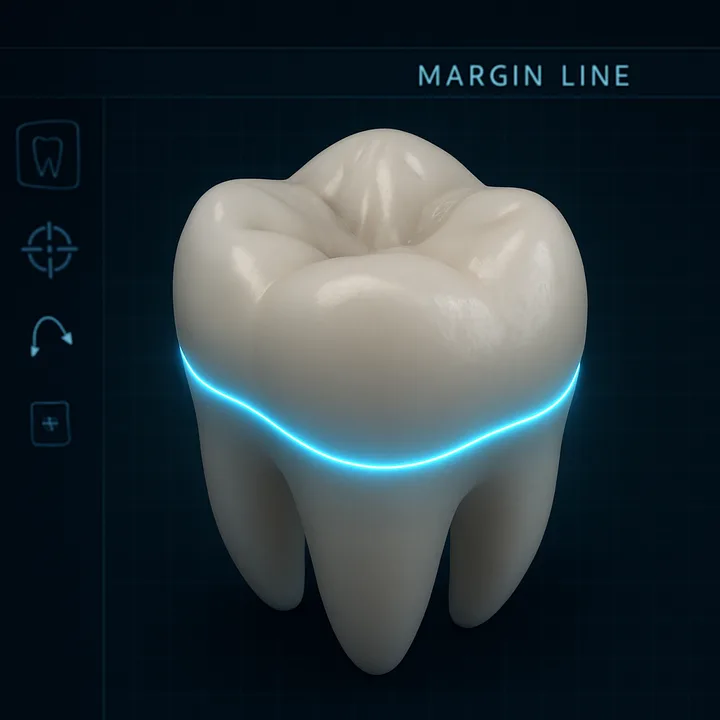
This matters because margin marking is one of the most error-prone manual steps in restorative design. AI assistance gives the clinician and the lab a clearer, more consistent starting point, reducing back-and-forth communication and guesswork between the operatory and the lab bench.
4. Intelligent Gap Filling and Hole Detection
When you miss a spot, the i900 flags it. The AI identifies missing data and incomplete regions, then guides you back to fill only what is needed instead of re-scanning the whole arch.
This targeted approach is a quiet but powerful efficiency gain. Rescanning a full quadrant to fix one shadowed groove wastes time and chair minutes; intelligent hole detection keeps corrections surgical and fast.
5. AI-Assisted Alignment and Stitching
The scanner's engine aligns thousands of individual frames into one coherent mesh. The i900 uses AI to improve frame stitching, so the model stays stable even with fast hand movement or interrupted scanning.
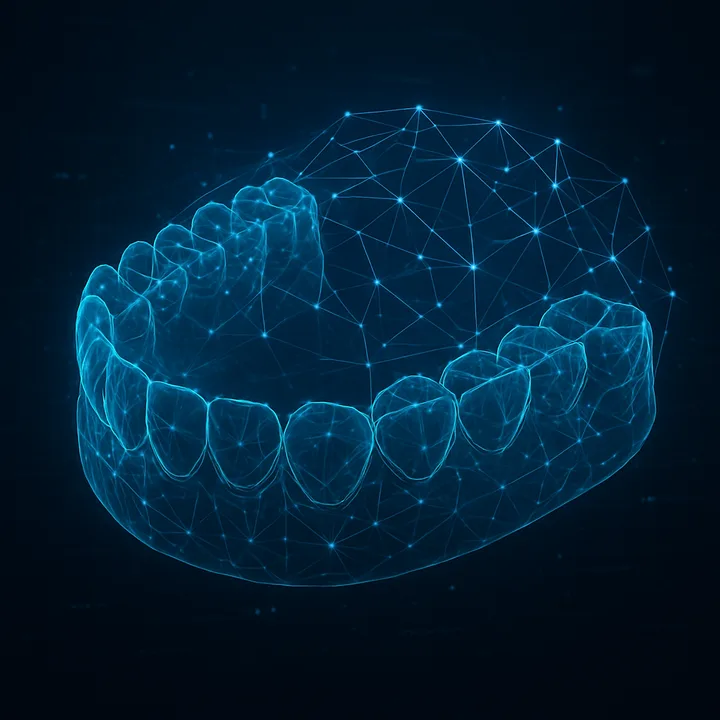
Stable stitching reduces the dreaded "double image" or warped arch that forces a restart. For full-arch cases, where small stitching errors compound across many teeth, robust AI alignment directly improves the trueness of the final model.
How the AI Features Improve Real Clinical Outcomes
The features above are not just convenient, they translate into measurable clinical and business value. Below is a plain comparison of scanning with AI assistance versus traditional manual digital scanning.
| Workflow Factor | Medit i900 (AI-Assisted) | Traditional Manual Scan |
|---|---|---|
| Soft-tissue cleanup | Automatic, real time | Manual deletion after scan |
| Scan re-takes | Low (targeted gap fill) | Higher (full re-scans common) |
| Margin identification | AI-assisted highlighting | Fully manual marking |
| Operator skill needed | Moderate | High |
| Time to clean model | Seconds | Several minutes |
| Lab communication | Clearer data | More clarification needed |
The pattern is consistent: AI shifts effort away from tedious manual correction and toward clinical decision-making. According to industry adoption research from Grand View Research, the global intraoral scanner market is growing at well over 9% annually, and AI-driven ease of use is repeatedly cited as a primary adoption driver. Faster, cleaner scans lower the barrier for clinics that previously avoided going digital.
The Faster Digital Dental Workflow
The real magic is how these AI features chain together into a smoother end-to-end workflow.
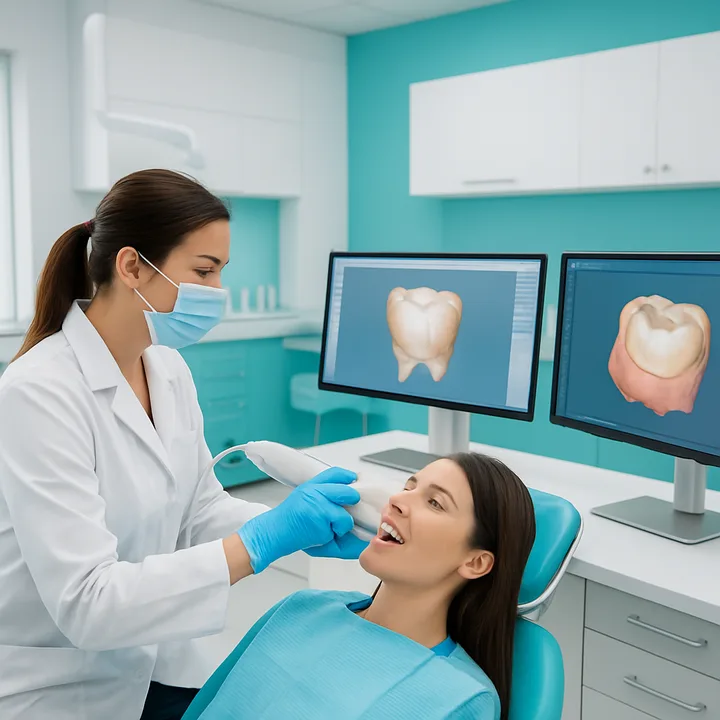
A typical AI-assisted i900 workflow looks like this:
- Scan the arch while AI removes soft tissue and artifacts live.
- Review the auto-flagged gaps and fill only those spots.
- Confirm the AI-assisted margin on prepared teeth.
- Export a clean, aligned model directly to CAD or the lab.
- Design the restoration with fewer data-quality interruptions.
Each AI feature removes a manual bottleneck from this chain. The cumulative effect is what clinicians describe as "faster chairside dentistry" without sacrificing precision. This is the same principle we apply when building automation tools, and it mirrors the AI strategy work covered at WebPeak: use intelligence to delete repetitive steps, not to add complexity.
If your practice or product team wants to build similar AI-driven efficiency into your own software, our artificial intelligence services focus on exactly this kind of practical, workflow-first automation.
Accuracy: Does AI Make the Scan Better or Just Faster?
A fair concern is whether automation sacrifices accuracy for speed. With the i900, the answer is that well-designed AI does both, because cleaner input data produces a truer model.
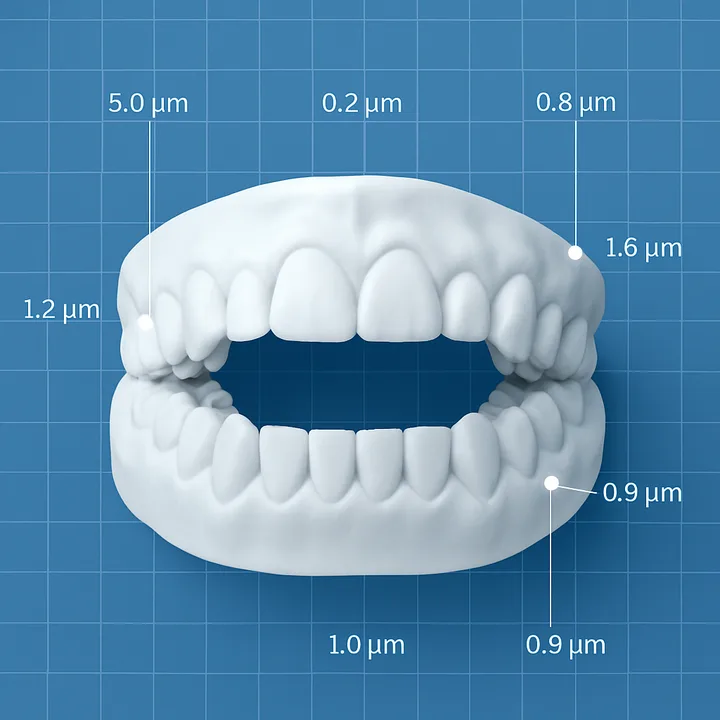
Modern intraoral scanners are engineered for accuracy measured in microns, and trueness depends heavily on eliminating noise. Studies published in dental journals have repeatedly shown that artifact contamination, not the camera itself, is a leading cause of impression error. By removing those artifacts at the source, the i900's AI improves the consistency of results across different operators, including less experienced ones.
The key insight: AI does not replace clinical judgment, it standardizes data quality so judgment can focus on dentistry instead of data cleanup.
How the Medit i900 AI Compares to Going Without It
For clinics weighing the upgrade, the practical question is what AI specifically removes from the daily grind.
- Less manual editing: Real-time cleanup eliminates most post-scan trimming.
- Fewer remakes: Cleaner margins and stable stitching reduce ill-fitting restorations.
- Lower learning curve: New staff produce usable scans sooner.
- Better lab handoffs: Cleaner files mean fewer clarification emails.
- More predictable chair time: Targeted corrections keep appointments on schedule.
None of these are flashy, but collectively they are why AI-assisted scanning is becoming the clinical default rather than a premium novelty.
The Bigger Picture: AI in Future Dentistry
The i900 is an early, practical example of where dental technology is heading. As AI models improve, expect scanners to move from cleaning data to actively suggesting clinical insights, flagging suspected caries, wear, or margin issues for the clinician to verify.
The principle stays the same: AI handles pattern recognition and repetitive processing, while humans make the final clinical calls. That balance, intelligent automation with human oversight, is exactly what makes the Medit i900's feature set feel mature rather than gimmicky.
Key Takeaways
- The Medit i900's core AI features are real-time scan cleanup, artifact and saliva removal, smart margin detection, intelligent gap filling, and AI-assisted alignment.
- AI removes the slowest part of digital impressions, manual data cleanup, cutting scan-to-model time from minutes to seconds.
- Cleaner input data improves accuracy and trueness, especially for full-arch and crown-and-bridge cases.
- The intraoral scanner market is growing over 9% annually, with AI ease-of-use cited as a major adoption driver.
- AI standardizes scan quality across operators, lowering the skill barrier and reducing costly remakes.
Frequently Asked Questions (FAQ)
What artificial intelligence features does the Medit i900 have?
The Medit i900 includes real-time AI scan cleanup, automatic soft-tissue and saliva artifact removal, AI-assisted margin detection, intelligent gap and hole detection, and improved AI frame alignment. Together these reduce manual editing, lower re-scan rates, and produce cleaner, more accurate 3D dental models faster.
Does the Medit i900 AI improve scan accuracy or just speed?
It improves both. By removing saliva, soft tissue, and movement artifacts during capture, the AI feeds cleaner data into the model. Since artifact contamination is a leading cause of impression errors, eliminating it at the source raises trueness and consistency, not just scanning speed, across different operators.
Is the Medit i900 hard to learn for new staff?
No, and that is a key benefit of its AI. Because the scanner automatically cleans data and flags missed areas in real time, less experienced users can produce clinically usable scans sooner. The AI standardizes quality, lowering the skill barrier that traditionally made digital scanning intimidating for new team members.
How does AI margin detection help with crowns and bridges?
AI margin detection highlights the preparation finish line on a scanned tooth, giving clinicians and labs a clearer, more consistent starting reference. Since manual margin marking is highly error-prone, this assistance reduces guesswork, improves restoration fit, and cuts the back-and-forth communication between the operatory and the dental lab.
Does the Medit i900 reduce the need for re-scans?
Yes. Instead of forcing full re-scans, the i900 uses AI hole detection to flag only the missing or incomplete areas. This lets clinicians fill targeted gaps in seconds rather than recapturing entire quadrants, saving chair time and reducing patient discomfort during longer appointments.
Will AI replace the dentist's judgment when scanning?
No. The i900's AI handles repetitive data processing, cleanup, alignment, and artifact removal, while the clinician makes all clinical decisions. The technology standardizes data quality so professionals can focus on dentistry. Future AI may suggest insights, but human verification remains essential for safe, accurate treatment.