
Learn how to run competitor analysis for affiliate marketing the right way uncover keyword gaps, traffic sources, backlinks, and monetization tactics to outrank rivals.
Competitor Analysis Affiliate Marketing
Affiliate marketing is no longer a low-competition gold rush. Every profitable niche already has established players ranking, building email lists, and earning commissions. The fastest way to catch up and eventually overtake them is not guesswork it is structured competitor analysis. When you study what already works for others in your niche, you shorten your learning curve dramatically and avoid expensive mistakes. This guide breaks down exactly how to perform competitor analysis for affiliate marketing, the tools to use, and how to turn raw data into commissions.

After years of building affiliate sites and auditing them for clients at ZoneTechify, one pattern stays constant: the affiliates who win are the ones who treat competitor research as an ongoing discipline, not a one-time task. Below is the same framework we use in real campaigns.
Quick Answer: Competitor analysis in affiliate marketing is the process of studying rival affiliate sites to uncover their keywords, traffic sources, backlinks, content gaps, and monetization tactics. You then use those insights to build better content, target underserved keywords, and earn higher commissions faster.
What Is Competitor Analysis in Affiliate Marketing?
Competitor analysis in affiliate marketing is the systematic study of other affiliates competing for the same audience and commissions. It involves identifying who ranks for your target keywords, how they attract traffic, which affiliate programs they promote, and where their content has weaknesses you can exploit.
The goal is not to copy competitors. It is to find their proven winners and unserved gaps so your resources go toward strategies with the highest probability of return. A good analysis answers three questions: who is winning, why are they winning, and where are they vulnerable.
Unlike broad market research, affiliate competitor analysis is laser-focused on revenue signals comparison pages, product reviews, buyer-intent keywords, and the specific programs your rivals monetize with. These are the pages that actually generate commissions.
Why Competitor Analysis Matters for Affiliate Success
The affiliate space is crowded and growing. According to industry data from Influencer Marketing Hub, the global affiliate marketing industry is valued at over 17 billion dollars and continues to expand each year. That growth attracts more competitors, which means ranking by luck is no longer realistic.

There is also a hard search reality to confront. According to Backlinko's analysis of Google click data, the first organic result earns roughly 27 percent of all clicks, while results on page two receive almost none. In affiliate marketing, where commissions depend on clicks, ranking on page one is not optional. Competitor analysis tells you precisely how much content depth, backlink authority, and topical coverage you need to reach those positions.
The payoff is efficiency. Instead of publishing 50 random articles and hoping something sticks, you publish 15 strategically chosen pieces that target proven keywords with achievable difficulty. That is the difference between burning a budget and building an asset.
Step-by-Step Competitor Analysis Framework
Follow this practical sequence to move from confusion to a clear action plan.
1. Identify Your Real Competitors
Your real competitors are the sites that rank for your money keywords, not necessarily the biggest brands in your niche. Search your top 10 target keywords in an incognito window and note which domains appear repeatedly. These recurring sites are your true SERP competitors. Separate them into two groups: large authority sites you will study for ideas, and similar-sized sites you can realistically outrank within months.
2. Analyze Their Keyword Strategy
Use tools like Ahrefs, Semrush, or Ubersuggest to pull the keywords your competitors rank for. Focus on buyer-intent terms: best, review, vs, alternative, and discount keywords. These convert far better than informational queries.

The most valuable technique here is the keyword gap analysis comparing your site against two or three competitors to reveal keywords they rank for that you do not. Each gap is a documented opportunity where demand already exists and a competitor has proven money can be made.
3. Study Their Traffic Sources
Not every affiliate relies on Google. Some thrive on Pinterest, YouTube, email, or paid ads. Understanding the traffic mix tells you where the audience actually lives.
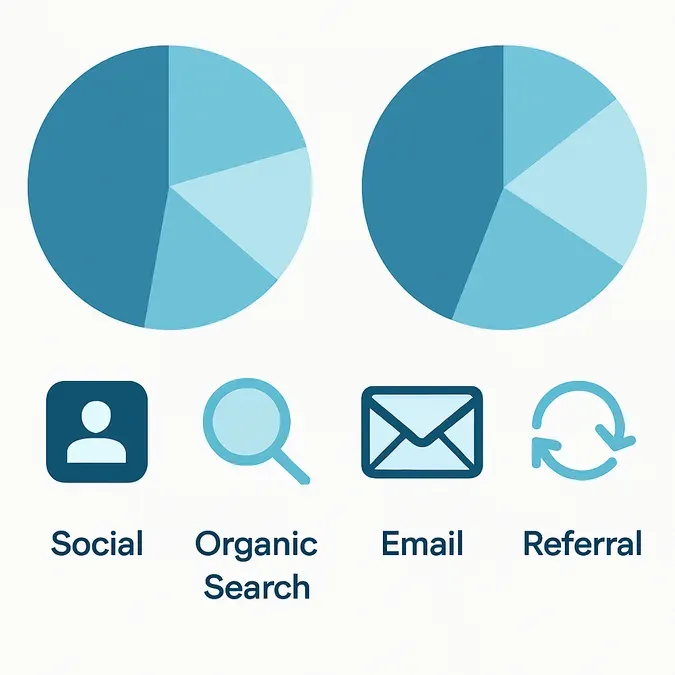
Use Similarweb or Semrush traffic analytics to estimate how much traffic comes from organic search, social, direct, and referral channels. If a competitor earns most of their traffic from Pinterest, you may discover a channel you have been ignoring entirely. Diversified traffic also signals a more resilient business worth studying closely.
4. Audit Their Backlink Profile
Backlinks remain one of Google's strongest ranking signals, and competitor backlinks are a roadmap to link-building opportunities you can replicate.
Export a competitor's backlinks and filter for high-authority, contextual links from blogs, resource pages, and roundups. If three competitors all earned links from the same resource page, that page is a realistic target for you too. Prioritize quality and relevance over raw volume a handful of authoritative niche links outperforms hundreds of low-quality ones.
5. Map Their Content Strategy
Review the structure, depth, and format of your competitors' top-performing pages. Note word counts, the use of comparison tables, images, videos, and how they place affiliate links and calls to action.
Look for content gaps: questions they fail to answer, outdated information, thin reviews, or missing product comparisons. These gaps are your fastest path to producing genuinely better content. A professional content writing service can help you scale this once you know exactly what to create.
6. Reverse-Engineer Their Monetization
Finally, study how competitors actually earn. Check which affiliate programs they join, how they disclose links, whether they use comparison widgets, and how aggressively they place calls to action.
This often reveals higher-paying programs you did not know existed, or smarter placement strategies that lift conversion rates. If several competitors promote the same program, it is usually because that program converts and pays well.
Best Tools for Affiliate Competitor Analysis
The right tools turn hours of manual work into minutes. Here is how the most popular options compare.
| Tool | Best For | Keyword Gap | Backlink Data | Free Tier |
|---|---|---|---|---|
| Ahrefs | Backlinks and keywords | Yes | Excellent | Limited |
| Semrush | All-in-one analysis | Yes | Strong | Limited |
| Ubersuggest | Budget research | Yes | Basic | Yes |
| Similarweb | Traffic sources | No | No | Yes |
| Google Search Console | Your own data | No | Basic | Yes |
Start with one paid tool and one free tool. Most affiliates do not need three subscriptions they need consistency in using one tool well.
Turning Analysis Into Action
Data is worthless without execution. After completing your analysis, build a simple priority list: target the keyword gaps with the highest search volume and lowest difficulty first, pursue the backlink opportunities that appear across multiple competitors, and fill the content gaps where rivals are weakest.

Review your competitors quarterly, because rankings, programs, and strategies shift constantly. Teams at WebPeak treat competitor analysis as a living document updated every few months, not a file that gets created once and forgotten. This ongoing rhythm is what separates affiliates who plateau from those who keep compounding their growth.
Key Takeaways
- Competitor analysis in affiliate marketing means studying rivals' keywords, traffic, backlinks, content, and monetization to find proven opportunities.
- The global affiliate marketing industry exceeds 17 billion dollars, making structured research essential to compete.
- The first organic Google result earns around 27 percent of clicks, so page-one ranking directly drives commissions.
- Keyword gap analysis reveals proven, profitable keywords your competitors already rank for and you do not.
- Backlink audits expose replicable link-building targets, while content audits reveal gaps you can fill with better pages.
- Review competitors quarterly and act on the highest-volume, lowest-difficulty opportunities first.
Frequently Asked Questions (FAQ)
What is competitor analysis in affiliate marketing?
Competitor analysis in affiliate marketing is the process of studying rival affiliate sites to learn their keywords, traffic sources, backlinks, content strategy, and monetization methods. You use those insights to create stronger content, target proven keywords, and earn commissions faster than starting from scratch.
How do I find my affiliate marketing competitors?
Search your top buyer-intent keywords in an incognito browser and note which domains appear repeatedly across results. Those recurring sites are your real SERP competitors. Tools like Ahrefs or Semrush can also list competing domains automatically based on shared keyword rankings and overlapping audiences.
Which tools are best for affiliate competitor analysis?
Ahrefs and Semrush are the strongest all-in-one tools for keywords and backlinks, while Similarweb excels at traffic source analysis. Ubersuggest offers a budget-friendly option, and Google Search Console tracks your own performance. Most affiliates only need one paid tool plus one free tool to start.
How often should I analyze my competitors?
Review your main competitors at least once per quarter, since rankings, affiliate programs, and content strategies change frequently. Run a deeper analysis whenever you enter a new sub-niche, notice a ranking drop, or plan a major content push. Consistent quarterly reviews keep your strategy current.
Can competitor analysis really increase affiliate commissions?
Yes. By revealing proven keywords, high-converting programs, and replicable backlinks, competitor analysis helps you focus resources on strategies that already generate revenue. Instead of guessing, you target documented opportunities, which improves rankings, click-through rates, and ultimately the commissions your affiliate content earns.