
A clear, expert guide to Tai Artificial Intelligence: what it means, how AI works, real business applications, implementation steps, and where the technology is heading.
Tai Artificial Intelligence

Artificial intelligence has moved from research labs into the everyday tools we use to write, sell, build, and decide. Yet for many people searching for "tai artificial intelligence," the goal is simple: understand what AI actually is, how it works, and how to put it to practical use without the hype. This guide answers exactly that. Whether "Tai" is a project name, a product, or simply how you typed the search, the underlying intent is the same, learning how modern AI can deliver measurable value.
We will define the core concepts in plain language, show how the technology powers real business outcomes, walk through a realistic implementation path, and look honestly at the risks. Everything here reflects how teams actually deploy AI today, not a theoretical wishlist.
Quick Answer: Tai artificial intelligence refers to applied AI, software that learns from data to perform tasks like prediction, language understanding, and automation. It works through machine learning models trained on examples, and businesses use it to cut costs, personalize experiences, and make faster, evidence-based decisions.
What Is Artificial Intelligence?
Artificial intelligence is the field of building software that performs tasks normally requiring human intelligence, such as recognizing speech, understanding text, spotting patterns, or making predictions. Unlike traditional programs that follow fixed rules, AI systems learn behavior from data.
The most important branch today is machine learning (ML), where a model improves its accuracy by studying examples rather than being explicitly coded for every case. A spam filter that learns from millions of flagged emails is machine learning in action.
A more advanced layer, deep learning, uses multi-layered neural networks to handle complex inputs like images, audio, and natural language. This is the engine behind tools such as ChatGPT, image generators, and voice assistants.
For a deeper look at how applied AI fits into modern digital products, ZoneTechify and WebPeak both publish practical resources for teams adopting these tools.
How Tai Artificial Intelligence Actually Works

At its core, AI follows a repeatable cycle. Understanding this cycle removes most of the mystery around the technology.
- Data collection - The system gathers relevant examples, such as customer messages, sales records, or images.
- Training - An algorithm studies the data, adjusting internal parameters until it can map inputs to correct outputs.
- Validation - The model is tested on data it has never seen to confirm it generalizes instead of memorizing.
- Inference - The trained model is deployed to make live predictions or generate content.
- Feedback - Real-world results feed back into the system to improve future versions.
The quality of an AI system depends far more on data than on clever code. According to widely cited industry research, data scientists spend roughly 80% of their time cleaning and preparing data, a reminder that reliable inputs matter more than fancy algorithms.
Key Terms Defined
- Model: The trained mathematical function that turns inputs into predictions.
- Training data: The labeled examples used to teach the model.
- Parameter: An internal value the model adjusts during learning.
- Inference: The act of using a trained model to produce results in real time.
Why Businesses Are Adopting AI Now
Adoption is accelerating because the return is concrete. According to McKinsey's global research, the share of organizations regularly using AI has more than doubled in recent years, with the steepest growth coming from generative AI in marketing, sales, and product development.
Three forces explain the momentum:
- Lower barriers: Cloud APIs let small teams use powerful models without owning expensive infrastructure.
- Proven ROI: Companies report measurable gains in productivity and customer satisfaction after deploying AI in support and content workflows.
- Competitive pressure: When competitors automate, standing still becomes a strategic risk.
The most common high-value use cases include customer support automation, demand forecasting, fraud detection, personalized recommendations, and content generation. Each one shares a pattern: a repetitive, data-rich task where speed and consistency matter.
AI Automation: Turning Insight Into Action
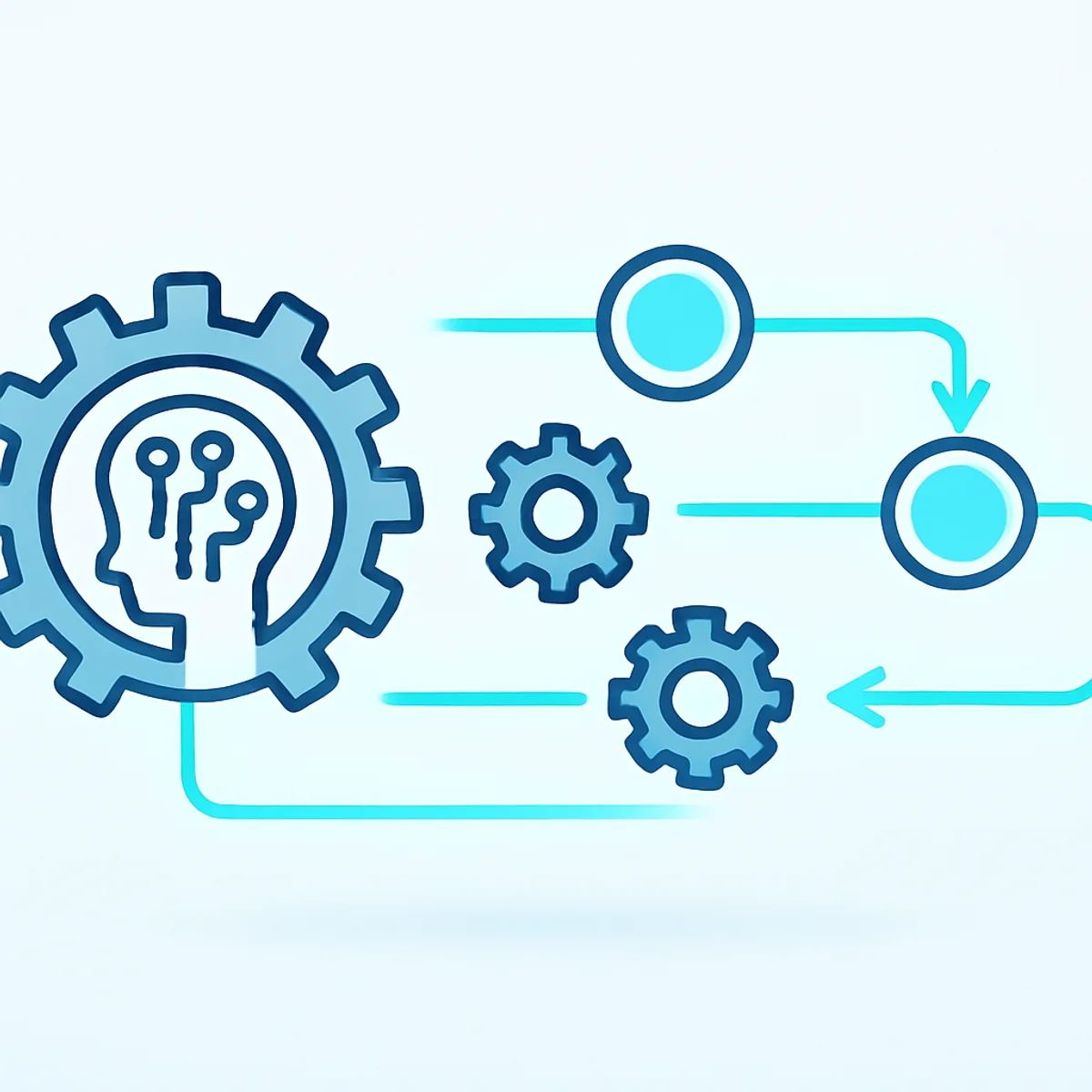
The biggest practical impact of AI is automation, letting software handle work that once consumed hours of manual effort. Modern automation goes beyond simple rules; it adapts based on context.
Consider customer support. An AI assistant can read an incoming ticket, classify its intent, draft a tailored response, and route complex cases to a human. The result is faster resolution and lower cost per ticket, without sacrificing quality on edge cases.
Teams building these workflows often combine AI with their existing systems through services like ZoneTechify's artificial intelligence solutions and specialized WebPeak AI services, which focus on integrating models into real operational pipelines rather than isolated demos.
The rule of thumb: automate tasks that are frequent, rule-bounded, and tolerant of occasional human review. Avoid fully automating high-stakes decisions, like medical diagnoses or legal rulings, without expert oversight.
AI in Data Analytics and Decision-Making

AI transforms raw data into decisions. Where traditional analytics tells you what happened, AI-driven analytics predicts what will happen and recommends what to do next.
Practical examples include:
- Forecasting: Predicting inventory needs or revenue trends from historical patterns.
- Segmentation: Grouping customers by behavior to personalize offers.
- Anomaly detection: Flagging unusual transactions that may indicate fraud.
- Sentiment analysis: Measuring how customers feel from reviews and messages at scale.
The value is speed and scale. A human analyst might review a few hundred reviews; an AI model can process millions in minutes and surface themes a person would miss. The key is treating AI output as decision support, with humans validating high-impact conclusions.
Comparison: Traditional Software vs. AI Systems
| Factor | Traditional Software | AI Systems |
|---|---|---|
| Logic source | Hand-coded rules | Learned from data |
| Adapts over time | No, needs manual updates | Yes, retrains on new data |
| Best for | Fixed, predictable tasks | Pattern recognition, prediction |
| Handles ambiguity | Poorly | Well, within trained limits |
| Transparency | High, easy to trace | Lower, can be a black box |
| Maintenance | Code changes | Data quality and retraining |
This comparison highlights the trade-off: AI delivers flexibility and scale but demands strong data practices and ongoing monitoring. Traditional software remains the right choice for tasks with clear, stable rules.
How to Implement AI in Your Organization
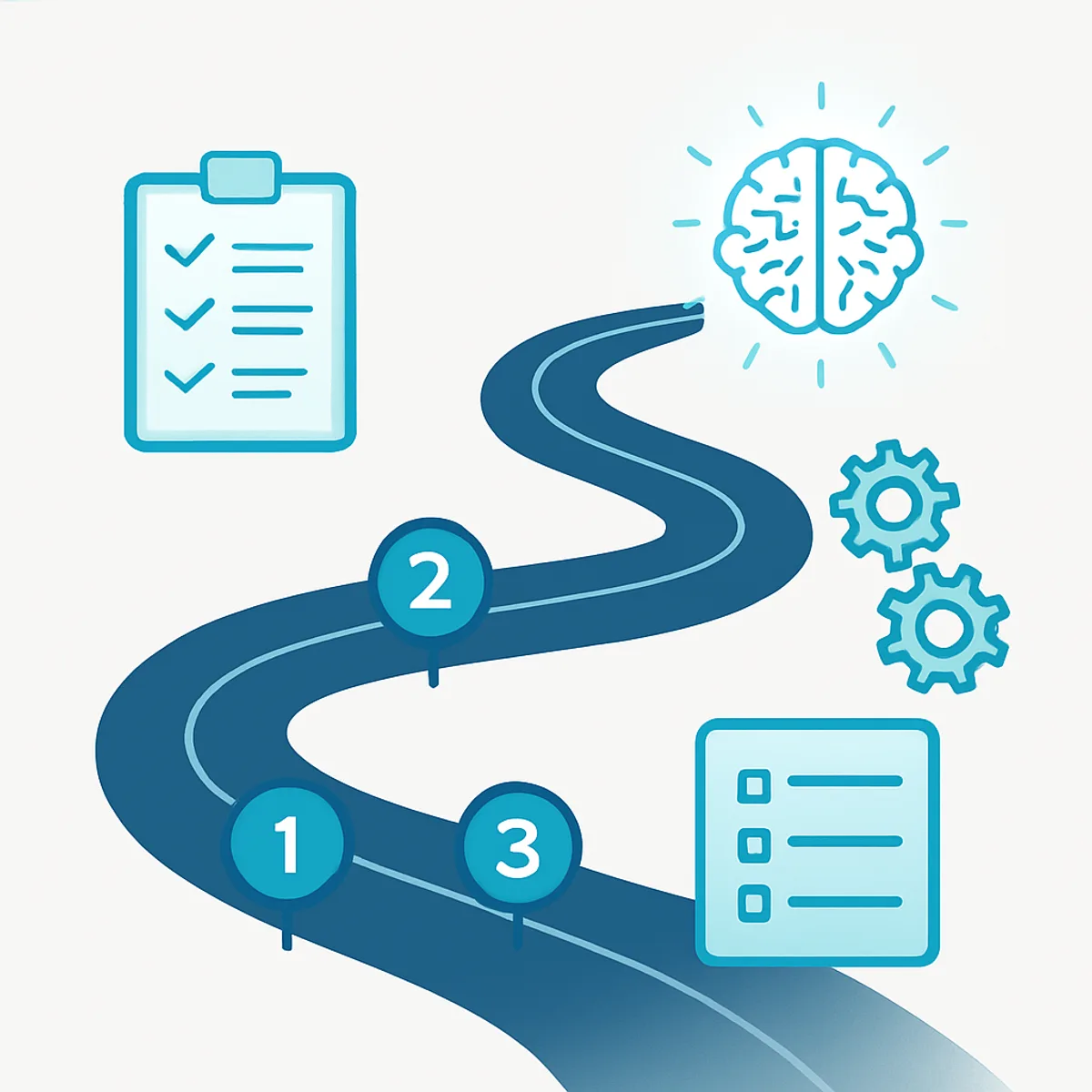
Successful AI adoption follows a disciplined path. Skipping steps is the most common reason projects stall.
- Start with a problem, not a tool. Identify one measurable pain point, such as slow ticket response or inaccurate forecasting.
- Check your data. Confirm you have clean, relevant, and sufficient data before building anything.
- Pilot small. Run a limited test against a clear success metric, like reducing response time by 30%.
- Measure honestly. Compare AI performance to your current baseline, not to perfection.
- Scale what works. Expand only after a pilot proves value, and keep humans in the loop.
- Monitor continuously. Models drift as the world changes, so plan for retraining.
This incremental approach reduces risk and builds internal trust. Organizations that begin with focused pilots consistently outperform those chasing broad, undefined "AI transformation."
Risks and Responsible Use
AI is powerful but not flawless. Responsible deployment means understanding its limits.
- Bias: Models can inherit unfairness from biased training data, requiring careful auditing.
- Hallucination: Generative models can produce confident but false statements, so outputs need verification.
- Privacy: Sensitive data must be handled under regulations like GDPR.
- Over-reliance: Treating AI as infallible leads to costly mistakes.
The trustworthy approach is transparency: document what data trains your models, disclose AI use to customers where appropriate, and keep human review for consequential decisions. Trust is earned through accountability, not automation alone.
The Future of Artificial Intelligence

The near future of AI points toward systems that are more capable, more specialized, and more integrated. Three trends stand out.
First, agentic AI, models that can plan and carry out multi-step tasks autonomously, is moving from experiment to production. Second, smaller, efficient models are making AI cheaper to run on everyday devices. Third, domain-specific AI tailored to fields like healthcare, law, and finance is delivering higher accuracy than general-purpose tools.
The practical takeaway is that AI will increasingly act as a collaborator embedded in workflows rather than a separate tool you visit. Teams that learn to direct and verify AI today will hold a durable advantage tomorrow.
Key Takeaways
- Tai artificial intelligence is applied AI: software that learns from data to predict, understand language, and automate tasks.
- Machine learning powers most modern AI, improving through training rather than hand-coded rules.
- Data quality matters more than algorithms; specialists spend around 80% of their time preparing data.
- Business adoption is rising fast, led by generative AI in marketing, sales, and support.
- Successful implementation starts with one clear problem, a small pilot, and honest measurement.
- Responsible use requires guarding against bias, hallucination, and over-reliance through human oversight.
Frequently Asked Questions (FAQ)
What does Tai artificial intelligence mean?
Tai artificial intelligence generally refers to applied AI, real-world software that learns from data to perform tasks like prediction, automation, and language understanding. The focus is practical use: helping businesses and individuals work faster and smarter rather than studying AI purely as theory.
Is artificial intelligence the same as machine learning?
Not exactly. Artificial intelligence is the broad goal of building smart software, while machine learning is the main method used to achieve it. Machine learning trains models on data so they improve automatically. Deep learning is a powerful subset of machine learning behind tools like chatbots.
How can a small business start using AI?
Start with one clear, repetitive problem such as answering common support questions. Use affordable cloud-based AI tools, run a small pilot, and measure results against your current process. Scale only after the pilot proves value, and always keep a human reviewing important decisions.
Is AI safe and reliable to use in business?
AI is reliable when used responsibly. It can make mistakes, show bias, or generate false information, so human oversight is essential for important decisions. Protect customer data, audit your models, and disclose AI use where appropriate. Treat AI as decision support, not an unquestionable authority.
Will AI replace human jobs?
AI mostly replaces specific tasks rather than entire jobs. It automates repetitive work, freeing people for creative, strategic, and relationship-driven roles. The most successful workers learn to direct and verify AI output, using it as a productivity partner rather than competing with it directly.