
Discover how computer science algorithms like optimal stopping, explore-exploit, and Bayes' rule can sharpen the everyday decisions you make as a human.
The Computer Science of Human Decisions

Every day you solve problems that mathematicians and computer scientists have studied for decades: when to stop searching for an apartment, which restaurant to try, how to organize your inbox, and whether to trust a first impression. The remarkable insight from computer science is that these are not just messy human dilemmas. They are well-defined computational problems with proven, often surprising, optimal strategies. This is the heart of what researchers call the computer science of human decisions.
This article translates rigorous algorithms into plain decisions you can actually use. You will learn the math behind knowing when to commit, when to keep exploring, and why a slightly messy desk can be mathematically efficient. The goal is practical: better choices with less regret, backed by logic that holds up under scrutiny.
Quick Answer: The computer science of human decisions applies algorithms like optimal stopping, explore-exploit, sorting, caching, and Bayes' rule to everyday choices. These proven strategies tell you when to commit, when to keep searching, and how to manage uncertainty, helping you decide faster with measurably less regret.
What Is the Computer Science of Human Decisions?
The computer science of human decisions is the practice of mapping real-life choices onto formal computational problems, then borrowing the optimal solutions algorithms already provide. Popularized by Brian Christian and Tom Griffiths in their book Algorithms to Live By, the field shows that human dilemmas such as searching, scheduling, and predicting mirror classic problems computers solve millions of times a day.
Definition: An algorithm is simply a finite sequence of well-defined steps for solving a problem. When you decide which task to do first or how long to keep house-hunting, you are running an algorithm, whether you realize it or not. The question is not if you use one, but whether you use a good one.
The value here is honesty about tradeoffs. Computer science does not promise perfect outcomes. It promises the best possible strategy given uncertainty, which is a more useful and trustworthy goal. Teams that think this way, including digital strategists at ZoneTechify, apply the same structured reasoning to business and product decisions.
The 37% Rule: When to Stop Looking
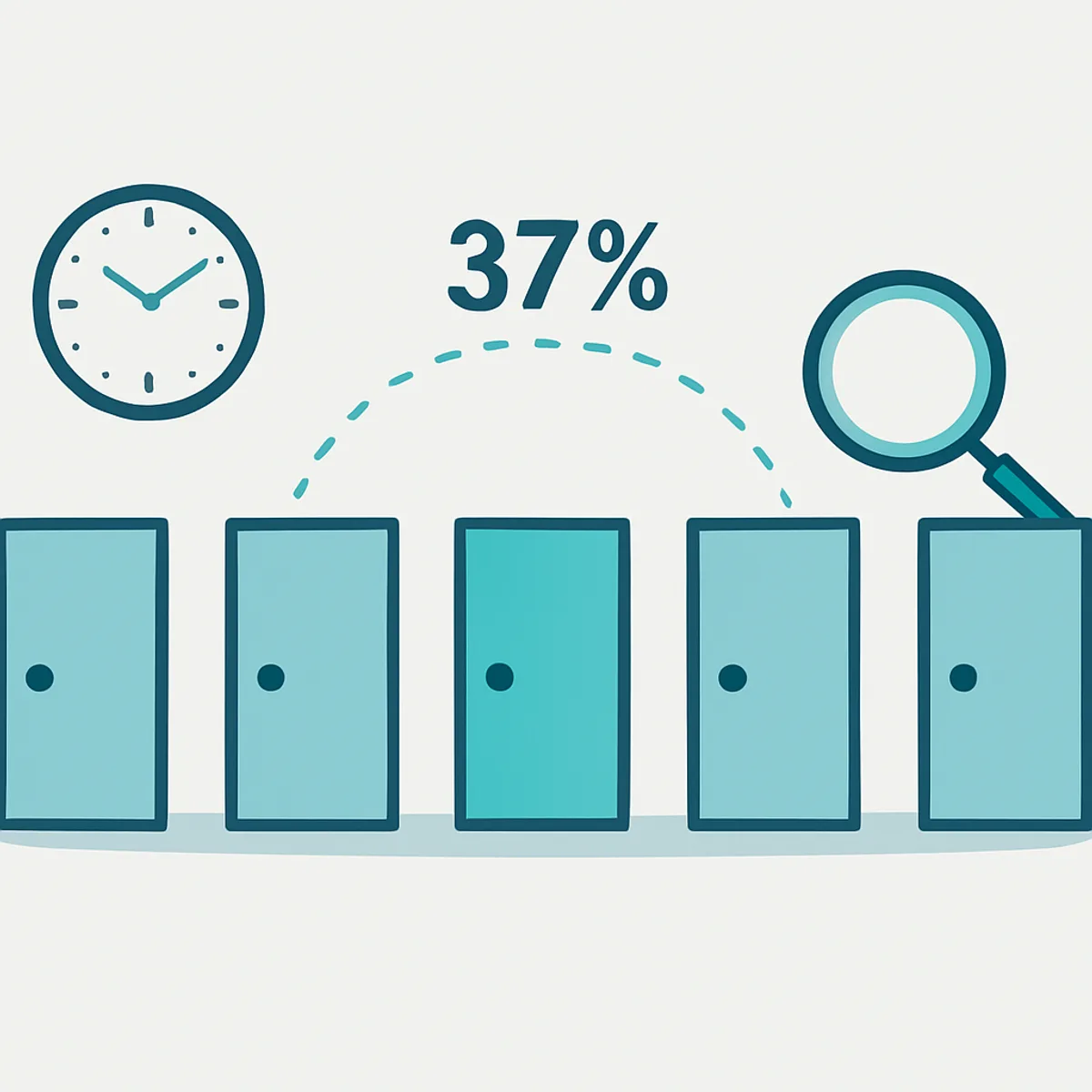
One of the most useful results is the solution to the optimal stopping problem. Imagine you are interviewing candidates, dating, or apartment hunting, and you must decide on the spot whether to commit, with no going back. How long should you keep looking before you choose?
The math gives a precise answer: spend the first 37% of your search purely observing and rejecting, then pick the next option that beats everyone you have seen so far. This is the famous 37% rule, derived from the secretary problem. Following it gives you roughly a 37% chance of landing the single best option, which is dramatically better than random guessing across a large pool.
How to Apply the 37% Rule
- Estimate your total search window (for example, one month of apartment hunting).
- Use the first 37% (about 11 days) to gather information without committing.
- After that threshold, commit to the first option better than anything in your sample.
- Accept that no strategy guarantees the best outcome, only the best odds.
The deeper lesson is emotional as well as mathematical: a "failed" early search is not wasted time, it is the calibration phase that makes a confident decision possible later.
Explore vs. Exploit: The Restaurant Dilemma

Should you return to your favorite restaurant or try a new one? Computer scientists call this the explore-exploit tradeoff, and it powers everything from A/B testing to the recommendations on your streaming apps.
Definition: Exploration means gathering new information by trying unknown options. Exploitation means using what you already know to get a reliable reward.
The optimal balance depends almost entirely on one variable: time remaining. The more future you have, the more exploring pays off, because you have many chances to benefit from a discovery. Near the end of an interval, exploitation wins. This explains a genuinely human truth: it is rational for a newcomer to a city to try new places constantly, and equally rational for a long-time resident to stick with favorites.
Algorithms like Upper Confidence Bound formalize this by favoring options that are either high-performing or under-tested. The practical takeaway: when you have time ahead of you, give novelty more weight than your gut suggests, because the value of information compounds.
Sorting and Caching: Organizing Your Life

Computer science has strong opinions about organization, and some of them are counterintuitive.
Sorting is expensive. The effort to fully sort a collection grows faster than the collection itself, so sorting things you will rarely search is often wasted labor. This is why sorting your entire email archive alphabetically is usually pointless; search is cheap, so erring toward a searchable pile beats a meticulously sorted one.
Caching is the opposite story: it is almost always worth it. A cache keeps frequently used items close at hand. The proven Least Recently Used (LRU) principle says that when space runs out, evict whatever you have not touched in the longest time. Your closet, your desk, and your phone home screen all work best under LRU.
| Concept | Best Use Case | Practical Tip |
|---|---|---|
| Sorting | Items searched often by others | Only sort when search frequency is high |
| Searching | Large personal piles | Trust search over manual sorting |
| Caching (LRU) | Daily-use items | Keep recent items closest, evict the stale |
| Bucketing | Rough grouping | Sort into broad bins, not exact order |
That slightly messy desk where recent papers sit on top? It is an LRU cache, and it is mathematically efficient.
Bayes' Rule: Predicting With Limited Data
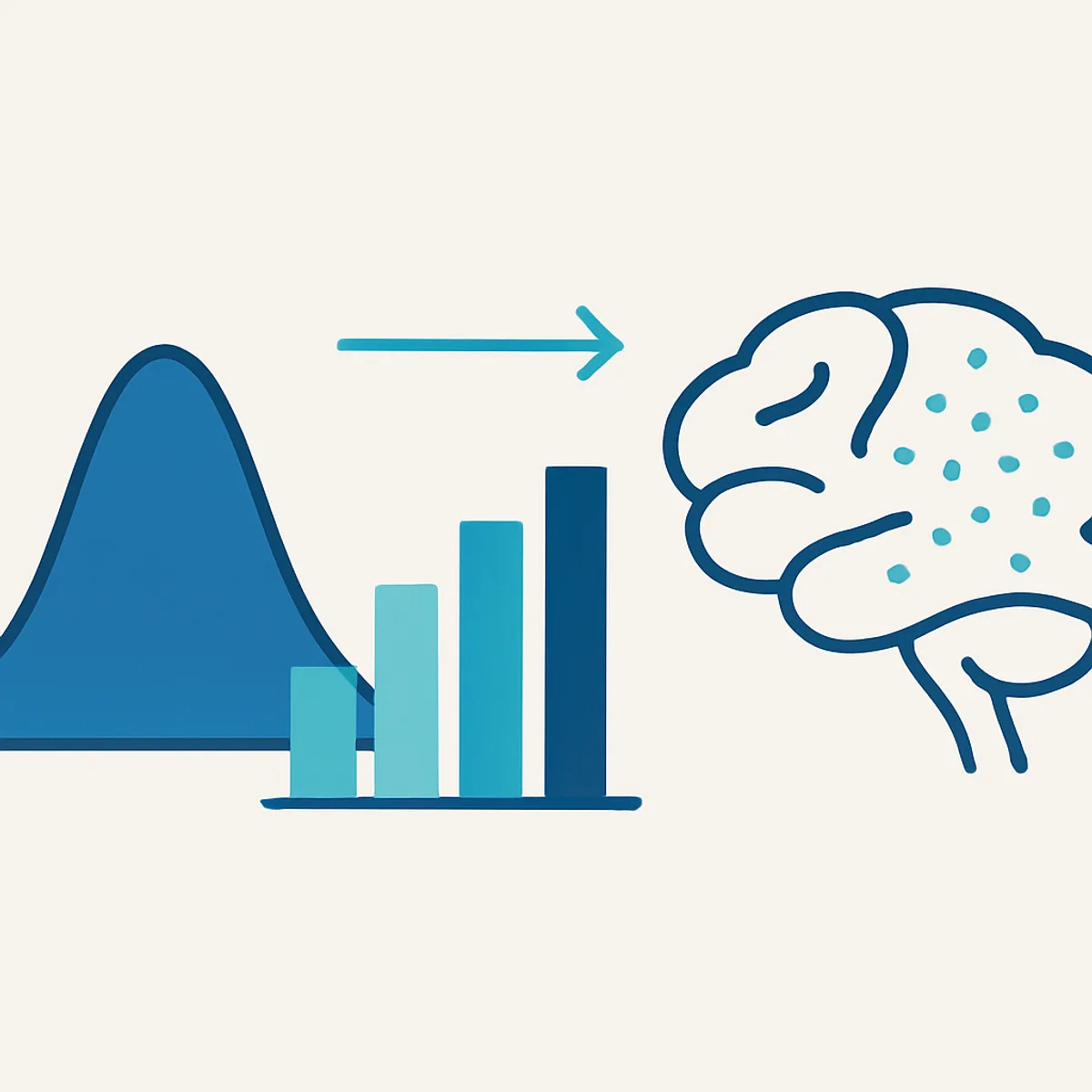
How do you predict how long a movie will run, how successful a project will be, or how long a delay will last when you have only one data point? The answer is Bayes' rule, the mathematics of updating beliefs as evidence arrives.
Definition: Bayesian reasoning combines a prior (what you expected before) with new evidence to produce a sharper estimate. The quality of your prediction depends heavily on the quality of your prior.
Griffiths' research showed that people are often intuitively excellent Bayesians, predicting lifespans and outcomes accurately because experience builds good priors. The actionable insight: when facing uncertainty, deliberately ask, "What is the typical distribution for this kind of event?" before reacting to a single dramatic data point. A good prior protects you from overreacting to outliers, which is one of the most common and costly decision errors.
Overfitting: Why Thinking Too Much Backfires
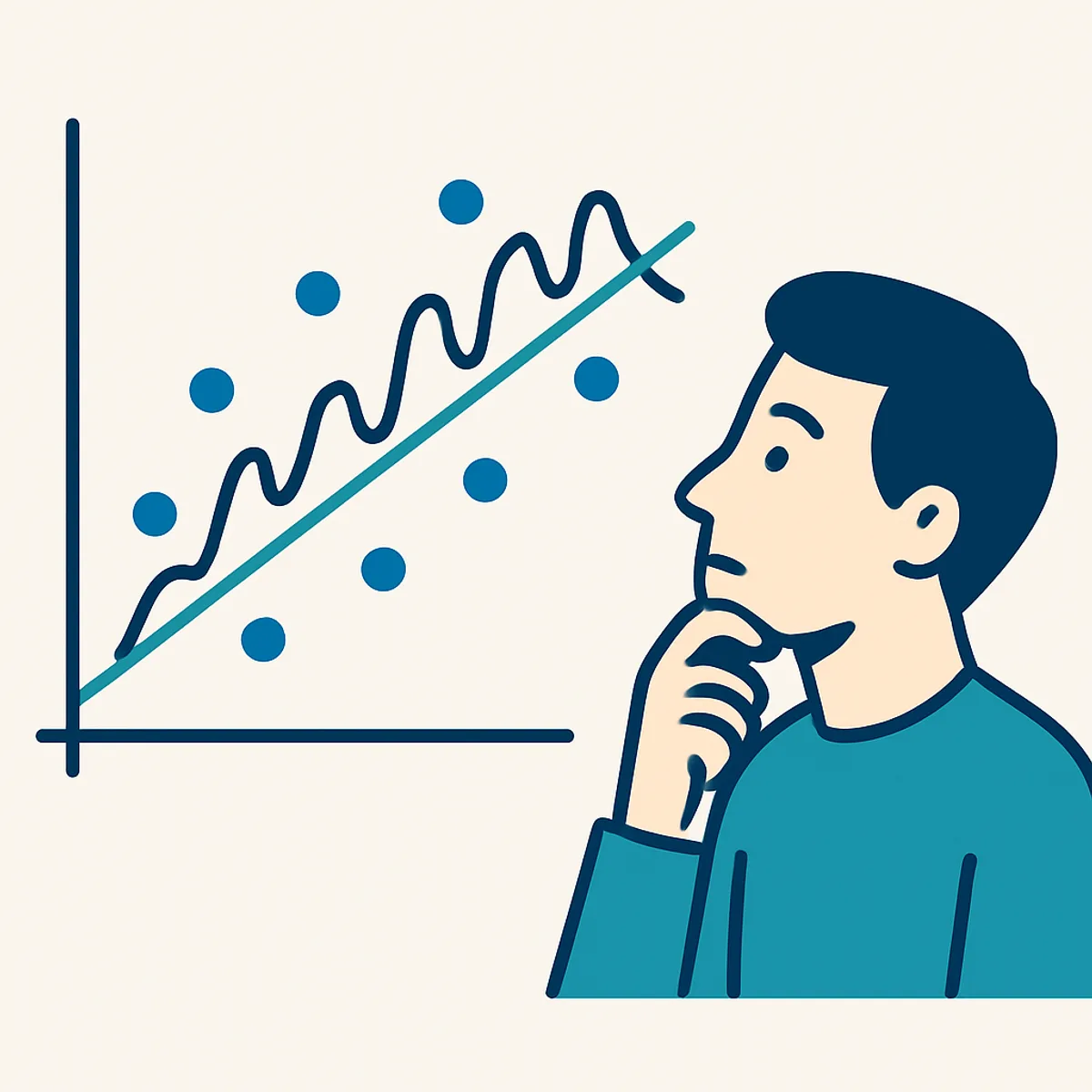
In machine learning, overfitting happens when a model memorizes noise instead of learning the real pattern, performing brilliantly on past data and terribly on the future. Humans overfit too.
When you obsess over every variable in a decision, optimize a workout plan down to the second, or craft a strategy that fits last quarter perfectly, you risk modeling noise. The cure in computer science is regularization: deliberately penalizing complexity to favor simpler, more robust models.
The human version is wisdom: trust simpler rules of thumb when data is limited or noisy. A simple decision rule that captures the main signal usually generalizes better than an elaborate one tuned to a few past events. This is why "go with your gut" sometimes outperforms exhaustive analysis, the gut is a regularized model.
Game Theory and Human Behavior

Many decisions involve other people reacting to your choices, which is the domain of game theory. A Nash equilibrium is a state where no player can improve by changing strategy alone. The unsettling insight is that equilibria are not always good for everyone, as the prisoner's dilemma shows.
The practical lesson is to recognize when you are trapped in a bad equilibrium, such as an arms race of overwork or constant price-cutting, and to redesign the game rather than play harder. Changing incentives, communication, or rules often beats winning the existing game. Strategists building digital products, including the consultants at WebPeak, routinely use this lens to reshape competitive dynamics instead of merely competing within them.
Key Takeaways
- The computer science of human decisions maps real choices onto proven algorithms for measurably better outcomes.
- The 37% rule tells you to observe for the first 37% of a search, then commit to the next best option, giving roughly a 37% success rate.
- The explore-exploit tradeoff says explore more when you have time ahead, exploit more as time runs out.
- Sorting is often wasteful, while caching with LRU keeps frequently used items efficiently close.
- Bayes' rule turns a single data point into a reliable prediction when paired with a good prior.
- Overfitting warns that overthinking models noise; simpler rules generalize better.
Frequently Asked Questions (FAQ)
What is the computer science of human decisions?
It is the practice of applying computer algorithms, such as optimal stopping and Bayes' rule, to everyday human choices. Instead of guessing, you use proven strategies that minimize regret and maximize your odds of a good outcome under genuine uncertainty.
How does the 37% rule actually work?
Spend the first 37% of your search time observing options without committing. After that point, choose the first option that is better than everything you have seen so far. This simple rule gives you about a 37% chance of picking the best available choice.
What is the explore-exploit tradeoff in simple terms?
Exploring means trying new options to gain information, while exploiting means sticking with what already works. The right balance depends on time: explore more when you have a long future ahead, and exploit your favorites as your remaining time shrinks.
Can algorithms really improve real-life decisions?
Yes. Algorithms will not guarantee perfect results, but they provide the best possible strategy given uncertainty. They reduce decision fatigue, cut wasted effort, and lower regret by replacing anxious guessing with a clear, defensible process you can trust and repeat.
Why is overfitting a problem for human thinking?
Overfitting happens when you over-tune a decision to past details and noise instead of the real pattern. The result looks perfect on history but fails in the future. Simpler rules of thumb usually generalize better, especially when your data is limited or unreliable.
Do I need a math background to use these ideas?
No math background is required. Each concept reduces to a plain-language rule, such as observe before committing or keep recent items close. Understanding the intuition behind these algorithms is enough to apply them effectively to daily personal and professional decisions.