Symbiotic artificial intelligence pairs human judgment with machine intelligence so both improve together. Learn how it works, why it matters, and how to apply it.
Symbiotic Artificial Intelligence
Most conversations about artificial intelligence assume a winner-takes-all outcome: either machines replace people, or people resist machines. After years of deploying AI tools inside real businesses, I have found that framing is wrong. The highest-performing teams do not pick a side. They build a partnership where humans and AI continuously strengthen each other. That partnership has a name: symbiotic artificial intelligence.
This article explains what symbiotic AI actually is, how it differs from traditional automation, where it already delivers measurable value, and how you can implement it without overhauling your entire organization. Every section is written to answer a specific question you are likely asking right now.
Quick Answer: Symbiotic artificial intelligence is a collaborative model where humans and AI systems work together in a continuous feedback loop, each improving the other's performance. Instead of replacing people, the AI augments human judgment while humans refine the AI, producing better decisions, faster output, and lower error rates than either could alone.
What Is Symbiotic Artificial Intelligence?
Symbiotic artificial intelligence is a design philosophy in which people and machines operate as interdependent partners rather than as a tool and its operator. The defining trait is mutual benefit: the AI handles scale, speed, and pattern recognition, while the human supplies context, ethics, creativity, and accountability. Critically, both sides learn from the interaction over time.
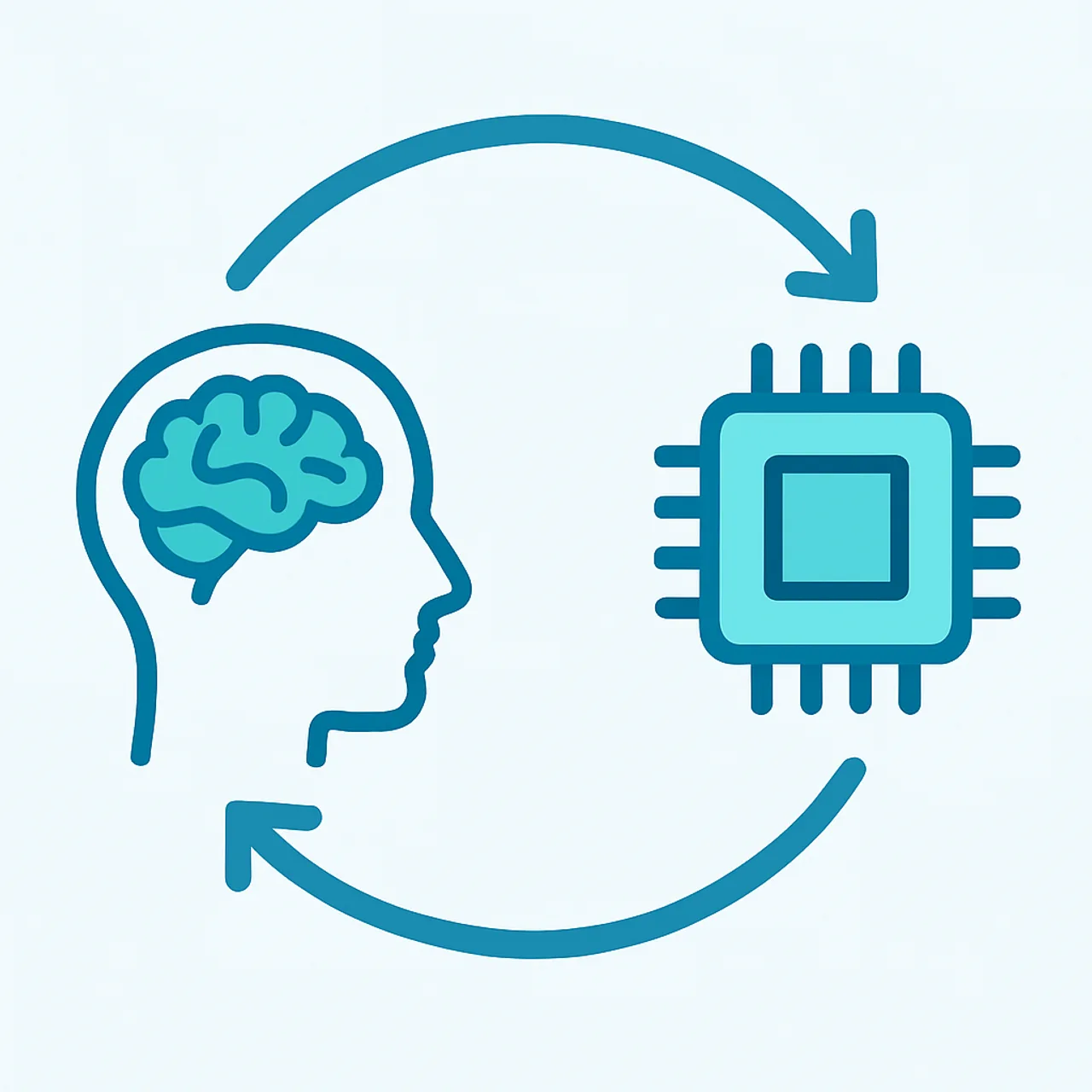
The word symbiosis comes from biology, where two organisms live together for mutual advantage. Applied to AI, it means the human is not simply pressing buttons and the machine is not simply executing commands. Each one's output becomes the other's input. A doctor reviews an AI diagnosis and corrects it; that correction trains the model; the improved model helps the next doctor. This loop is what separates symbiotic AI from a static, one-directional tool.
The Core Principle: A Two-Way Feedback Loop
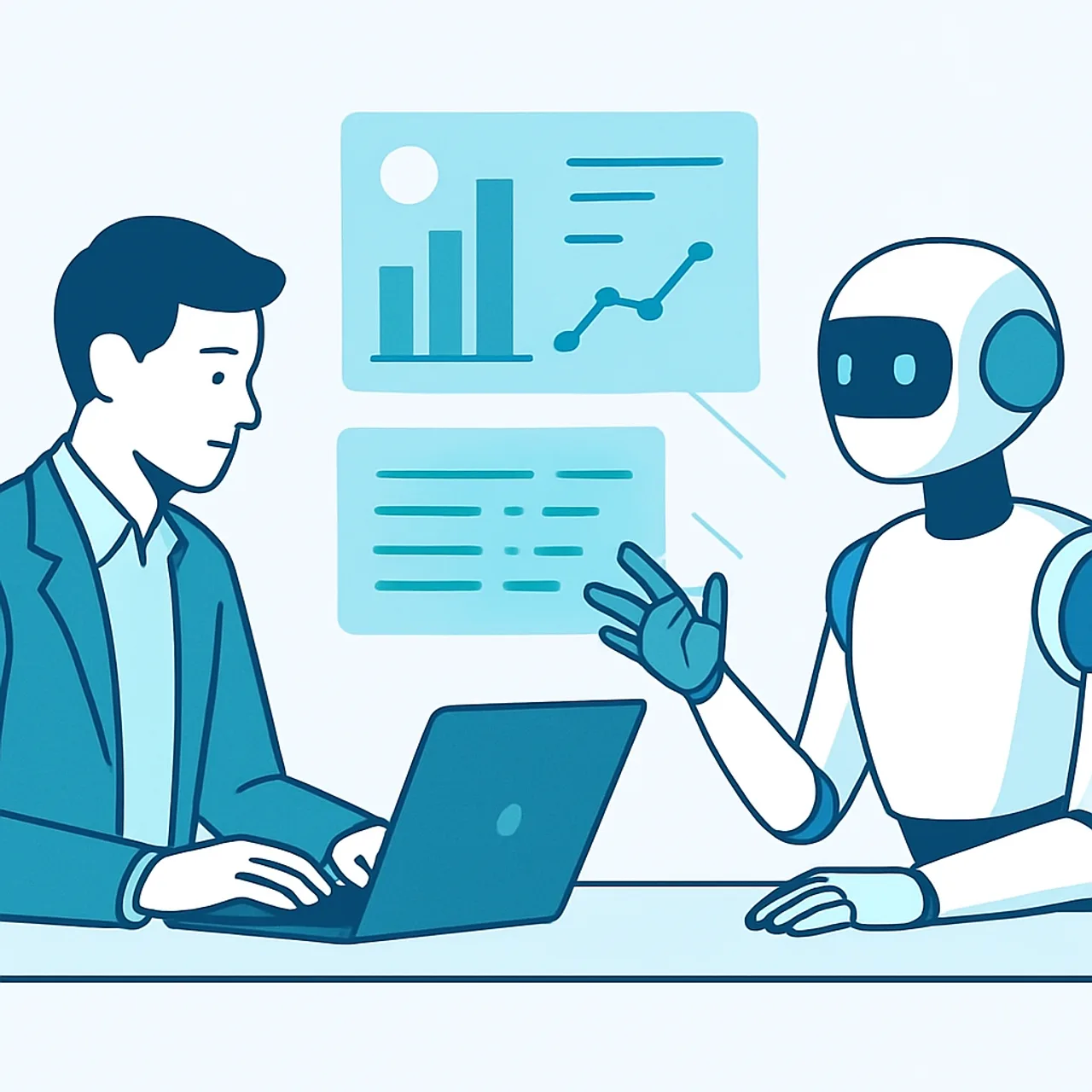
Traditional software gives you the same answer every time until an engineer changes the code. Symbiotic systems change because you use them. The feedback loop has three repeating stages:
- The AI proposes a draft, prediction, or recommendation based on data.
- The human evaluates it, applying expertise the model lacks and making the final call.
- The system captures that human decision and uses it to improve future suggestions.
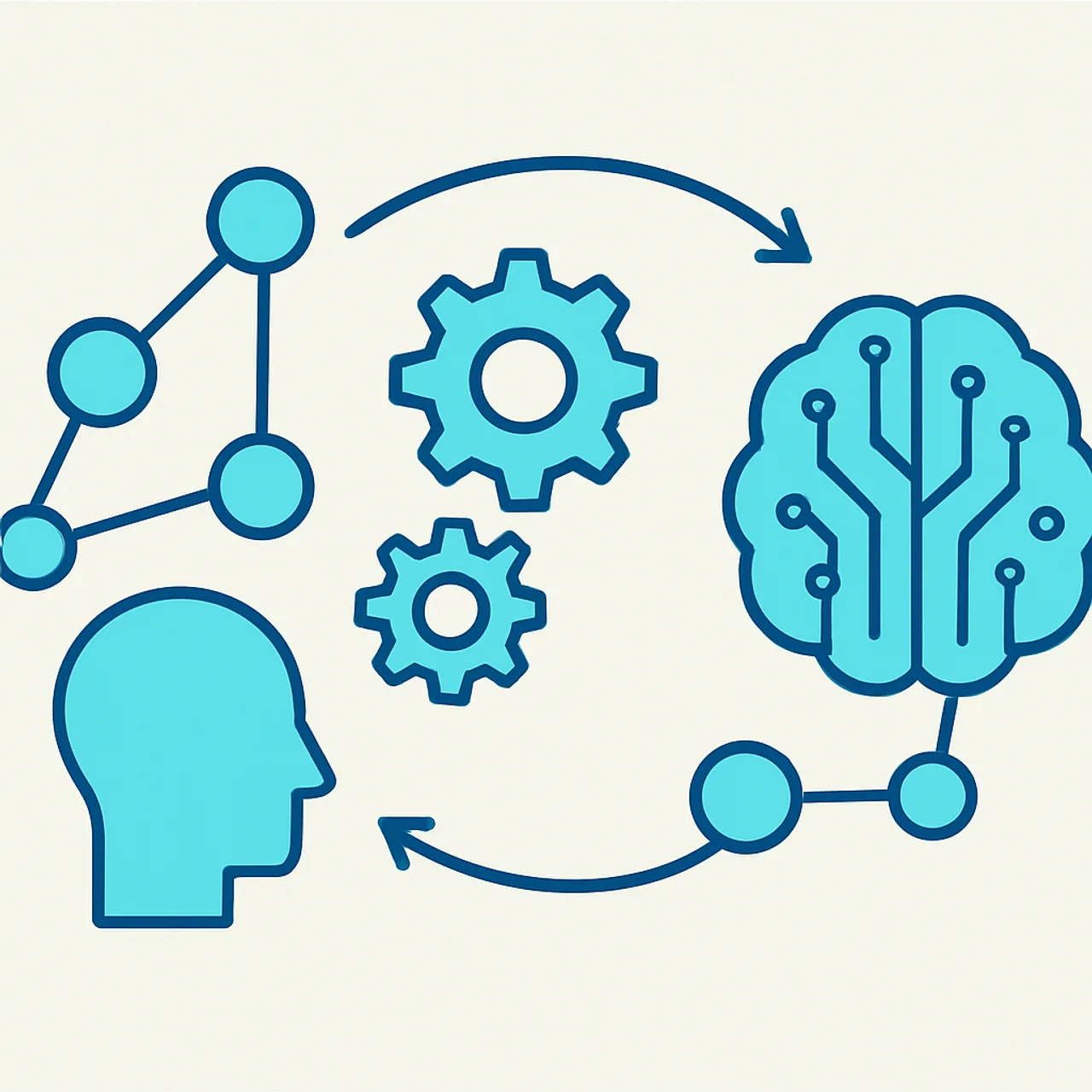
When this loop runs thousands of times, the AI becomes precisely tuned to your context, and the humans become faster because they are editing rather than starting from zero.
Symbiotic AI vs. Traditional AI: What Actually Changes
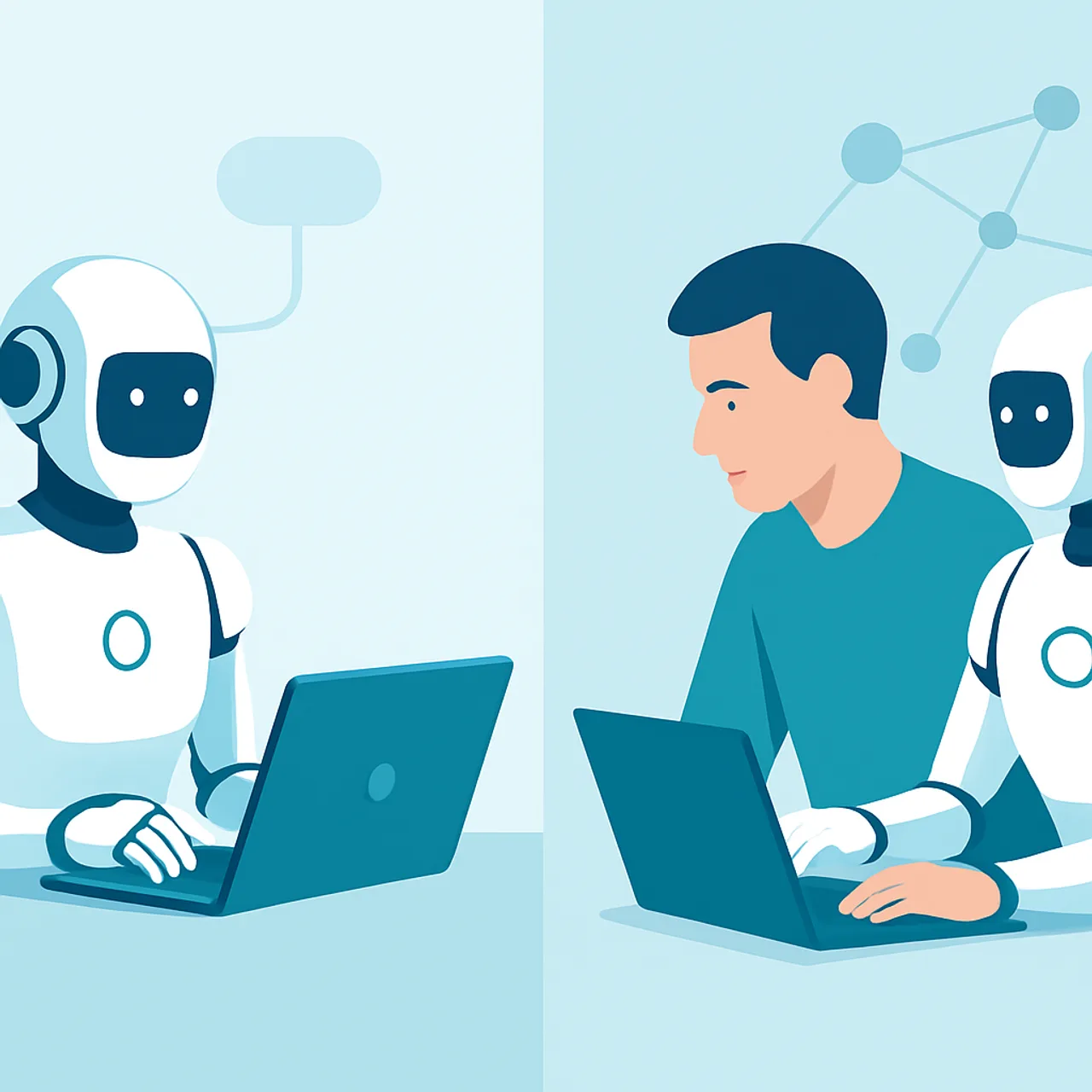
The difference between conventional automation and symbiotic AI is not cosmetic. It changes who is accountable, how the system improves, and how much trust users place in the output. The table below summarizes the practical distinctions I explain to clients.
| Dimension | Traditional AI / Automation | Symbiotic Artificial Intelligence |
|---|---|---|
| Goal | Replace a human task | Augment human capability |
| Decision authority | Machine or fixed rules | Human keeps final decision |
| Improvement source | Engineer updates | Continuous human feedback |
| Error handling | Fails silently or escalates | Human catches and corrects in real time |
| Trust level | Low to moderate | High, because humans stay in the loop |
| Best use case | Repetitive, low-risk tasks | Complex, high-stakes judgment |
The key insight is accountability. In a symbiotic model, a person is always answerable for the outcome, which makes the system safer and far easier to deploy in regulated fields like healthcare, finance, and law.
Why Symbiotic AI Matters Right Now
Symbiotic AI matters because pure automation has hit a ceiling of trust, and pure human effort cannot match the scale of modern data. The combination resolves both problems at once.
The data backs this up. According to a 2023 study published in Nature Machine Intelligence, human-AI teams in medical diagnosis reduced error rates compared to either humans or AI working alone in several controlled tasks, because each party caught mistakes the other missed. Separately, Stanford's AI Index Report has repeatedly documented that AI adoption rises fastest in functions where humans review output before it ships, rather than where AI runs unsupervised.
There is also an economic argument. Fully autonomous systems require near-perfect accuracy before they can be trusted in production, and that last few percent of accuracy is extraordinarily expensive. Symbiotic systems sidestep this: a model that is 90 percent accurate is genuinely useful when a human reviews the remaining 10 percent, delivering value years before full autonomy is technically possible.
Where Symbiotic AI Already Delivers Value
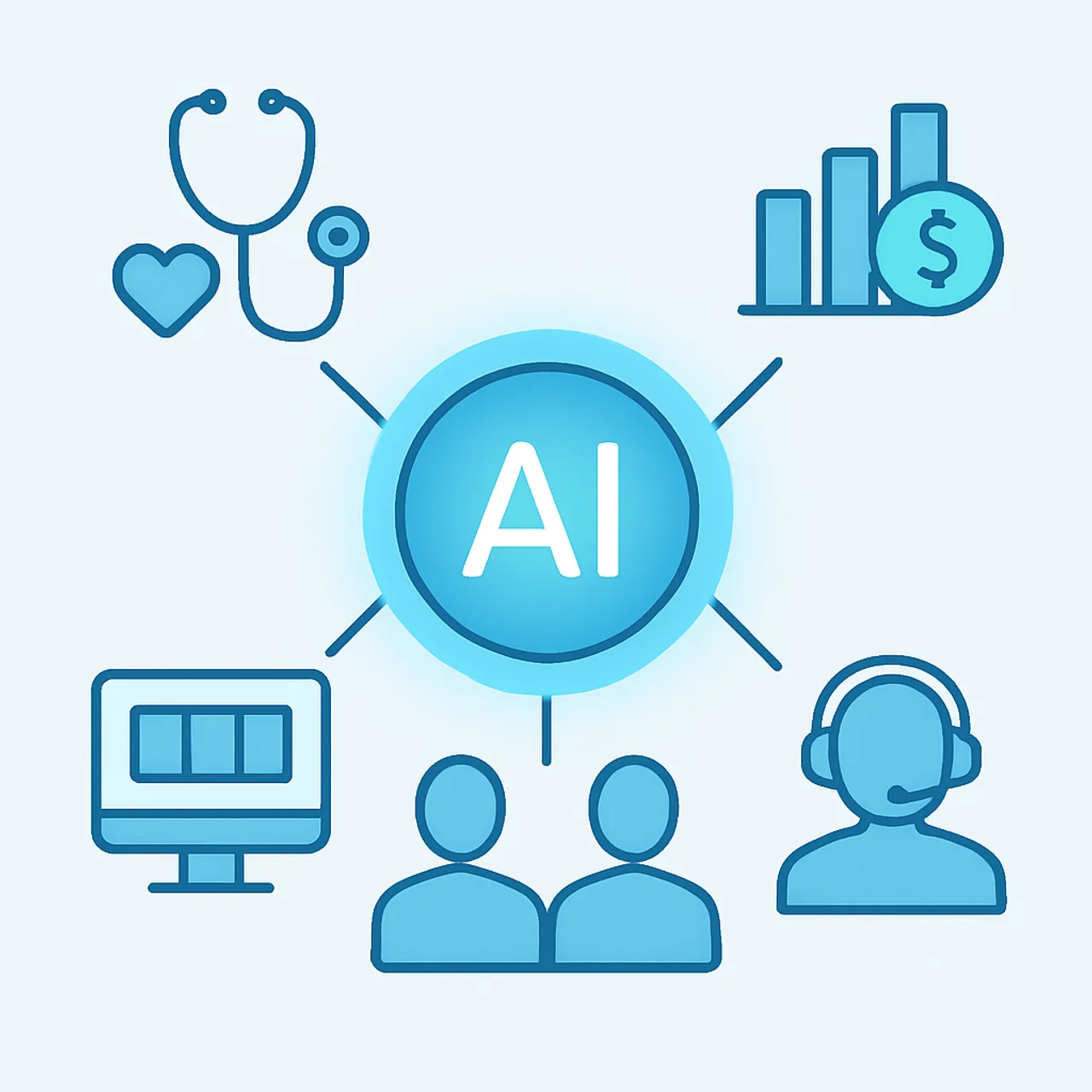
Symbiotic artificial intelligence is not theoretical. It is already embedded in workflows across industries, usually wherever judgment and scale collide.
Healthcare and Diagnostics
Radiologists use AI to flag suspicious regions on scans, then apply clinical judgment to confirm or dismiss them. The AI never misses a faint pattern out of fatigue; the human never treats a statistical anomaly as gospel. Together they are more reliable than either alone.
Content and Marketing
Writers use AI to draft, research, and restructure, then inject brand voice, accuracy, and original insight. This is exactly how high-quality teams scale output without sacrificing trust. If you want this done professionally, a specialized content writing service can build the human review layer that keeps AI-assisted content credible and on-brand.
Software Development
Developers pair with AI coding assistants that suggest functions and catch bugs, while the engineer owns architecture, security, and final correctness. Studies of AI pair-programming consistently show faster task completion when developers treat suggestions as drafts rather than answers.
Customer Support
AI drafts responses and surfaces relevant knowledge-base articles; human agents personalize, handle edge cases, and manage emotional nuance. The result is faster resolution times without the robotic experience customers resent.
How to Implement Symbiotic AI in Your Organization
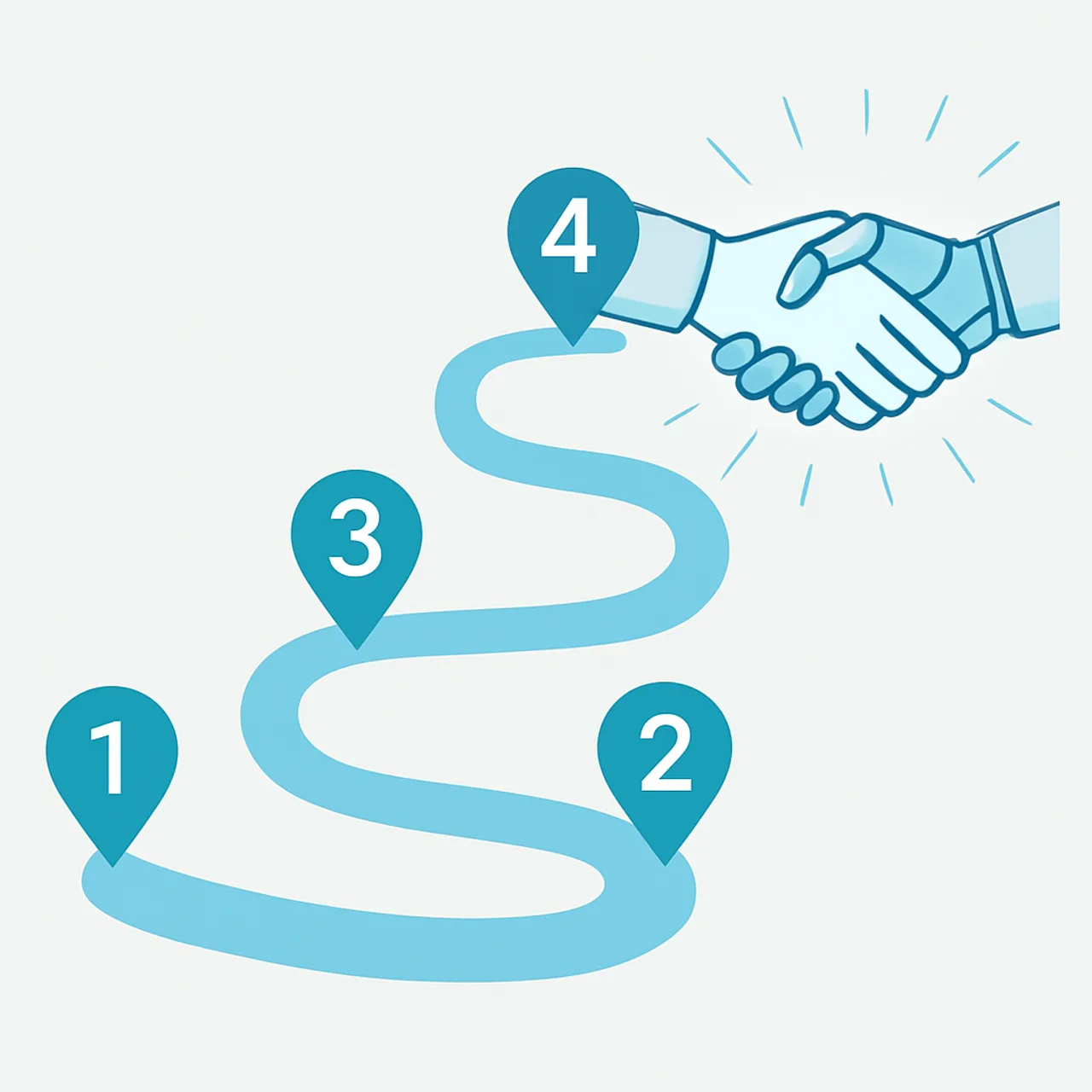
You implement symbiotic AI by inserting AI into existing workflows as an assistant, not an autopilot, and building deliberate checkpoints where humans review and correct. Here is the practical sequence I recommend.
- Map a high-friction workflow. Choose a process that is repetitive but still needs judgment, such as drafting reports or triaging tickets.
- Insert AI at the draft stage. Let the model produce a first pass, never the final output.
- Define the human checkpoint. Make it explicit who reviews, what they check, and what authority they hold to override.
- Capture the corrections. Store human edits as structured feedback the system can learn from.
- Measure both speed and quality. Track time saved and error rates together, so you never trade accuracy for speed.
- Expand gradually. Once one loop is trusted, replicate the pattern in adjacent workflows.
The biggest mistake teams make is skipping step three. Without a clear human checkpoint, symbiotic AI quietly drifts into unsupervised automation, and trust collapses the first time it fails.
Organizations that lack in-house machine-learning expertise often partner with specialists to design these loops correctly. Teams like the one behind WebPeak and its dedicated AI services focus on building these human-in-the-loop systems so the technology augments staff instead of alienating them.
The Future of Human-AI Symbiosis
The future of symbiotic AI points toward interfaces so seamless that the boundary between human thought and machine assistance becomes nearly invisible. We are already seeing early signs: AI that anticipates the next step in your workflow, adapts to your personal style, and explains its reasoning so you can trust or challenge it.
The organizations that win this decade will not be the ones with the most powerful models. They will be the ones that design the best collaboration between people and machines. As tools improve, human skills like critical thinking, ethical judgment, and creative direction become more valuable, not less, because someone must steer the intelligence. For practical guidance and implementation support, resources like ZoneTechify continue to help businesses adopt AI in a way that respects this human-centered principle.
Key Takeaways
- Symbiotic artificial intelligence is a partnership where humans and AI improve each other through a continuous feedback loop, rather than one replacing the other.
- It keeps humans accountable for final decisions, which makes it safer and easier to deploy in regulated, high-stakes fields.
- Human-AI teams can reduce errors that either party would make alone, because each catches the other's mistakes.
- It delivers value sooner than full autonomy because a 90 percent accurate model plus human review is immediately useful.
- Successful implementation depends on a clear human checkpoint and capturing corrections as feedback.
Frequently Asked Questions (FAQ)
What is symbiotic artificial intelligence in simple terms?
Symbiotic artificial intelligence is a teamwork model where people and AI work together and improve each other. The AI handles speed and pattern recognition, while humans add judgment and context. Each one's output feeds the other, so both get better over time instead of competing.
How is symbiotic AI different from regular AI?
Regular AI usually replaces a task and stays the same until engineers update it. Symbiotic AI keeps humans in control of final decisions and learns continuously from their corrections. The big difference is the two-way feedback loop, which makes the system more accurate and far more trustworthy.
Is symbiotic AI safe to use in regulated industries?
Yes, it is often safer than full automation. Because a qualified human always reviews and approves the final output, accountability stays with a person. This human checkpoint is exactly why fields like healthcare, finance, and law adopt symbiotic AI faster than unsupervised systems.
Does symbiotic AI replace jobs?
No, it reshapes them. Symbiotic AI removes repetitive drafting and analysis while making human skills like critical thinking, creativity, and ethical judgment more valuable. Workers shift from producing everything manually to directing, reviewing, and refining AI output, which usually increases both speed and quality.
How do I start using symbiotic AI in my business?
Start by choosing one repetitive workflow that still needs judgment. Insert AI at the draft stage, define a clear human review checkpoint, and capture corrections as feedback. Measure speed and quality together, then expand to similar workflows once the first loop earns your team's trust.