
An expert breakdown of the South America healthcare artificial intelligence market — size, growth drivers, leading countries, real applications, and challenges.
South America Healthcare Artificial Intelligence Market
The South America healthcare artificial intelligence market is moving from experimental pilots to real clinical deployment, and the pace is accelerating faster than most global forecasts predicted. Across Brazil, Argentina, Chile, Colombia, and Peru, hospitals and public health systems are turning to AI to solve deeply local problems: physician shortages in rural regions, overloaded public clinics, and rising chronic disease. This article gives you an honest, expert view of where the market actually stands, who is leading it, what technologies are gaining traction, and where the friction points remain.
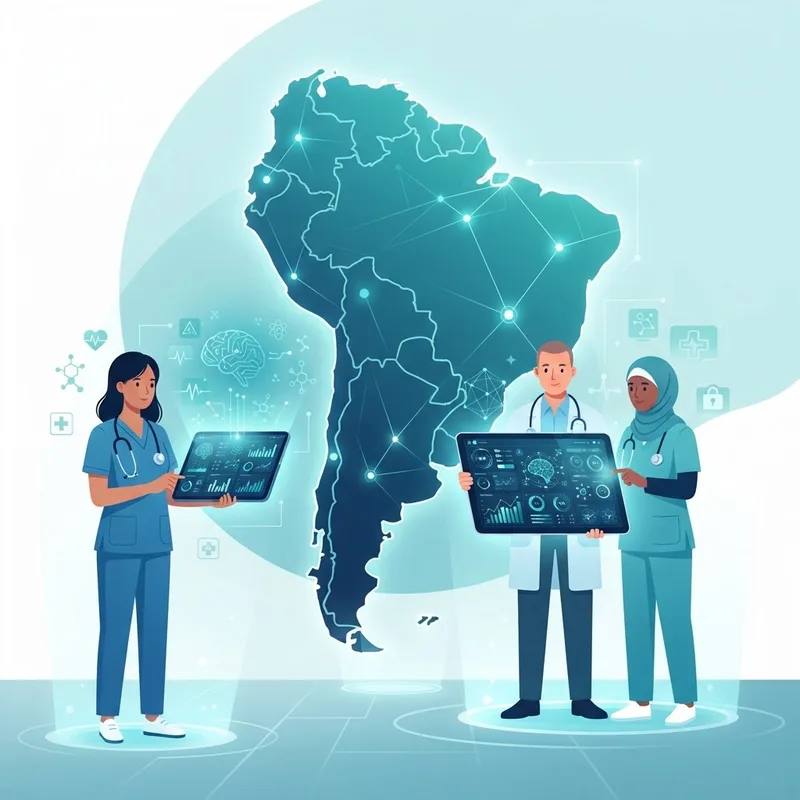
Having followed digital health transformation across emerging markets, one thing stands out: South America is not simply copying North American or European AI models. The region is building its own path, shaped by public health priorities, mobile-first populations, and a growing pool of local health-tech startups.
Quick Answer: The South America healthcare AI market is a fast-growing sector where hospitals, insurers, and governments use artificial intelligence for diagnostics, telemedicine, and hospital operations. Brazil leads adoption, driven by physician shortages, expanding digital infrastructure, and strong demand for affordable, scalable healthcare across underserved regions.
What Is the Healthcare Artificial Intelligence Market?
The healthcare artificial intelligence market refers to the total ecosystem of software, hardware, and services that apply machine learning, natural language processing, and computer vision to medical tasks. In practice, this means AI systems that read medical images, predict patient deterioration, automate administrative paperwork, and power virtual health assistants.
In South America specifically, this market covers three broad layers: clinical AI (diagnostics and decision support), operational AI (hospital workflow, billing, and staffing), and patient-facing AI (chatbots, symptom checkers, and remote monitoring). Understanding these layers matters because growth is not uniform — operational and patient-facing tools are scaling faster than fully regulated clinical AI, simply because they carry lower regulatory risk.
Market Size and Growth Drivers
The global healthcare AI market is expanding rapidly, and South America is one of its fastest-emerging regions. According to industry analyses, the global healthcare AI market is projected to grow at a compound annual growth rate exceeding 35% through the end of the decade, and Latin America is repeatedly flagged as a high-upside region because adoption started from a low base.

Several concrete drivers explain this momentum:
- Physician shortages. According to the World Health Organization, many Latin American countries fall below the recommended ratio of physicians per 1,000 people, especially outside major cities. AI triage and remote diagnostics help stretch limited specialist capacity.
- Mobile penetration. Smartphone adoption across South America exceeds 70% in most major economies, making mobile-first AI health tools realistic at scale.
- Public health pressure. Aging populations and rising rates of diabetes, hypertension, and cancer are straining public systems that cannot expand fast enough with human staff alone.
- Startup and investment activity. Regional health-tech funding has grown steadily, with Brazilian and Chilean startups attracting international venture capital.
These are not abstract trends. They translate directly into procurement decisions inside ministries of health and private hospital networks that need measurable cost savings.
Brazil: The Regional Leader
Brazil is the clear anchor of the South America healthcare AI market. As the largest economy and most populous country in the region, it combines a massive public health system (SUS), a sophisticated private insurance sector, and a mature startup scene.

Brazilian hospitals such as those in the Albert Einstein and Sírio-Libanês networks have deployed AI for radiology triage, sepsis prediction, and administrative automation. The scale of SUS also creates a unique opportunity: AI tools that reduce cost per patient by even a small margin generate enormous aggregate savings across hundreds of millions of appointments annually.
What makes Brazil especially instructive is its regulatory movement. ANVISA, the national health regulator, has been developing clearer pathways for AI-based medical software, giving vendors more confidence to invest. For organizations planning entry, Brazil is the natural first market, followed by Argentina, Chile, and Colombia.
Key Application: AI Medical Diagnostics
Diagnostics is where AI delivers the most visible clinical value in South America. Computer vision models that analyze X-rays, CT scans, mammograms, and retinal images are being deployed to support radiologists who are often overloaded and unevenly distributed.

The practical benefit is speed and reach. A rural clinic in the Andes or the Amazon basin may have no on-site radiologist, but a scan can be captured locally, analyzed by an AI model, and flagged for a remote specialist within minutes. Studies of AI-assisted radiology consistently show that well-trained models can match or accelerate expert reads for specific conditions such as tuberculosis screening and diabetic retinopathy — two diseases with major public health relevance in the region.
The key expert caveat: AI diagnostics work best as decision support, not replacement. The winning deployments in South America pair AI with human oversight, which also aligns with current regulatory expectations. Businesses building these tools benefit from specialized artificial intelligence services that handle model training, validation, and clinical integration correctly.
Key Application: AI-Powered Telemedicine
Telemedicine adoption exploded across South America during and after the pandemic, and AI is now the layer making it scalable rather than merely available.
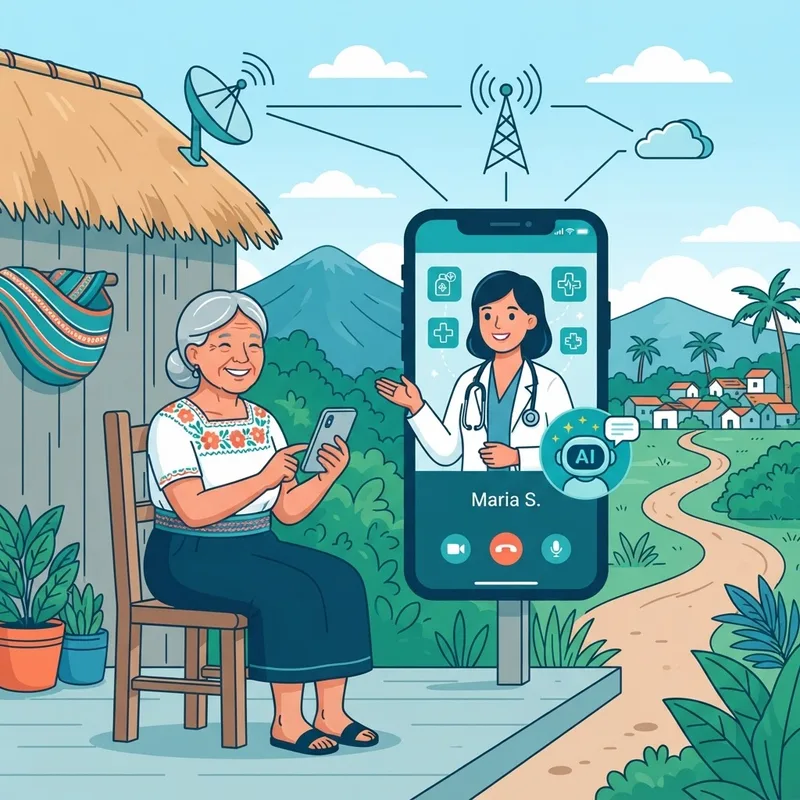
AI chatbots and symptom-assessment tools triage patients before they ever reach a human clinician, routing urgent cases quickly and resolving simple questions automatically. For countries with vast geographies and dispersed populations — think the interior of Brazil, Patagonia, or highland Peru — this is transformational. Natural language processing tuned for Portuguese and Spanish, including regional dialects, is a genuine competitive differentiator that global vendors often underestimate.
The most successful telemedicine platforms combine three elements: multilingual AI triage, secure video consultations, and automated follow-up reminders that improve treatment adherence. This blend directly addresses the region's biggest challenge — connecting scarce specialists to patients who cannot travel.
Key Application: Smart Hospital Operations
Beyond diagnosis and consultation, AI is quietly transforming how hospitals run. Operational AI rarely makes headlines, yet it often delivers the fastest return on investment.

Hospitals across the region are using AI to forecast patient admissions, optimize staff scheduling, reduce no-show rates, automate insurance claims, and manage medication inventory. These systems cut administrative overhead — a major cost center — without touching the more heavily regulated clinical decision layer. That lower risk profile is exactly why operational AI is scaling quickly in cost-sensitive markets.
A well-run predictive scheduling system can reduce emergency-room wait times and free clinical staff for actual patient care. For private hospital groups competing on service quality, that efficiency is a direct commercial advantage.
Comparison: AI Adoption Across Key Markets
The following table summarizes how the major South American markets compare on healthcare AI maturity, based on infrastructure, regulation, and deployment activity.
| Country | AI Maturity | Primary Focus | Regulatory Clarity |
|---|---|---|---|
| Brazil | High | Diagnostics and operations | Improving |
| Chile | Medium-High | Telemedicine and data systems | Strong |
| Argentina | Medium | Diagnostics and research | Developing |
| Colombia | Medium | Telemedicine and access | Developing |
| Peru | Emerging | Rural access and screening | Early stage |
This snapshot helps prioritize market entry: Brazil and Chile offer the most immediate opportunity, while Colombia and Peru represent longer-term growth with strong social impact potential.
Challenges Slowing Adoption
No honest market analysis ignores the obstacles, and South America has real ones.
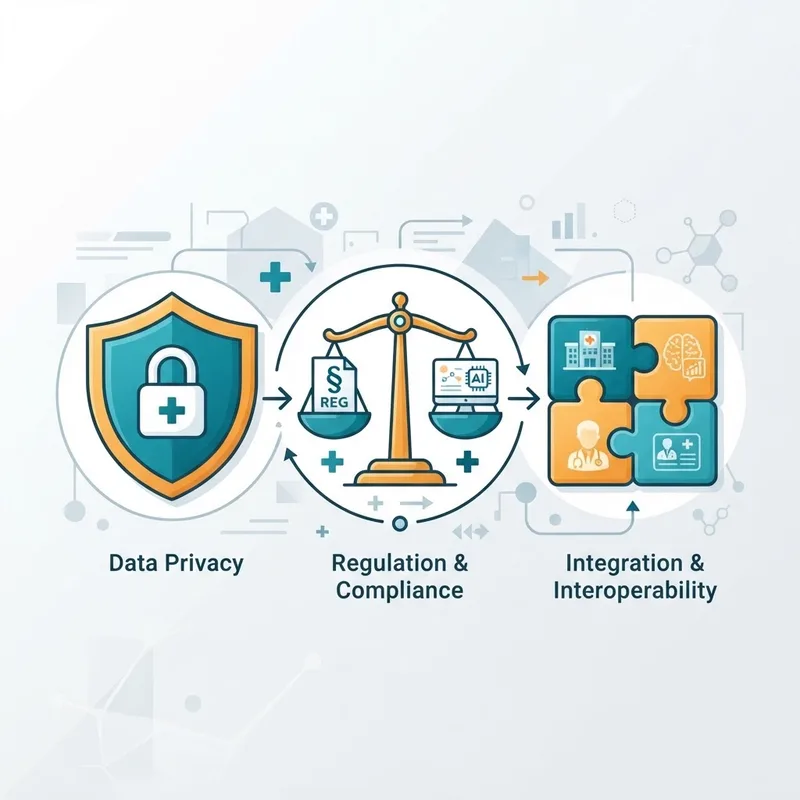
The main barriers include:
- Data fragmentation. Health records are often paper-based or siloed across systems, making the clean, structured data that AI requires hard to obtain.
- Regulatory uncertainty. While Brazil and Chile are advancing, several countries lack clear approval pathways for AI medical devices.
- Data privacy compliance. Laws such as Brazil's LGPD impose strict requirements on how patient data is stored and processed.
- Infrastructure gaps. Rural connectivity and computing resources remain uneven, limiting where cloud-based AI can operate reliably.
- Trust and training. Clinicians need evidence and education before they rely on AI recommendations.
Solving these requires more than technology — it demands thoughtful implementation partners. Companies like ZoneTechify and WebPeak emphasize that successful healthcare AI depends on secure data pipelines, clean integration, and human-centered design rather than flashy demos.
The Road Ahead
The trajectory is clear even if the timeline varies by country. Over the next several years, expect deeper integration of AI into public health programs, more locally trained language models for Portuguese and Spanish, and a shift from isolated pilots to system-wide deployments. Governments increasingly view AI not as a luxury but as a practical tool to extend limited healthcare budgets.
The organizations that win will be those combining strong clinical partnerships, regulatory awareness, and reliable engineering. Specialized providers such as WebPeak's artificial intelligence services show how tailored AI development bridges the gap between promising models and dependable, compliant healthcare tools.
Key Takeaways
- The South America healthcare AI market is growing rapidly, with the global healthcare AI sector projected to expand at over 35% CAGR through the decade.
- Brazil leads regional adoption, supported by the SUS public system, strong private insurers, and improving ANVISA regulation.
- Diagnostics, telemedicine, and smart hospital operations are the three highest-impact application areas.
- Smartphone penetration above 70% makes mobile-first AI health tools viable at scale.
- Data fragmentation, privacy laws like LGPD, and infrastructure gaps remain the biggest adoption barriers.
Frequently Asked Questions (FAQ)
What is the South America healthcare AI market?
It is the growing sector where hospitals, insurers, and governments across South America use artificial intelligence for diagnostics, telemedicine, and operations. It spans clinical decision support, patient-facing chatbots, and administrative automation, driven by physician shortages, mobile adoption, and rising demand for affordable, scalable care.
Which country leads healthcare AI in South America?
Brazil clearly leads the region. As the largest economy with the massive SUS public health system, a sophisticated private insurance sector, and a maturing startup ecosystem, it offers the biggest deployment scale. Improving ANVISA regulation also gives AI vendors more confidence to invest and expand there.
How is AI used in South American healthcare today?
AI is used mainly for medical imaging analysis, patient triage through chatbots, remote monitoring, and hospital operations like scheduling and claims automation. Diagnostics tools screen for tuberculosis and diabetic retinopathy, while telemedicine platforms use multilingual AI to connect scarce specialists with remote and rural patients efficiently.
What challenges slow healthcare AI adoption in the region?
The biggest challenges are fragmented or paper-based health data, unclear regulatory pathways in some countries, strict privacy laws such as Brazil's LGPD, and uneven rural infrastructure. Clinician trust and training also matter, since doctors need solid evidence before relying on AI-generated recommendations in daily practice.
Is AI replacing doctors in South America?
No. AI functions as decision support, not a replacement for clinicians. The most successful deployments pair AI analysis with human oversight, which improves speed and reach while keeping accountability with medical professionals. This approach also aligns with current regional regulations that require qualified human review of clinical outputs.
How big is the growth potential for healthcare AI here?
The potential is substantial. Latin America is repeatedly identified as a high-upside region because adoption began from a low base, meaning more room to grow. With over 70% smartphone penetration, expanding digital health programs, and rising chronic disease, demand for scalable AI healthcare solutions will keep increasing significantly.