A clear, expert breakdown of Roger Penrose's arguments on artificial intelligence, consciousness, Godel's theorem, and the quantum Orch-OR mind theory.
Penrose Artificial Intelligence
Roger Penrose is one of the few Nobel laureates who has publicly argued that today's dominant approach to artificial intelligence will never produce genuine understanding. As a mathematical physicist who shared the 2020 Nobel Prize in Physics, his skepticism carries unusual weight in a field crowded with optimism. When people search for "Penrose artificial intelligence," they usually want to know one thing: does this respected scientist believe machines can truly think and become conscious? This article explains exactly what Penrose argues, why he argues it, and what it means for the AI systems we use today.
Quick Answer: Roger Penrose argues that human consciousness is non-computable, meaning it cannot be reproduced by any algorithm or classical computer. He believes true understanding arises from quantum processes in the brain, so today's AI, however powerful, simulates intelligence without genuinely experiencing or understanding anything.
Who Is Roger Penrose and Why His AI Views Matter
Roger Penrose is a British mathematical physicist, professor emeritus at the University of Oxford, and co-recipient of the 2020 Nobel Prize in Physics for his work on black hole formation. His authority in mathematics and physics gives his critique of artificial intelligence a credibility that few outsiders can match. Penrose is not a technophobe; he is a rigorous thinker who applies mathematical logic to the question of whether machines can think.
His position matters because it directly challenges the mainstream assumption behind modern AI: that intelligence and eventually consciousness are just computation, and enough computation will get us there. Penrose says the math itself proves otherwise. For businesses and developers building real systems, understanding this debate helps set honest expectations about what AI can and cannot do, a topic explored further at ZoneTechify.
What Penrose Actually Argues About Artificial Intelligence
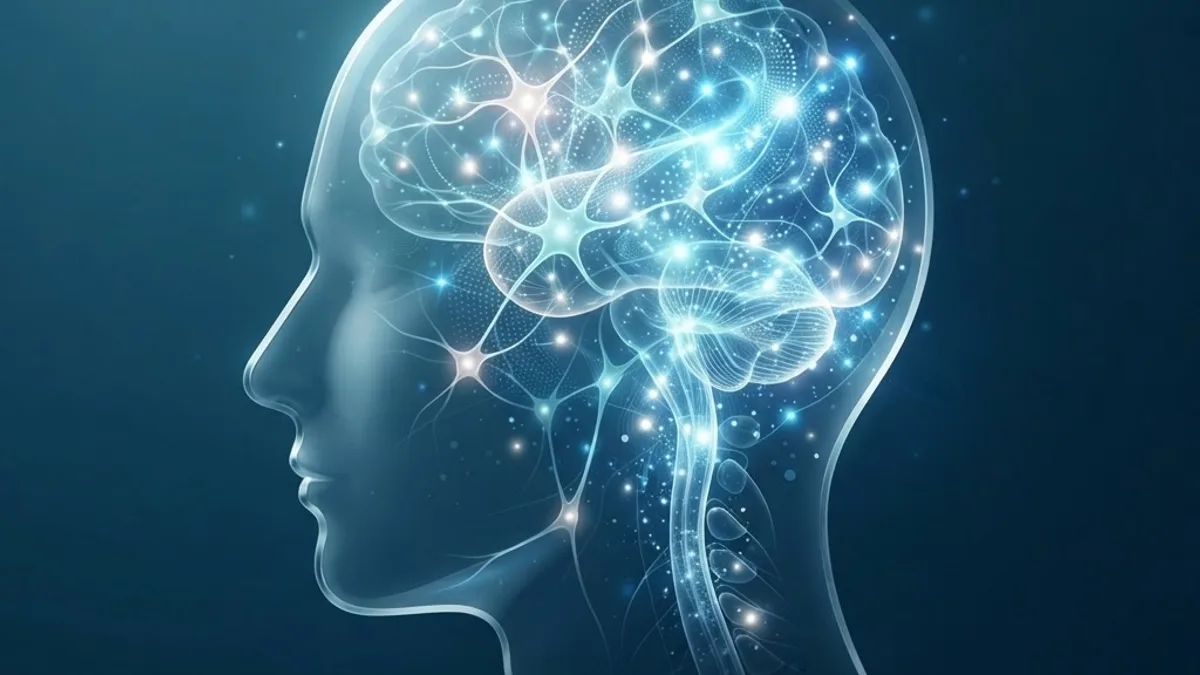
Penrose divides AI thinking into categories, most notably "Strong AI," the claim that a suitably programmed computer would genuinely have a mind and understand. He rejects Strong AI outright. His central claim is that human mathematical insight involves a form of understanding that no algorithm can replicate, because that understanding is non-computable.
Definition: Non-computable means a process that cannot be carried out by any step-by-step algorithm or Turing machine, no matter how much time or memory it has. Penrose believes human awareness falls into this category.
He laid this out in two influential books, The Emperor's New Mind (1989) and Shadows of the Mind (1994). His argument is not that computers are slow or under-powered, but that they are the wrong kind of thing to ever produce genuine understanding.
The Godel Argument Against Strong AI
Penrose's most famous argument draws on Kurt Godel's incompleteness theorems. Godel proved that in any consistent formal mathematical system powerful enough to describe arithmetic, there are true statements the system cannot prove within its own rules. Penrose argues that human mathematicians can nonetheless "see" the truth of certain Godel statements that a formal algorithmic system cannot prove.
If humans can grasp truths that no fixed algorithm can derive, Penrose concludes, then human understanding is not itself an algorithm. Since every conventional computer is fundamentally an algorithm executor, no such computer can fully replicate human mathematical insight. This is the logical backbone of his rejection of Strong AI.
Orchestrated Objective Reduction (Orch-OR): The Quantum Mind Theory
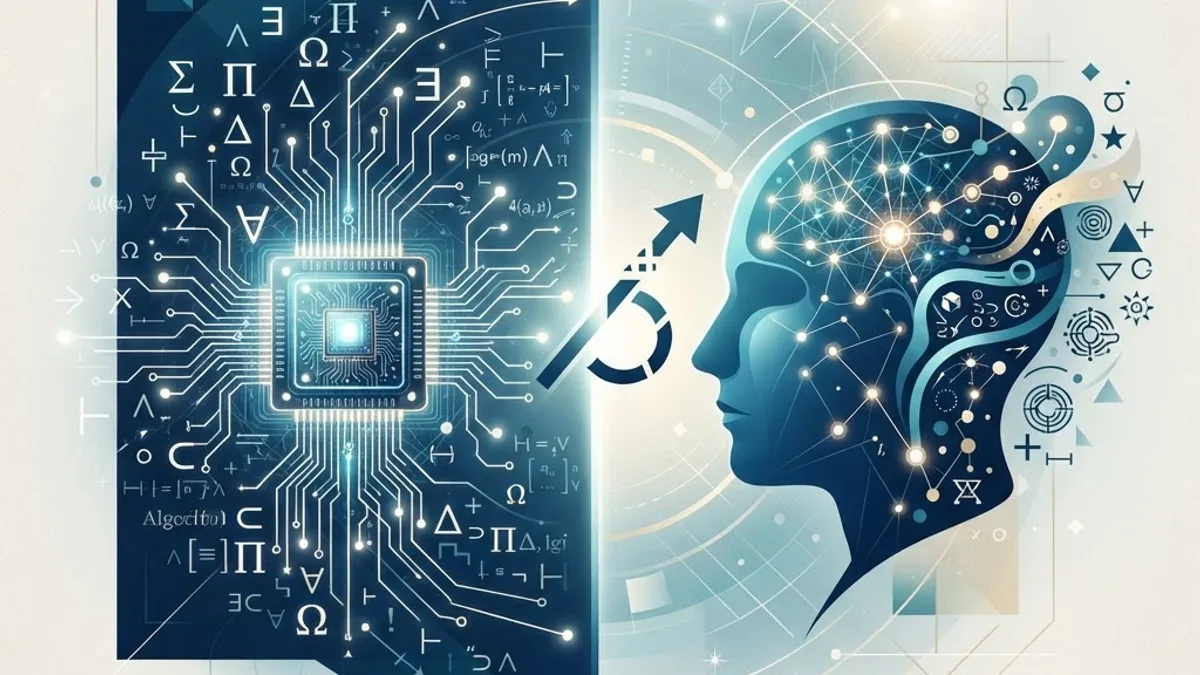
Having argued that consciousness is non-computable, Penrose had to answer an obvious question: where does non-computable understanding come from? His answer, developed with anesthesiologist Stuart Hameroff, is a theory called Orchestrated Objective Reduction, or Orch-OR.
Definition: Orch-OR proposes that consciousness arises from quantum computations inside microtubules, tiny protein structures within brain neurons, and that these quantum states collapse through a physical process tied to the fundamental structure of spacetime.
The theory suggests the brain is not merely a biological classical computer but a quantum system exploiting physics that ordinary silicon computers do not access. If true, it would explain why standard AI cannot reproduce consciousness: it lacks the underlying quantum mechanism.
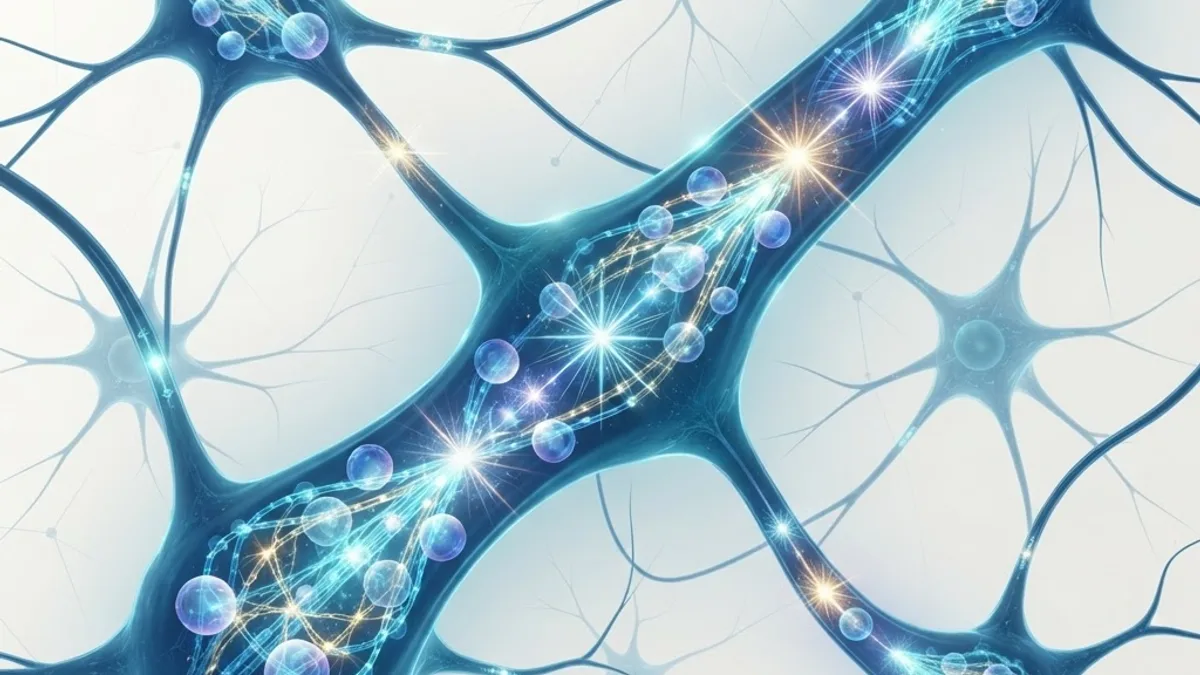
Orch-OR remains highly controversial. Critics long argued the brain is too warm and wet to sustain quantum coherence. However, a 2022 study by Italian physicists reported experimental hints consistent with quantum processes in microtubules, and 2024 research continued probing these effects, keeping the theory scientifically alive rather than dismissed.
Penrose's View vs Mainstream AI: A Comparison
The gap between Penrose and mainstream AI researchers is philosophical and scientific. The table below summarizes the core differences.
| Question | Penrose's Position | Mainstream AI Position |
|---|---|---|
| Is consciousness computable? | No, it is non-computable | Yes, in principle |
| Can Strong AI ever exist? | No | Yes, eventually |
| Source of understanding | Quantum brain processes | Complex computation |
| Basis of the argument | Godel's theorem and physics | Scale and neural networks |
| Are current LLMs conscious? | No, they simulate only | Not yet, but possibly later |
Why This Debate Matters for Today's AI
Large language models like GPT and Gemini produce fluent, human-like text, which makes many people assume the machines understand what they write. Penrose's framework offers a sharp counterpoint: fluency is not understanding. These systems are extraordinary pattern predictors, statistically completing sequences without any inner experience or genuine comprehension.
This distinction has real consequences. According to Stanford's 2024 AI Index Report, global corporate AI investment reached roughly 92 billion dollars, and adoption keeps accelerating. Yet a Penrose-informed perspective reminds decision makers that scaling these models produces better simulations of intelligence, not consciousness. Companies deploying AI benefit from this clarity, which is why practical artificial intelligence services focus on measurable business outcomes rather than promises of machine sentience.
Criticisms and Counterarguments
Penrose's ideas are influential but far from universally accepted, and intellectual honesty requires presenting the strongest objections.
- The Godel argument is disputed. Philosophers such as Hilary Putnam argued that humans cannot actually verify their own consistency, weakening the claim that we transcend formal systems.
- Quantum coherence is fragile. Physicist Max Tegmark calculated that quantum states in the brain would decohere far too quickly to influence neural activity, though Orch-OR proponents contest his assumptions.
- No mechanism for AI is required. Many neuroscientists argue consciousness emerges from classical neural complexity, needing no exotic quantum physics.
These criticisms do not disprove Penrose, but they show the debate is open. His genuine contribution is forcing the field to define understanding precisely rather than assuming computation automatically produces it.

What Penrose's Ideas Mean for the Future of AI
Whether or not Orch-OR proves correct, Penrose reframes the goal of AI in a useful way. If consciousness truly requires quantum biological processes, then silicon-based AI, no matter how advanced, will remain a powerful tool rather than a mind. That is not a limitation to fear but a boundary to understand.
For builders and businesses, the practical takeaway is to treat AI as augmentation, not replacement of human judgment. The most valuable systems pair machine speed and scale with human understanding and accountability. Organizations that internalize this build more trustworthy products, a philosophy reflected in modern development work at WebPeak. Penrose's skepticism, rather than slowing progress, encourages honest, human-centered AI.
Key Takeaways
- Roger Penrose, a 2020 Nobel laureate in Physics, argues human consciousness is non-computable and cannot be reproduced by algorithms.
- His Godel-based argument claims humans grasp mathematical truths that no fixed algorithm can prove, so understanding is not computation.
- The Orch-OR theory, developed with Stuart Hameroff, proposes consciousness arises from quantum processes in neuronal microtubules.
- Penrose says current AI, including large language models, simulates intelligence without genuine understanding or awareness.
- His views remain debated, with critics citing quantum decoherence and disputed interpretations of Godel's theorem.
Frequently Asked Questions (FAQ)
Does Roger Penrose believe AI can become conscious?
No. Penrose argues that consciousness is non-computable and depends on quantum processes in the brain. Because conventional computers only run algorithms, he believes no standard AI, regardless of power or scale, can ever achieve genuine consciousness or true understanding.
What is the Penrose argument against artificial intelligence?
Penrose uses Godel's incompleteness theorem to argue that humans can recognize mathematical truths that no formal algorithm can prove. Since computers are algorithm-based, he concludes human understanding is not computational, meaning Strong AI, machines that genuinely understand, is fundamentally impossible.
What is Orch-OR theory in simple terms?
Orchestrated Objective Reduction is a theory by Penrose and Stuart Hameroff. It proposes that consciousness comes from quantum computations inside microtubules within brain neurons. These quantum states collapse through a physical process linked to spacetime, producing conscious moments that ordinary computers cannot replicate.
Are large language models like ChatGPT conscious according to Penrose?
No. From a Penrose perspective, language models are advanced statistical pattern predictors. They generate convincing text without inner experience or genuine understanding. Their fluency mimics intelligence, but Penrose would say they simulate thinking rather than actually comprehending anything they produce.
Is Penrose's theory of consciousness widely accepted?
Not universally. Penrose's ideas are respected but contested. Critics challenge the Godel argument and question whether the warm brain can sustain quantum coherence. However, recent microtubule experiments keep Orch-OR scientifically active, so the theory remains a serious, ongoing debate rather than a settled conclusion.
Roger Penrose does not offer comfortable answers, but he offers rigorous ones. His work reminds us that intelligence and consciousness may be deeply different things, and that the smartest response to powerful AI is clear thinking about what it truly is.