
Discover how artificial intelligence is reshaping organizational decision-making structures, from centralized hierarchies to adaptive, data-driven, human-AI collaborative models.
Organizational Decision-Making Structures in the Age of Artificial Intelligence

Artificial intelligence is no longer a back-office tool for automating spreadsheets. It now sits inside the boardroom, quietly reshaping how companies decide who decides. For decades, organizations relied on rigid hierarchies where authority flowed from the top down. That model is being rewritten as machines process information faster than any executive team ever could. This article explains how AI is transforming organizational decision-making structures, what the new models look like, and how leaders can adapt without losing accountability or human judgment.
Quick Answer: In the age of artificial intelligence, organizational decision-making structures are shifting from rigid top-down hierarchies to hybrid, data-driven models where AI handles analysis and routine choices while humans retain strategic, ethical, and accountability roles. The result is faster, decentralized, and more adaptive decision-making across every level of the organization.
How AI Is Changing the Nature of Organizational Decisions
AI changes decision-making by compressing the time between data and action. Traditionally, a decision traveled up the chain of command, waited for approval, and returned as an instruction. AI collapses that loop by surfacing insights instantly at the point of need. According to McKinsey, organizations that embed AI into core workflows report decision speeds up to five times faster than peers relying on manual analysis.
This speed forces a structural question: if a frontline employee has the same predictive insight as a senior director, why route every decision through layers of management? The honest answer, drawn from working with dozens of teams adopting AI, is that many of those layers exist to move and interpret information, a job AI now does better. When the bottleneck disappears, the structure built around it becomes optional.

Defining AI-Augmented Decision-Making
AI-augmented decision-making is a model where algorithms provide recommendations, forecasts, and risk assessments, while humans make the final call. It is distinct from full automation, where machines decide without oversight. Most healthy organizations aim for augmentation, not replacement, because it preserves human accountability while gaining machine speed and pattern recognition.
Centralized vs. Decentralized Decision Structures
The biggest structural debate in the AI era is whether to centralize or decentralize authority. Both models gain new life when powered by intelligent systems, but they serve different needs.

Centralized structures use AI to give leadership a single, real-time view of the entire organization. Decentralized structures use the same intelligence to push authority outward, trusting employees who now hold reliable data. The right choice depends on risk tolerance, industry regulation, and how quickly the market moves.
| Factor | Centralized + AI | Decentralized + AI |
|---|---|---|
| Decision speed | Moderate | Fast |
| Consistency | High | Variable |
| Frontline autonomy | Low | High |
| Best for | Regulated, high-risk sectors | Fast-moving, customer-facing teams |
| Accountability | Clear, top-heavy | Distributed, needs governance |
| Innovation potential | Controlled | High |
In practice, the strongest companies blend both. They centralize strategy, ethics, and capital allocation while decentralizing operational choices to teams armed with AI dashboards. This hybrid avoids the paralysis of over-centralization and the chaos of unchecked autonomy.
The Rise of AI-Augmented Leadership
Leaders are no longer the sole source of insight; they are curators of it. The modern executive spends less time gathering reports and more time questioning what the algorithms surface. This is a profound identity shift for management.

Effective AI-augmented leaders do three things well. First, they frame the right questions, because an AI system is only as useful as the problem it is pointed at. Second, they interrogate outputs for bias and blind spots rather than accepting them at face value. Third, they own the outcome, since a machine cannot be held responsible for a flawed strategy. Teams building this capability often lean on specialists such as ZoneTechify's artificial intelligence services to integrate models responsibly into leadership workflows.
The flatter the organization becomes, the more leaders must lead through influence and clarity rather than positional control. When information is democratized, authority must be earned through better judgment, not granted by title alone.
Building a Data-Driven Decision Framework
A data-driven decision framework is a repeatable process for turning raw information into confident action. Without it, AI creates noise instead of clarity. The framework matters more than the tool.
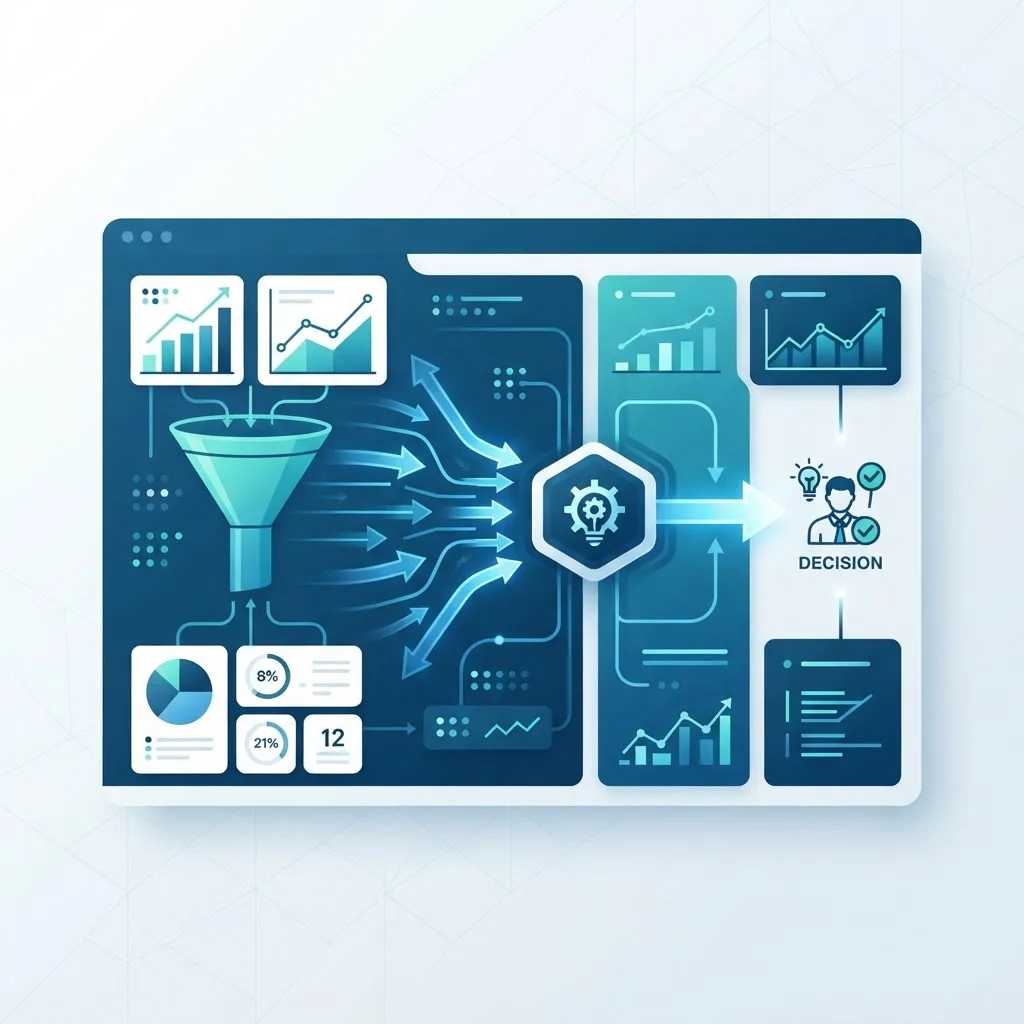
A reliable framework follows clear steps:
- Define the decision and the outcome it should improve.
- Identify the data that genuinely informs it, ignoring vanity metrics.
- Apply AI analysis to model options, forecasts, and risks.
- Add human context such as ethics, brand values, and relationships.
- Decide and document the reasoning for future accountability.
- Measure results and feed them back to improve the model.
The documentation step is the one most teams skip, and it is the most important. According to Gartner, through 2026, organizations that operationalize AI transparency and governance will achieve significantly better business outcomes than those that treat AI as a black box. Writing down why a decision was made keeps both humans and machines accountable.
Human-AI Collaboration in Everyday Workflows
The real transformation happens not in the boardroom but in daily workflows where humans and AI trade tasks fluidly. The goal is a division of labor that plays to each side's strengths.
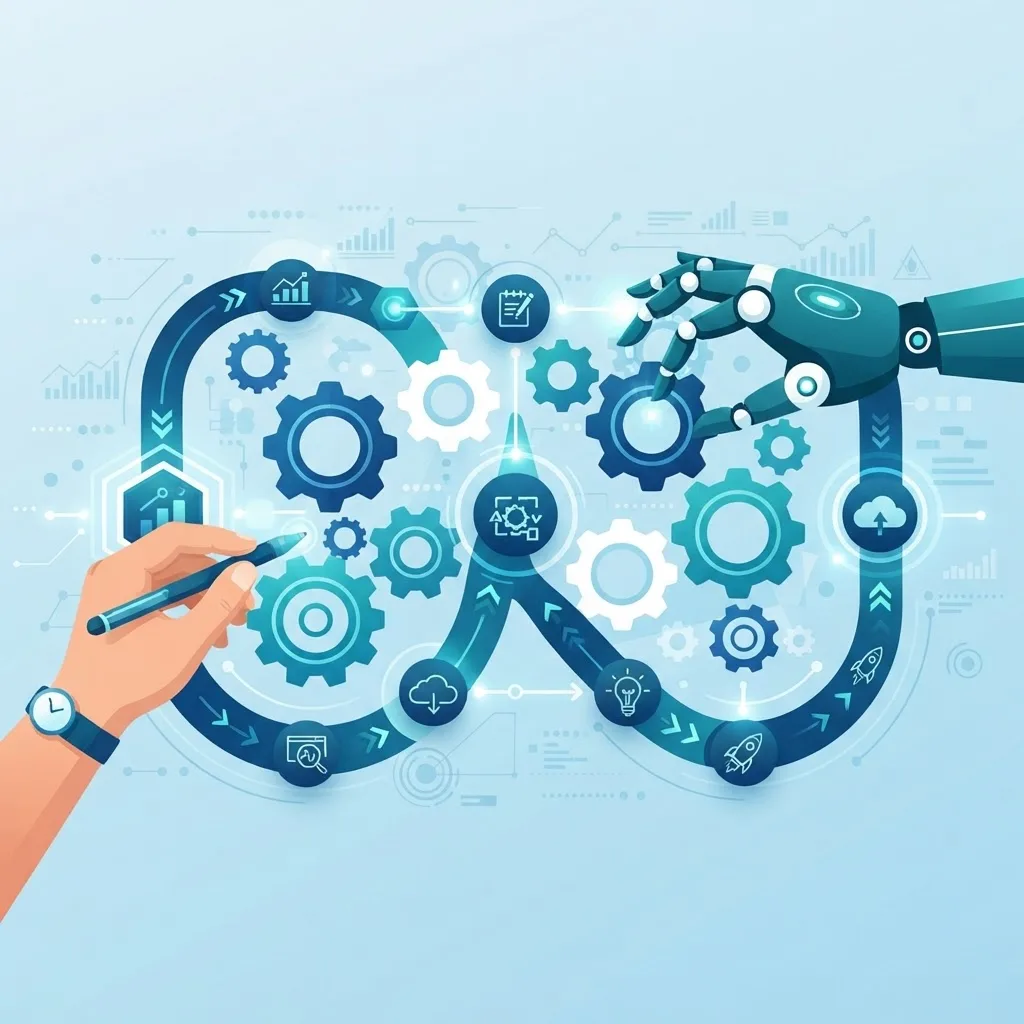
AI excels at scale, consistency, and pattern detection across millions of data points. Humans excel at empathy, creativity, ethical judgment, and handling ambiguity. A well-designed workflow lets AI draft, sort, predict, and flag, then hands the nuanced final decision to a person. For example, an AI can score a thousand sales leads in seconds, but a human decides how to build the relationship that closes the deal.
The risk is over-reliance. When people accept AI outputs without scrutiny, small errors compound into strategic failures. The healthiest teams treat AI as a sharp but fallible advisor, not an oracle. Businesses looking to design these hybrid workflows can explore dedicated WebPeak AI services to ensure automation strengthens rather than replaces human judgment.
Governance and Accountability in AI Decision-Making
Governance is the guardrail that keeps AI-powered decisions ethical, legal, and aligned with company values. As algorithms take on more influence, the question of accountability becomes urgent. If an AI recommendation causes harm, who answers for it?

Strong AI governance rests on a few non-negotiable principles:
- Transparency: decisions must be explainable, not hidden in opaque models.
- Human oversight: a person must be able to review and override AI outputs.
- Bias auditing: models must be tested regularly for discriminatory patterns.
- Clear ownership: every AI-influenced decision needs a named human owner.
- Data integrity: decisions are only as trustworthy as the data behind them.
Regulation is catching up quickly. Frameworks like the EU AI Act now classify decision-making systems by risk level, requiring documentation and human oversight for high-stakes uses such as hiring and lending. Organizations that build governance early will adapt far more smoothly than those forced to retrofit it under legal pressure.
The Future: Adaptive, Self-Reshaping Organizations
The long-term direction is clear: organizations are becoming adaptive systems that reshape their own structures around opportunities in real time. Instead of fixed departments and permanent hierarchies, we see fluid teams forming and dissolving around problems, coordinated by AI that allocates talent and resources dynamically.
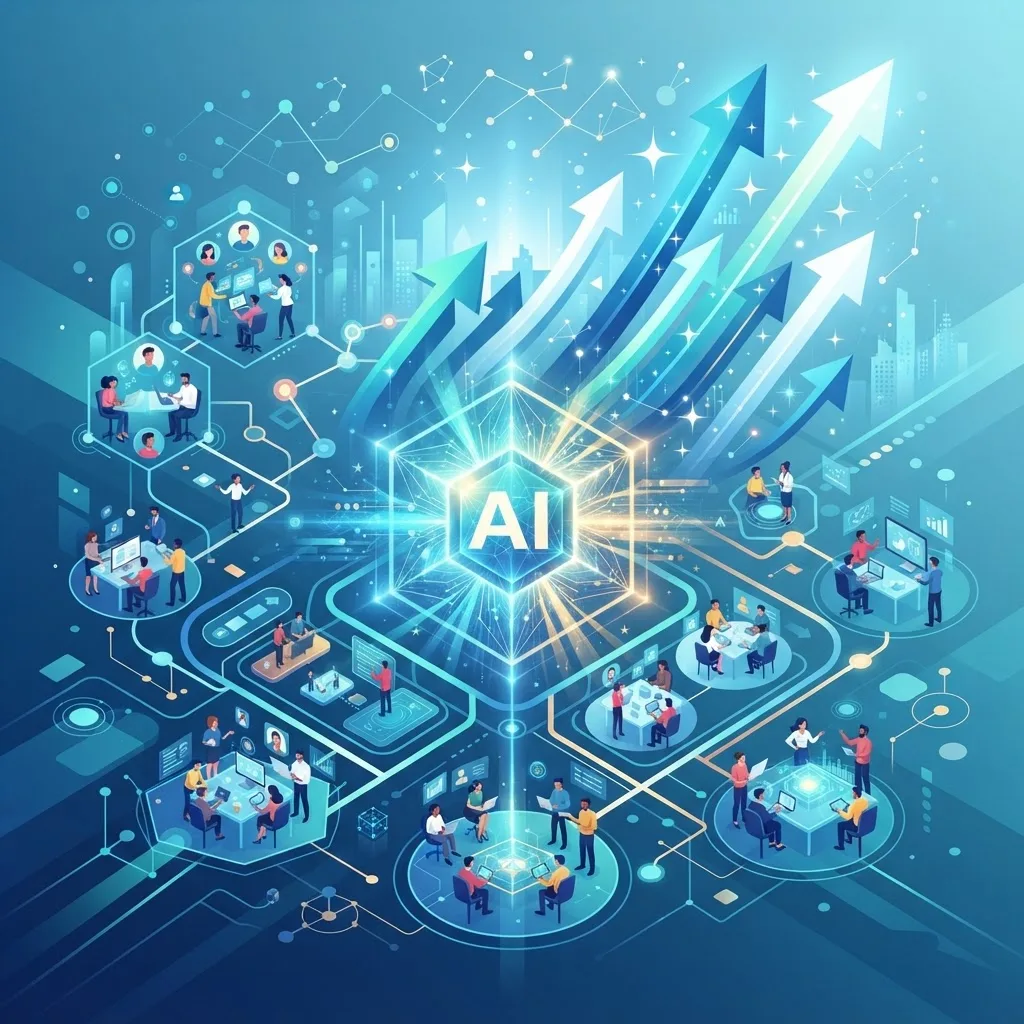
In this model, the org chart becomes a living map rather than a static pyramid. AI identifies where expertise is needed, suggests team compositions, and tracks outcomes to learn what structures work best. This is not science fiction; project-based and networked organizations already use lightweight versions of it today. The companies that thrive will be those that treat structure as a variable to optimize, not a constant to defend.
The enduring truth is that technology changes the mechanics of decisions, but not their purpose. Decisions still exist to serve customers, employees, and society. AI simply gives us faster, sharper tools to serve them well, provided we keep human wisdom firmly in the loop.
Key Takeaways
- AI compresses the gap between data and action, making traditional information-relaying management layers optional.
- The strongest structures are hybrid: centralized strategy and ethics, decentralized operational decisions powered by AI.
- AI-augmented decision-making keeps humans accountable while gaining machine speed and pattern recognition.
- A documented, data-driven decision framework prevents AI from creating noise instead of clarity.
- Governance, transparency, and clear human ownership are non-negotiable as regulations like the EU AI Act expand.
- The future favors adaptive organizations that reshape teams dynamically around real-time opportunities.
Frequently Asked Questions (FAQ)
How is AI changing organizational decision-making?
AI changes decision-making by delivering real-time insights directly to the point of need, which removes the delays of traditional top-down approval chains. This lets organizations flatten hierarchies, push authority to frontline teams, and make faster, more consistent decisions while humans focus on strategy, ethics, and accountability.
Will AI replace managers and executives?
No, AI will not replace managers, but it will change their role significantly. Instead of gathering and relaying information, leaders now frame the right questions, interrogate AI outputs for bias, and own the outcomes. Machines cannot be held accountable, so human judgment and responsibility remain essential at every level.
What is the difference between centralized and decentralized AI decision-making?
Centralized AI decision-making gives leadership a single real-time view for consistent, controlled choices, ideal for regulated industries. Decentralized AI decision-making pushes authority to frontline teams armed with data, enabling speed and innovation. Most successful organizations blend both, centralizing strategy while decentralizing day-to-day operational decisions.
How do you keep AI-driven decisions accountable?
You keep AI-driven decisions accountable through governance that requires transparency, human oversight, bias auditing, and a named human owner for every decision. Documenting the reasoning behind each choice is critical. Regulations such as the EU AI Act now mandate oversight and documentation for high-risk decision systems.
What skills do leaders need in the age of AI?
Leaders need three core skills in the AI age: framing sharp questions to point AI at the right problems, critically interrogating AI outputs for bias and blind spots, and owning outcomes since machines cannot bear responsibility. Influence, clarity, and ethical judgment matter more than positional authority in flatter organizations.
Is human-AI collaboration better than full automation?
Yes, for most decisions human-AI collaboration outperforms full automation. AI handles scale, consistency, and pattern detection, while humans provide empathy, creativity, and ethical judgment. This division preserves accountability and reduces the risk of compounding errors that occur when people accept AI outputs without scrutiny.