Learn how artificial intelligence strengthens industrial control systems security by detecting threats, spotting anomalies, and automating response across SCADA and OT networks.
Industrial Control Systems Security Using Artificial Intelligence
Industrial control systems (ICS) run the machinery behind power grids, water treatment plants, oil refineries, and factory floors. When these systems fail or get breached, the consequences are physical: blackouts, contaminated water, halted production, and real danger to human lives. As attackers grow more sophisticated and operational technology (OT) connects to corporate IT networks, traditional signature-based defenses can no longer keep pace. This is where artificial intelligence changes the equation.
In this guide, I break down exactly how AI is applied to ICS security, where it delivers measurable value, and where it still needs human oversight. Having worked alongside OT engineers securing legacy SCADA environments, I have seen firsthand why generic IT security tools fail in industrial settings and how AI-driven monitoring fills that gap.
Quick Answer: Industrial control systems security using artificial intelligence means applying machine learning to monitor OT and SCADA networks, detect anomalies in real time, identify cyber threats, and automate response. AI baselines normal industrial behavior, then flags deviations that signature-based tools miss, protecting critical infrastructure from disruption.
What Are Industrial Control Systems?
Industrial control systems are the hardware and software that monitor and control physical processes in critical infrastructure. They include SCADA (Supervisory Control and Data Acquisition) systems, programmable logic controllers (PLCs), distributed control systems (DCS), and remote terminal units (RTUs). These components regulate everything from turbine speeds to chemical dosing.
Unlike IT systems that prioritize confidentiality, ICS environments prioritize availability and safety. A control system that stops working can shut down a whole plant. This fundamental difference is why security approaches must be tailored, not copied from the IT world.
Why ICS Security Is Uniquely Difficult
Many ICS devices were designed decades ago, long before cybersecurity was a concern. They often cannot be patched without downtime, run outdated protocols like Modbus with no built-in authentication, and were never meant to connect to the internet. Yet digital transformation has bridged these once-isolated networks to enterprise IT, widening the attack surface dramatically.
How Artificial Intelligence Strengthens ICS Security
Artificial intelligence strengthens ICS security by learning what normal industrial behavior looks like and then detecting deviations that indicate threats. Because industrial processes are highly repetitive and predictable, AI models can build precise behavioral baselines that make anomalies stand out clearly.
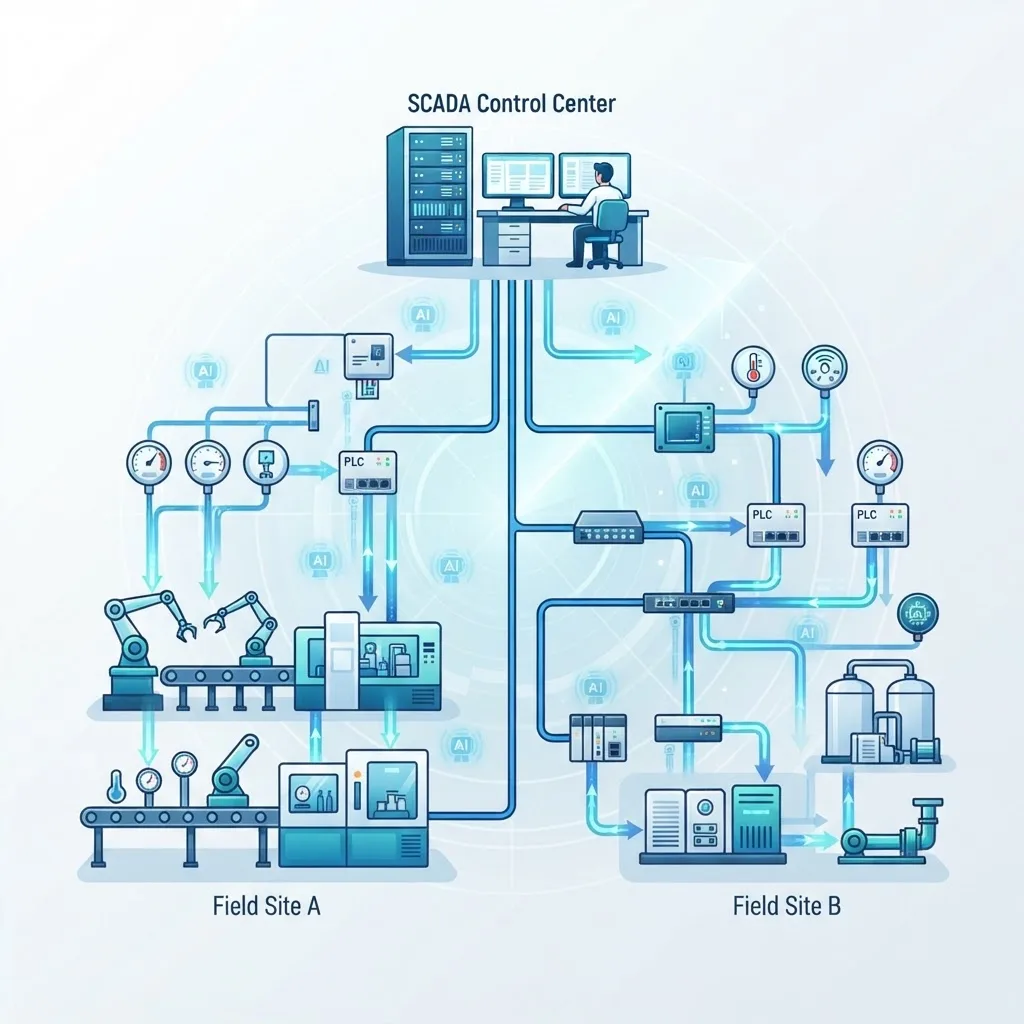
Here are the core ways AI protects industrial environments:
- Anomaly detection: Machine learning flags unusual traffic patterns, command sequences, or sensor readings that fall outside learned norms.
- Threat classification: AI distinguishes between benign process changes and genuine attacks, reducing false alarms.
- Predictive maintenance overlap: Models that detect equipment failure signatures also surface tampering and sabotage.
- Automated response: AI can isolate compromised devices or trigger alerts faster than any human analyst.
- Network visibility: AI-driven asset discovery maps every device on an OT network, including forgotten legacy hardware.
AI Anomaly Detection in Action
Anomaly detection is the single most valuable AI capability in ICS. Because a pump, valve, or motor behaves within tight tolerances, a model trained on its normal operation can catch a manipulated setpoint or a rogue command almost instantly. According to a 2023 IBM report, organizations using AI and automation extensively in security detected and contained breaches 108 days faster on average than those without it.
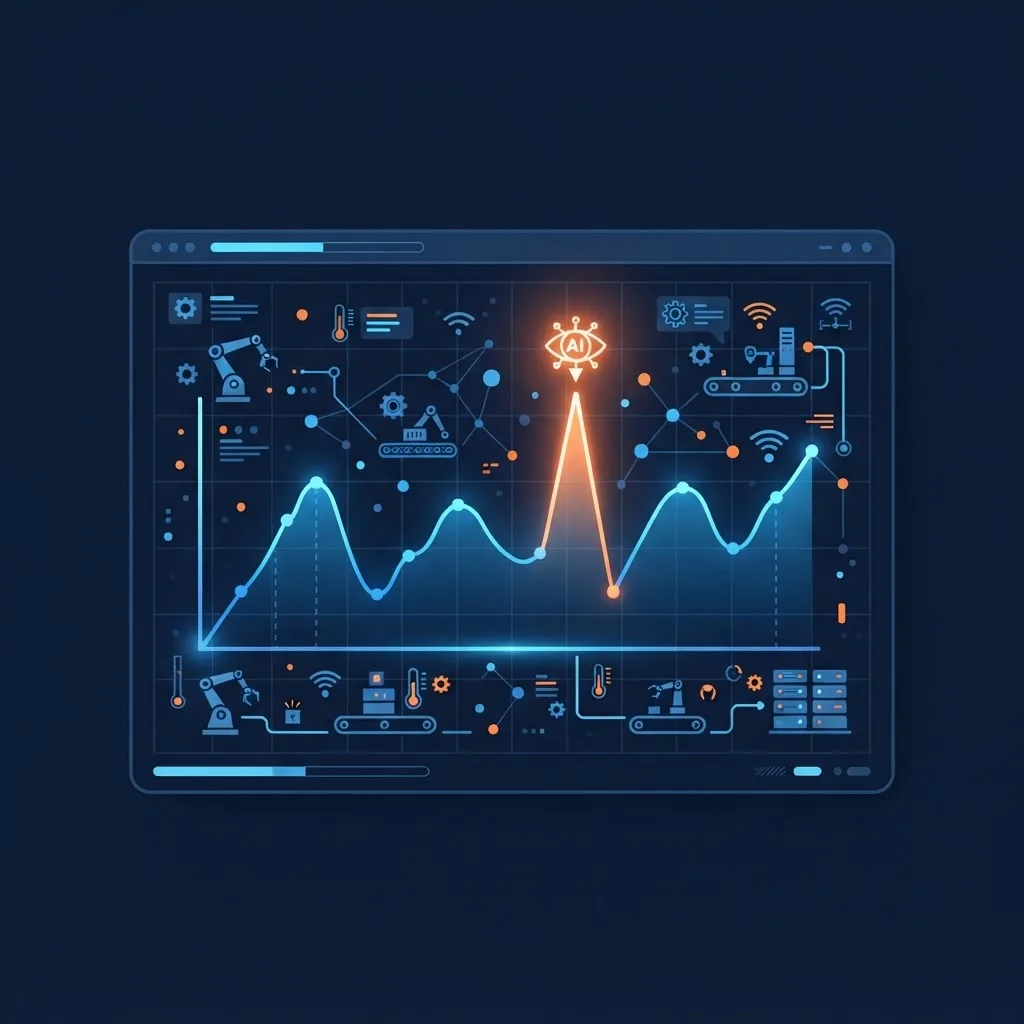
This speed matters enormously in OT, where an undetected intrusion can quietly alter physical processes for weeks. The infamous Stuxnet attack demonstrated how malware can subtly manipulate centrifuges while reporting normal readings to operators. AI-driven behavioral monitoring is specifically designed to catch exactly this kind of stealthy manipulation.
The OT and IT Convergence Challenge
The convergence of operational technology and information technology is both the biggest opportunity and the biggest risk in modern industrial security. Connecting OT to IT unlocks data analytics and remote management, but it also exposes fragile control systems to internet-borne threats.
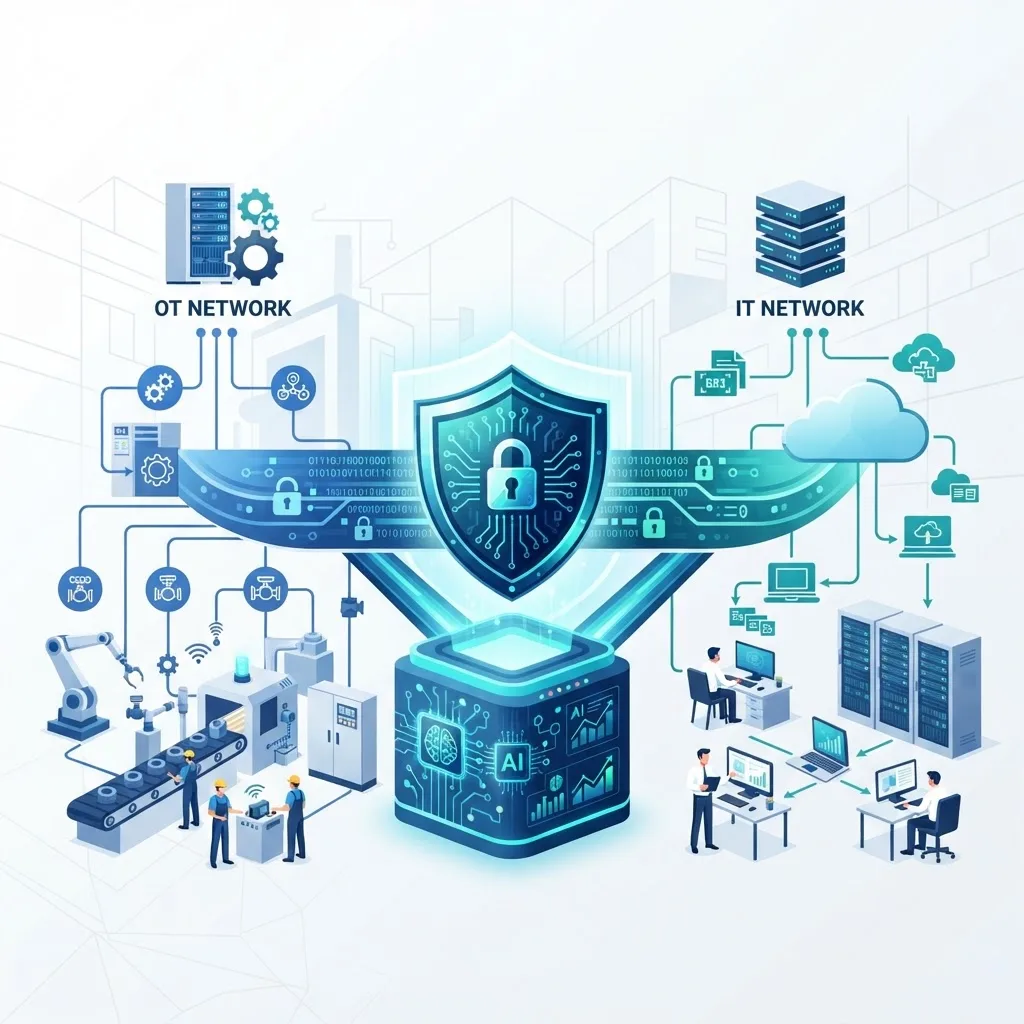
AI helps manage this convergence by providing a unified security layer that understands both worlds. It correlates events across IT and OT, so a phishing email that compromises an engineer's laptop can be linked to suspicious PLC commands minutes later. Without this correlation, security teams see two unrelated incidents instead of one coordinated attack.
For organizations building this bridge, working with specialists in cybersecurity ensures the convergence is designed defensively from day one rather than patched afterward.
Machine Learning Models Used in ICS Defense
Several machine learning approaches power industrial cyber defense, each suited to a different problem. Understanding them helps you evaluate vendor claims critically instead of accepting marketing buzzwords.
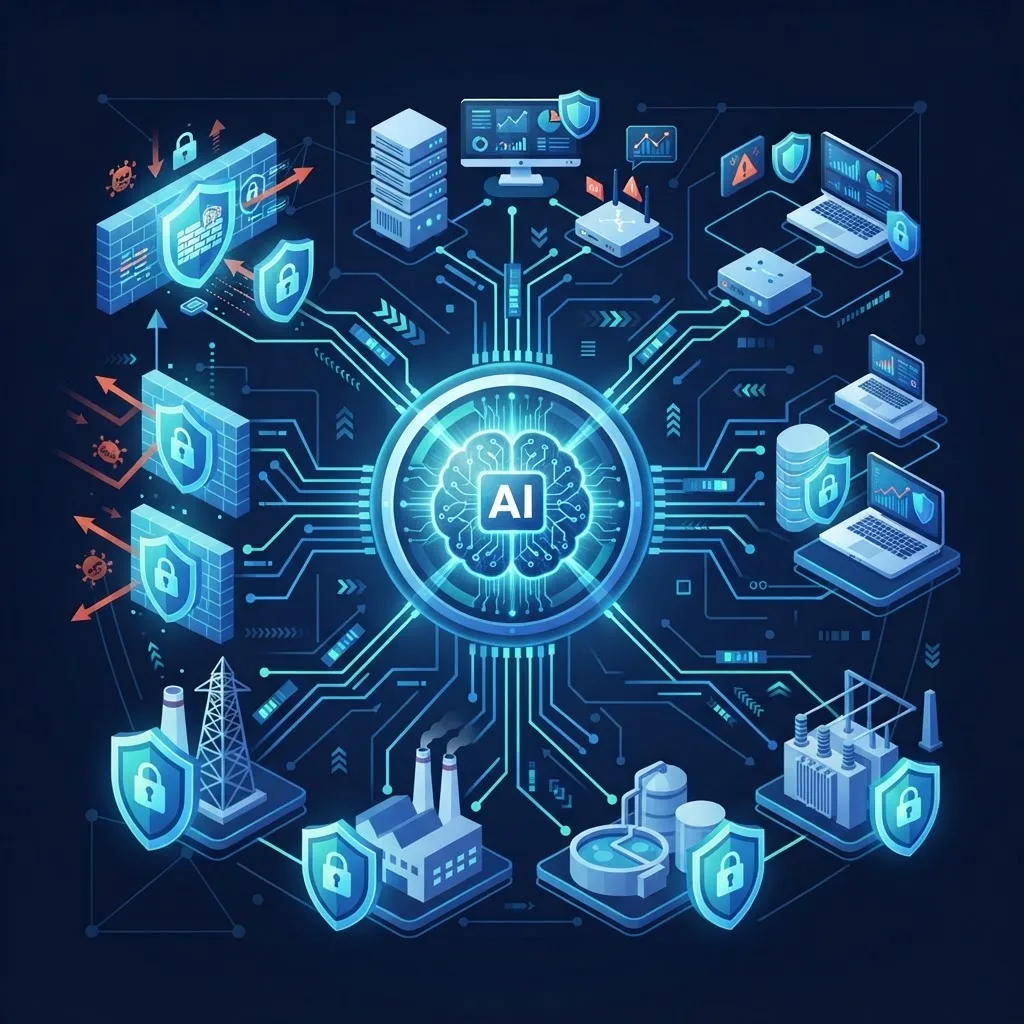
- Unsupervised learning: Clusters normal behavior and flags outliers without needing labeled attack data, ideal for unknown threats.
- Supervised learning: Trained on known attack signatures to classify specific threat types with high accuracy.
- Deep learning: Neural networks that model complex, multivariate process behavior across thousands of sensors.
- Reinforcement learning: Emerging use for adaptive defense strategies that improve response decisions over time.
Comparison: Traditional vs AI-Driven ICS Security
| Capability | Traditional Security | AI-Driven Security |
|---|---|---|
| Threat detection method | Known signatures only | Behavioral baselines plus signatures |
| Zero-day detection | Poor | Strong |
| False positive rate | High in OT settings | Lower with tuned models |
| Response speed | Manual, hours | Automated, seconds |
| Legacy device visibility | Limited | Comprehensive asset discovery |
| Scalability across sites | Difficult | High |
Automated Incident Response
Automated incident response uses AI to act on threats without waiting for human intervention, dramatically shrinking the window of exposure. In an ICS context, response must be carefully constrained: automatically shutting down a turbine could be as damaging as the attack itself.
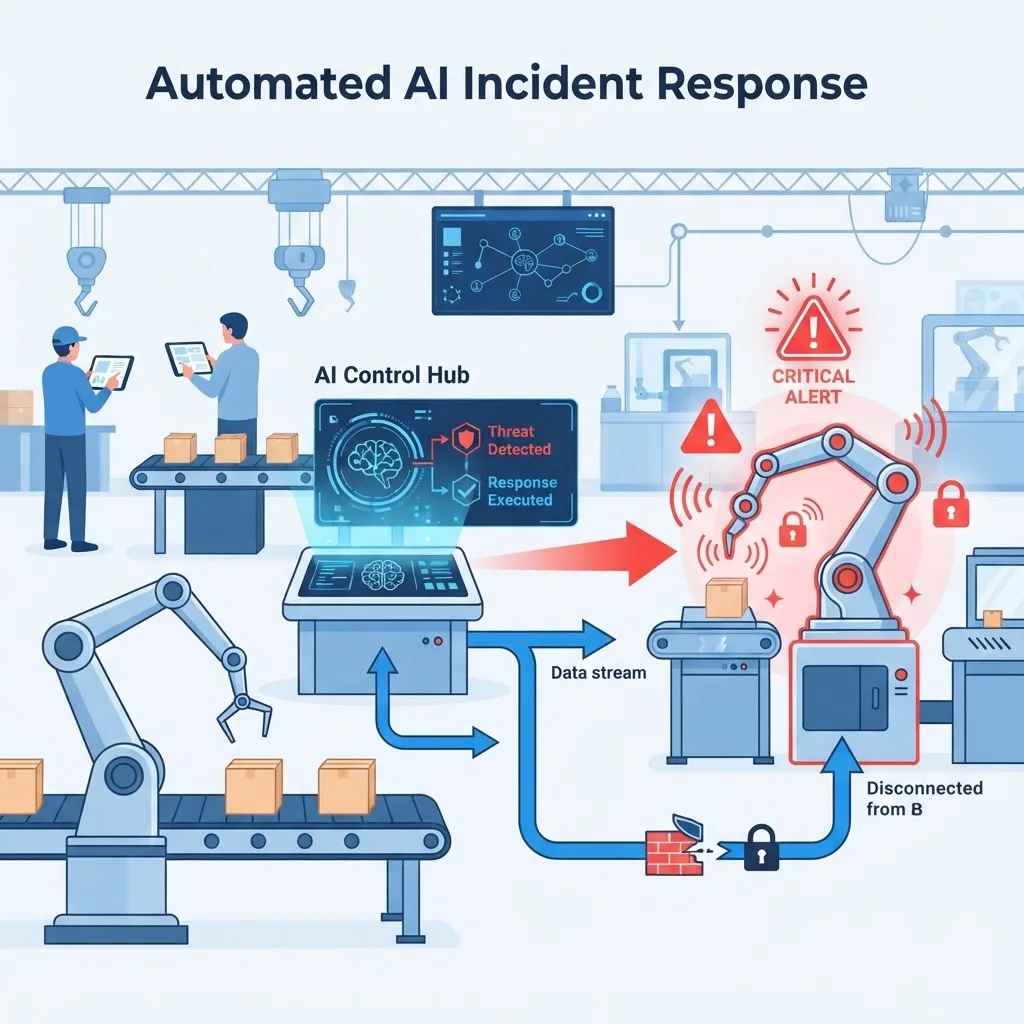
The best implementations use AI for detection and triage while keeping a human in the loop for high-impact physical actions. AI can safely quarantine a suspicious workstation, block malicious network traffic, or revoke credentials automatically, while flagging any action that touches physical process control for operator approval. This balance respects the safety-first culture that defines industrial operations.
Real-Time Monitoring Dashboards
AI-powered dashboards give security teams a live, prioritized view of risk across an entire industrial estate. Instead of drowning in raw alerts, analysts see ranked threats with context: which asset, what behavior changed, and how confident the model is.
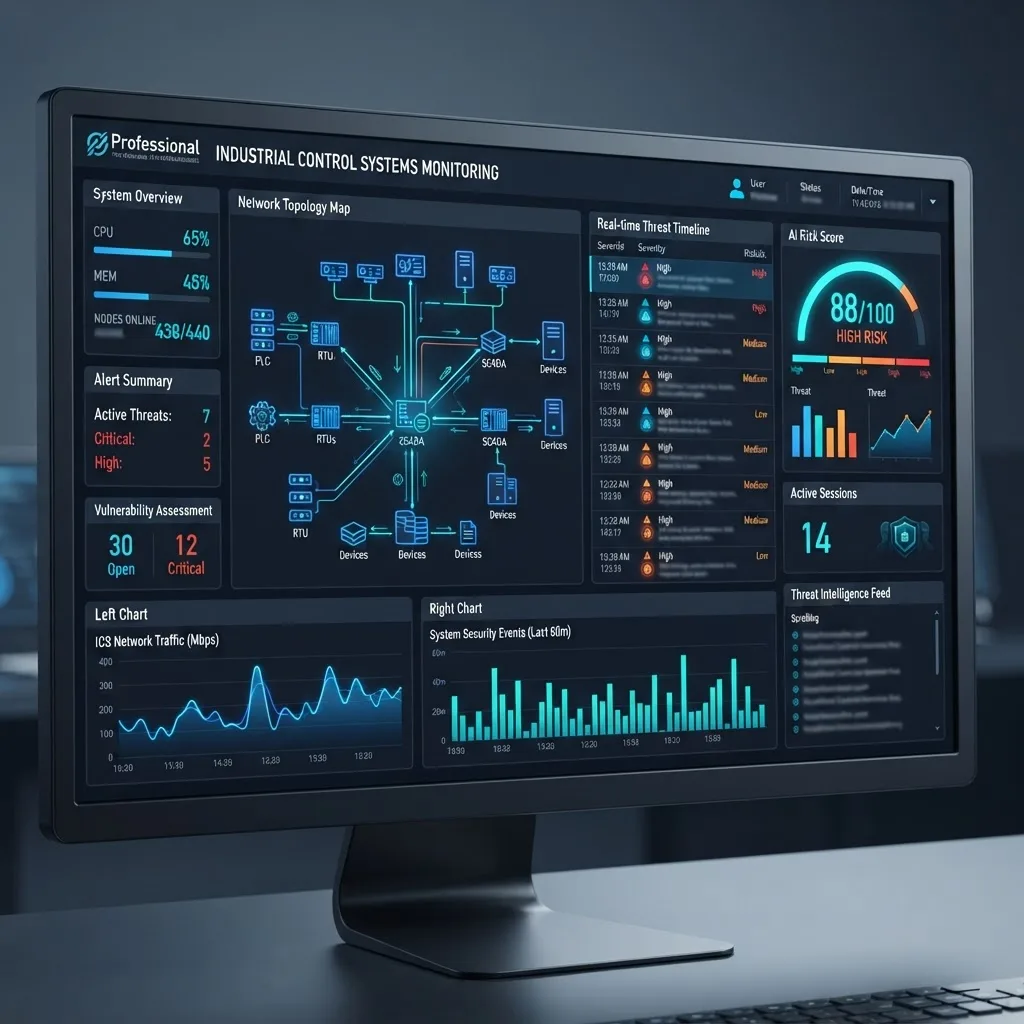
According to Gartner, by 2025 an estimated 75% of CEOs will be held personally liable for cyber-physical security incidents, making executive-friendly reporting essential. Modern dashboards translate technical anomalies into business-level risk scores that leadership can actually act on. Companies investing in intelligent automation often partner with artificial intelligence services to build these monitoring pipelines correctly.
Best Practices for Deploying AI in ICS Security
Deploying AI in industrial environments succeeds only when it respects operational realities. Based on real deployments, these practices separate effective programs from expensive shelfware.
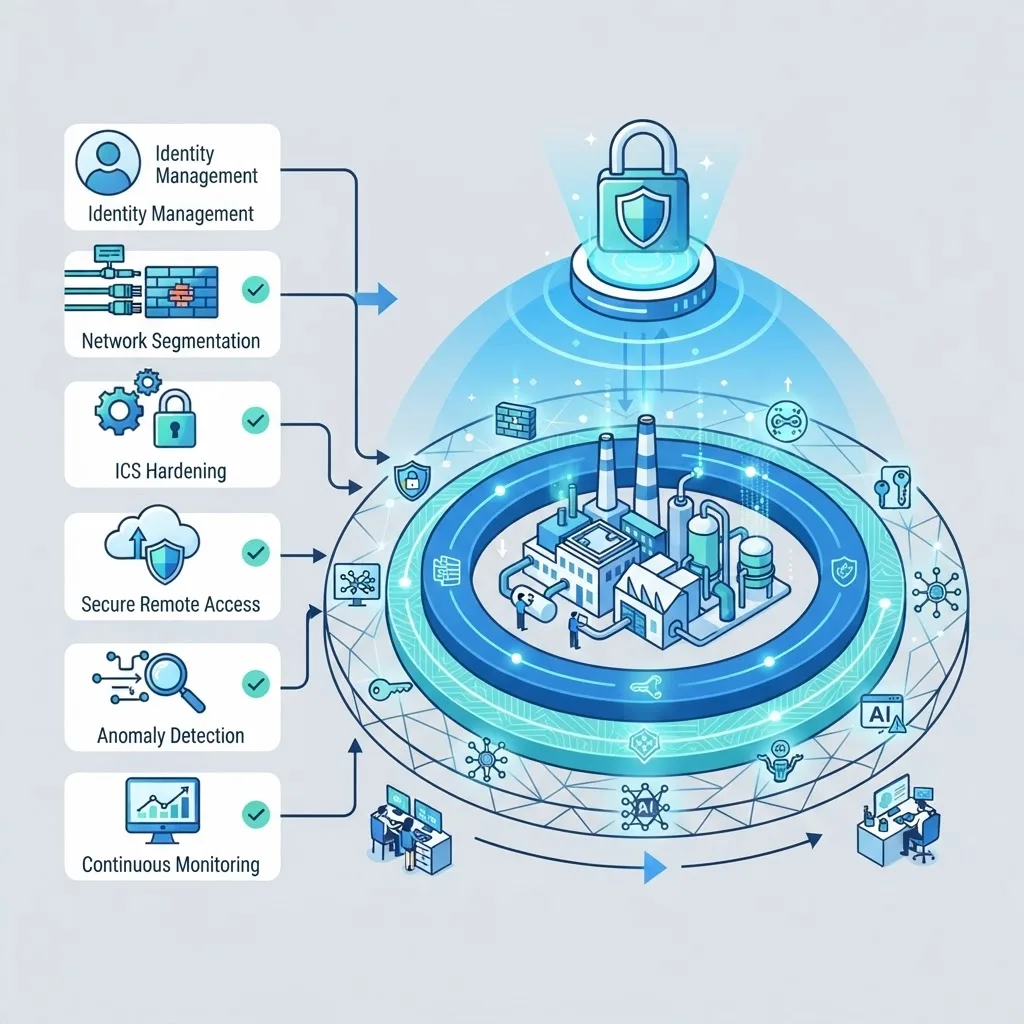
- Start with passive monitoring: Deploy AI in observe-only mode first so it learns baselines without risking process disruption.
- Segment your network: Use zones and conduits per the ISA/IEC 62443 standard to contain any breach.
- Involve OT engineers early: Their process knowledge prevents false positives and dangerous automated actions.
- Feed models quality data: Clean, comprehensive telemetry from PLCs and sensors is the foundation of accurate detection.
- Keep humans in control of physical actions: Automate detection and low-risk response, never uncontrolled shutdowns.
- Continuously retrain models: Industrial processes change with seasons, production shifts, and upgrades.
For teams building custom platforms to unify this data, resources like ZoneTechify and WebPeak offer guidance on integrating AI security into broader digital infrastructure.
Key Takeaways
- AI protects industrial control systems by learning normal behavior and detecting anomalies that signature-based tools miss.
- Organizations using AI and automation in security contained breaches 108 days faster on average, according to IBM's 2023 research.
- Anomaly detection is the highest-value AI capability in ICS because industrial processes are predictable and repetitive.
- OT and IT convergence expands the attack surface, and AI provides the cross-domain correlation needed to defend it.
- Automated response should quarantine and alert automatically but keep humans in control of physical process actions.
- Following the ISA/IEC 62443 standard and starting in passive mode are critical for safe AI deployment.
Frequently Asked Questions (FAQ)
What is industrial control systems security using artificial intelligence?
It is the practice of applying machine learning to protect SCADA, PLC, and OT networks. AI learns normal industrial behavior, detects anomalies and cyber threats in real time, and automates response, catching stealthy attacks that traditional signature-based security tools cannot identify in critical infrastructure environments.
Can AI replace human analysts in ICS security?
No, AI augments human analysts rather than replacing them. AI handles detection, triage, and low-risk automated response at machine speed, but experienced OT engineers must approve any action affecting physical processes. The safest programs keep humans firmly in the loop for high-impact industrial decisions.
Why can't I just use regular IT security tools for ICS?
ICS environments prioritize availability and safety over confidentiality, run fragile legacy devices that cannot be patched easily, and use protocols without authentication. Standard IT tools generate excessive false positives and can disrupt operations. AI-driven OT-specific security understands industrial behavior and protects without breaking processes.
How does AI detect zero-day attacks in industrial systems?
AI uses unsupervised learning to build behavioral baselines of normal operations without needing prior attack samples. When a zero-day exploit causes unusual commands, traffic, or sensor readings, the model flags the deviation immediately. This behavior-based approach detects novel threats that signature databases have never seen.
Is deploying AI in ICS security expensive and risky?
Initial investment exists, but starting in passive monitoring mode eliminates operational risk while models learn. The cost is far lower than a breach that halts production or damages equipment. Phased deployment, quality data, and OT engineer involvement make AI security both safe and cost-effective over time.