A clear, expert guide to what artificial intelligence is, how it works, and real-world AI examples you already use every day in life and business.
What Is Artificial Intelligence with Examples
Artificial intelligence is no longer a distant sci-fi idea. It quietly powers the phone in your pocket, the shows recommended to you tonight, and the fraud alert your bank sends within seconds of a suspicious charge. Yet most people still struggle to define it clearly. In this guide, we break down exactly what artificial intelligence is, how it works, and the concrete examples you interact with daily. Whether you are a curious reader or a business owner planning your next move, you will leave understanding AI in practical, real-world terms.
Quick Answer: Artificial intelligence (AI) is the ability of computer systems to perform tasks that normally require human intelligence, such as learning, reasoning, and decision-making. Everyday examples include voice assistants like Siri, Netflix recommendations, Google Maps routing, spam filters, and chatbots such as ChatGPT.
What Is Artificial Intelligence?
Artificial intelligence is the branch of computer science focused on building machines that can perform tasks requiring human-like intelligence. These tasks include recognizing speech, understanding language, spotting patterns, making predictions, and improving over time without being explicitly reprogrammed for every scenario.
The term was coined by computer scientist John McCarthy in 1956, but the technology only became mainstream once cheap computing power and massive datasets arrived. Today, AI is embedded in software you already trust. According to McKinsey's Global Survey, 72% of organizations reported adopting AI in at least one business function in 2024, up sharply from previous years. That adoption is why AI feels suddenly everywhere.
At its core, AI is not magic. It is math, data, and statistics working together to imitate specific slices of human thinking. If you want to explore this field practically, resources like ZoneTechify and WebPeak publish accessible breakdowns for beginners and businesses alike.
How Artificial Intelligence Works
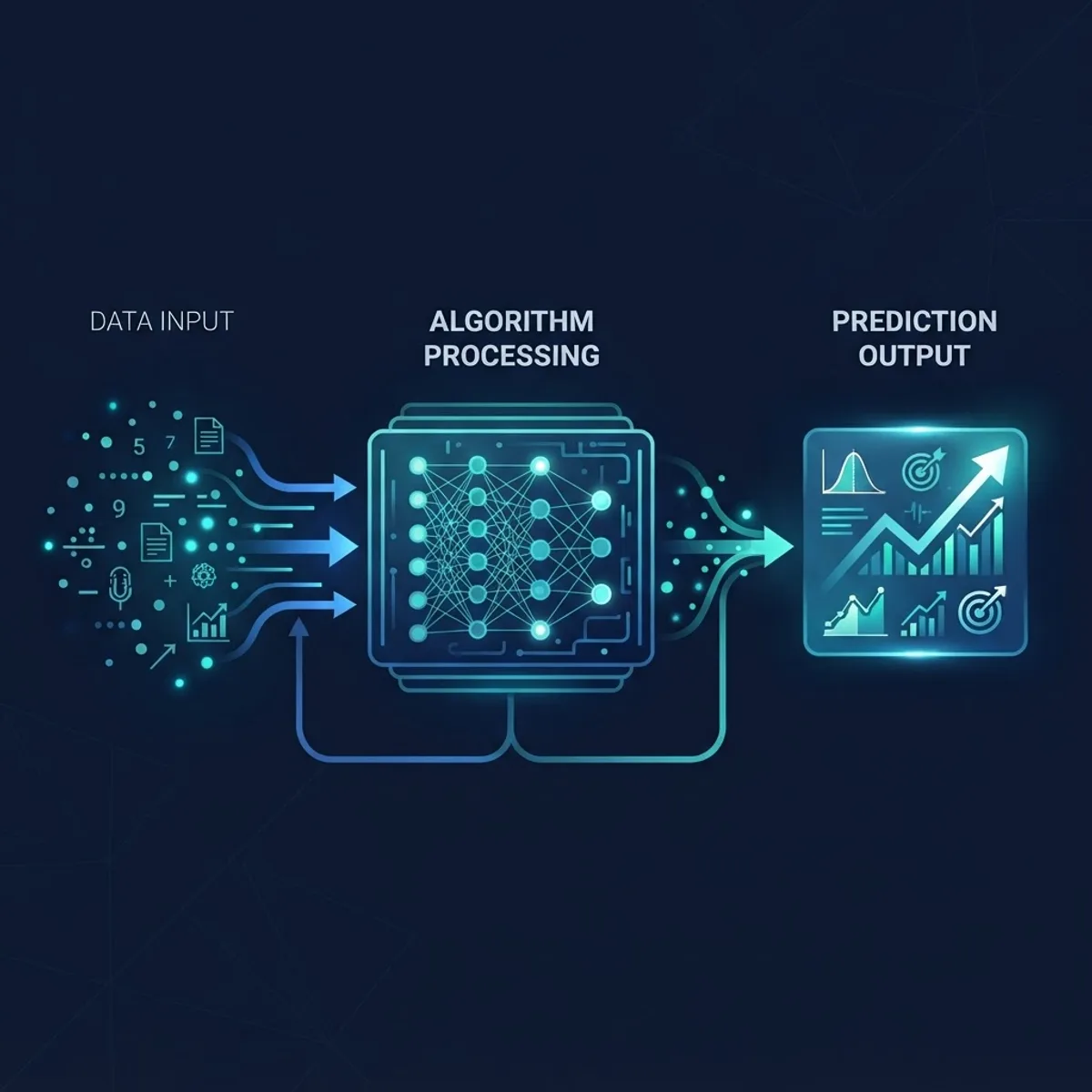
AI works by feeding large amounts of data into algorithms that detect patterns and use those patterns to make decisions or predictions. Instead of following fixed rules for every situation, modern AI learns from examples, much like a person learning from experience.
Here is the simplified process most AI systems follow:
- Data collection: The system gathers relevant data, such as images, text, transactions, or clicks.
- Training: An algorithm studies that data to identify patterns and relationships.
- Model creation: The learned patterns are stored in a mathematical model.
- Prediction: New, unseen data is fed to the model, which outputs an answer or action.
- Feedback loop: Results are measured, and the model is refined to improve accuracy.
For example, a spam filter studies millions of emails labeled spam or safe. It learns which words, senders, and structures signal junk mail, then applies that knowledge to filter your inbox automatically. The more feedback it receives, the sharper it becomes.
Types of Artificial Intelligence
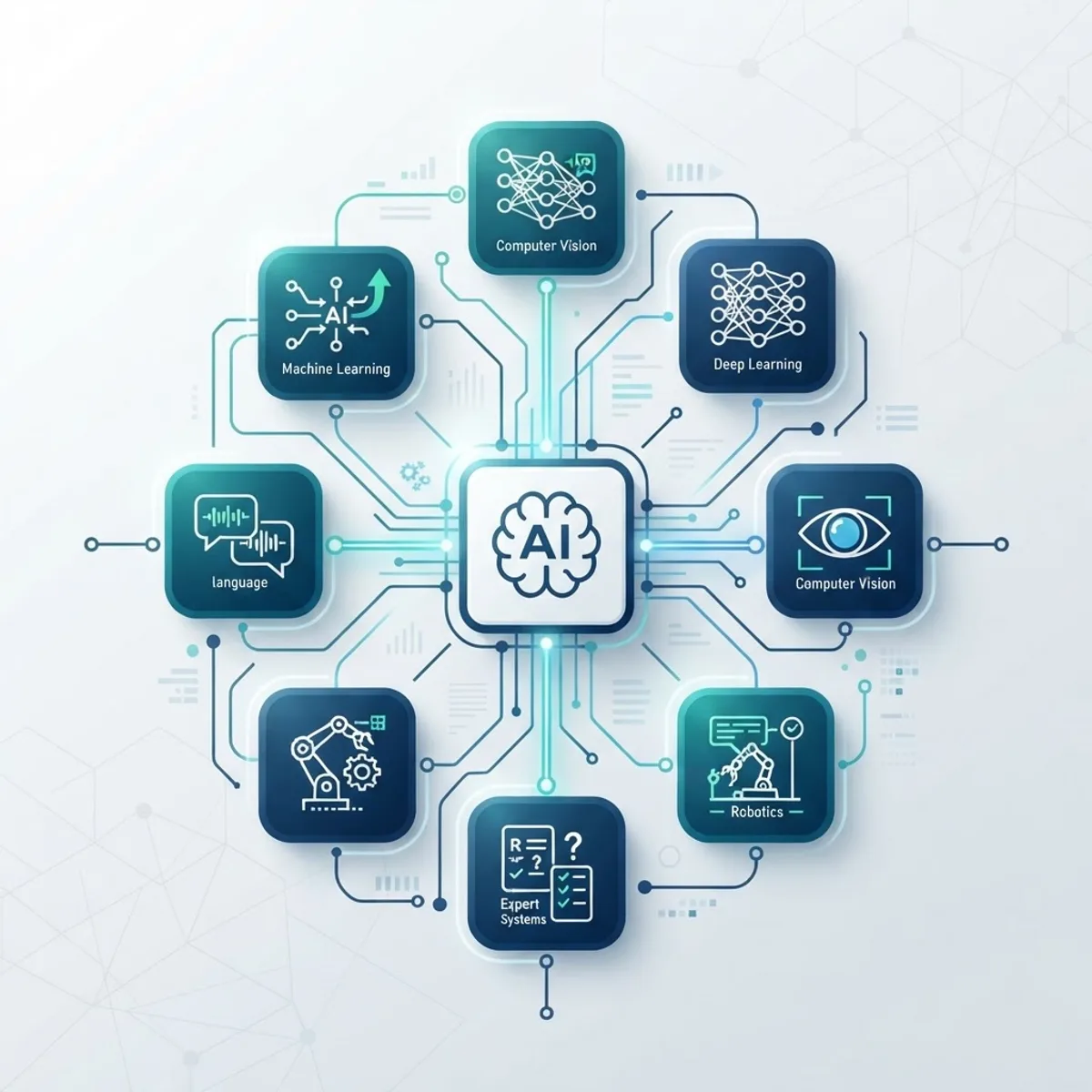
AI is commonly grouped into three types based on capability. Understanding these categories helps separate today's reality from future speculation.
- Narrow AI (Weak AI): Designed to perform one specific task extremely well. Every AI in use today falls here, including chatbots, recommendation engines, and facial recognition.
- General AI (Strong AI): A hypothetical system that could understand, learn, and apply intelligence across any task like a human. It does not yet exist.
- Super AI: A theoretical intelligence that would surpass human capability in every area. This remains purely conceptual.
The key takeaway is that despite dramatic headlines, all real-world AI in 2026 is narrow AI. A tool that writes essays cannot drive your car, and a system that plays chess cannot diagnose disease unless specifically built and trained to do so.
Machine Learning vs Deep Learning
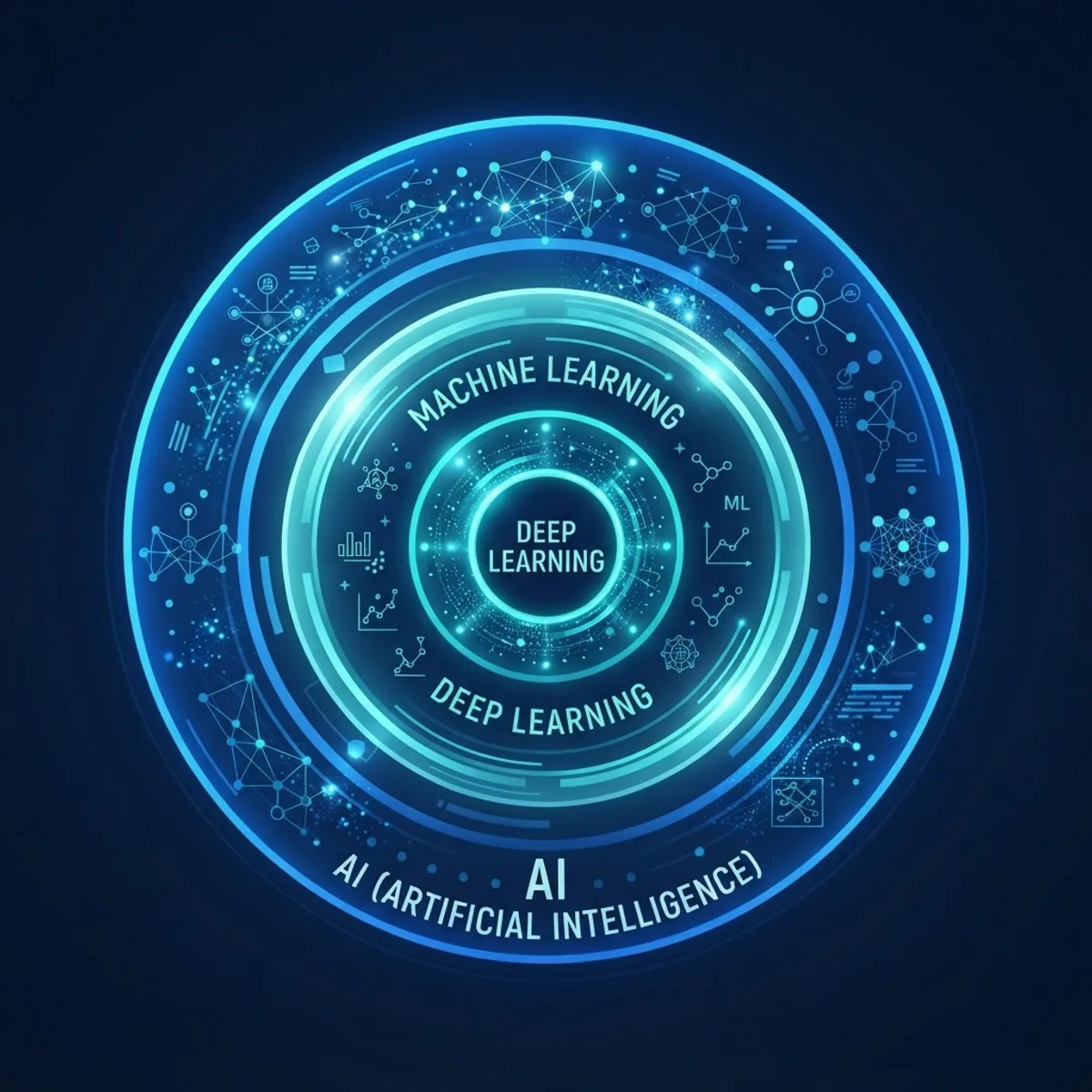
Machine learning and deep learning are subsets of artificial intelligence, not separate rivals. AI is the broad umbrella. Machine learning (ML) is a method within AI where systems learn from data. Deep learning is a specialized branch of ML that uses layered neural networks inspired by the human brain.
Deep learning excels at complex, unstructured data like images, audio, and natural language, which is why it powers modern voice assistants and image generators. The table below clarifies the differences.
| Feature | Machine Learning | Deep Learning |
|---|---|---|
| Data needed | Moderate | Very large |
| Human feature input | Often required | Minimal, learns features itself |
| Hardware needs | Standard computers | High-powered GPUs |
| Best for | Structured data, forecasts | Images, speech, language |
| Example | Credit scoring | Self-driving vision systems |
In short, all deep learning is machine learning, and all machine learning is AI, but the reverse is not true.
Real-World Examples of Artificial Intelligence
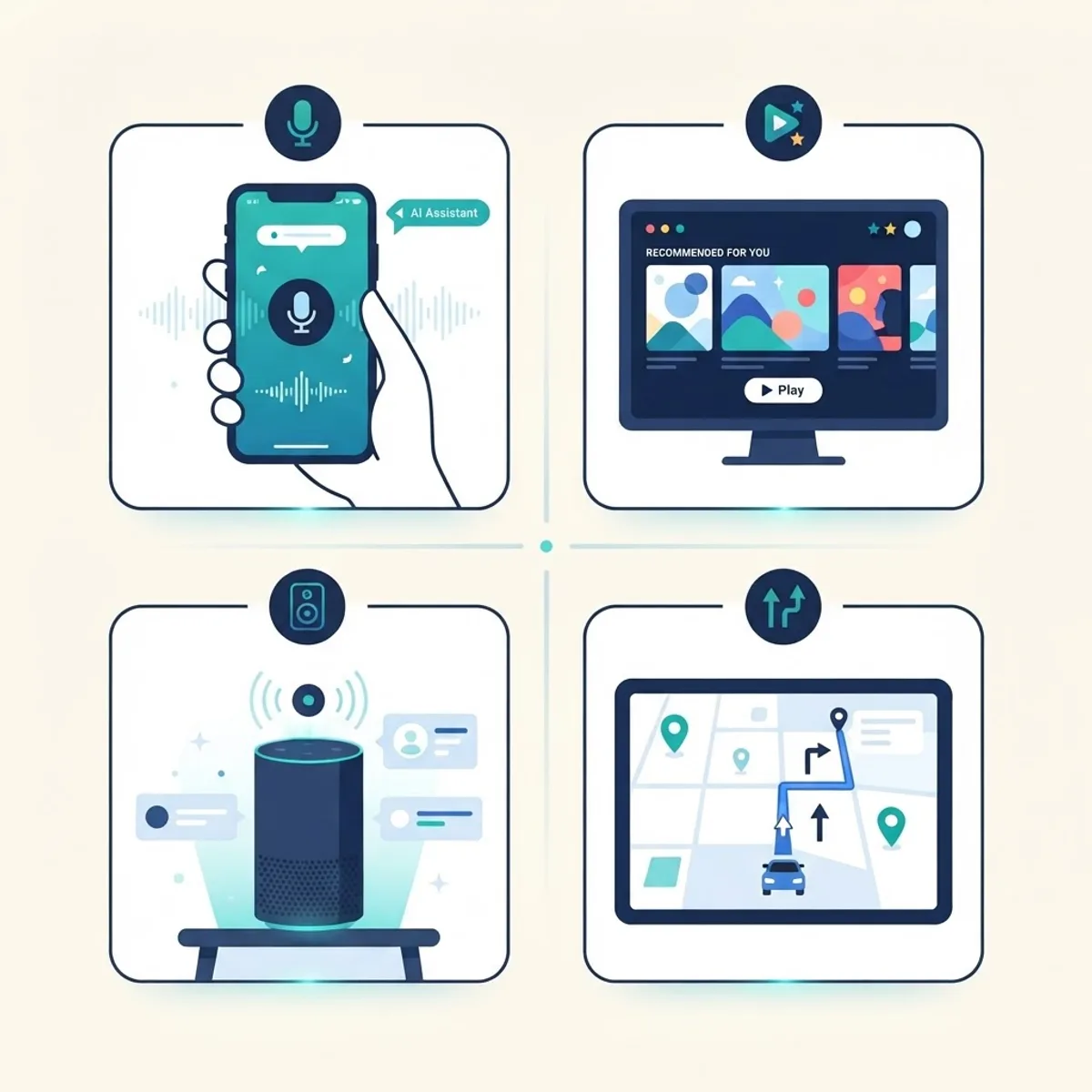
You already use artificial intelligence dozens of times a day, often without noticing. Here are clear, everyday examples that make the concept tangible:
- Voice assistants: Siri, Alexa, and Google Assistant convert speech to text and respond intelligently.
- Streaming recommendations: Netflix and Spotify analyze your habits to suggest content. Netflix has stated its recommendation engine saves the company over 1 billion dollars per year in customer retention.
- Navigation apps: Google Maps predicts traffic and reroutes you in real time.
- Email filtering: Gmail blocks spam and sorts messages into categories automatically.
- Chatbots and assistants: Tools like ChatGPT generate human-like text, answer questions, and draft content.
- Facial recognition: Your phone unlocks by identifying your face.
- Fraud detection: Banks flag unusual transactions within milliseconds.
Each example is narrow AI performing one focused job exceptionally well. Together, they show how deeply integrated the technology has become in ordinary life.
Artificial Intelligence in Business

Businesses use AI to automate repetitive work, personalize customer experiences, and make faster data-driven decisions. This is where AI delivers measurable financial value rather than novelty.
Common business applications include:
- Customer support: AI chatbots handle routine queries around the clock, freeing human agents for complex issues.
- Marketing personalization: AI predicts which products a customer is likely to buy and tailors offers accordingly.
- Demand forecasting: Retailers predict inventory needs to reduce waste and stockouts.
- Process automation: Invoices, scheduling, and data entry run with minimal human oversight.
Companies that want to deploy these capabilities responsibly often partner with specialists. If you are exploring implementation, ZoneTechify's artificial intelligence services help organizations design and integrate practical AI solutions tailored to real workflows rather than hype.
Benefits and Limitations of Artificial Intelligence
AI offers major advantages, but it is not flawless. Balanced understanding builds trust and prevents costly mistakes.
Key benefits include speed, scalability, consistency, and the ability to uncover insights hidden in massive datasets. AI never tires, works around the clock, and reduces human error in repetitive tasks.
However, real limitations exist. AI systems can inherit bias from flawed training data, they lack genuine understanding or common sense, and they may produce confident but incorrect answers, a problem often called hallucination. AI also raises privacy and job-displacement concerns that require thoughtful governance. The most reliable results come from combining AI efficiency with human judgment, not replacing people entirely.
The Future of Artificial Intelligence

The future of AI points toward more capable, multimodal, and accessible systems that understand text, images, audio, and video together. Generative AI has already transformed content creation, coding, and design in just a few years.
Expect three major trends to accelerate: AI agents that complete multi-step tasks autonomously, tighter regulation to ensure safety and fairness, and deeper integration into everyday software so the technology fades quietly into the background. The businesses and individuals who learn to use AI as a collaborator, rather than fearing or ignoring it, will hold a clear advantage in the years ahead.
Key Takeaways
- Artificial intelligence enables machines to perform tasks that normally require human intelligence, such as learning and decision-making.
- All AI in use today is narrow AI, built for specific tasks, not human-level general intelligence.
- Machine learning is a subset of AI, and deep learning is a subset of machine learning.
- Everyday AI examples include Siri, Netflix recommendations, Google Maps, spam filters, and ChatGPT.
- 72% of organizations adopted AI in at least one function in 2024, per McKinsey.
- AI delivers speed and scale but requires human oversight to manage bias and errors.
Frequently Asked Questions (FAQ)
What is artificial intelligence in simple words?
Artificial intelligence is technology that lets computers think and act in ways similar to humans. It learns from data, spots patterns, and makes decisions or predictions. Simple examples include voice assistants understanding your questions and Netflix suggesting shows based on what you previously watched.
What are the best examples of artificial intelligence?
The clearest everyday examples are voice assistants like Siri and Alexa, Netflix and Spotify recommendations, Google Maps traffic routing, Gmail spam filtering, facial recognition on phones, and chatbots such as ChatGPT. Each performs one focused task exceptionally well using data-trained algorithms.
Is artificial intelligence the same as machine learning?
No, they are related but not identical. Artificial intelligence is the broad field of making machines intelligent. Machine learning is one method within AI where systems learn from data. All machine learning is AI, but AI also includes other techniques beyond machine learning alone.
Is artificial intelligence dangerous?
Today's AI is narrow and task-specific, so it poses practical risks like bias, privacy concerns, and misinformation rather than science-fiction dangers. These risks are manageable with good data, transparency, and human oversight. Responsible design and regulation make AI safe and genuinely useful for everyday tasks.
How do beginners start learning artificial intelligence?
Beginners should start with free online courses covering AI basics, Python programming, and statistics. Experiment with accessible tools like ChatGPT, then progress to machine learning fundamentals. Practicing small projects and reading trusted guides from sources like ZoneTechify and WebPeak builds practical, lasting understanding quickly.
Final Thoughts
Artificial intelligence is simply the science of teaching machines to perform tasks that once required human intelligence, and its examples already surround you. From unlocking your phone to filtering your inbox, narrow AI quietly improves daily life and business outcomes. Understanding what AI truly is, and what it is not, positions you to use it wisely rather than fear it. As the technology matures, the smartest strategy is treating AI as a powerful collaborator that amplifies human capability.