A clear, expert breakdown of the latest government AI adoption news today, covering policy, public-sector use cases, statistics, challenges, and what comes next.
Government AI Adoption News Today
Governments are no longer experimenting quietly with artificial intelligence in back offices. In 2026, AI has moved to the center of public administration, from tax processing to national security. If you are trying to make sense of the government AI adoption news today, the pace can feel overwhelming, with new executive orders, procurement rules, and pilot programs announced almost weekly.
This guide cuts through the noise. Drawing on public policy records, agency reports, and real deployment patterns we track at ZoneTechify, it explains what is actually changing, where the money is going, and what it means for citizens, vendors, and public servants.
Quick Answer: Government AI adoption news today centers on faster public-sector deployment paired with stricter oversight. Agencies are rolling out AI for citizen services, fraud detection, and document processing, while new rules demand transparency, risk assessment, and human accountability for every high-impact automated decision.
What Is Driving Government AI Adoption Right Now
The biggest force behind current adoption is pressure to do more with fewer resources. Public agencies face rising service demand, aging workforces, and tight budgets. AI promises measurable relief by automating repetitive tasks and surfacing insights buried in massive datasets.
According to the U.S. Government Accountability Office, federal agencies reported more than 1,700 current and planned AI use cases across dozens of departments, a sharp increase from prior years. This signals that AI is no longer a niche experiment but a core operational tool.
Three drivers stand out today:
- Efficiency mandates pushing agencies to cut processing times for permits, benefits, and licenses.
- Citizen expectations shaped by private-sector apps that deliver instant, personalized service.
- National competitiveness, as governments race to avoid falling behind in AI capability and infrastructure.
Latest Government AI Policy And Regulation Updates
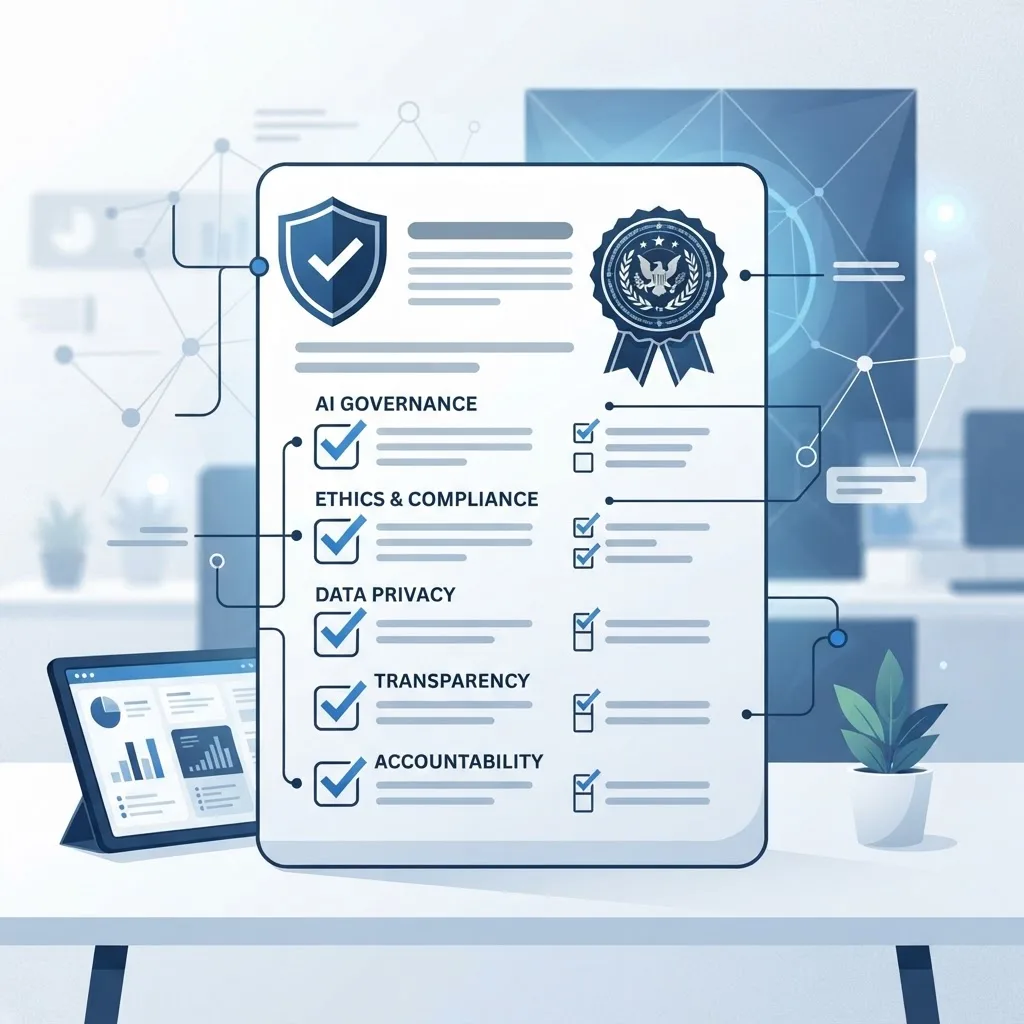
Policy is where most government AI adoption news today originates. Governments have shifted from broad principles to enforceable rules that dictate how agencies can buy, build, and deploy AI systems.
AI governance framework is the defining term of this era. It refers to the combined set of laws, standards, and internal controls that govern how an organization develops and uses AI responsibly, covering risk, transparency, and accountability.
Key regulatory themes shaping headlines include:
- Mandatory risk classification. Agencies must label AI systems as high-impact or low-impact, with stricter reviews for anything affecting rights, safety, or benefits.
- Chief AI Officers. Many federal and national agencies now require a designated leader accountable for responsible AI use.
- Public inventories. Governments increasingly publish lists of the AI systems they use, improving transparency and public trust.
- Procurement guardrails. New rules require vendors to disclose training data practices, bias testing, and security controls before winning contracts.
The European Union's AI Act, which classifies AI systems by risk level and imposes obligations on high-risk uses, continues to influence government policy worldwide as a reference model for oversight.
How Governments Are Actually Using AI Today
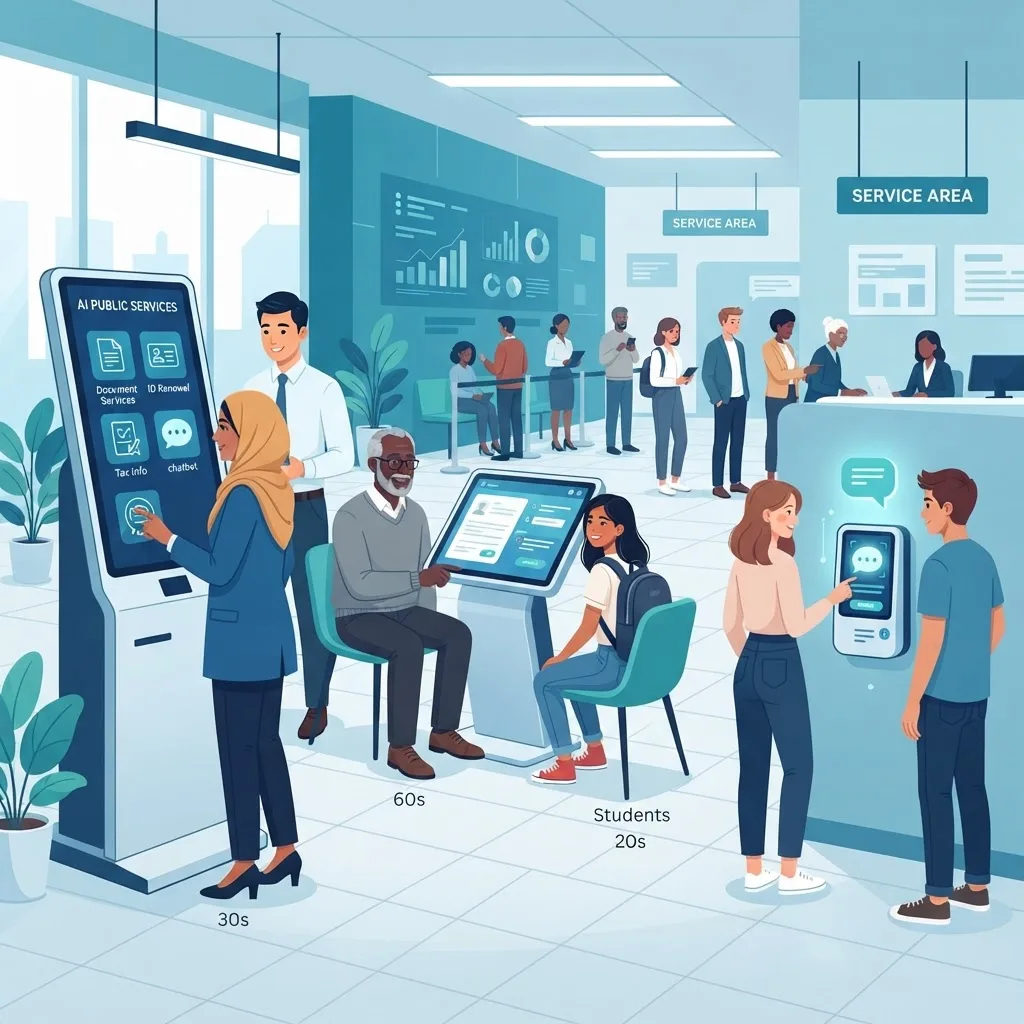
Behind the policy headlines are concrete deployments already serving millions of people. The most active adoption is happening in high-volume, document-heavy processes where AI delivers fast, measurable returns.
Common real-world government AI use cases include:
- Citizen service chatbots that answer questions about taxes, benefits, and permits around the clock.
- Fraud and improper-payment detection in benefits, tax, and procurement systems.
- Document processing that reads, classifies, and extracts data from millions of forms.
- Translation and accessibility tools that make services available in more languages.
- Predictive maintenance for public infrastructure like bridges, transit, and utilities.
Agencies that pair these tools with strong data foundations see the strongest results. Organizations building similar capabilities often rely on specialized artificial intelligence services to handle model integration, security, and compliance correctly from the start.
Government AI Adoption By The Numbers
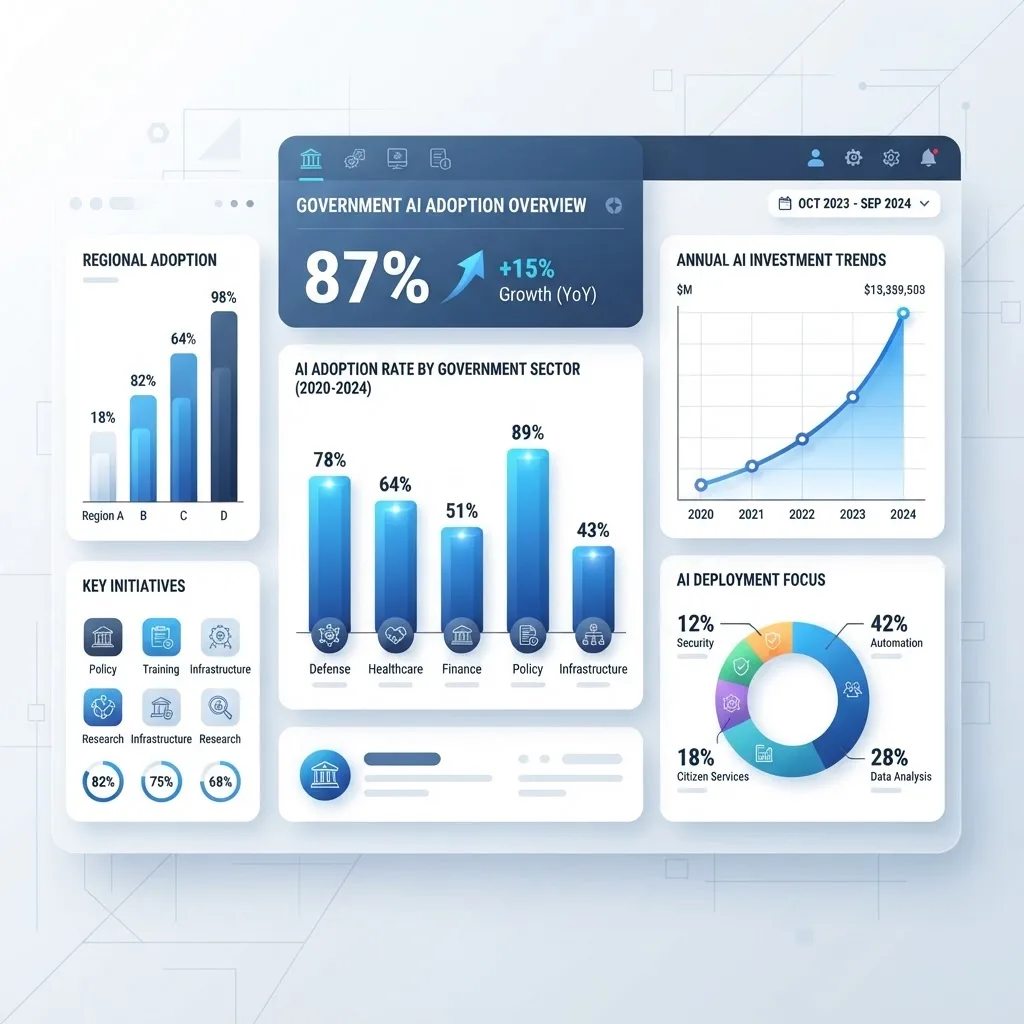
Data helps separate hype from reality. The statistics below reflect the direction of travel reported across public-sector research and agency disclosures.
| Metric | What The Data Shows | Why It Matters |
|---|---|---|
| Federal AI use cases | Over 1,700 reported (GAO) | AI is now embedded across most agencies |
| Primary use area | Citizen services and back-office automation | Efficiency drives most early wins |
| Top adoption barrier | Talent and data quality gaps | Technology is rarely the limiting factor |
| Governance requirement | Risk classification and human oversight | Accountability is now mandatory, not optional |
| Public trust factor | Transparency and explainability | Citizens accept AI only when it is understandable |
A second data point worth noting: research from Deloitte and other public-sector analysts consistently finds that a majority of government leaders view data quality and workforce skills, not algorithms, as their biggest obstacles. This reframes AI adoption as an organizational challenge rather than a purely technical one.
The Real Challenges Slowing Government AI
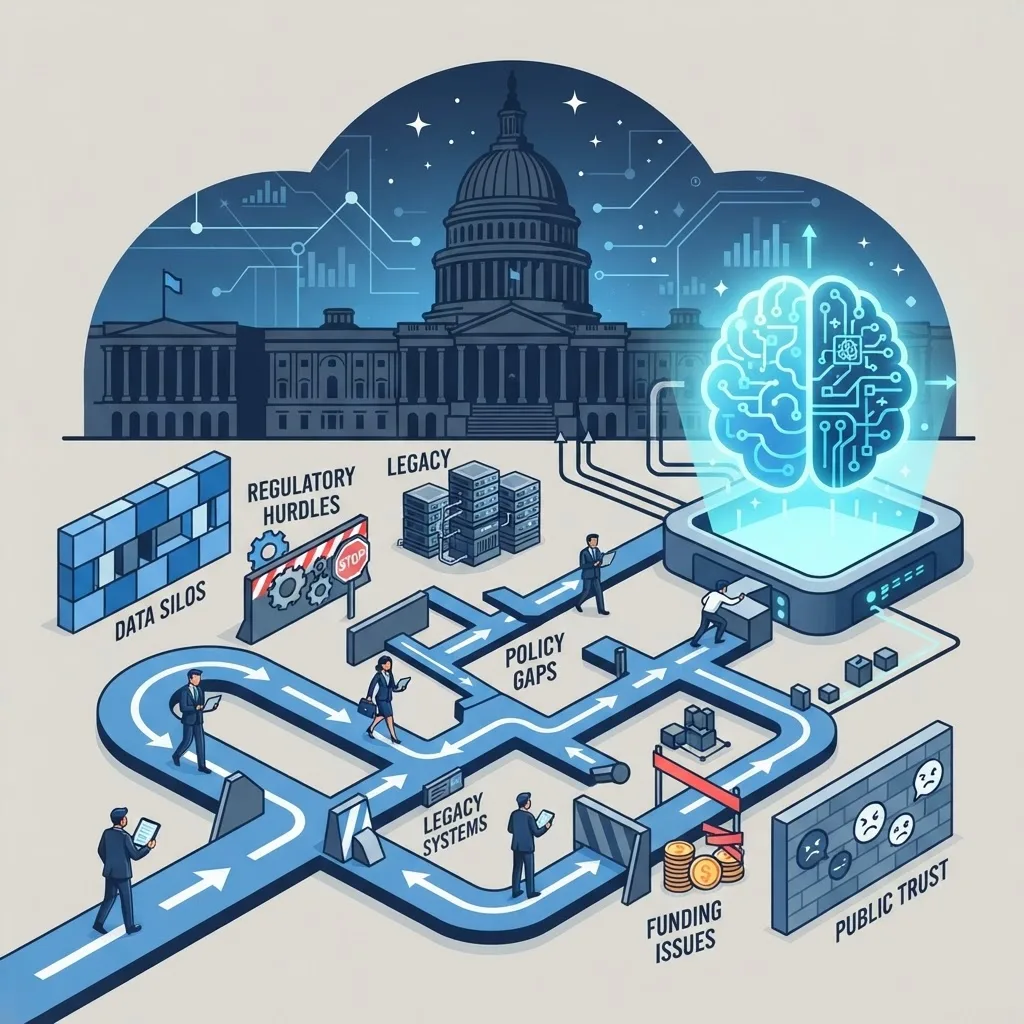
Every optimistic announcement hides genuine friction. Understanding these barriers explains why some projects stall despite strong funding and political support.
Legacy Systems And Data Silos
Many agencies run on decades-old systems that were never designed to share data. AI models are only as good as the information feeding them, so fragmented, inconsistent data limits accuracy and slows deployment.
Talent And Skills Shortages
Governments compete with private firms for scarce AI engineers, data scientists, and security experts. Without in-house expertise, agencies struggle to evaluate vendors, manage models, and maintain systems responsibly over time.
Public Trust And Accountability
Citizens are rightly cautious about automated decisions affecting benefits, policing, or immigration. A single biased or opaque system can erode trust across an entire program, which is why explainability and human oversight now dominate policy.
Security And Privacy Risks
Government datasets are prime targets. AI expands the attack surface, raising the stakes for data protection, access controls, and adversarial resilience. Robust security is not optional in public deployments.
Citizen-Facing AI: What It Means For You

For everyday people, government AI adoption shows up as faster, simpler interactions. Instead of waiting weeks for a response, citizens increasingly get instant answers, quicker approvals, and services available in more languages and formats.
The most visible improvements include:
- Shorter wait times for benefits, permits, and status updates.
- 24/7 self-service through chatbots and guided digital forms.
- Proactive alerts about deadlines, eligibility, and required documents.
- Better accessibility for people with disabilities or limited language proficiency.
The key safeguard is the right to a human review. Responsible programs ensure that any AI-assisted decision affecting your rights can be explained and appealed to a person, preserving fairness and accountability.
The Future Of Government AI Adoption
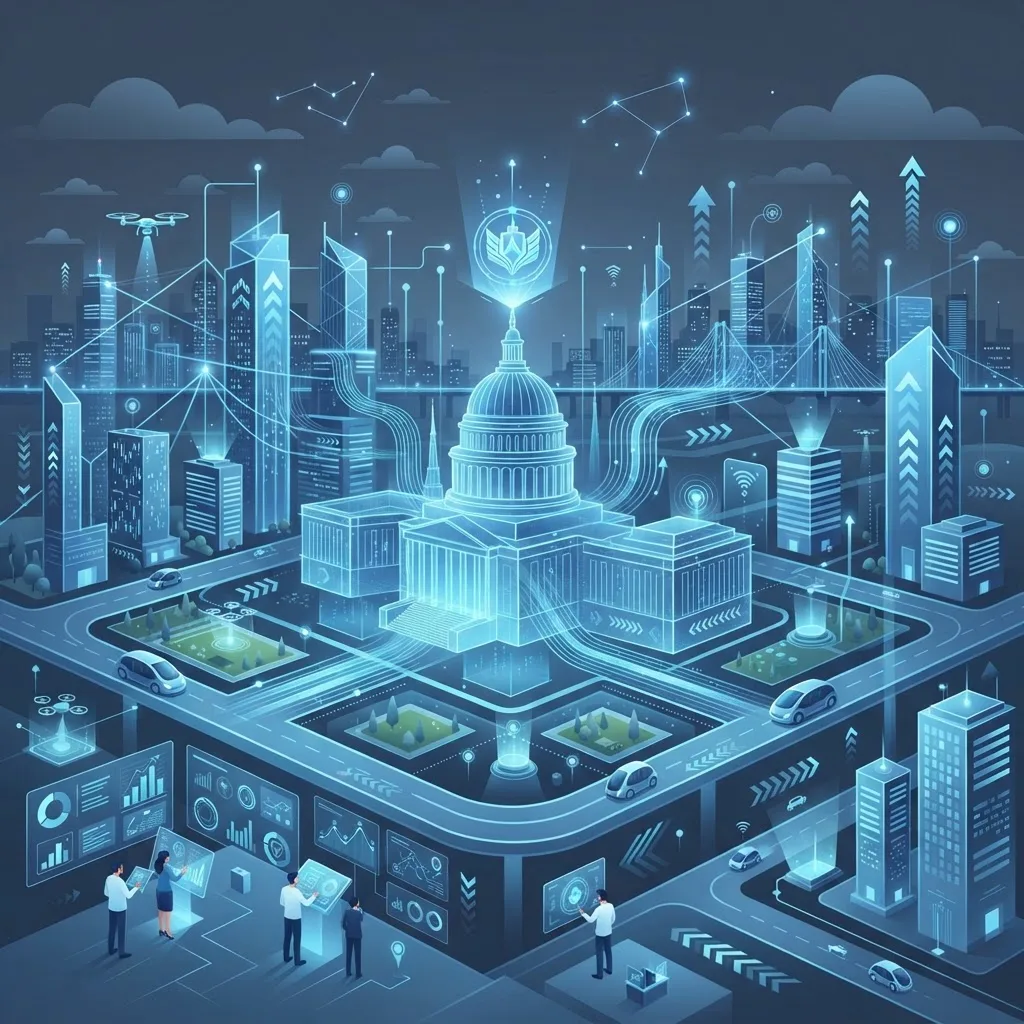
Looking ahead, the trajectory points toward deeper, more coordinated AI use across public services. The next wave will focus less on isolated pilots and more on integrated, agency-wide platforms with shared governance.
Expect these developments to shape upcoming headlines:
- Agentic AI assistants that complete multi-step tasks, not just answer questions.
- Shared government AI infrastructure to cut costs and standardize security.
- Stronger evaluation standards measuring accuracy, bias, and citizen outcomes.
- Tighter international coordination on AI safety and cross-border data rules.
Digital-first agencies that modernize their data and web platforms will adopt these tools fastest. Teams planning that groundwork can explore practical build support through resources like WebPeak, which focuses on the technical foundations AI adoption depends on.
Key Takeaways
- Government AI adoption news today reflects a shift from experimentation to large-scale, governed deployment across agencies.
- The GAO reports over 1,700 federal AI use cases, showing AI is now embedded in core public operations.
- Policy is tightening, with mandatory risk classification, human oversight, and public AI inventories becoming standard.
- The biggest barriers are data quality, talent gaps, and public trust, not the technology itself.
- Citizens benefit through faster services and 24/7 access, protected by the right to human review of important decisions.
Frequently Asked Questions (FAQ)
What is government AI adoption?
Government AI adoption is the process of public agencies integrating artificial intelligence into services and operations. It includes tools for citizen support, fraud detection, and document processing, all governed by rules requiring transparency, risk assessment, and human accountability for high-impact decisions.
Why are governments adopting AI so quickly in 2026?
Governments are adopting AI to handle rising service demand with limited budgets and shrinking workforces. AI automates repetitive tasks, speeds up approvals, and reduces fraud. Citizen expectations shaped by private apps and global competitiveness pressures are accelerating this shift across most public agencies.
Is government use of AI safe and regulated?
Yes, government AI use is increasingly regulated. Agencies must classify systems by risk, ensure human oversight, publish AI inventories, and test for bias. Frameworks like the EU AI Act set global reference standards, requiring transparency and accountability for any high-impact automated decision.
What are the biggest challenges in government AI adoption?
The biggest challenges are poor data quality, legacy systems, talent shortages, and public trust. Most experts agree technology is rarely the limiting factor. Success depends on modernizing data infrastructure, hiring skilled staff, and maintaining transparent, explainable systems that citizens can trust.
How does government AI adoption affect ordinary citizens?
Government AI adoption gives citizens faster service, shorter wait times, and 24/7 self-service through chatbots and digital forms. It improves accessibility across languages and abilities. Importantly, responsible programs preserve the right to human review for any decision affecting your benefits or rights.
Where can I follow reliable government AI news?
Follow official agency publications, the GAO, and recognized policy bodies for accurate updates. Reputable technology partners such as ZoneTechify and WebPeak also translate complex AI developments into practical, business-ready insights, helping organizations understand and respond to evolving public-sector AI trends.