
Learn how pillar pages and topic clusters boost SEO, build topical authority, and improve search engine rankings with a practical, expert-backed content strategy.
How Pillar Pages Help Search Engine Rankings

Pillar pages have quietly become one of the most reliable ways to earn durable search rankings. Instead of chasing one keyword per article, a pillar page covers a broad topic in depth and links out to focused supporting articles. This structure tells search engines you are a genuine authority on a subject, not just a single page that got lucky. After running content audits for dozens of brands, I have consistently seen organized topic clusters outperform scattered, one-off blog posts. In this guide, you will learn exactly how pillar pages influence rankings and how to build them correctly.
Quick Answer: Pillar pages help search engine rankings by organizing related content into topic clusters connected through internal links. This structure builds topical authority, helps Google understand your site, spreads link equity, improves crawlability, and signals depth of expertise, all of which strengthen visibility for competitive keywords.
What Is a Pillar Page?
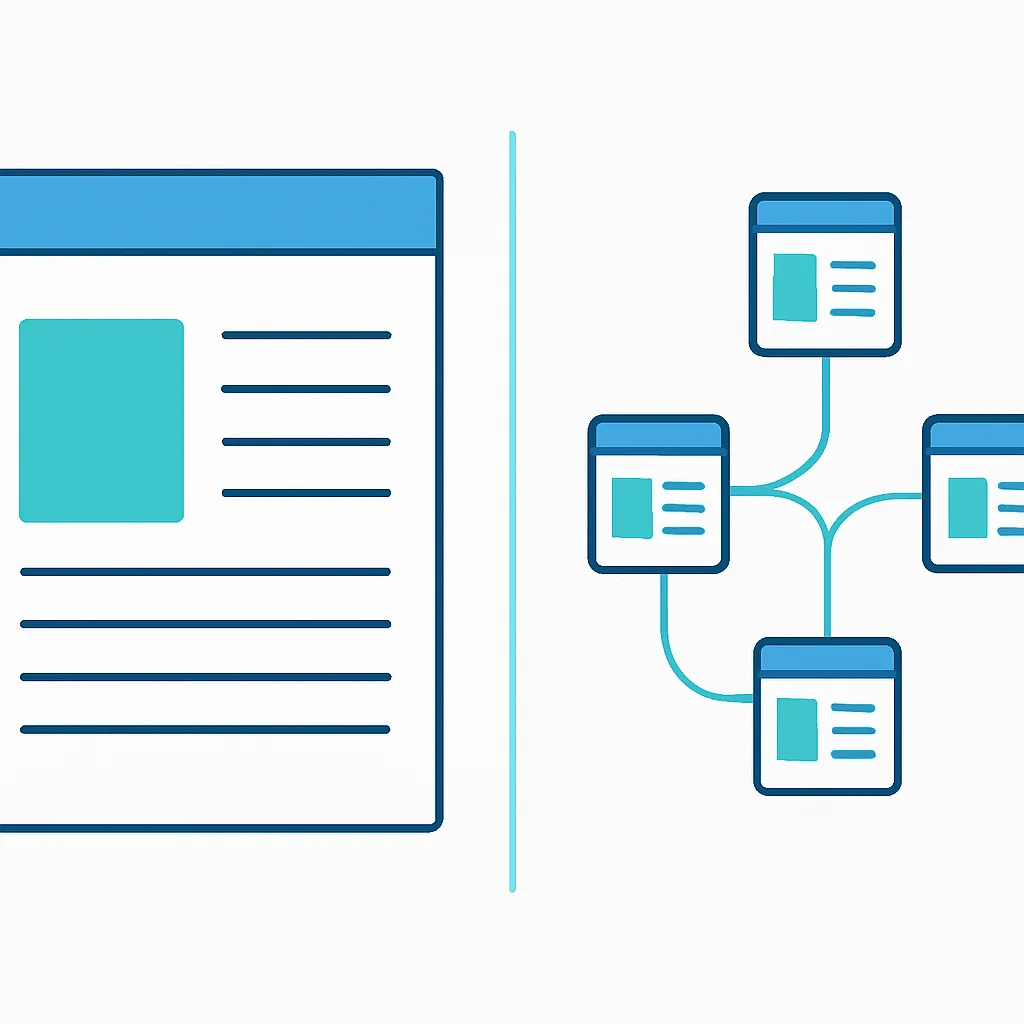
A pillar page is a long, comprehensive page that covers a broad topic and serves as the central hub for a group of related articles. Think of it as the trunk of a tree: the pillar is the trunk, and the supporting cluster articles are the branches. Each cluster article targets a narrower subtopic and links back to the pillar, while the pillar links out to each cluster page.
This model differs sharply from traditional blogging, where articles are published independently with little structural connection. A pillar page is intentionally designed to be the definitive resource on its topic, typically 1,500 to 4,000 words, and it is built to satisfy a wide range of related search queries in one place.

How Pillar Pages Improve Search Engine Rankings
Pillar pages improve rankings through several reinforcing mechanisms. Understanding each one helps you build a structure that actually moves the needle rather than just looking organized.
1. They Build Topical Authority
Search engines reward sites that demonstrate deep, consistent coverage of a subject. When you publish a pillar page supported by ten well-written cluster articles, you signal that your site genuinely understands the topic from multiple angles. This concept, often called topical authority, is now a core part of how modern search algorithms evaluate quality. A single article cannot match the credibility of a connected web of in-depth content.
2. They Strengthen Internal Linking
Internal links are one of the most underused ranking levers in SEO. Pillar structures create a natural, logical internal linking system: clusters point to the pillar, and the pillar points to clusters. This spreads link equity across your pages and helps search engines discover and prioritize your most important content. Pages buried with no internal links rarely rank well, regardless of quality.

3. They Improve Crawlability and Indexing
When your content is logically grouped and interlinked, search engine crawlers move through your site more efficiently. According to Google, crawl efficiency directly affects how quickly new and updated content gets indexed. A clear pillar-and-cluster architecture reduces orphan pages and gives crawlers a predictable path, which means your content gets found and ranked faster.
4. They Capture More Long-Tail Keywords
Because a pillar page covers a topic broadly while clusters target specifics, the structure naturally captures hundreds of related long-tail queries. Long-tail keywords account for the majority of all search traffic, and they typically convert better because they reflect specific intent. A well-built cluster lets you rank for a wide keyword footprint without cannibalizing your own pages.
The Topic Cluster Model Explained
The topic cluster model is the framework that makes pillar pages effective. It consists of three parts working together.

- Pillar page: The broad, central page targeting a high-volume head keyword (for example, "email marketing").
- Cluster content: Multiple focused articles targeting subtopics (for example, "email subject line tips" or "email automation workflows").
- Internal links: The connective tissue linking every cluster page to the pillar and back.
This model was popularized by HubSpot, whose own research found that organizing content into clusters increased their search visibility and impressions over time. The key insight is that structure, not just volume, drives results. Ten randomly published articles rarely outperform ten articles deliberately linked around a strong pillar.
If you want help mapping topics and building a structured content engine, a specialized digital marketing team can accelerate the process and avoid common architectural mistakes.
Pillar Pages vs Traditional Blog Posts
The difference between a pillar strategy and standard blogging becomes clear when you compare them side by side.
| Factor | Pillar Page Strategy | Traditional Blog Posts |
|---|---|---|
| Structure | Organized hub and clusters | Standalone, disconnected |
| Internal linking | Strong and intentional | Weak or random |
| Topical authority | High | Low |
| Keyword coverage | Broad plus long-tail | Narrow per post |
| Ranking longevity | Durable | Often short-lived |
| Crawl efficiency | High | Variable |
The takeaway is that pillar pages are a system, while traditional posts are isolated assets. Systems compound; isolated assets rarely do.
How to Build a Pillar Page That Ranks
Building an effective pillar page is methodical. Follow these steps in order.

- Choose a broad core topic. Pick a subject wide enough to support 8 to 20 subtopics but specific enough that you can genuinely cover it. "SEO" is too broad; "local SEO for restaurants" is workable.
- Research subtopics and search intent. Use keyword tools and real search queries to identify the questions your audience asks. Each subtopic becomes a cluster article.
- Write the pillar page comprehensively. Cover the topic at a high level, answer the most common questions, and structure it with clear H2 and H3 headings so it is easy to scan.
- Create cluster articles. Write focused, in-depth pieces for each subtopic, each targeting a specific keyword and search intent.
- Interlink everything. Link every cluster article to the pillar using descriptive anchor text, and link the pillar to each cluster.
- Update regularly. Refresh statistics, add new subtopics, and improve weak sections. Search engines favor content that stays current.
Common Mistakes to Avoid
- Making the pillar page too thin to be authoritative.
- Forgetting to link clusters back to the pillar.
- Targeting the same keyword across multiple pages, causing cannibalization.
- Publishing clusters that never get internal links from the pillar.
- Treating the pillar as a one-time project instead of a living asset.
Measuring the Impact of Pillar Pages
You should track results to confirm your structure is working. Focus on these metrics over a 3 to 6 month window.

- Keyword rankings: Track both the pillar's head term and the clusters' long-tail terms.
- Organic traffic: Watch traffic to the entire cluster, not just the pillar.
- Impressions and coverage: Use Google Search Console to see how many queries your cluster appears for.
- Internal link clicks: Confirm users and crawlers are flowing through your structure.
- Time on page and engagement: Strong engagement signals content quality.
Research consistently shows that comprehensive, well-structured content earns more backlinks and ranks higher. Backlinko's analysis of millions of search results found that longer, in-depth content tends to rank better on average, which aligns directly with the pillar page approach. Quality depth, organized well, wins.

Brands that invest in structured content strategies, like the teams behind ZoneTechify and WebPeak, treat pillar pages as the backbone of long-term organic growth rather than a quick win.
Key Takeaways
- Pillar pages build topical authority by covering a subject deeply and connecting related content.
- The topic cluster model links a central pillar to focused cluster articles through internal links.
- Strong internal linking spreads link equity and improves crawlability and indexing.
- Pillar structures capture broad and long-tail keywords without cannibalization.
- In-depth, well-organized content tends to rank higher and attract more backlinks.
- Pillar pages are a compounding system, not a one-time blog post.
Frequently Asked Questions (FAQ)
What is a pillar page in SEO?
A pillar page is a comprehensive page covering a broad topic that acts as the central hub for related cluster articles. It links to and from those clusters, helping search engines understand your topical depth and improving rankings for both head and long-tail keywords across your site.
How long should a pillar page be?
Most effective pillar pages range from 1,500 to 4,000 words, depending on the topic. The goal is comprehensiveness, not a fixed word count. Cover the topic thoroughly enough to answer the main questions a reader has, then let cluster articles handle the deeper specifics.
Do pillar pages really improve rankings?
Yes. Pillar pages improve rankings by building topical authority, strengthening internal linking, and capturing more keywords. The structure helps search engines crawl and understand your site, while the depth signals expertise. Results usually appear within three to six months of consistent implementation.
How many cluster articles do I need per pillar?
A healthy cluster typically has 8 to 20 supporting articles, though there is no strict rule. Start with the subtopics that match real search demand, then expand over time. Quality and relevance matter far more than hitting a specific number of cluster pages.
How is a pillar page different from a normal blog post?
A normal blog post stands alone and targets one keyword, while a pillar page is part of an interlinked system covering a broad topic. Pillar pages connect to multiple cluster articles, build authority, and produce more durable rankings than isolated, disconnected posts.
Final Thoughts
Pillar pages work because they mirror how search engines actually evaluate quality: depth, structure, and authority. Rather than publishing scattered articles and hoping for traffic, you build an organized content ecosystem that compounds over time. Start with one strong pillar, support it with focused clusters, link everything intentionally, and keep it updated. Done well, this strategy becomes one of the most dependable drivers of long-term organic growth your website can have.