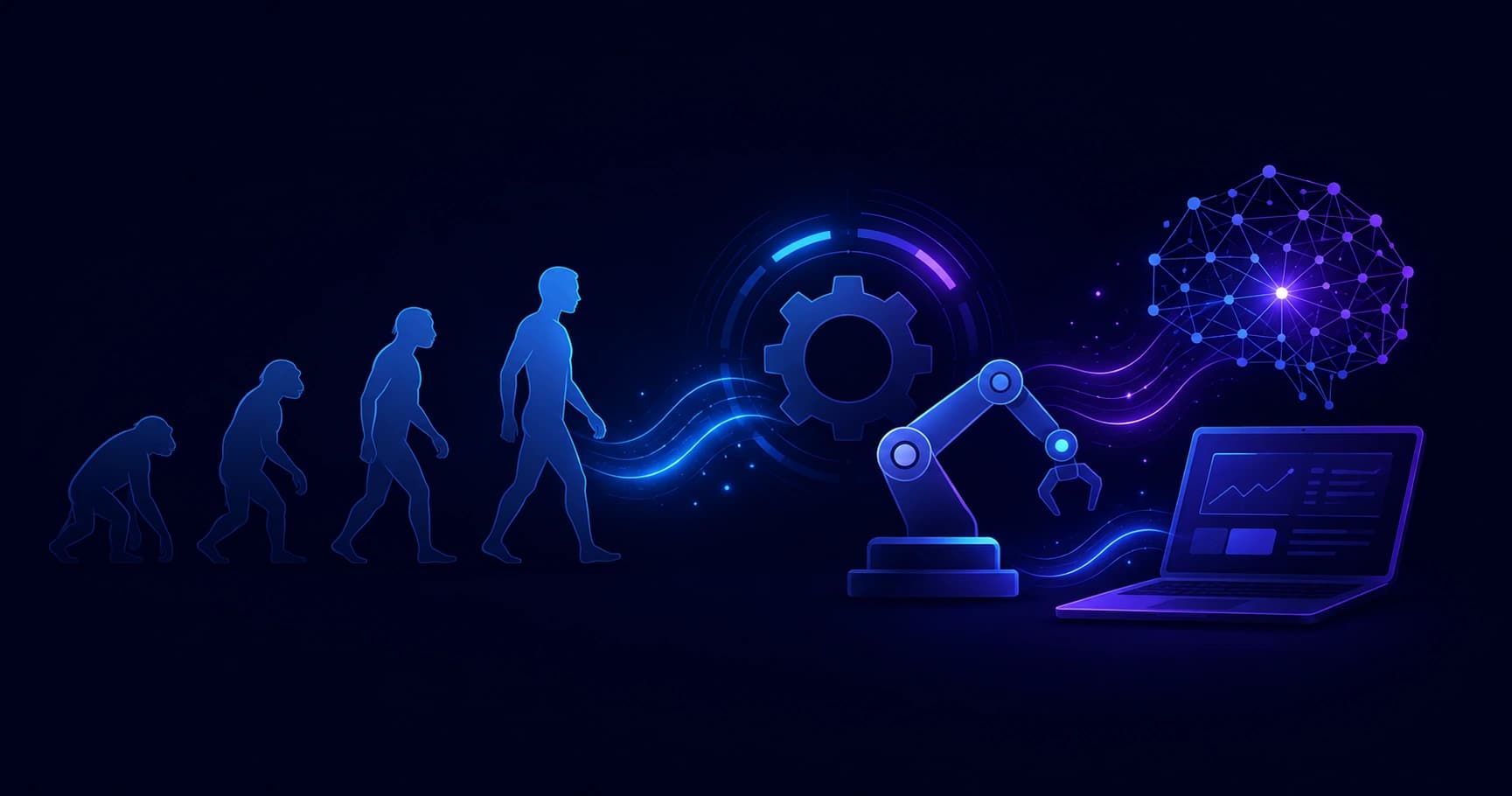
A clear, expert look at how evolution automated work across history and how modern AI-driven automation is reshaping business, productivity, and the future of jobs.
How Evolution Automated
Automation did not arrive overnight. It evolved. From the first water wheels that ground grain without human muscle, to the AI systems that now write code and answer customer emails, the story of automation is really the story of humans handing repetitive work to machines so they could focus on higher-value thinking. Understanding how evolution automated our world helps you make smarter decisions about what to automate next in your own business.
This guide traces that evolution with real context, explains the mechanics behind each leap, and gives you a practical framework for applying intelligent automation today. Whether you run a small team or a growing company, the lessons from history point directly at your next move. For teams ready to act on it, agencies like ZoneTechify and WebPeak build these systems into real workflows.
Quick Answer: Evolution automated work in stages: mechanical machines replaced physical labor, electronics replaced manual control, software replaced repetitive tasks, and AI now replaces routine decision-making. Each stage removed friction so humans could focus on creativity, strategy, and problem-solving instead of repetitive effort.
What Does It Mean That Evolution Automated Work?
Automation is the use of technology to perform tasks with minimal human intervention. When we say evolution automated work, we mean that each technological era systematically removed a category of human effort and replaced it with a repeatable system.
The pattern is consistent across centuries. First a task is done entirely by hand. Then a tool makes it faster. Then a machine does it without direct human force. Finally, an intelligent system decides when and how the task should run. This progression from muscle, to machine, to software, to intelligence is the backbone of every automation story.
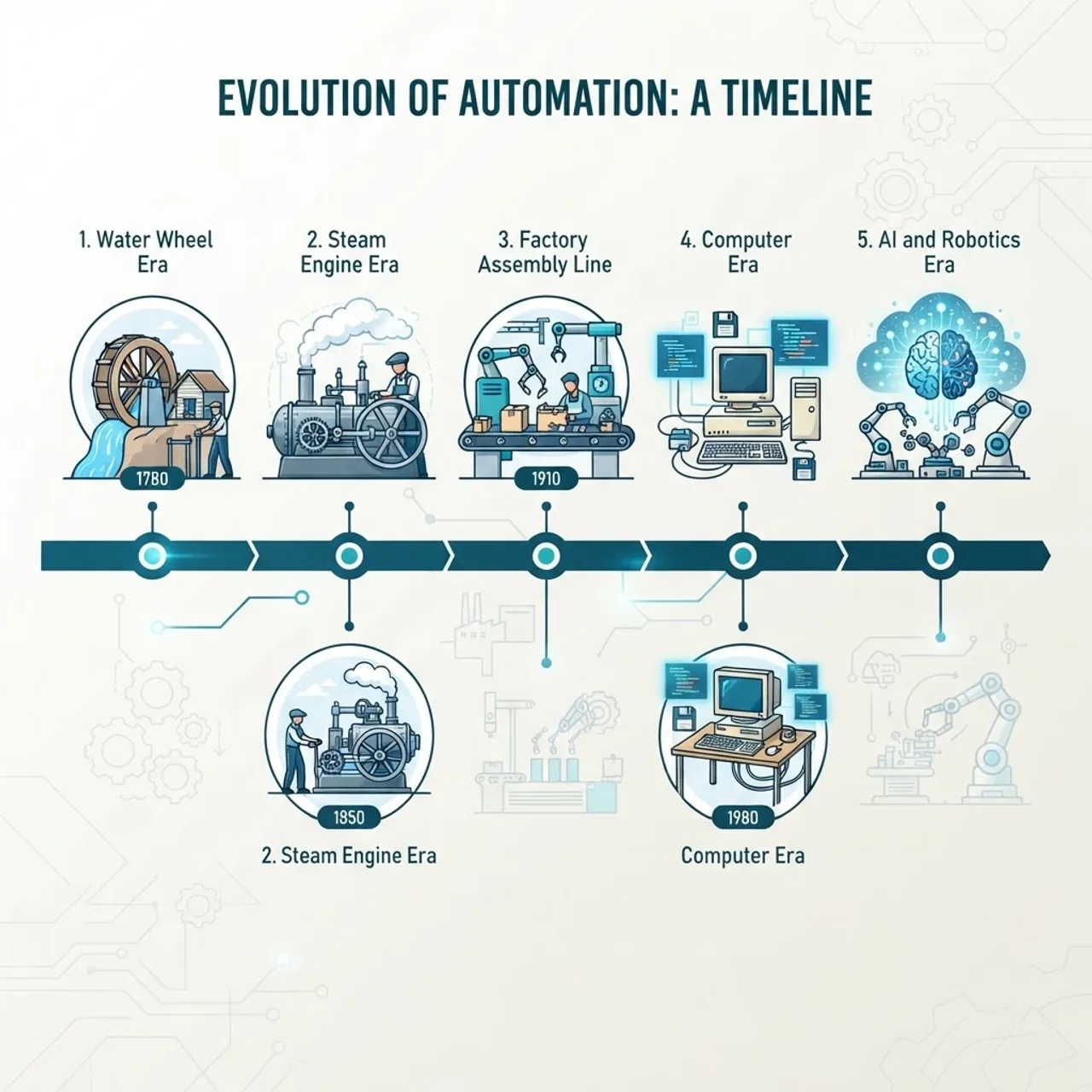
The Four Eras of Automation
1. Mechanical Automation (Pre-1900s)
The earliest automation replaced physical labor. Water wheels, windmills, and later the steam engine let a single operator do the work of dozens. The Industrial Revolution scaled this dramatically: the mechanized loom and the assembly line meant that output no longer depended on how many workers you could hire, but on how many machines you could run.
The key insight from this era still applies today: automation multiplies output without multiplying headcount. That is exactly why businesses automate now.
2. Electrical and Control Automation (1900s-1970s)
Electricity added precision and control. Factories moved from raw mechanical power to programmable relays, thermostats, and feedback loops. A thermostat that turns heating on and off is a simple but profound idea: a machine that senses its environment and acts on it without a human watching.
This era introduced the concept of the control system, the ancestor of every smart device and self-adjusting algorithm we use today.
3. Digital and Software Automation (1970s-2010s)
The computer moved automation from the factory floor into the office. Spreadsheets automated calculation, databases automated record-keeping, and later, scripts and software automated entire workflows. Robotic Process Automation (RPA) emerged to handle repetitive digital tasks like copying data between systems.
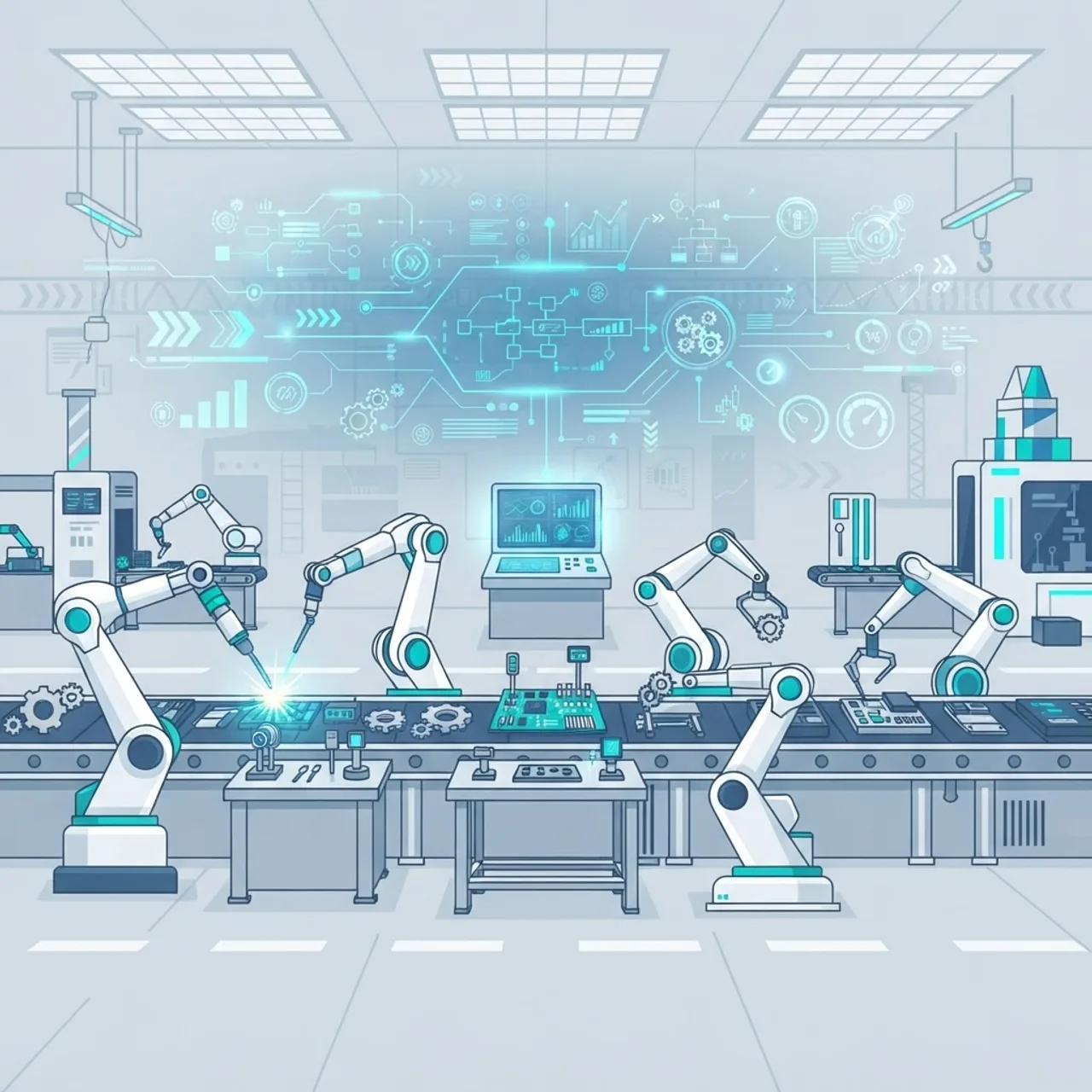
This is where automation became accessible to non-engineers. You no longer needed a factory. A rule such as "if an invoice arrives, log it and notify accounting" could run automatically, forever.
4. Intelligent Automation (2010s-Present)
The current era combines automation with artificial intelligence and machine learning. Instead of following fixed rules, systems now learn from data and make probabilistic decisions. AI can read a document, understand its meaning, and route it correctly, even if it has never seen that exact document before.
This is the leap that changes everything: for the first time, automation handles judgment, not just repetition. Businesses building in this space often partner with specialists such as WebPeak's AI services to design systems that learn and adapt.
How Modern AI Automation Actually Works
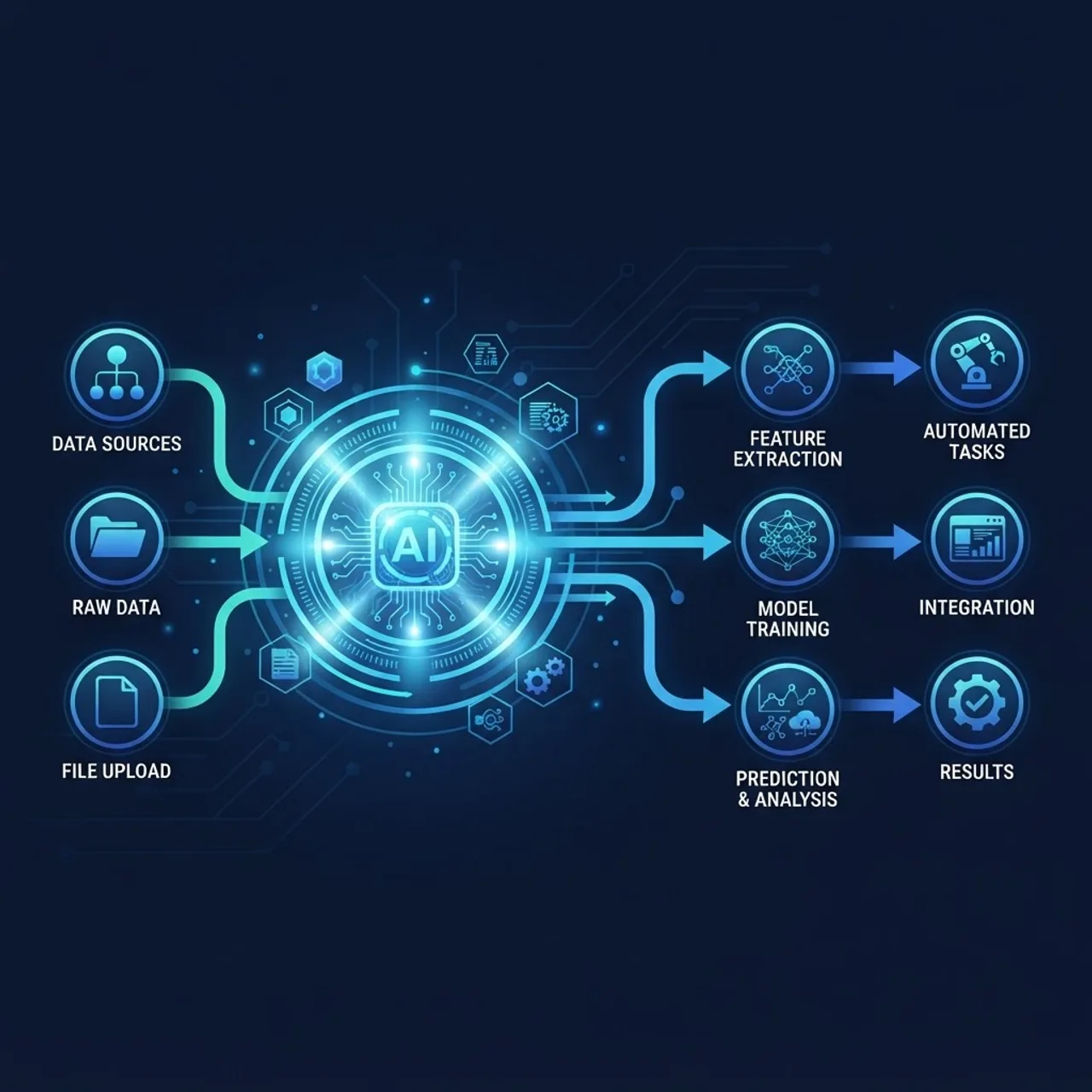
Modern automation is not magic. It follows a clear cycle you can understand and apply:
- Capture data from a source such as a form, email, sensor, or database.
- Process and interpret that data using rules or a machine learning model.
- Decide the correct action based on the interpretation.
- Execute the action automatically, such as sending a reply or updating a record.
- Learn from the outcome to improve future decisions.
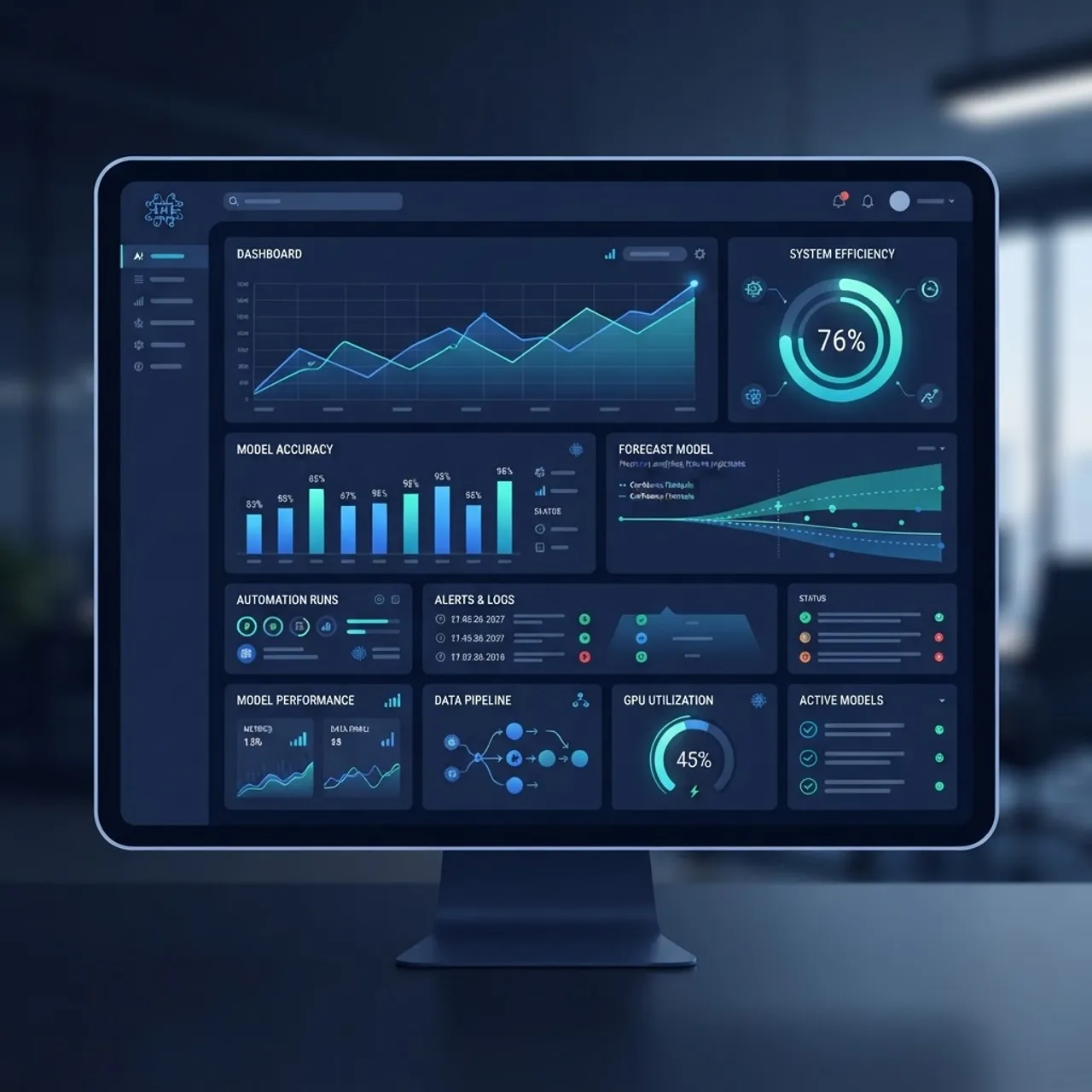
The difference between old and new automation lives in steps 2 and 5. Traditional automation used rigid rules. Intelligent automation interprets ambiguity and improves over time, which is why it can handle messy, real-world inputs.
Old Automation vs Modern AI Automation
| Factor | Traditional Automation | Modern AI Automation |
|---|---|---|
| Logic | Fixed rules | Learns from data |
| Inputs | Structured only | Structured and unstructured |
| Adaptability | Low | High |
| Handles ambiguity | No | Yes |
| Setup effort | Lower | Higher upfront, scales better |
| Best for | Repetitive tasks | Decision-heavy tasks |
The practical takeaway: use rule-based automation for predictable, high-volume tasks, and reserve AI automation for work that requires interpretation or judgment.
Why This Evolution Matters for Your Business
Automation is no longer optional for competitive companies. According to McKinsey, about 60% of all occupations have at least 30% of activities that are technically automatable with current technology. That does not mean jobs vanish. It means roles shift toward the work machines cannot do well: creativity, empathy, and strategy.
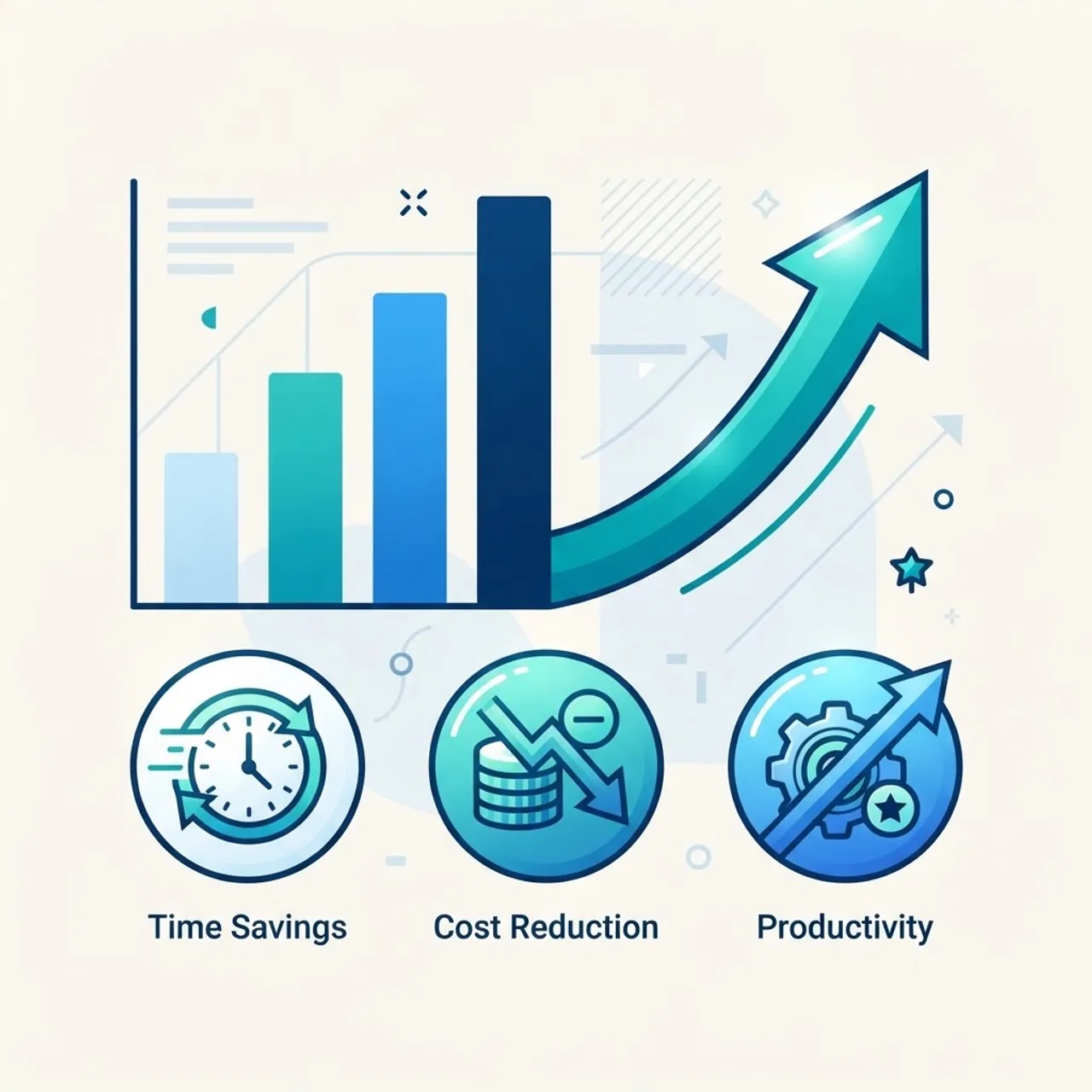
The economic pull is real. A widely cited Deloitte survey found that organizations adopting intelligent automation reported average cost reductions and significant productivity gains, with many scaling automation across multiple departments within a few years. The businesses that win are not the ones that automate the most, but the ones that automate the right things first.
A Practical Roadmap to Automate Your Own Work
You can apply the same evolutionary logic inside your business. Here is a proven sequence:
- Audit repetitive tasks. List every task done more than once a week that follows a predictable pattern.
- Rank by time and error cost. Automate the tasks that waste the most hours or cause the most mistakes first.
- Start with rules, not AI. Automate the clear, rule-based tasks before touching machine learning.
- Layer in AI where judgment is needed. Add intelligent automation only for tasks that require interpretation.
- Measure and refine. Track time saved and error rates, then expand what works.
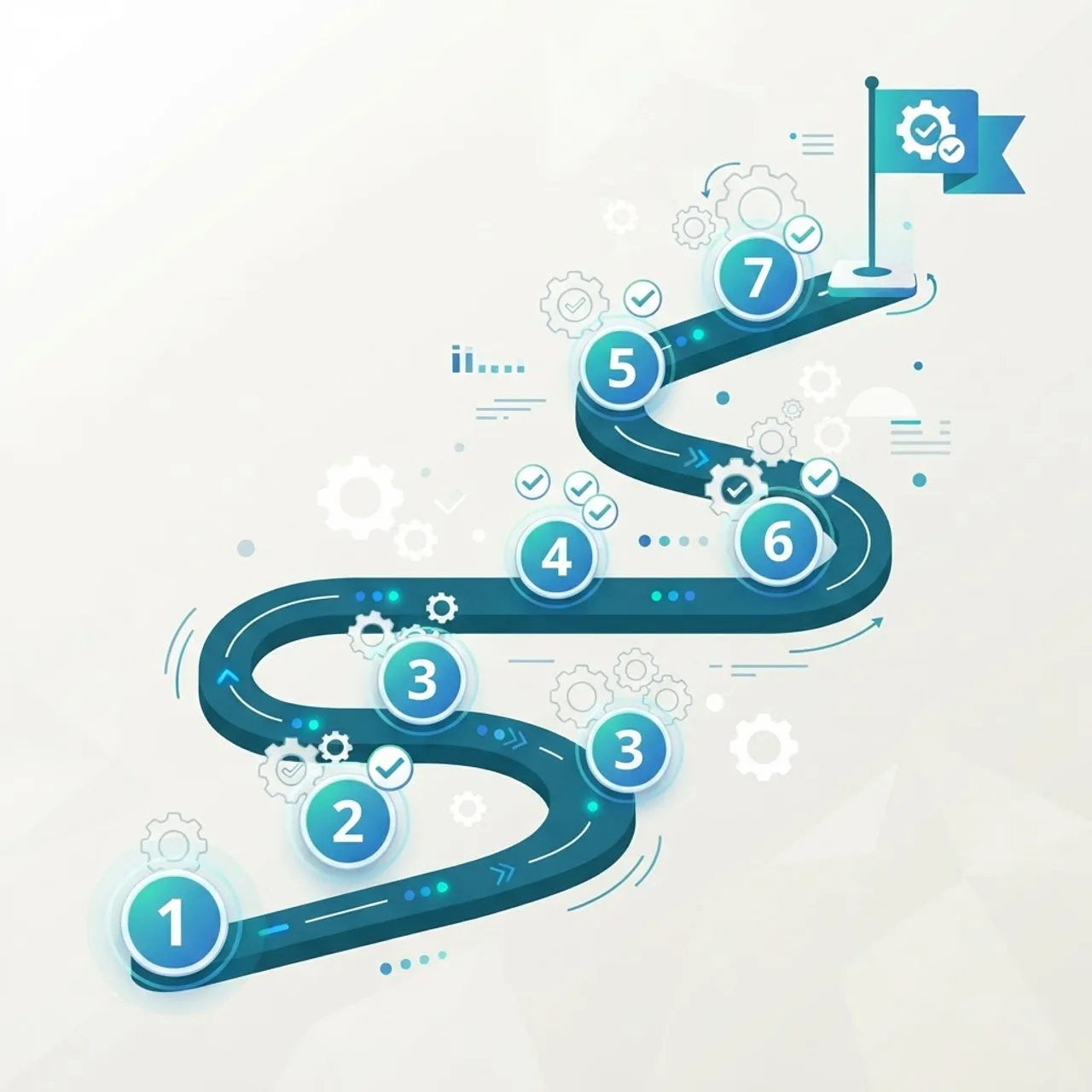
This staged approach mirrors how automation evolved historically, and it prevents the most common failure: trying to automate everything at once with tools that are too complex for the problem.
The Future: Where Automation Evolves Next
The next stage is autonomous, agent-based automation, where AI systems chain multiple tasks together and act toward a goal with minimal supervision. Instead of automating a single step, these agents manage an entire process, deciding which tools to use and when.
The direction is clear: automation is moving from doing tasks to managing outcomes. Humans will increasingly set goals and guardrails while intelligent systems handle execution. The competitive advantage will belong to people who know how to direct automation, not just operate it.
Key Takeaways
- Automation evolved in four stages: mechanical, electrical, digital, and intelligent.
- Each stage removed a category of human effort so people could focus on higher-value work.
- Traditional automation follows fixed rules, while modern AI automation learns from data and handles ambiguity.
- McKinsey estimates about 60% of occupations have at least 30% of tasks that are automatable.
- The smartest strategy is to automate predictable tasks first, then layer AI where judgment is required.
- The future is agent-based automation that manages outcomes, not just single tasks.
Frequently Asked Questions (FAQ)
What does it mean that evolution automated work?
It means each technological era replaced a type of human effort with a repeatable system. Machines replaced muscle, electronics replaced manual control, software replaced repetitive tasks, and AI now replaces routine decision-making, freeing people to focus on creative and strategic work.
Is automation the same as artificial intelligence?
No. Automation is any technology that performs tasks with minimal human input, and it can be rule-based. Artificial intelligence is one type of automation that learns from data and makes decisions. All AI is automation, but not all automation uses AI.
Will automation replace human jobs?
Automation shifts jobs more than it eliminates them. It removes repetitive tasks while creating demand for roles in oversight, strategy, and creativity. History shows each automation wave changed the type of work people do rather than removing the need for human workers entirely.
What should a business automate first?
Start with repetitive, predictable, high-volume tasks that follow clear rules, such as data entry, invoicing, and scheduling. These deliver fast returns with low risk. Only introduce AI-based automation later, for tasks that require interpretation, judgment, or handling unstructured information.
How do I start automating without a technical team?
Begin by listing repetitive weekly tasks and choosing simple rule-based tools first. Many platforms need no coding. For complex or AI-driven needs, partner with a specialist agency that can design, build, and maintain the automation so it scales reliably as your needs grow.
Final Thoughts
The evolution of automation is a single, continuous story: technology keeps absorbing the work humans would rather not do. Understanding that pattern gives you an edge, because it tells you exactly where to look for your next opportunity. Start with the repetitive, add intelligence where judgment matters, and let your team focus on what only humans can do. When you are ready to build real systems, ZoneTechify and WebPeak can help you put this evolution to work.