Discover how high-performance medicine blends human clinical judgment with artificial intelligence to improve diagnosis, treatment, and patient outcomes at scale.
High-Performance Medicine: The Convergence of Human and Artificial Intelligence
Medicine is entering a new operating model. For most of the last century, clinical performance depended almost entirely on the individual physician's memory, pattern recognition, and stamina. Today, that model is being upgraded. High-performance medicine is the disciplined pairing of expert human judgment with artificial intelligence systems that can read scans, predict deterioration, and surface evidence in seconds. This is not about replacing clinicians. It is about building a system where machines handle scale and pattern detection while humans handle context, ethics, and care.
As practitioners who build AI tools for healthcare and knowledge-driven businesses, we have watched this convergence move from research papers into real clinics. This article explains how it actually works, where it delivers measurable value, and what still requires a human hand.
Quick Answer: High-performance medicine is the integration of human clinical expertise with artificial intelligence, where AI analyzes data at scale to detect patterns, predict risk, and support decisions, while physicians provide context, judgment, and empathy. The result is faster, safer, and more accurate patient care.
What Is High-Performance Medicine?
High-performance medicine is a care model in which artificial intelligence augments, rather than replaces, human clinicians to raise diagnostic accuracy, speed, and consistency. The phrase was popularized by cardiologist and researcher Eric Topol, whose landmark 2019 review in Nature Medicine argued that AI's greatest near-term value lies in giving clinicians back time and precision, not in automating them out of the loop.
The core idea is division of labor by strength. AI excels at processing enormous volumes of structured and unstructured data without fatigue. Humans excel at interpreting ambiguous situations, weighing patient values, and taking responsibility for outcomes. When these strengths are combined deliberately, the system outperforms either one working alone.
Why the Convergence Matters Now
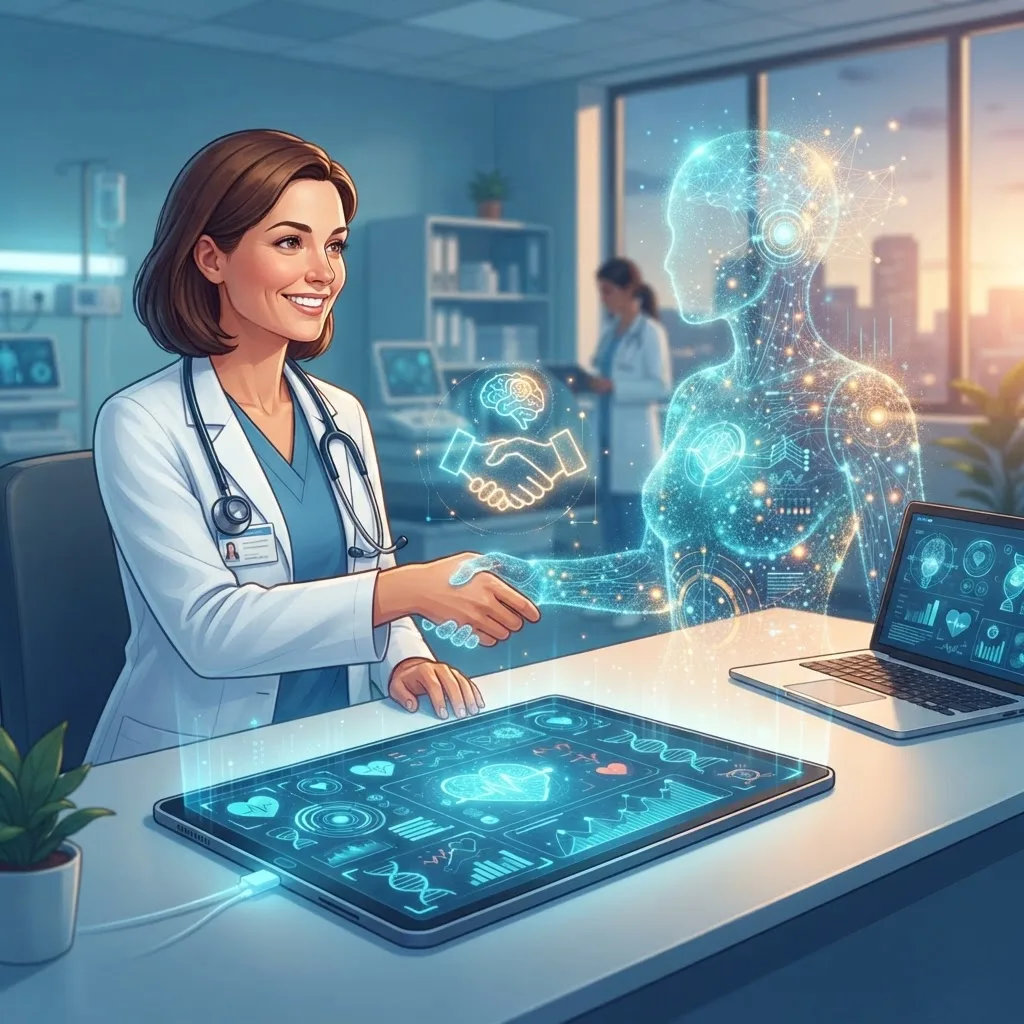
Three forces have made this convergence practical. First, medical data has exploded: imaging, genomics, wearables, and electronic health records generate more information than any clinician can manually review. Second, deep learning models have matured to the point where they match specialist performance on narrow tasks. Third, clinician burnout has reached a crisis level, creating urgent demand for tools that reduce administrative and cognitive load.
How AI Is Reshaping Medical Imaging
Medical imaging is where AI has delivered its clearest wins. Algorithms trained on millions of labeled images can flag suspicious findings in radiology, pathology, and ophthalmology with remarkable consistency. According to a widely cited 2020 study published in Nature, an AI system for breast cancer screening reduced false negatives by 9.4% and false positives by 5.7% compared with radiologists working alone in a US dataset.
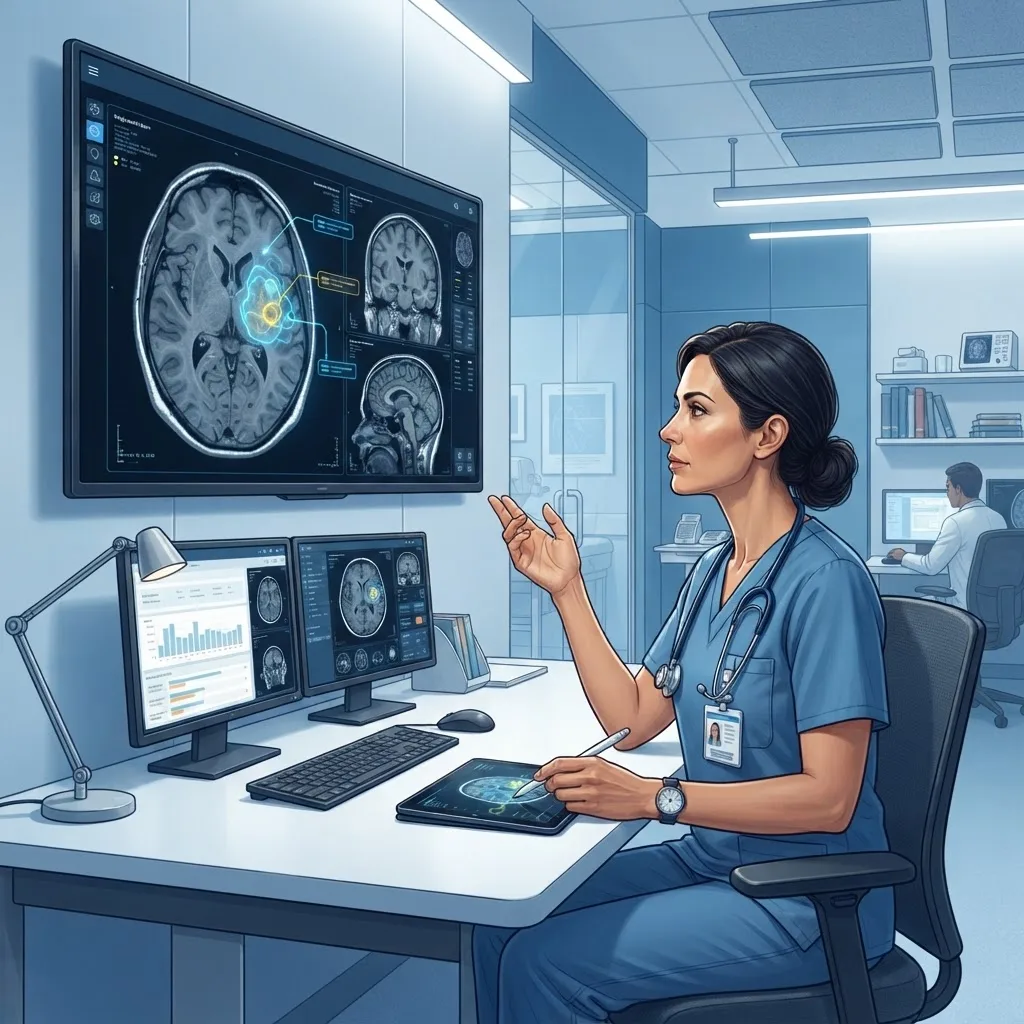
The practical value is triage and safety net. AI can pre-sort scans so urgent cases reach a radiologist first, and it can act as a second reader that catches the subtle nodule a tired human eye might miss at the end of a long shift. Crucially, the radiologist stays in charge. The algorithm suggests; the physician decides and signs. This human-in-the-loop design is what separates responsible high-performance medicine from reckless automation.
AI-Powered Clinical Decision Support
Clinical decision support systems (CDSS) use AI to surface relevant evidence, drug interactions, and risk scores at the moment a physician needs them. Instead of forcing a doctor to remember every guideline, a modern CDSS reads the patient's chart and quietly recommends the next best step.
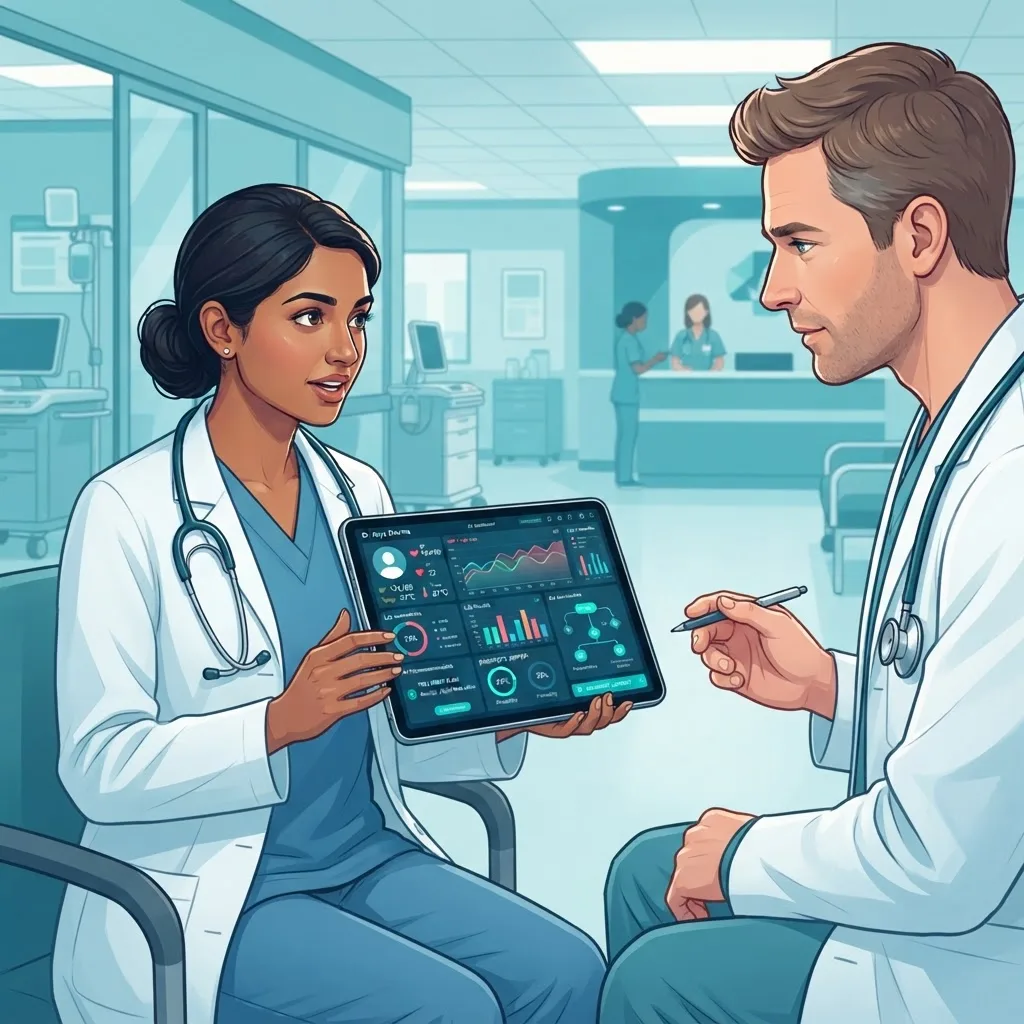
The best systems share three traits:
- Transparency — they explain why a recommendation was made, citing the underlying data or guideline.
- Integration — they live inside existing workflows rather than adding another login.
- Deference — they present options and let the clinician override them without friction.
When decision support respects clinician autonomy, adoption rises and errors fall. When it nags or hides its reasoning, physicians ignore it, a phenomenon researchers call alert fatigue. Building tools that clinicians actually trust is a design challenge as much as a technical one, and it is where teams offering dedicated artificial intelligence services add real value.
Predictive Analytics and Preventive Care
Predictive analytics is arguably the most transformative application of AI in medicine because it shifts care from reactive to proactive. By analyzing trends in vital signs, lab results, and history, models can flag a patient likely to deteriorate hours before a human would notice.
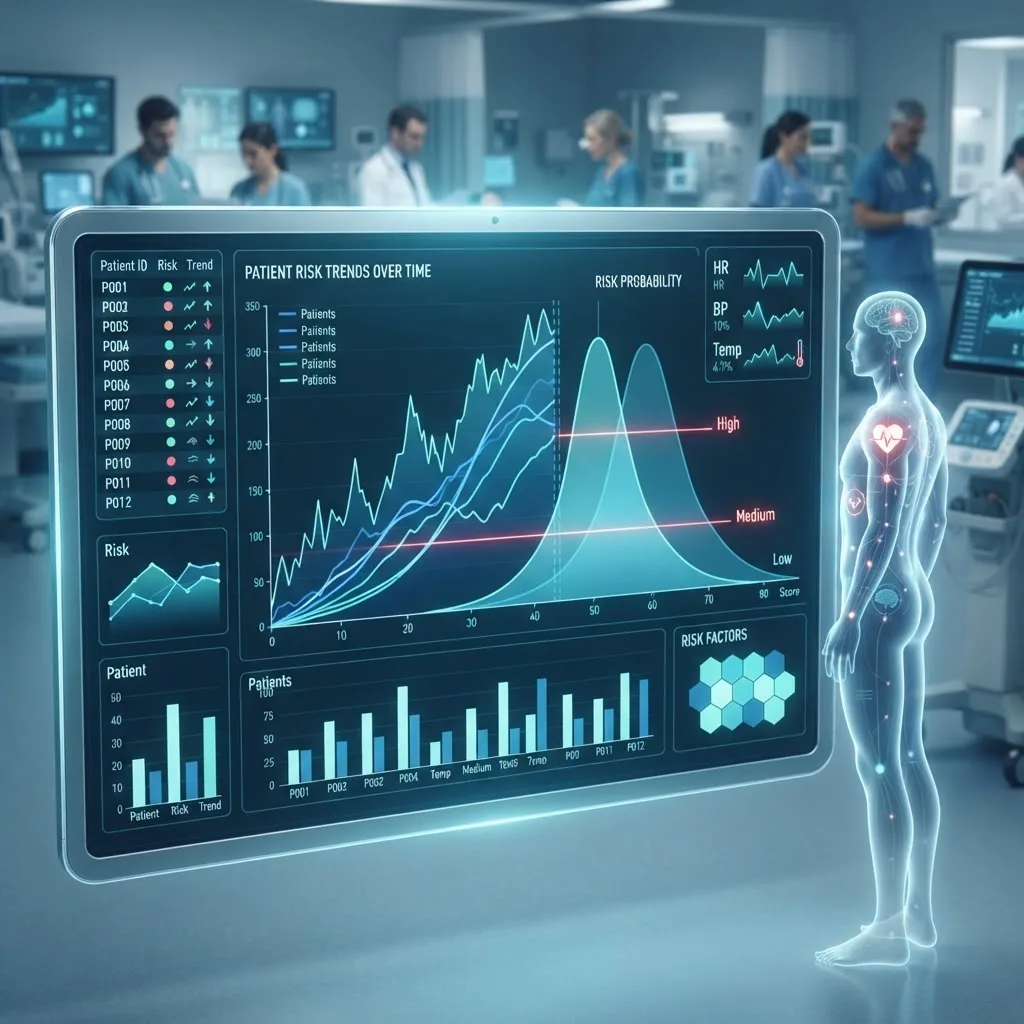
Early-warning systems for sepsis, for example, monitor subtle changes in heart rate, temperature, and white blood cell counts to alert care teams before organ failure begins. Because sepsis mortality rises sharply with every hour of delayed treatment, even a modest head start saves lives. The same predictive approach powers hospital readmission models, ICU capacity planning, and chronic disease management.
The honest caveat: predictions are probabilities, not certainties. A high-performance system presents risk as a well-calibrated number the clinician can weigh, not a verdict. Overtrusting a model is as dangerous as ignoring one.
Accelerating Drug Discovery and Research
Artificial intelligence is compressing the timeline of biomedical research. Traditional drug discovery can take over a decade and cost billions, with most candidates failing. AI models now screen millions of molecular combinations, predict protein structures, and identify promising compounds far faster than lab work alone.

The breakthrough that captured global attention was DeepMind's AlphaFold, which predicted the 3D structure of nearly all known proteins, roughly 200 million, and released them freely to researchers. Problems that once required years of laboratory experiments can now begin with a computational prediction, letting scientists focus their expensive bench time on the most promising leads.
Here too, humans remain essential. AI narrows the search space; researchers design the experiments, validate results, and navigate the regulatory path that no algorithm can shortcut.
Wearables and Continuous Monitoring
Consumer wearables have quietly turned patients into continuous data streams. Smartwatches now detect atrial fibrillation, track blood oxygen, and estimate sleep quality, feeding AI models that spot anomalies long before a scheduled appointment.
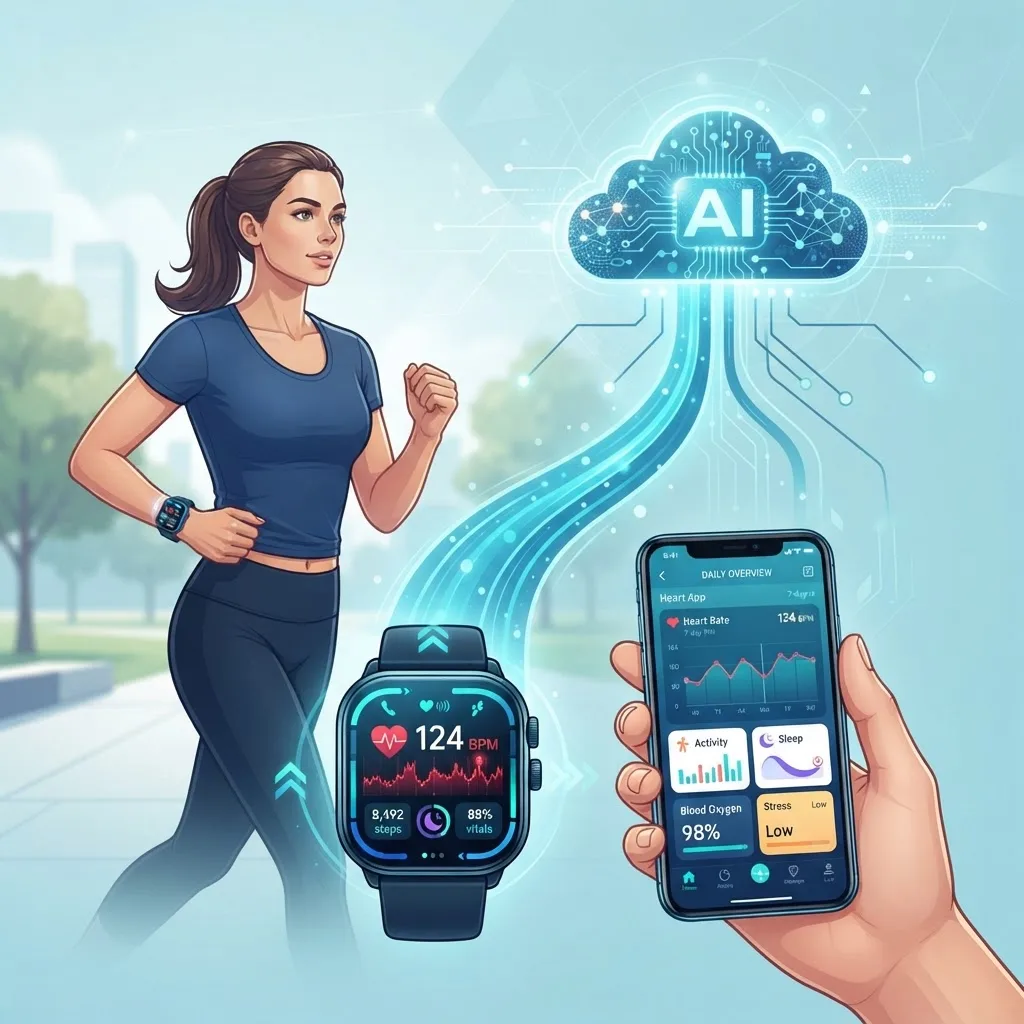
This matters because most health happens outside the clinic. A device that flags an irregular heartbeat during an ordinary Tuesday can prompt an early evaluation that prevents a stroke. When paired with AI that filters signal from noise, wearables extend the physician's reach into daily life without demanding constant human attention.
The challenge is avoiding alarm overload and protecting privacy. Continuous data is only useful if it reaches the right clinician at the right time and is stored securely, which is why data governance sits at the heart of any credible deployment.
The Human Element That AI Cannot Replace
Despite these advances, the defining insight of high-performance medicine is that empathy, ethics, and accountability remain irreducibly human. A model can calculate a survival probability, but it cannot sit with a frightened family, interpret a patient's unspoken fears, or take moral responsibility for a difficult decision.
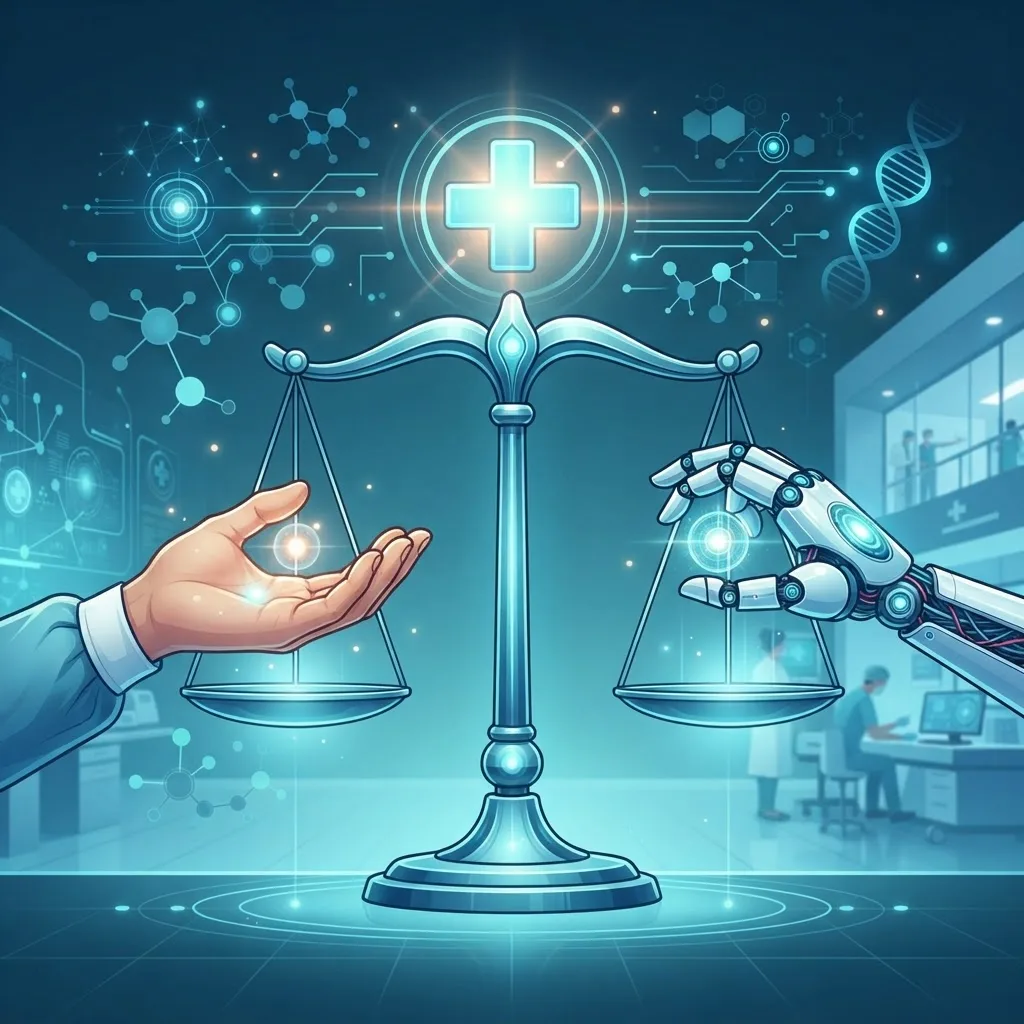
Trust in medicine is built through human relationships. Studies of patient satisfaction consistently show that communication, listening, and shared decision-making drive outcomes as much as technical accuracy. AI frees clinicians from data drudgery precisely so they can spend more of that reclaimed time on the human side of care. Teams building healthcare and knowledge platforms, including those at ZoneTechify and WebPeak, consistently find that the most successful tools are the ones that give professionals more time with people, not less.
Human Versus AI: A Practical Comparison
| Capability | Artificial Intelligence | Human Clinician |
|---|---|---|
| Processing large data volumes | Excellent | Limited |
| Pattern detection in images | Very high, consistent | High, variable with fatigue |
| Contextual judgment | Limited | Excellent |
| Empathy and communication | None | Excellent |
| Speed of analysis | Seconds | Minutes to hours |
| Accountability for decisions | Cannot hold | Fully accountable |
| Handling novel or rare cases | Weak without data | Strong with reasoning |
The table makes the strategy obvious: assign each task to the party that performs it best, and design the handoffs carefully.
Key Takeaways
- High-performance medicine combines AI's scale with human judgment; it augments clinicians rather than replacing them.
- AI reduced breast cancer screening false negatives by 9.4% in a US dataset, according to a 2020 Nature study.
- AlphaFold predicted around 200 million protein structures, dramatically accelerating drug discovery.
- Human-in-the-loop design, transparency, and clinician autonomy are essential for safe adoption.
- Empathy, ethics, and accountability remain uniquely human responsibilities that AI cannot assume.
Frequently Asked Questions (FAQ)
What is high-performance medicine?
High-performance medicine is a care approach that pairs artificial intelligence with human clinical expertise. AI analyzes large datasets to detect patterns and predict risk, while physicians apply judgment, context, and empathy. The goal is faster, more accurate, and safer patient care than either could achieve alone.
Will AI replace doctors in the future?
No. AI is expected to augment doctors, not replace them. Machines handle data processing, pattern detection, and repetitive tasks, but humans remain essential for contextual judgment, ethical decisions, empathy, and accountability. The strongest outcomes come from clinicians and AI working together, not one substituting for the other.
How accurate is AI in medical diagnosis?
AI can match or exceed specialists on narrow, well-defined tasks like reading certain scans. A 2020 Nature study found AI reduced breast cancer screening false negatives by 9.4%. However, accuracy depends on data quality, and human review remains necessary, especially for complex or rare cases.
What are the main risks of using AI in healthcare?
The main risks include biased training data, lack of transparency, over-reliance on predictions, alert fatigue, and privacy concerns with sensitive health data. Responsible deployment addresses these through human oversight, explainable models, strong data governance, and rigorous validation before any clinical use.
How does AI help with early disease detection?
AI analyzes continuous data from wearables, labs, and records to spot subtle warning signs before symptoms appear. Predictive models flag risks such as sepsis or irregular heart rhythms early, giving clinicians time to intervene. Earlier detection often means simpler treatment and significantly better patient outcomes.
Is patient data safe when AI is involved?
Patient data can be safe when systems follow strict governance, encryption, and compliance standards like HIPAA. Safety depends on how data is collected, stored, and accessed, not on AI itself. Reputable healthcare AI tools prioritize privacy, minimize data exposure, and keep sensitive information tightly controlled and auditable.