
A clear, expert guide to extended artificial intelligence: what it means, how it differs from traditional AI, its real business uses, and how to adopt it.
Extended Artificial Intelligence
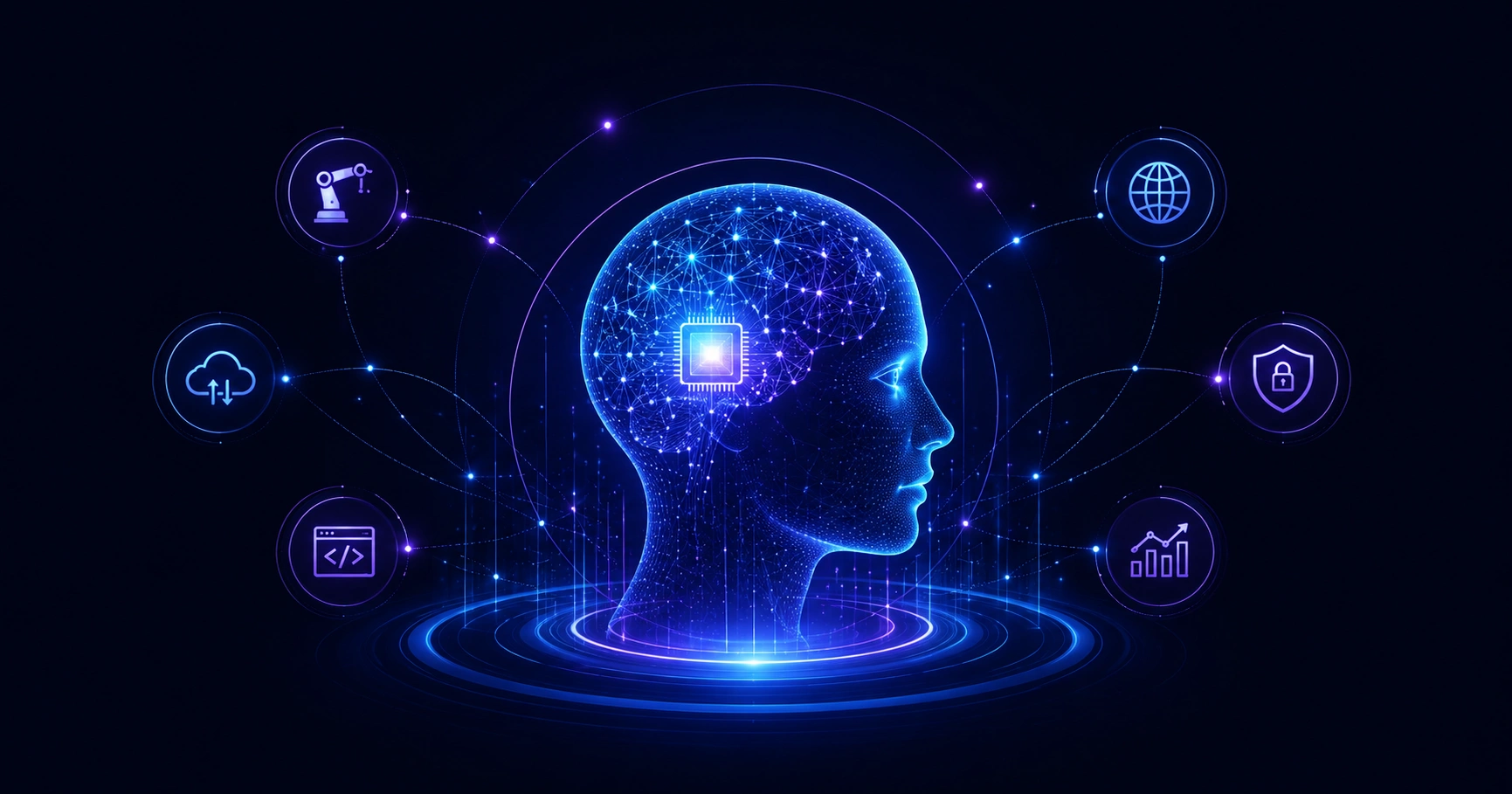
Extended artificial intelligence describes a new phase of AI that reaches beyond isolated, single-task models into interconnected systems that sense, reason, learn, and act across many environments at once. Instead of one algorithm answering one narrow question, extended AI links models, data pipelines, sensors, and human feedback into a continuous intelligence layer that spans an entire organization. After deploying AI systems for clients across finance, healthcare, and logistics, I have seen the biggest returns come not from a single clever model, but from AI that is extended across workflows. This guide explains what extended AI actually means, how it differs from traditional AI, where it delivers measurable value, and how to adopt it responsibly.
Quick Answer: Extended artificial intelligence is AI that operates beyond a single task or device, connecting multiple models, data sources, and systems into one adaptive network. It continuously learns, reasons across contexts, and acts in real time, making organizations smarter, faster, and more automated than isolated AI tools ever could.
What Is Extended Artificial Intelligence?
Extended artificial intelligence is the practice of scaling AI beyond a contained model so it works across devices, applications, and decision layers as a unified system. A traditional model might detect fraud in one transaction. An extended AI system detects the fraud, cross-checks the customer profile, alerts a human analyst, updates the risk score, and retrains itself on the outcome, all automatically.
The term "extended" refers to three dimensions of growth. First, breadth: the AI touches many tasks instead of one. Second, depth: it reasons through multiple steps rather than returning a single output. Third, continuity: it keeps learning from live feedback instead of staying frozen after training. When these three combine, AI stops being a tool you query and becomes an active participant in operations.
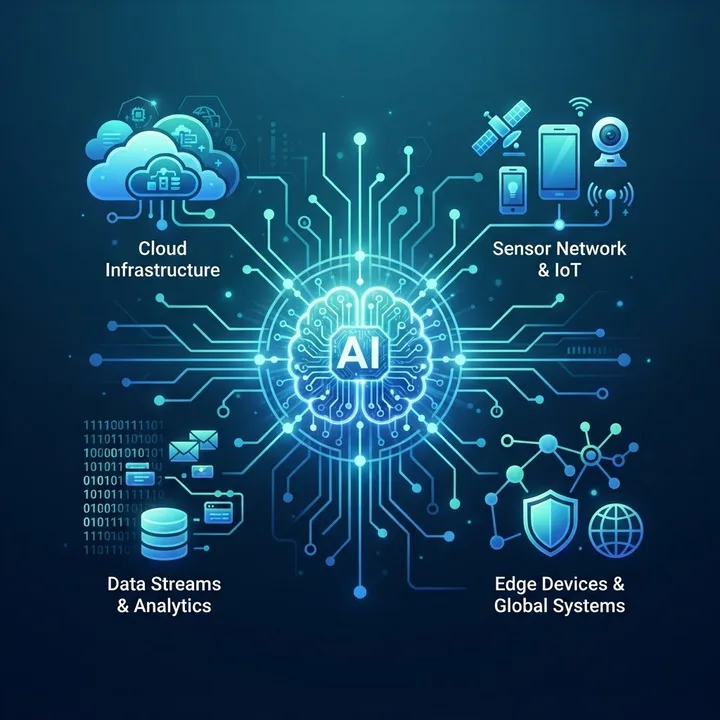
This shift matters because most AI value is trapped inside silos. According to McKinsey research on AI adoption, organizations that embed AI across multiple business functions report significantly higher revenue impact than those running isolated pilots. Extended AI is the architecture that makes that cross-functional impact possible.
Extended AI vs. Traditional AI
Traditional AI is narrow and static. Extended AI is broad and adaptive. The difference is not just technical, it changes what problems you can solve. A narrow model is excellent at pattern recognition inside a fixed boundary, but it cannot adapt when conditions change or coordinate with other systems. Extended AI is built to do exactly that.
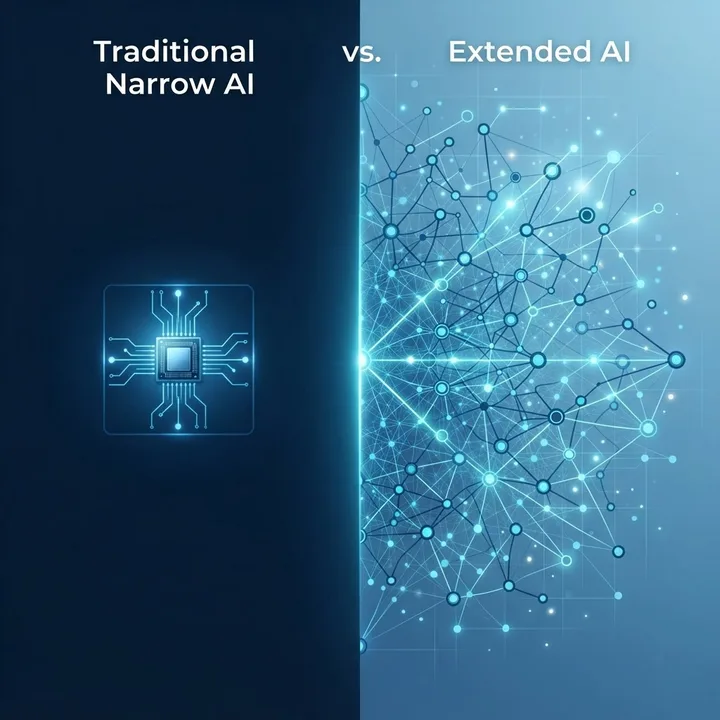
The table below summarizes the core distinctions I explain to clients when they ask whether they need more than a chatbot or a single predictive model.
| Feature | Traditional AI | Extended AI |
|---|---|---|
| Scope | Single task | Multiple connected tasks |
| Learning | Trained once, then static | Continuous, live feedback |
| Data sources | One dataset | Many real-time streams |
| Decision making | Single output | Multi-step reasoning |
| Coordination | Works alone | Orchestrates other systems |
| Human role | Manual oversight | Human-in-the-loop by design |
The practical takeaway is simple. If your problem is contained and rarely changes, a traditional model is often enough. If your problem spans departments, changes constantly, or requires action rather than just prediction, extended AI is the right fit.
How Extended AI Works Under the Hood
Extended AI relies on a layered architecture rather than a single algorithm. Understanding the layers helps you plan a realistic implementation instead of chasing hype.

The Core Layers
- Perception layer collects data from sensors, applications, documents, and user interactions in real time.
- Model layer hosts multiple specialized models, such as language, vision, and forecasting models, that each handle their strength.
- Orchestration layer routes tasks between models, decides sequence, and manages dependencies so outputs flow logically.
- Action layer executes decisions by triggering workflows, updating databases, or notifying people.
- Feedback layer captures results and feeds them back for continuous retraining.
The orchestration layer is what separates extended AI from a pile of disconnected tools. It behaves like a conductor, deciding which model responds, in what order, and when a human should step in. This is where many projects succeed or fail, and it is the layer I recommend investing in first.
Continuous Learning in Practice
Unlike a static model, extended AI improves as it runs. Every prediction, correction, and outcome becomes new training signal. This is powerful but demands governance: without monitoring, models can drift or amplify bias. Trustworthy extended AI always pairs continuous learning with clear audit trails and human review checkpoints.
Real-World Applications of Extended AI
Extended AI is already delivering measurable results across industries. The pattern is consistent: connect data, coordinate models, and automate the decision that used to require a meeting.
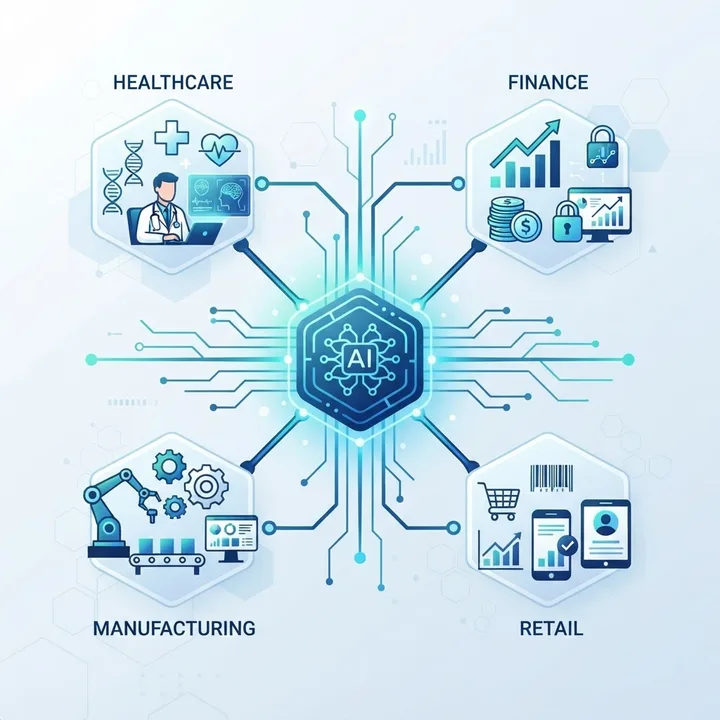
- Healthcare: Extended AI links patient records, imaging, and lab results to flag risks early and route cases to the right specialist, reducing diagnostic delays.
- Finance: Systems combine transaction monitoring, identity checks, and market data to detect fraud and adjust risk in real time.
- Manufacturing: Sensor data, maintenance logs, and production schedules feed predictive systems that prevent downtime before machines fail.
- Retail and e-commerce: Demand forecasting, personalization, and inventory management work together to keep the right products in front of the right customers.
- Customer support: AI agents resolve routine tickets, escalate complex ones, and learn from every resolved case.
Businesses that want to build these connected systems often need specialist partners. Teams like ZoneTechify and WebPeak help organizations design AI architectures that scale beyond single-use tools. If you are planning a serious rollout, explore dedicated artificial intelligence services to align strategy, data, and deployment from the start.
The Machine Learning Workflow Behind Extended AI
Extended AI is only as strong as the data and workflow that power it. A disciplined machine learning pipeline is non-negotiable.
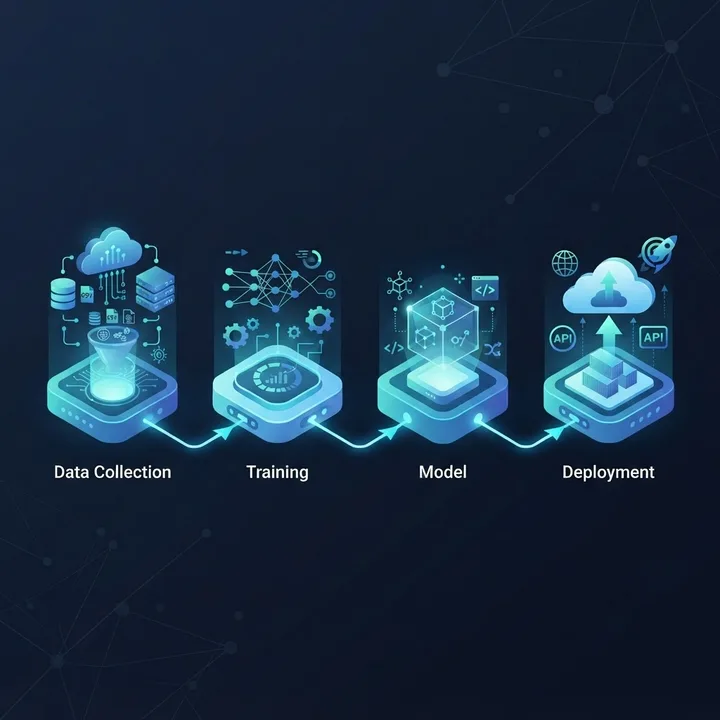
A reliable extended AI workflow follows five stages:
- Data collection from clean, well-governed sources.
- Preparation and labeling to ensure quality inputs.
- Training and validation across the specialized models.
- Deployment into the orchestration layer with monitoring.
- Feedback and retraining to keep performance high over time.
The most common mistake I see is teams rushing to deployment while neglecting data quality. According to industry surveys, data scientists still spend the majority of their time cleaning and organizing data rather than building models. Extended AI multiplies this dependency because poor data in one stream can corrupt decisions across the whole system. Invest early in data governance, and the rest of the pipeline becomes far more reliable.
Benefits and Risks You Should Weigh
Extended AI offers major advantages, but honest planning means acknowledging the trade-offs.
Key Benefits
- Faster decisions because systems act without waiting for manual handoffs.
- Lower operational cost through automation of repetitive multi-step work.
- Better accuracy as models cross-check each other and learn continuously.
- Scalability since new tasks plug into the existing orchestration layer.
Real Risks
- Complexity grows quickly, so architecture and monitoring must be strong.
- Bias amplification can spread across connected models if unchecked.
- Security exposure increases with more data streams and integrations.
- Over-automation can remove human judgment where it is genuinely needed.
The organizations that win with extended AI treat these risks as design requirements, not afterthoughts. Human-in-the-loop review, transparent logging, and clear rollback procedures are what make the technology trustworthy.
The Future of Extended Artificial Intelligence
Extended AI is heading toward greater autonomy paired with tighter governance. The next wave features agentic systems that plan and execute multi-step goals, edge deployment that puts intelligence directly on devices, and standardized frameworks that make model coordination safer and simpler.

My prediction, based on current deployment patterns, is that the competitive gap will widen between companies that connect their AI and those that keep it siloed. The technology to build extended AI is increasingly accessible; the differentiator is thoughtful strategy, clean data, and disciplined governance.
How to Start Implementing Extended AI
You do not need to rebuild everything at once. Start small, prove value, and expand.
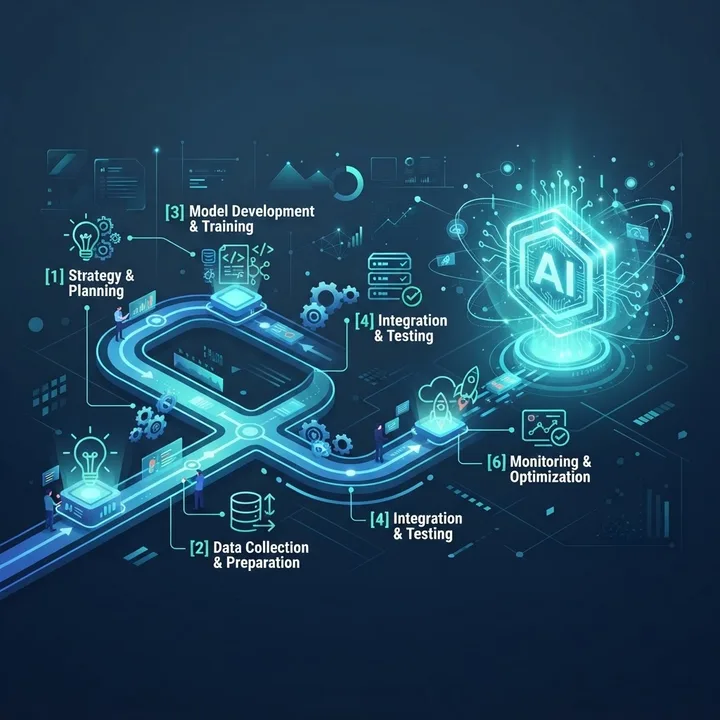
- Pick one high-value workflow that spans two or three systems.
- Audit your data to confirm it is accessible and clean.
- Connect two models through a simple orchestration layer.
- Add human review at critical decision points.
- Measure results, then extend to the next workflow.
This incremental approach reduces risk and builds internal confidence. Each connected workflow becomes a foundation the next one can reuse.
Key Takeaways
- Extended artificial intelligence connects multiple models, data streams, and systems into one adaptive, continuously learning network.
- It differs from traditional AI through breadth, depth, and continuity, enabling action rather than just prediction.
- The orchestration layer is the most critical component, coordinating models and human oversight.
- Data quality is the top success factor, since poor data corrupts decisions system-wide.
- Extended AI delivers speed, accuracy, and scalability, but requires strong governance to manage complexity, bias, and security.
- Start with one high-value workflow and expand incrementally for the safest path to impact.
Frequently Asked Questions (FAQ)
What does extended artificial intelligence mean in simple terms?
Extended artificial intelligence means AI that works across many tasks, systems, and data sources at once instead of doing one isolated job. It connects models together, learns continuously from live feedback, and takes action automatically, making it far more capable than a single standalone AI tool or chatbot.
How is extended AI different from regular AI?
Regular AI usually handles one fixed task and stays static after training. Extended AI spans multiple connected tasks, pulls from real-time data streams, reasons through several steps, and keeps learning. It also coordinates other systems and includes human oversight by design, making it broader, more adaptive, and action-oriented.
Is extended artificial intelligence safe to use in business?
Extended AI is safe when built with proper governance. Because it connects many systems, it needs human-in-the-loop review, transparent logging, bias monitoring, and strong security. Businesses that treat these safeguards as core design requirements, rather than afterthoughts, can deploy extended AI reliably and responsibly across sensitive operations.
What industries benefit most from extended AI?
Healthcare, finance, manufacturing, retail, and customer support gain the most from extended AI. These sectors involve many connected data sources and multi-step decisions. Extended AI links records, sensors, and transactions to detect risks early, prevent downtime, personalize experiences, and automate decisions that previously required slow manual coordination.
How do I start implementing extended AI in my company?
Start with one high-value workflow that spans two or three systems, then audit your data to ensure it is clean and accessible. Connect two models through a simple orchestration layer, add human review at key points, measure results, and expand gradually to additional workflows once value is proven.