
A practical, expert guide to evaluating your fleet on applied artificial intelligence, covering predictive maintenance, route optimization, safety, ROI, and a step-by-step adoption framework.
Evaluate Fleet on Applied Artificial Intelligence
Evaluating a fleet on applied artificial intelligence is no longer a futuristic experiment reserved for global logistics giants. It has become a practical decision that determines fuel costs, vehicle uptime, driver safety, and profit margins for operators of every size. Yet many fleet managers still confuse buzzwords with business value. This guide breaks down exactly how to assess whether AI genuinely improves your fleet, which use cases deliver measurable returns, and how to run a disciplined evaluation before you sign any contract. Drawing on real deployment patterns, we focus on outcomes you can measure, not vendor promises.
Quick Answer: To evaluate a fleet on applied artificial intelligence, measure how AI improves four areas: predictive maintenance, route optimization, driver safety, and real-time telematics. Assess each on data quality, cost savings, uptime gains, and ROI. Applied AI is worthwhile only when it produces measurable, repeatable operational results.
What Does It Mean to Evaluate a Fleet on Applied AI?
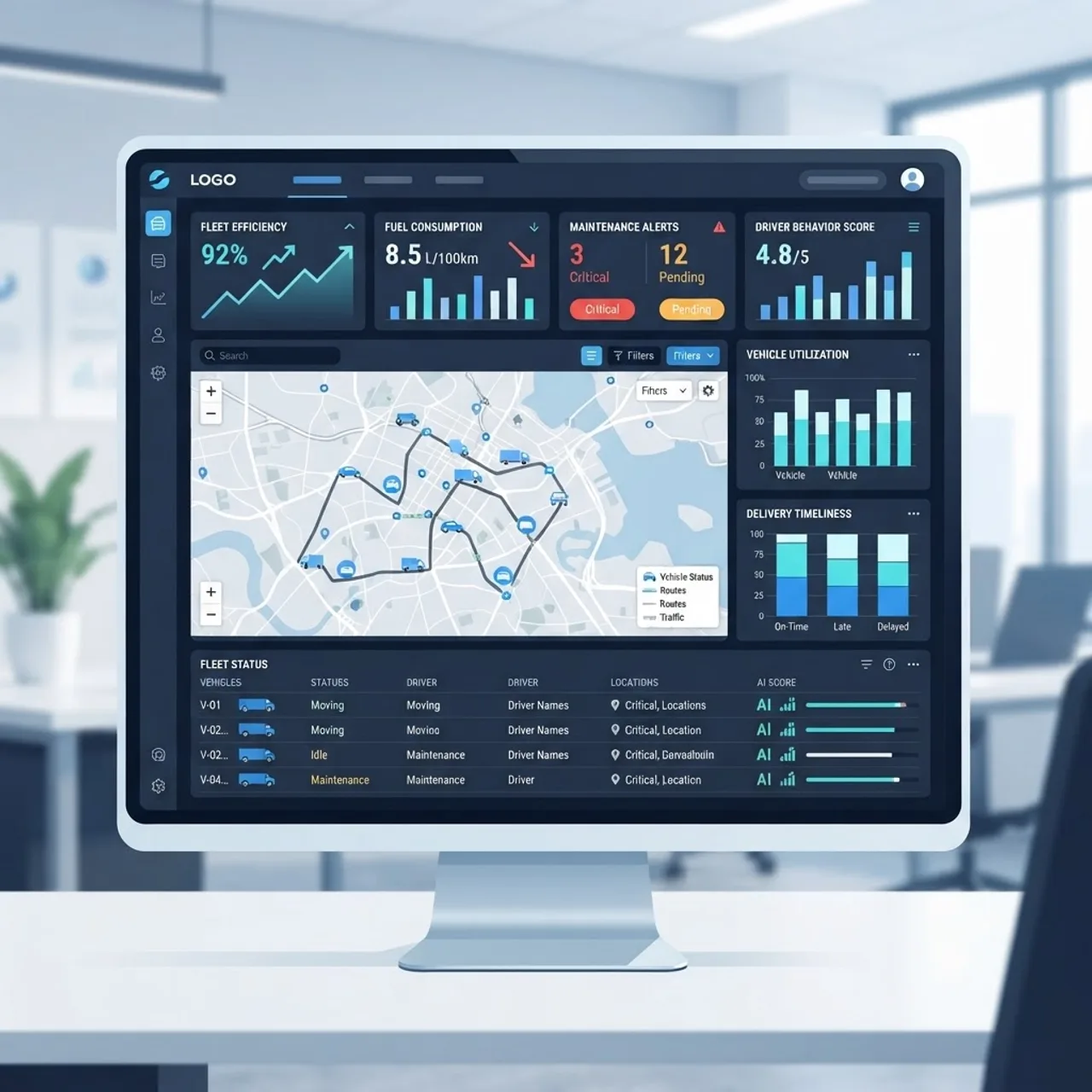
Applied artificial intelligence refers to AI systems built to solve a specific, real-world problem rather than to demonstrate general intelligence. In a fleet context, that means algorithms trained to predict a failing alternator, reroute a delivery around congestion, or flag a distracted driver in real time. Evaluating a fleet on applied AI means measuring how well these targeted systems perform against your actual operational goals: lower cost per mile, higher vehicle availability, fewer accidents, and better on-time delivery rates.
The distinction matters because a tool can be technically impressive yet operationally useless. A strong evaluation ignores marketing language and instead asks a single question for every feature: does this change a number on the balance sheet? If a system cannot connect to a clear metric, it does not belong in your evaluation. Companies like ZoneTechify and WebPeak approach AI adoption the same way, prioritizing measurable impact over novelty.
Why Fleet AI Evaluation Matters Now
The economics of transport have made AI evaluation urgent. According to the U.S. Department of Energy, fuel and maintenance together account for roughly 60 percent of total fleet operating costs, meaning even small efficiency gains compound quickly across hundreds of thousands of miles. Meanwhile, McKinsey research indicates that AI-driven predictive maintenance can reduce vehicle downtime by up to 50 percent and cut maintenance costs by 10 to 40 percent when implemented correctly.
Those figures explain why the global fleet management market, valued at over 25 billion dollars, is increasingly built around data intelligence rather than simple GPS tracking. The organizations pulling ahead are not those that adopt the flashiest tools, but those that evaluate applied AI rigorously and deploy only what pays for itself. A structured evaluation protects your budget from expensive pilots that never scale.

The Core Pillars of Applied AI in Fleet Management
A credible fleet AI evaluation rests on four pillars. Each solves a distinct operational problem, and each should be scored independently before you judge a platform as a whole.
1. Predictive Maintenance
Predictive maintenance uses sensor data, historical repair records, and machine learning to forecast component failures before they happen. Instead of fixed service intervals or reactive breakdowns, the system flags the exact part likely to fail and the window in which it will occur. When evaluating this pillar, check how the model ingests engine, brake, and battery data, how accurately it predicts failures, and whether it reduces unplanned downtime. A trustworthy vendor will share false-positive rates, not just success stories.

2. Route Optimization
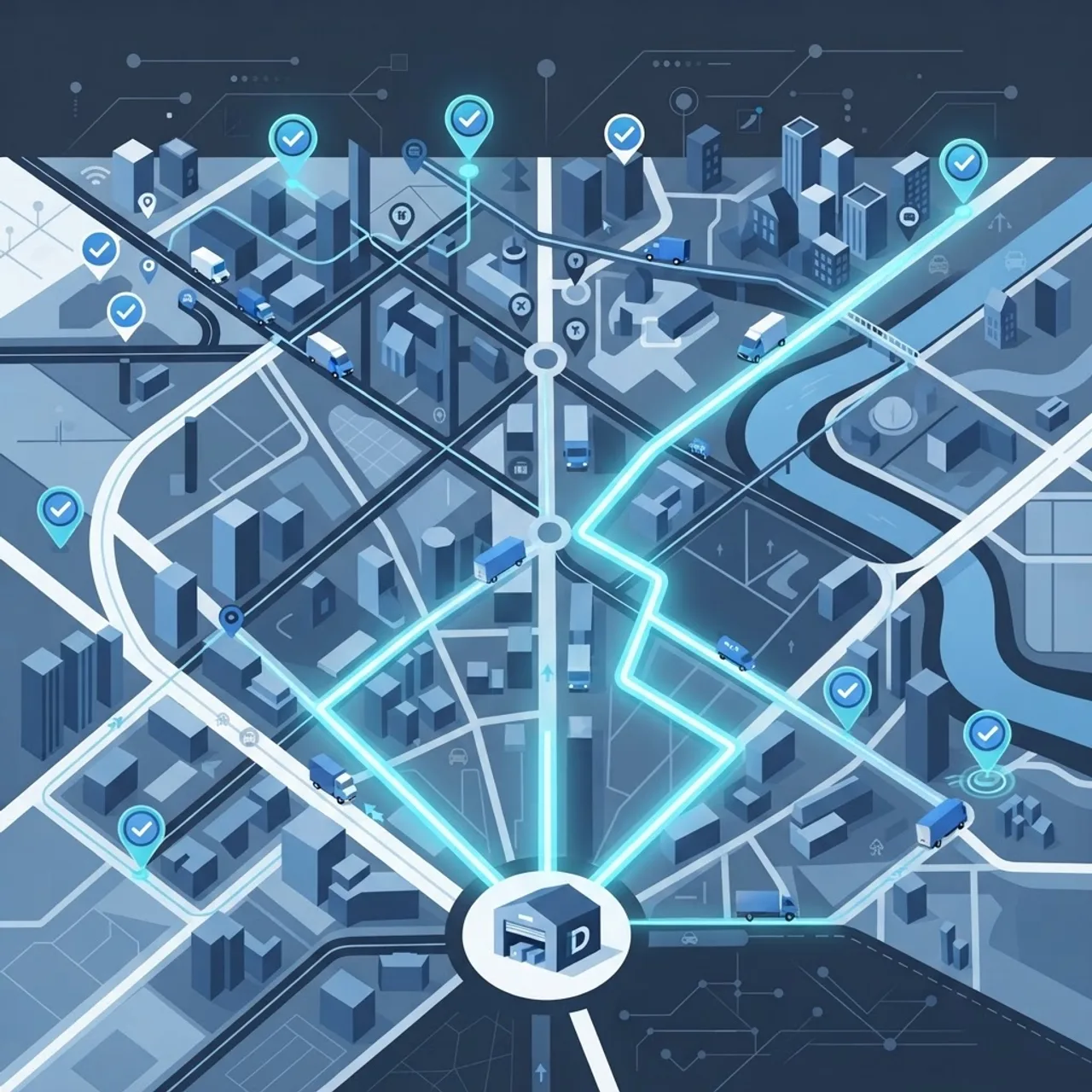
Route optimization AI calculates the most efficient path across multiple stops using live traffic, weather, delivery windows, and vehicle constraints. Unlike static routing, it adapts continuously throughout the day. Evaluate it by comparing planned versus actual mileage, fuel consumed, and on-time delivery rates before and after deployment. The best systems also account for driver hours and load capacity, turning a routing tool into a genuine dispatch strategy.
3. Driver Safety and Behavior Monitoring
AI-powered safety systems use in-cab cameras and telematics to detect distraction, fatigue, harsh braking, and speeding. Because collisions are among the most expensive events a fleet faces, this pillar often delivers the fastest return. During evaluation, verify how the system distinguishes genuine risk from false alerts, whether it coaches drivers constructively, and how it protects driver privacy. Adoption fails when drivers feel surveilled rather than supported, so change management matters as much as the algorithm.

4. Telematics and Real-Time Data Quality
Every AI pillar depends on clean, continuous data. Telematics hardware collects location, speed, fuel, and engine diagnostics that feed the models above. When you evaluate applied AI, you are really evaluating your data foundation. Ask how often data is sampled, how gaps are handled, and whether the platform integrates with your existing systems. Poor data produces confident but wrong predictions, which is worse than no AI at all. Professional artificial intelligence services typically begin every engagement with a data audit for this reason.
How to Evaluate Applied AI for Your Fleet: A Step-by-Step Framework
Use this repeatable framework to keep your evaluation objective and evidence-based:
- Define the metric first. Pick one or two hard numbers, such as cost per mile or downtime hours, before you look at any vendor.
- Audit your data. Confirm you have consistent telematics data for at least six months, since AI models need history to learn from.
- Run a scoped pilot. Test on 10 to 20 vehicles rather than the entire fleet, isolating a single use case per pilot.
- Establish a baseline. Record current performance so improvements are provable, not anecdotal.
- Measure against the baseline. Compare results after 60 to 90 days using the same metric you defined in step one.
- Calculate true cost of ownership. Include hardware, subscription, training, and integration, not just the headline price.
- Score adoption. Track whether drivers and dispatchers actually use the tool daily; unused AI delivers zero return.
Comparison Table: Traditional vs AI-Driven Fleet Management
| Factor | Traditional Fleet Management | AI-Driven Fleet Management |
|---|---|---|
| Maintenance approach | Fixed intervals or reactive repairs | Predictive, failure-forecast based |
| Routing | Static, planned in advance | Dynamic, real-time optimization |
| Safety | Post-incident review | Real-time risk detection and coaching |
| Data use | Manual reports and spreadsheets | Continuous automated analysis |
| Downtime | Higher, unplanned | Reduced up to 50 percent |
| Decision speed | Slow, human-dependent | Fast, data-supported |
| Scalability | Limited by staff | High, automation-driven |
Measuring ROI: The Number That Decides Everything
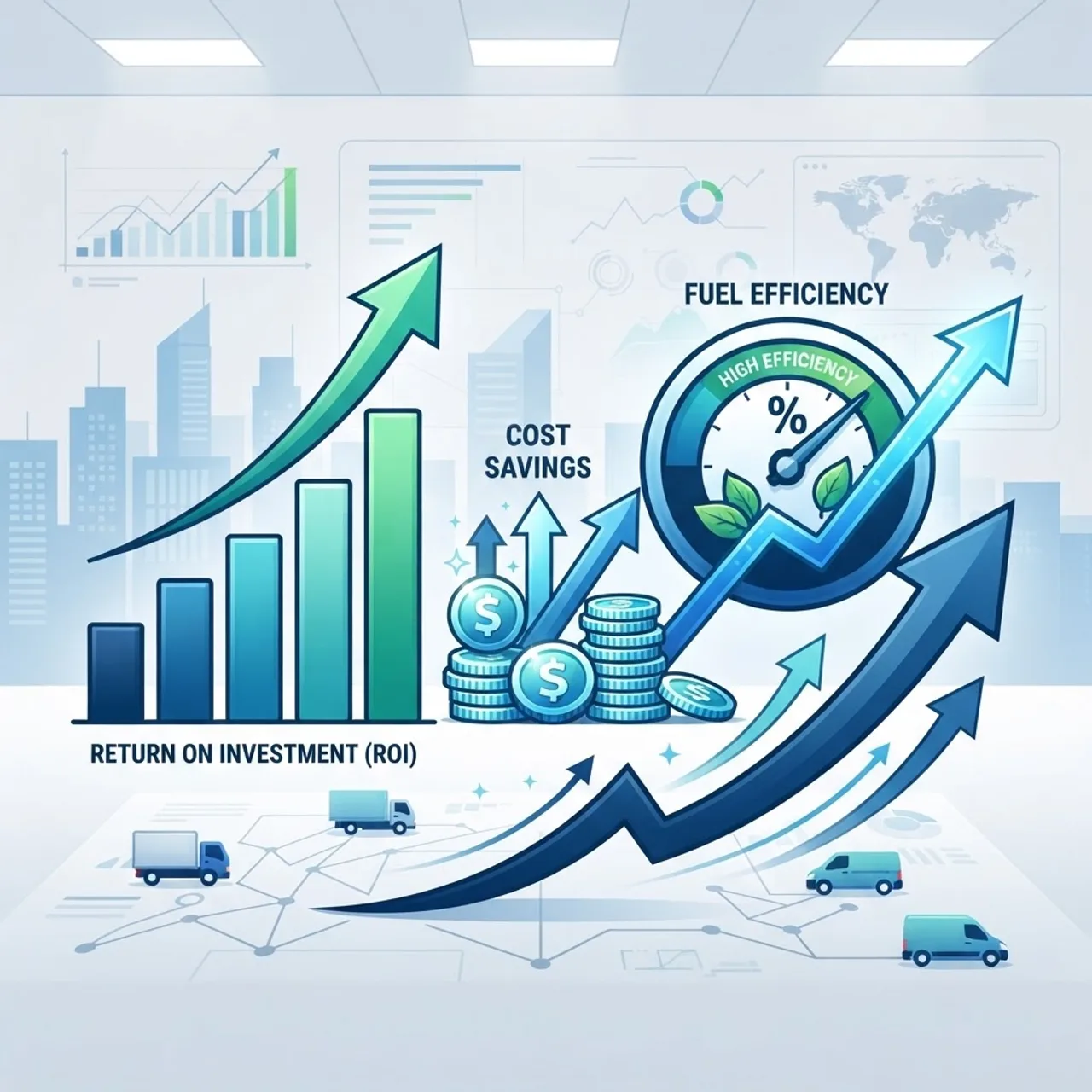
Return on investment is the ultimate test of any fleet AI system. To calculate it honestly, add the total annual cost of the solution and compare it against quantifiable savings: reduced fuel spend, fewer breakdowns, lower insurance premiums from safer driving, and recovered productive hours. A practical benchmark is that applied AI should return at least three dollars for every dollar invested within the first year, or it is not solving a costly enough problem.
Be skeptical of soft benefits that cannot be measured. Improved visibility and better dashboards are nice, but they do not pay wages. Anchor your ROI to figures your finance team already tracks, and revisit the calculation quarterly as the model improves and adoption deepens.
Common Mistakes to Avoid
Most failed fleet AI projects share the same avoidable errors. First, buying a platform before defining a metric leads to features nobody uses. Second, skipping the data audit produces unreliable predictions that erode trust. Third, deploying fleet-wide without a pilot magnifies mistakes and wastes capital. Fourth, ignoring driver buy-in guarantees low adoption regardless of how strong the technology is. Finally, treating AI as a one-time purchase rather than a continuously improving system means you never capture its compounding value.
Implementation Roadmap
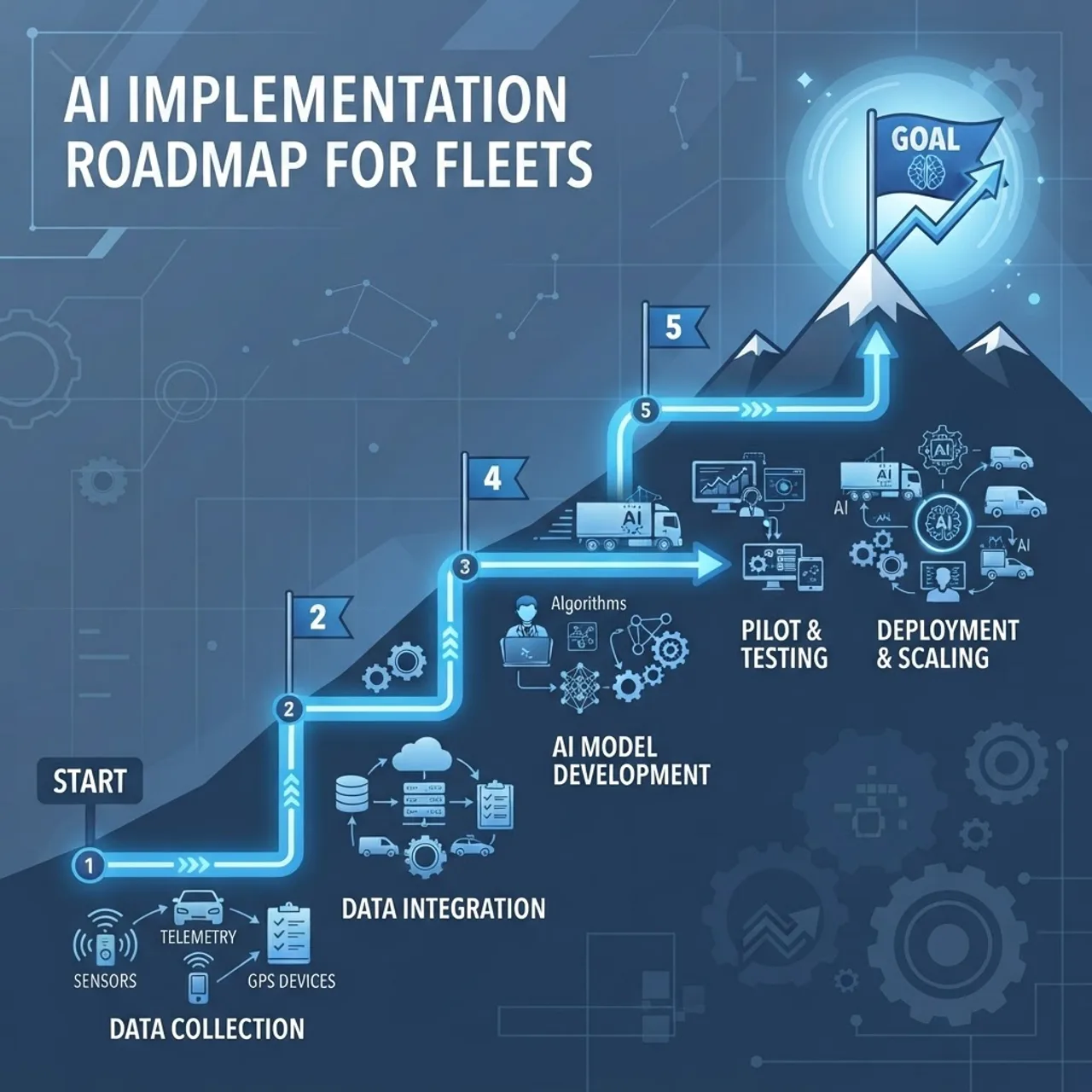
Moving from evaluation to deployment works best in phases. Begin with a single high-cost problem, prove value with a small pilot, then expand one use case at a time. Integrate telematics data early, train your team thoroughly, and set review checkpoints every 90 days. This staged approach keeps risk low while building organizational confidence, and it lets you kill underperforming features before they drain your budget.
Key Takeaways
- Applied AI must connect to a measurable business metric such as cost per mile, downtime, or accident rate to be worth adopting.
- Predictive maintenance can cut maintenance costs by 10 to 40 percent and downtime by up to 50 percent, per McKinsey research.
- Fuel and maintenance make up roughly 60 percent of fleet operating costs, so small AI-driven gains compound quickly.
- The four pillars to evaluate are predictive maintenance, route optimization, driver safety, and telematics data quality.
- Always run a scoped pilot with a clear baseline before scaling AI across the entire fleet.
- Target a minimum three-to-one first-year ROI, and anchor it to numbers your finance team already tracks.
Frequently Asked Questions (FAQ)
What does it mean to evaluate a fleet on applied artificial intelligence?
It means measuring how effectively targeted AI systems improve specific operations like maintenance, routing, and safety. Rather than judging AI on hype, you score it against real metrics such as fuel savings, uptime, and accident reduction, adopting only the tools that produce measurable, repeatable financial results.
Is AI worth it for small fleets?
Yes, small fleets often see faster returns because a single prevented breakdown or accident represents a large share of their budget. Start with one high-impact use case, such as predictive maintenance, run a small pilot, and expand only after you confirm measurable savings against a clear baseline.
How much can AI actually save a fleet?
Savings vary by fleet, but McKinsey research shows predictive maintenance alone can reduce maintenance costs by 10 to 40 percent and downtime by up to 50 percent. Combined with route optimization and safer driving, well-implemented applied AI commonly targets a three-to-one or greater first-year return.
What data do I need before adopting fleet AI?
You need consistent telematics data, ideally six months or more, covering location, speed, fuel, and engine diagnostics. Clean, continuous data is essential because AI models learn from history. A data audit should always come first, since poor data produces confident but inaccurate predictions.
How long does it take to see results from fleet AI?
Most applied AI use cases show measurable results within 60 to 90 days when deployed with a clear baseline. Predictive maintenance and safety monitoring often deliver the fastest returns, while route optimization benefits compound as the model learns your specific routes and traffic patterns.
Final Thoughts
Evaluating a fleet on applied artificial intelligence is fundamentally a discipline, not a purchase. The operators who win treat every AI feature as a hypothesis to be tested against real numbers, pilot before they scale, and measure ROI relentlessly. Do that, and AI stops being a buzzword and becomes one of the most reliable levers you have for cutting costs and improving safety. Approach it with the same rigor you bring to any other capital decision, and the technology will earn its place in your operation.