
A complete guide to Purdue's ECE 57000 Artificial Intelligence course: topics, prerequisites, study strategy, tools, and the careers it prepares you for.
ECE 57000 - Artificial Intelligence

If you are searching for ECE 57000 - Artificial Intelligence, you are almost certainly a graduate student (or a curious professional) trying to understand what this course actually covers, how hard it is, and whether it will prepare you for real AI work. ECE 57000 is Purdue University's graduate-level introduction to artificial intelligence, and it has become one of the most requested electives in the College of Engineering because it blends classical AI theory with modern machine learning practice.
This guide is written from the perspective of people who have taken graduate AI courses and who build production machine learning systems. Instead of repeating a syllabus verbatim, we explain what each topic means, why it matters, and how to study it efficiently so you leave with skills you can use.
Quick Answer: ECE 57000 is Purdue University's graduate Artificial Intelligence course covering search, probabilistic reasoning, machine learning, and deep learning. It combines mathematical theory with hands-on Python programming, requires linear algebra and probability, and prepares students for research and industry roles in AI and machine learning.
What Is ECE 57000?
ECE 57000 is a three-credit graduate course offered by Purdue's School of Electrical and Computer Engineering. It serves as the foundational AI course for master's and PhD students and is frequently the first formal exposure engineers get to the mathematics behind intelligent systems.
Definition: Artificial Intelligence, in the context of this course, is the study of algorithms that allow machines to perceive, reason, learn, and make decisions under uncertainty. ECE 57000 treats AI as a rigorous engineering discipline rather than a buzzword.
The course typically moves from classical, symbolic AI toward statistical and neural approaches. That progression matters: it mirrors how the field itself evolved and helps you understand why deep learning dominates today while classical methods still power planning, robotics, and optimization.

Core Topics Covered in ECE 57000
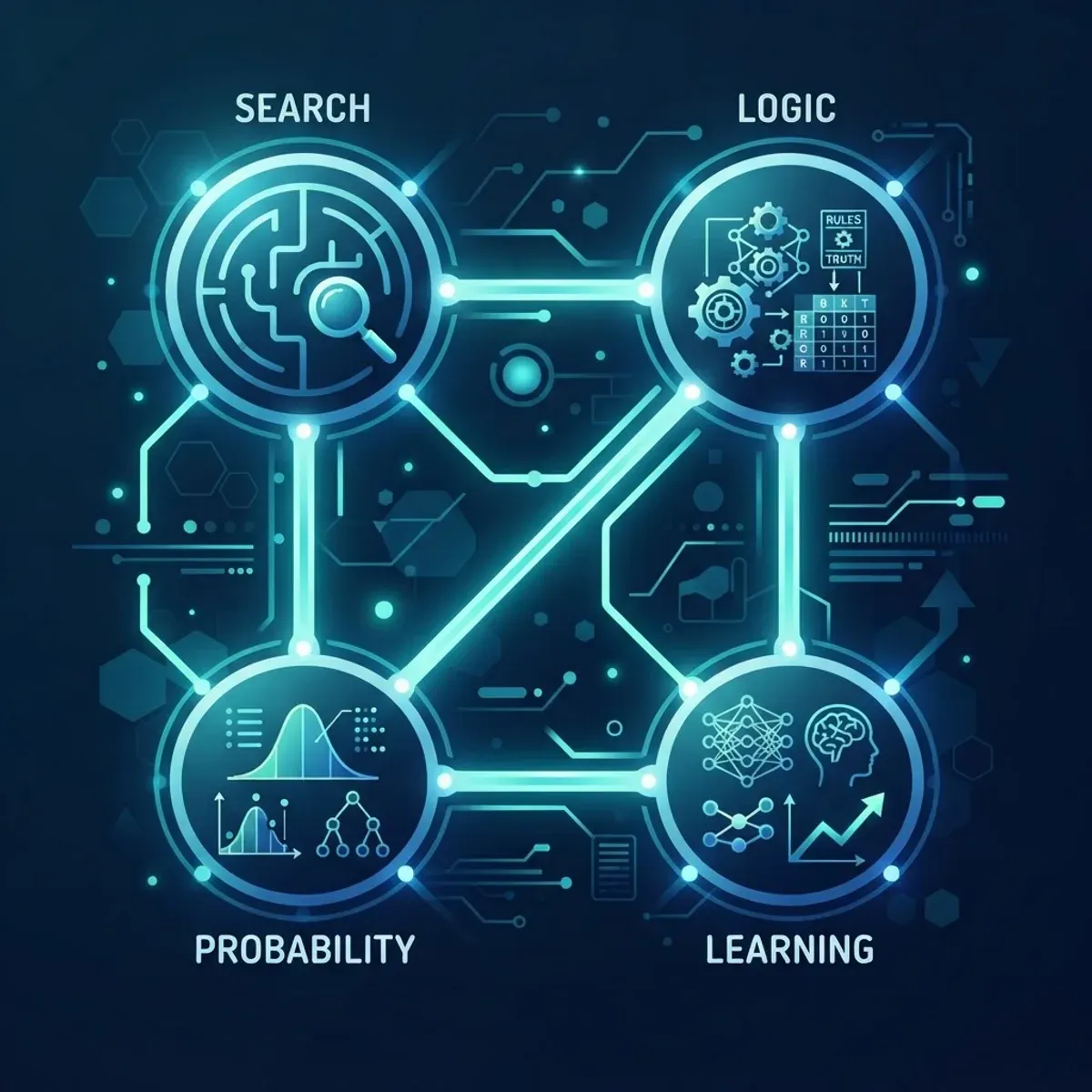
The curriculum varies slightly by instructor and semester, but the backbone stays consistent. Below are the pillars you should expect and master.
1. Search and Problem Solving
The course opens with uninformed and informed search: breadth-first, depth-first, uniform-cost, greedy, and A* search. You learn to model a problem as states, actions, and goals, then find optimal paths efficiently. This section teaches a mindset that reappears everywhere in AI: define the problem precisely before choosing an algorithm.
2. Probabilistic Reasoning
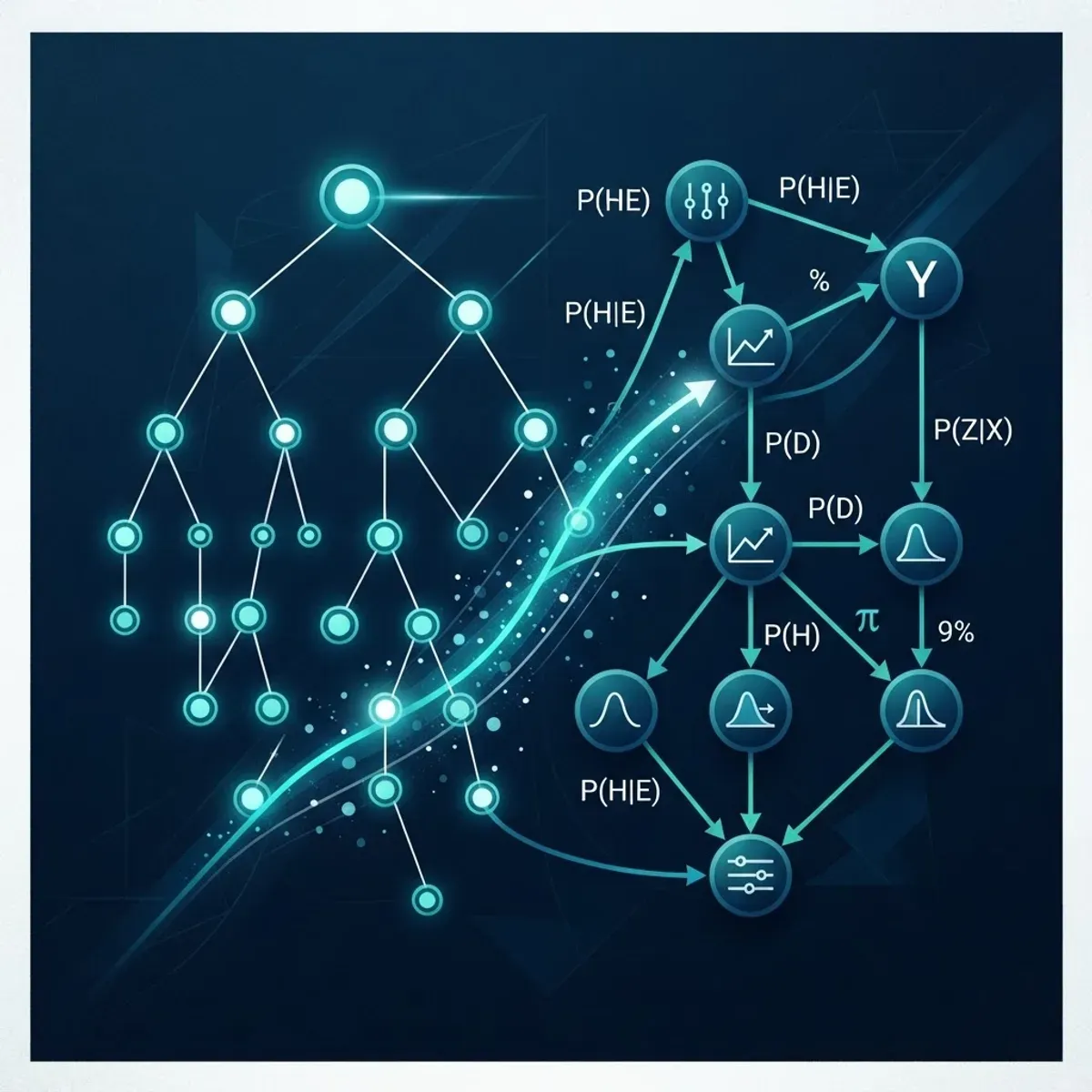
Next comes reasoning under uncertainty using probability theory, Bayes' rule, and Bayesian networks. This is where many students first appreciate that AI is fundamentally about managing incomplete information. Expect to compute conditional probabilities by hand before scaling to graphical models.
3. Machine Learning Fundamentals
The heart of the course. You cover supervised learning (regression, classification), unsupervised learning (clustering, dimensionality reduction), overfitting, regularization, bias-variance tradeoff, and evaluation metrics. Optimization methods such as gradient descent are introduced here because every modern model depends on them.

4. Neural Networks and Deep Learning
The final third typically introduces perceptrons, multilayer networks, backpropagation, convolutional neural networks, and often an introduction to modern architectures. You implement and train networks, gaining intuition for why depth, activation functions, and initialization matter.

Prerequisites: What You Need Before Enrolling
ECE 57000 is mathematically demanding. Students who struggle almost always lack the prerequisites rather than the intelligence. Make sure you are comfortable with the following before day one.
- Linear algebra: matrices, vectors, eigenvalues, and matrix operations.
- Probability and statistics: distributions, expectation, conditional probability, and Bayes' theorem.
- Calculus: partial derivatives and the chain rule (essential for backpropagation).
- Programming: proficiency in Python, ideally with NumPy.
According to Stanford's foundational AI curriculum, roughly 70% of early struggle in graduate AI courses traces back to weak probability and linear algebra skills, not to the AI concepts themselves. Refreshing these areas beforehand pays off enormously.
ECE 57000 vs. a General Online AI Course
Many learners wonder whether a formal course like ECE 57000 is worth it compared to a self-paced online class. The table below compares them honestly.
| Factor | ECE 57000 (Graduate Course) | Typical Online AI Course |
|---|---|---|
| Depth of theory | High, proof-based | Low to medium |
| Programming rigor | Graded, structured assignments | Optional exercises |
| Accountability | Deadlines, exams, grades | Self-paced |
| Research readiness | Strong | Limited |
| Credential value | Graduate transcript | Certificate |
| Cost | Tuition | Low or free |
The takeaway: ECE 57000 delivers depth, accountability, and research readiness that most online courses cannot match, while online courses win on flexibility and cost. If you aim for research or advanced engineering roles, the structured course is the stronger foundation.
How to Succeed in ECE 57000: A Practical Study Roadmap
Based on how strong students approach graduate AI, here is a study plan that consistently works.
- Front-load the math. Spend the first two weeks refreshing linear algebra and probability so lectures feel additive, not overwhelming.
- Implement everything from scratch once. Code A* search, logistic regression, and a small neural network without high-level libraries. This builds durable intuition.
- Keep a formula-to-code notebook. For every equation, write the matching Python line. This bridges theory and practice quickly.
- Do the assignments early. Debugging machine learning code takes longer than expected; starting early prevents last-minute failure.
- Form a study group. Explaining backpropagation to a peer is the fastest way to confirm you truly understand it.

Tools and Frameworks You Will Use
Expect a Python-centric workflow. Most assignments rely on NumPy for foundational implementations, then progress to frameworks like PyTorch or TensorFlow for deep learning. Jupyter notebooks are the standard environment for experimentation, while Matplotlib helps visualize decision boundaries and loss curves.
Understanding these tools deeply is exactly what makes graduates employable. Companies do not just want people who know theory; they want engineers who can ship working models. If your organization needs that expertise applied to real products, teams like ZoneTechify's artificial intelligence services and WebPeak's AI services turn these same concepts into deployed solutions.
Why ECE 57000 Matters for Your Career
AI expertise is among the most in-demand skills in technology. According to the World Economic Forum's Future of Jobs data, AI and machine learning specialists rank among the fastest-growing roles worldwide, with demand projected to keep rising through the decade. A rigorous course like ECE 57000 signals to employers and admissions committees that you understand AI at a level deeper than tutorials provide.
Graduates of foundational AI courses commonly move into roles such as machine learning engineer, data scientist, research scientist, computer vision engineer, and AI product developer. The mathematical maturity you build also makes advanced electives, such as reinforcement learning or natural language processing, far more approachable.

Common Mistakes Students Make
Avoiding a few predictable errors dramatically improves your outcome.
- Memorizing instead of understanding. AI exams test reasoning, not recall. Learn why an algorithm works.
- Ignoring the math. Skipping derivations makes deep learning feel like magic and breaks down during debugging.
- Copying assignment code. You forfeit the intuition that interviews and research demand.
- Underestimating compute time. Training models takes time; plan around it.
Key Takeaways
- ECE 57000 is Purdue's graduate Artificial Intelligence course covering search, probabilistic reasoning, machine learning, and deep learning.
- Prerequisites include linear algebra, probability, calculus, and Python programming; weak math is the top cause of struggle.
- The course emphasizes implementing algorithms from scratch, which builds durable, job-ready intuition.
- Structured graduate courses offer more depth and research readiness than most self-paced online alternatives.
- AI and machine learning specialists are among the fastest-growing roles globally, making this foundation career-relevant.
Frequently Asked Questions (FAQ)
Is ECE 57000 hard?
ECE 57000 is challenging but manageable with the right preparation. The difficulty comes mainly from its mathematical rigor rather than the AI concepts. Students strong in linear algebra, probability, and Python usually cope well. Those who refresh the prerequisites before the semester consistently report a much smoother experience.
What are the prerequisites for ECE 57000?
You need solid linear algebra, probability and statistics, and calculus, plus practical programming skills in Python. Familiarity with NumPy is strongly recommended. These prerequisites matter because concepts like backpropagation and Bayesian reasoning depend directly on partial derivatives and conditional probability rather than on prior AI experience.
Do I need coding experience for ECE 57000?
Yes, coding experience is essential. Assignments require implementing AI algorithms in Python, from search routines to neural networks. You do not need to be an expert software engineer, but you should comfortably write functions, handle arrays, and debug code independently before the course begins for the best results.
What can I do after taking ECE 57000?
After completing ECE 57000, you can pursue roles such as machine learning engineer, data scientist, or research assistant. It also prepares you for advanced electives like deep learning, computer vision, and reinforcement learning. The mathematical foundation makes both industry work and graduate research significantly more accessible.
Is ECE 57000 better than an online AI course?
For depth, accountability, and research readiness, ECE 57000 outperforms most online courses because it is proof-based, graded, and structured. Online courses win on flexibility and cost. If your goal is advanced engineering or research, the formal course provides a stronger, more credible foundation.
How much math is in ECE 57000?
A significant amount. Expect linear algebra, probability, and calculus throughout, especially when deriving gradient descent and backpropagation. The math is not optional; it is the language the course uses to explain why AI algorithms work. Strengthening these skills early is the single best way to succeed.