A practical, expert guide to modernizing your Security Operations Center with AI, covering detection, automation, SIEM integration, and a step-by-step roadmap.
Best Practices for Modernizing SOC with Artificial Intelligence
Security Operations Centers were built for a slower threat landscape. Today, analysts drown in alerts, attackers move in minutes, and legacy rule-based tooling simply cannot keep pace. Modernizing your SOC with artificial intelligence is no longer a competitive advantage — it is a survival requirement. This guide draws on real deployment experience to show you exactly how to do it well, without the hype and without the costly mistakes teams commonly make.
Quick Answer: To modernize a SOC with artificial intelligence, integrate AI into detection, triage, and response layers gradually. Start with high-volume, low-risk tasks like alert enrichment and correlation, connect AI to your SIEM and SOAR, keep human analysts in the loop, and measure results using mean time to detect and respond.
What Does It Mean to Modernize a SOC with AI?
Modernizing a SOC with AI means embedding machine learning and automation into the core workflows of threat detection, investigation, and response so the center operates faster and with less manual effort. It is not about replacing analysts — it is about removing repetitive work so skilled people focus on real decisions.
Security Operations Center (SOC): A centralized team and technology stack responsible for continuously monitoring, detecting, and responding to cybersecurity threats across an organization.
AI-driven SOC: A SOC where machine learning handles pattern recognition, anomaly detection, and routine triage, while humans handle judgment, escalation, and strategy.
The distinction matters because many teams buy an "AI security tool" and expect transformation. Real modernization is architectural: AI must touch data ingestion, correlation, prioritization, and response — not just sit in one dashboard.
Why AI Modernization Is Now Urgent
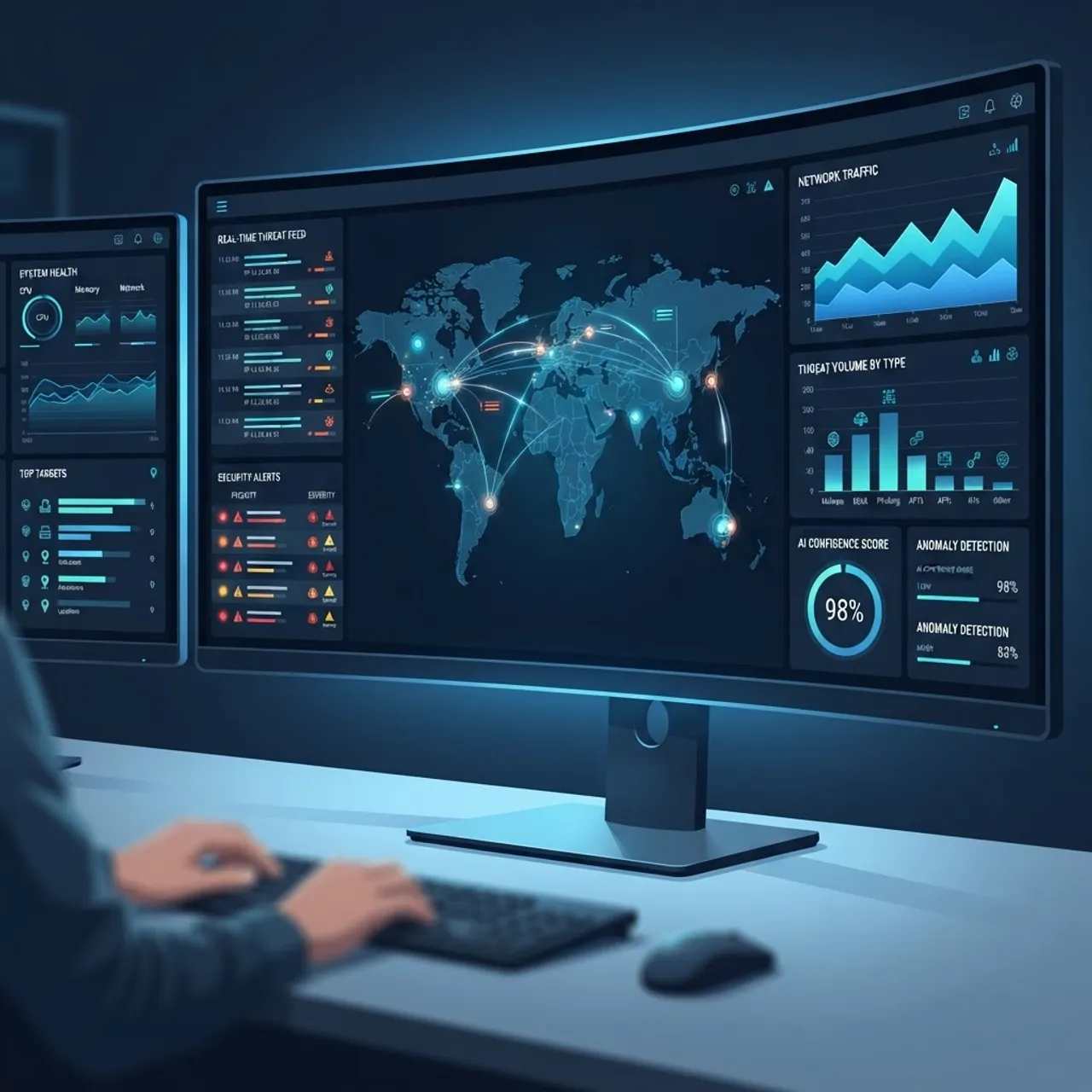
The economics of security have shifted. According to IBM's Cost of a Data Breach report, organizations that extensively deploy security AI and automation save an average of USD 1.76 million per breach and identify breaches over 100 days faster than those without it. That is a measurable, citable return — not a marketing claim.
The alert problem is equally stark. Industry research consistently shows that a large share of SOC teams report analyst burnout and that a significant percentage of daily alerts go uninvestigated because volume exceeds human capacity. When alerts pile up, dwell time grows, and dwell time is precisely what attackers exploit.
If your organization needs help executing a modernization program, specialized cybersecurity services can accelerate the transition while your internal team stays focused on daily operations.
Best Practice 1: Start with High-Value, Low-Risk Use Cases
Do not begin by handing AI autonomous response authority. Begin where AI delivers immediate value with minimal downside:
- Alert enrichment — automatically add threat intelligence, asset context, and user history to every alert.
- Deduplication and correlation — group thousands of related alerts into single, coherent incidents.
- Automated triage — score and rank alerts so analysts see the most dangerous ones first.
- Log summarization — convert noisy raw logs into readable investigation timelines.
These use cases build trust in the system and produce quick, visible wins. In practice, teams that start here see analyst workload drop within the first quarter, which builds the internal support needed for deeper automation later.
Best Practice 2: Integrate AI Directly into Your SIEM and SOAR
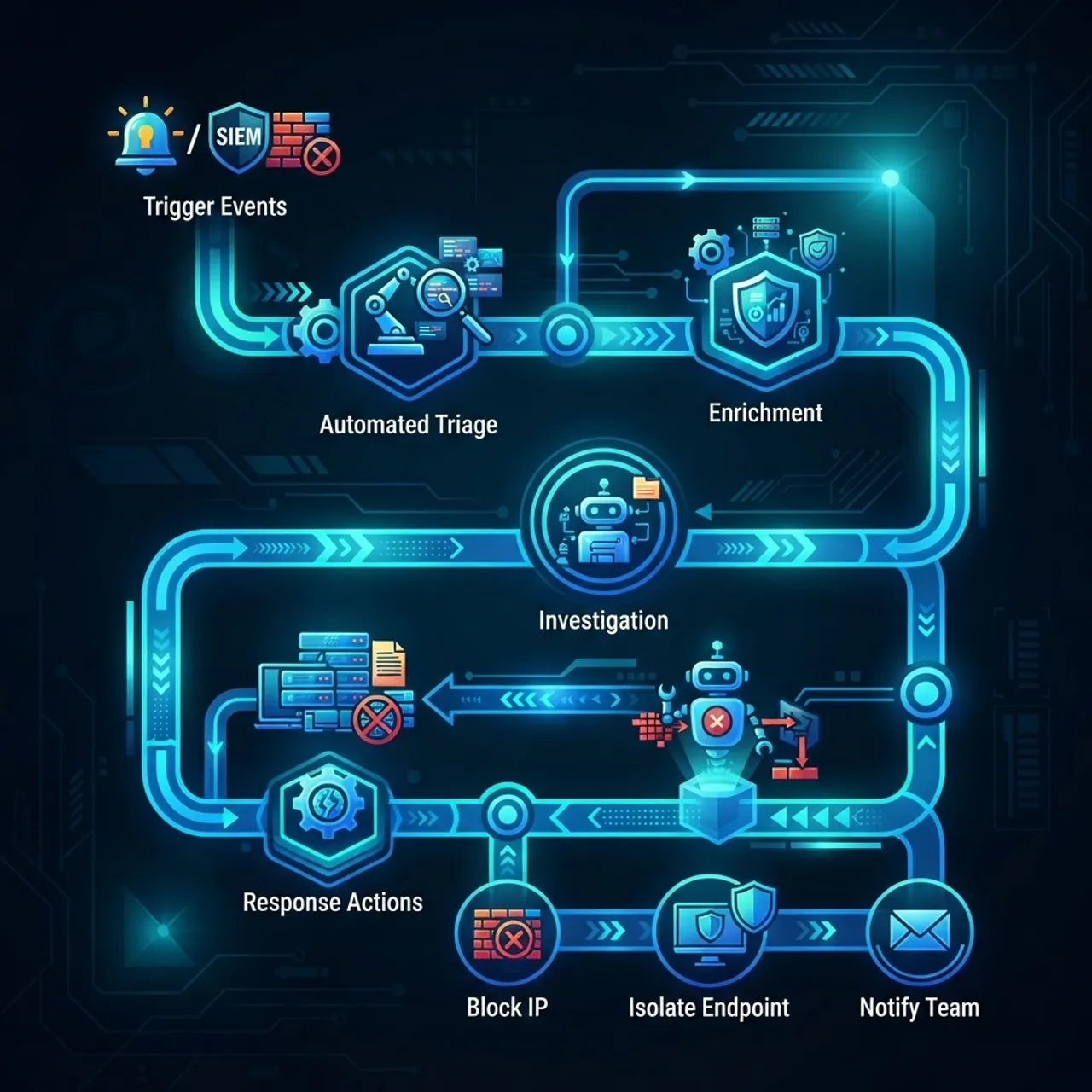
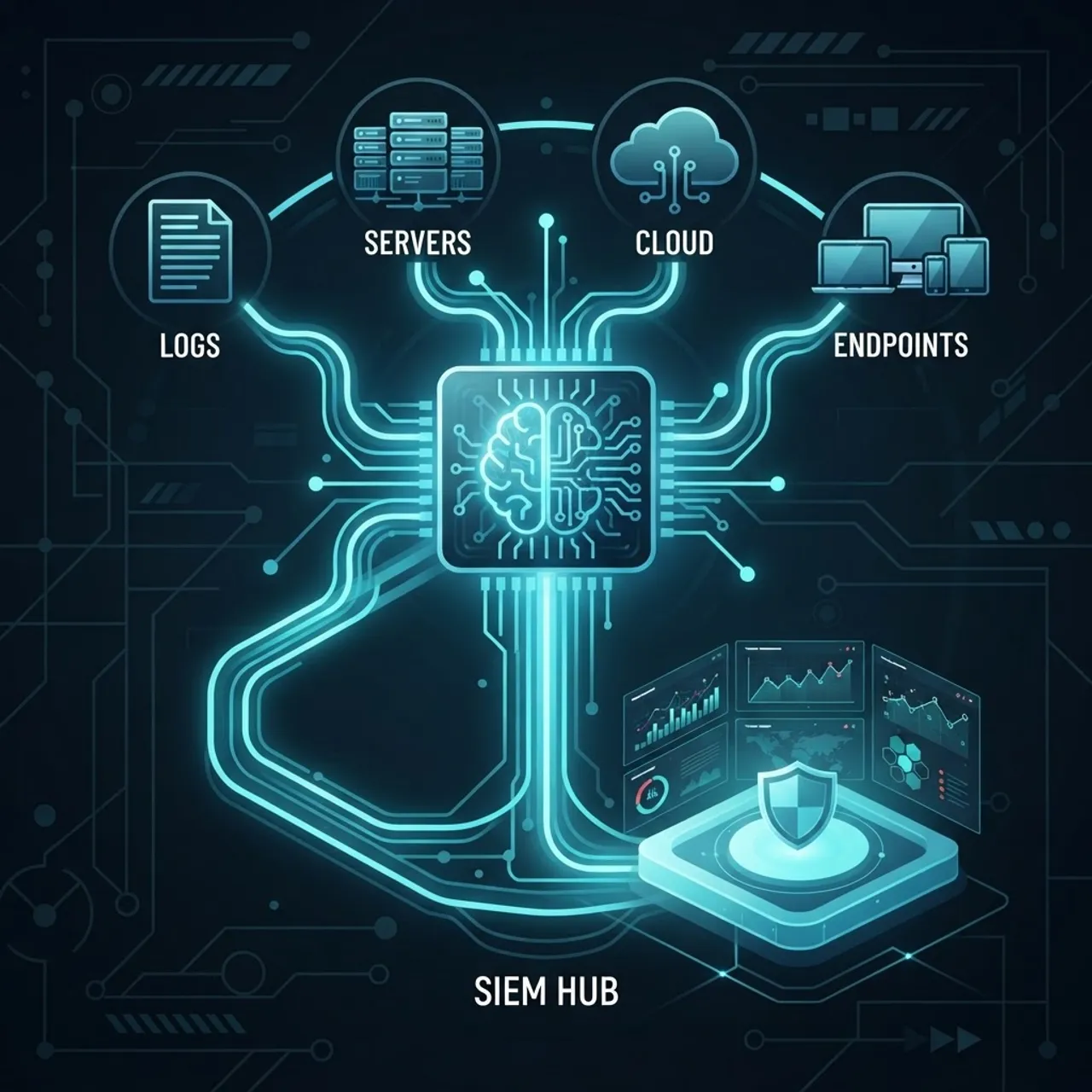
AI that lives in a silo produces insights nobody acts on. The highest-performing modern SOCs connect AI directly into their SIEM (Security Information and Event Management) and SOAR (Security Orchestration, Automation, and Response) platforms so intelligence flows straight into action.
SIEM: The platform that aggregates and correlates security event data from across your environment.
SOAR: The layer that executes automated playbooks — isolating a host, disabling an account, or opening a ticket — based on defined triggers.
When AI feeds enriched, prioritized incidents into SOAR playbooks, you shorten the gap between detection and containment dramatically. The goal is a closed loop: detect, decide, act, learn.
Best Practice 3: Keep Humans in the Loop
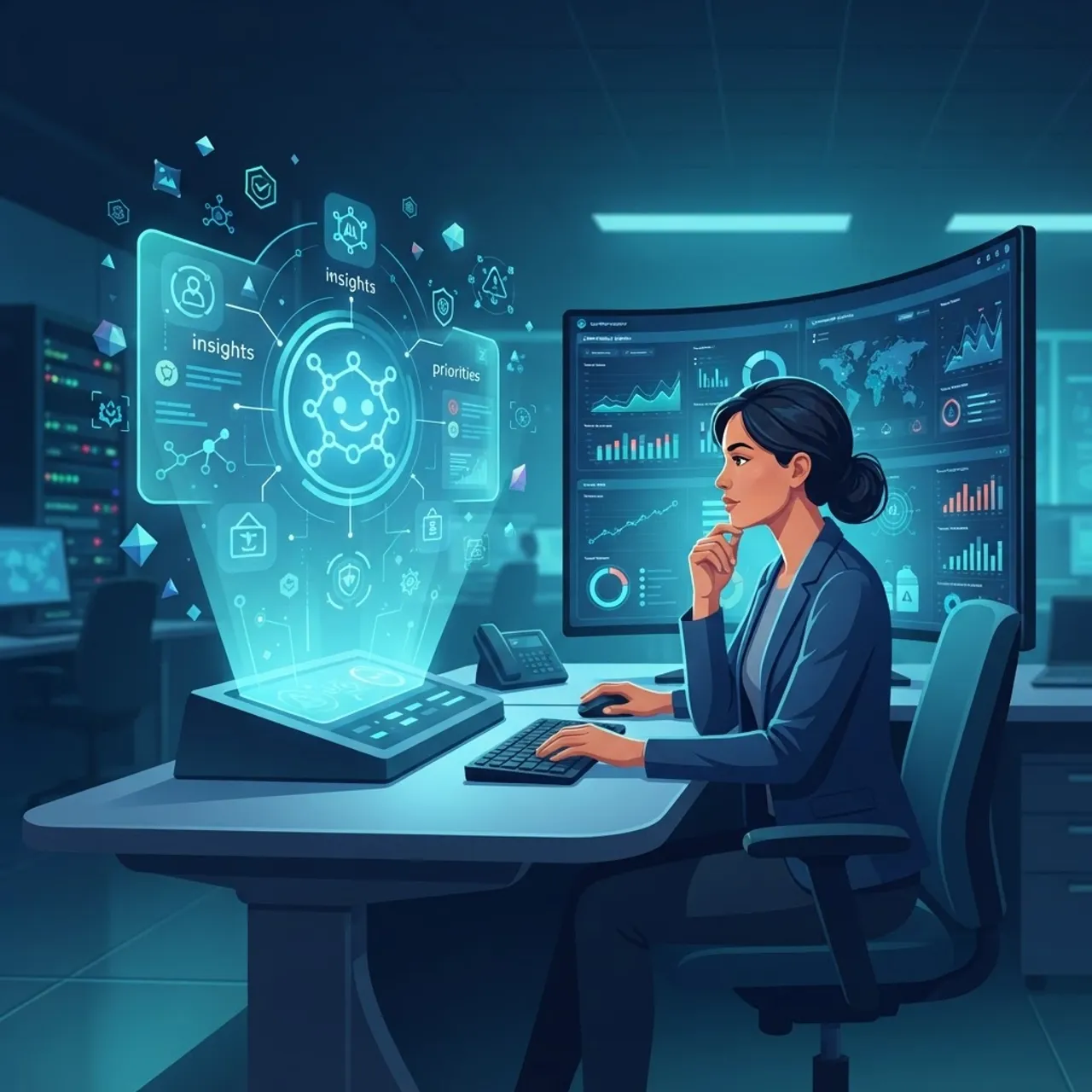
Fully autonomous SOCs remain a marketing fantasy for most organizations. The proven model is human-in-the-loop, where AI handles scale and speed while analysts retain authority over consequential actions.
Good practice is to tier your automation by risk:
- Auto-execute: low-risk, reversible actions (enrichment, tagging, notifications).
- Recommend and confirm: medium-risk actions (blocking an IP, quarantining a file) that an analyst approves in one click.
- Analyst-only: high-impact actions (shutting down production systems) that always require human judgment.
This approach preserves trust, prevents automation from causing outages, and keeps accountability clear — a critical factor for compliance and audit readiness.
Best Practice 4: Feed AI Clean, Unified Data
AI is only as good as the data behind it. Fragmented logs, inconsistent formats, and blind spots produce false positives and missed threats. Before scaling AI, invest in data hygiene:
- Normalize log formats across endpoints, cloud, network, and identity sources.
- Ensure full visibility — AI cannot detect what it never sees.
- Maintain an accurate asset inventory so context is reliable.
- Continuously retrain models on your own environment, not just vendor defaults.
A model tuned to your organization's normal behavior detects anomalies far more accurately than a generic one. This is where the difference between a noisy tool and a trustworthy system is decided.
Best Practice 5: Measure What Actually Matters
Modernization without metrics is guesswork. Track outcomes that reflect real security improvement, not vanity numbers.
| Metric | What It Measures | Why AI Improves It |
|---|---|---|
| MTTD (Mean Time to Detect) | Speed of identifying threats | AI spots anomalies in real time |
| MTTR (Mean Time to Respond) | Speed of containment | Automated playbooks act instantly |
| Alert-to-incident ratio | Noise reduction | AI correlates and deduplicates alerts |
| False positive rate | Accuracy of detection | Tuned models reduce wasted effort |
| Analyst hours per incident | Operational efficiency | Automation removes manual triage |
Establish a baseline before deployment, then compare quarter over quarter. If MTTD and MTTR are not falling, your AI is not modernizing anything — it is just adding cost.
Best Practice 6: Address AI Risk and Governance
AI introduces new risks: model drift, adversarial manipulation, and false confidence. Treat your AI systems as assets that must themselves be secured and governed.
- Explainability: analysts must understand why AI flagged something, or they will ignore it.
- Bias and drift monitoring: review model performance regularly as your environment changes.
- Adversarial awareness: attackers may attempt to poison training data or evade detection.
- Compliance alignment: document AI decisions to satisfy auditors and regulators.
Governance is not bureaucracy — it is what makes AI defensible when leadership, auditors, or regulators ask hard questions.
A Practical SOC Modernization Roadmap
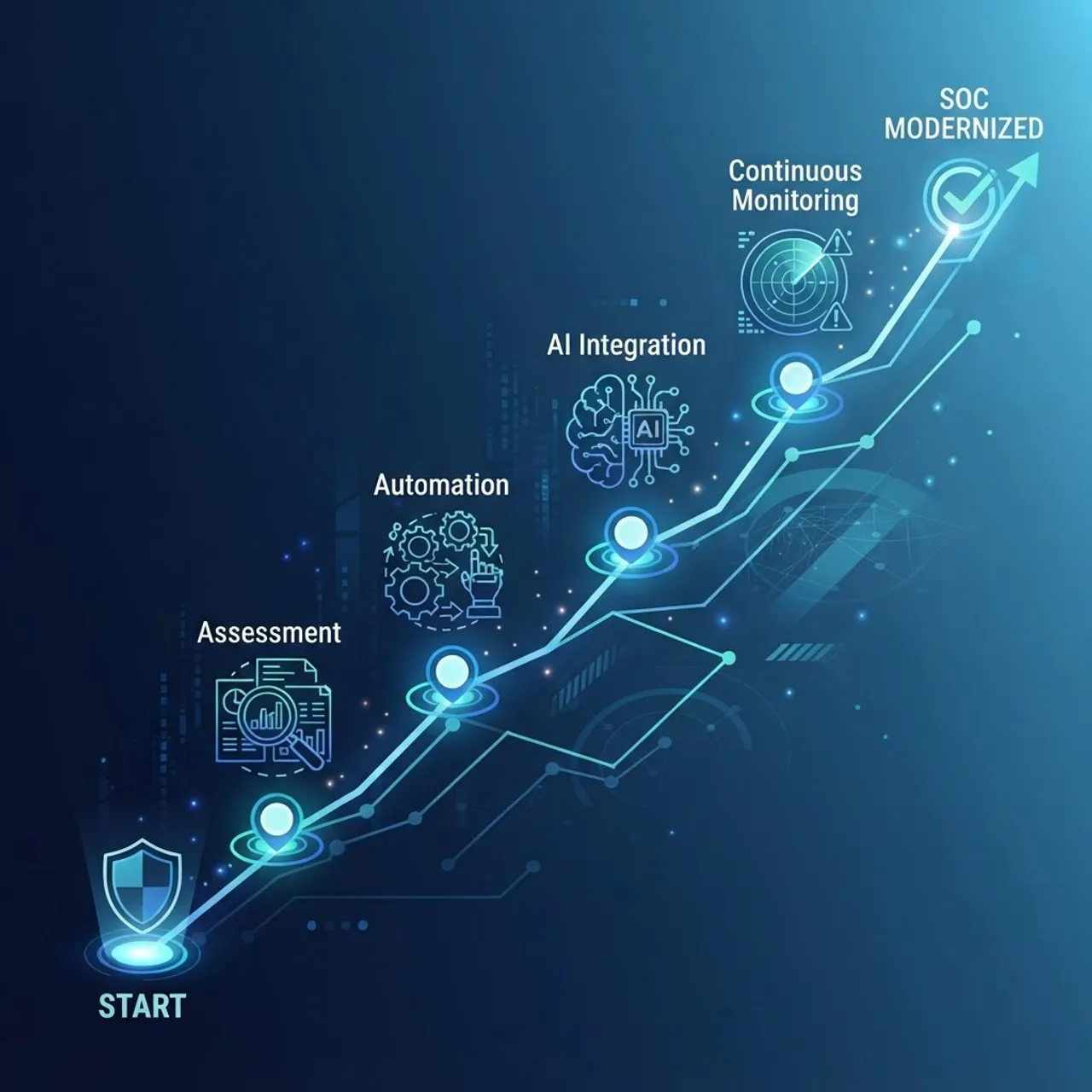
Use this phased sequence to modernize without disrupting operations:
- Assess — audit current tooling, data sources, and analyst pain points.
- Unify data — consolidate and normalize telemetry into your SIEM.
- Deploy AI on triage — start with enrichment and prioritization.
- Automate response — add tiered SOAR playbooks with human approval.
- Measure and tune — track MTTD, MTTR, and false positives.
- Scale and govern — expand automation with strong oversight.
Organizations that follow a staged approach see stronger adoption than those attempting a "big bang" rollout, because analysts trust systems they helped shape.
The Future of the AI-Driven SOC
The trajectory is clear: SOCs are moving toward agentic AI systems that investigate incidents end to end and propose fully reasoned responses, with humans supervising rather than executing every step. Generative AI is already accelerating investigations by writing queries, summarizing incidents in plain language, and drafting reports.
Organizations building AI capability now — with the help of dedicated AI services — will be positioned to adopt these advances safely, while laggards will struggle to catch up as attackers weaponize AI on their side too.

Key Takeaways
- Organizations using security AI and automation extensively save an average of USD 1.76 million per breach and detect breaches over 100 days faster (IBM).
- Modernization is architectural — AI must span detection, triage, and response, not sit in one dashboard.
- Start with low-risk use cases like alert enrichment before automating consequential actions.
- Integrate AI directly into SIEM and SOAR to close the loop between detection and containment.
- Keep humans in the loop with risk-tiered automation to prevent outages and preserve accountability.
- Measure MTTD, MTTR, and false positive rates to prove real improvement.
Frequently Asked Questions (FAQ)
What is an AI-driven SOC?
An AI-driven SOC is a Security Operations Center where machine learning handles pattern recognition, anomaly detection, and routine alert triage, while human analysts focus on judgment, escalation, and strategy. AI increases speed and scale without removing human accountability for high-impact security decisions.
Will AI replace SOC analysts?
No. AI removes repetitive work like triage and log analysis, but analysts remain essential for investigation, judgment, and response decisions. The proven model is human-in-the-loop, where AI handles scale and speed while people retain authority over consequential and irreversible security actions.
How do I start modernizing my SOC with AI?
Begin with high-value, low-risk use cases such as alert enrichment, correlation, and automated triage. Unify and normalize your data first, integrate AI into your SIEM, then gradually add SOAR playbooks with human approval, measuring results with detection and response time metrics.
How does AI reduce alert fatigue in a SOC?
AI reduces alert fatigue by correlating and deduplicating thousands of related alerts into single incidents, enriching them with context, and ranking them by risk. Analysts then see fewer, more meaningful alerts, which cuts wasted investigation time and lowers burnout across the team.
What metrics prove AI modernization is working?
Track mean time to detect (MTTD), mean time to respond (MTTR), the alert-to-incident ratio, false positive rate, and analyst hours per incident. Establish a baseline before deployment, then compare quarter over quarter. Falling MTTD and MTTR are the clearest signs of real progress.
Final Thoughts
Modernizing a SOC with artificial intelligence is a journey of disciplined steps, not a single purchase. Prioritize clean data, start small, keep humans in control, and measure relentlessly. Done right, AI transforms your SOC from a reactive, overwhelmed function into a fast, focused, and resilient defense. For hands-on help with strategy and implementation, explore ZoneTechify and WebPeak.