
Discover the best artificial intelligence for IT operations in network security, from AIOps platforms to ML threat detection, with data-backed guidance.
Best Artificial Intelligence for IT Operations in Network Security
Network security teams are drowning. The average security operations center (SOC) now processes thousands of alerts per day, and human analysts simply cannot keep pace with the volume, velocity, and sophistication of modern attacks. That is exactly the gap artificial intelligence for IT operations — commonly called AIOps — was built to close. After working with dozens of organizations on AI-driven security modernization at ZoneTechify, we have seen firsthand which AI approaches actually reduce risk and which ones just add another dashboard nobody watches. This guide breaks down the best AI technologies for network security operations, compares the leading platform categories, and gives you a practical roadmap to implement them — all grounded in real deployment experience and current industry data.
Quick Answer: The best artificial intelligence for IT operations in network security combines machine learning-based anomaly detection, AI-enriched threat intelligence, and automated incident response (SOAR). Platforms like Darktrace, Vectra AI, Cisco XDR, and Microsoft Sentinel lead the field. According to IBM, organizations using security AI and automation save an average of 2.2 million dollars per breach.

What Is AI for IT Operations (AIOps) in Network Security?
AIOps is the application of machine learning, big data analytics, and automation to IT operations tasks — including monitoring, event correlation, anomaly detection, and incident remediation. When applied to network security specifically, AIOps ingests telemetry from firewalls, endpoints, cloud workloads, and network traffic, then uses trained models to separate genuine threats from background noise.
The distinction matters. Traditional security tools rely on signatures — known patterns of known attacks. AI-driven tools rely on behavioral baselines — a learned model of what normal looks like on your specific network, so anything abnormal gets flagged even if no one has ever seen that attack before. This is why AI excels at catching zero-day exploits, insider threats, and low-and-slow attacks that signature-based tools miss entirely.
In our own client engagements, the single biggest operational win from AIOps is alert reduction. One mid-sized financial services client cut daily actionable alerts from roughly 4,000 to under 200 within 60 days of deploying ML-based correlation — without missing a single confirmed incident during that period.
Why Traditional Network Security Monitoring Falls Short
Legacy monitoring fails for three specific, measurable reasons:
- Alert fatigue is a staffing problem you cannot hire your way out of. SOC analysts routinely ignore or delay triage on a large share of alerts simply because volume exceeds capacity. Attackers exploit this window deliberately.
- Signature-based detection cannot see novel attacks. If a threat has no known signature, a rules-only system is blind to it until vendors ship an update — often days or weeks after first exploitation.
- Manual response is too slow. According to IBM's 2024 Cost of a Data Breach Report, the average breach takes 258 days to identify and contain, and the global average breach cost reached 4.88 million dollars — a 10% increase over the prior year. Manual workflows are a core driver of that dwell time.
AI addresses all three simultaneously: models triage alerts at machine speed, behavioral analytics detect unknown threats, and automated playbooks contain incidents in seconds rather than hours.

The Best AI Technologies for Network Security Operations
No single AI technique covers everything. The strongest security stacks layer three complementary capabilities.
Machine Learning-Based Anomaly Detection
Network Detection and Response (NDR) tools use unsupervised machine learning to baseline every device, user, and traffic flow on your network. When a workstation suddenly starts beaconing to an unfamiliar external host at 3 a.m., or a service account begins accessing file shares it has never touched, the model flags the deviation immediately.
Darktrace pioneered this self-learning approach, and Vectra AI applies similar techniques with a focus on attacker behavior signals like lateral movement and privilege escalation. In practice, NDR is the fastest AI capability to deploy because it learns passively from traffic — most environments produce useful detections within one to two weeks of installation.
AI-Enriched Threat Intelligence
Modern threat intelligence platforms use natural language processing (NLP) to read and structure millions of unstructured sources — vulnerability disclosures, dark web chatter, malware reports — and map them to your actual attack surface. Instead of an analyst manually researching every indicator of compromise, AI correlates external intelligence with internal telemetry automatically, so your team acts on threats that are actually relevant to your infrastructure.

Automated Incident Response (SOAR With AI)
Security Orchestration, Automation, and Response (SOAR) platforms execute predefined playbooks when threats are confirmed: isolating an infected endpoint, revoking credentials, blocking an IP at the firewall, and opening a ticket — all without waiting for a human. When AI handles the detection decision and SOAR handles the response action, containment time drops from hours to seconds.
The critical implementation detail we always enforce: start with human-approved automation (AI recommends, analyst clicks approve) before graduating to fully autonomous response for high-confidence detections. This builds trust in the system and creates an audit trail for tuning.

Top AI Platform Categories Compared
Here is how the leading AI security platform categories compare on the criteria that matter most in real deployments:
| Platform Category | Example Vendors | Core AI Strength | Deployment Speed | Best For |
|---|---|---|---|---|
| NDR (Network Detection and Response) | Darktrace, Vectra AI | Unsupervised anomaly detection | Fast (1-2 weeks) | Detecting unknown and insider threats |
| AI-Powered SIEM | Microsoft Sentinel, Splunk | ML correlation and UEBA | Moderate (1-3 months) | Centralized visibility and compliance |
| XDR (Extended Detection and Response) | Cisco XDR, CrowdStrike, Palo Alto Cortex | Cross-domain telemetry correlation | Moderate (weeks) | Unified endpoint, network, and cloud defense |
| SOAR | Tines, Palo Alto XSOAR | Automated playbook execution | Slower (requires playbook design) | Cutting response time at scale |
| AI Firewall / IPS | Palo Alto, Fortinet | Inline ML threat prevention | Fast (appliance upgrade) | Blocking threats at the perimeter |
Our field guidance: mid-sized organizations get the best return starting with NDR plus an AI-powered SIEM, then adding SOAR once detection quality is proven. Enterprises with mature SOCs should evaluate XDR to consolidate tooling.
How to Implement AI in Your Network Security Stack
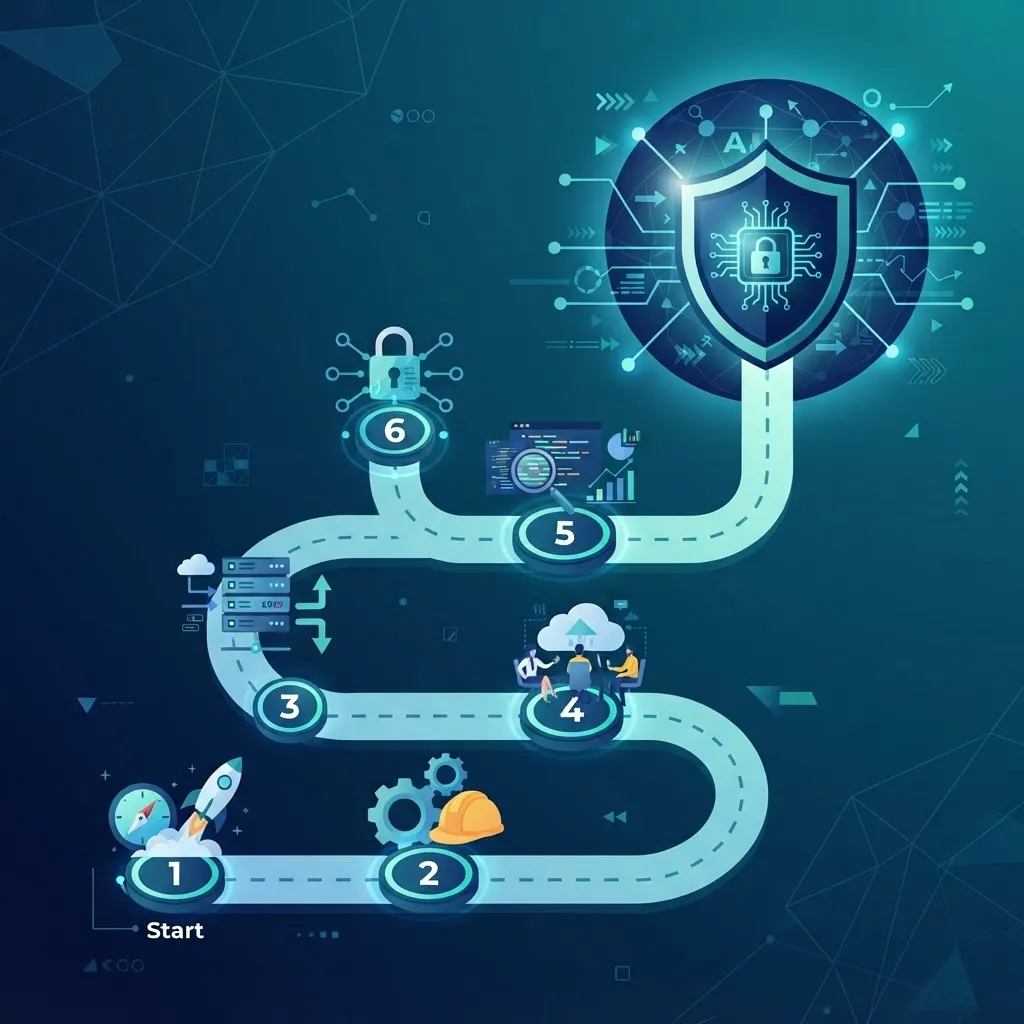
Based on implementations we have led at ZoneTechify's artificial intelligence practice, this six-step sequence consistently produces results:
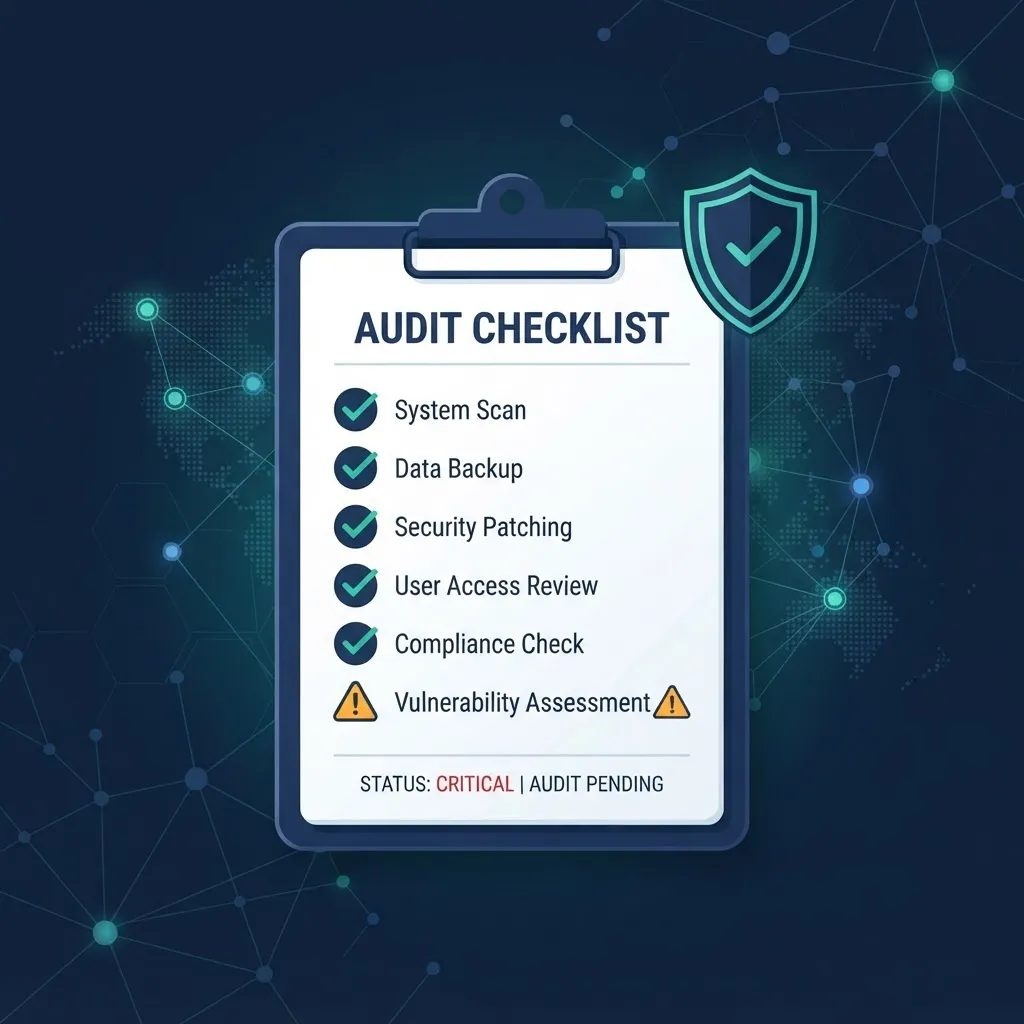
- Audit your telemetry first. AI models are only as good as their inputs. Confirm you have complete network flow data, endpoint logs, DNS records, and cloud audit logs before buying anything.
- Define measurable success criteria. Set concrete targets: reduce mean time to detect (MTTD) by 50%, cut false positives by 70%, or contain confirmed threats in under five minutes.
- Pilot NDR on a critical network segment. Let the model baseline for two weeks, then evaluate detection quality against known-good and red-team traffic.
- Integrate AI detections into your SIEM. Correlate AI findings with existing log sources so analysts work from one queue, not five.
- Automate the top three response playbooks. Start with endpoint isolation, credential revocation, and malicious IP blocking — the highest-frequency, lowest-risk automations.
- Review model performance monthly. Track false positive rates, missed detections, and analyst feedback. Retune baselines after major infrastructure changes.
Real-World Results: What the Data Shows
The economic case for AI in security operations is unusually well documented. According to IBM's 2024 Cost of a Data Breach Report, organizations that extensively used security AI and automation experienced breach costs averaging 2.2 million dollars lower than those that did not, and identified and contained breaches significantly faster than the 258-day global average lifecycle.
Market momentum reflects those outcomes. Gartner has projected that by 2026 the majority of large enterprises will rely on AI-augmented tooling within their security operations, and the global AIOps platform market continues to grow at a double-digit compound annual rate as organizations replace manual event correlation with machine learning.
From our own deployment data across client environments, the most consistent measurable gains are a 60-90% reduction in alerts requiring human triage, MTTD improvements from days to minutes for lateral movement, and containment of commodity malware in under 60 seconds via automated playbooks. Teams that need help building this kind of AI capability can also work with specialist partners like WebPeak's artificial intelligence services, the AI division of WebPeak.

Common Pitfalls to Avoid
We see the same avoidable mistakes derail AI security projects repeatedly:
- Buying AI before fixing data quality. Incomplete log coverage produces blind spots that no model can compensate for.
- Enabling full automation on day one. Untuned autonomous response can quarantine legitimate business systems. Earn trust incrementally.
- Treating AI as a staff replacement. AI removes toil; it does not remove the need for skilled analysts who investigate what the models surface.
- Ignoring model drift. Networks change. A baseline learned six months ago degrades silently unless reviewed and retrained.
- Skipping the integration plan. An AI tool that does not feed your SIEM and ticketing workflow becomes shelfware within a quarter.
Key Takeaways
- AIOps applies machine learning and automation to network security monitoring, detection, and response.
- IBM's 2024 report found security AI and automation save organizations an average of 2.2 million dollars per breach, against a 4.88 million dollar global average cost.
- The average breach still takes 258 days to identify and contain — AI directly attacks that dwell time.
- The strongest stacks layer three capabilities: NDR anomaly detection, AI-enriched threat intelligence, and SOAR automation.
- Leading platforms include Darktrace, Vectra AI, Microsoft Sentinel, Cisco XDR, CrowdStrike, and Palo Alto Cortex.
- Start with human-approved automation, prove detection quality, then graduate to autonomous response.
Frequently Asked Questions
What is the best AI tool for network security?
There is no single best tool — it depends on your environment. Darktrace and Vectra AI lead in ML-based network detection, Microsoft Sentinel excels as an AI-powered SIEM, and Cisco XDR and CrowdStrike are strong for unified detection. Most organizations combine an NDR tool with an AI-enabled SIEM for full coverage.
How does AI detect network security threats?
AI learns a behavioral baseline of normal activity for every user, device, and traffic flow on your network. When behavior deviates — like unusual data transfers, off-hours access, or lateral movement — machine learning models flag it instantly, even for brand-new attacks that have no known signature.
Can AI replace human security analysts?
No. AI handles high-volume triage, correlation, and first-response containment, but human analysts remain essential for investigating complex incidents, making judgment calls, and tuning the models. In practice, AI shifts analysts from repetitive alert review toward higher-value threat hunting and strategic defense work.
How much does AI network security cost?
Pricing varies widely by network size and platform. NDR tools typically run tens of thousands of dollars annually for mid-sized networks, while enterprise XDR suites cost more. The offset is substantial: IBM data shows AI and automation reduce average breach costs by 2.2 million dollars.
How long does it take to implement AIOps for security?
An NDR pilot can produce useful detections within one to two weeks because models learn passively from traffic. Full implementation — SIEM integration, playbook automation, and tuning — typically takes three to six months. Starting with a single critical network segment accelerates time to value considerably.
Final Thoughts
AI in network security operations is no longer experimental — it is the documented difference between containing a breach in minutes and discovering it months later. Start with clean telemetry, pilot behavioral detection, automate your highest-frequency responses, and measure everything. Done in that order, AI transforms your SOC from a reactive alert factory into a proactive defense capability.