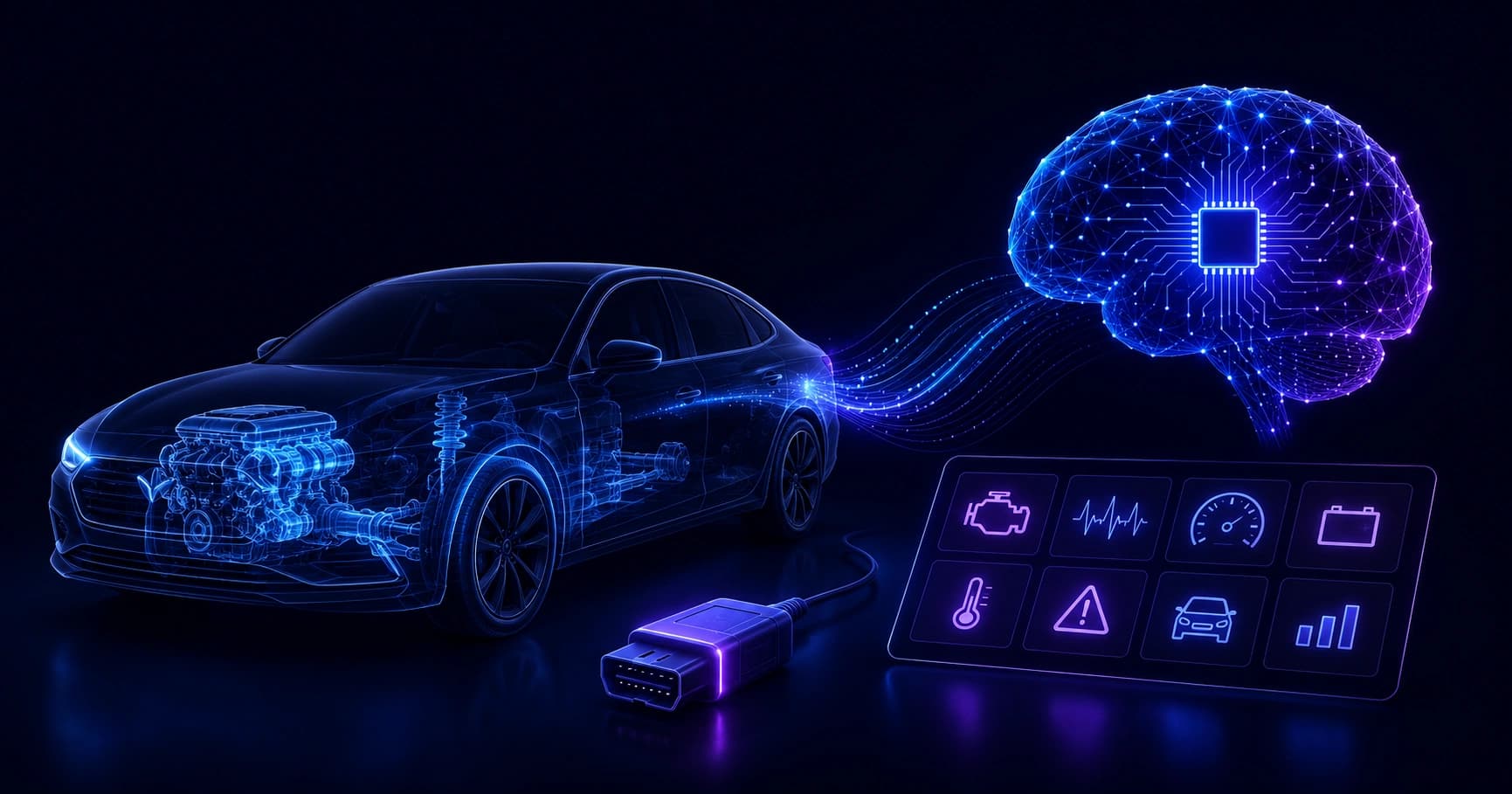
Discover how artificial intelligence is transforming automotive diagnostics, from real-time fault detection to predictive maintenance that prevents breakdowns before they happen.
Automotive Diagnostics Artificial Intelligence
For decades, diagnosing a car problem meant a technician plugging in a scanner, reading a cryptic error code, and relying on years of intuition to guess the root cause. That process worked, but it was slow, inconsistent, and expensive. Artificial intelligence is rewriting that entire workflow. Modern vehicles generate enormous streams of sensor data every second, and AI is the only practical way to interpret it accurately and at scale. In this guide, I will explain exactly how AI-driven automotive diagnostics work, why they outperform traditional methods, and what this shift means for drivers, mechanics, and the wider repair industry.
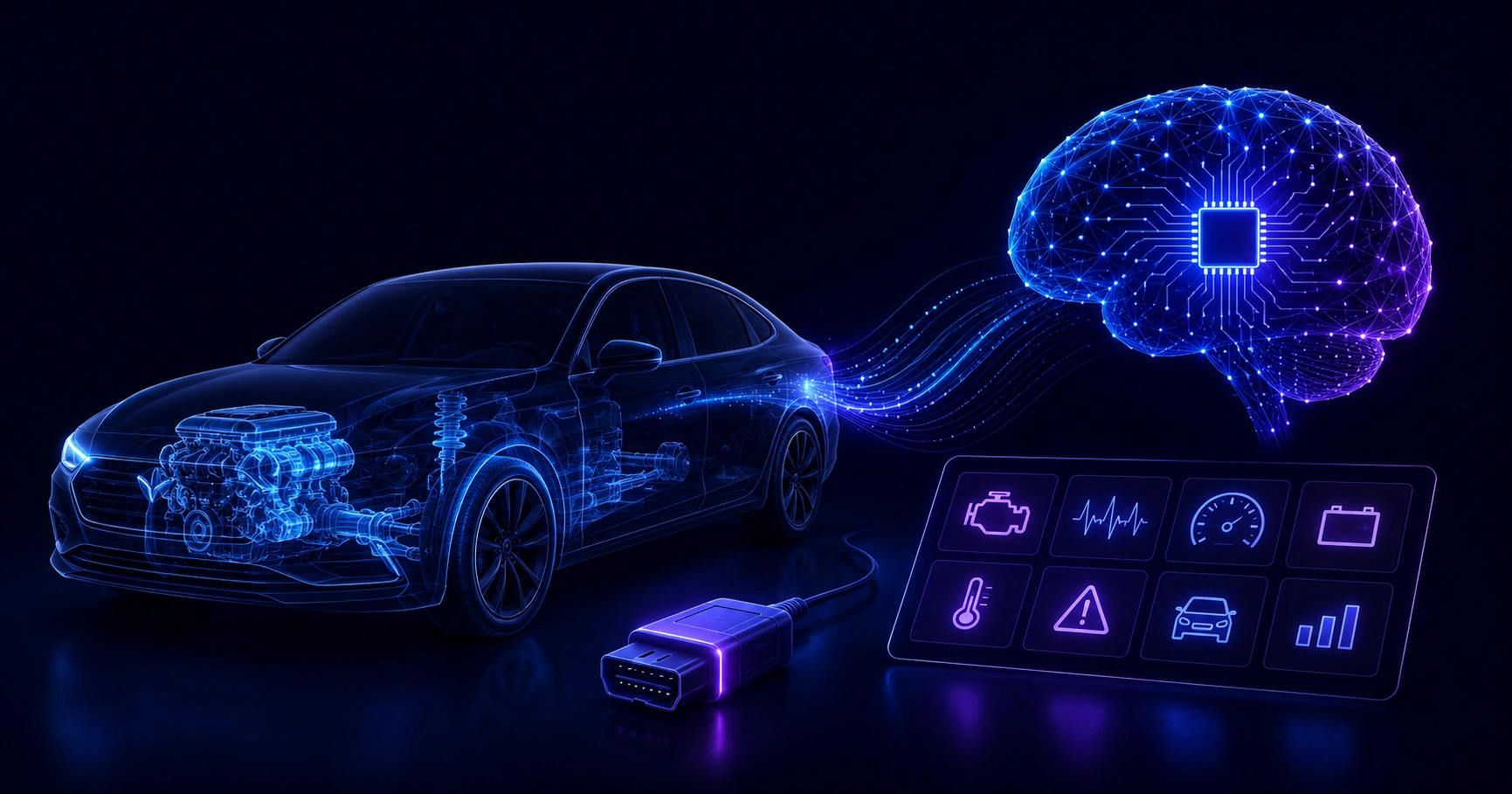
Quick Answer: Automotive diagnostics artificial intelligence uses machine learning to analyze real-time vehicle sensor data, detect faults, and predict failures before they happen. It interprets error codes, spots hidden patterns, and recommends repairs faster and more accurately than traditional manual diagnostic methods.
What Is AI in Automotive Diagnostics?
AI in automotive diagnostics is the application of machine learning models to vehicle data so that faults can be detected, classified, and predicted automatically. Instead of relying solely on a static list of trouble codes, an AI system learns from millions of real-world repair outcomes to connect symptoms with their true root causes.
A modern car contains anywhere from 70 to over 100 electronic control units (ECUs), each producing continuous telemetry. AI ingests this data, compares it against learned patterns, and surfaces the most probable issue ranked by confidence. The result is a diagnosis that improves with every vehicle it analyzes, something no printed repair manual can match.
Why Traditional Diagnostics Fall Short
Traditional diagnostics depend heavily on a technician reading an OBD-II code and then manually investigating. The problem is that a single code, such as a P0300 random misfire, can have a dozen possible causes ranging from spark plugs to a failing fuel injector or a vacuum leak.
According to industry studies, a significant share of warranty repairs involve replacing parts that were not actually faulty, a costly pattern known as "no fault found" returns. This guesswork wastes time and money. AI reduces it by weighing every available data point at once instead of forcing a human to test possibilities one by one.
How AI Diagnostic Systems Actually Work
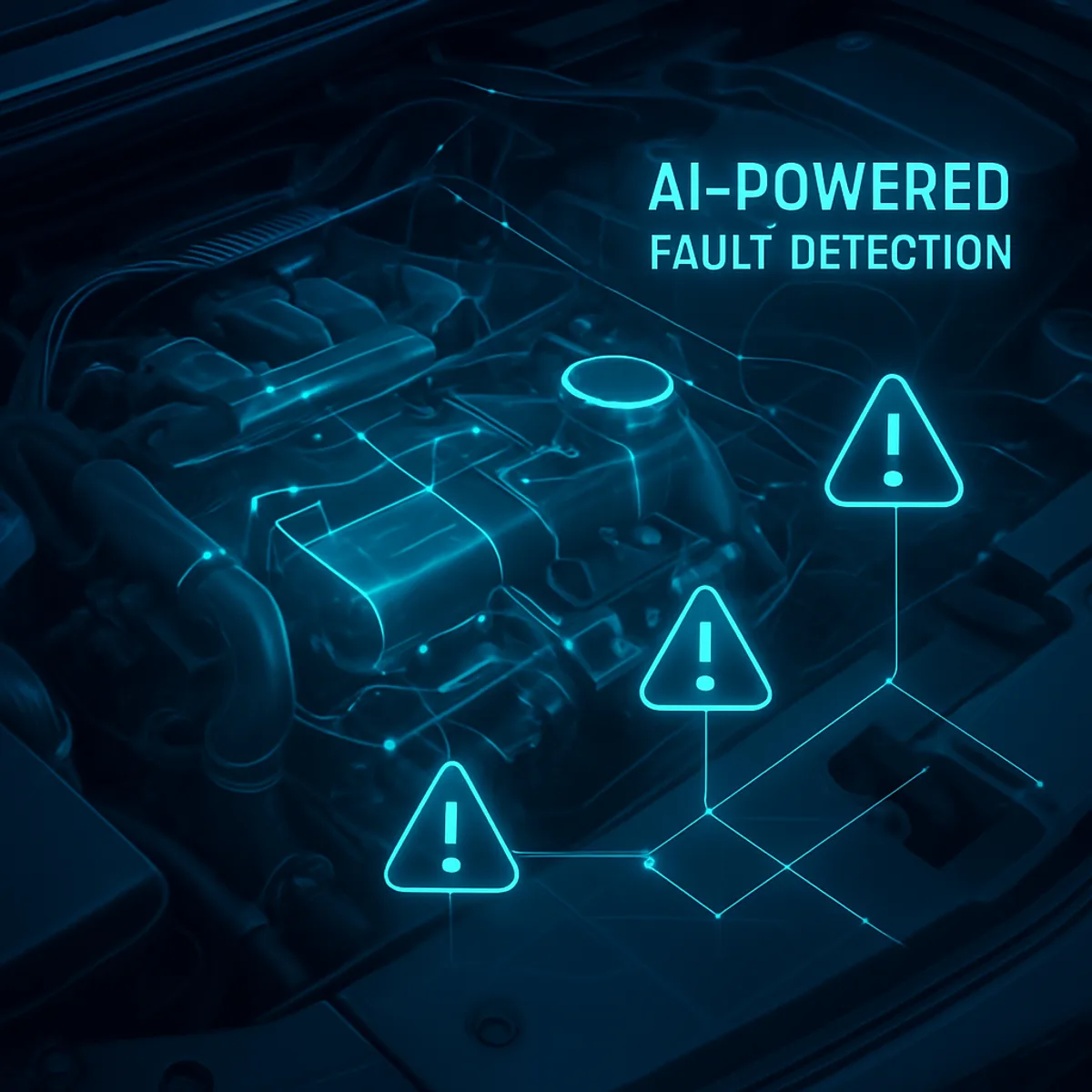
Understanding the mechanics helps you trust the output. Here is the typical pipeline an AI diagnostic platform follows:
- Data collection: The system pulls live signals from the OBD-II port, onboard sensors, and ECUs, including engine temperature, voltage, vibration, fuel trims, and emissions readings.
- Data cleaning: Noisy or incomplete readings are filtered so the model works with reliable inputs.
- Pattern recognition: A trained machine learning model compares current readings against patterns from thousands of confirmed repairs.
- Fault classification: The system identifies the most likely problem and assigns a confidence score.
- Recommendation: It suggests the specific component to inspect or replace, often with estimated repair time and parts.
This closed loop means each repair outcome can feed back into the model, sharpening future accuracy. Teams building these platforms often rely on specialized artificial intelligence services to train and maintain the underlying models.
Predictive Maintenance: Fixing Problems Before They Happen
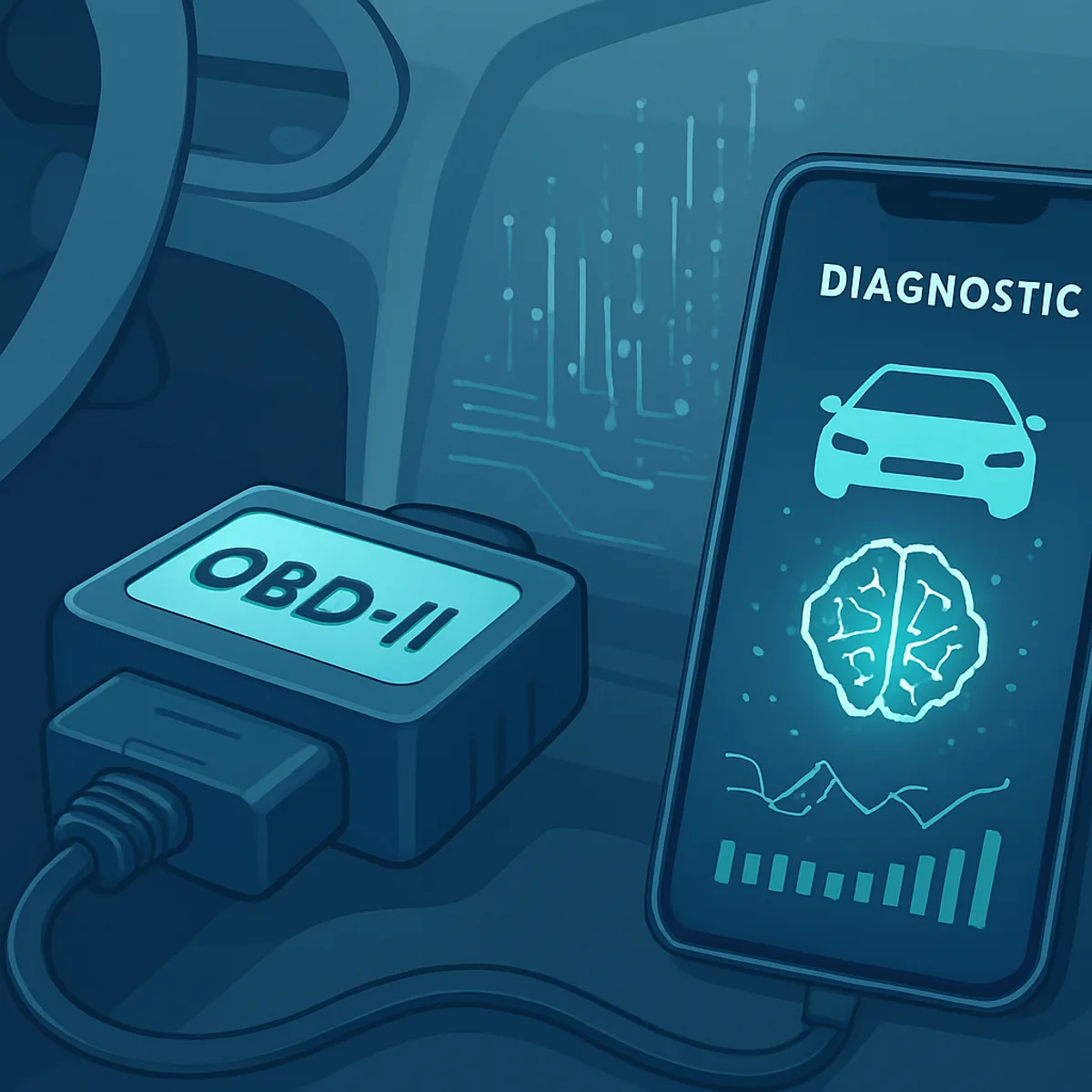
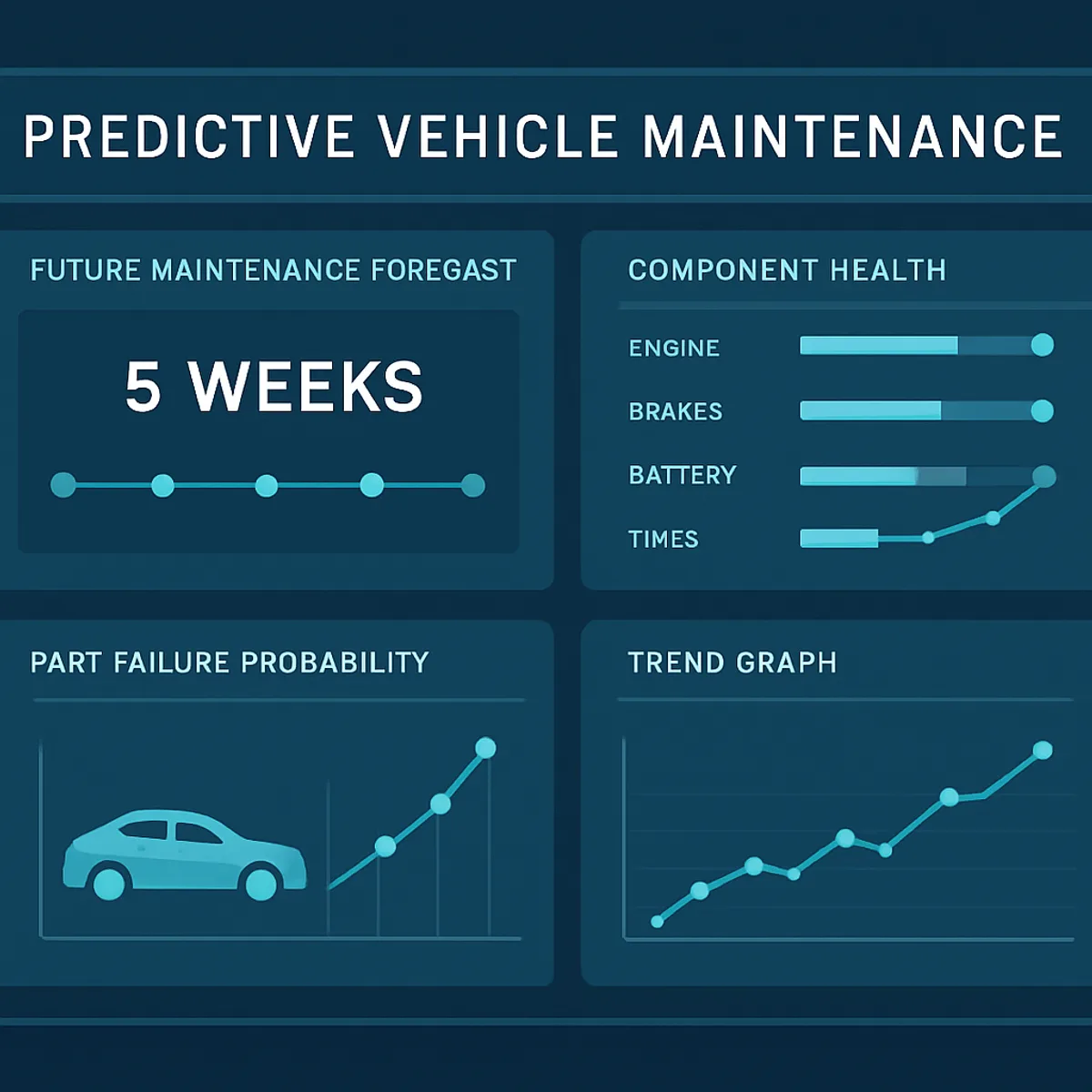
The biggest leap AI brings is moving from reactive repair to predictive maintenance. Predictive maintenance is the practice of forecasting component failures based on data trends, so a part is serviced before it breaks.
For example, AI can detect that a battery's voltage is degrading along a curve that historically precedes failure within two weeks. The driver gets a warning while the car still runs fine. According to McKinsey, predictive maintenance can reduce maintenance costs by up to 40% and cut unplanned downtime significantly, which is transformative for commercial fleets where every idle vehicle loses revenue.
Real-Time Sensor Data Analysis
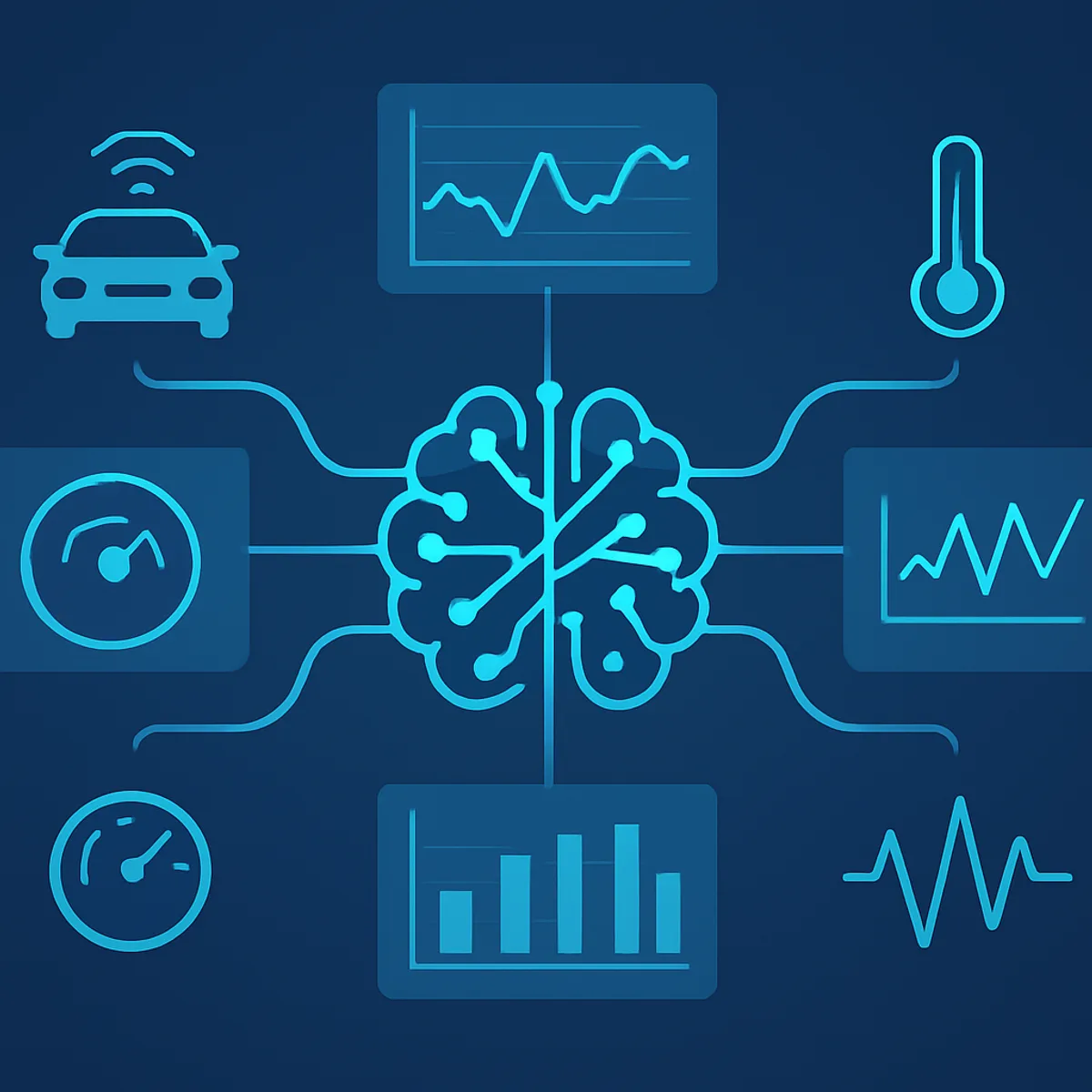
Real-time analysis is where AI separates itself from older tools. A connected vehicle can generate several gigabytes of data per hour. Humans cannot read that volume, but machine learning thrives on it.
By analyzing temperature spikes, vibration signatures, and electrical anomalies as they occur, AI can flag an overheating issue or a sensor drift the instant it begins. This continuous monitoring is especially valuable for electric vehicles, where battery thermal management is critical to safety and longevity.
AI vs Traditional Automotive Diagnostics
The table below compares the two approaches across the factors that matter most to drivers and shops.
| Factor | Traditional Diagnostics | AI-Powered Diagnostics |
|---|---|---|
| Speed | Slow, manual testing | Fast, near-instant analysis |
| Accuracy | Depends on technician skill | Consistent, data-driven |
| Root cause detection | Often trial and error | Ranked by confidence score |
| Predictive ability | None, reactive only | Forecasts failures early |
| Improves over time | No | Yes, learns from outcomes |
| Cost over time | Higher due to misdiagnosis | Lower, fewer wasted parts |
The pattern is clear: AI does not replace skilled technicians, it amplifies them by handling the data-heavy reasoning so humans can focus on hands-on repair.
The Mechanic's New Role
A common fear is that AI will replace mechanics. In practice, the opposite is happening. AI handles interpretation, but a human still performs the physical inspection, confirms the diagnosis, and completes the repair.
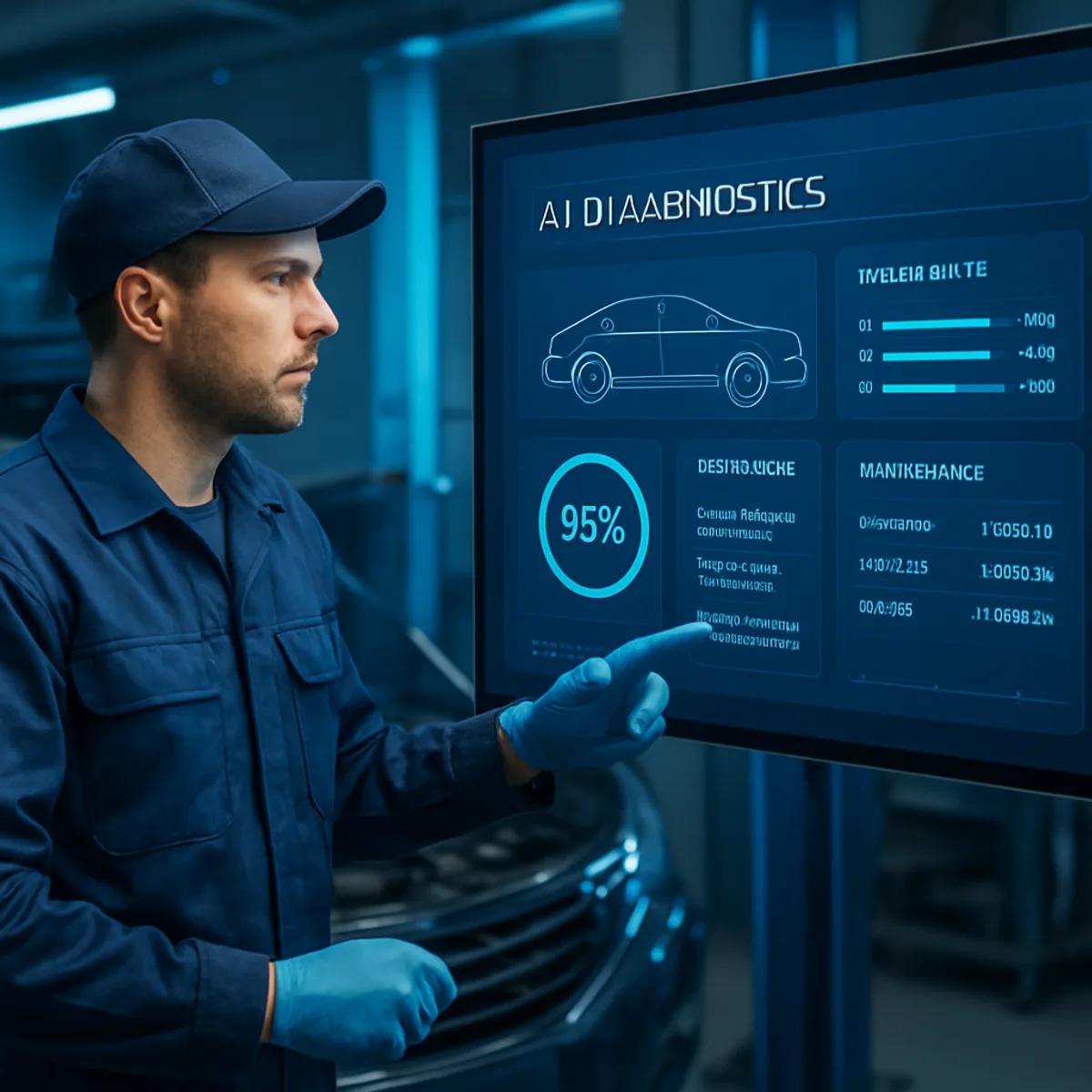
The modern technician now reads an AI dashboard that explains the likely fault in plain language, complete with repair steps. This lowers the barrier for newer technicians and lets experienced ones work faster. Shops that adopt these tools report higher first-time fix rates and improved customer trust because diagnoses come with transparent data.
Real-World Applications Today
AI automotive diagnostics are not theoretical. They are already deployed in several practical ways:
- Fleet management: Logistics companies monitor hundreds of vehicles remotely, scheduling repairs only when data demands it.
- Connected car apps: Drivers receive plain-English alerts on their phones instead of confusing dashboard lights.
- Dealership service centers: Technicians use AI to cut diagnostic time and reduce comeback repairs.
- Insurance and warranty: Data-backed diagnoses reduce fraudulent or unnecessary claims.
Businesses looking to build these connected platforms often combine diagnostics with custom software and broader artificial intelligence development to fit their specific operations.
Challenges and Limitations to Know
AI diagnostics are powerful but not flawless, and honest expertise means acknowledging the limits. Models are only as good as the data they are trained on, so rare or brand-new vehicle issues may be misjudged until enough examples exist.
Data privacy is another genuine concern, since connected vehicles transmit sensitive location and usage information that must be secured. Finally, integrating AI into older vehicles without rich sensor networks remains difficult. These are solvable problems, but buyers should evaluate any platform with these realities in mind rather than assuming perfection.
The Future of AI Car Diagnostics
The trajectory points toward fully autonomous diagnostic ecosystems. As vehicles become more connected and electric, the volume of usable data will only grow, making AI even more accurate.
Expect self-healing software updates that fix issues over the air, voice-based diagnostics where you simply describe a noise, and tighter integration between cars, repair shops, and parts suppliers. The repair shop of the near future will diagnose many problems before the vehicle even arrives.
Key Takeaways
- AI automotive diagnostics analyze real-time data from 70 to 100+ ECUs to detect and predict faults with high accuracy.
- Predictive maintenance can reduce maintenance costs by up to 40% and minimize unplanned downtime, according to McKinsey.
- AI ranks likely causes by confidence score, cutting the costly "no fault found" part replacements common in traditional methods.
- The technology augments mechanics rather than replacing them, improving first-time fix rates.
- Key challenges remain around data quality, privacy, and integrating AI into older vehicles.
For businesses ready to adopt these capabilities, expert partners like ZoneTechify and WebPeak help design and deploy intelligent diagnostic and automation systems tailored to real operational needs.
Frequently Asked Questions (FAQ)
How does AI improve car diagnostics?
AI improves car diagnostics by analyzing real-time sensor data from across the vehicle and comparing it against millions of confirmed repair patterns. It identifies the most likely root cause with a confidence score, reduces guesswork, and predicts failures before they happen, making repairs faster and more accurate.
Can AI replace human mechanics?
No, AI cannot fully replace human mechanics. It handles data interpretation and fault prediction, but a skilled technician is still needed to physically inspect the vehicle, confirm the diagnosis, and perform the repair. AI works best as a powerful assistant that makes mechanics faster and more accurate.
Is AI automotive diagnostics accurate?
AI diagnostics are highly accurate when trained on large, quality datasets, often outperforming manual methods at identifying root causes. However, accuracy can drop for rare or brand-new issues with limited training data. The best systems improve continuously by learning from every repair outcome they process.
What data does AI use to diagnose vehicles?
AI uses data from the OBD-II port, onboard sensors, and electronic control units. This includes engine temperature, voltage, fuel trims, vibration signatures, emissions readings, and error codes. It combines these live signals with historical repair data to pinpoint problems and forecast potential failures early.
Does AI diagnostics work on older cars?
AI diagnostics work best on modern, connected vehicles rich in sensors. Older cars with limited electronics provide less data, which restricts how accurately AI can analyze them. Some aftermarket OBD-II adapters can add basic AI monitoring, but full predictive capability requires newer, sensor-equipped vehicles.