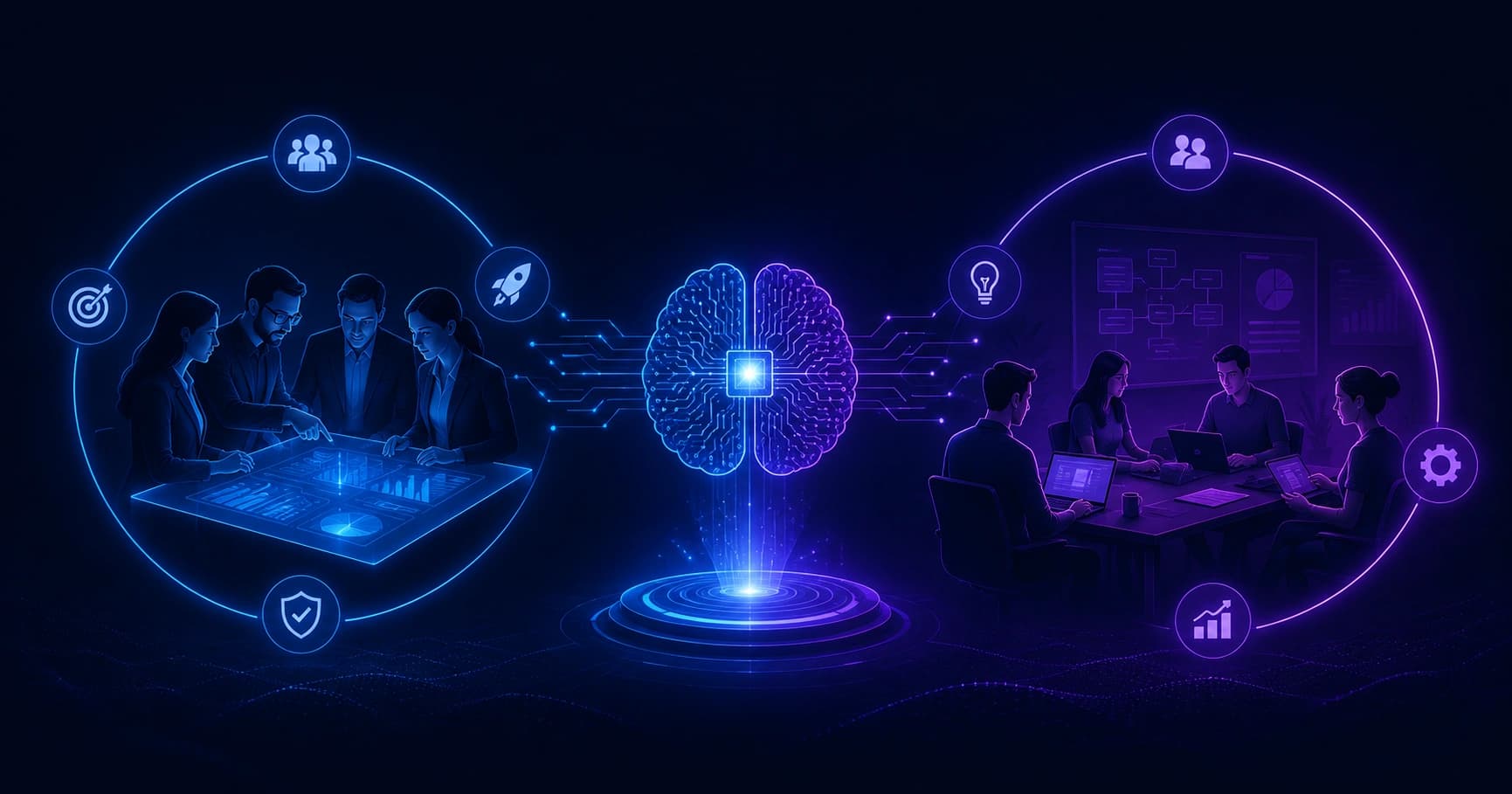
A practical, expert comparison of AI transformation consultants versus internal teams, covering cost, speed, risk, and how to choose the right model for your business.
Artificial Intelligence Transformation Consultants vs Internal Teams
Every leader chasing an AI advantage eventually hits the same fork in the road: hire external artificial intelligence transformation consultants, or build the capability with an internal team. The choice shapes your budget, your timeline, and whether the knowledge stays inside your company after the project ends. Having guided dozens of mid-market AI rollouts, I can tell you the right answer is rarely "one or the other" it depends on your maturity, urgency, and appetite for ownership.
This guide breaks down both paths with real trade-offs, hard numbers, and a decision framework you can apply this week. No hype, just the practical reasoning experienced operators use.
Quick Answer: AI transformation consultants deliver speed, proven frameworks, and outside expertise for fast, high-stakes projects. Internal teams build lasting in-house knowledge and lower long-term costs. Most successful companies use a hybrid model: consultants to launch and de-risk, internal teams to scale and maintain.
What Are AI Transformation Consultants?
AI transformation consultants are external specialists who help organizations identify, design, and deploy artificial intelligence across their operations. They typically arrive with cross-industry experience, reusable playbooks, and vendor-neutral advice on tools, data architecture, and governance.
Their value is concentrated in the earliest and riskiest phases: defining use cases, estimating ROI, choosing models, and avoiding the expensive mistakes that sink first-time projects. According to McKinsey, only about 11% of companies report capturing significant value from AI at scale a gap consultants exist to close. Firms like ZoneTechify and WebPeak bring this kind of structured, outcome-focused guidance to teams that cannot afford a year of trial and error.
What Is an Internal AI Team?
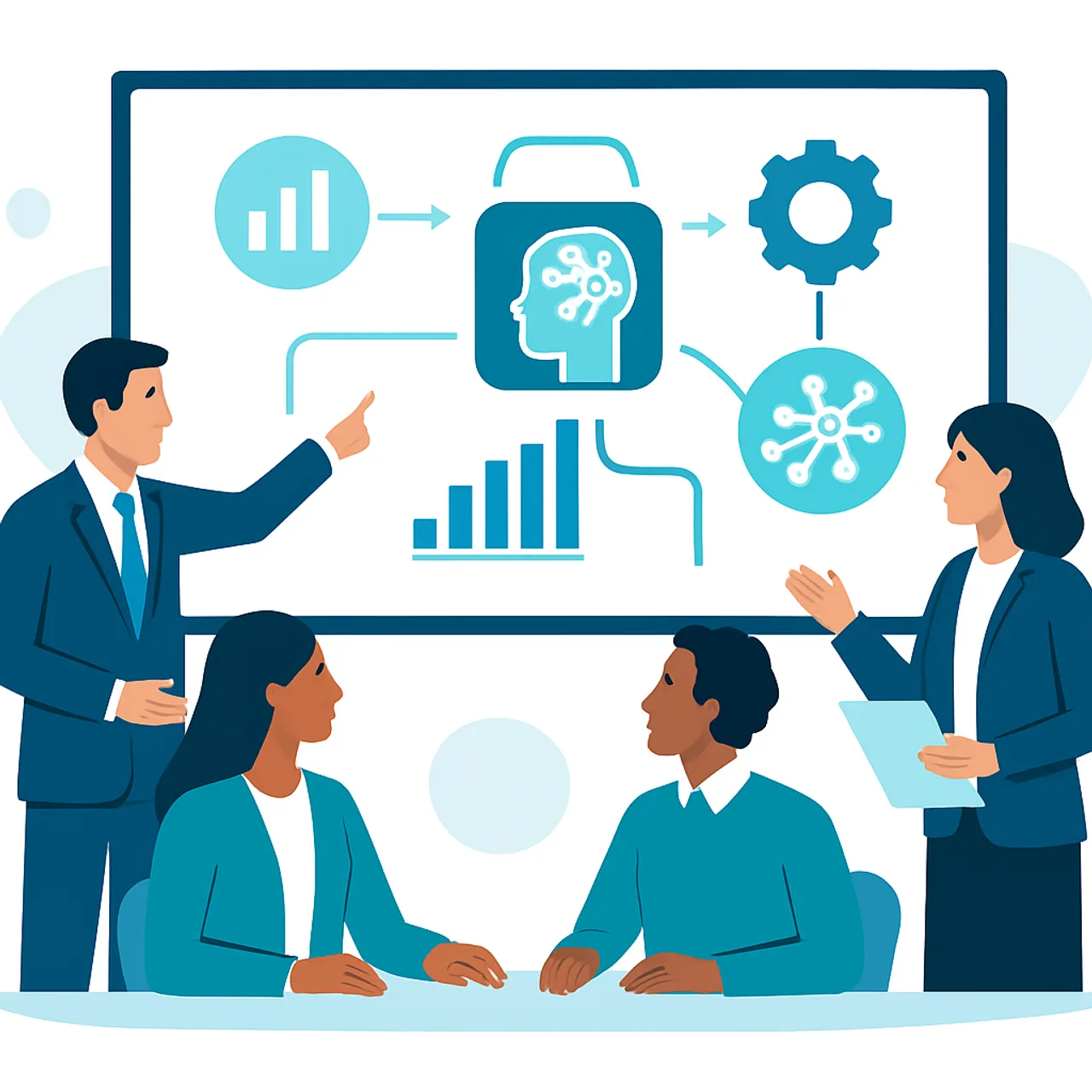
An internal AI team is a permanent in-house group data scientists, ML engineers, product owners, and analysts employed directly by your company to build and run AI initiatives. Unlike consultants, they live inside your business context, understand your data intimately, and stay long after launch.
Internal teams excel at iteration. Once a model is live, it needs constant tuning, monitoring, and retraining as data drifts. That ongoing ownership is expensive to outsource indefinitely, which is why companies serious about AI eventually build internal muscle. The catch: hiring skilled AI talent is slow and competitive, and a half-staffed team can stall a project for months.
Consultants vs Internal Teams: The Core Trade-Offs
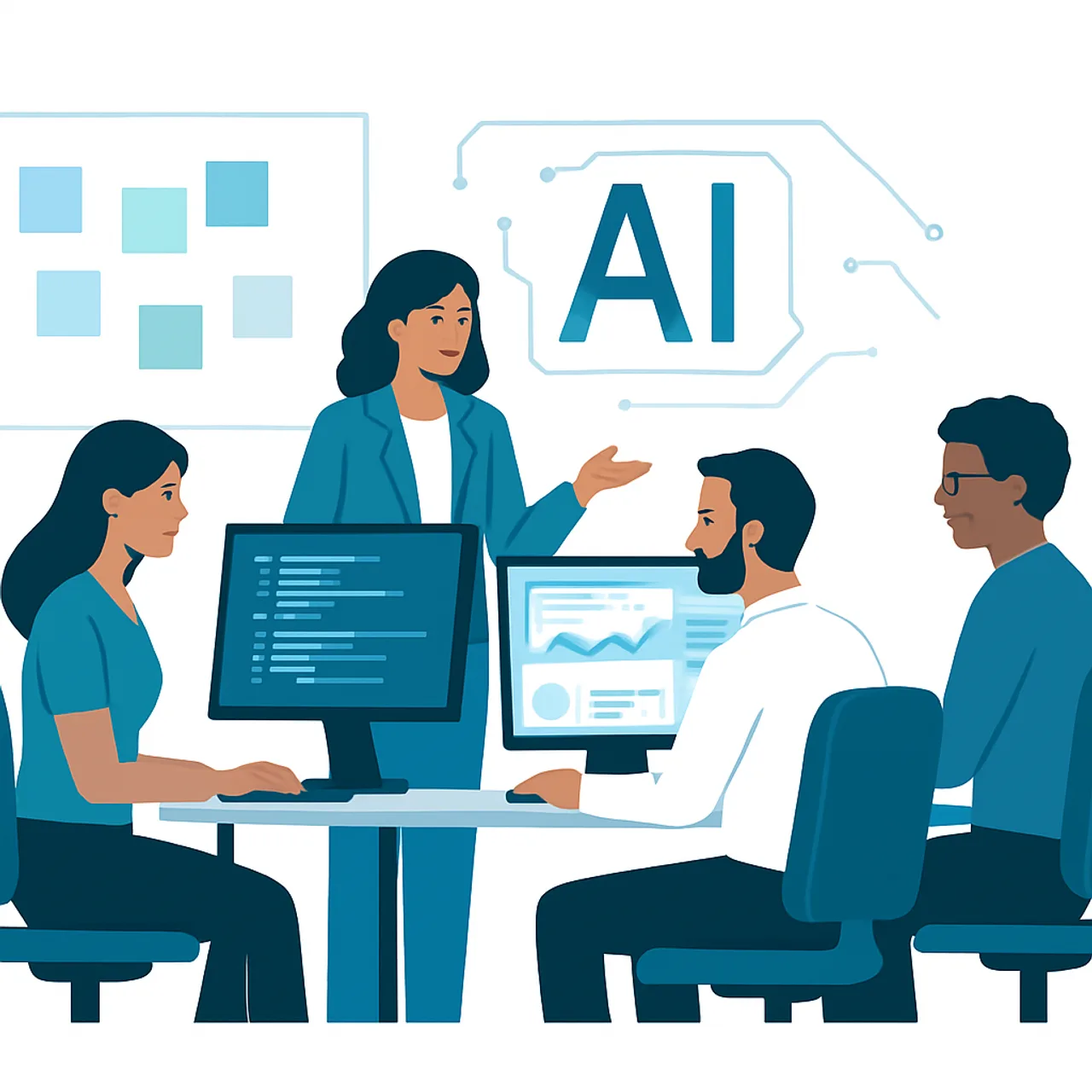
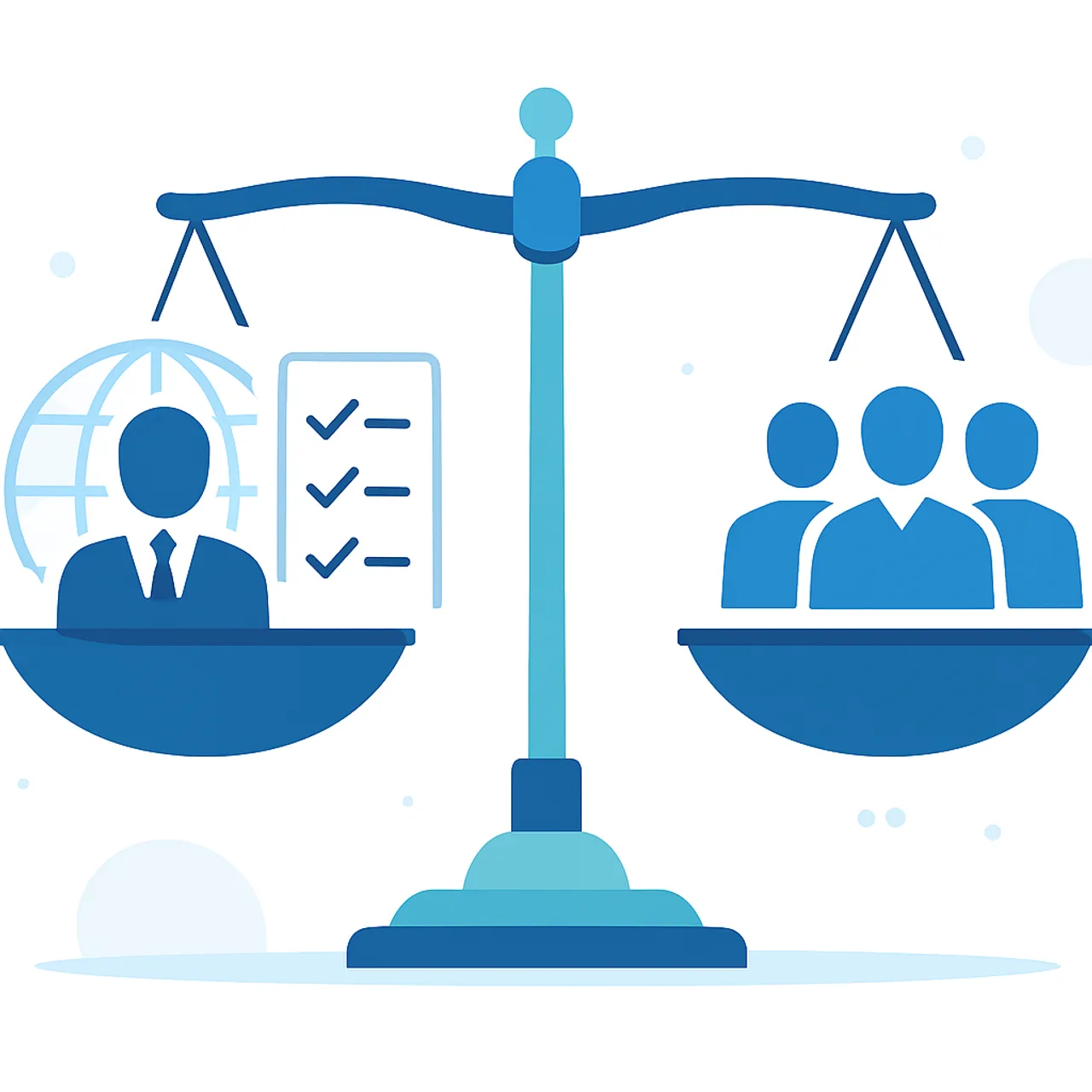
The decision comes down to five levers: speed, cost structure, expertise depth, knowledge retention, and risk. Consultants win on speed and breadth of experience. Internal teams win on context, continuity, and long-term economics. Understanding where each shines prevents the most common mistake building slowly in-house when speed matters, or renting consultants forever when ownership matters.
Speed to Value
Consultants can start within days and often deliver a working pilot in weeks because they reuse proven architectures. Building an internal team first means a hiring cycle that frequently stretches three to six months before real work begins. If your competitive window is short, that delay alone can justify external help.
Cost Structure
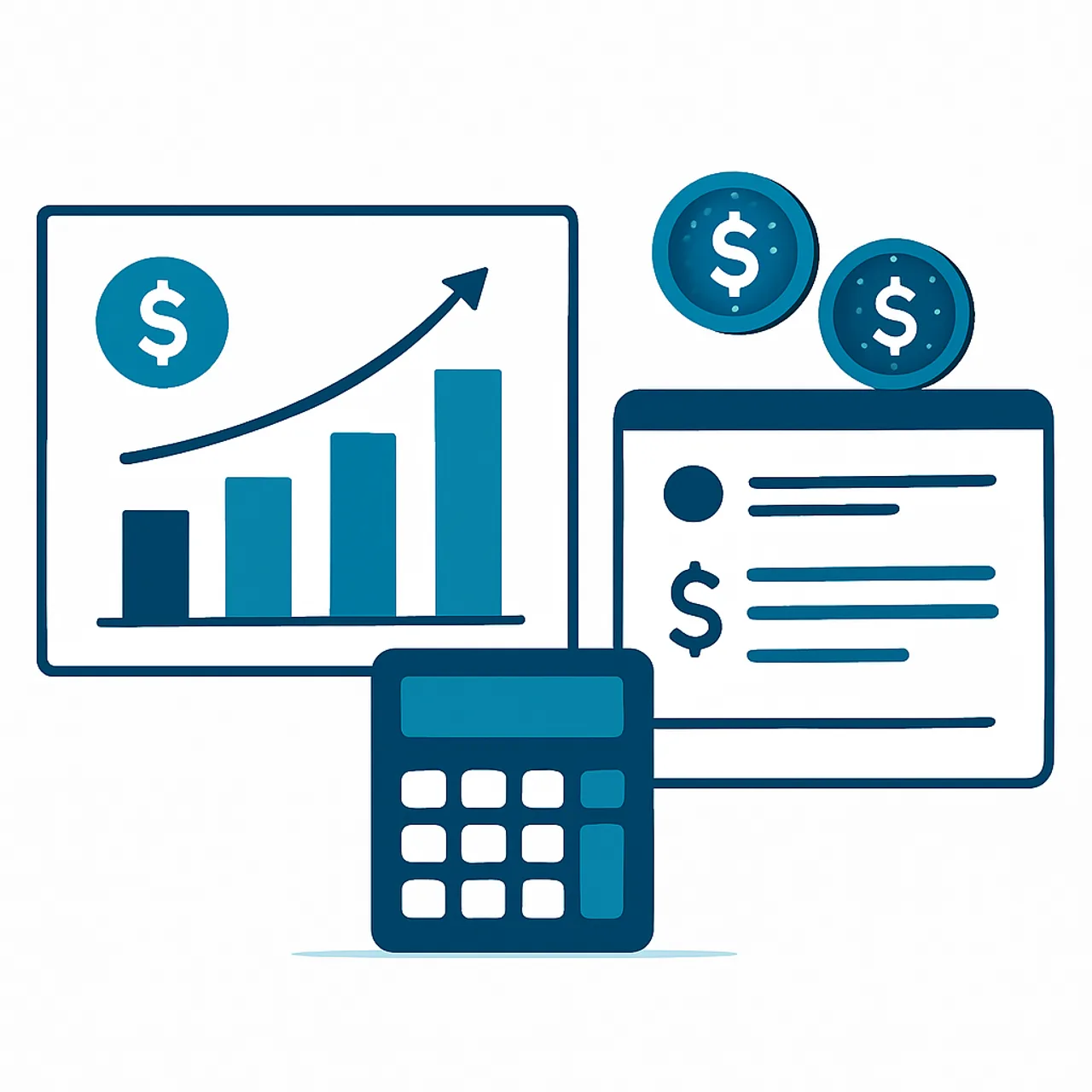
Consultants carry a high hourly or project rate but no long-term payroll, benefits, or idle-time cost. Internal teams have a lower marginal cost per hour once hired, but a heavy fixed cost whether or not projects are active. The crossover point usually arrives when AI becomes continuous rather than a one-time initiative.
Side-by-Side Comparison
The table below summarizes how the two models compare across the factors that matter most when planning an AI transformation.
| Factor | AI Transformation Consultants | Internal AI Team |
|---|---|---|
| Time to start | Days to weeks | 3 to 6 months (hiring) |
| Upfront cost | High project fees | High salaries plus tooling |
| Long-term cost | Low (no payroll) | Lower per project at scale |
| Industry breadth | Broad, cross-sector | Deep in your domain only |
| Knowledge retention | Leaves with the firm | Stays in the company |
| Best for | Fast launch, de-risking | Scaling, maintenance |
| Bias risk | Vendor-neutral advice | Internal blind spots |
When to Choose AI Transformation Consultants
Choose consultants when speed, objectivity, or specialized skills outweigh the desire for permanent ownership. They are the right call in clearly defined situations.
- You are early in your AI journey and need help identifying which use cases actually deliver ROI.
- The project is time-sensitive and you cannot wait months to hire.
- You lack niche expertise such as computer vision, LLM fine-tuning, or MLOps.
- You need an unbiased audit of your data readiness, vendors, or governance.
- Leadership needs proof before committing to permanent headcount.
A strong consulting engagement should always include knowledge transfer. If a partner is not training your people as they build, you are renting a result instead of building a capability. Specialist providers such as ZoneTechify's artificial intelligence services and WebPeak's AI services are built around exactly this kind of outcome-driven, transfer-focused delivery.
When to Build an Internal Team
Build internally when AI is becoming core to how your business operates, not a one-off experiment. Companies that treat AI as a permanent capability rather than a project gain compounding advantages.
- AI is central to your product and will need constant iteration.
- Your data is sensitive and you prefer to minimize external access.
- You have recurring use cases that justify full-time specialists.
- You want institutional knowledge to accumulate inside the company.
The trade-off is patience. Recruiting, onboarding, and ramping an AI team takes time, and early projects may move slower while the team learns your systems. But once established, an internal team turns AI from a cost center into a durable strategic asset.
The Hybrid Model: Why Most Winners Choose Both
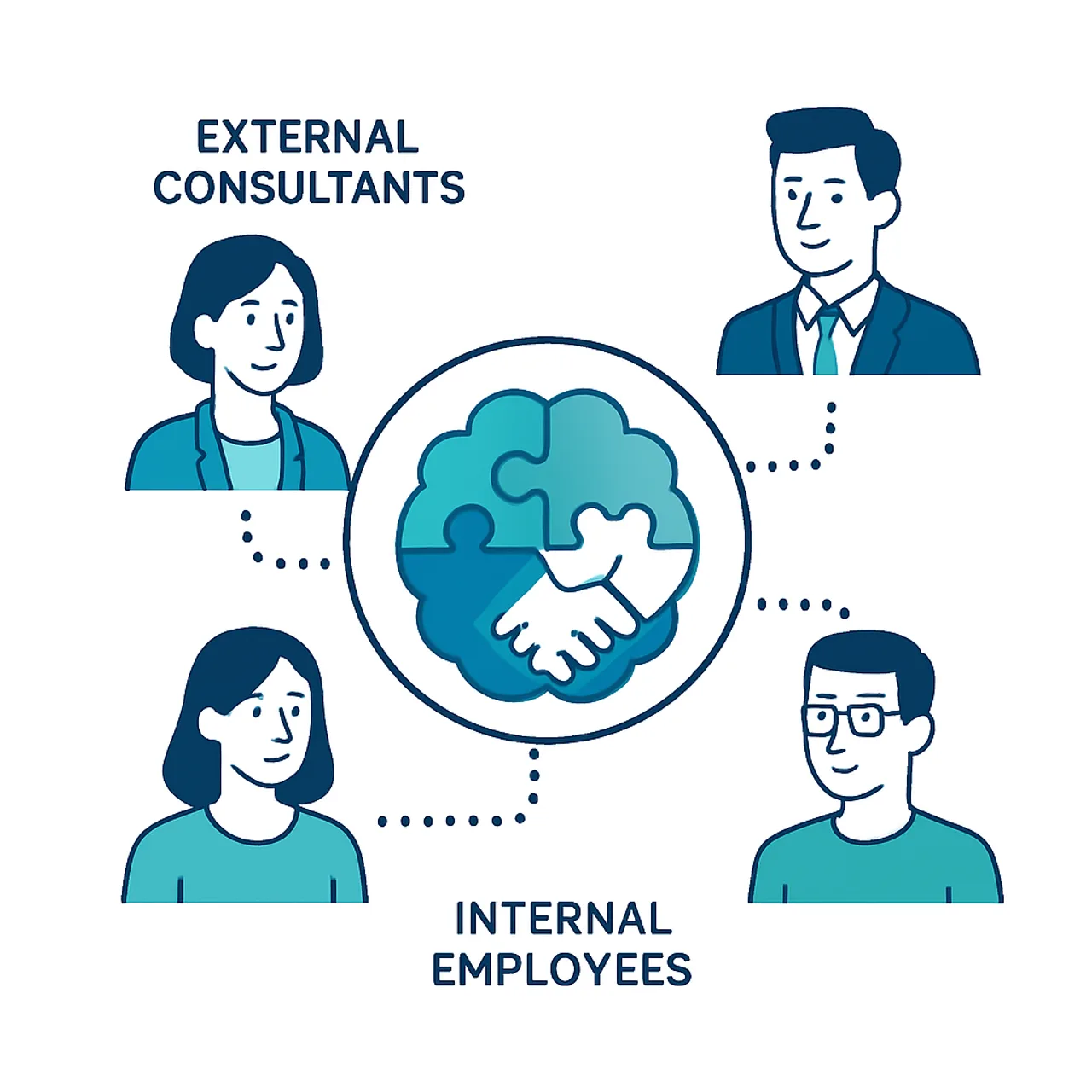
In my experience, the highest-performing organizations rarely pick a side they sequence the two. They bring in consultants to define strategy, de-risk the first deployment, and establish best practices, while simultaneously hiring or upskilling an internal team that absorbs that knowledge and takes over operations.
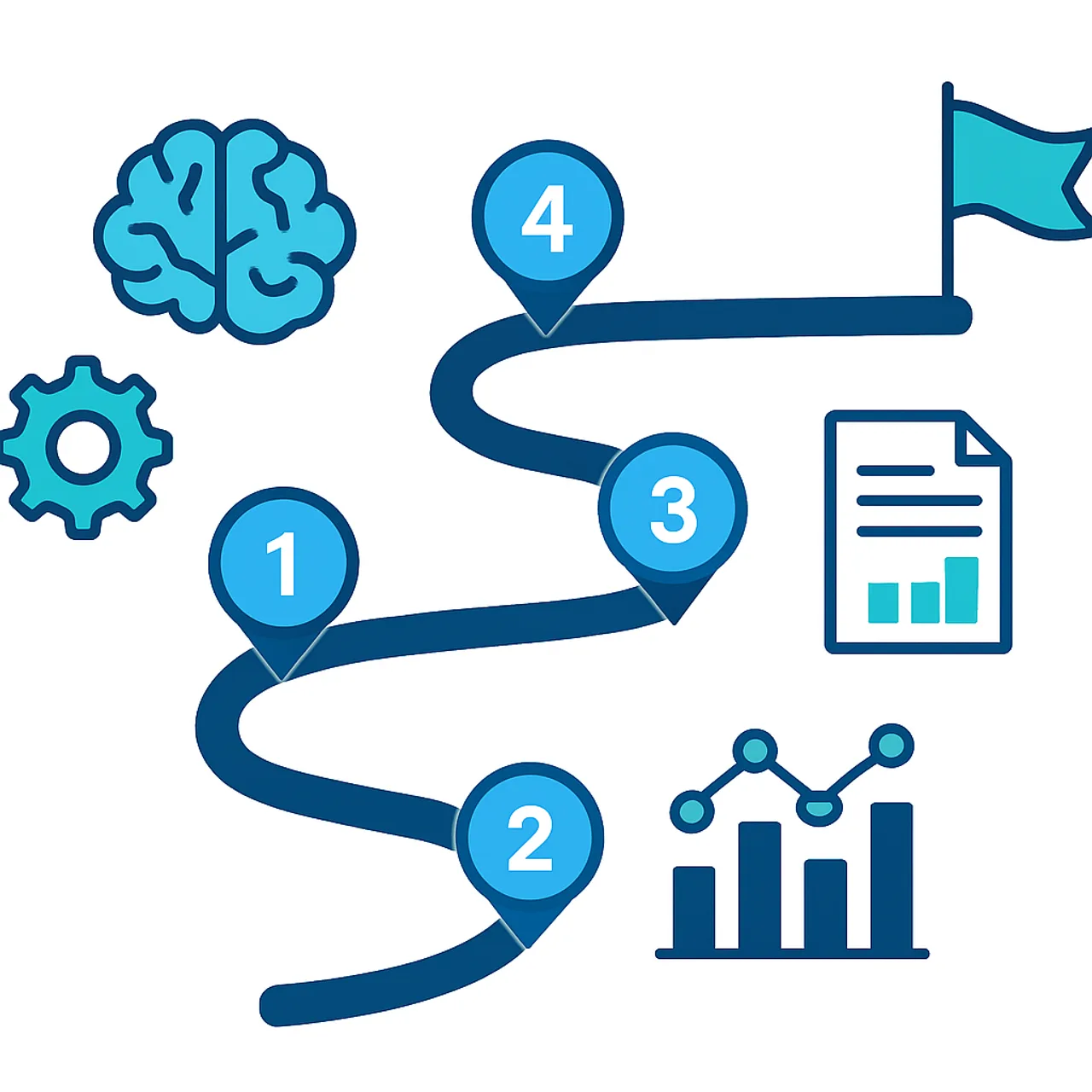
This hybrid approach front-loads expertise where mistakes are most expensive and shifts ownership inward where continuity matters most. A typical pattern looks like this:
- Discovery and strategy led by consultants to prioritize use cases.
- Pilot build delivered jointly, with internal staff embedded to learn.
- Knowledge transfer through documentation, pairing, and training.
- Handover and scale where the internal team owns maintenance and expansion.
Done well, the consulting cost becomes an accelerant rather than a dependency. Gartner has projected that a large share of generative AI projects are abandoned after proof of concept, frequently because no one owned the work after launch the hybrid model directly prevents this failure.
How to Make the Right Decision
Use a simple scoring exercise. Rate your urgency, in-house expertise, budget flexibility, and how permanent AI will be to your operations. High urgency and low expertise point toward consultants. High permanence and strong data sensitivity point toward an internal team. A mix points to hybrid which is most companies.
Also weigh the hidden costs. Consultants reduce execution risk but can create dependency if knowledge transfer is ignored. Internal teams build ownership but carry recruitment risk and slower starts. The best decision is the one that matches your current maturity, not the one that sounds most impressive in a board meeting.
Key Takeaways
- AI transformation consultants deliver speed, cross-industry expertise, and de-risking, but the knowledge can leave with them unless transfer is built in.
- Internal teams provide deep context, continuity, and lower long-term cost, but take three to six months to hire and ramp.
- Only around 11% of companies capture significant value from AI at scale, per McKinsey expert guidance closes that gap.
- Many generative AI pilots are abandoned after proof of concept, usually due to lack of ownership a hybrid model prevents this.
- The hybrid model consultants to launch, internal teams to scale is the most reliable path for sustained AI success.
- Choose based on urgency, expertise, data sensitivity, and how permanent AI is to your business.
Frequently Asked Questions (FAQ)
Are AI transformation consultants worth the cost?
Yes, when speed and risk reduction matter. Consultants help you avoid expensive missteps, choose the right tools, and prove ROI quickly. The investment pays off most when they transfer knowledge to your team, leaving lasting capability rather than a one-time deliverable you cannot maintain.
Is it cheaper to build an internal AI team?
Not upfront. Internal teams carry high fixed salary and tooling costs and take months to assemble. They become cheaper per project only when AI work is continuous and ongoing. For one-off or early-stage initiatives, consultants are usually the more cost-effective choice.
How long does an AI transformation project take?
It varies by scope. A focused pilot with consultants can ship in four to twelve weeks. Building an internal team first adds three to six months for hiring. Full enterprise-wide transformation typically unfolds over twelve to twenty-four months across multiple phases.
Can consultants and internal teams work together?
Absolutely, and they should. The hybrid model pairs consultants for strategy and de-risking with internal staff who learn and take ownership. This combination front-loads expertise where mistakes cost the most and keeps long-term operations and knowledge inside your organization for sustainability.
What should I look for in an AI consultant?
Look for relevant industry experience, vendor-neutral advice, a clear ROI focus, and a strong knowledge-transfer plan. Avoid partners who create permanent dependency. The best consultants train your people as they build, leaving your team capable of running and scaling the solution independently.
How do I know if my company is ready for AI?
Assess your data quality, clear use cases, leadership buy-in, and budget. If your data is messy or goals are vague, start with a readiness audit often the first thing good consultants provide before committing to permanent hires or large-scale builds.