
Discover how AI tail spend management services help procurement teams control unmanaged spend, automate sourcing, and unlock measurable cost savings.
Artificial Intelligence Tail Spend Management Services

Tail spend is the messy, low-value, high-volume portion of procurement that most companies ignore until it quietly drains millions. It is the 80% of suppliers who account for roughly 20% of total spend, scattered across thousands of one-off purchases that no buyer has time to negotiate. Artificial intelligence tail spend management services exist to fix exactly this problem: turning chaotic, unmanaged purchasing into a structured, automated, and savings-generating process. After helping procurement teams audit their spend data, we have seen firsthand how AI surfaces savings that manual analysis simply cannot reach.
This guide explains what AI tail spend management is, how it works, what results to expect, and how to choose the right service. You will leave knowing exactly how to act.
Quick Answer: AI tail spend management services use machine learning to automatically classify, analyze, and optimize the scattered low-value purchases that traditional procurement ignores. They consolidate suppliers, automate sourcing, flag maverick spend, and typically recover 5-15% in savings on previously unmanaged categories.
What Is Tail Spend in Procurement?
Tail spend is the collection of small, infrequent, and decentralized purchases that fall outside a company's strategically managed contracts. It usually represents only 20% of total spend value but up to 80% of total suppliers and transactions. Because each purchase is individually small, procurement teams rarely negotiate or monitor it, which is why it becomes a blind spot.
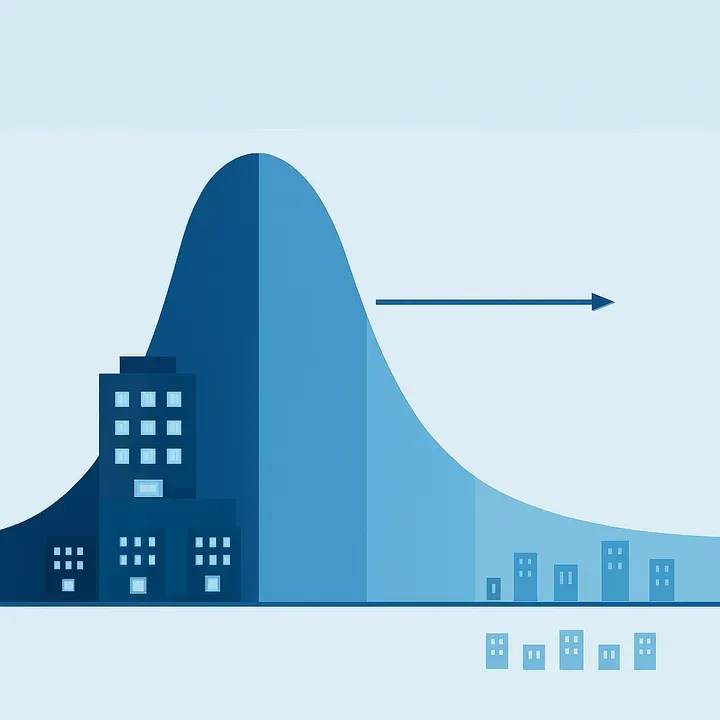
Typical tail spend includes office supplies, software subscriptions, marketing tools, maintenance items, and ad-hoc professional services. The danger is not any single purchase but the cumulative leakage: duplicate suppliers, off-contract buying, inconsistent pricing, and compliance risk. According to research from The Hackett Group, tail spend can account for as much as 80% of supplier relationships while delivering minimal strategic value, making it the single largest source of untapped savings in most organizations.
Why Tail Spend Is So Hard to Manage Manually
Managing tail spend by hand fails because the data volume overwhelms human capacity. A mid-sized company may process tens of thousands of low-value transactions annually across hundreds of inconsistent categories. No analyst can clean, classify, and benchmark that volume continuously.
The core obstacles include:
- Dirty data: Supplier names, item descriptions, and categories are inconsistent across systems.
- No clear ownership: Tail purchases happen across departments without central oversight.
- Low ROI per item: Negotiating a single $400 purchase rarely justifies a buyer's time.
- Maverick spend: Employees buy off-contract, bypassing negotiated savings.
This is precisely where automation changes the economics. When the cost of analysis drops to near zero, even small purchases become worth optimizing.
How Artificial Intelligence Transforms Tail Spend Management
AI transforms tail spend management by automating the data classification, supplier analysis, and sourcing decisions that humans cannot scale. Machine learning models read messy procurement data, normalize it, and group purchases into clean categories within minutes rather than weeks.

Here is how the technology delivers value across the procurement cycle:
1. Automated Spend Classification
AI uses natural language processing to interpret vague line-item descriptions and assign each transaction to the correct category. What once required manual tagging now happens automatically with accuracy that improves over time as the model learns your data.
2. Supplier Consolidation
Machine learning identifies redundant vendors selling identical goods and recommends consolidation toward preferred suppliers. Fewer suppliers mean stronger negotiating leverage and lower administrative overhead.

3. Maverick Spend Detection
AI continuously monitors purchases against negotiated contracts and flags off-contract buying in real time, recovering savings that would otherwise leak away unnoticed.
4. Automated Sourcing and Workflows
Low-value purchases can be routed through automated guided buying, marketplace catalogs, or instant RFQs, removing manual procurement steps entirely.
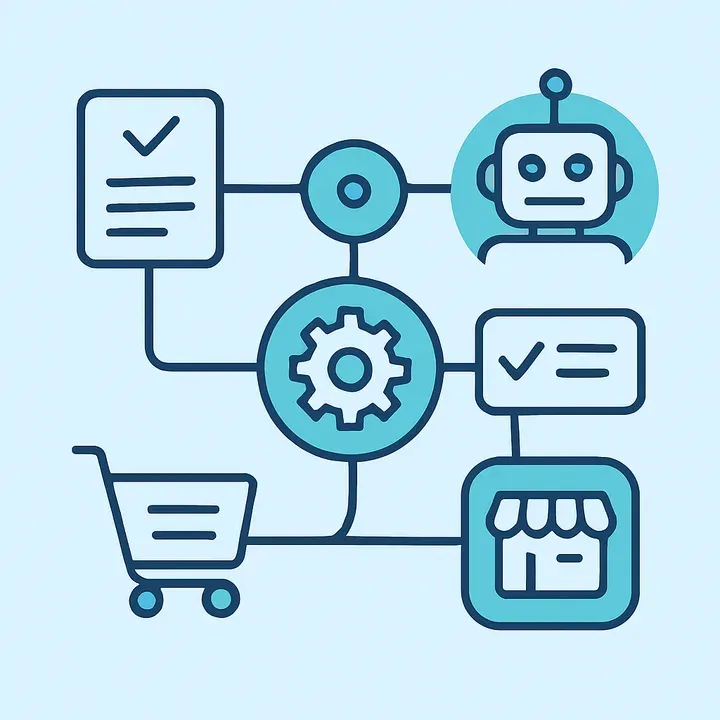
For organizations building these capabilities, specialized artificial intelligence services can integrate machine learning models directly into existing procurement systems rather than relying on rigid off-the-shelf tools.
AI vs. Traditional Tail Spend Management
The difference between manual and AI-driven approaches is stark across every meaningful metric. The table below summarizes how the two methods compare in real procurement environments.
| Factor | Traditional Manual Approach | AI-Powered Approach |
|---|---|---|
| Spend classification | Weeks of manual tagging | Minutes, automated |
| Data accuracy | Inconsistent, error-prone | High, self-improving |
| Supplier consolidation | Rarely completed | Continuous recommendations |
| Maverick spend detection | Reactive, after the fact | Real-time alerts |
| Typical savings | 0-3% | 5-15% |
| Scalability | Limited by headcount | Scales infinitely |
| Ongoing cost | High labor cost | Low after setup |
The takeaway is clear: AI does not just do the same work faster, it makes managing tail spend economically viable for the first time.
Real Savings: What the Data Shows
Organizations that apply AI to tail spend typically recover between 5% and 15% of that spend category. For a company with $50 million in annual spend and $10 million in tail spend, that translates to $500,000 to $1.5 million in recoverable savings each year.

These savings come from three compounding sources: better pricing through consolidation, eliminated duplicate and maverick spend, and reduced processing costs per transaction. Beyond hard dollars, AI also reduces supplier risk and improves compliance, which protects against costly disruptions. In our experience auditing procurement data, the largest early wins almost always come from eliminating duplicate suppliers and redirecting off-contract buying, both of which AI surfaces within the first analysis cycle.
How to Implement AI Tail Spend Management Services
Implementing AI tail spend management follows a clear, repeatable path. You do not need a perfect data environment to start, only a willingness to let the model learn from what you have.

Follow these steps:
- Aggregate your spend data. Pull transaction records from ERP, accounts payable, and procurement systems into one place.
- Run an AI classification baseline. Let the model clean and categorize the data to reveal where tail spend actually sits.
- Identify quick wins. Target duplicate suppliers, maverick spend, and obvious consolidation opportunities first.
- Automate low-value buying. Route routine purchases through guided buying or catalogs to prevent future leakage.
- Monitor continuously. Use real-time dashboards to track savings, compliance, and supplier performance.
Many companies partner with specialists to accelerate this process. Working with an experienced team, such as the experts at ZoneTechify or the AI consultants at WebPeak, helps integrate these models without disrupting existing operations.
Choosing the Right AI Tail Spend Service
Not all AI procurement tools are equal. The best services combine strong machine learning with practical procurement expertise. When evaluating a provider, prioritize these criteria:
- Data integration depth: It must connect cleanly to your ERP and AP systems.
- Classification accuracy: Ask for proven accuracy rates on real, messy data.
- Automation capability: Look for guided buying and automated sourcing, not just analytics.
- Transparency: AI recommendations should be explainable, not a black box.
- Measurable ROI: The provider should commit to tracking realized savings.
Avoid tools that only generate dashboards without driving action. Insight without automation rarely changes behavior, and behavior change is where savings come from.
The Future of AI in Tail Spend Management
The future of tail spend management is autonomous procurement, where AI agents handle routine buying decisions end to end. Generative AI and agentic systems are already moving beyond analysis toward execution, negotiating with suppliers, drafting RFQs, and approving compliant purchases automatically.

As these systems mature, the human role shifts from processing transactions to setting strategy and guardrails. Procurement teams that adopt AI now will build the data foundation and trust required to capture this next wave. Those who wait will face a widening efficiency gap against competitors already operating with leaner, smarter procurement functions.
Key Takeaways
- Tail spend represents about 20% of spend value but up to 80% of suppliers, making it the largest untapped savings source in most companies.
- AI tail spend management services automate classification, consolidation, maverick spend detection, and sourcing.
- Organizations typically recover 5-15% of tail spend through AI optimization.
- Implementation follows five steps: aggregate data, baseline with AI, target quick wins, automate buying, and monitor continuously.
- The future is agentic procurement, where AI executes routine purchasing decisions autonomously.
Frequently Asked Questions (FAQ)
What is tail spend management?
Tail spend management is the process of controlling and optimizing the many small, low-value, decentralized purchases that fall outside strategic contracts. It focuses on classifying scattered transactions, consolidating suppliers, and reducing off-contract buying to recover savings that procurement teams typically overlook in day-to-day operations.
How does AI reduce tail spend costs?
AI reduces tail spend costs by automatically classifying purchases, identifying duplicate suppliers for consolidation, and detecting off-contract maverick spend in real time. It analyzes thousands of transactions in minutes, surfacing pricing inconsistencies and savings opportunities that manual review cannot economically reach across high transaction volumes.
How much can companies save with AI tail spend services?
Most companies recover between 5% and 15% of their tail spend using AI services. For a business with $10 million in annual tail spend, that means roughly $500,000 to $1.5 million in yearly savings from consolidation, eliminated duplicate purchases, and reduced transaction processing costs.
Is AI tail spend management suitable for small businesses?
Yes, AI tail spend management benefits businesses of all sizes. Smaller companies often have proportionally messier, more fragmented spend, so even modest automation delivers strong returns. Cloud-based AI tools scale to fit smaller transaction volumes without requiring a large procurement team or expensive on-premise infrastructure.
How long does it take to implement AI tail spend management?
Most implementations show initial results within four to eight weeks. The first phase involves aggregating and classifying spend data, which AI completes quickly. Quick wins like supplier consolidation appear early, while automated buying workflows and continuous monitoring are typically rolled out over the following months.
Do I need clean data before starting?
No, you do not need perfect data to begin. Modern AI models are specifically designed to handle messy, inconsistent procurement records. The classification engine cleans and normalizes supplier names and item descriptions automatically, improving accuracy over time as it learns from your organization's actual purchasing patterns.