Discover how assembly line inspection artificial intelligence detects defects in real time, cuts waste, and boosts manufacturing quality with proven, actionable insights.
Assembly Line Inspection Artificial Intelligence
Manufacturing defects are expensive, and most of them slip past tired human eyes during repetitive visual checks. Assembly line inspection artificial intelligence solves this by combining high-resolution cameras with machine learning models that examine every single unit, at full line speed, without fatigue. After working alongside production teams deploying these systems, I have seen scrap rates drop and customer returns shrink within weeks. This guide explains exactly how the technology works, what it costs, where it fits, and how to implement it without disrupting your existing line.
Quick Answer: Assembly line inspection artificial intelligence uses cameras and machine learning models to automatically detect defects, missing parts, and assembly errors in real time. It inspects 100% of products at line speed, improving accuracy, reducing waste, and lowering labor costs compared to manual visual inspection.
What Is Assembly Line Inspection Artificial Intelligence?
Assembly line inspection artificial intelligence is the use of computer vision and machine learning to automatically identify defects on products as they move through a production line. Instead of relying on a human inspector to spot scratches, cracks, or misaligned components, AI-trained cameras capture images and a model classifies each unit as pass or fail in milliseconds.
The core technology is machine vision powered by deep learning. A neural network is trained on thousands of labeled images showing good and defective parts. Once trained, the model recognizes patterns far too subtle or fast for the human eye. Unlike traditional rule-based vision systems that need rigid programming for every condition, AI models generalize, adapting to lighting changes, slight part variation, and new defect types.
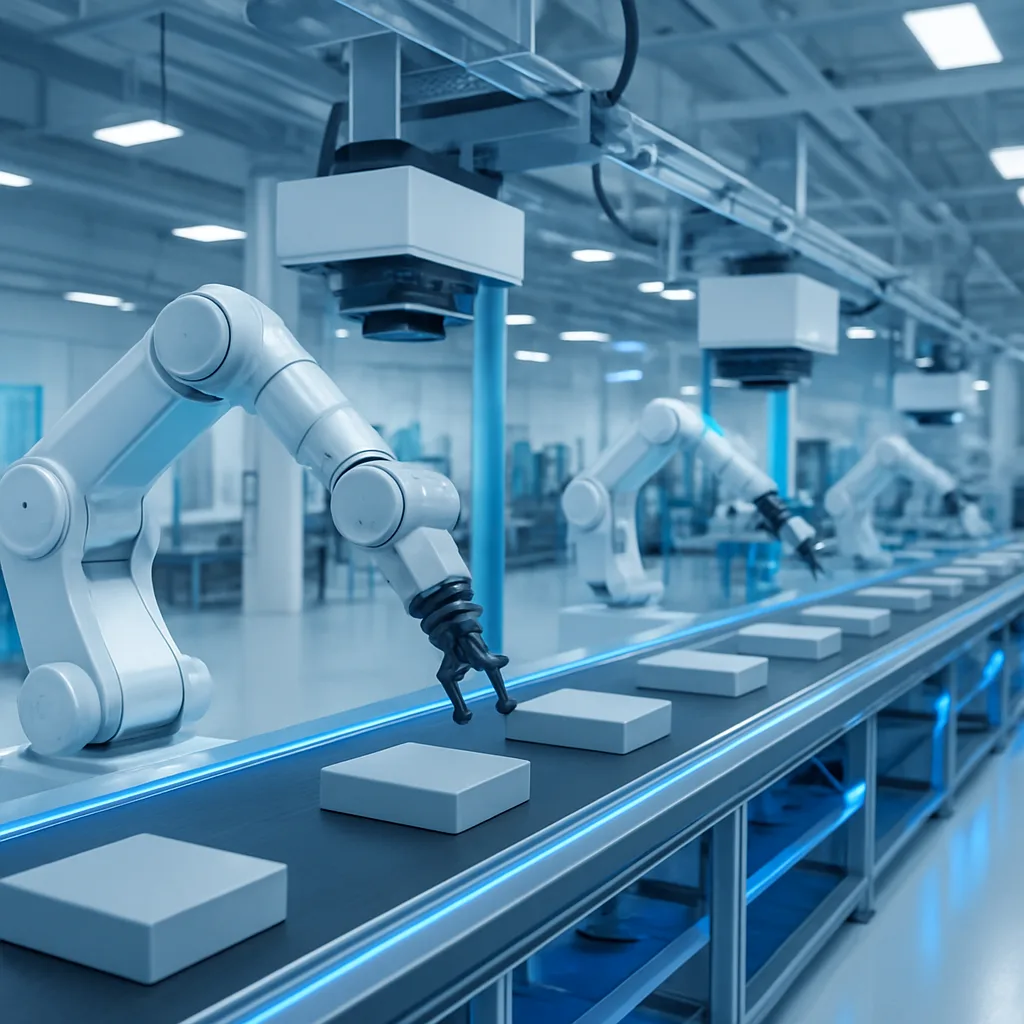
This matters because manual inspection has a hard ceiling. According to research cited by the American Society for Quality, manual visual inspection is typically only 80% effective, meaning roughly one in five defects can escape. AI inspection routinely pushes accuracy above 99% on well-trained tasks, closing that gap dramatically.
How AI Inspection Works on the Line
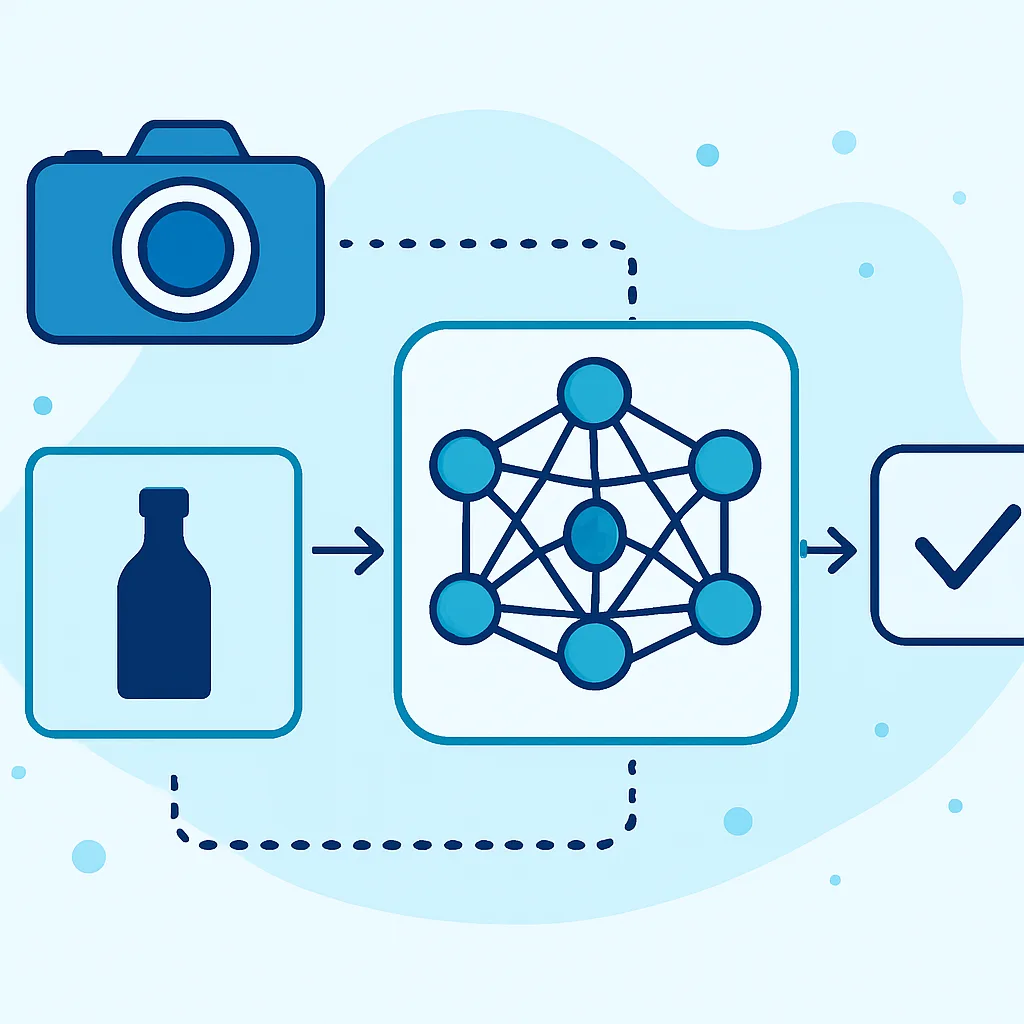
The workflow is simpler than most factory managers expect. The process breaks into five repeatable stages:
- Image capture — Industrial cameras or sensors photograph each product as it passes a fixed inspection point, often triggered by a proximity sensor.
- Preprocessing — Software normalizes lighting, contrast, and alignment so the model sees consistent input.
- Inference — The trained deep learning model analyzes the image and assigns a defect probability or classification.
- Decision — A pass result lets the unit continue; a fail result triggers a reject mechanism, alarm, or sorting arm.
- Feedback logging — Every result is stored, building a dataset that improves the model and reveals upstream process problems.
The real power lives in that final logging step. When defects cluster around a specific shift, machine, or batch, the data points engineers straight to the root cause. AI does not just catch bad parts; it explains why they happened. Teams building these intelligent pipelines often partner with specialists in artificial intelligence services to handle model training and integration correctly the first time.
Defect Types AI Detects Better Than Humans
Machine vision excels at consistent, high-volume detection. In practice, AI inspection reliably catches:
- Surface flaws — scratches, dents, cracks, discoloration, and corrosion.
- Dimensional errors — parts that are too large, too small, or out of tolerance.
- Assembly mistakes — missing screws, reversed components, or misaligned labels.
- Print and label defects — smudged barcodes, wrong text, or color drift.
- Contamination — foreign material, residue, or packaging debris.
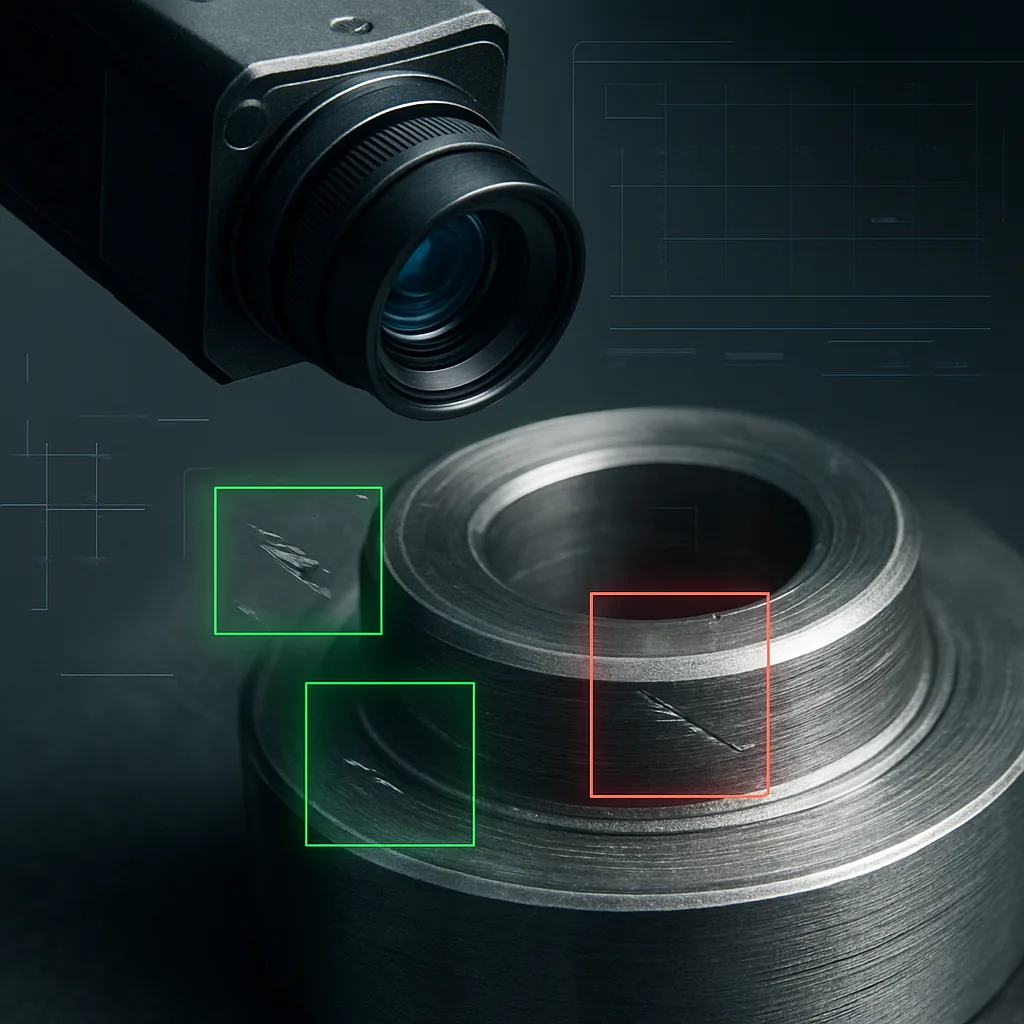
The advantage is consistency. A human inspector's accuracy drops sharply after 20 to 30 minutes of repetitive visual work, while an AI model performs identically at hour one and hour ten. That reliability is why automotive, electronics, food, and pharmaceutical manufacturers have adopted it fastest.
Manual Inspection vs AI Inspection: A Direct Comparison
The difference becomes obvious when you put both approaches side by side. The table below reflects patterns I have seen repeatedly across deployed systems.
| Factor | Manual Inspection | AI Inspection |
|---|---|---|
| Coverage | Sample-based, often 5-20% | 100% of units |
| Accuracy | Around 80% | Above 99% on trained tasks |
| Speed | Limited by human pace | Full line speed, milliseconds per unit |
| Consistency | Drops with fatigue | Identical all shift |
| Data capture | Minimal or manual | Automatic, fully logged |
| Cost over time | Rises with labor | Falls after setup |
| Scalability | Hard to scale | Easily replicated |
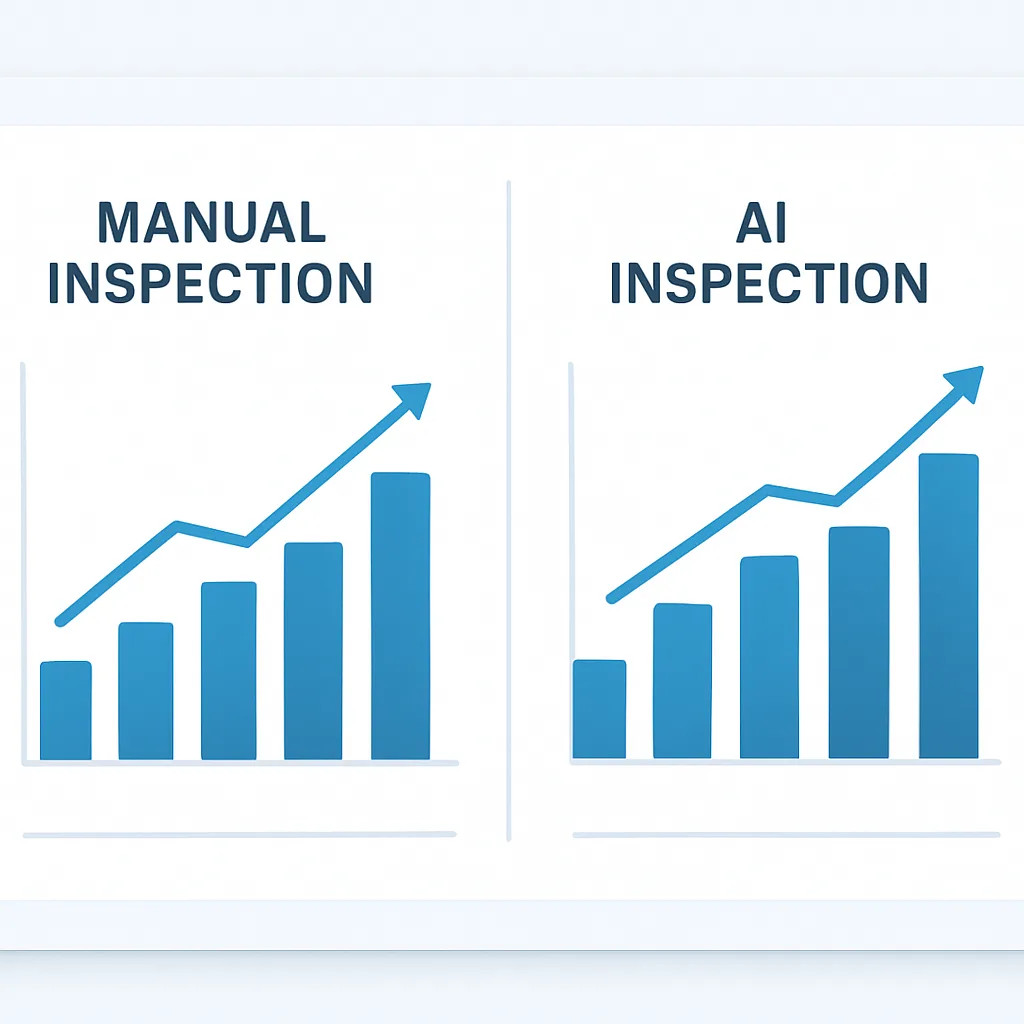
The most underrated column is data capture. Manual inspection rarely produces analyzable records, while AI builds a permanent quality history you can mine for continuous improvement.
Real Business Impact and ROI
The financial case for AI inspection is strong and measurable. According to McKinsey, AI-driven quality control can reduce defect detection costs by up to 50% while improving detection rates by as much as 90%. Those numbers translate directly into fewer recalls, less scrap, and stronger brand trust.
Consider the hidden costs of a missed defect. A faulty component that reaches a customer can cost ten to one hundred times more to fix than catching it on the line, a principle quality engineers call the 1-10-100 rule. AI inspection attacks the cheapest possible point in that curve by catching defects at the source.
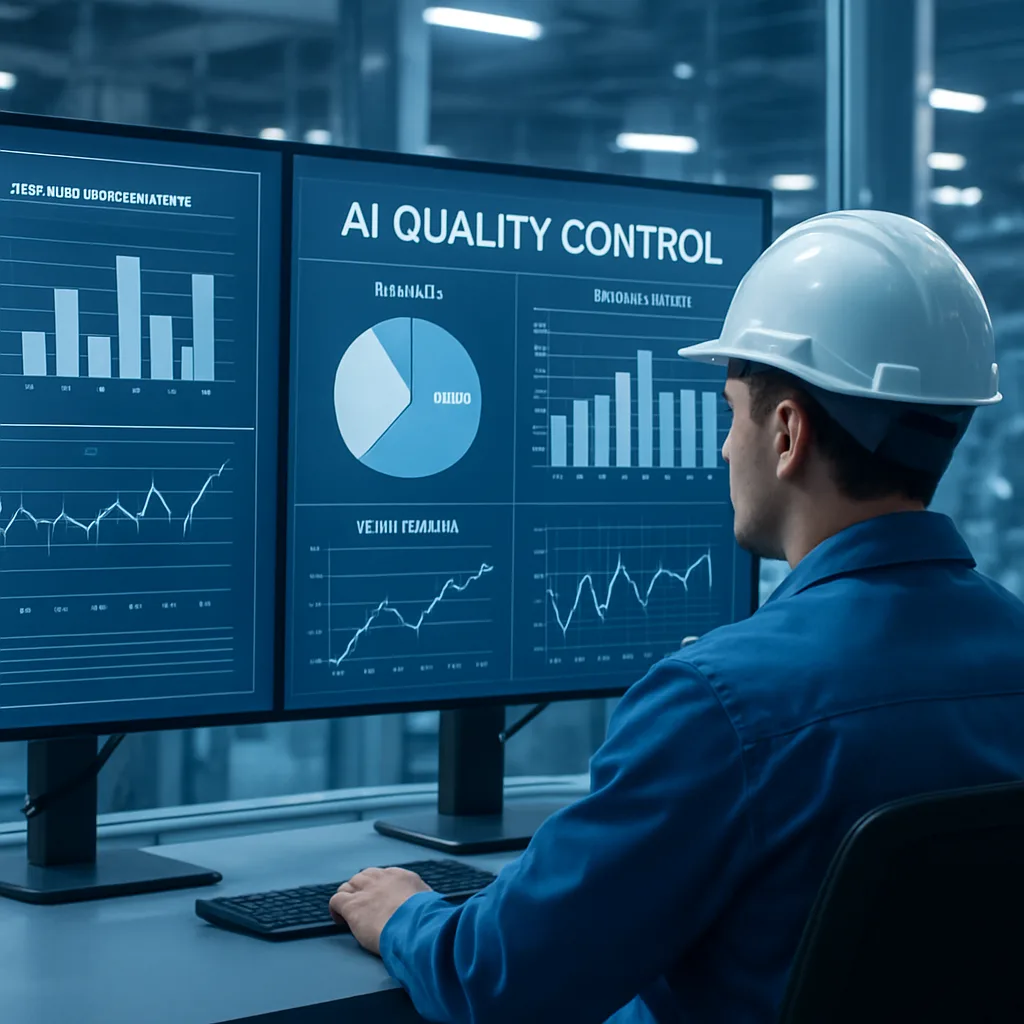
In my experience, mid-sized manufacturers typically recover their investment within 12 to 18 months, driven mostly by reduced scrap and reallocated labor. Importantly, AI does not eliminate inspectors; it elevates them from repetitive checking to handling edge cases, maintaining models, and improving processes.
How to Implement AI Inspection Without Disrupting Production
A successful rollout is methodical, not all-at-once. Follow this proven sequence:
- Start with one high-impact defect — Choose your most frequent or costly defect type for the pilot.
- Collect quality images — Gather hundreds to thousands of labeled good and bad examples under real line conditions.
- Train and validate — Build the model and test it against known samples before going live.
- Run in shadow mode — Let AI inspect alongside humans first, comparing results without rejecting parts.
- Go live and monitor — Activate automatic rejection once confidence is proven, then track performance daily.
- Expand gradually — Add new defect types and inspection points once the first station is stable.
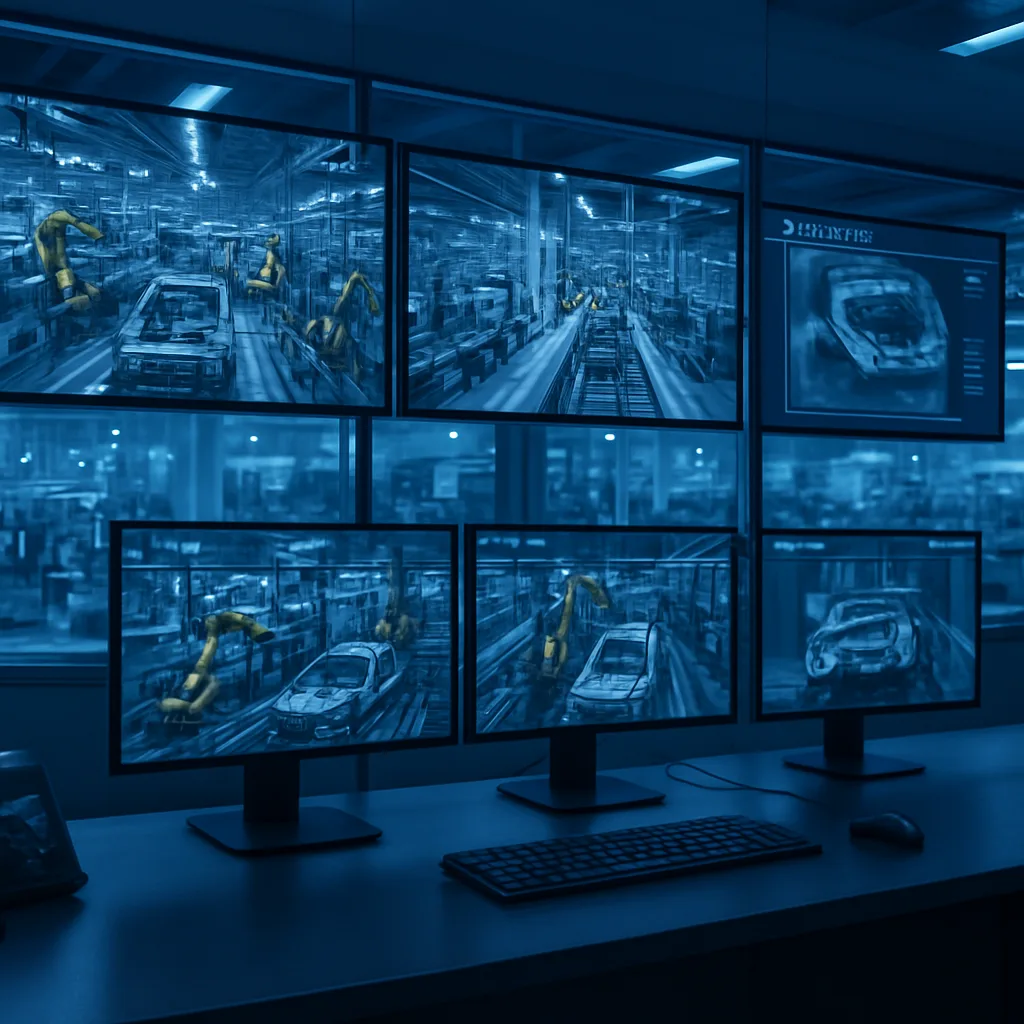
The shadow mode stage is non-negotiable. It builds team trust and exposes weaknesses safely before any product gets rejected automatically. Businesses that need full integration support, from hardware selection to model deployment, often work with experienced providers like the team behind ZoneTechify and their dedicated artificial intelligence services to avoid common pitfalls.
Common Challenges and How to Solve Them
AI inspection is powerful but not plug-and-play. The three most common obstacles are predictable and solvable:
- Insufficient defect data — Rare defects are hard to train on. Solve this with synthetic data generation and augmentation to expand limited samples.
- Lighting and environment drift — Changing factory light fools weak models. Use controlled enclosed lighting and retrain periodically.
- Model drift over time — As products evolve, accuracy can slip. Schedule regular retraining using freshly logged production images.
The organizations that succeed treat AI inspection as a living system, not a one-time install. Continuous monitoring and retraining keep accuracy high as conditions change. You can learn more about practical AI implementation approaches at WebPeak.
The Future of AI on the Assembly Line
The trajectory points toward fully connected, self-improving quality systems. Edge AI now runs inference directly on cameras, removing latency and cloud dependence. Self-supervised learning is reducing the labeling burden that once made projects slow. Soon, inspection systems will not only detect defects but predict them before they occur by reading subtle upstream signals.
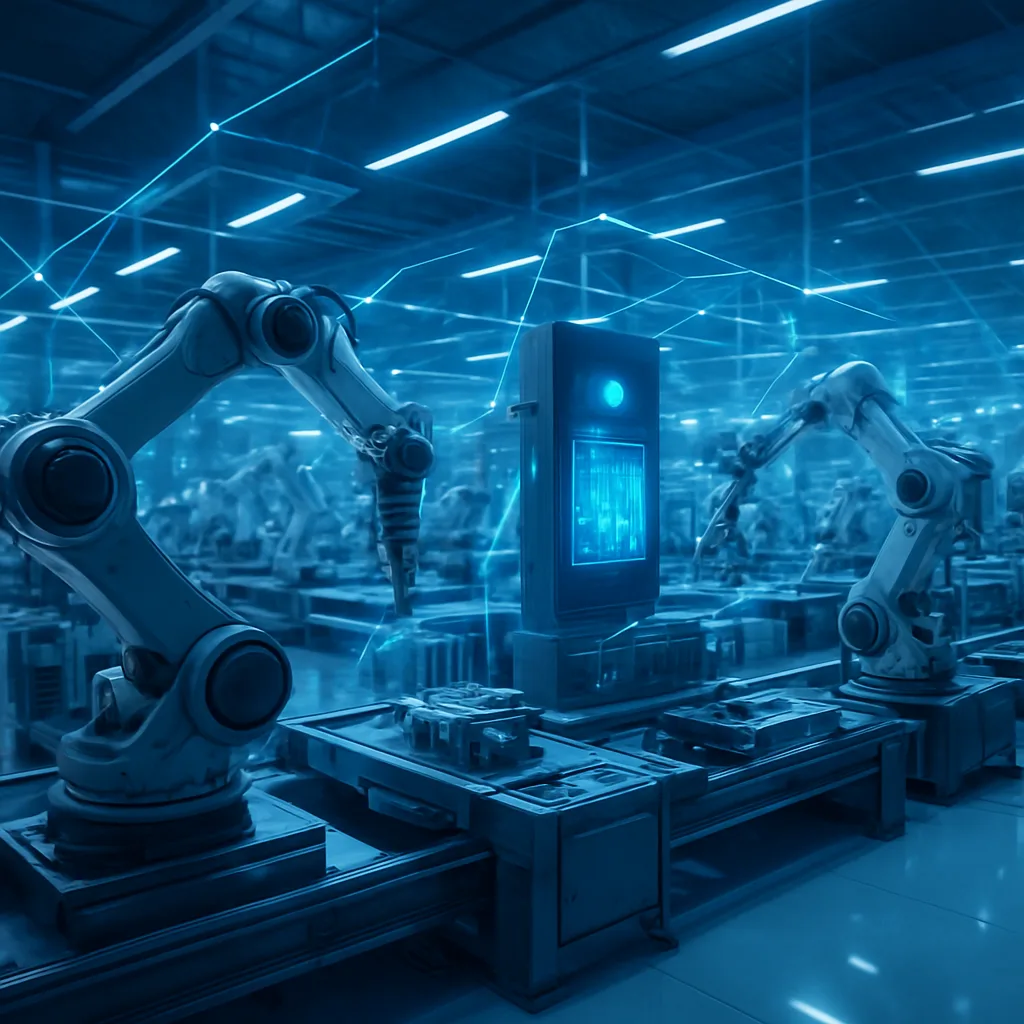
This is the shift from reactive quality control to predictive quality assurance. Factories that adopt AI inspection today are building the data foundation that makes those advanced capabilities possible tomorrow.
Key Takeaways
- Assembly line inspection AI uses computer vision and deep learning to inspect 100% of products at full line speed.
- Manual inspection averages around 80% accuracy, while trained AI systems routinely exceed 99%.
- McKinsey reports AI quality control can cut defect detection costs by up to 50% and improve detection by up to 90%.
- The 1-10-100 rule means catching defects on the line is far cheaper than fixing them after shipment.
- Successful rollouts start small, use shadow mode, and rely on continuous retraining to prevent model drift.
- AI elevates human inspectors to higher-value work rather than replacing them entirely.
Frequently Asked Questions (FAQ)
How accurate is AI for assembly line inspection?
Well-trained AI inspection systems typically achieve over 99% accuracy on defined defect tasks, compared to roughly 80% for manual visual inspection. Accuracy depends on image quality, training data, and consistent lighting. Regular retraining keeps performance high as products and conditions change over time.
Is AI inspection expensive to set up?
Initial costs cover cameras, lighting, computing hardware, and model training, but most mid-sized manufacturers recover the investment within 12 to 18 months. Savings come from reduced scrap, fewer recalls, and reallocated labor. Starting with one high-impact defect keeps the first project affordable and low-risk.
Will AI inspection replace human inspectors?
No. AI handles repetitive, high-volume defect detection while humans manage edge cases, maintain models, and investigate root causes. In practice, inspectors move from tedious visual checking to higher-value quality engineering roles. The combination produces better results than either humans or AI working alone.
How much data do I need to train an inspection model?
Most projects start with several hundred to a few thousand labeled images of good and defective parts. Rare defects can be supplemented with synthetic data and augmentation. The key is capturing real line conditions, including varied lighting and natural product variation, for reliable model performance.
How long does it take to deploy AI inspection?
A focused pilot on a single defect type can go live in a few weeks once quality images are collected. Running in shadow mode alongside human inspectors first builds trust and validates accuracy. Full multi-station rollouts take longer and expand gradually after the initial station proves stable.