
A practical, expert guide to how artificial intelligence is transforming claims litigation, from document review and predictive analytics to ethics, costs, and the road ahead.
Artificial Intelligence in Claims Litigation

Claims litigation has always been a battle of volume. Thousands of pages, competing timelines, and high financial stakes converge on every case. Artificial intelligence is now changing how legal teams, insurers, and claimants navigate that complexity. Having worked alongside litigation teams adopting these tools, I have seen AI move from an experimental add-on to a core part of case strategy. This guide explains, in plain language, exactly how AI is reshaping claims litigation, where it delivers real value, and where human judgment must still lead.
Quick Answer: Artificial intelligence in claims litigation uses machine learning and natural language processing to review documents, predict case outcomes, detect fraud, and automate claims workflows. It accelerates discovery, reduces costs, and improves accuracy while lawyers retain final decision-making, strategy, and ethical oversight of every case.
What Is Artificial Intelligence in Claims Litigation?
Artificial intelligence in claims litigation is the use of software that learns from data to assist with legal tasks involving insurance and liability disputes. Instead of following fixed rules, these systems recognize patterns in past cases, contracts, and evidence.
Key terms defined:
- Machine learning (ML): Algorithms that improve their predictions as they process more case data.
- Natural language processing (NLP): Technology that reads and interprets legal text the way a person would.
- Predictive analytics: Models that estimate the likely outcome, value, or duration of a claim.
In practice, AI does not replace attorneys. It handles repetitive, data-heavy work so legal professionals can focus on strategy, negotiation, and courtroom advocacy. Firms exploring these capabilities often partner with specialists such as ZoneTechify and WebPeak to build responsible, secure implementations.
How AI Accelerates Document Review and Discovery

Document review is the single most time-consuming phase of litigation, and it is where AI delivers its most immediate return. In a large claims dispute, teams may face millions of emails, medical records, and policy documents.
AI-driven technology-assisted review (TAR) ranks documents by relevance so lawyers see the most important material first. According to a widely cited RAND Corporation study, document review historically accounts for roughly 73% of the cost of e-discovery, making it the clearest target for automation.
Here is how AI improves the discovery process:
- Predictive coding learns from a small set of attorney-reviewed documents and applies those judgments across the full dataset.
- Concept clustering groups related documents even when they use different wording.
- Automatic privilege detection flags attorney-client communications to prevent accidental disclosure.
- Timeline extraction builds a chronology of events directly from raw documents.
The result is faster review with fewer missed documents. Instead of reading everything, teams verify AI recommendations, dramatically shrinking the hours billed for first-pass review.
Predictive Analytics: Forecasting Case Outcomes
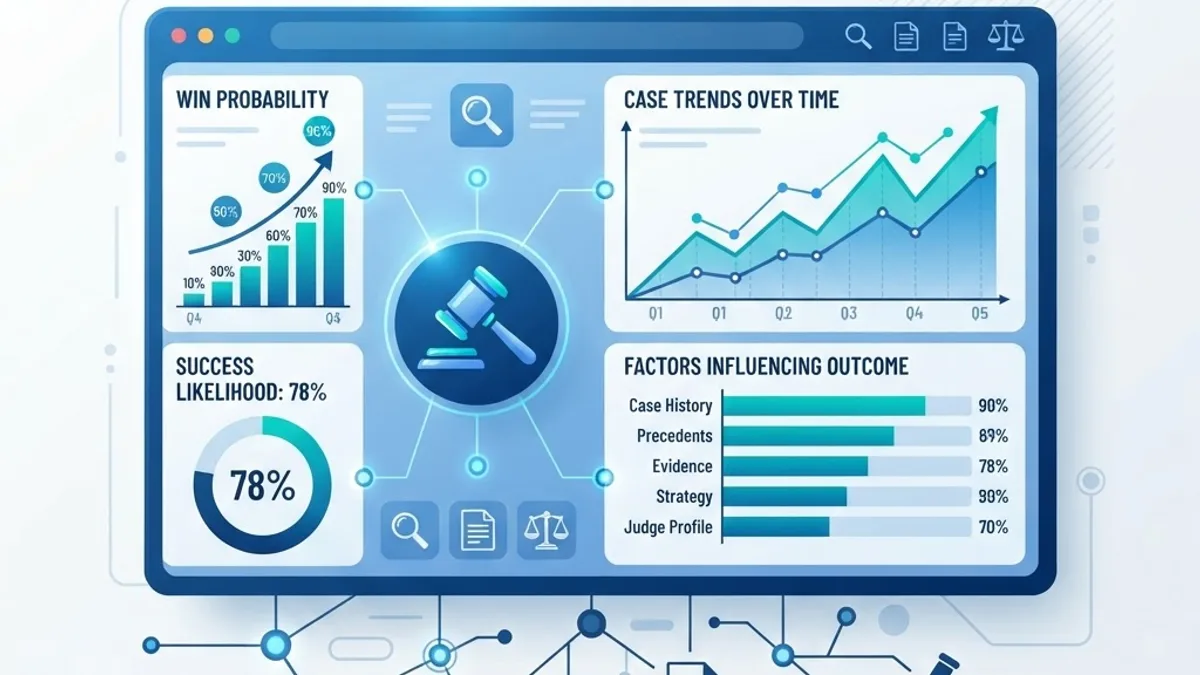
Predictive analytics is where AI shifts from clerical help to strategic advantage. By analyzing historical rulings, settlement amounts, judge tendencies, and case characteristics, AI models estimate the probable outcome of a claim before significant resources are spent.
This matters because most disputes never reach trial. According to the U.S. Department of Justice, fewer than 3% of civil cases go to trial, meaning settlement decisions dominate litigation strategy. Accurate outcome forecasting directly improves those decisions.
Predictive models help legal teams:
- Set realistic settlement ranges backed by comparable case data.
- Decide whether to litigate, mediate, or settle early.
- Identify weak claims that should be resolved quickly.
- Allocate senior attorney time to the highest-value cases.
The honest caveat, drawn from real deployments, is that these predictions are only as good as the data behind them. A model trained on a narrow jurisdiction will not travel well to another court. Treat predictions as informed guidance, not verdicts.
Automating Claims Workflows and Fraud Detection
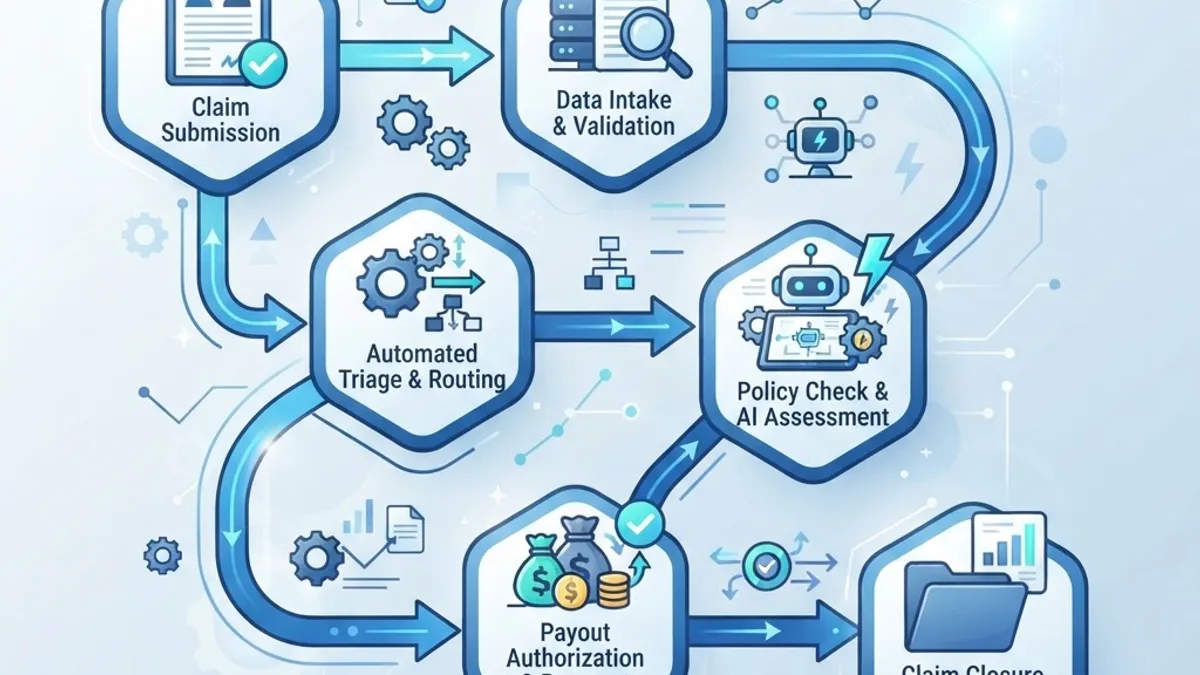
Before a claim ever becomes litigation, AI is already at work. Insurers use automation to triage incoming claims, validate coverage, and route complex cases to human adjusters. This reduces the friction that often escalates disputes into lawsuits.
Fraud detection is a standout use case. Machine learning models compare each claim against patterns learned from millions of prior claims, flagging anomalies a human might miss. The Coalition Against Insurance Fraud estimates that insurance fraud costs Americans at least 308 billion dollars per year, so even modest accuracy gains produce enormous savings.
Common automation tasks include:
- Extracting key data from claim forms and invoices.
- Cross-checking claims against policy terms automatically.
- Scoring claims for fraud risk in real time.
- Generating first drafts of demand letters and responses.
Organizations building these systems often rely on dedicated artificial intelligence services to integrate models safely into existing case-management platforms without disrupting compliance requirements.
Data Security and Confidentiality Concerns

Litigation data is among the most sensitive information any organization handles. Medical records, financial statements, and privileged strategy all flow through AI systems, so security cannot be an afterthought.
Responsible AI adoption in claims litigation requires:
- Encryption of data both in transit and at rest.
- Access controls that limit who can view privileged material.
- Private or on-premise models so confidential data is never used to train public systems.
- Audit trails that record every AI decision for later review.
From experience, the firms that succeed treat data governance as the first project milestone, not the last. Regulators including the American Bar Association have issued guidance reminding lawyers that using AI does not reduce their duty to protect client confidentiality. The technology is a tool under the attorney's responsibility, never a substitute for it.
Cutting Litigation Costs and Timelines

Cost control is the reason many firms adopt AI in the first place, and the savings are measurable. By automating review, drafting, and research, AI compresses tasks that once took weeks into days.
AI vs. Traditional Claims Litigation
| Factor | Traditional Approach | AI-Assisted Approach |
|---|---|---|
| Document review speed | Slow, manual, page-by-page | Fast, prioritized, automated ranking |
| Cost per case | High billable hours | Lower review and drafting costs |
| Outcome prediction | Based on intuition | Backed by historical data |
| Fraud detection | Sample-based, reactive | Real-time, pattern-based |
| Human oversight | Full | Full, focused on strategy |
| Scalability | Limited by staff | Scales with data volume |
The pattern is consistent: AI does not remove the lawyer, it removes the drudgery. That reallocation of time toward high-value work is where the true return on investment appears.
Ethical Considerations and Human Oversight

AI in litigation raises legitimate ethical questions that responsible practitioners must confront directly. Bias in training data can produce unfair predictions. Over-reliance on automation can weaken professional judgment. And opaque models can make it hard to explain a recommendation to a court or client.
The guiding principle is simple: AI advises, humans decide. Attorneys remain accountable for every filing, settlement, and strategy, regardless of which tool produced the first draft. Best practices include validating models regularly, documenting how AI influenced decisions, and disclosing AI use when ethics rules require it.
Handled with this discipline, AI strengthens rather than threatens the integrity of the litigation process.
The Future of AI in Claims Litigation

The next wave of AI in claims litigation centers on generative models that draft pleadings, summarize depositions, and answer complex legal questions in seconds. These systems will increasingly integrate directly into case-management platforms, giving legal teams a unified workspace.
Expect three clear trends:
- Deeper integration between AI tools and court filing systems.
- Explainable AI that shows its reasoning to satisfy judicial scrutiny.
- Wider access as smaller firms adopt affordable, cloud-based tools once reserved for large practices.
The firms that thrive will be those that pair strong technology with strong human judgment, using AI to serve clients better rather than simply cutting corners.
Key Takeaways
- AI in claims litigation automates document review, predicts outcomes, detects fraud, and streamlines workflows while lawyers retain full control.
- Document review historically accounts for about 73% of e-discovery costs, making it the highest-value target for automation.
- Fewer than 3% of U.S. civil cases reach trial, so accurate settlement forecasting is critical, and predictive analytics directly supports it.
- Insurance fraud costs Americans at least 308 billion dollars annually, and AI pattern detection meaningfully reduces that loss.
- Data security, bias mitigation, and human oversight are non-negotiable for ethical AI use in litigation.
Frequently Asked Questions (FAQ)
What does artificial intelligence do in claims litigation?
Artificial intelligence in claims litigation reviews large document sets, predicts case outcomes, detects fraudulent claims, and automates routine drafting and data entry. It accelerates discovery and lowers costs, while attorneys keep full responsibility for strategy, negotiation, filings, and every final legal decision made in a case.
Can AI replace lawyers in litigation?
No, AI cannot replace lawyers in litigation. It handles repetitive, data-heavy tasks such as document review and research, but legal strategy, courtroom advocacy, client counseling, and ethical judgment require human attorneys. AI is a productivity tool that supports lawyers rather than substituting for their professional expertise and accountability.
Is AI accurate at predicting case outcomes?
AI can be highly useful for predicting case outcomes, but accuracy depends entirely on the quality and relevance of its training data. Models built on strong, jurisdiction-specific data give reliable guidance for settlement decisions. However, predictions remain estimates, so experienced attorneys should always validate them before acting.
How does AI reduce litigation costs?
AI reduces litigation costs by automating document review, drafting, and research that once required many billable hours. It prioritizes relevant evidence, flags privileged material, and speeds up discovery. This lets legal teams focus expensive attorney time on strategy and negotiation, significantly lowering the overall cost of each case.
Is it safe to use AI with confidential legal data?
Using AI with confidential legal data is safe only with proper safeguards. Firms should use encrypted, private, or on-premise models, strict access controls, and detailed audit trails. Public tools that train on user data must be avoided. Attorneys remain fully responsible for protecting client confidentiality under professional ethics rules.
Which types of claims benefit most from AI?
High-volume, document-heavy claims benefit most from AI, including insurance disputes, personal injury, mass tort, and complex commercial litigation. These cases involve massive datasets where automated review and fraud detection save the most time and money. Simpler, low-document disputes gain less from AI but can still use basic automation.