Discover how artificial intelligence is transforming biochemistry, from protein folding and drug discovery to enzyme engineering, genomics, and faster lab research.
Artificial Intelligence in Biochemistry
Artificial intelligence has quietly become one of the most powerful instruments in the modern biochemistry lab. Where researchers once spent years crystallizing a single protein or screening thousands of compounds by hand, machine learning models now predict molecular behavior in hours. This shift is not hype; it is reshaping how discoveries are made, validated, and applied to real human health problems. In this guide, we break down exactly how AI works inside biochemistry, where it delivers measurable value, and what its limits still are.
Quick Answer: Artificial intelligence in biochemistry uses machine learning to predict protein structures, accelerate drug discovery, engineer enzymes, and analyze genomic data. It processes massive molecular datasets far faster than manual methods, cutting research timelines from years to days while improving accuracy and lowering experimental costs.
What Is Artificial Intelligence in Biochemistry?
Artificial intelligence in biochemistry is the application of machine learning and deep learning models to understand, predict, and design biological molecules. Instead of relying solely on wet-lab experiments, scientists feed algorithms enormous datasets of protein sequences, molecular structures, and reaction outcomes so the models learn the underlying chemical rules.
Key definition: A machine learning model in this field is a system trained on known biochemical data that can then predict properties of new, unseen molecules, such as how a protein folds or how tightly a drug binds to a target.
The result is a hybrid workflow. AI narrows millions of possibilities down to a handful of high-probability candidates, and biochemists then confirm those candidates experimentally. Teams that combine computational and laboratory expertise, like those featured at ZoneTechify, consistently report faster iteration cycles because failed experiments are filtered out before a single test tube is touched.
How AI Predicts Protein Structures
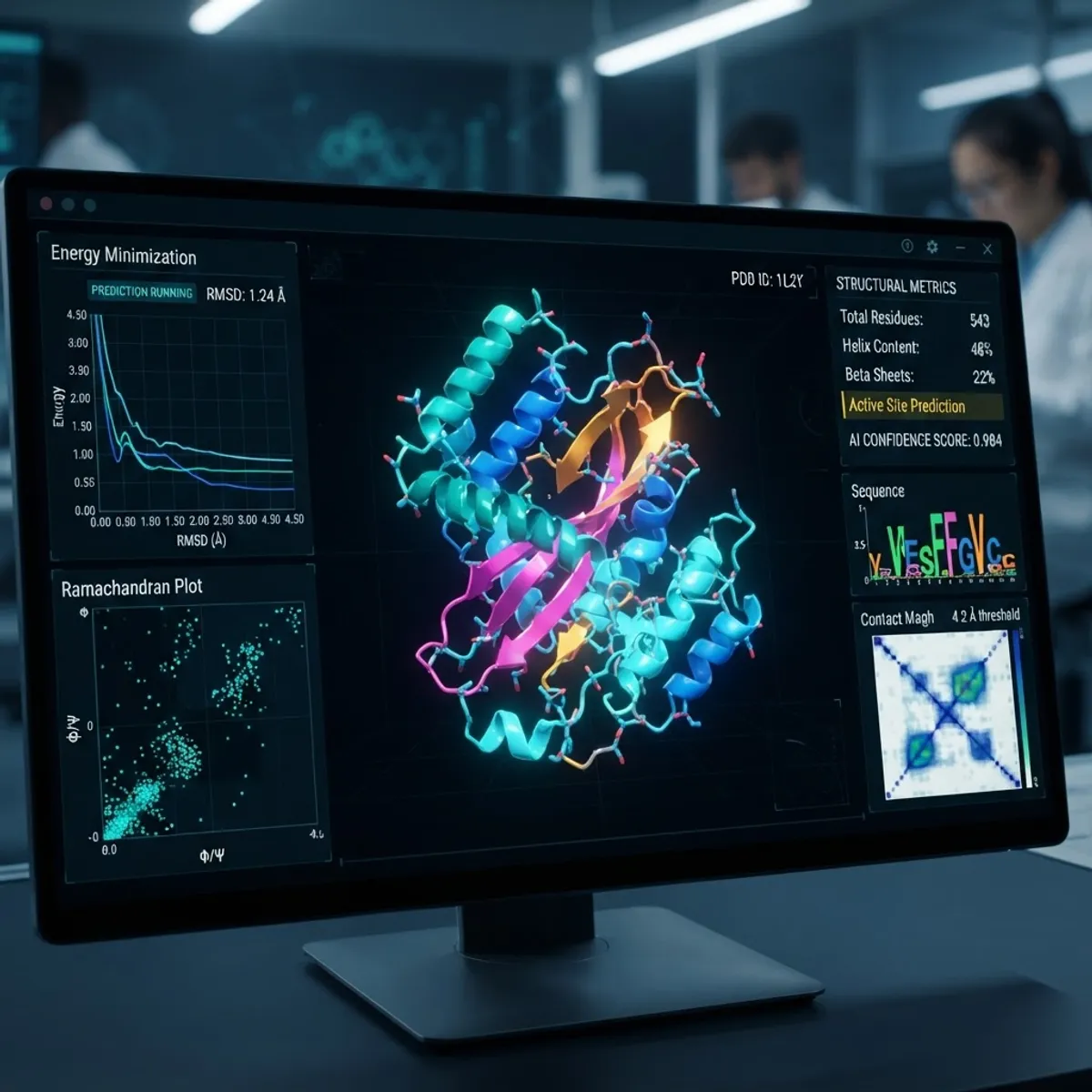
Protein structure prediction is the clearest success story of AI in biochemistry. A protein's function is dictated by how its amino acid chain folds into a three-dimensional shape, and determining that shape was historically one of biology's hardest problems.
In 2021, DeepMind's AlphaFold predicted structures for over 200 million proteins, effectively covering nearly every catalogued organism. According to the developers, its accuracy rivaled experimental methods like X-ray crystallography for many proteins, a leap that the scientific community had waited fifty years to see.
This matters because protein shape reveals function. When researchers know a structure, they can:
- Identify binding pockets where drugs could attach
- Understand disease-causing mutations at the molecular level
- Design synthetic proteins for industrial or medical use
What once required months of lab work and expensive equipment can now begin with a free structure prediction, letting smaller labs compete with well-funded institutions.
Accelerating Drug Discovery With AI
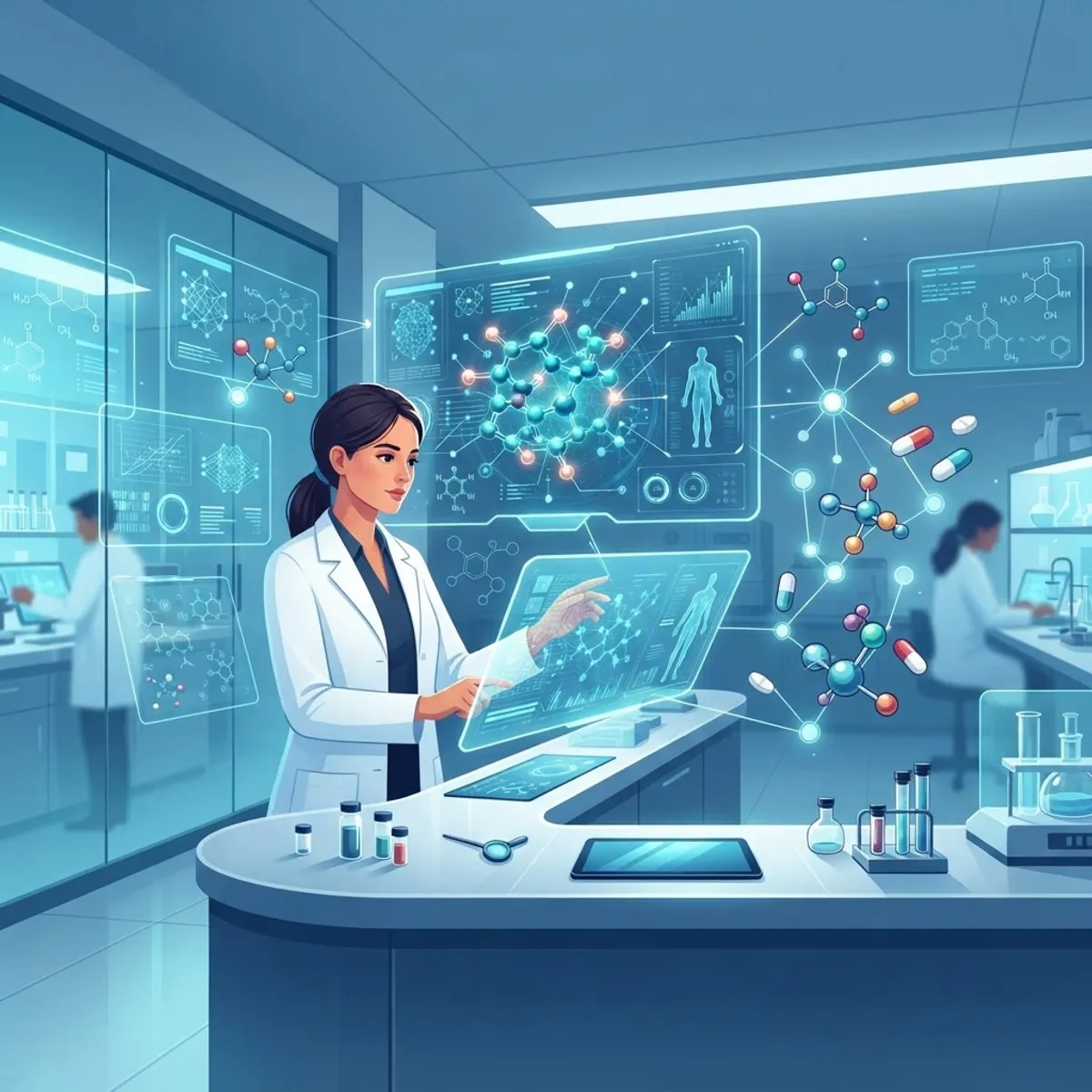
Drug discovery is expensive and slow. Developing a single approved drug can cost over 2 billion dollars and take more than a decade, according to widely cited industry analyses. AI attacks the most wasteful part of that pipeline: the early screening stage.
Machine learning models perform virtual screening, evaluating millions of chemical compounds against a biological target in silico before any physical synthesis. This lets teams prioritize the most promising molecules and discard weak candidates early.
AI contributes across several drug discovery stages:
- Target identification — pinpointing which protein or gene drives a disease
- Hit generation — proposing candidate molecules likely to interact with that target
- Lead optimization — refining molecules for potency, safety, and stability
- Toxicity prediction — flagging harmful side effects before clinical trials
By compressing these steps, AI reduces both cost and the risk of late-stage failure. For organizations building custom research platforms, specialized artificial intelligence services can turn these models into usable internal tools rather than isolated experiments.
Machine Learning for Molecular Analysis

Beyond structure and drugs, AI excels at interpreting the flood of data that modern instruments generate. Mass spectrometry, nuclear magnetic resonance, and high-throughput assays produce datasets far too large for manual analysis.
Machine learning models classify these signals, detect patterns, and quantify molecular concentrations with high consistency. A well-trained model does not tire, does not drift between samples, and applies the same criteria to every reading, which improves reproducibility, a persistent challenge in biochemistry research.
A practical example is metabolomics, the study of small molecules in cells. AI clusters thousands of metabolites to reveal which biochemical pathways are active in healthy versus diseased tissue, insights that would take a human analyst weeks to extract manually.
AI in Enzyme Engineering
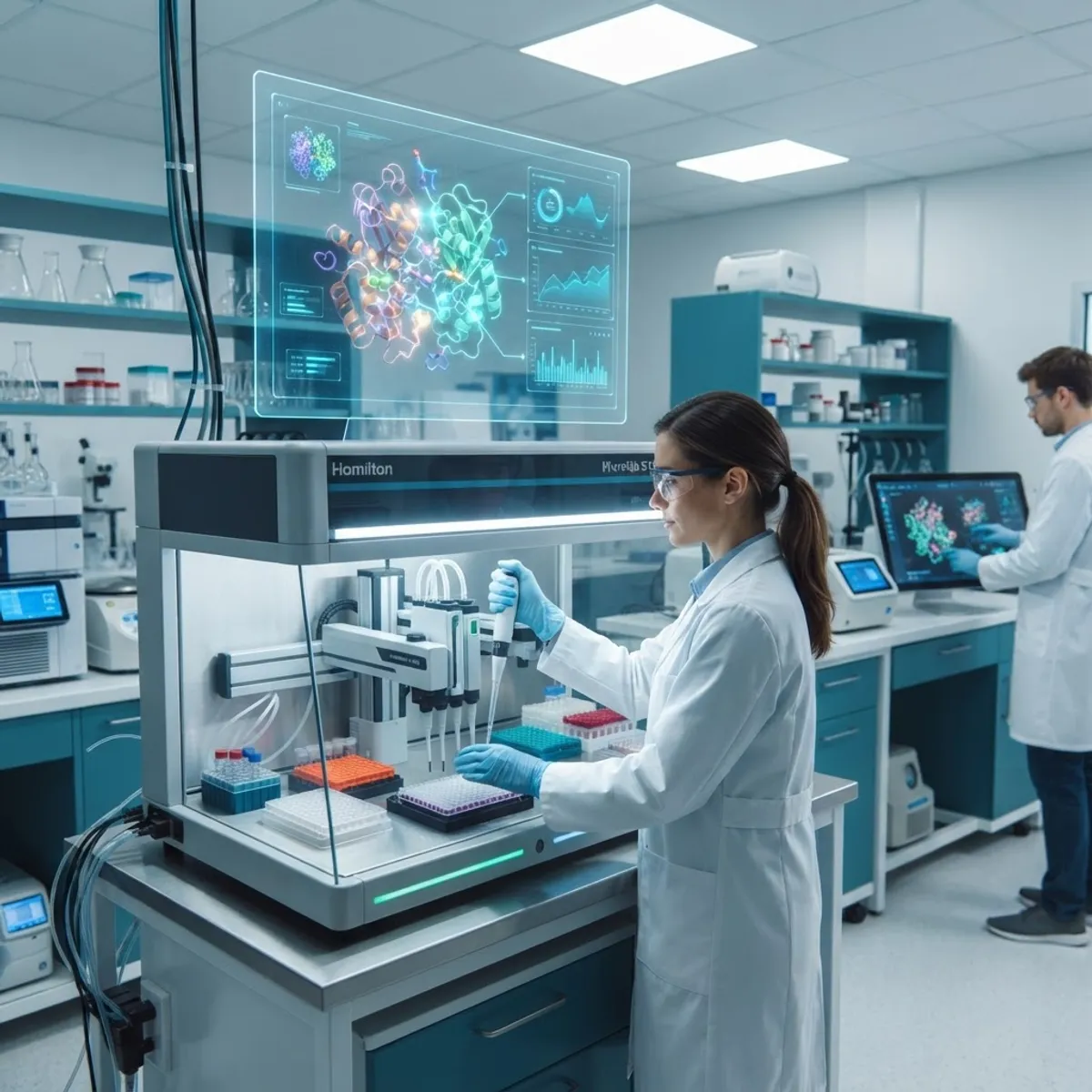
Enzymes are biological catalysts, and engineering better ones has enormous value for medicine, sustainable manufacturing, and food production. Traditional enzyme optimization relied on directed evolution, an iterative trial-and-error process that could take dozens of laboratory rounds.
AI shortcuts this by predicting which amino acid changes will improve stability, activity, or specificity. Models trained on sequence and function data suggest targeted mutations, so scientists test tens of variants instead of thousands.
This approach has produced enzymes that break down plastic waste, manufacture pharmaceuticals more cleanly, and operate at industrial temperatures. The economic and environmental payoff is significant: fewer failed batches, less chemical waste, and greener production processes.
AI and Genomics Data
Genomics generates some of the largest datasets in all of science. A single human genome contains roughly 3 billion base pairs, and interpreting that information biochemically requires computational power.
AI links genetic variations to biochemical outcomes, predicting how a mutation alters protein production or metabolic function. This connects the genome to the proteome and metabolome, giving a fuller picture of how life operates at the molecular level.
Practical applications include identifying genetic markers for disease risk, personalizing treatments based on an individual's biochemistry, and understanding how populations respond differently to the same drug. This is the foundation of precision medicine, where therapy is tailored to molecular reality rather than population averages.
AI Biochemistry Research Workflow
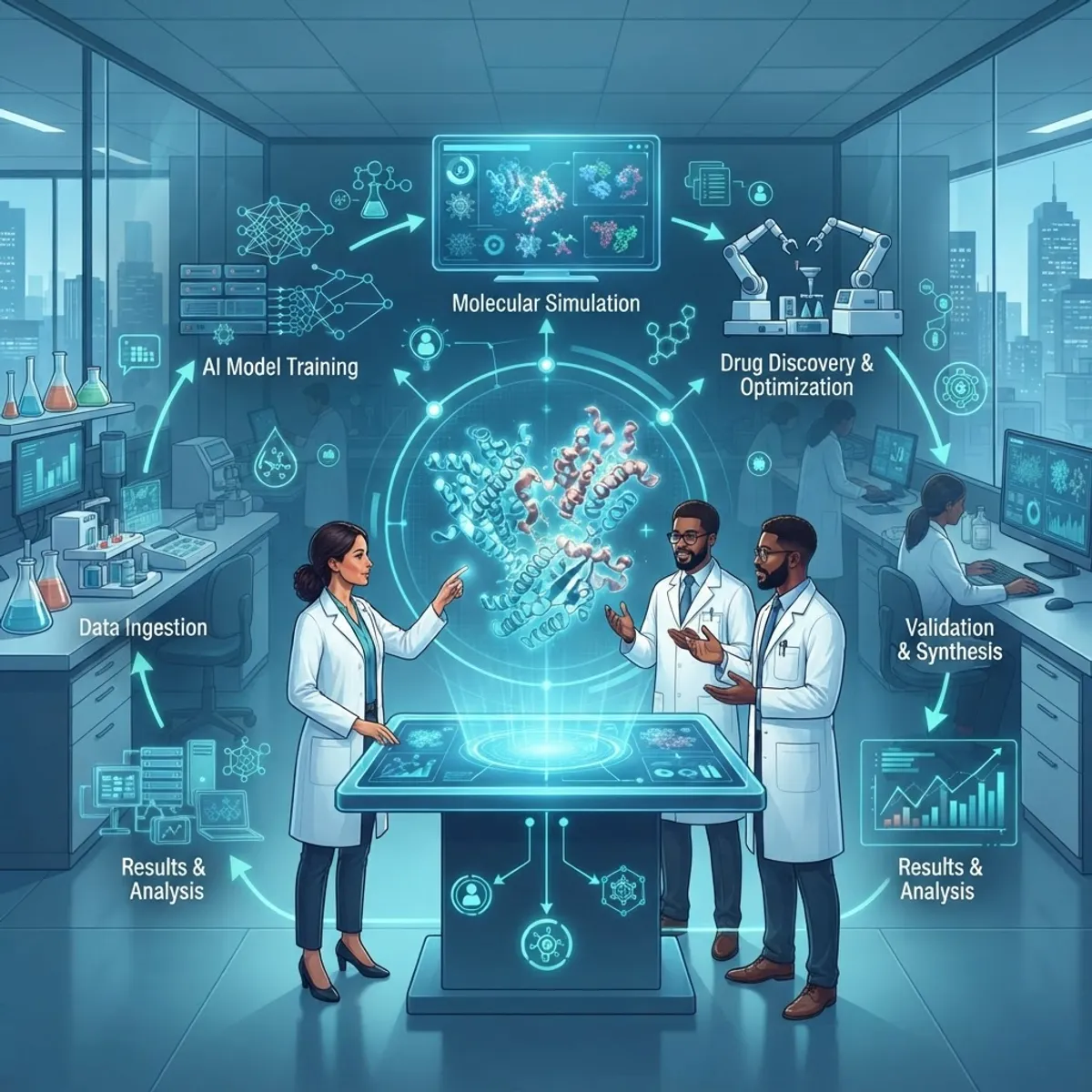
Understanding where AI fits in the daily research cycle clarifies its real value. The modern workflow is iterative and collaborative rather than fully automated.
| Research Stage | Traditional Method | AI-Assisted Method |
|---|---|---|
| Structure discovery | Months of crystallography | Hours of prediction |
| Compound screening | Manual, thousands tested | Virtual, millions ranked |
| Data analysis | Weeks of manual review | Automated pattern detection |
| Enzyme optimization | Dozens of lab rounds | Targeted variant prediction |
| Cost efficiency | High, error-prone | Lower, filtered early |
The pattern is consistent: AI handles scale and prediction, while human scientists provide judgment, experimental validation, and ethical oversight. Neither replaces the other. The most productive labs treat AI as a tireless research assistant, not an autonomous decision-maker.
The Future of AI in Biochemistry
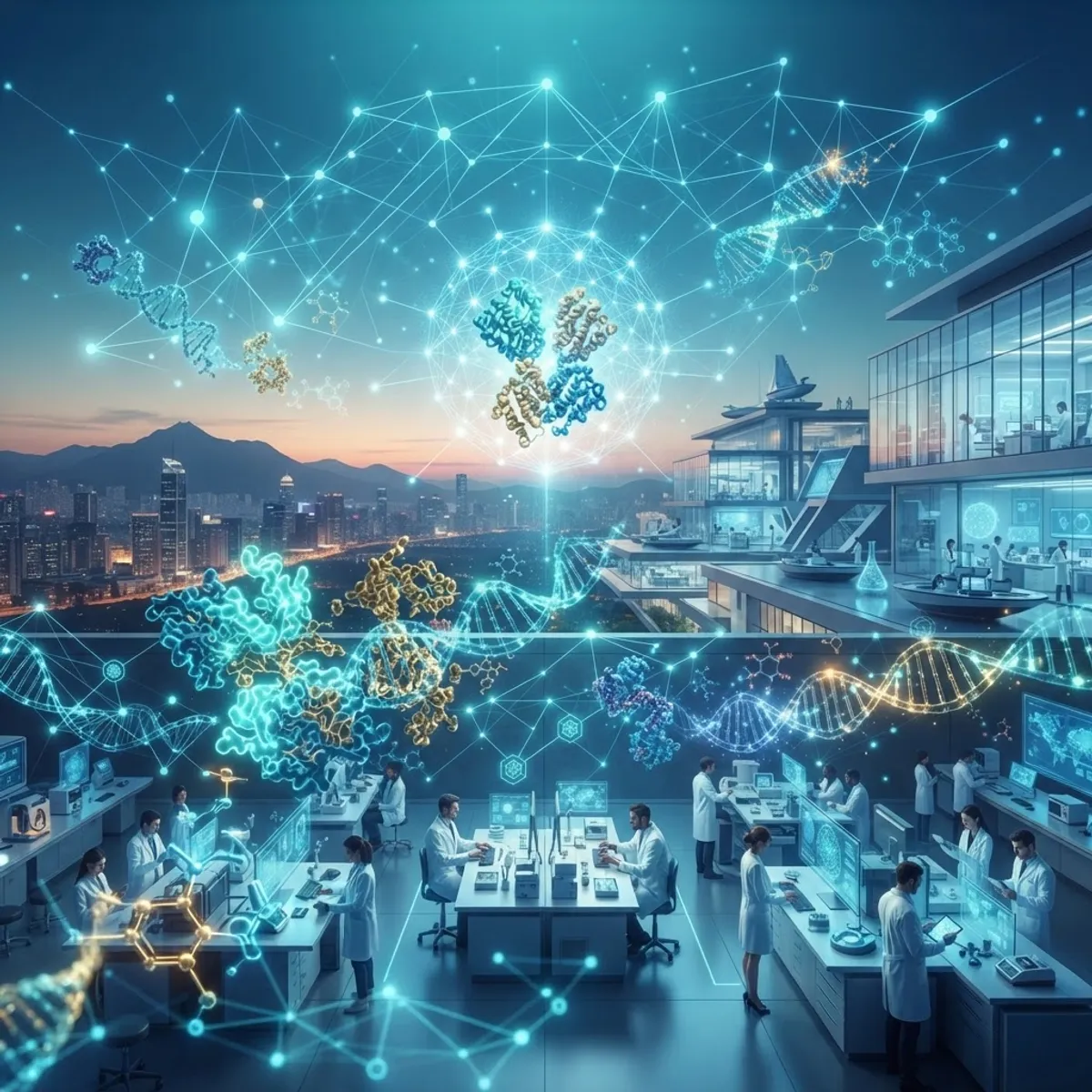
The next decade will push AI from prediction toward genuine design. Generative models are already proposing entirely novel proteins that do not exist in nature, opening the door to custom biological tools built for specific tasks.
Expect tighter integration between AI and automated laboratories, where models design experiments, robotic systems run them, and results feed back to retrain the models, creating a self-improving research loop. Explainable AI will also become critical, because scientists and regulators need to understand why a model made a prediction before trusting it in medicine.
The organizations that benefit most will be those that invest early in both data quality and computational literacy. Clean, well-labeled biochemical data is the fuel these systems run on, and it remains the single biggest bottleneck.
Key Takeaways
- Artificial intelligence in biochemistry predicts protein structures, accelerates drug discovery, and engineers enzymes far faster than manual methods.
- AlphaFold predicted over 200 million protein structures, solving a fifty-year-old scientific challenge.
- Drug development costs over 2 billion dollars and more than a decade; AI reduces waste in early screening stages.
- The human genome's roughly 3 billion base pairs make AI essential for genomics interpretation and precision medicine.
- AI augments rather than replaces biochemists, handling scale and prediction while humans validate and decide.
Frequently Asked Questions (FAQ)
What is artificial intelligence in biochemistry used for?
AI in biochemistry is used to predict protein structures, discover new drugs, engineer enzymes, and analyze genomic and molecular data. It processes huge datasets quickly, ranks the most promising candidates, and helps scientists focus lab work on experiments most likely to succeed.
Can AI replace biochemists in the laboratory?
No, AI cannot replace biochemists. It handles large-scale prediction and data analysis, but human scientists still design experiments, validate results in the lab, interpret biological meaning, and make ethical decisions. The strongest results come from combining AI speed with human expertise and judgment.
How does AI speed up drug discovery?
AI speeds up drug discovery through virtual screening, evaluating millions of compounds against a target computationally before any are synthesized. It also predicts toxicity and optimizes candidates early, so teams avoid costly late-stage failures and reach viable leads in a fraction of the traditional time.
Is AI accurate at predicting protein structures?
Yes, modern AI models like AlphaFold achieve accuracy comparable to experimental methods for many proteins. According to its developers, it produced reliable structures for over 200 million proteins. However, scientists still verify important predictions experimentally, especially for complex or novel proteins where confidence is lower.
What skills are needed to use AI in biochemistry?
Using AI in biochemistry requires a blend of biochemistry knowledge, data literacy, and basic programming, often in Python. Understanding how models are trained, how to clean data, and how to interpret predictions responsibly matters more than being an AI engineer, since collaboration bridges the gaps.
Final Thoughts
Artificial intelligence has moved from a promising experiment to an essential partner in biochemistry. It compresses timelines, lowers costs, and reveals molecular insights that were previously out of reach, yet it works best alongside skilled scientists who validate and guide it. Whether you are researching new therapies or building computational tools, the winning strategy is integration, not replacement. To explore how AI-driven solutions can support your own projects, visit WebPeak and start turning molecular data into real discoveries.