
A clear, expert guide to the University of Portsmouth Online MSc Artificial Intelligence: curriculum, entry requirements, costs, flexibility, and career outcomes.
University of Portsmouth Online MSc Artificial Intelligence
Artificial intelligence is no longer a niche specialism reserved for research labs. It sits behind fraud detection, medical imaging, recommendation engines, and the automation reshaping nearly every industry. That shift has pushed working professionals to seek formal, flexible qualifications, and the University of Portsmouth Online MSc Artificial Intelligence is one of the UK programmes attracting attention. This guide breaks down what the course actually offers, who it suits, and whether it is worth your time and money.
As a team that has advised dozens of career-changers and technology professionals at ZoneTechify, we have seen the same questions come up repeatedly: Is an online AI master's respected? Can I study while working full time? What will I actually be able to build afterwards? This article answers those honestly, using verifiable context rather than marketing gloss.
Quick Answer: The University of Portsmouth Online MSc Artificial Intelligence is a flexible, part-time postgraduate degree designed for working professionals. It teaches machine learning, deep learning, and applied AI through 100% online delivery, letting you gain an accredited UK master's without pausing your career or relocating.

What Is the University of Portsmouth Online MSc in Artificial Intelligence?
The University of Portsmouth Online MSc Artificial Intelligence is a fully online postgraduate degree that trains students in the theory and practical application of AI. Unlike a traditional on-campus master's, it is delivered through a virtual learning environment, allowing students anywhere in the world to study without relocating to the UK.
Artificial Intelligence (AI), in an academic sense, is the field of building computer systems that perform tasks normally requiring human intelligence, such as recognising speech, making decisions, and identifying patterns in data. The Portsmouth programme grounds this definition in hands-on coursework rather than abstract theory alone.
Portsmouth is a recognised UK public university with strong standing in computing and engineering. Its online postgraduate portfolio is built specifically for part-time learners, which is why the AI master's is structured in shorter study blocks rather than fixed semesters. That structure matters more than most prospective students realise, because it determines whether you can realistically finish while holding down a demanding job.
Course Structure and Curriculum
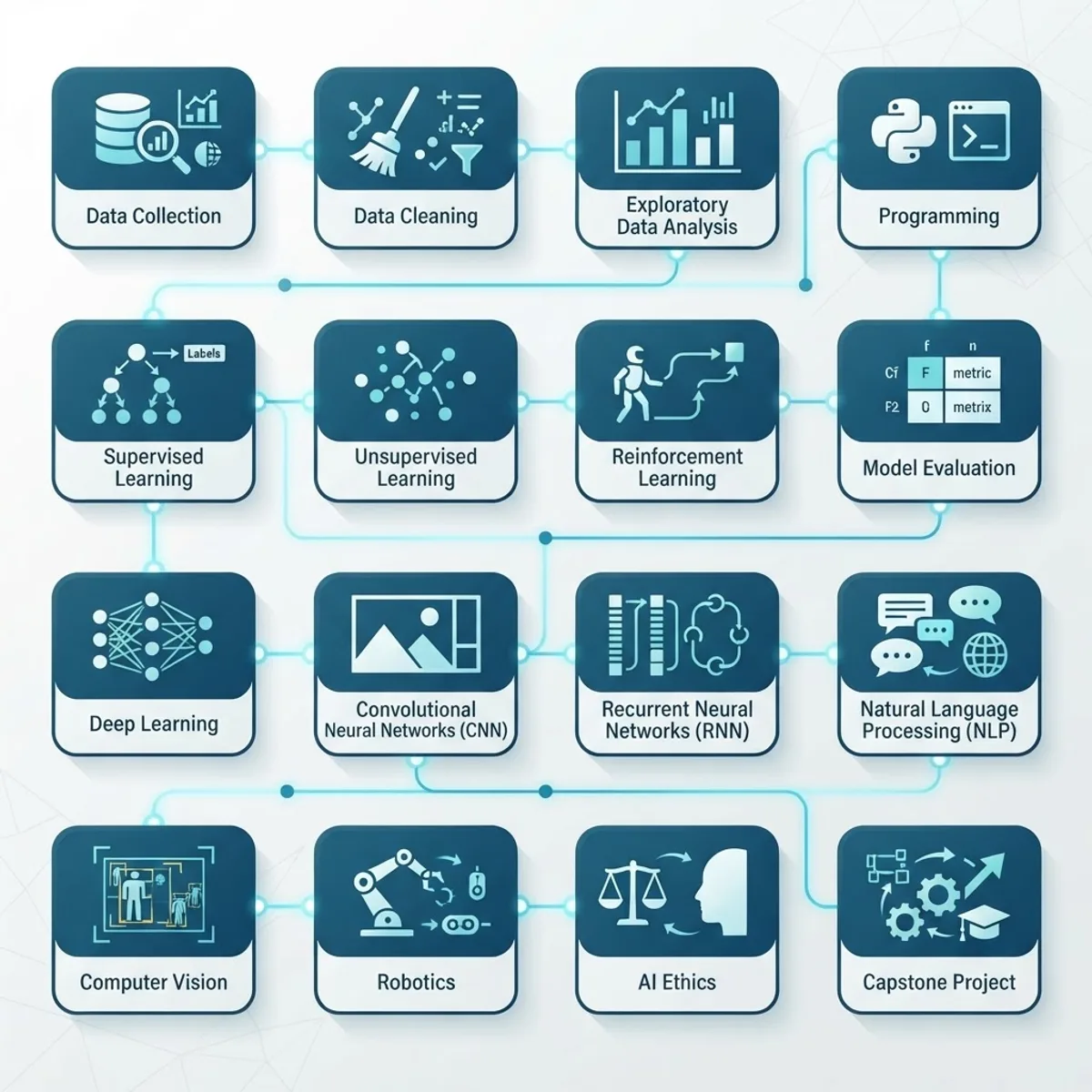
The curriculum is modular. You typically complete a sequence of taught modules before progressing to a final research project or dissertation, and each module is delivered in a focused block rather than spread thinly across a whole term.
Core Areas You Will Study
While exact module titles are refreshed periodically, an online MSc in AI at this level consistently covers the following pillars:
- Foundations of machine learning — supervised and unsupervised algorithms, model evaluation, and data preparation.
- Deep learning and neural networks — architectures used for image, text, and sequence data.
- Data science and analytics — statistical reasoning, feature engineering, and drawing valid conclusions from data.
- Programming for AI — practical development, most commonly in Python and its scientific libraries.
- Ethics, governance, and responsible AI — bias, transparency, and legal considerations.
- Research project or dissertation — an applied capstone where you solve a real problem end to end.
The dissertation is where the degree proves its value. Rather than a theoretical essay, strong AI master's projects produce a working model, a reproducible analysis, or a deployable prototype you can showcase to employers.

Entry Requirements and Admissions
Admission to an online MSc in AI is competitive but accessible to motivated applicants. Based on typical UK postgraduate standards for computing programmes, you should expect the following indicative requirements. Always confirm current specifics on the official Portsmouth website, as intakes are updated regularly.

- Academic background: A recognised undergraduate degree, usually a UK second-class honours (2:2 or above) or international equivalent, ideally in a numerate or computing-related subject.
- Relevant experience: Some programmes accept applicants with substantial professional experience in lieu of a directly related degree.
- Mathematical readiness: Comfort with basic statistics and algebra, since machine learning depends heavily on both.
- English language proficiency: For non-native speakers, an IELTS score around 6.5 (or equivalent) is a common benchmark.
If your first degree is unrelated to computing, do not assume you are excluded. Many successful AI students come from finance, healthcare, engineering, and even the humanities. Demonstrating self-taught coding ability or completing a short preparatory course strengthens a borderline application considerably.
Is an Online AI Master's Respected by Employers?
Yes, an online MSc in Artificial Intelligence from an established UK university carries the same academic weight as its on-campus equivalent. The degree certificate does not state that it was earned online, and accreditation is tied to the institution, not the delivery mode.
Employers increasingly value demonstrable skills over the format of study. According to the World Economic Forum's Future of Jobs research, AI and machine learning specialists rank among the fastest-growing roles this decade, and hiring managers care most about whether you can build and evaluate models. A portfolio-backed online degree often signals exactly the self-discipline and practical focus that employers want.
This is where organisations like WebPeak and its dedicated artificial intelligence services intersect with graduates: the market rewards people who can translate AI theory into deployed, revenue-generating systems, not just those who can recite algorithms.

Career Opportunities After Graduation
An AI master's opens doors across sectors because almost every industry now generates data that needs modelling. Common roles graduates target include:
- Machine Learning Engineer — building and deploying production models.
- Data Scientist — extracting insight and predictions from data.
- AI Research Assistant — supporting applied or academic research.
- Business Intelligence Analyst — turning data into strategic decisions.
- AI Product Specialist — bridging technical teams and product strategy.
Salaries reflect this demand. According to industry salary surveys in the UK, machine learning and data science roles frequently command mid-to-senior pay well above the national average, with experienced specialists earning significantly more. The degree alone does not guarantee these outcomes, but combined with a strong project portfolio it materially improves your candidacy.
Flexibility: Studying While Working
The single biggest advantage of the Portsmouth online model is flexibility. Lectures, readings, and assessments are accessed asynchronously, meaning you learn around your schedule rather than fixed lecture halls.

Most students study part time, dedicating evenings and weekends to one module at a time. This staged approach prevents burnout and lets you apply new techniques directly at work, which reinforces learning far better than cramming. In our experience advising professionals, the learners who succeed treat the degree like a long-term habit, blocking consistent weekly hours rather than relying on last-minute bursts.
That said, flexibility is not the same as ease. An online AI master's demands genuine time and mathematical effort. Be honest with yourself about capacity before enrolling.
Cost and Return on Investment
Tuition for UK online master's degrees varies, but online delivery typically reduces total cost because you avoid relocation, campus fees, and living expenses in an unfamiliar city. Many providers also let you pay per module, spreading the financial load across the programme.
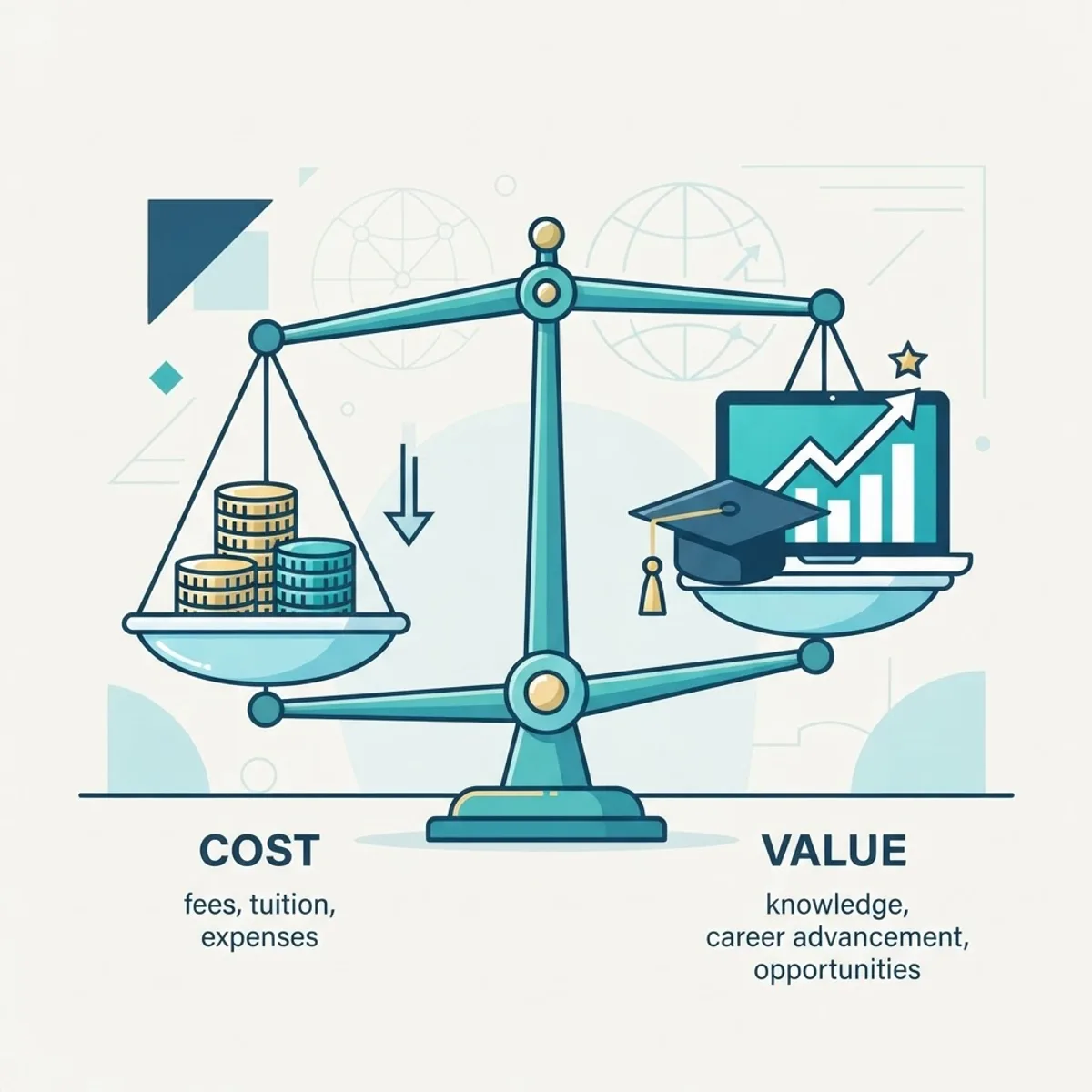
When weighing the investment, compare the total tuition against the salary uplift and career mobility an AI qualification can unlock. For many mid-career professionals, the ability to move into higher-paid technical roles offsets the cost within a few years.
Online vs On-Campus AI Master's Comparison
| Factor | Online MSc AI | On-Campus MSc AI |
|---|---|---|
| Location freedom | Study from anywhere | Must attend in person |
| Schedule | Flexible, part-time friendly | Mostly fixed timetable |
| Relocation cost | None | Often significant |
| Career interruption | Keep working | Usually a career pause |
| Networking | Virtual and forum-based | In-person and immediate |
| Accreditation value | Equal | Equal |
Tips to Succeed in an Online AI Programme
The difference between finishing strong and dropping out often comes down to habits, not intelligence. Based on patterns we have observed among successful graduates:
- Build before you are told to. Recreate every algorithm you study in code, even simple ones.
- Keep a public portfolio. Push projects to GitHub so your learning becomes visible evidence for employers.
- Join the cohort community. Online does not mean isolated; peer discussion accelerates understanding.
- Revisit maths early. A weekend refreshing linear algebra and statistics pays off for the entire degree.
- Apply lessons at work. Real problems cement concepts faster than synthetic exercises.
Key Takeaways
- The University of Portsmouth Online MSc Artificial Intelligence is a flexible, fully online UK postgraduate degree for working professionals.
- The curriculum centres on machine learning, deep learning, data science, Python programming, AI ethics, and a capstone research project.
- Online degrees carry equal accreditation weight, and employers prioritise demonstrable skills and portfolios over delivery format.
- AI and machine learning specialists are among the fastest-growing roles globally, supporting strong career and salary prospects.
- Online study removes relocation costs and lets you keep earning, but it still demands consistent effort and mathematical readiness.
Frequently Asked Questions (FAQ)
Is the University of Portsmouth online AI degree worth it?
For working professionals wanting to move into machine learning or data science, yes. It delivers an accredited UK master's without career interruption or relocation. Its real value comes from the applied projects you build, which become portfolio evidence that employers weigh heavily during hiring.
Can I study the online MSc in AI while working full time?
Yes, the programme is designed for part-time study around employment. Lectures and materials are delivered asynchronously, so you learn evenings and weekends at your own pace. Most students take one module at a time, applying new skills directly at work to reinforce their learning steadily.
Do I need a computer science degree to apply?
Not necessarily. Applicants from numerate or technical backgrounds are welcome, and relevant professional experience can sometimes substitute for a directly related degree. You will, however, need comfort with basic mathematics and a willingness to learn programming, since machine learning depends heavily on both.
What jobs can I get after an online AI master's?
Graduates commonly pursue roles such as machine learning engineer, data scientist, AI research assistant, business intelligence analyst, and AI product specialist. These positions exist across finance, healthcare, retail, and technology, and demand continues to grow rapidly as organisations invest in automation and data-driven decision-making.
How long does the online MSc in Artificial Intelligence take?
Most online AI master's programmes are completed part time over roughly two to three years, depending on your pace and module load. The modular structure lets you progress in focused blocks, pausing between modules if life demands it, which reduces pressure compared with a fixed full-time timetable.
Is an online AI master's respected as much as on-campus?
Yes. Accreditation is tied to the university, not the delivery method, and certificates do not distinguish online study. Employers increasingly value demonstrable skills and portfolios over format, so a well-executed online degree with strong practical projects competes directly with traditional on-campus qualifications.