
An expert analysis of Spain's healthcare artificial intelligence market, covering growth drivers, real clinical use cases, regulation, challenges, and what comes next.
Spain Healthcare Artificial Intelligence Market

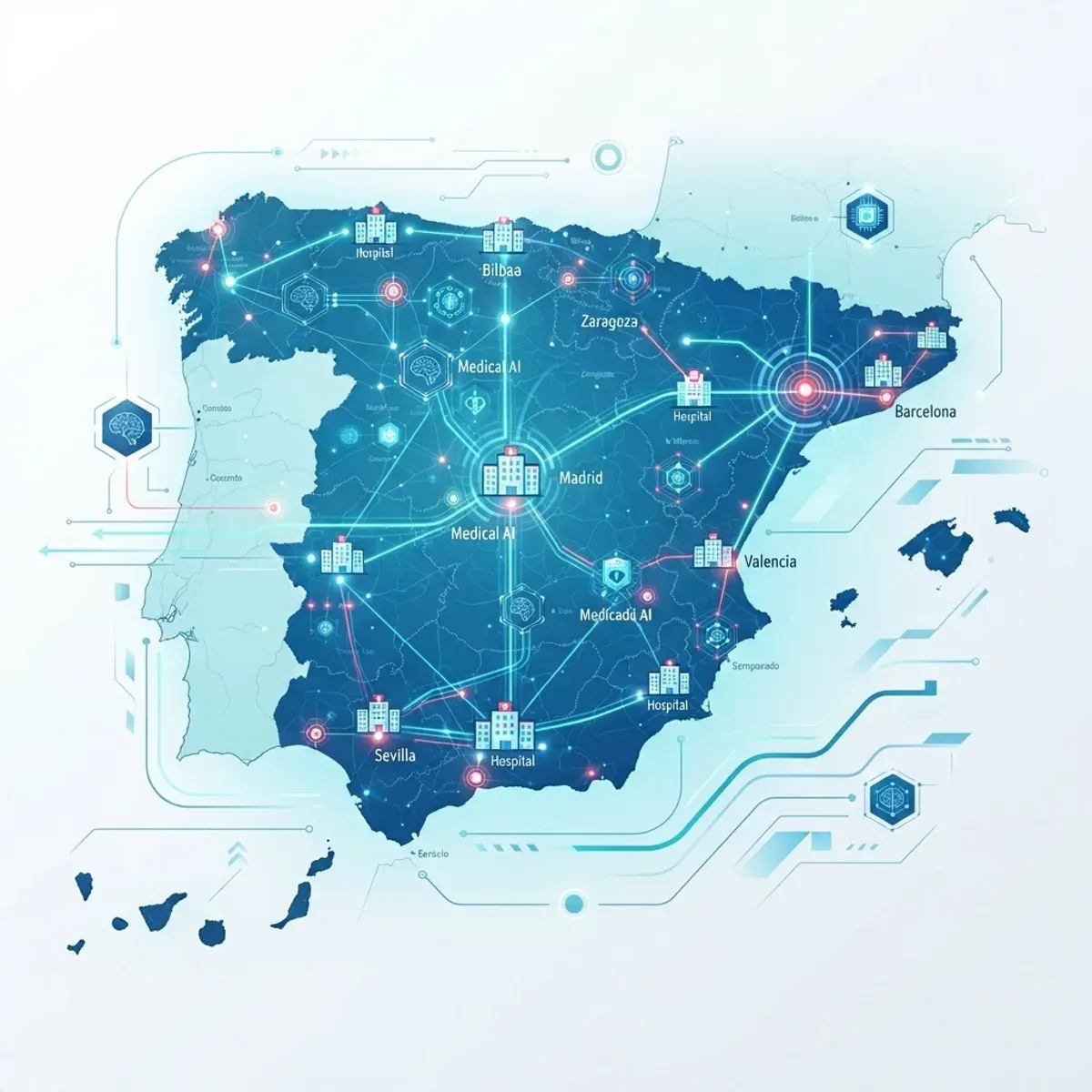
Spain is quietly becoming one of Europe's most interesting testing grounds for medical AI. With a publicly funded universal healthcare system, a rapidly ageing population, and 17 autonomous regions each running their own health service, the country offers both the pressure and the scale that artificial intelligence needs to prove its value. Hospitals in Madrid, Barcelona, and Valencia are already deploying algorithms that read scans, triage patients, and predict which chronic patients will deteriorate next.
This article breaks down what is actually happening in the Spanish healthcare AI market, who is driving it, where the real clinical wins are, and the regulatory and cultural hurdles that still slow adoption. If you are a founder, clinician, investor, or health administrator, you will leave with a grounded, current picture rather than hype.
Quick Answer: Spain's healthcare AI market is growing fast, driven by an ageing population, a strained public health system, and strong hospital digitization. AI is used mainly for medical imaging, diagnostics, and patient triage, with adoption shaped by EU data rules and regional health service fragmentation.
What Is the Spain Healthcare AI Market?
The Spain healthcare artificial intelligence market refers to the software, platforms, and services that apply machine learning and related AI techniques to clinical and administrative healthcare tasks within Spain. This includes diagnostic imaging tools, clinical decision support, predictive analytics, virtual assistants, robotic process automation for hospital admin, and drug discovery platforms operating in the Spanish market.
Unlike a purely private system, Spain's market is anchored by the Sistema Nacional de Salud (SNS), the national public health system that covers the vast majority of citizens. This matters enormously: AI vendors are not selling to a single buyer but to regional health authorities, individual hospitals, and a growing private sector led by groups such as Quironsalud and HM Hospitales.
Why Is Spain a Strong Market for Healthcare AI?
Several structural forces make Spain unusually fertile ground for medical AI adoption.
- An ageing population. According to Eurostat, roughly 20% of Spain's population is aged 65 or over, and projections suggest this could approach 30% by 2050. More elderly patients means more chronic disease, more imaging, and more demand than clinicians can manually absorb.
- Clinician shortages and burnout. Spain trains excellent doctors but loses many to other EU countries offering higher pay. AI that automates repetitive reading and documentation directly relieves overstretched teams.
- High digital health maturity. Spain has near-universal electronic health records within regional systems, giving algorithms the structured historical data they need to learn.
- Strong research base. Barcelona and Madrid host world-class hospitals, universities, and the Barcelona Supercomputing Center, which supports large-scale medical AI research.
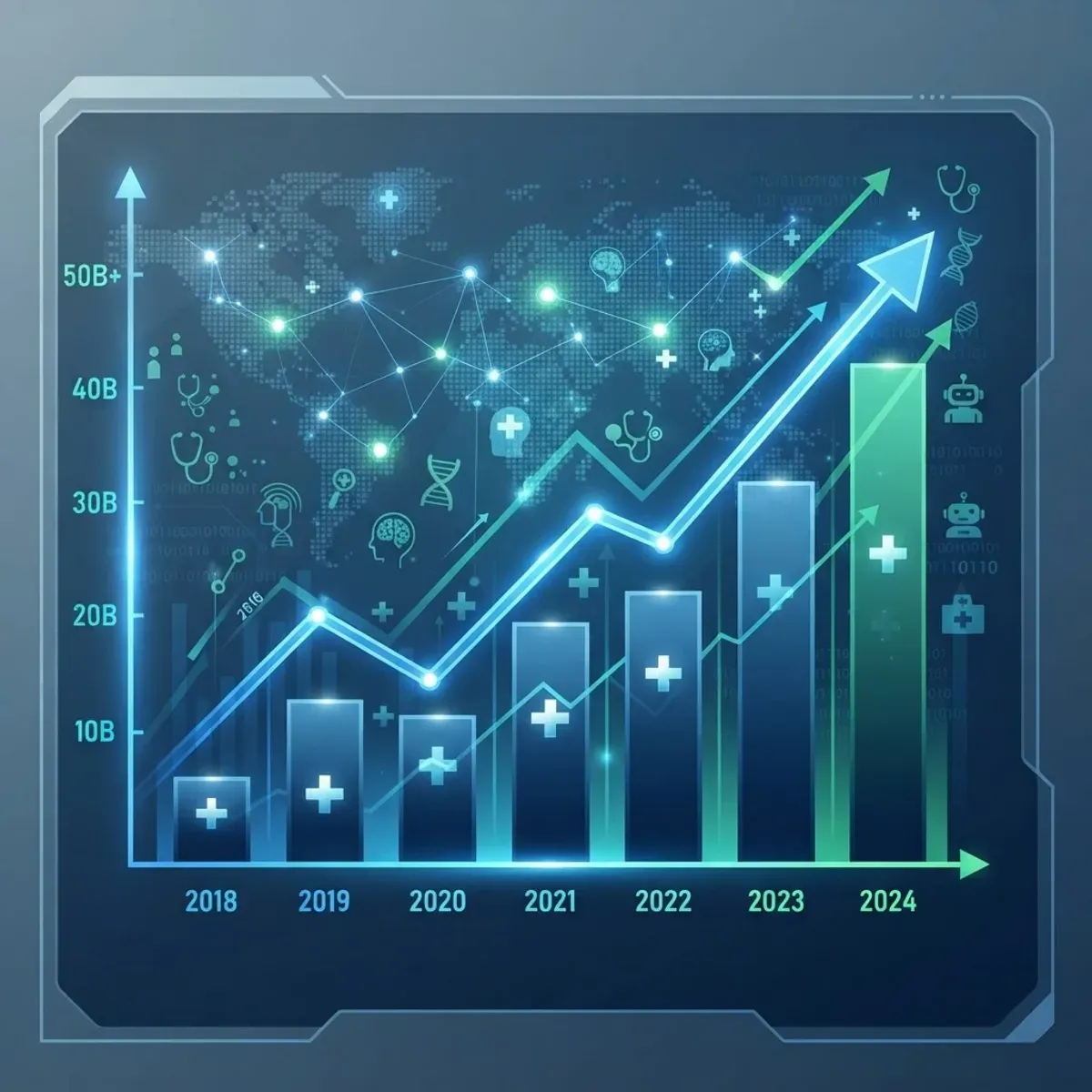
Globally, the healthcare AI sector is expanding rapidly. According to Grand View Research, the worldwide AI in healthcare market was valued at over 22 billion US dollars in 2023 and is projected to grow at a compound annual growth rate above 35% through 2030. Spain, as one of the EU's five largest economies, captures a meaningful and growing slice of that European demand.
Where AI Is Actually Being Used in Spanish Healthcare
The most credible way to judge a market is to look at deployed, revenue-generating use cases rather than pilots. In Spain, three areas stand out.
Medical Imaging and Radiology
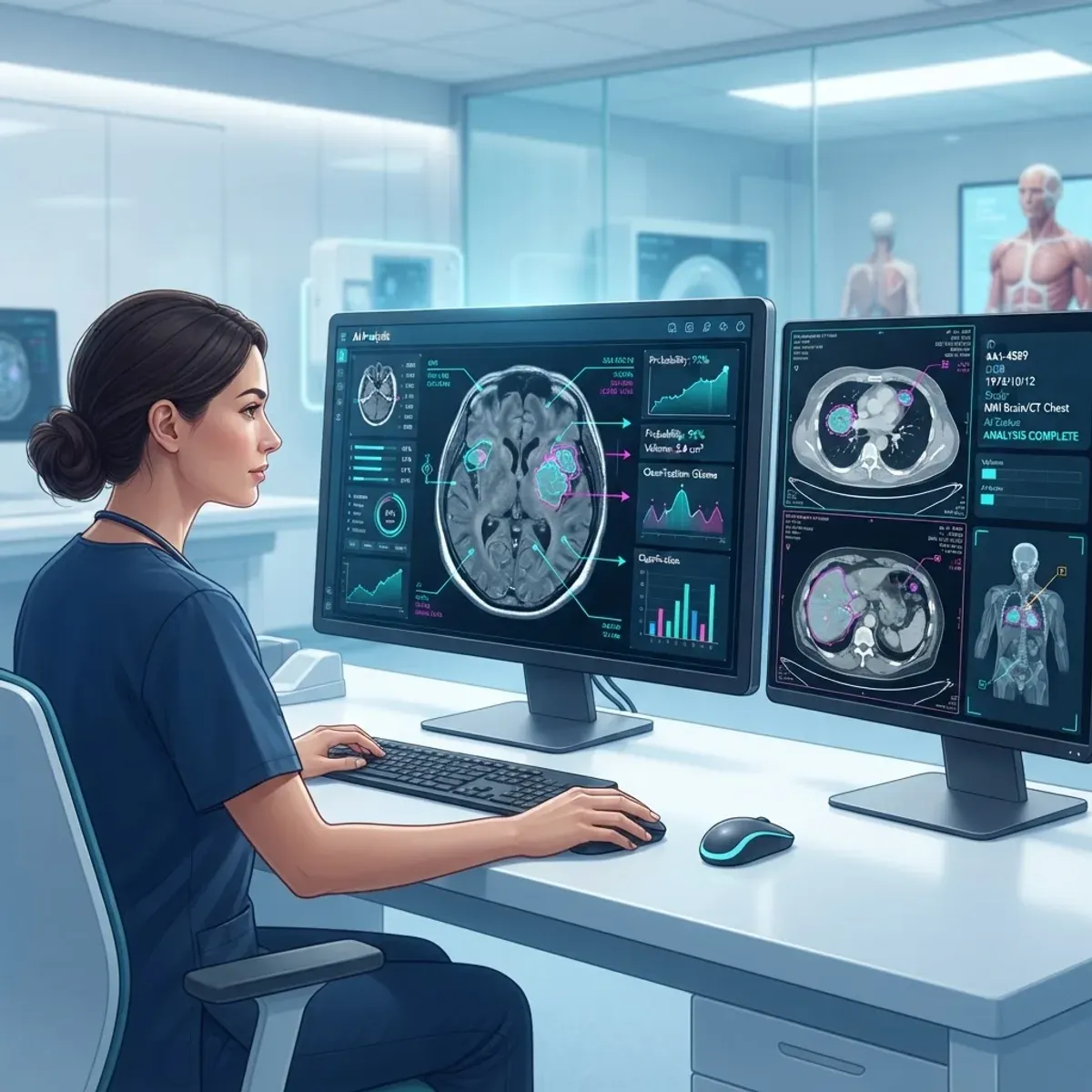
Imaging is the clearest AI success story. Spanish hospitals use algorithms to flag suspected tumours in mammograms, detect strokes in CT scans, and prioritise urgent chest X-rays. These tools do not replace radiologists; they act as a second reader that shortens turnaround time and reduces missed findings. Given radiologist shortages, this is where hospitals see the fastest return on investment.
Clinical Diagnostics and Decision Support
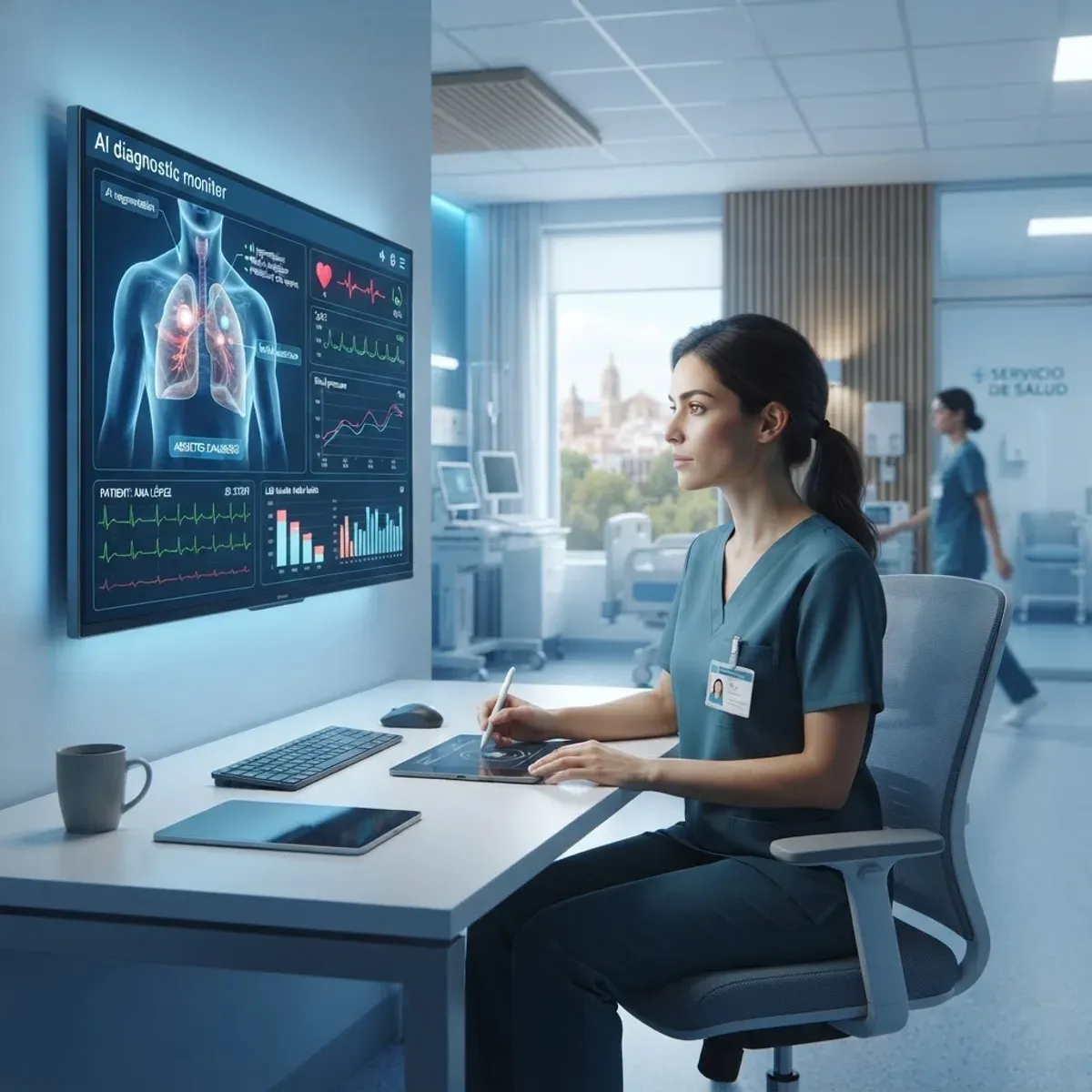
Beyond imaging, AI supports diagnosis by cross-referencing symptoms, lab results, and patient history. Predictive models identify patients at high risk of sepsis, readmission, or diabetic complications, allowing earlier intervention. Several Catalan and Madrid hospitals run sepsis-prediction and deterioration-alert systems inside their electronic records.
Telemedicine and Virtual Triage
The pandemic permanently expanded remote care in Spain. AI now powers symptom checkers, appointment triage, and virtual assistants that route patients to the right level of care. This reduces unnecessary emergency visits and helps rural regions, where physical access to specialists is limited.

Spain Healthcare AI Market: Opportunities vs Challenges
A balanced view requires weighing momentum against friction. The table below summarises the core dynamics shaping the market.
| Factor | Opportunity | Challenge |
|---|---|---|
| Public health system | Large, centralised buyers and rich data | Slow, bureaucratic procurement cycles |
| Regional autonomy (17 regions) | Room to pilot and scale locally | Fragmented standards and duplicated effort |
| EU regulation | Builds patient trust and safety | Compliance cost under GDPR and the EU AI Act |
| Clinical workforce | AI relieves shortages and burnout | Change resistance and training gaps |
| Investment climate | Growing EU and private health-tech funding | Smaller local VC pool than US or UK |
The honest takeaway: Spain has demand and data, but commercial success depends on navigating fragmented regional buyers and rigorous EU compliance. Vendors that treat regulation as a feature, not an obstacle, win trust faster.
Regulation: The EU AI Act and Data Privacy
Regulation is the single biggest factor foreign vendors underestimate. Spanish healthcare AI operates under both GDPR and the EU AI Act, which classifies most clinical AI as high-risk. High-risk systems must meet strict requirements for data governance, transparency, human oversight, and post-market monitoring.
Key definition: A high-risk AI system, under the EU AI Act, is one whose failure could threaten health, safety, or fundamental rights, requiring conformity assessment before deployment. Nearly all diagnostic and triage tools fall into this category.
Spain has been proactive here. It launched the EU's first regulatory sandbox for AI, allowing companies to test high-risk systems under supervision before full market entry. This gives Spanish deployments a credibility advantage that engineering-led teams should not ignore. Building compliant, well-documented AI is itself a competitive moat, and it is where specialist partners such as those offering WebPeak AI services and ZoneTechify AI services add real value for organisations without in-house regulatory expertise.

Who Are the Key Players?
Spain's market blends multinationals, hospital groups, and homegrown startups.
- Global vendors: Siemens Healthineers, GE HealthCare, and Philips supply imaging AI bundled with their equipment.
- Private hospital groups: Quironsalud, HM Hospitales, and Vithas invest in AI to differentiate premium care.
- Local startups: A growing cluster of Barcelona and Madrid health-tech firms build diagnostic, radiology, and clinical-workflow tools tailored to Spanish and Latin American markets.
- Public research: The Barcelona Supercomputing Center and university hospitals drive foundational research and validation studies.
This mix means partnerships, not lone-wolf products, tend to succeed. A startup that integrates with an existing hospital record system and a trusted imaging vendor gets adopted far faster than a standalone app.
How to Enter or Invest in This Market
For teams considering the Spanish healthcare AI market, a disciplined approach beats broad ambition.
- Pick one region and one clinical problem. Prove value in, say, Catalonia's stroke pathway before trying to sell nationwide.
- Design for compliance from day one. Document data lineage, bias testing, and human oversight before a hospital asks.
- Localise fully. Spanish-language clinical interfaces and support for regional systems are non-negotiable.
- Partner with a hospital champion. Clinical evidence published with a respected Spanish hospital unlocks other buyers.
- Plan long sales cycles. Public procurement is slow; budget runway accordingly.
You can explore how brands approach digital transformation and AI adoption further at ZoneTechify and WebPeak, both of which work with organisations modernising their technology stack.
The Future of Healthcare AI in Spain
The next five years will shift Spain from AI-as-second-reader toward AI-as-workflow-backbone. Expect predictive population health, where regional systems forecast disease burden and allocate resources proactively. Generative AI will automate clinical documentation, freeing doctors from screens. And multimodal models combining imaging, genomics, and records will push toward genuinely personalised medicine.
The constraint will not be technology; it will be trust, integration, and reimbursement. Spain's strong public system means the winners will be those who prove measurable outcomes and cost savings, not flashy demos.

Key Takeaways
- Spain's healthcare AI market is driven by an ageing population (around 20% aged 65+), clinician shortages, and high digital health maturity.
- The global AI in healthcare market exceeded 22 billion US dollars in 2023 and is growing at over 35% CAGR, with Spain capturing significant European demand.
- Medical imaging, diagnostics, and virtual triage are the leading real-world use cases.
- The EU AI Act classifies most clinical AI as high-risk; Spain's regulatory sandbox gives compliant vendors a trust advantage.
- Success depends on regional focus, hospital partnerships, localisation, and patience with public procurement.
Frequently Asked Questions (FAQ)
How big is the healthcare AI market in Spain?
Spain does not publish a single official figure, but it captures a substantial share of Europe's healthcare AI spending. Given the global market exceeded 22 billion US dollars in 2023 and grows above 35% annually, Spain's segment is expanding quickly, led by imaging and diagnostics adoption.
What is healthcare AI used for in Spanish hospitals?
Spanish hospitals mainly use AI for medical imaging analysis, clinical decision support, predicting patient deterioration, and virtual triage. These tools act as assistants to clinicians, speeding up scan reading, flagging high-risk patients early, and routing telemedicine cases to the appropriate level of care.
Is medical AI legal and regulated in Spain?
Yes. Medical AI in Spain is legal and tightly regulated under GDPR and the EU AI Act, which treats most clinical AI as high-risk. Spain also runs the EU's first AI regulatory sandbox, letting companies test high-risk systems under official supervision before full deployment.
Which companies lead Spain's healthcare AI market?
Global imaging vendors like Siemens Healthineers, GE HealthCare, and Philips lead alongside private hospital groups such as Quironsalud and HM Hospitales. A growing cluster of Barcelona and Madrid startups builds locally tailored diagnostic and workflow tools, supported by strong public research institutions.
What are the biggest barriers to healthcare AI adoption in Spain?
The main barriers are fragmented procurement across 17 autonomous regions, slow public-sector buying cycles, strict EU compliance costs, and clinician change-resistance. Vendors succeed by focusing on one region, partnering with a hospital champion, and designing for regulatory compliance from the very beginning.