A clear, expert guide to neuro-symbolic artificial intelligence in 2026: what it is, how it works, real applications, and why this hybrid approach is the future of trustworthy AI.
Neuro Symbolic Artificial Intelligence the State of the Art
Artificial intelligence has spent the last decade dominated by deep learning, yet the most exciting frontier today blends two very different traditions: the pattern-recognition power of neural networks and the structured reasoning of symbolic logic. This hybrid approach, known as neuro-symbolic AI, is quickly becoming one of the most researched directions in the field. At ZoneTechify, we track this shift closely because it signals where practical, trustworthy AI is heading next.
This guide explains what neuro-symbolic AI actually is, why it matters right now, how these systems are built, and where the state of the art stands in 2026. Whether you are a developer, product leader, or curious technologist, you will leave understanding the real capabilities and limits of this approach.
Quick Answer: Neuro-symbolic artificial intelligence combines neural networks that learn from data with symbolic systems that reason using explicit rules and logic. This hybrid produces AI that is more accurate, explainable, and data-efficient, making it the leading approach for trustworthy reasoning in 2026.
What Is Neuro-Symbolic AI?
Neuro-symbolic AI is an approach that integrates neural networks (systems that learn statistical patterns from data) with symbolic AI (systems that manipulate explicit rules, logic, and knowledge representations). Instead of choosing between learning and reasoning, it fuses both into a single pipeline.
Neural networks excel at perception—recognizing images, transcribing speech, and generating language. Symbolic systems excel at logic—following rules, chaining facts, and explaining conclusions. Neuro-symbolic AI lets a model see a scene like a neural network and then reason about it like a logician. The result is intelligence that can both perceive the world and justify its decisions.
Why Neuro-Symbolic AI Matters Now
The timing is not accidental. Large language models proved that scale delivers remarkable fluency, but they also exposed persistent weaknesses: hallucinations, brittle reasoning, and an inability to explain how conclusions were reached. Neuro-symbolic methods directly target these gaps.
According to research presented at AAAI, hybrid neuro-symbolic models can reach accuracy comparable to pure deep learning while using a fraction of the training data on structured reasoning tasks. That data efficiency matters enormously for industries where labeled data is scarce or expensive, such as healthcare and law.
There is also a trust dimension. According to Gartner, organizations that operationalize AI transparency, trust, and security are projected to see up to a 50% improvement in adoption, business goals, and user acceptance. Neuro-symbolic systems, with their explicit reasoning traces, are naturally aligned with that demand for explainability.
Symbolic Reasoning vs Neural Networks: The Core Difference
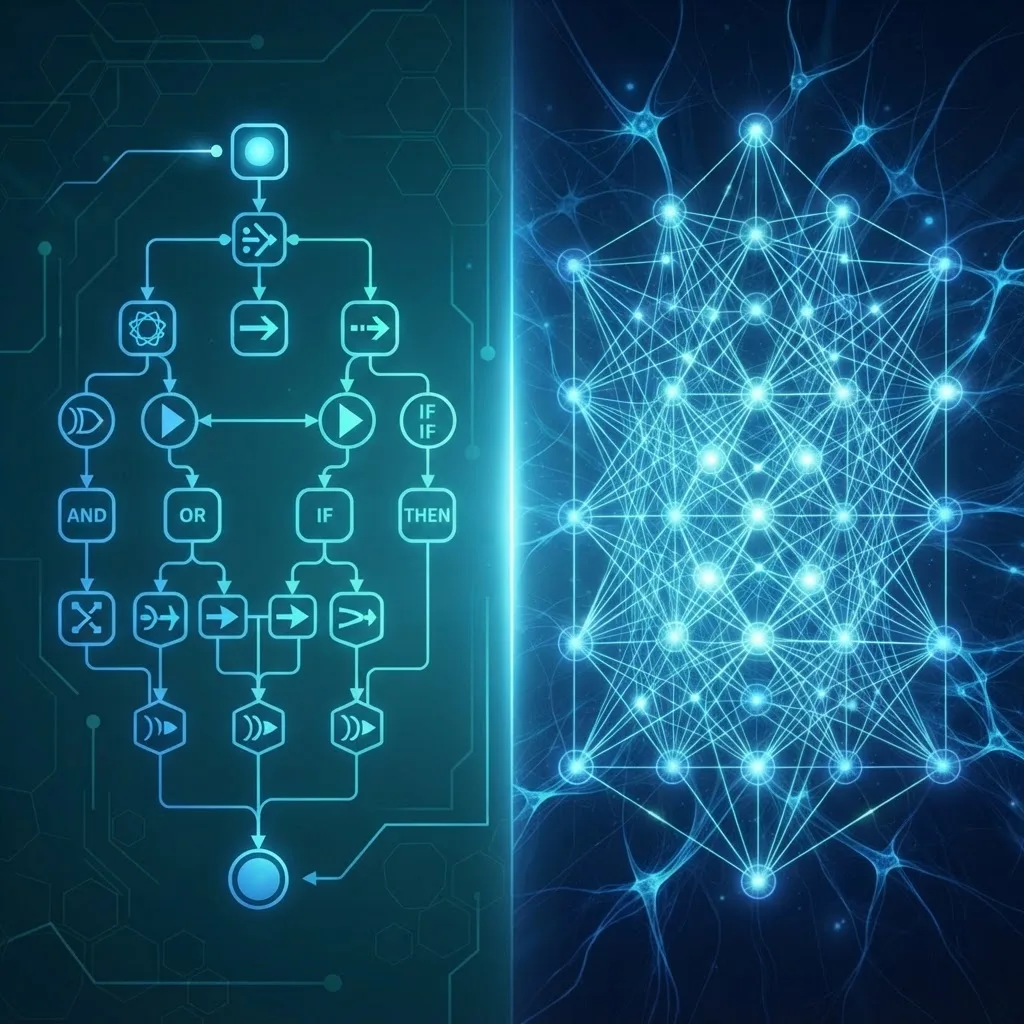
To appreciate the hybrid, it helps to compare the two parents side by side.
| Dimension | Neural Networks | Symbolic AI |
|---|---|---|
| Learning style | Learns patterns from data | Follows human-defined rules |
| Data needs | Large datasets required | Works with little or no data |
| Explainability | Opaque, hard to interpret | Transparent, step-by-step |
| Handling ambiguity | Excellent | Poor |
| Generalization | Strong on unseen inputs | Limited to known rules |
| Common failure | Hallucination, bias | Brittleness, no learning |
The key insight is that each approach fails exactly where the other succeeds. Neuro-symbolic AI is the engineering answer to that complementarity.
How Neuro-Symbolic Systems Are Built
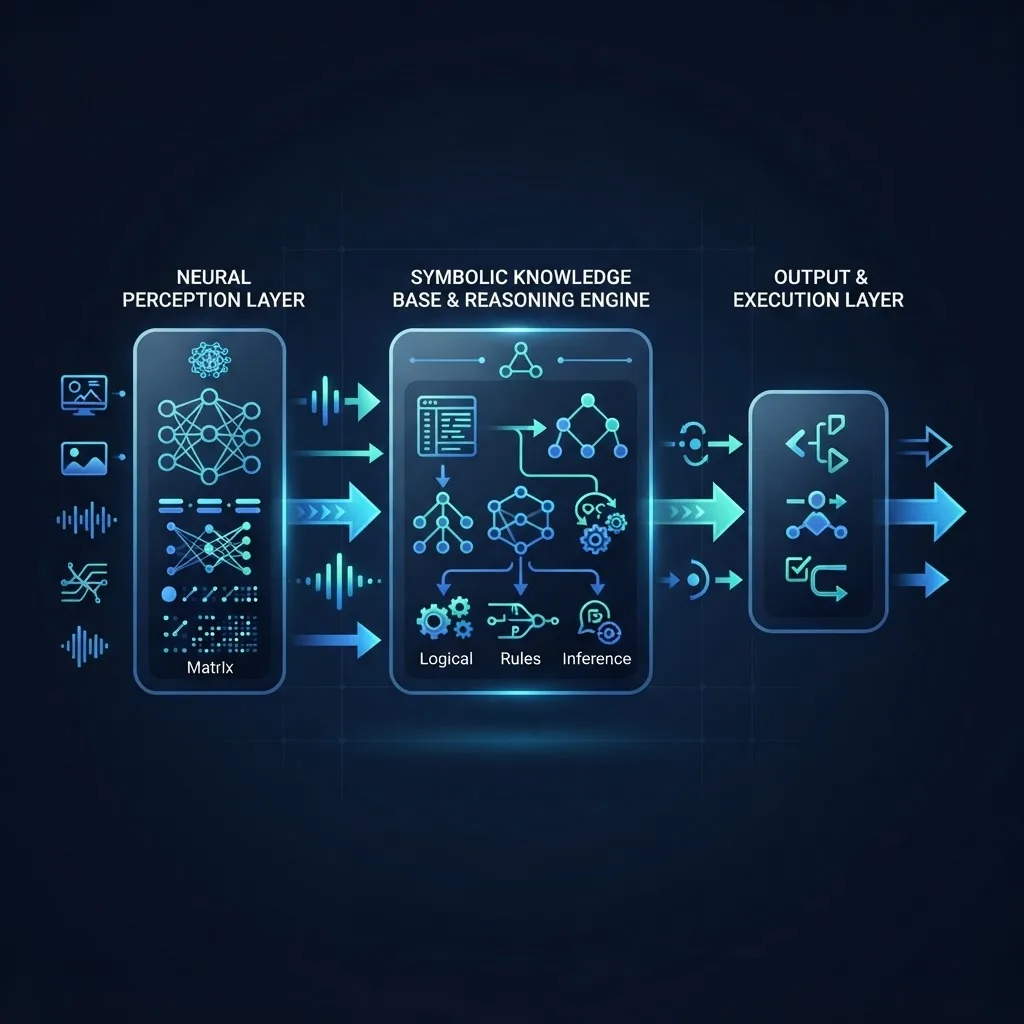
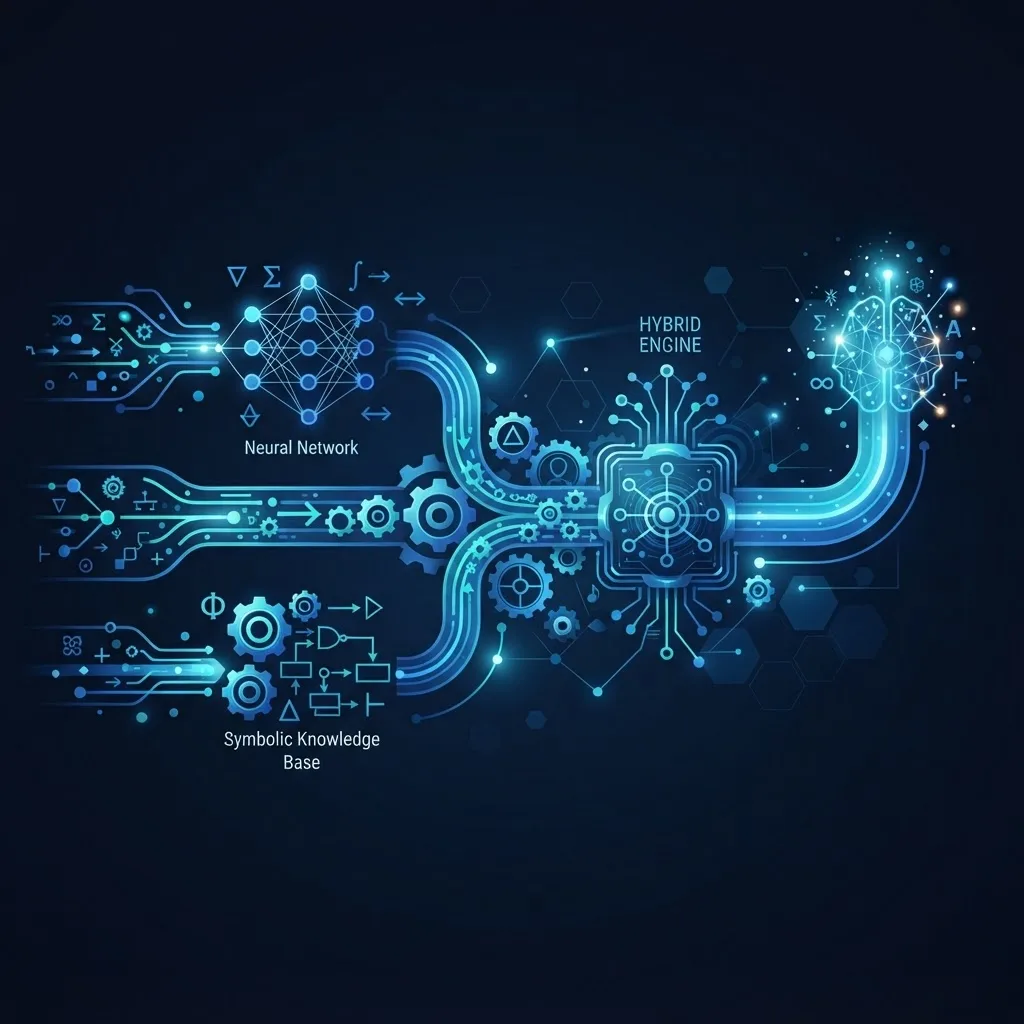
Building a neuro-symbolic system generally follows a repeatable pattern. While architectures vary, most implementations share these stages:
- Perception layer: A neural network processes raw inputs—text, images, or audio—and converts them into structured representations such as entities, relationships, or symbols.
- Knowledge representation: These outputs are mapped onto a symbolic structure, often a knowledge graph or logic-based schema that encodes facts and rules.
- Reasoning engine: A symbolic solver applies logical inference, constraints, or rules to derive conclusions that the neural network alone could not guarantee.
- Feedback loop: Results can be fed back to fine-tune the neural component, tightening accuracy over time.

Knowledge graphs play an especially important role here. They give the symbolic layer a persistent, queryable memory of facts and relationships, which is what allows the system to reason consistently rather than guessing. Teams building custom artificial intelligence solutions increasingly pair neural models with knowledge graphs for exactly this reason.
The State of the Art in 2026
The current generation of neuro-symbolic research clusters around a few dominant directions. The first is neuro-symbolic concept learning, where systems learn visual or linguistic concepts and then reason about them compositionally—answering complex questions about a scene by combining learned primitives.
The second is LLM-plus-reasoner architectures. Here, a large language model handles natural language understanding while an external symbolic engine—such as a theorem prover, planner, or program interpreter—handles exact reasoning. This pattern powers many of the most reliable AI agents shipping today, because it offloads math, logic, and planning to tools that do not hallucinate.
The third frontier is differentiable reasoning, where logical operations are made compatible with gradient-based learning, allowing rules and neural weights to be trained together end to end. Research groups at IBM, MIT, and DeepMind have all published notable work advancing these techniques.
Real-World Applications
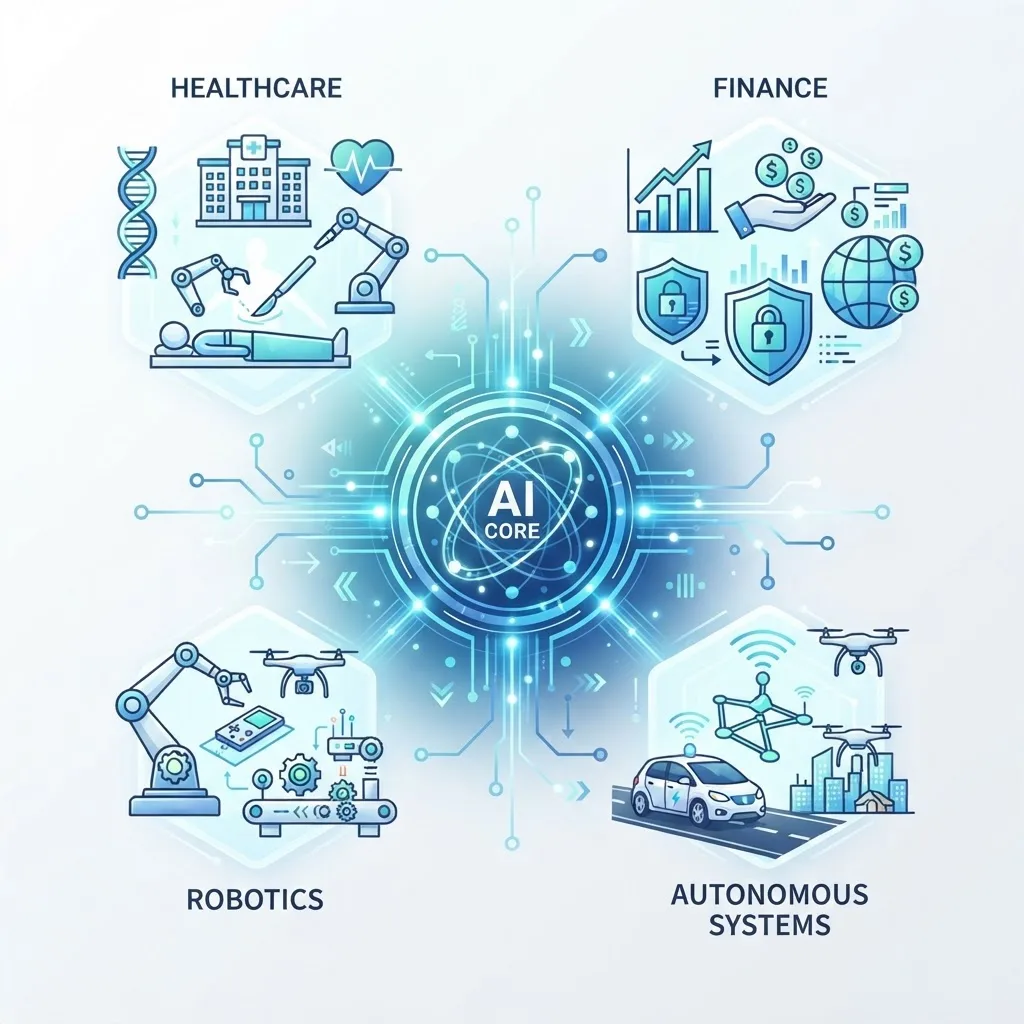
Neuro-symbolic AI is no longer purely academic. It is being applied where correctness and explanation are non-negotiable:
- Healthcare: Combining medical imaging recognition with rule-based clinical guidelines to support diagnoses that clinicians can audit.
- Finance: Detecting fraud by pairing pattern-spotting neural models with explicit compliance rules that regulators can inspect.
- Autonomous systems: Letting self-driving platforms perceive their environment neurally while obeying hard-coded safety constraints symbolically.
- Enterprise search and agents: Grounding LLM answers in verified knowledge graphs to reduce hallucination.
Companies specializing in applied machine learning, such as the team behind WebPeak and its dedicated AI services, report that clients increasingly ask for AI whose decisions can be explained to auditors and customers—precisely the strength of hybrid systems.
The Explainability Advantage
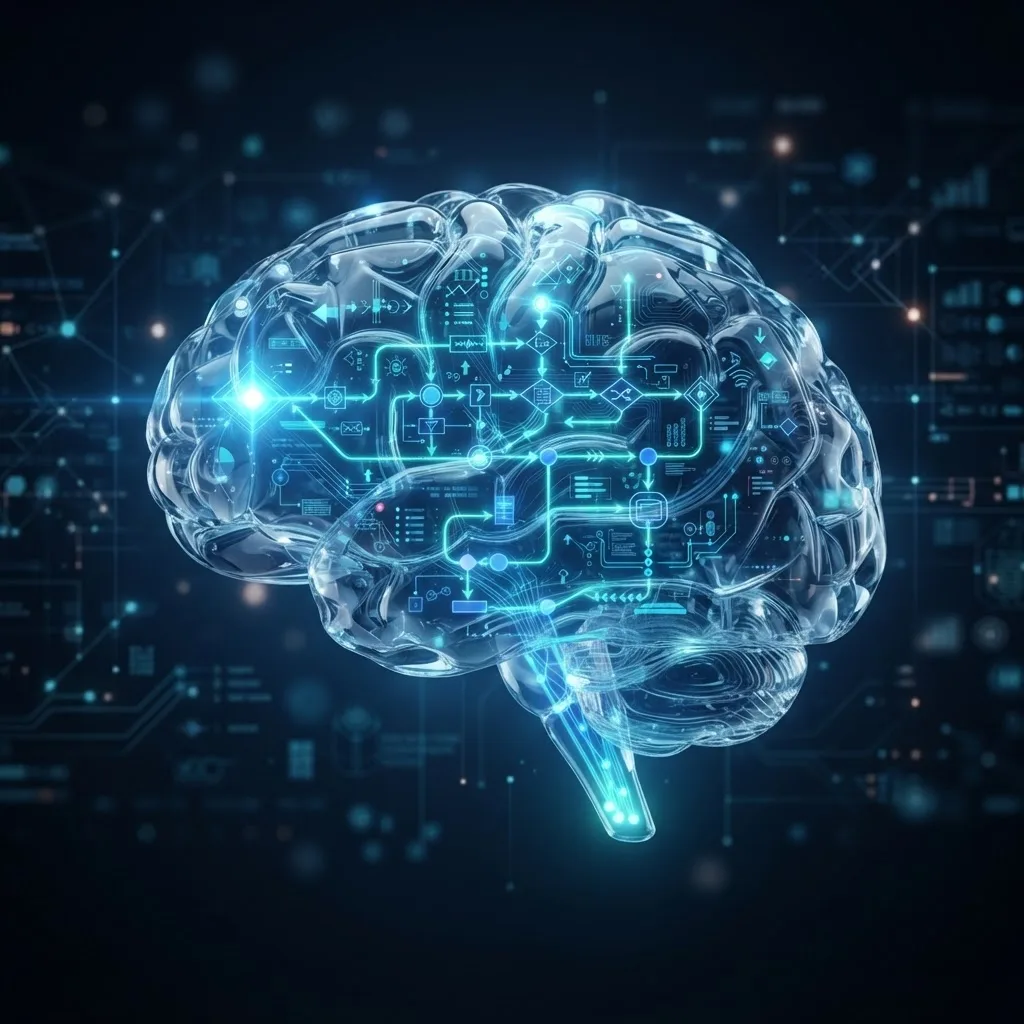
Explainability is the single biggest reason enterprises adopt neuro-symbolic AI. Because the symbolic layer produces an explicit chain of reasoning, users can see exactly which rules and facts led to an output. This is impossible with a standalone neural network, whose decisions live in millions of opaque weights.
This transparency is not just a nicety. Regulations such as the EU AI Act increasingly require high-risk AI systems to be interpretable and auditable. Neuro-symbolic architectures give organizations a credible path to compliance without abandoning the accuracy of deep learning.
Challenges and Limitations
Despite the momentum, neuro-symbolic AI is not a solved problem. Integrating two paradigms with fundamentally different mathematics is genuinely difficult. Translating fuzzy neural outputs into crisp symbols—a step often called the "symbol grounding problem"—remains a core research challenge.
Scalability is another hurdle. Symbolic reasoning can become computationally expensive as the number of rules and facts grows, and engineering the interface between neural and symbolic components requires specialized expertise that is still rare in the job market. Finally, there is no single standard framework, so teams often build bespoke pipelines, which raises maintenance costs.

The Future of Neuro-Symbolic AI
Most researchers now view neuro-symbolic integration as a leading candidate for the "third wave" of AI—systems that both learn and reason. The trajectory points toward tighter coupling, where reasoning is not bolted on after training but woven directly into how models learn.
Expect three developments over the next few years: standardized frameworks that make hybrid systems easier to build, deeper integration between LLMs and symbolic tools inside mainstream agent platforms, and growing regulatory pressure that makes explainable hybrids the default choice for high-stakes decisions. The organizations that invest early will hold a meaningful advantage in trustworthy AI.
Key Takeaways
- Neuro-symbolic AI combines neural learning with symbolic reasoning to deliver accuracy plus explainability.
- Hybrid models can match deep learning accuracy while using far less training data on structured tasks.
- Knowledge graphs are central to giving symbolic reasoning a reliable, queryable memory.
- LLM-plus-reasoner architectures already power the most dependable AI agents in production.
- Explainability makes neuro-symbolic AI a strong fit for regulated industries like healthcare and finance.
- The main open challenge is symbol grounding—reliably converting neural outputs into symbols.
Frequently Asked Questions (FAQ)
What is neuro-symbolic AI in simple terms?
Neuro-symbolic AI blends two techniques: neural networks that learn patterns from data and symbolic systems that reason with rules and logic. Together they create AI that can both recognize things and explain its decisions, making it more accurate and trustworthy than either method used alone.
How is neuro-symbolic AI different from deep learning?
Deep learning relies purely on learned patterns and is often a black box. Neuro-symbolic AI adds a reasoning layer of explicit rules and knowledge, so it needs less data, generalizes better on logic tasks, and can clearly explain how it reached a conclusion.
Is neuro-symbolic AI better than large language models?
It is not strictly better; it is complementary. Many state-of-the-art systems pair a large language model with a symbolic reasoning engine. The LLM handles language while the symbolic tool handles exact logic and math, reducing hallucinations and improving reliability.
What are real examples of neuro-symbolic AI?
Practical examples include medical diagnosis tools that combine image recognition with clinical rules, fraud-detection systems that mix pattern spotting with compliance logic, and AI agents that ground answers in knowledge graphs to stay factual and auditable.
Why is neuro-symbolic AI important for the future?
It addresses deep learning's biggest weaknesses—hallucination, poor reasoning, and lack of transparency. As regulations demand explainable AI, neuro-symbolic systems offer a path to models that are both powerful and accountable, making them a strong candidate for the next wave of AI.
Final Thoughts
Neuro-symbolic AI represents a mature, pragmatic answer to the limitations of pure deep learning. By marrying perception with reasoning, it delivers systems that are accurate, data-efficient, and—crucially—explainable. For teams planning their next generation of intelligent products, understanding this approach is no longer optional. Explore how expert-built AI can work for you at ZoneTechify.