
Discover how Körber uses artificial intelligence across pharma and biotech, from AI quality control to predictive analytics, compliance, and smart manufacturing
Körber Artificial Intelligence Pharma Biotech
The pharmaceutical and biotech industries are under relentless pressure to move faster, prove quality, and cut waste without ever compromising patient safety. Körber, the global technology group behind the widely used PAS-X manufacturing execution system, has become a central name in this shift by embedding artificial intelligence directly into pharma and biotech operations. This guide explains what Körber's AI approach actually does, where it delivers measurable value, and how manufacturers can adopt it responsibly.

Quick Answer: Körber applies artificial intelligence across pharma and biotech through its software, consulting, and inspection portfolio, chiefly the PAS-X MES ecosystem. AI powers batch execution, quality control, predictive maintenance, and supply-chain optimization, helping manufacturers cut deviations, speed release, and stay compliant with GMP regulations.
Who Is Körber and Why It Matters in Pharma AI
Körber is a German-headquartered technology group whose Pharma business area supplies software, hardware, and expertise to drug and vaccine manufacturers worldwide. Its flagship product, Werum PAS-X MES, is one of the most widely installed manufacturing execution systems in the industry and is used in the production of many of the world's medicines and vaccines.
Definition: A Manufacturing Execution System (MES) is software that digitally manages and records every step of production on the shop floor, including recipes, materials, equipment, and operator actions, creating a complete electronic batch record.
Körber's relevance to AI comes from this data position. Because PAS-X and its inspection systems capture enormous volumes of structured production data, they provide the clean, contextual foundation that machine-learning models require. Without trustworthy data, AI in regulated manufacturing fails; Körber's core strength is supplying that data backbone.

Where AI Delivers Value Across the Pharma Value Chain
Artificial intelligence is not a single feature. It is a set of capabilities applied to specific problems. Below are the areas where Körber-style AI produces the clearest returns for pharma and biotech.
1. Smart Manufacturing Execution
AI-assisted MES turns static work instructions into adaptive guidance. Instead of forcing operators through rigid steps, the system can flag likely errors before they happen, suggest the next best action, and auto-populate records. This reduces "right-first-time" failures, one of the biggest hidden costs in drug manufacturing.
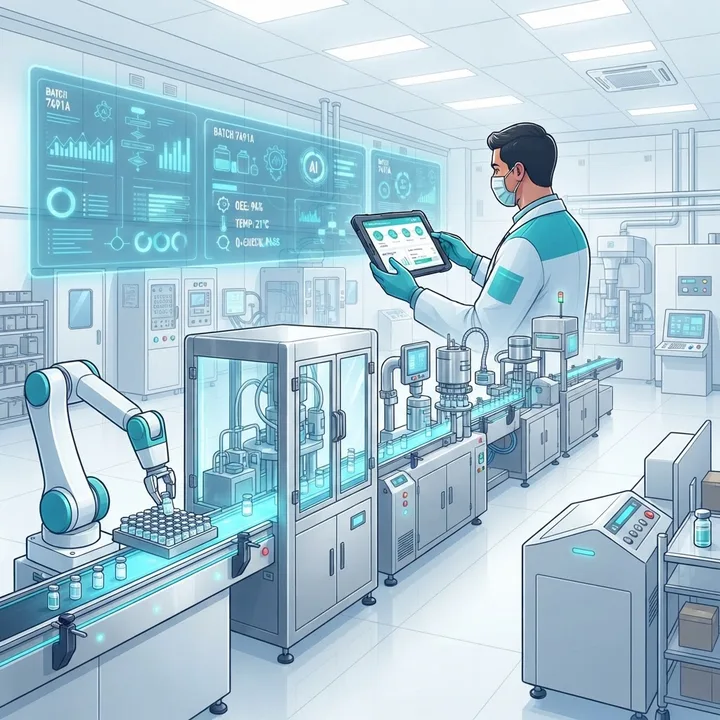
For biotech firms scaling from clinical to commercial volumes, this adaptability matters enormously. Process knowledge that once lived in a few experts' heads becomes encoded, repeatable software logic.
2. AI-Powered Quality Control
Quality control is where computer vision and anomaly detection shine. AI models trained on thousands of images can inspect vials, syringes, and tablets faster and more consistently than manual review, catching cosmetic and critical defects that human inspectors miss late in a shift.
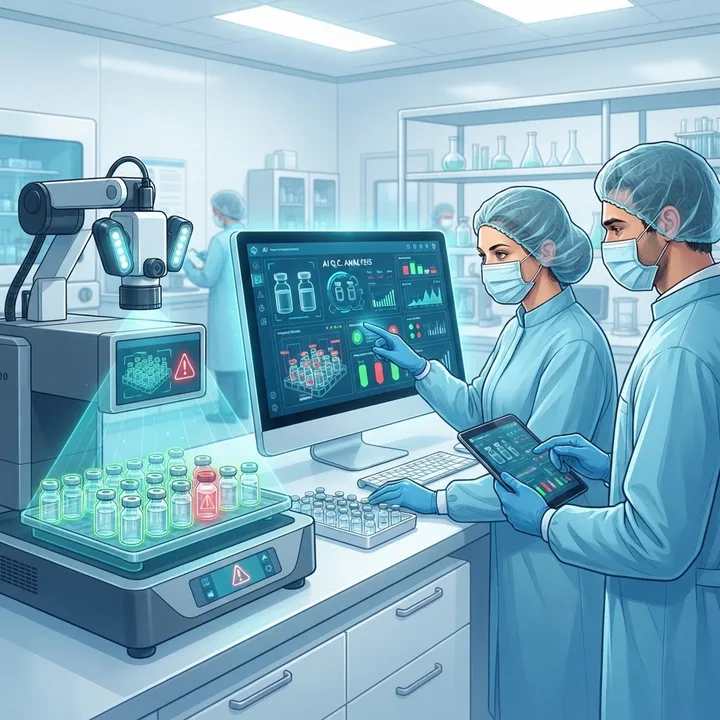
Just as important, AI reduces false rejects. Over-rejection quietly destroys yield; a well-tuned model keeps genuine defects out while sparing good product, directly improving margins.
3. Predictive Analytics and Process Optimization
Predictive models analyze historical batch data to forecast deviations, predict equipment failures, and identify the process parameters that most influence yield. This shifts teams from reacting to problems toward preventing them.

Definition: Predictive maintenance uses sensor and historical data to estimate when equipment will fail, so maintenance happens just before breakdown, avoiding both unplanned downtime and unnecessary servicing.
4. Intelligent Supply Chain and Serialization
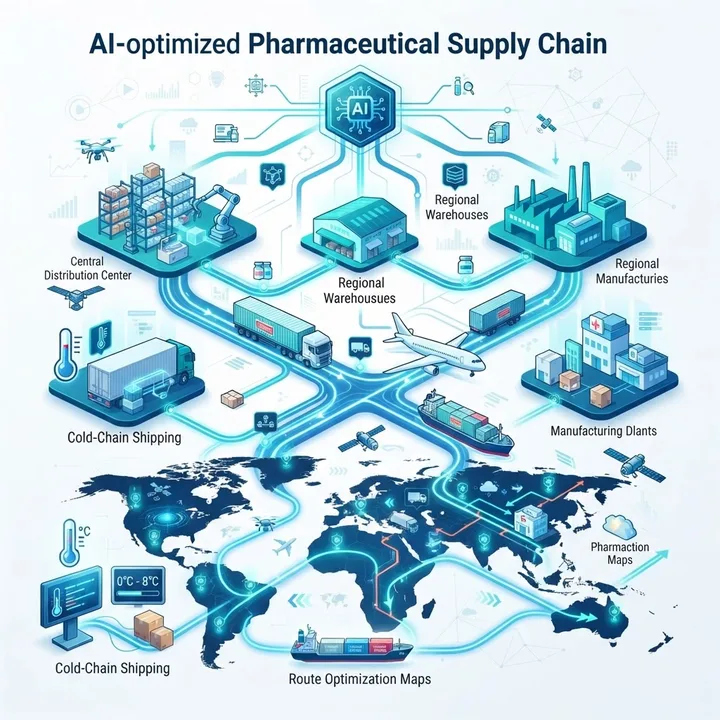
AI helps optimize the notoriously complex pharma supply chain by balancing demand forecasts, cold-chain constraints, and serialization requirements. Machine learning improves forecast accuracy, reduces stockouts of critical medicines, and strengthens traceability against counterfeiting.
Körber AI Capabilities vs. Traditional Pharma Systems
The table below compares an AI-enabled Körber-style approach with legacy paper-based or basic digital operations.
| Capability | Traditional Approach | AI-Enabled Körber Approach |
|---|---|---|
| Batch records | Paper or basic electronic | Automated electronic batch records |
| Deviation handling | Reactive, manual review | Predictive, flagged before release |
| Quality inspection | Manual visual checks | Computer vision anomaly detection |
| Maintenance | Fixed schedule | Predictive maintenance |
| Release time | Days to weeks | Reduced via review-by-exception |
| Data use | Siloed, archived | Continuous learning loop |
Review-by-exception, where the system only surfaces the records that actually need human attention, is often the single biggest time saver, compressing batch release from weeks to days.
Compliance, Validation, and Trust
In pharma, no technology matters if it cannot pass regulatory scrutiny. AI in GMP environments must be validated, explainable, and fully audit-tracked.

Körber's ecosystem is built around GMP compliance, data integrity (ALCOA+ principles), and 21 CFR Part 11 electronic-record requirements. The practical implication for AI adoption is clear: models must be transparent enough to explain their outputs, and every automated decision needs a traceable record. "Black box" AI that cannot justify a batch decision is a non-starter for regulators.
This is why partnering with experienced implementation teams matters. Organizations building AI-driven pharma platforms often work with specialists such as the teams at ZoneTechify and WebPeak to design validated, secure, and audit-ready systems. For deeper machine-learning and automation builds, dedicated artificial intelligence services can bridge the gap between data science and regulated deployment.
The Business Case: Real Numbers
The financial stakes justify the investment. According to Deloitte, the average cost to bring a new drug to market now exceeds $2 billion, and every day of delayed production carries real revenue and patient impact. Meanwhile, a McKinsey analysis estimates that AI and machine learning could generate $60 to $110 billion in annual economic value across the pharmaceutical and medical-products sector, largely through faster R&D and leaner manufacturing.
For a single commercial site, even modest gains, such as a few percentage points of improved yield or a halving of batch-release time, translate into millions of dollars annually and, more importantly, more reliable supply of critical medicines.
The Future of AI in Pharma and Biotech
The next phase moves from assistance to autonomy. Digital twins, virtual replicas of production lines, let teams simulate process changes before touching real equipment. Generative AI is beginning to draft deviation reports and standard operating procedures, while self-optimizing processes adjust parameters in real time within validated limits.
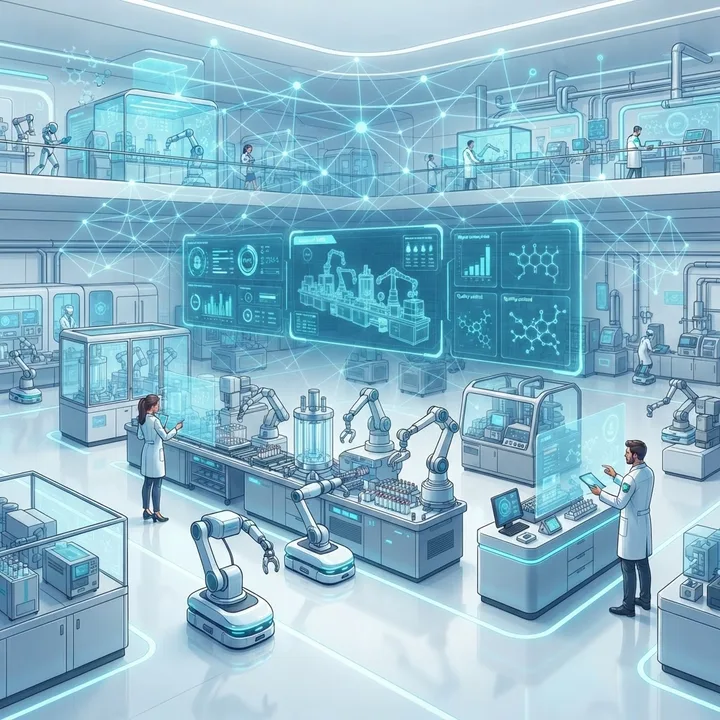
Körber and similar players are steering toward this "pharma 4.0" vision, where connected, learning systems continuously improve. The winners will be manufacturers that treat data as a strategic asset today, building the clean, contextual foundation that tomorrow's AI depends on.
Key Takeaways
- Körber anchors pharma AI through data: Its PAS-X MES captures the structured, GMP-compliant production data that machine-learning models need to work reliably.
- AI delivers across four zones: manufacturing execution, quality control, predictive analytics, and supply chain, each with measurable ROI.
- Compliance is non-negotiable: AI must be validated, explainable, and audit-tracked to satisfy 21 CFR Part 11 and ALCOA+ data integrity.
- The value is proven: McKinsey estimates $60 to $110 billion in annual AI value for pharma; Deloitte pegs average drug-development cost above $2 billion.
- Review-by-exception is the quick win: It can compress batch release from weeks to days.
Frequently Asked Questions (FAQ)
What does Körber do in the pharma and biotech industry?
Körber supplies software, inspection hardware, and consulting to pharma and biotech manufacturers. Its flagship PAS-X manufacturing execution system digitizes production, while AI capabilities add predictive analytics, computer-vision quality control, and supply-chain optimization to help companies produce medicines faster and more reliably.
How is artificial intelligence used in pharmaceutical manufacturing?
AI in pharma manufacturing predicts deviations before they occur, inspects products with computer vision, guides operators through adaptive work instructions, and forecasts equipment failures. It also optimizes supply chains and speeds batch release through review-by-exception, all while maintaining strict GMP compliance and full audit traceability.
Is AI in pharma manufacturing compliant with regulations?
Yes, when implemented correctly. AI systems in pharma must be validated, explainable, and fully audit-tracked to meet standards like 21 CFR Part 11 and ALCOA+ data integrity. Körber's ecosystem is built around GMP compliance, so automated decisions remain transparent and defensible during regulatory inspections.
What is a manufacturing execution system (MES)?
A manufacturing execution system is software that manages and records every production step on the shop floor, including recipes, materials, equipment, and operator actions. It creates a complete electronic batch record, ensuring traceability and quality. Körber's PAS-X is one of the most widely used MES platforms in pharma.
Can small biotech companies benefit from Körber AI solutions?
Yes. Smaller biotech firms benefit most when scaling from clinical to commercial production. AI-driven MES encodes expert process knowledge into repeatable software, reduces costly right-first-time failures, and shortens release times, helping lean teams compete without expanding headcount or sacrificing regulatory compliance.
Does AI replace human workers in pharma production?
No. AI augments rather than replaces pharma workers. It automates repetitive checks, flags risks, and handles data-heavy analysis, freeing experts to focus on judgment, investigation, and improvement. Regulated environments still require human oversight and sign-off, so skilled staff remain essential to safe, compliant manufacturing.