
A complete guide to Pearl artificial intelligence: what it is, how it works, key features, benefits for professionals, and why verified AI answers matter.
Pearl Artificial Intelligence
Pearl artificial intelligence represents a new generation of purpose-built AI assistants designed to deliver verified, trustworthy answers rather than confident guesses. Unlike general chatbots that occasionally invent facts, Pearl AI is engineered around accuracy, source-backed responses, and expert oversight. In this guide, you will learn exactly what Pearl AI is, how it works, where it excels, and how professionals in law, business, and research use it to save time while avoiding costly mistakes. Whether you are exploring AI tools for the first time or comparing enterprise-grade options, this is a practical, no-fluff breakdown.
Quick Answer: Pearl artificial intelligence is a professional-grade AI assistant that delivers verified, source-backed answers instead of unchecked responses. It combines large language models with expert validation and a confidence score, helping users in law, medicine, and business get trustworthy information they can act on with genuine confidence.

What Is Pearl Artificial Intelligence?
Pearl artificial intelligence is an AI-powered answer engine built to prioritize accuracy and accountability over speed alone. Where a typical chatbot generates the most statistically likely response, Pearl AI adds layers of verification so users know how much to trust each answer. It is designed for high-stakes environments where a wrong answer carries real consequences, such as legal filings, medical guidance, tax questions, and business decisions.
The core idea is simple but powerful: an AI that admits when it is unsure. Instead of forcing a polished but potentially false response, Pearl AI grades its own reliability and points users toward professional help when a question exceeds what the model can safely answer.
Why Verified Answers Matter
Unverified AI output is the single biggest barrier to trusting these tools in serious work. A widely cited 2024 Stanford RegLab study found that even leading AI legal research tools produced incorrect or hallucinated information in more than 17% of queries. In fields like law and healthcare, that error rate is unacceptable. Pearl AI directly addresses this problem by attaching a confidence measure and, in many cases, human expert review to its responses, turning AI from a risky shortcut into a dependable assistant.
How Pearl AI Works
Pearl AI works by layering verification on top of a large language model rather than relying on raw generation alone. When you ask a question, the system does not just predict text. It retrieves relevant information, drafts an answer, evaluates that answer against trusted sources, and then assigns a confidence score before showing you the result.
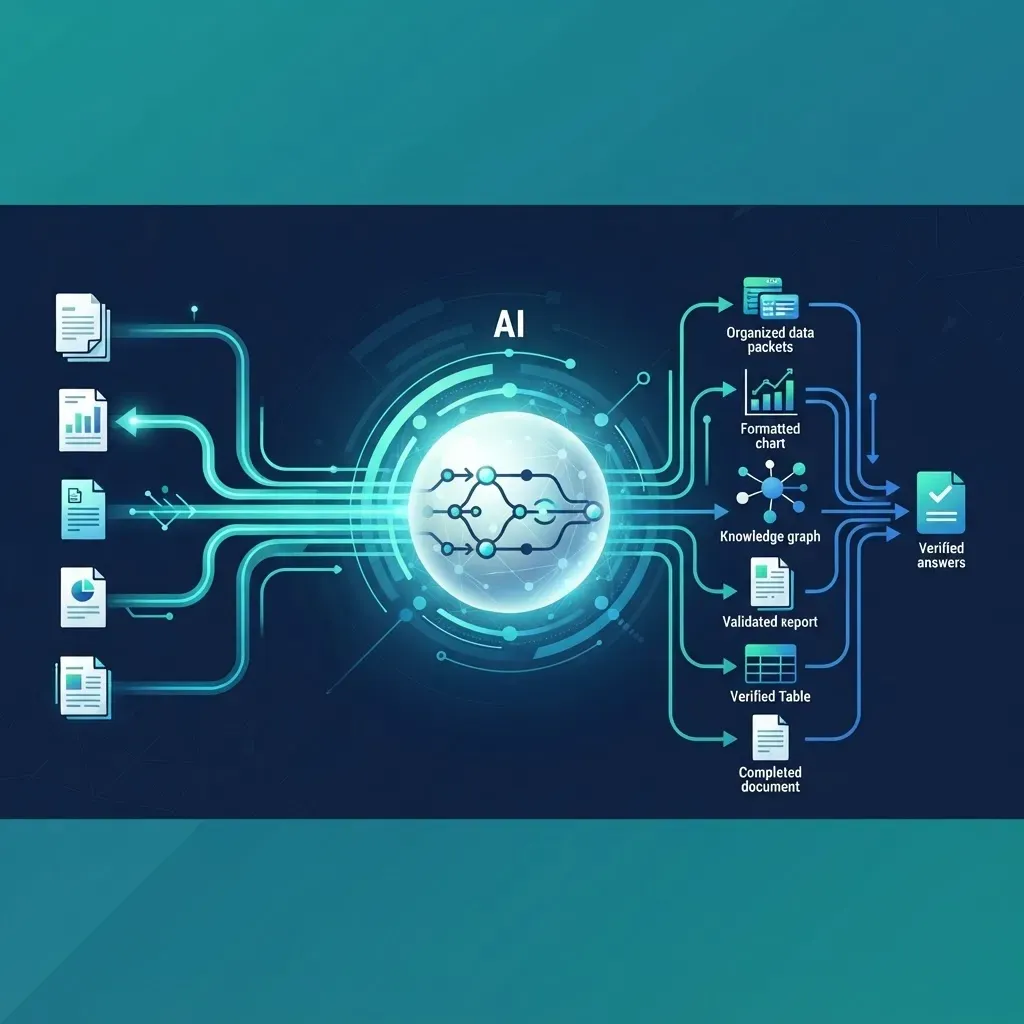
The typical workflow follows four stages:
- Understanding the question and its intent, including context and jurisdiction where relevant.
- Retrieving supporting information from vetted sources and knowledge bases.
- Drafting a clear, structured response grounded in that retrieved material.
- Verifying the answer, scoring its reliability, and escalating to human experts when needed.
This structure is what separates Pearl AI from a standard chatbot. The verification loop is not an afterthought. It is the entire point of the product.
The Confidence Score Explained
A confidence score is a numeric rating that tells you how reliable an AI answer is. Pearl AI grades responses on a clear scale, often out of 100, so you immediately understand whether an answer is safe to use as-is, worth double-checking, or something to escalate to a qualified professional. This transparency is critical: it lets you calibrate trust instead of blindly accepting output. For a busy professional, knowing an answer scored high versus low can be the difference between confidently acting and pausing to verify.
Key Features of Pearl AI
Pearl AI packs several features that make it stand out from general-purpose assistants. Each one is designed to reduce risk and increase usefulness in professional settings.

- Verified answers: Responses are checked against reliable sources rather than generated in isolation.
- Confidence scoring: Every answer includes a reliability rating so you know how much to trust it.
- Expert escalation: Complex or high-risk questions can be routed to licensed professionals for review.
- Source citations: Answers point to the material behind them, supporting transparency and follow-up research.
- Domain focus: Deep coverage of specialized fields such as legal, medical, financial, and technical topics.
- Conversational interface: Natural, chat-style interaction that keeps context across follow-up questions.
Together, these features shift the burden of fact-checking away from the user and build accountability directly into the tool. That is exactly what businesses adopting AI need. If you are planning to integrate this kind of intelligent system into your own products, expert help from an AI development team can accelerate the process considerably.
Pearl AI for Legal and Professional Research
Pearl AI is especially valuable in legal and professional research, where accuracy is non-negotiable. According to Thomson Reuters research, legal professionals spend a significant share of their week on research and document review, time that verified AI can meaningfully reduce.

Instead of manually combing through statutes, case law, and precedent, a lawyer can ask a direct question and receive a structured, cited answer within seconds. The confidence score signals whether the response is solid enough to rely on or whether a human attorney should confirm the details. This is a fundamentally different value proposition from a generic chatbot that might fabricate a case citation. Beyond law, the same model applies to accounting, healthcare, insurance, and compliance, any field where a confidently wrong answer creates liability. Pearl AI does not replace the professional; it makes the professional faster and better informed.
Pearl AI vs Traditional Search Tools
Understanding how Pearl AI compares to traditional tools clarifies why verified AI is gaining traction. The table below breaks down the practical differences.

| Factor | Pearl AI | Traditional Search | Generic Chatbot |
|---|---|---|---|
| Answer format | Direct, verified answer | List of links | Direct but unverified |
| Accuracy signal | Confidence score included | None | None |
| Source transparency | Cited sources | User must dig | Often missing |
| Expert oversight | Available | No | No |
| Time to insight | Seconds | Minutes to hours | Seconds |
| Best for | High-stakes decisions | Broad browsing | Casual questions |
The key takeaway is that traditional search gives you raw material to interpret yourself, while a generic chatbot gives you an answer you cannot fully trust. Pearl AI aims to deliver the speed of a chatbot with the reliability closer to a professional consultation.
Benefits for Professionals and Businesses
The benefits of Pearl AI go beyond convenience and directly affect productivity, risk, and cost. Generative AI's economic potential is enormous: McKinsey estimates it could add between $2.6 trillion and $4.4 trillion annually to the global economy, and verified tools like Pearl AI help organizations capture that value safely.

Here are the most tangible benefits:
- Faster research: Reduce hours of manual lookup to seconds of guided answering.
- Lower risk: Confidence scores and citations reduce the chance of acting on false information.
- Cost efficiency: Handle routine questions in-house before escalating only the complex ones.
- Better decisions: Structured, sourced answers support clearer, more defensible choices.
- Scalability: Serve more clients or internal requests without proportionally growing headcount.
For teams building or adopting these systems, partnering with specialists in artificial intelligence services ensures the implementation is secure, accurate, and tailored to real workflows rather than generic use cases.
How to Get Started with Pearl AI
Getting started with Pearl AI is straightforward if you approach it methodically. Follow these steps to evaluate whether it fits your needs:
- Define your use case. Identify the specific, high-value questions you need answered reliably.
- Test with real queries. Run actual work questions and observe the confidence scores.
- Verify the citations. Confirm that sourced answers hold up to your own standards.
- Integrate gradually. Start with low-risk tasks, then expand as trust builds.
- Train your team. Teach staff to interpret confidence scores and when to escalate.
The goal is to build confidence through evidence, not hype. Start small, measure results, and scale what works. Brands like ZoneTechify and WebPeak regularly help businesses evaluate and deploy AI tools using exactly this kind of disciplined, results-first approach.
The Future of Pearl Artificial Intelligence
The future of Pearl artificial intelligence points toward deeper specialization and tighter human-AI collaboration. As verification technology improves, expect confidence scores to become more granular, source transparency to become standard across the industry, and expert-in-the-loop systems to expand into more professions.

The broader trend is clear: users are no longer satisfied with fast answers that might be wrong. The next competitive edge in AI is trust. Tools that can prove their reliability, cite their sources, and honestly flag uncertainty will win adoption in serious industries. Pearl AI is an early, influential example of this shift, and its model of accountable AI is likely to shape how the entire category evolves over the coming years.
Key Takeaways
- Pearl AI is a verified answer engine built for accuracy, not just speed.
- It uses a confidence score to tell users how much to trust each response.
- Studies show general AI tools hallucinate in a meaningful share of queries; verification directly addresses this.
- It excels in high-stakes fields like law, medicine, and finance.
- The future of AI value depends on trust, transparency, and expert oversight.
Frequently Asked Questions (FAQ)
What is Pearl artificial intelligence used for?
Pearl artificial intelligence is used to get verified, source-backed answers to important questions, especially in law, medicine, finance, and business. It helps professionals research faster while reducing the risk of acting on incorrect information, thanks to built-in confidence scoring and optional expert review of complex queries.
Is Pearl AI more accurate than ChatGPT?
Pearl AI is designed to be more reliable for high-stakes questions because it verifies answers and shows a confidence score, while general chatbots like ChatGPT generate responses without a built-in accuracy signal. For casual use, general chatbots work well; for professional decisions, verification adds meaningful protection against errors.
How does the Pearl AI confidence score work?
The confidence score is a numeric rating, often out of 100, that indicates how reliable an answer is. A high score means the response is well-supported and safe to use, while a low score signals you should verify the information or consult a qualified human expert before acting.
Can Pearl AI replace professionals like lawyers or doctors?
No, Pearl AI is built to assist professionals, not replace them. It speeds up research and surfaces sourced answers, but it escalates complex or high-risk questions to licensed experts. The goal is to make qualified professionals faster and better informed, not to remove human judgment from critical decisions.
Is Pearl AI safe for business use?
Yes, Pearl AI is generally well-suited for business use because it emphasizes accuracy, source transparency, and reliability signals. Businesses should still start with low-risk tasks, verify citations, and train staff to interpret confidence scores, ensuring the tool is adopted responsibly within existing workflows and compliance requirements.
Final Thoughts
Pearl artificial intelligence signals an important maturity point for the AI industry: the move from impressive-sounding answers to genuinely trustworthy ones. By pairing large language models with verification, confidence scoring, and expert oversight, it turns AI into a tool professionals can actually rely on. If your organization wants to adopt this kind of accountable AI thoughtfully, focus on real use cases, verify results, and scale what proves reliable.