Discover how smart office artificial intelligence boosts productivity, cuts energy costs, and secures workplaces with practical, expert-backed insights.
Smart Office Artificial Intelligence
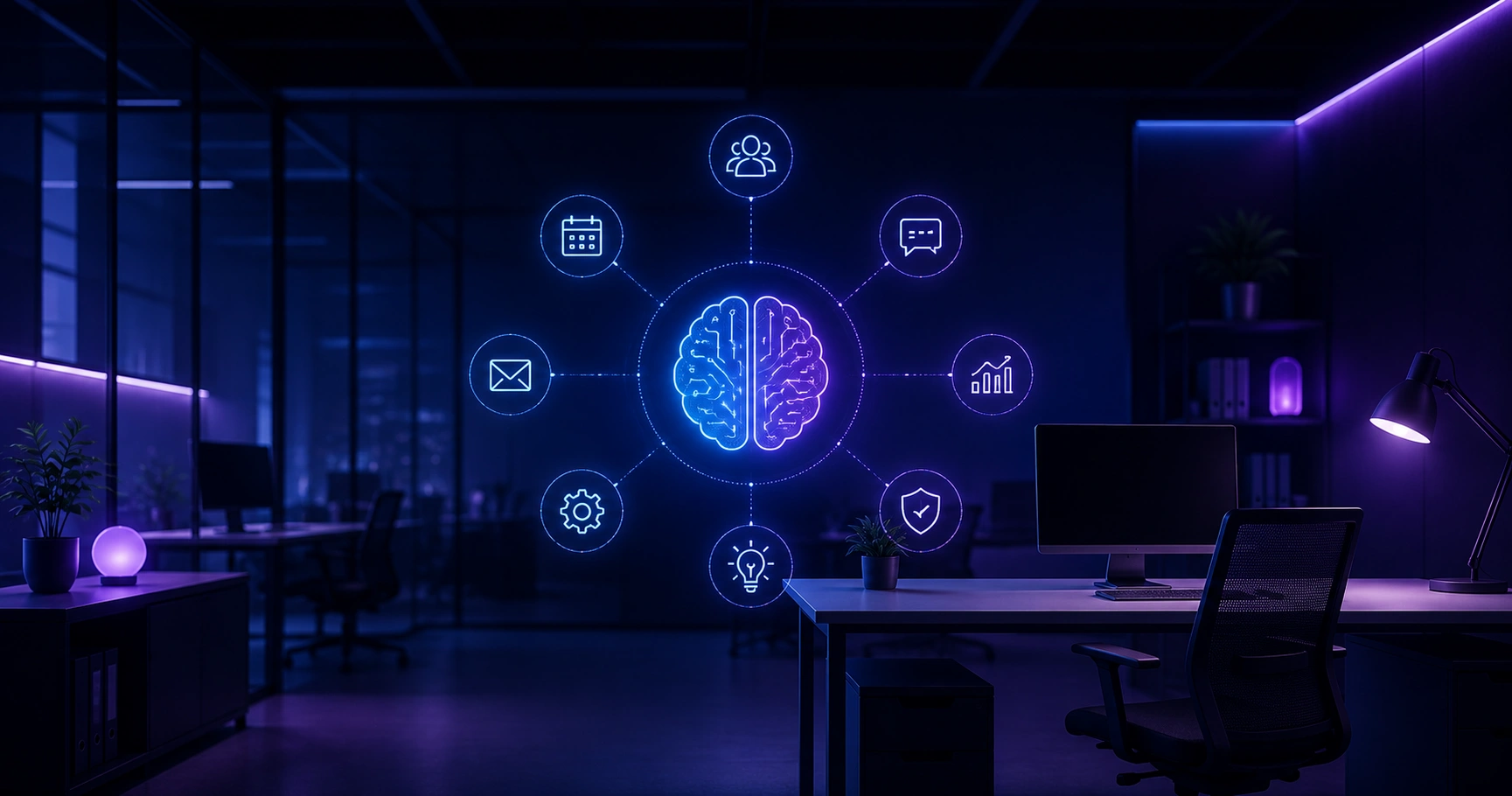
The modern workplace is quietly becoming intelligent. Lights dim when a room empties, meeting notes write themselves, and the building predicts a maintenance issue before it happens. This is smart office artificial intelligence in action, and it is no longer a futuristic concept reserved for tech giants. Small and mid-sized businesses now deploy AI-driven systems that manage energy, automate scheduling, and protect physical spaces. In this guide, we explain exactly how these systems work, what results you can expect, and how to adopt them without wasting budget on hype.
Quick Answer: Smart office artificial intelligence uses connected sensors, machine learning, and automation to manage workplace tasks like lighting, climate, security, and scheduling. It reduces operating costs, improves employee productivity, and makes buildings safer by learning patterns and acting automatically without constant human input.
What Is a Smart Office Powered by AI?
A smart office is a workplace where connected devices, sensors, and software use artificial intelligence to automate and optimize daily operations. Instead of employees manually adjusting thermostats or booking rooms, the environment responds to real-time data on its own.
Definition: Smart office artificial intelligence is the application of machine learning and Internet of Things (IoT) technology to workplace systems, enabling buildings and software to sense conditions, learn behavior, and make decisions automatically.
The difference between a "connected" office and a genuinely "smart" one is learning. A connected sensor reports that a room is 74 degrees. A smart system knows that this room is always booked at 2 PM, cools it in advance, and logs the energy used so it can do it more efficiently tomorrow. That predictive layer is where AI adds measurable value.
Why Businesses Are Adopting AI in the Office
Adoption is accelerating because the return on investment is now concrete. According to McKinsey, organizations that integrate AI into operations report cost reductions of 10 to 20 percent in the functions where it is applied. In office environments, energy and space management are the fastest areas to show savings.
The second driver is talent. A Gartner survey found that a majority of employees expect flexible, technology-enabled workplaces, and companies that deliver frictionless digital experiences retain staff longer. When AI removes tedious tasks like note-taking, room hunting, and expense logging, employees spend more time on meaningful work.
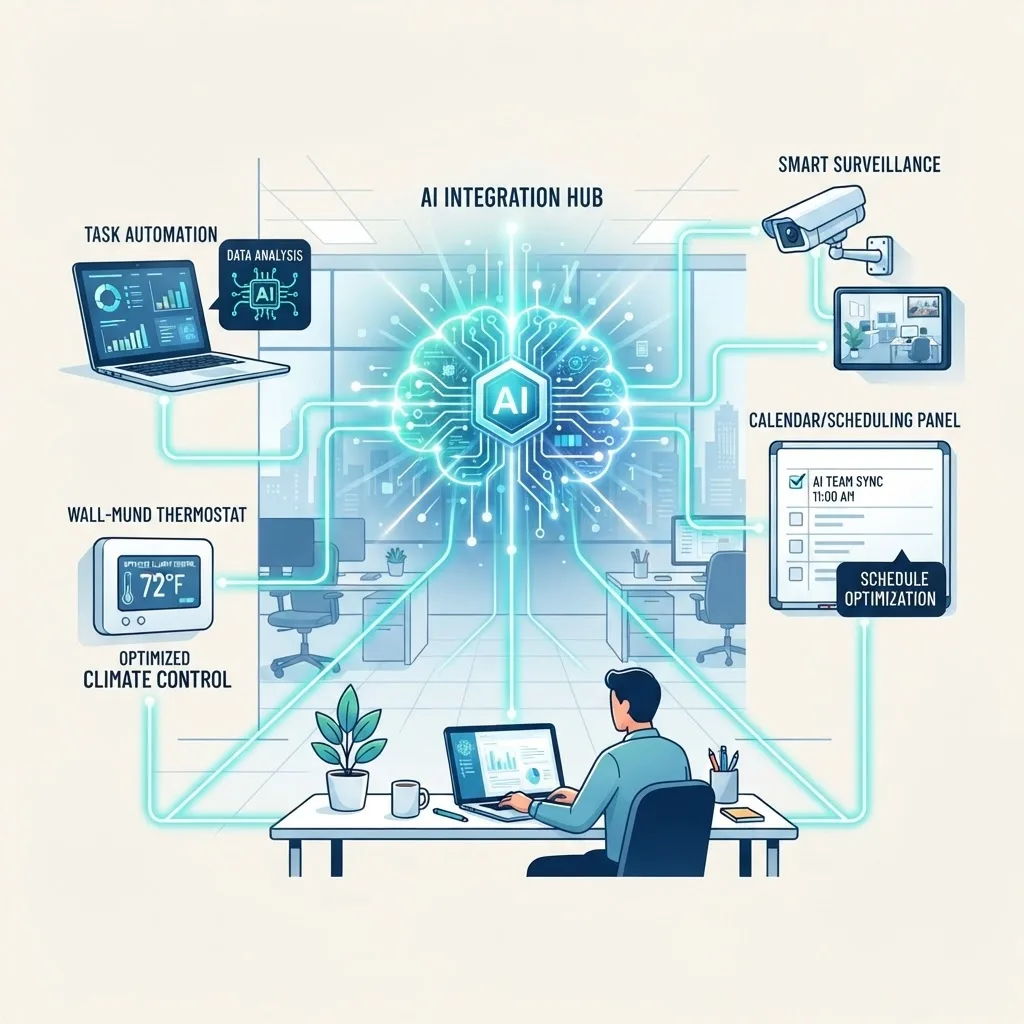
If you are exploring how to bring these capabilities into your organization, working with a specialist in artificial intelligence services can help you avoid common integration mistakes and prioritize the systems with the fastest payback.
AI-Powered Meeting Rooms
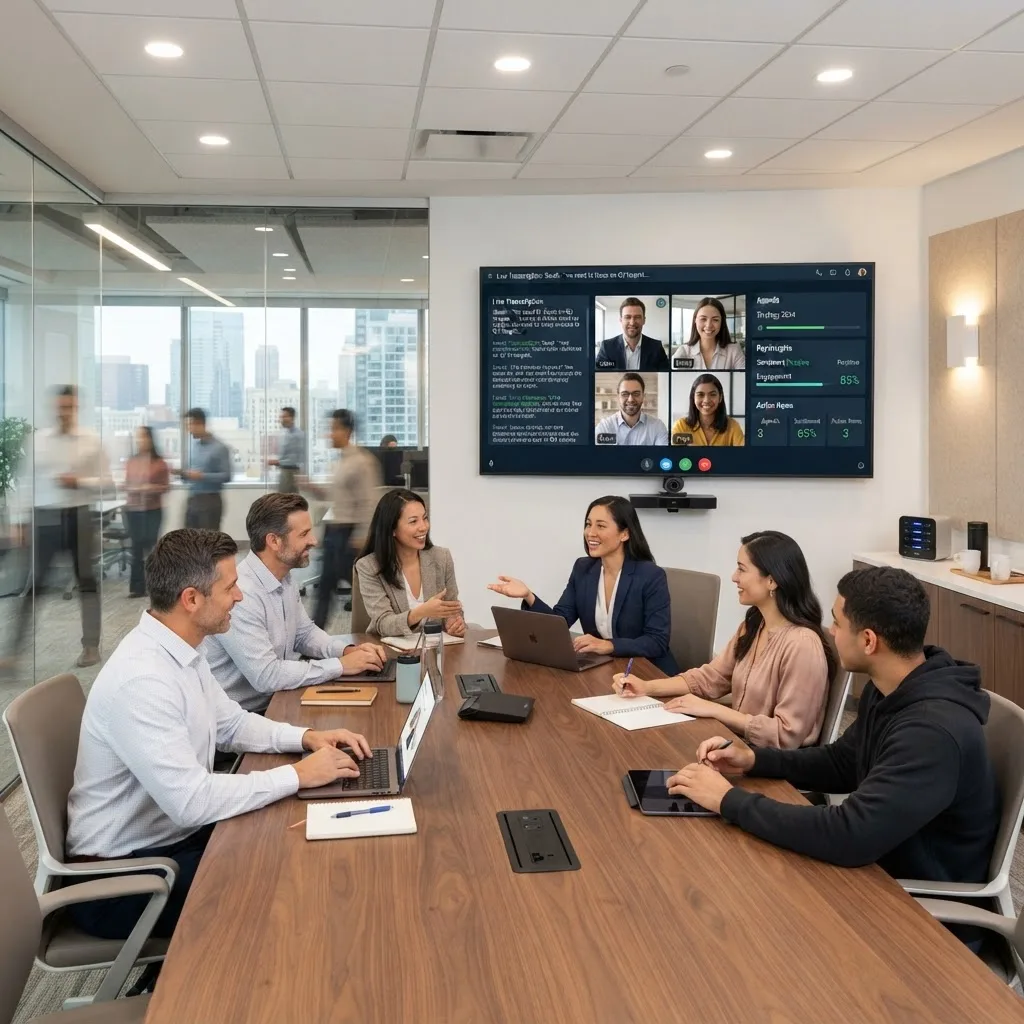
Meeting rooms are the most visible win for smart office AI because everyone feels the friction of double-bookings and wasted time. AI transforms these spaces in three practical ways.
- Automatic transcription and summaries. Tools listen to meetings and produce searchable notes, action items, and follow-ups without a dedicated scribe.
- Occupancy detection. Sensors detect whether a booked room is actually in use and release ghost bookings back into the pool, recovering hours of lost capacity each week.
- Smart scheduling. AI assistants scan calendars, resolve conflicts, and suggest the best time and room based on attendee location and availability.
In our experience helping teams roll out these tools, the biggest early win is not the technology itself but the recovered meeting-room capacity. Companies frequently discover they do not need to build or lease more rooms, they simply need to stop wasting the ones they have.
Intelligent Office Automation Systems
Automation is the backbone of the smart office. Instead of isolated gadgets, a central AI platform coordinates lighting, blinds, climate, and desk booking as one system that responds to real conditions.
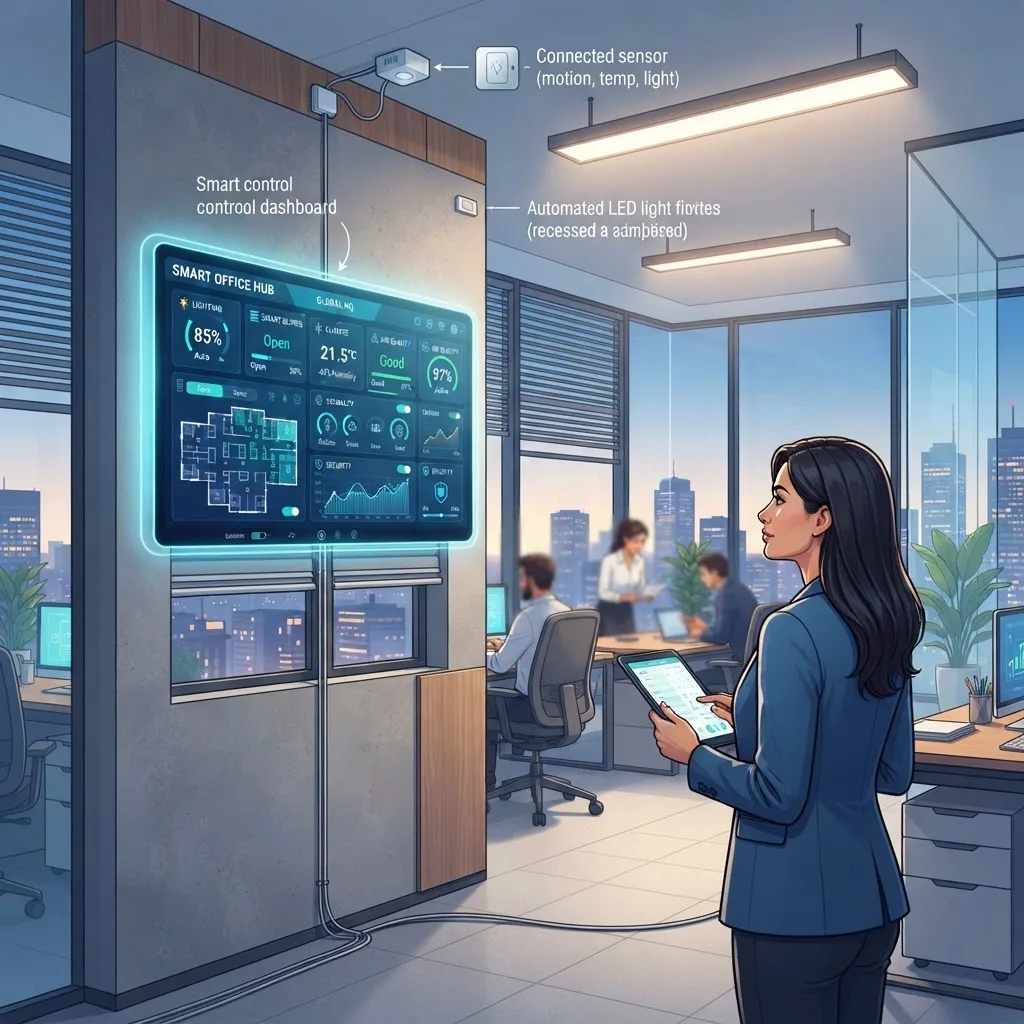
Here is what well-designed automation handles day to day:
- Adaptive lighting that brightens or dims based on daylight and occupancy.
- Automated blinds that reduce glare and heat gain during peak sun.
- Desk and space allocation that assigns hot desks based on team schedules.
- Predictive maintenance that flags failing HVAC or equipment before breakdown.
The key principle is that automation should be invisible. Employees should notice a comfortable, responsive space, not a control panel demanding attention. When automation forces people to learn complicated apps, adoption collapses. Good AI fades into the background.
AI Energy Management: The Fastest Cost Win
Energy is where smart office AI delivers the clearest financial return. Buildings account for roughly 40 percent of global energy consumption according to the International Energy Agency, and a large share of that is wasted on empty rooms and inefficient climate control.
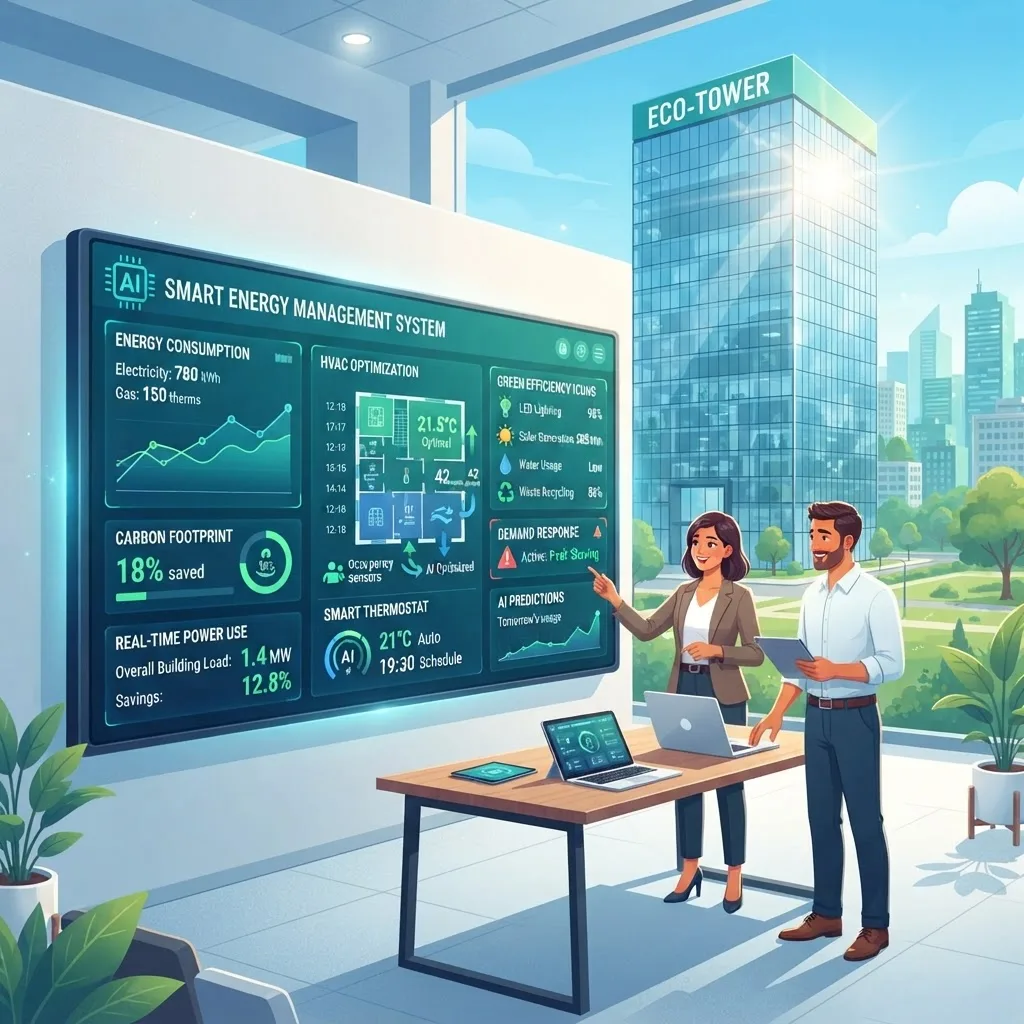
AI energy systems learn a building's rhythm. They pre-cool spaces using off-peak power, shut down zones outside working hours, and continuously tune HVAC based on occupancy and weather forecasts. Many organizations report 15 to 30 percent energy savings within the first year of deployment, which often covers the entire cost of the system.
Beyond savings, these systems support sustainability reporting. Automated dashboards track carbon output and energy intensity, giving leadership the verified data needed for ESG commitments and green building certifications.
Smart Office Security and Access Control
AI has redefined workplace security by shifting it from reactive to predictive. Traditional cameras record incidents after they happen. AI-powered systems analyze feeds in real time and alert staff to anomalies as they occur.
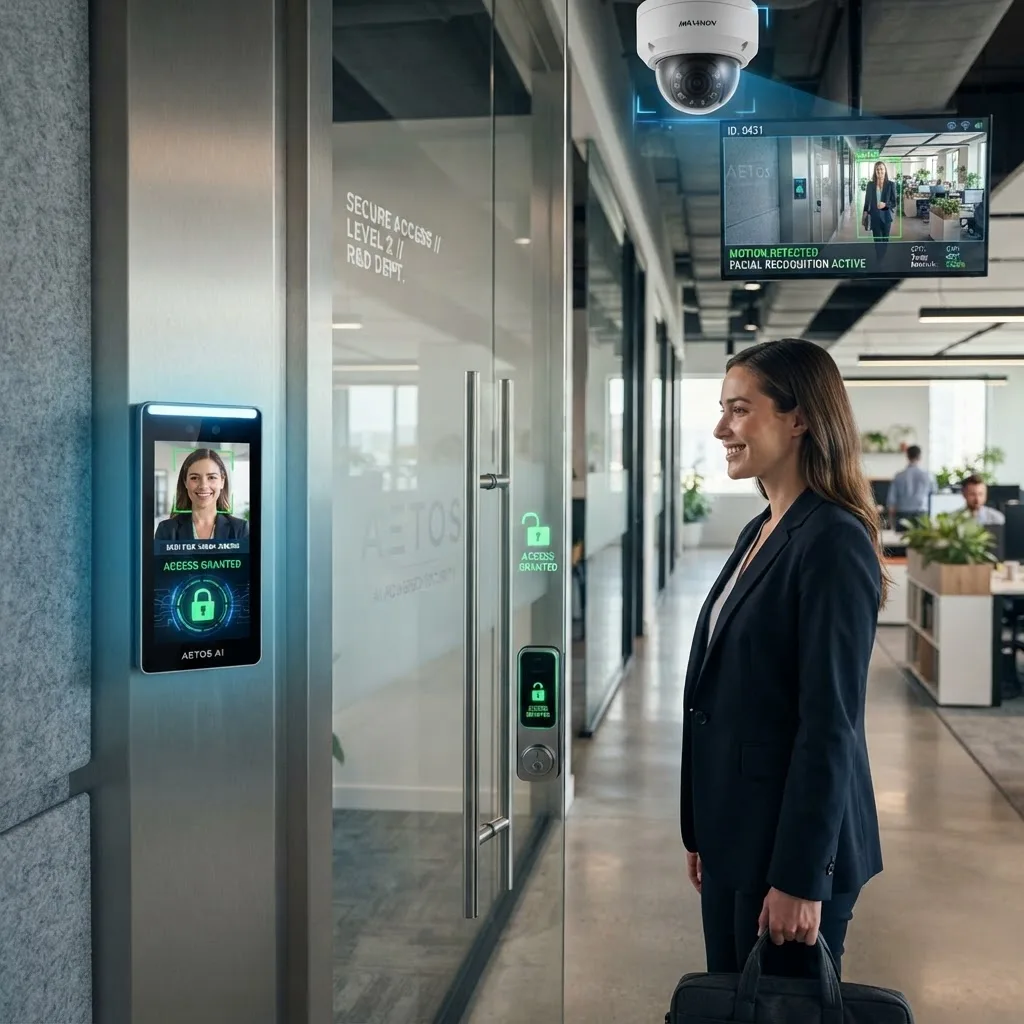
Modern smart office security includes:
- Touchless access control using facial recognition or mobile credentials.
- Real-time video analytics that detect tailgating, restricted-area entry, or unattended items.
- Automated visitor management that pre-registers guests and notifies hosts on arrival.
- Integration with alarms and lighting so the building responds instantly to threats.
A word on trust: responsible deployment requires transparency. Employees should know what data is collected, how long it is stored, and who can access it. The most successful implementations we have seen pair strong security with a clear, published data policy that respects privacy.
AI Workplace Productivity Tools
Productivity tools bring smart office AI directly to the individual employee. These are the assistants that summarize inboxes, draft replies, prioritize tasks, and surface the right document at the right moment.

According to a Microsoft Work Trend report, employees using AI assistants completed tasks up to 29 percent faster in common activities like searching, writing, and summarizing. The compounding effect across a full team is significant: even 30 minutes saved per person per day adds up to weeks of recovered time annually.
The practical advice here is to start narrow. Deploy one high-impact assistant, such as meeting summaries or email triage, master it, and then expand. Rolling out ten tools at once overwhelms staff and buries the benefits.
Smart Office AI: Cost vs. Value Comparison
The table below compares traditional office operations with an AI-enabled smart office across the areas that matter most to decision-makers.
| Area | Traditional Office | Smart Office with AI |
|---|---|---|
| Energy management | Manual, fixed schedules | Predictive, 15-30% savings |
| Meeting rooms | Frequent double-bookings | Auto-released, higher use |
| Security | Reactive, review after events | Real-time anomaly alerts |
| Note-taking | Manual, often skipped | Automatic transcripts |
| Maintenance | Fix after breakdown | Predictive, fewer outages |
| Setup cost | Low upfront | Higher upfront, fast payback |
How to Start Building a Smart Office
You do not need to rebuild your workplace overnight. A phased approach protects budget and builds internal confidence.
- Audit current pain points. Identify the top three frustrations, whether that is energy bills, room chaos, or slow security.
- Start with one system. Choose the area with the clearest ROI, usually energy or meeting rooms.
- Ensure integration. Pick platforms with open APIs so future tools connect easily.
- Measure results. Track savings and time recovered for 90 days before expanding.
- Scale intentionally. Add systems only after the previous one is adopted and delivering value.
For teams that want strategic guidance on integrating AI across their digital and physical operations, resources like ZoneTechify and WebPeak offer practical direction on planning and implementation.

The Future of Smart Office AI
The next wave moves from automation to true anticipation. Buildings will negotiate energy pricing with the grid, autonomous robots will handle deliveries and cleaning, and AI agents will coordinate entire workflows across teams. As these systems mature, the office becomes less a place you manage and more a partner that manages routine work for you, freeing humans for creativity and connection.
Key Takeaways
- Smart office AI combines IoT sensors, machine learning, and automation to run workplace systems intelligently.
- Energy management delivers the fastest ROI, with reported savings of 15 to 30 percent in the first year.
- Buildings consume roughly 40 percent of global energy, making AI optimization a major sustainability lever.
- AI meeting tools recover lost room capacity and eliminate manual note-taking.
- AI productivity assistants can complete common tasks up to 29 percent faster.
- Start with one high-ROI system, measure results, then scale intentionally.
Frequently Asked Questions (FAQ)
What is smart office artificial intelligence?
Smart office artificial intelligence uses connected sensors, machine learning, and automation to manage workplace tasks automatically. It controls lighting, climate, security, and scheduling by learning patterns and acting without manual input, helping businesses cut costs, save energy, and improve employee productivity across the workplace.
How much does a smart office AI system cost?
Costs vary by scope, but most businesses start with a single system like energy or meeting-room management for a modest upfront investment. Energy savings of 15 to 30 percent often cover the cost within the first year, making a phased rollout the most budget-friendly approach.
Is smart office AI secure and private?
Yes, when deployed responsibly. Reputable systems encrypt data and limit access, but privacy depends on your policy. Publish clear rules on what data is collected, how long it is stored, and who can view it. Transparency with employees is essential for trust and successful adoption.
Do small businesses benefit from smart office AI?
Absolutely. Small businesses often see faster results because they can deploy quickly without complex legacy systems. Starting with energy management or an AI meeting assistant delivers measurable savings and time recovery, making smart office technology accessible even on a limited budget.
Which smart office AI system should I install first?
Start with the area causing the most pain and offering the clearest return. For most offices that is energy management, since it produces immediate, measurable savings. Meeting-room automation is a strong second choice because it quickly recovers wasted space and eliminates scheduling conflicts.