
A clear, expert breakdown of the Solactive Wedbush Artificial Intelligence Index: what it tracks, how it is built, its holdings, performance, risks, and how investors use it.
Solactive Wedbush Artificial Intelligence Index
The Solactive Wedbush Artificial Intelligence Index has become one of the most talked-about thematic benchmarks for investors who want targeted exposure to the companies powering the AI revolution. As artificial intelligence shifts from hype to measurable revenue, index providers and research firms have partnered to package that opportunity into a single, rules-based basket of stocks. This index is one result of that collaboration between Solactive, a German index engineering firm, and Wedbush Securities, a well-known US investment research house.
In this guide, I break down exactly what this index is, how it selects and weights its components, how it has behaved relative to broad benchmarks, and the practical risks every investor should weigh before treating it as a proxy for the AI economy. If you have ever wondered whether a thematic AI index deserves a place in your portfolio, this article gives you a grounded, experience-based answer.

Quick Answer: The Solactive Wedbush Artificial Intelligence Index is a rules-based benchmark that tracks publicly listed companies driving artificial intelligence, from chipmakers to software and infrastructure. Built by Solactive with Wedbush research input, it gives investors a transparent, thematic way to measure and access the AI sector's performance.
What Is the Solactive Wedbush Artificial Intelligence Index?
The Solactive Wedbush Artificial Intelligence Index is a thematic equity index designed to represent companies that generate meaningful value from artificial intelligence. Solactive acts as the index administrator and calculation agent, while Wedbush contributes sector research and thematic classification that helps define which companies genuinely belong in the AI universe.
A thematic index differs from a traditional market-cap benchmark like the S&P 500. Instead of holding the largest companies regardless of business, it holds companies filtered by a specific theme, in this case AI. This means the index intentionally concentrates on semiconductors, cloud infrastructure, machine learning software, data platforms, robotics, and adjacent enablers.
Key term defined: A rules-based index is a benchmark governed by a published, transparent methodology, meaning constituents are selected and reweighted by fixed criteria rather than by a manager's discretion. This makes performance repeatable and auditable, which is exactly what institutional investors demand.
For businesses trying to understand how AI is being commercialized across industries, studying an index like this is a fast way to see which players the market rewards. If your organization is building AI capabilities of its own, expert partners such as ZoneTechify's artificial intelligence services can help you turn that market insight into working products.

How the Index Methodology Works
The strength of any thematic index lies in its methodology. A well-designed AI index avoids both dilution (too many loosely related firms) and over-concentration (a handful of mega-caps dominating returns). The Solactive Wedbush framework typically follows a structured selection process.
The Selection Process
- Define the universe. Start with liquid, publicly listed equities that meet minimum size and tradability thresholds.
- Apply the AI theme filter. Use Wedbush research and classification to identify companies with genuine AI exposure across revenue, products, or R&D.
- Score and rank. Rank eligible companies by their relevance to the AI theme and their financial quality.
- Select constituents. Choose the top-ranked names up to a target count.
- Weight the components. Apply a weighting scheme, often modified market-cap or equal-weight variants, with caps to limit single-stock dominance.
- Rebalance periodically. Review and reconstitute the index on a fixed schedule, usually quarterly or semi-annually.
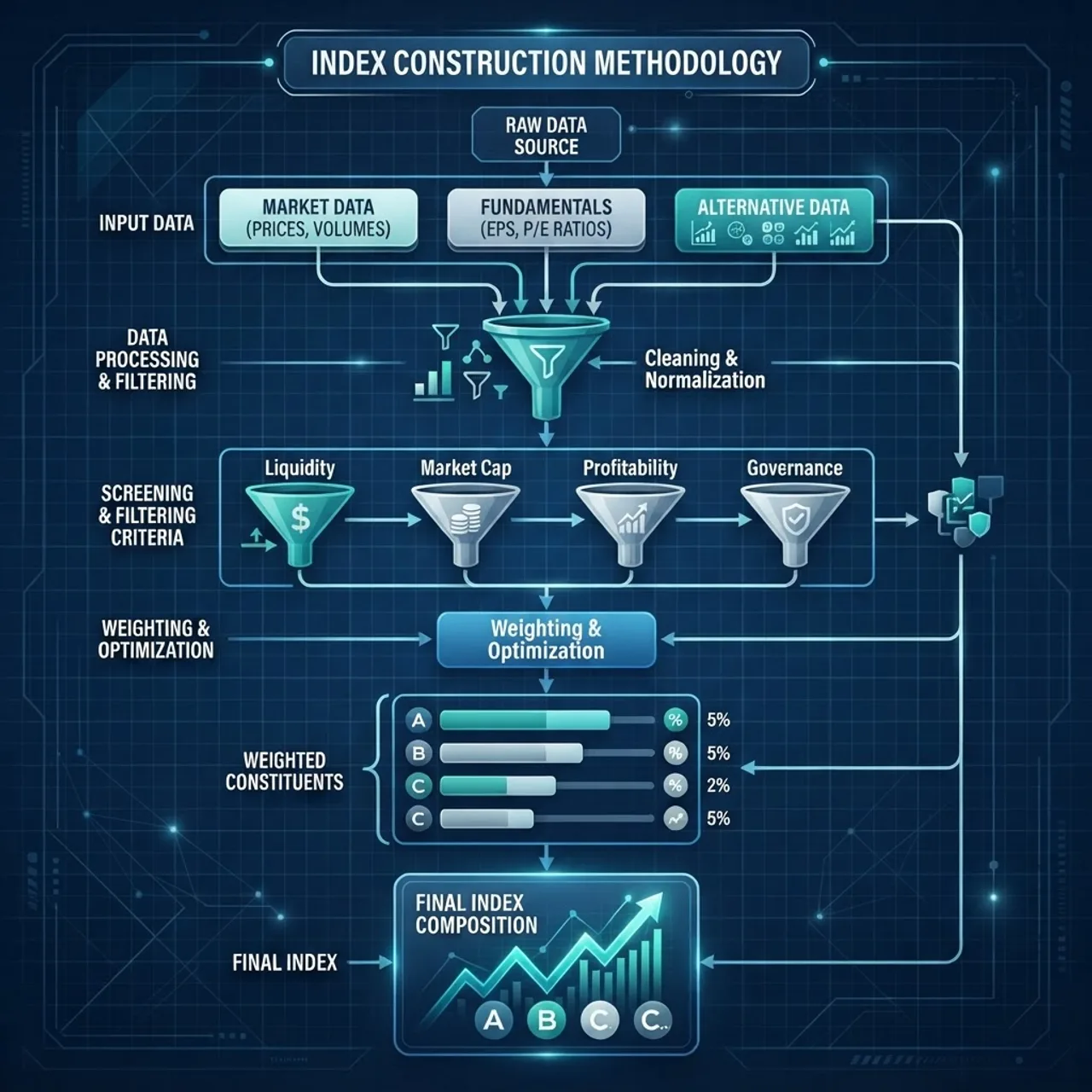
This disciplined approach matters. According to research from index providers, thematic indices with capping rules typically reduce single-stock concentration risk by a meaningful margin compared with pure market-cap weighting. That capping is what keeps a runaway winner from quietly becoming half the portfolio.
Why Weighting Choices Change Everything
Weighting is not a technical footnote, it is the single biggest driver of thematic performance. An equal-weighted AI index gives smaller innovators a real voice, while a market-cap-weighted version tends to mirror the largest chip and cloud giants. Reading the official factsheet's weighting rules tells you far more about future behavior than the index name ever will.
What Companies Are in the Index?
While the exact constituents change at each rebalance, the Solactive Wedbush Artificial Intelligence Index generally spans several recognizable AI value-chain segments. Understanding these buckets helps you interpret the index rather than chase a static holdings list.
- Semiconductors and hardware: Firms designing GPUs, AI accelerators, and specialized chips that train and run large models.
- Cloud and infrastructure: Hyperscalers and data-center operators providing the compute backbone for AI workloads.
- AI software and platforms: Companies offering machine learning tools, analytics, and enterprise AI applications.
- Data and enabling services: Businesses supplying the data pipelines, cybersecurity, and networking AI depends on.

Because AI spending is concentrated in infrastructure today, hardware and cloud names often carry the largest weights. That reflects reality: model training is capital-intensive, and the firms selling the shovels frequently capture early profits before software monetization matures.
Performance and What It Tells Investors
Thematic AI indices have delivered striking returns during periods of intense AI enthusiasm, but they also amplify volatility. The lesson from recent market history is that concentrated themes rise faster and fall harder than diversified benchmarks.
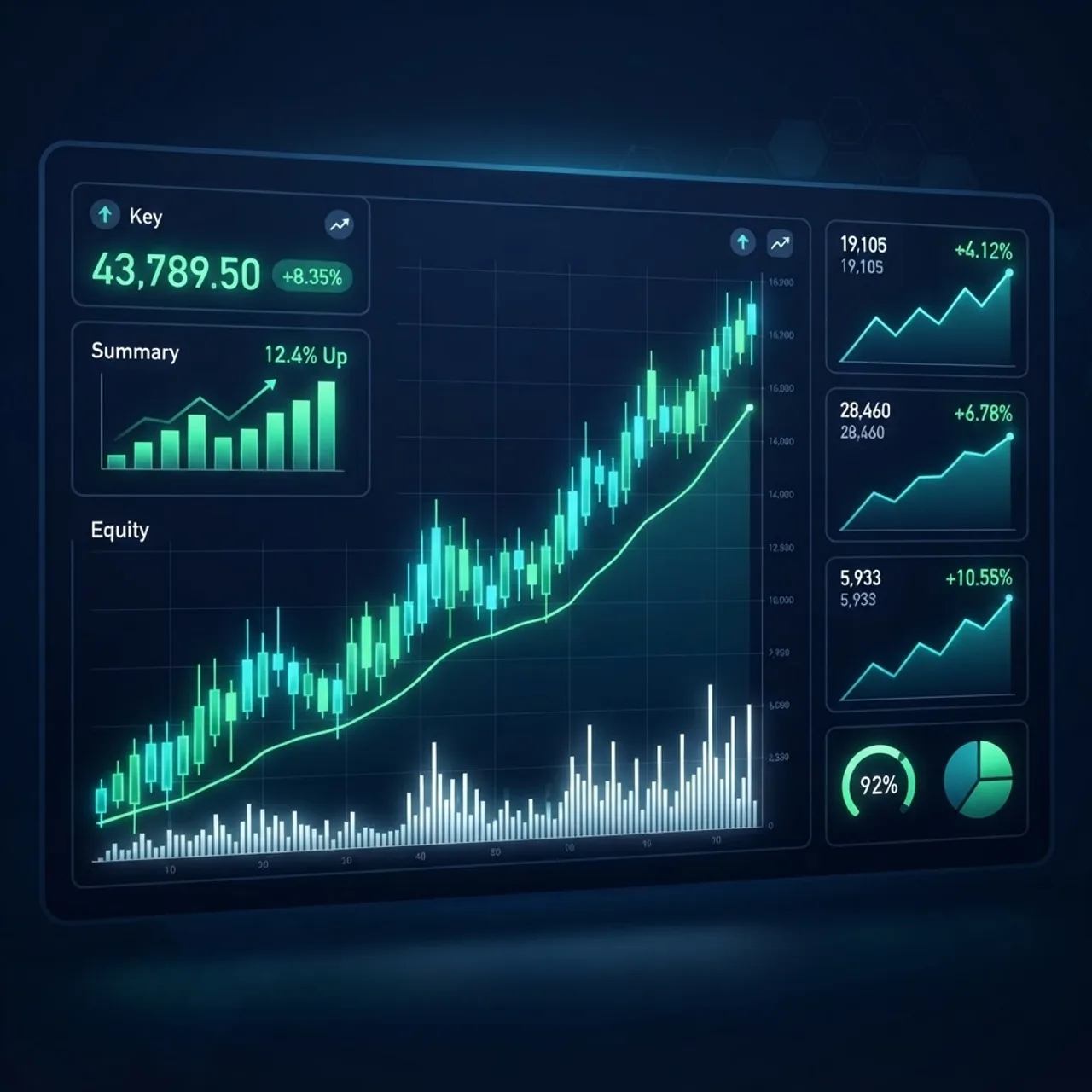
Context is essential when reading any performance figure. According to McKinsey research, generative AI could add between 2.6 and 4.4 trillion dollars in annual economic value across use cases, which helps explain why investors bid up AI-linked equities aggressively. Separately, industry analysts have noted that AI-exposed semiconductor stocks drove a disproportionate share of major index gains in recent bull runs, underscoring how narrow leadership can be.
The practical takeaway: strong trailing performance in an AI index often reflects a small group of leaders. Always check whether returns are broad-based across constituents or concentrated in a few names, because that distinction determines how the index will behave when sentiment shifts.
Solactive Wedbush AI Index vs Broad Benchmarks
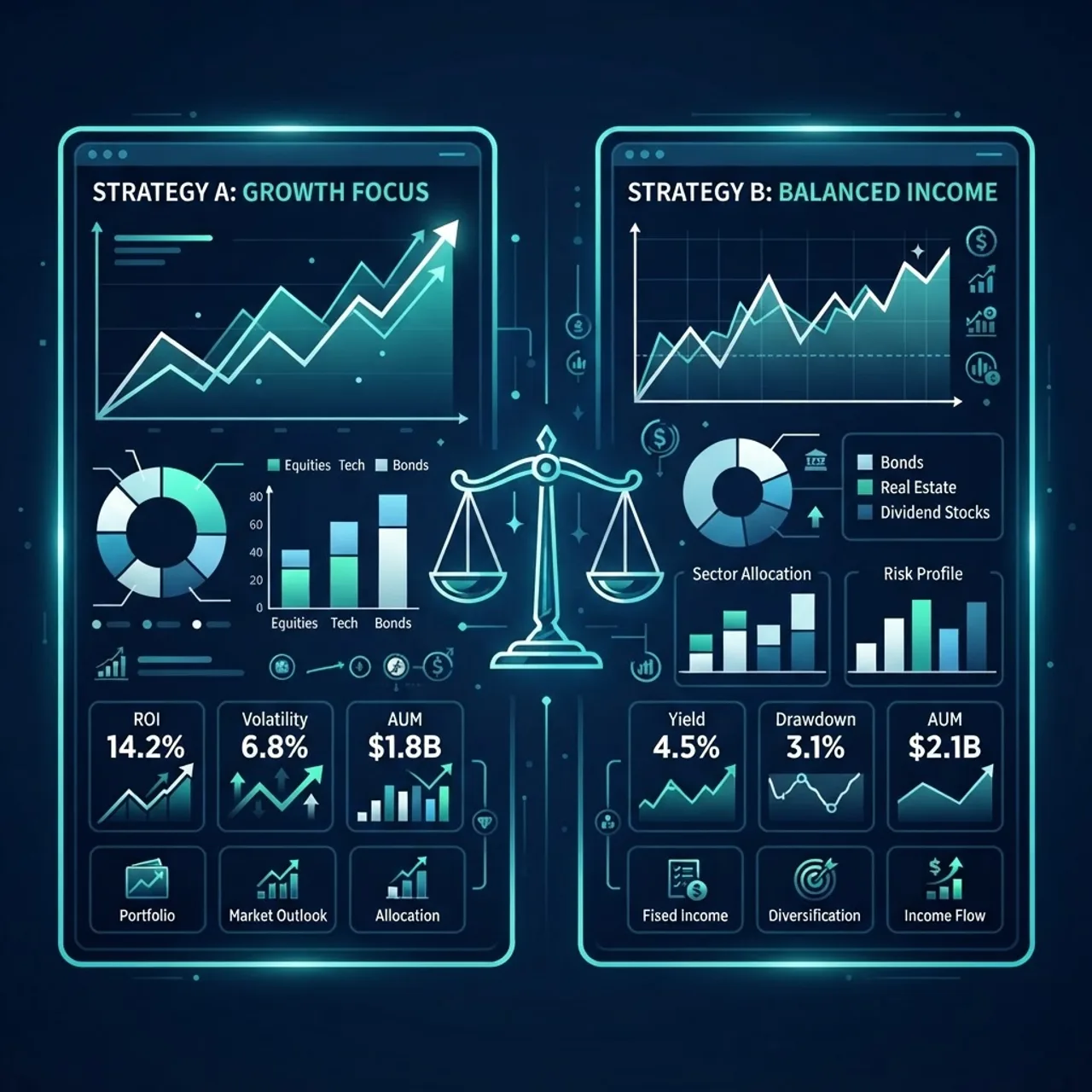
Comparing a thematic index to a broad benchmark clarifies the trade-off you are accepting: higher potential upside in exchange for higher risk and less diversification.
| Feature | Solactive Wedbush AI Index | Broad Market Index (e.g. S&P 500) |
|---|---|---|
| Focus | AI theme only | Entire large-cap market |
| Diversification | Concentrated | Broad |
| Volatility | Higher | Moderate |
| Growth potential | High if AI thesis holds | Steady, balanced |
| Sector exposure | Tech-heavy | All sectors |
| Best use case | Targeted AI allocation | Core portfolio holding |
The table makes the role clear. A broad index is a core holding; a thematic AI index is a satellite position, a smaller allocation layered on top of a diversified core to express a specific conviction about where technology is heading.
How Investors Access the Index
An index itself is not directly investable, it is a measuring stick. Investors typically gain exposure through financial products that track it, such as exchange-traded funds (ETFs), structured notes, or certificates licensed to use the index as their benchmark.

Practical Steps Before You Invest
- Find the tracking product. Locate the specific ETF or note licensed to follow the index in your market.
- Read the factsheet. Confirm the methodology, rebalance schedule, and top holdings.
- Check fees. Compare the expense ratio against similar thematic funds.
- Assess overlap. Ensure the AI names do not already dominate your existing funds.
- Size the position sensibly. Treat it as a satellite allocation, not your core.
This discipline protects you from the most common thematic-investing mistake: doubling down on tech exposure you already own through broad funds without realizing it.
Risks and Considerations
Every thematic index carries risks that deserve honest attention. Ignoring them is how enthusiastic investors get hurt when a cycle turns.

- Concentration risk: A few mega-cap names can dominate returns, so a single company's stumble drags the whole index.
- Valuation risk: AI stocks often trade at premium multiples that assume years of flawless growth.
- Volatility: Thematic indices swing sharply with sentiment and interest-rate expectations.
- Theme drift: As AI spreads across every sector, defining a pure AI company becomes harder, which can dilute the theme over time.
- Regulatory risk: Emerging AI regulation could reshape the economics of leading constituents.
My experience reviewing thematic products is that the biggest danger is behavioral, not structural. Investors chase these indices after a strong run and abandon them during drawdowns, locking in the worst of both. A fixed allocation rule beats emotion every time.
Key Takeaways
- The Solactive Wedbush Artificial Intelligence Index is a rules-based thematic benchmark tracking companies that drive artificial intelligence, built by Solactive with Wedbush research input.
- It concentrates on semiconductors, cloud infrastructure, AI software, and enabling data services rather than the whole market.
- Methodology, especially weighting and capping rules, matters more than the index name for understanding behavior.
- McKinsey estimates generative AI could add 2.6 to 4.4 trillion dollars in annual economic value, explaining strong investor demand.
- Treat any AI index as a satellite allocation, not a core holding, and always check for overlap with funds you already own.
Frequently Asked Questions (FAQ)
What is the Solactive Wedbush Artificial Intelligence Index?
It is a rules-based thematic equity index that tracks publicly listed companies driving artificial intelligence, including chipmakers, cloud providers, and AI software firms. Solactive administers and calculates it, while Wedbush provides the research that defines which companies genuinely belong in the AI theme.
Can I invest directly in the index?
No, you cannot invest in an index directly because it is a measuring benchmark, not a fund. Instead, you buy financial products licensed to track it, such as ETFs, structured notes, or certificates. Always read the tracking product's factsheet to confirm holdings, fees, and how closely it follows the index.
How is this index different from the S&P 500?
The S&P 500 holds the largest US companies across all sectors, offering broad diversification. The Solactive Wedbush AI Index intentionally concentrates on AI-related firms, making it more volatile and tech-heavy. It is designed as a targeted thematic bet, not a diversified core portfolio holding for most investors.
Is the Solactive Wedbush AI Index a safe investment?
No thematic index is inherently safe. It carries concentration, valuation, and volatility risks because returns often depend on a few large holdings. It can outperform in AI bull markets but fall sharply when sentiment shifts. Size it as a small satellite position within a diversified portfolio to manage that risk.
How often is the index rebalanced?
Most Solactive thematic indices rebalance on a fixed schedule, commonly quarterly or semi-annually, though the exact frequency is defined in the official methodology document. Rebalancing updates constituents and weights to reflect changes in the AI landscape, keeping the index aligned with its stated theme rather than drifting over time.
For more expert guides on AI, technology trends, and digital growth, explore ZoneTechify and WebPeak.