
A complete guide to the South African Artificial Intelligence Association: its mission, membership benefits, ethics work, industry impact, and future roadmap.
South African Artificial Intelligence Association
Artificial intelligence is reshaping how South Africa banks, farms, mines, heals, and learns. Yet for years the country's AI talent worked in isolated pockets: brilliant researchers at universities, ambitious startups in Cape Town and Johannesburg, and enterprise data teams that rarely shared knowledge. A South African Artificial Intelligence Association exists to close that gap, giving the nation a single, credible body to coordinate research, set ethical standards, and represent local interests in a fast-moving global industry.
This guide explains what such an association does, who it serves, and why it matters for anyone building an AI career or company in South Africa. Whether you are a student, a founder, or a policymaker, understanding this ecosystem helps you plug into the right networks and avoid reinventing work that others have already solved.
Quick Answer: The South African Artificial Intelligence Association is a professional body that unites researchers, developers, businesses, and policymakers to advance responsible AI in South Africa. It promotes ethical standards, skills development, industry collaboration, and local representation in global AI policy and innovation debates.

What Is the South African Artificial Intelligence Association?
A South African Artificial Intelligence Association is a non-profit or member-driven organisation that brings the country's AI community under one roof. It typically connects academic institutions, private companies, government departments, and independent practitioners who share a common goal: growing a trustworthy, globally competitive AI sector on African soil.
A Clear Definition
Artificial Intelligence Association: a professional membership body that sets standards, shares knowledge, and advocates on behalf of a country's AI practitioners and organisations. Unlike a single research lab or company, an association is neutral. It does not sell one product; it strengthens the entire field.
In practice, this means the association runs conferences, publishes guidelines, connects members to funding, and speaks to government when new regulation is being drafted. It becomes the trusted voice the media, investors, and lawmakers call when they need an informed South African perspective on AI.
Why South Africa Needs a Dedicated AI Association
South Africa faces a genuine talent and coordination challenge. According to the World Economic Forum, AI and automation are expected to create and displace tens of millions of jobs globally by 2030, and emerging economies risk falling behind without organised upskilling. A national association helps the country move together rather than in fragments.

There are three concrete reasons a dedicated body matters here:
- Talent retention. South Africa exports skilled engineers to Europe, the UK, and North America. An active community with real opportunities gives professionals a reason to build careers at home.
- Local context. AI models trained mostly on Western data often misread South African languages, names, and social realities. A local association pushes for datasets and tools that reflect all eleven official languages and diverse communities.
- Trust and adoption. Businesses hesitate to adopt AI they do not understand. A credible association educates the market, which accelerates responsible adoption across sectors.
Statista projects the global AI market will surpass 800 billion US dollars by 2030. Even capturing a small share of that value requires organised effort, and that is exactly what an association is built to deliver.
Core Objectives and Focus Areas
Most AI associations, in South Africa and elsewhere, organise their work around a few durable pillars. Understanding these helps you know what to expect as a member or partner.
- Research and knowledge sharing through journals, papers, and open events.
- Ethics and governance to ensure AI is fair, transparent, and accountable.
- Skills and education to grow the pipeline of qualified practitioners.
- Industry adoption by connecting solution providers with businesses that need them.
- Policy advocacy so South African realities shape national and continental regulation.
Each pillar reinforces the others. Strong ethics work, for example, makes industry adoption safer, which in turn creates demand for more trained talent. Companies looking to build compliant solutions often partner with specialists such as ZoneTechify's artificial intelligence services to turn these principles into working products.
Membership Benefits: What You Actually Gain
Joining a national AI association is not about a certificate on a wall. The real value is access, and that access compounds over time.

Here is what well-run associations typically offer members:
- Networking with peers, mentors, and potential co-founders or clients.
- Early access to research, funding calls, and government tenders.
- Discounted training, workshops, and recognised certifications.
- A public profile through directories that help clients find trusted experts.
- A collective voice in policy discussions that affect your work.
For freelancers and small studios, that shared voice is priceless. One independent developer has little influence over national policy, but a thousand members speaking together are impossible to ignore. This is the classic advantage of collective action applied to a young, high-stakes industry.
AI Policy and Ethics in South Africa
Ethics is where a South African AI association earns lasting credibility. As AI systems increasingly make decisions about credit, hiring, and healthcare, the risk of bias and harm grows. An association translates abstract principles into practical, enforceable guidance.
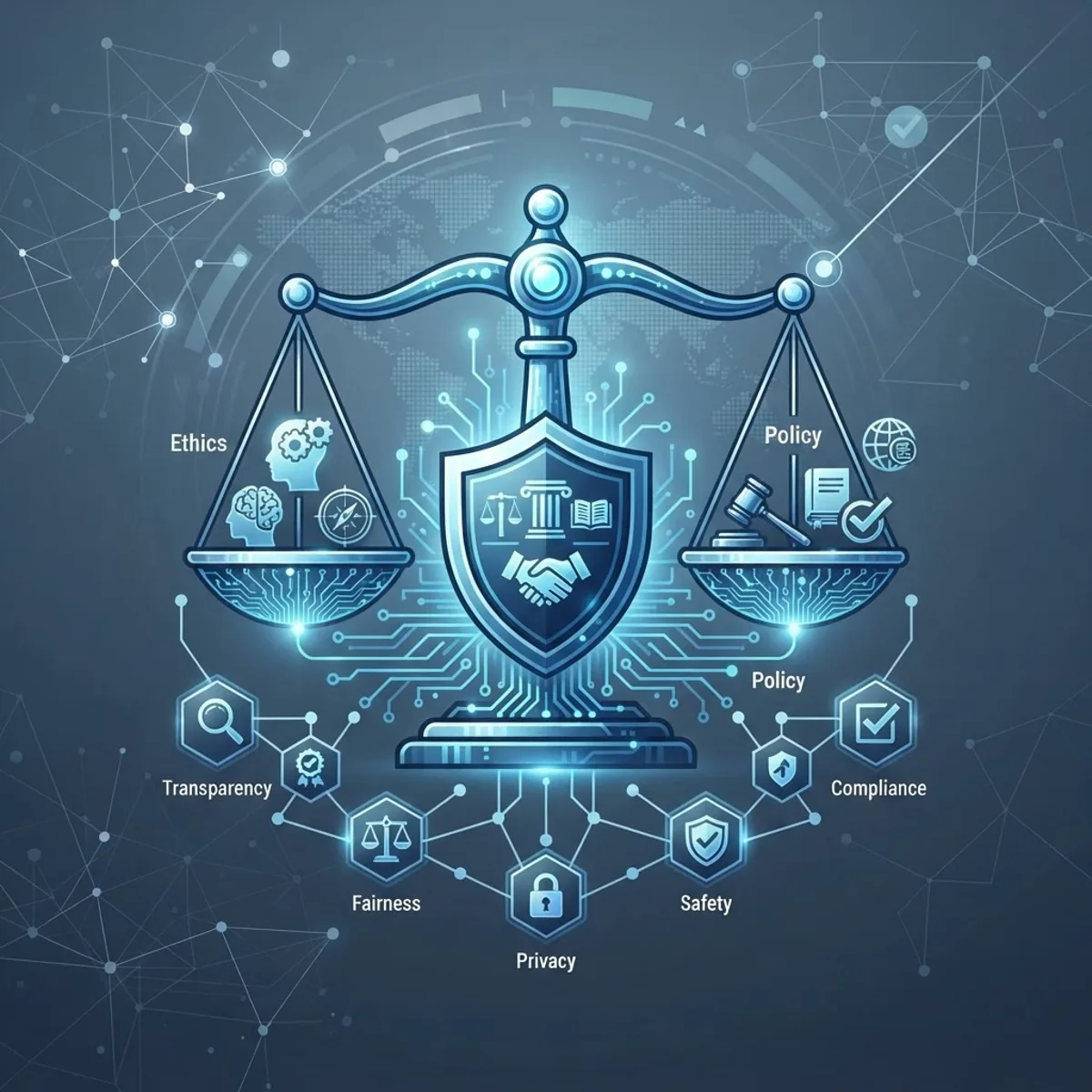
A responsible framework usually addresses transparency, data privacy in line with the Protection of Personal Information Act (POPIA), fairness across South Africa's diverse population, and clear human accountability for automated decisions. The table below shows how a coordinated association approach compares to a fragmented, go-it-alone market.
| Focus Area | With an AI Association | Without an Association |
|---|---|---|
| Ethical standards | Shared, enforceable guidelines | Inconsistent, company by company |
| Talent development | Coordinated national pipeline | Scattered, duplicated effort |
| Policy influence | Unified, expert voice | Fragmented and easily ignored |
| Global visibility | Represented internationally | Individual, limited reach |
| Public trust | Built through transparency | Eroded by unchecked failures |
The difference is stark. Coordination turns isolated good intentions into a reliable system that businesses, regulators, and citizens can trust.
Industry Applications Across South Africa
AI is already delivering measurable value across the South African economy, and an association helps spread these wins beyond early adopters.
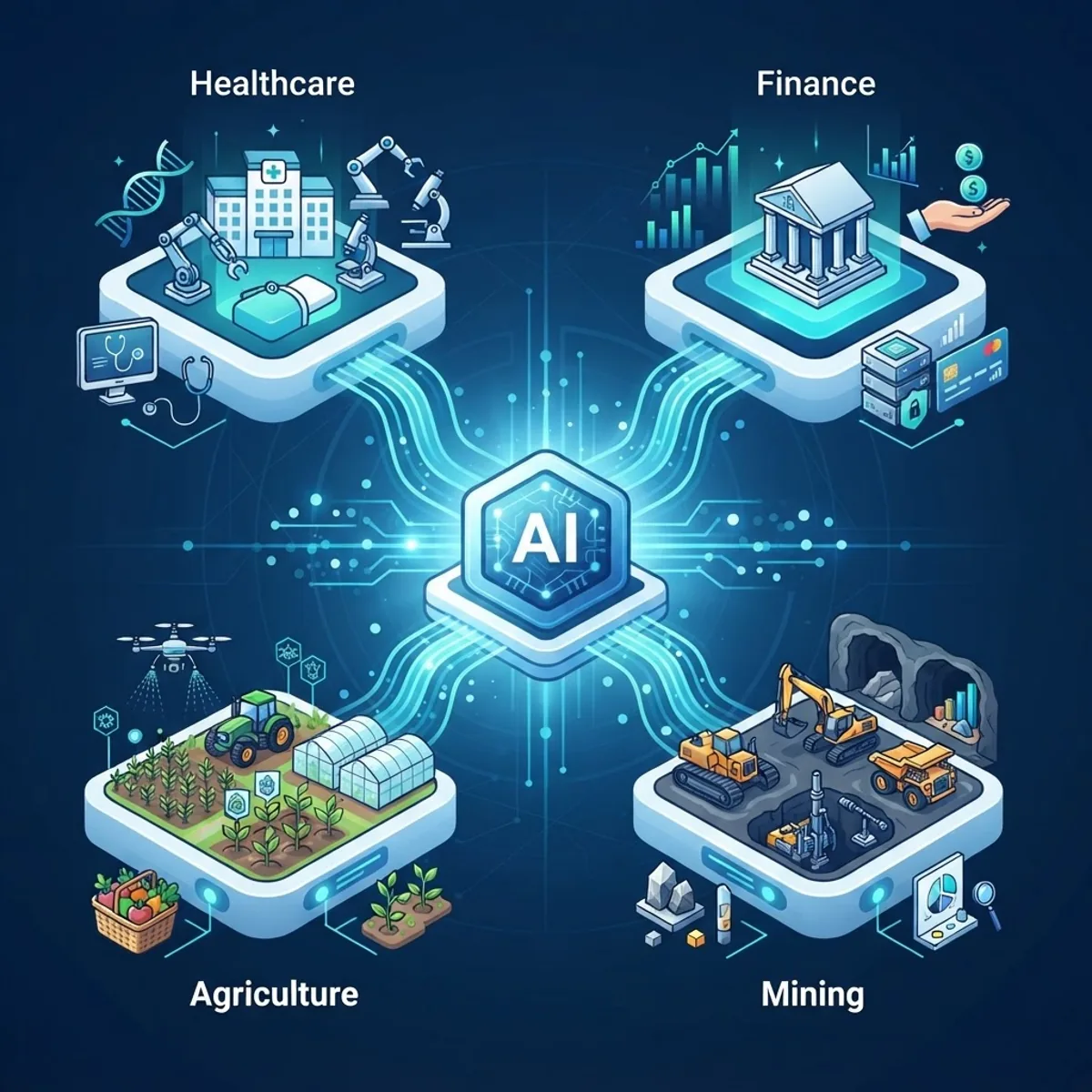
Key sectors seeing real impact include:
- Financial services, where banks use AI to detect fraud and expand access to credit for underbanked customers.
- Agriculture, where computer vision and predictive models improve crop yields and manage scarce water.
- Mining, where predictive maintenance reduces costly downtime and improves worker safety.
- Healthcare, where diagnostic tools extend specialist expertise to under-served rural clinics.
- Retail and logistics, where demand forecasting cuts waste and speeds up delivery.
An association documents these case studies and shares them openly, so a mining firm in Limpopo can learn from a bank in Sandton. That cross-pollination is difficult to achieve without a neutral coordinating body actively collecting and publishing results.
Skills Development and Training
The single biggest constraint on South African AI is skilled people, and this is where an association can change the country's trajectory fastest.
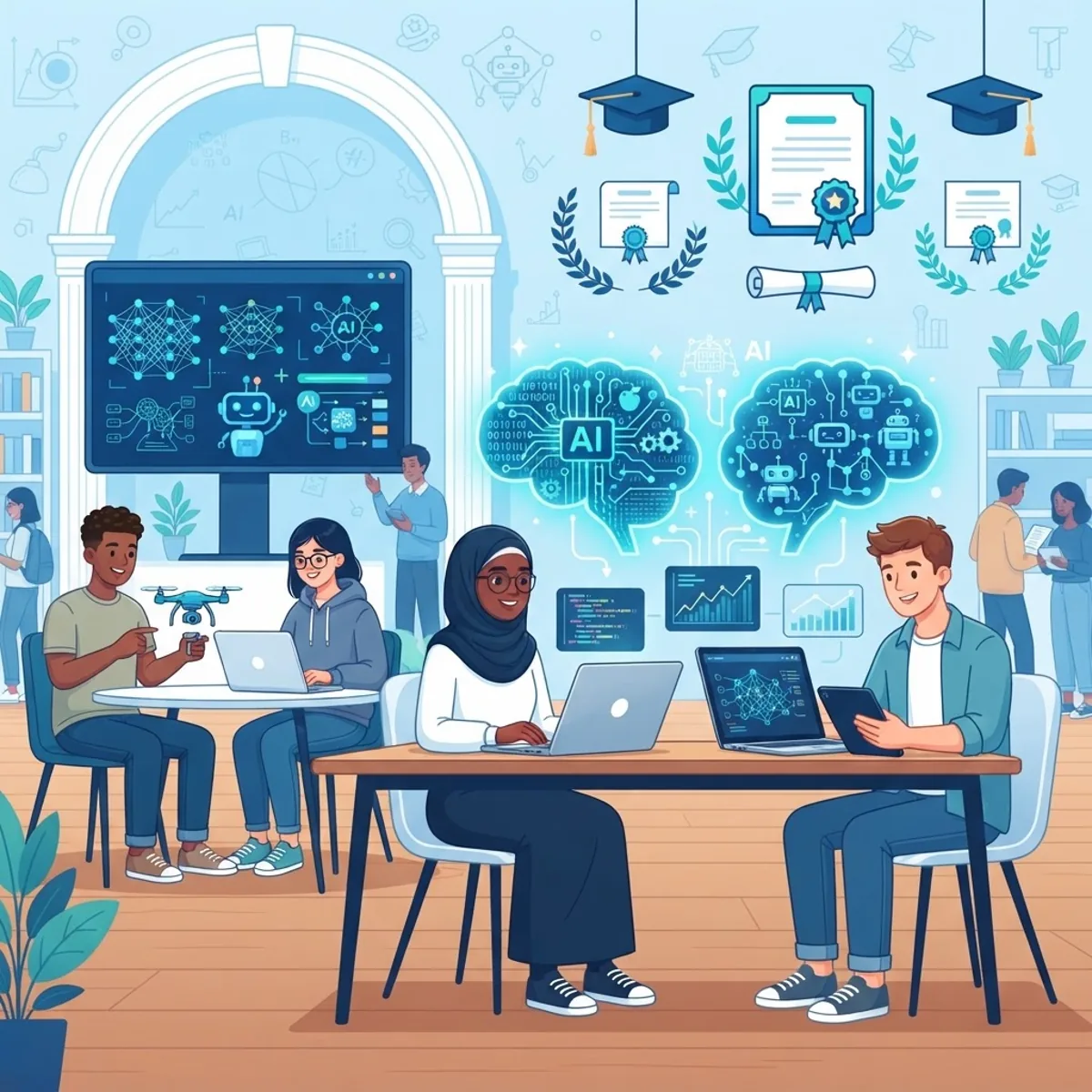
Effective associations partner with universities, coding schools, and employers to build clear learning pathways from beginner to expert. They champion bursaries for students from disadvantaged backgrounds, run practical bootcamps, and align curricula with the skills employers actually need. This matters because a degree alone rarely prepares graduates for production AI work.
Companies that want to strengthen their own capabilities often combine association training with specialist partners. For example, teams building automation and machine-learning products frequently work alongside providers like WebPeak's artificial intelligence services to accelerate delivery while their internal talent grows. The goal is a virtuous cycle: more trained people, more successful projects, and more demand for training.
The Future Roadmap for AI in South Africa
The long-term vision is a South Africa that is not just an AI consumer but a genuine producer and exporter of AI innovation. A national association is central to reaching that goal.

Priorities for the years ahead include expanding local-language datasets, deepening research collaboration across the African continent, attracting responsible foreign investment, and ensuring AI benefits reach rural and township communities rather than only major cities. Achieving this requires patience and structure, and an association provides both.
South Africa has strong universities, a proven fintech sector, and a growing developer community. With coordinated leadership, these ingredients can position the country as the AI hub of the continent. You can explore more resources on responsible technology at ZoneTechify and WebPeak.
Key Takeaways
- A South African Artificial Intelligence Association unites researchers, businesses, and policymakers to advance responsible AI nationally.
- Coordination solves three core problems: talent loss, lack of local context in AI models, and slow, hesitant adoption.
- Membership delivers networking, early funding access, discounted training, and a collective policy voice.
- Ethics and POPIA-aligned governance are what earn the association lasting public and regulatory trust.
- The global AI market is projected to exceed 800 billion US dollars by 2030, making organised local effort economically urgent.
Frequently Asked Questions (FAQ)
What does a South African Artificial Intelligence Association actually do?
It coordinates the national AI community by setting ethical standards, sharing research, running training, and advocating in policy debates. Instead of selling a product, it strengthens the whole sector so researchers, businesses, and government can collaborate and adopt AI responsibly and competitively.
Who can join an AI association in South Africa?
Membership is usually open to students, academics, software developers, data scientists, startups, established companies, and public-sector professionals. Most associations offer tiered options, so individuals, small studios, and large enterprises can each join at a level that matches their needs and budget.
Why is a dedicated AI body important for South Africa?
It keeps skilled talent in the country, pushes for AI tools that understand local languages and realities, and builds public trust that speeds adoption. A unified body also gives South Africa a credible voice in continental and global AI policy discussions.
How does an AI association support ethics and privacy?
It publishes practical guidelines aligned with laws like POPIA, promoting transparency, fairness, data protection, and human accountability for automated decisions. These shared standards help companies deploy AI safely and give regulators and citizens confidence that systems are being built responsibly.
How can businesses benefit from AI in South Africa?
Businesses use AI to detect fraud, forecast demand, improve crop yields, and extend healthcare to rural areas. An association shares proven case studies openly, and specialist partners help companies turn these opportunities into working, compliant products that deliver measurable returns.
The bottom line: a South African Artificial Intelligence Association is far more than a networking club. It is the connective tissue that lets a talented but scattered community act as one, ensuring the country builds AI that is competitive, ethical, and genuinely African.