
A practical guide to artificial intelligence CPT coding: how the AMA classifies assistive, augmentative, and autonomous AI, and how to bill and document AI-assisted care correctly.
Artificial Intelligence CPT
Artificial intelligence CPT refers to the Current Procedural Terminology codes used to report medical services that involve algorithmic or machine learning software. Since the American Medical Association introduced its AI taxonomy in the CPT 2022 code set, coding an AI-assisted service is no longer guesswork. It follows a defined framework based on how much clinical work the software actually performs.
This matters commercially. A hospital that deploys an FDA-cleared diagnostic algorithm but reports it under the wrong code family will either lose legitimate revenue or invite an audit. This guide explains the taxonomy, the code categories, the documentation standards, and the reimbursement reality as of 2026.
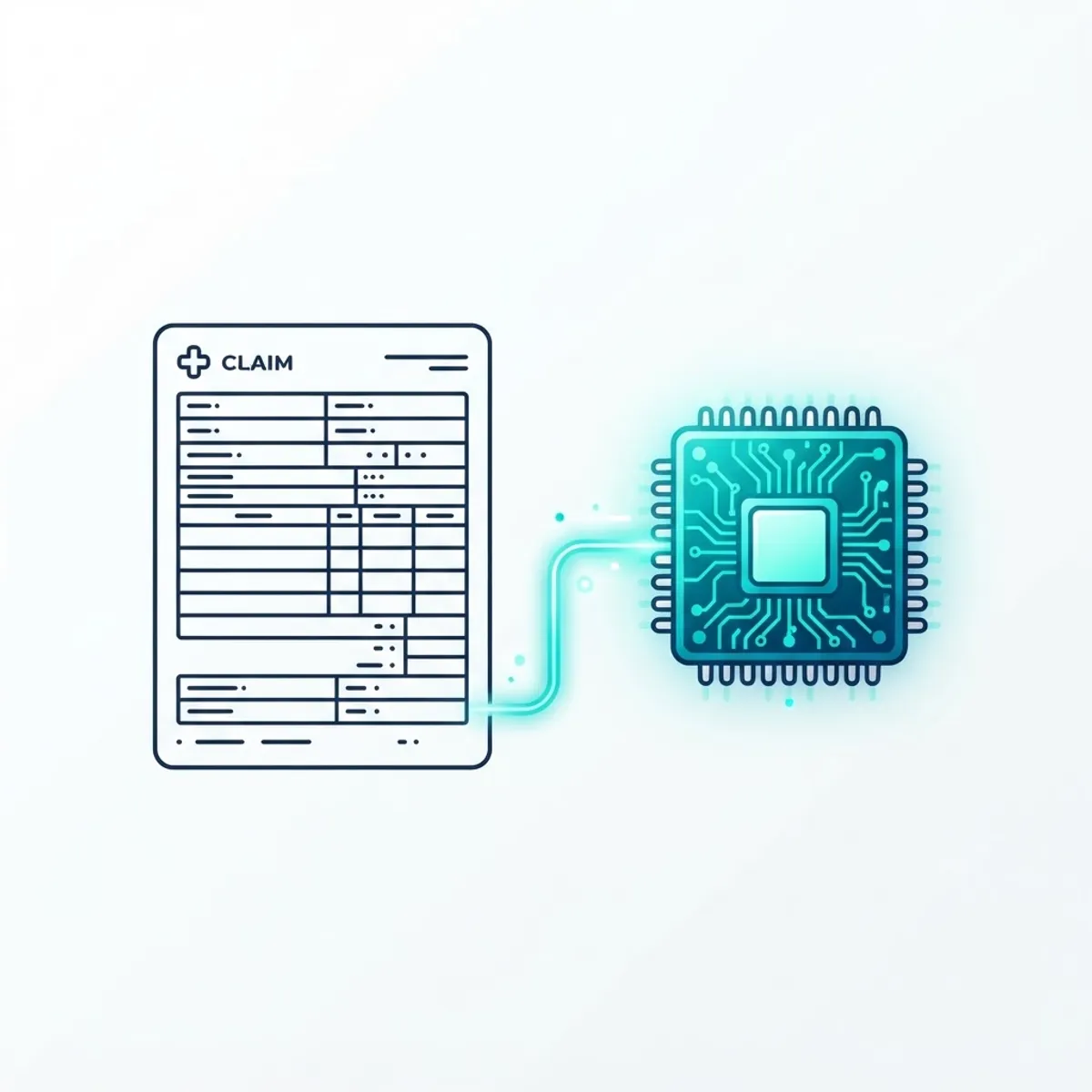
Quick Answer: Artificial intelligence CPT codes are CPT codes that report services performed with AI software. The AMA classifies them in Appendix S as assistive, augmentative, or autonomous, based on how much of the clinical decision the algorithm makes. Most existing AI codes are Category III temporary codes, which limits payer reimbursement.
What Does CPT Mean in an AI Context?
CPT stands for Current Procedural Terminology, the code set maintained by the American Medical Association and used by nearly every US payer to describe medical procedures and services. A CPT code is the billing language of American healthcare. If a service has no code, it usually has no payment pathway.
Artificial intelligence created a classification problem for this system. Traditional CPT codes assume a human clinician performs the work. When software analyzes a retinal image and returns a screening result with no physician interpretation, the old code structure could not describe who did what. The AMA answered this with Appendix S of the CPT code set, a taxonomy specifically for AI-augmented medical services.
Key Terms Defined
- CPT Category I codes: Permanent codes for widely performed, FDA-approved, evidence-backed services. These carry established Medicare payment values.
- CPT Category II codes: Optional performance measurement tracking codes. They carry no payment.
- CPT Category III codes: Temporary codes for emerging technology. Payment is discretionary and payer specific. Most AI codes live here.
- Appendix S: The AMA classification framework that sorts AI applications into assistive, augmentative, and autonomous categories.

The Three Levels of AI in CPT Appendix S
The AMA taxonomy is built on one question: how much clinical work does the algorithm do without a human? Understanding this determines which code you can legitimately report.
- Assistive AI. The software detects clinically relevant data but the physician interprets everything and makes the decision. The algorithm flags, the clinician decides. Example: software that highlights a suspicious region on a scan for radiologist review.
- Augmentative AI. The software analyzes the data and produces clinically meaningful output that the physician reviews, verifies, and acts on. The algorithm contributes analysis, the clinician retains judgment.
- Autonomous AI. The software interprets data and makes an actionable clinical conclusion without physician involvement in that specific interpretation. The AMA further splits this into autonomous AI with a physician acting on the output, autonomous AI with a physician contradiction pathway, and fully autonomous AI.
The practical rule most coders miss is that the taxonomy describes the service, not the product marketing. A vendor may describe its tool as autonomous, but if a physician must sign off on every output before it enters the chart, the reported service is augmentative. Documentation, not the sales deck, decides the category.

Artificial Intelligence CPT Code Categories Compared
| Attribute | Category I AI Codes | Category III AI Codes | Unlisted Procedure Codes |
|---|---|---|---|
| Status | Permanent | Temporary, five year lifespan | Fallback option |
| FDA clearance expected | Yes | Usually yes | Varies |
| Medicare RVU assigned | Typically yes | Rarely | No |
| Payment likelihood | Moderate to high | Low, payer discretion | Very low, manual review |
| Documentation burden | Standard | High, narrative often required | Highest |
| Example use | Established autonomous retinal screening | Emerging cardiac or imaging algorithms | Brand new tool with no code |
Two data points frame the current landscape. First, the FDA had authorized well over one thousand AI and machine learning enabled medical devices by 2025, with radiology accounting for roughly three quarters of them. Second, the number of CPT codes that describe AI-augmented services remains in the low dozens. That gap is the single most important fact in AI reimbursement: clearance volume is far ahead of coding and payment infrastructure.
The original analysis worth taking away is this. Most organizations treat AI CPT coding as a billing task. It is actually a procurement task. The moment to determine whether a tool has a viable code and payment pathway is before you sign the contract, not after the first claim denies.
How to Bill an AI-Assisted Service Correctly
A defensible AI claim follows a repeatable sequence. Teams that skip step one generate the majority of denials.
- Confirm the regulatory status. Identify the exact FDA clearance number and the cleared indication. A code cannot be supported for use outside the cleared indication.
- Classify the service under Appendix S. Decide honestly whether the workflow is assistive, augmentative, or autonomous based on who signs the clinical conclusion.
- Locate the specific code. Search Category I first, then Category III. Only use an unlisted procedure code when nothing describes the service.
- Check payer policy before the service. Category III codes are paid at payer discretion. A prior authorization or written coverage policy check prevents write offs.
- Document the algorithm by name and version. Include the software name, version, inputs analyzed, output produced, and the clinician action taken.
- Avoid double reporting. If the professional interpretation is already bundled into the primary service, reporting an additional AI code is a compliance risk.

Why Medical Imaging Leads AI CPT Adoption
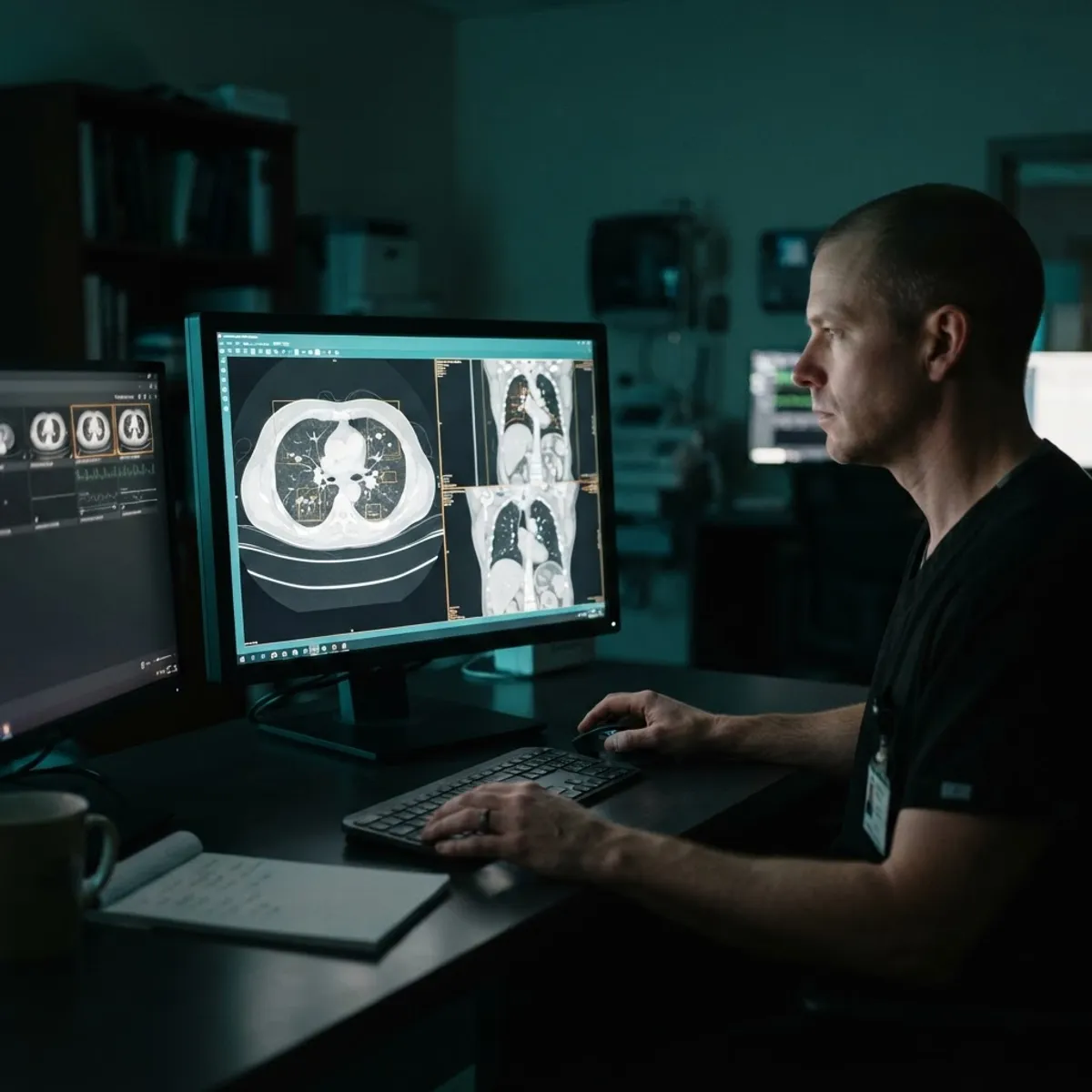
Radiology dominates AI CPT activity because imaging produces standardized, digital, high volume data that algorithms can be validated against. Coronary plaque quantification, large vessel occlusion triage, fracture detection, and mammography density analysis all have describable outputs, which is exactly what a CPT code requires.
But leading in code count does not mean leading in payment. Many imaging AI services are reported with Category III codes that are paid only through narrow mechanisms such as Medicare New Technology Add-on Payments in the inpatient setting or specific outpatient pass through arrangements. The operational lesson is to model AI value on measurable throughput, length of stay, and clinician time saved, and treat direct fee-for-service payment as upside rather than the business case.
Documentation and Compliance Requirements
An AI CPT claim is only as strong as its audit trail. Auditors look for evidence that the software actually ran, that it ran on this patient, and that the output influenced care.
- Record the software name, manufacturer, and version number in the encounter note.
- Store the algorithm output as a retrievable artifact, not a screenshot pasted into free text.
- Document the clinician review, agreement or disagreement, and the resulting action.
- Note the medical necessity for running the algorithm on this patient.
- Retain FDA clearance documentation and the internal validation summary at the organizational level.
- Log who ordered the AI service, since some codes require a physician order.
Organizations building this infrastructure often need custom pipelines rather than off-the-shelf reporting, which is where a specialist partner in AI workflow solutions can bridge the gap between the clinical software and the billing system. On the platform and measurement side, the engineering-led approach used by WebPeak Digital reflects the same principle: instrument the workflow first, then optimize what it produces.

Five Mistakes That Trigger AI Claim Denials
- Reporting autonomous codes for supervised workflows. If a physician verifies the output, the service is not autonomous.
- Billing AI separately when it is bundled. Some algorithms are considered inherent to the base imaging or laboratory service.
- Using a code for an off-label indication. The cleared indication defines the billable use.
- Assuming commercial payers mirror Medicare. Category III policy varies widely between plans.
- Omitting the software version. Version specificity is increasingly requested in audits because clinical performance changes between releases.
What Changes Next for Artificial Intelligence CPT
Three shifts are underway. The AMA continues expanding Appendix S as more autonomous applications reach clearance, which will gradually move mature algorithms from Category III toward Category I. Payer scrutiny is rising, with more plans issuing explicit AI coverage policies rather than handling claims case by case. And ambient documentation AI, now widely deployed, sits mostly outside CPT entirely because it supports administrative work rather than a billable clinical service, a boundary worth watching.
The strategic implication is that AI CPT literacy is becoming a revenue cycle competency, not a niche specialty. Teams that map codes at procurement time will convert AI investment into reimbursed services faster than teams that discover the gap at denial time.

Key Takeaways
- Artificial intelligence CPT codes describe medical services performed with algorithmic software, classified by the AMA in Appendix S.
- The taxonomy has three levels: assistive, augmentative, and autonomous, defined by how much clinical work the software performs independently.
- Most current AI codes are Category III temporary codes, so reimbursement is payer discretionary rather than guaranteed.
- Over one thousand AI enabled devices have FDA authorization, while AI-specific CPT codes number in the low dozens.
- Radiology accounts for roughly three quarters of cleared AI devices and leads AI CPT adoption.
- Documentation must include software name, version, output, and the clinician action taken.
- Verify code availability and payer policy during procurement, not after the first claim.
Frequently Asked Questions (FAQ)
What is an artificial intelligence CPT code?
An artificial intelligence CPT code is a Current Procedural Terminology code that reports a medical service performed using AI or machine learning software. The American Medical Association classifies these services in Appendix S as assistive, augmentative, or autonomous, depending on how much clinical work the algorithm performs without a physician.
Does Medicare pay for AI CPT codes?
Medicare pays for some AI services, but coverage is inconsistent. Category I AI codes may carry assigned payment values, while Category III temporary codes are usually paid at contractor discretion or through special mechanisms such as inpatient New Technology Add-on Payments. Always verify the current local coverage determination before billing.
How do I know if my AI tool is assistive, augmentative, or autonomous?
Look at who makes the final clinical conclusion. If the software only flags findings for review, it is assistive. If it produces analysis a physician verifies and acts on, it is augmentative. If it delivers an actionable clinical conclusion without physician interpretation, it is autonomous.
Can I bill an AI service if there is no specific CPT code?
You can report an unlisted procedure code, but expect manual payer review and a low payment likelihood. Submit a detailed narrative describing the software, its FDA clearance, the work performed, and the clinical value. Confirm payer willingness in writing before delivering the service whenever possible.
What documentation do auditors expect for AI CPT claims?
Auditors expect the software name, manufacturer, and version, the specific data analyzed, the algorithm output stored as a retrievable record, the ordering clinician, the reviewing clinician action, and the medical necessity rationale. Screenshots pasted into free text notes are frequently considered insufficient evidence during review.
Are ambient AI scribes billable under CPT?
Generally no. Ambient documentation tools support administrative and clerical work rather than a distinct billable clinical service, so they usually fall outside CPT reporting. Their value is measured in clinician time saved and note quality, not in a separately reportable procedure code on the claim.