
Discover how artificial intelligence catalog management software solutions automate product data, improve accuracy, and scale your ecommerce operations effortlessly.
Artificial Intelligence Catalog Management Software Solutions
Managing a large product catalog by hand is one of the most time-consuming and error-prone jobs in modern commerce. Spreadsheets pile up, product descriptions go stale, attributes are missing, and the same item shows up with three different titles across three different sales channels. As catalogs grow into the tens or hundreds of thousands of SKUs, manual processes simply break down. This is exactly where artificial intelligence catalog management software solutions step in to transform chaos into clean, structured, sellable data.
In this guide, we explore what AI-driven catalog management really means, the features that matter, the measurable benefits, and how to choose the right platform. Whether you run a growing online store or manage product data for a global brand, AI can help you work faster and smarter. To learn more about the teams behind these solutions, visit ZoneTechify and WebPeak.
What Is AI Catalog Management Software?
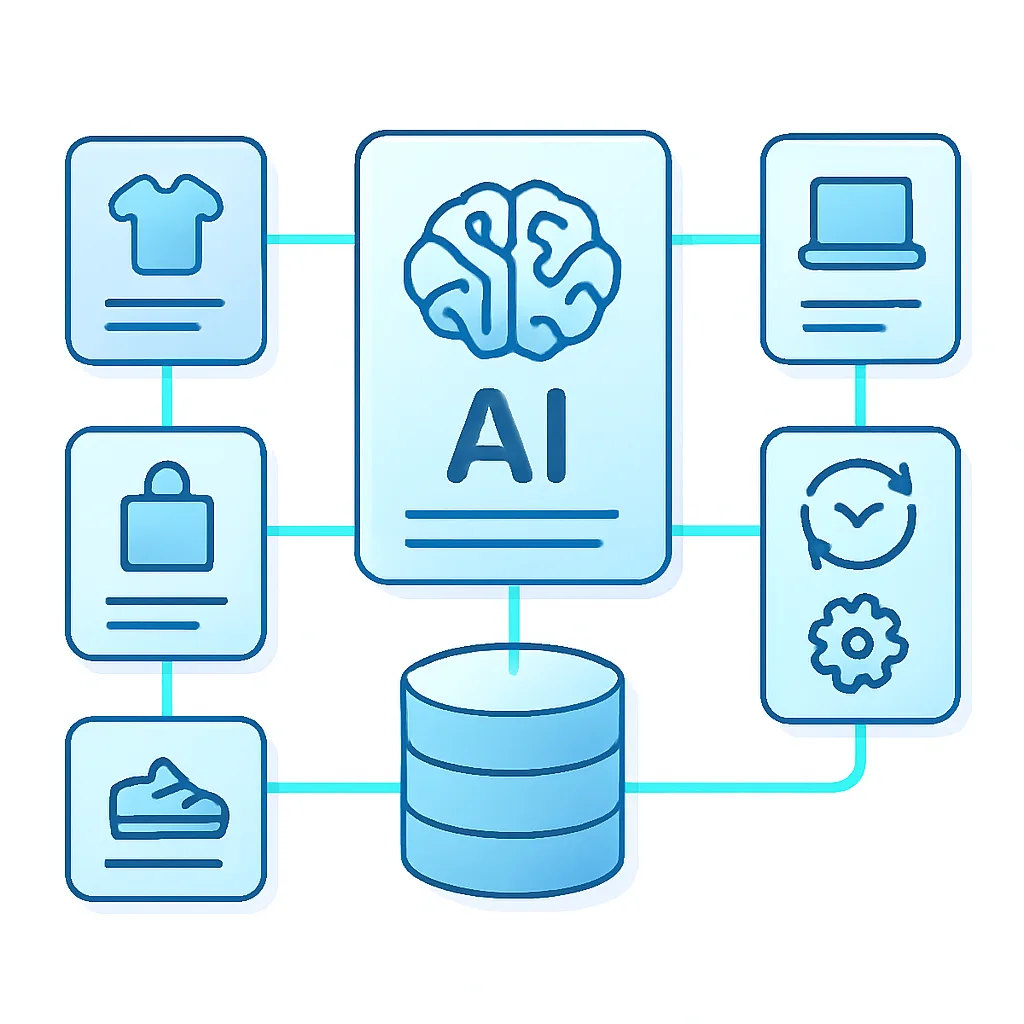
Catalog management is the discipline of organizing, enriching, and distributing product information so that it stays accurate everywhere it appears. Traditionally, this required dedicated teams entering data row by row. Artificial intelligence changes the equation by automating the repetitive, judgment-heavy tasks that used to consume entire workdays.
AI catalog management software uses machine learning, natural language processing, and computer vision to understand your products the way a human merchandiser would, only at massive scale. It can read a raw supplier feed, recognize what each field means, generate a polished description, classify the item into the correct category, and flag anything that looks incomplete or inconsistent. The result is a single source of truth that feeds your website, marketplaces, and marketing channels.
Unlike rigid rule-based systems, AI tools learn from your existing data. The more products they process, the better they become at predicting attributes, matching duplicates, and maintaining a consistent brand voice across thousands of listings.
Why Manual Catalog Management No Longer Works
A decade ago, a store with a few hundred products could survive on manual data entry. Today, customer expectations and channel complexity have exploded. Shoppers want rich descriptions, accurate specs, high-quality images, and consistent pricing across every touchpoint. Search engines and marketplaces reward complete, well-structured listings and penalize thin or duplicate content.
Manual management introduces three persistent problems: speed, accuracy, and scalability. People are slow compared to automation, they make typos and omissions, and they cannot keep pace when catalogs double or triple in size. Every error costs money through lost sales, returns, and damaged trust.
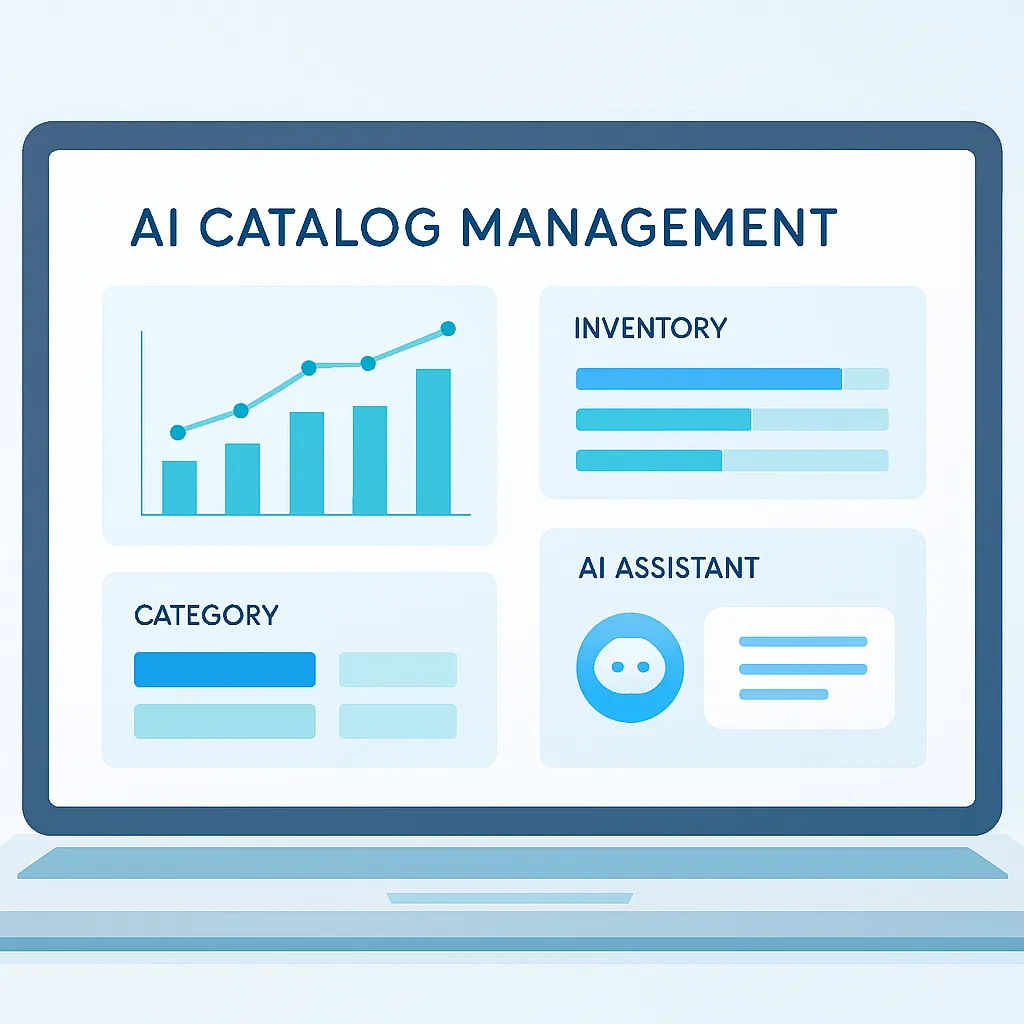
Artificial intelligence solves these pain points by removing the human bottleneck from routine work. Staff are freed to focus on strategy, merchandising, and customer experience instead of copy-pasting attributes. The shift is not about replacing people but about letting them do higher-value work.
How AI Automates Product Data
The core power of these platforms lies in automated data enrichment. When a new product enters the system, AI gets to work immediately across several layers.
Attribute extraction pulls structured details such as size, color, material, and dimensions from messy supplier text. Auto-categorization places the item into the correct taxonomy node so it appears in the right filters and navigation paths. Description generation writes unique, on-brand copy that is optimized for both shoppers and search engines, eliminating thin or duplicated content.
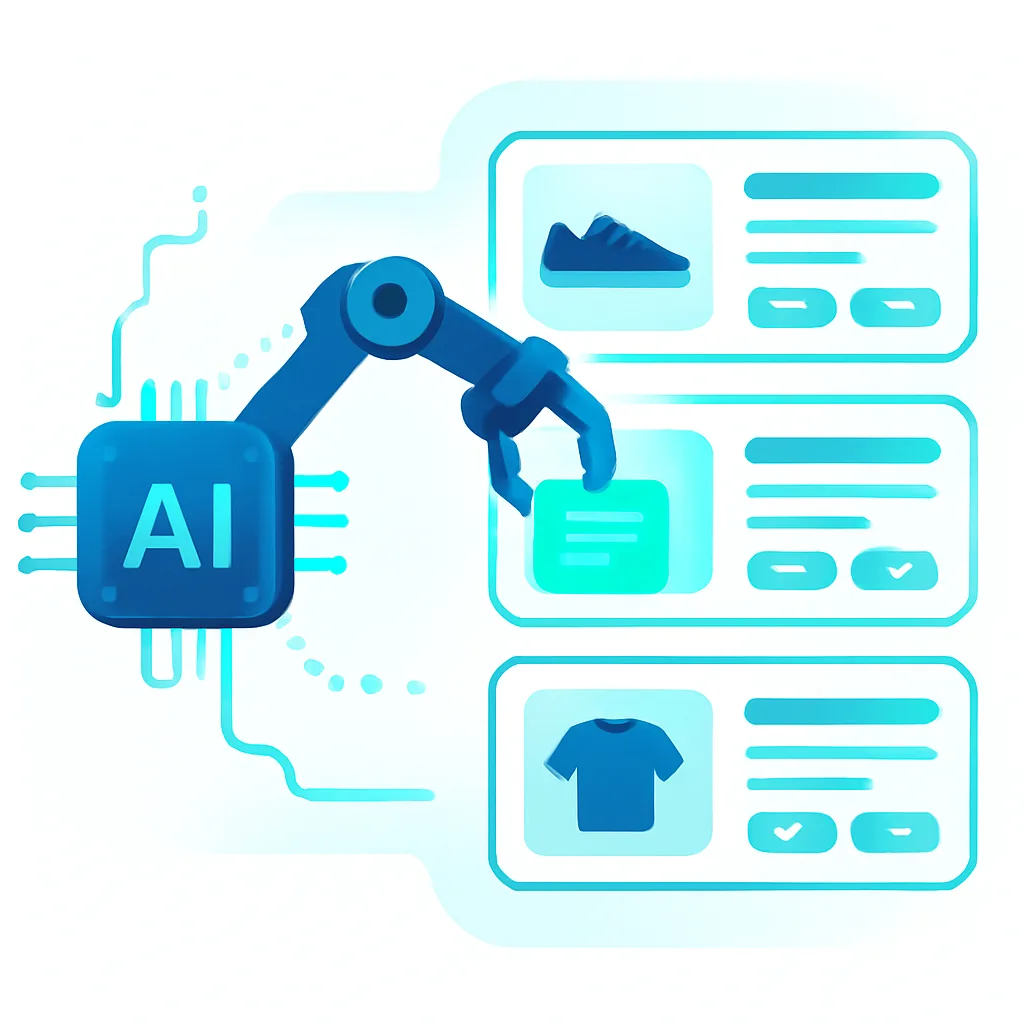
Computer vision adds another dimension. AI can analyze product photos to detect colors, patterns, and product types, then auto-tag images for better internal search and on-site discovery. It can even flag low-resolution or off-brand images before they go live. Combined, these capabilities turn a raw, incomplete feed into a rich, ready-to-sell catalog in minutes rather than weeks.
Key Features to Look For
Not every platform is equal. When evaluating artificial intelligence catalog management software solutions, prioritize the features that deliver real operational value.
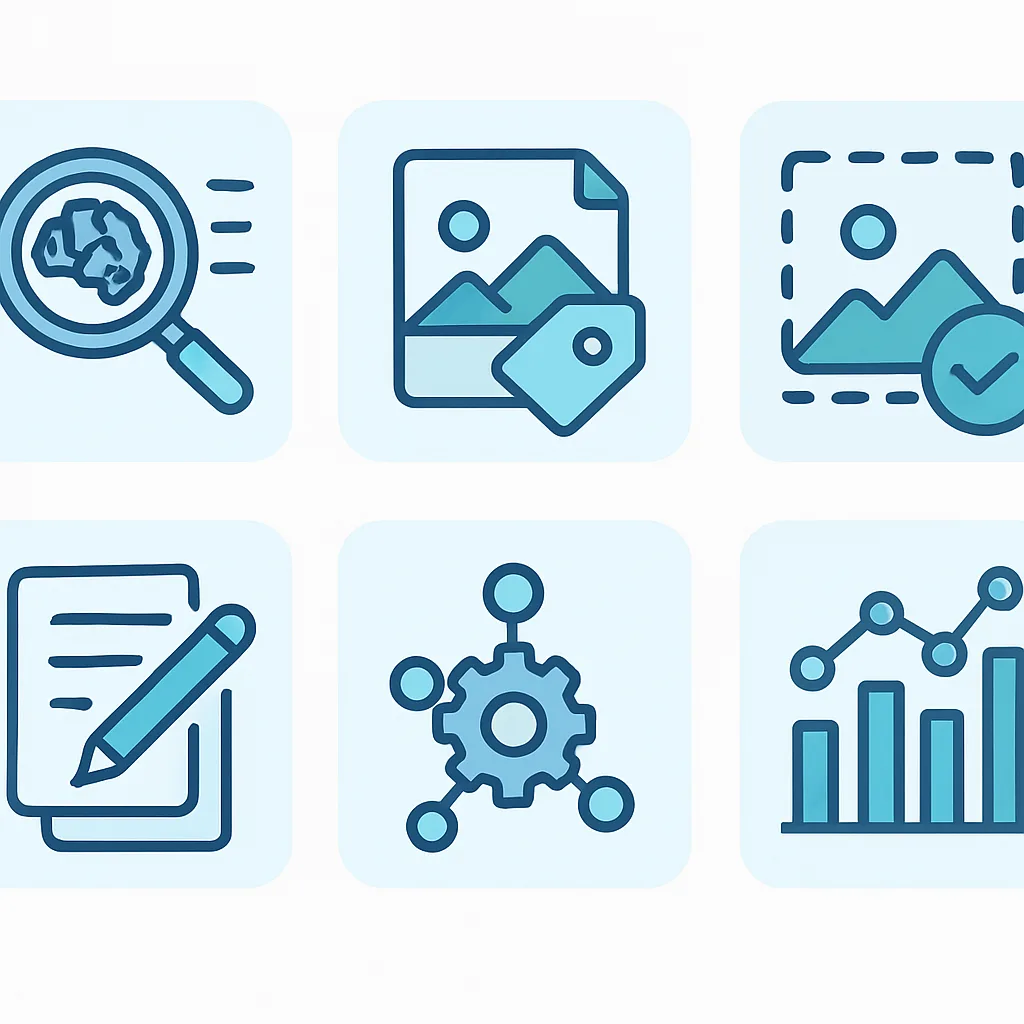
- Smart auto-tagging and classification to keep products organized without manual effort.
- AI-generated descriptions that stay consistent with your brand voice and SEO goals.
- Image recognition for visual search, tagging, and quality control.
- Duplicate detection and matching to merge near-identical SKUs and clean messy feeds.
- Bulk editing tools that apply intelligent changes across thousands of items at once.
- Multichannel syndication so data flows automatically to your website, marketplaces, and ad platforms.
- Real-time analytics that surface gaps, errors, and merchandising opportunities.
The best systems also integrate cleanly with your existing ecommerce stack, ERP, and PIM tools. Open APIs and prebuilt connectors save months of custom development and reduce the risk of data silos.
Real Business Benefits
The return on investment from AI catalog management is concrete and measurable. Teams that adopt these tools consistently report faster time-to-market, fewer errors, and improved search visibility.

Speed is the most obvious win. Tasks that once took a team several days, such as onboarding a new supplier catalog, can be completed in hours. Accuracy improves because AI applies the same rules consistently and never gets tired. Richer, more complete listings lift conversion rates and reduce returns caused by mismatched expectations.
There is also a strong SEO advantage. Unique, structured product content helps your pages rank, while clean attributes power better on-site filtering. For businesses exploring how machine learning can extend beyond catalogs into broader automation, the artificial intelligence services from ZoneTechify offer a practical starting point. Specialized AI development teams can also tailor models to your exact catalog structure, as seen with WebPeak AI services.
AI vs Manual Catalog Management
To make the contrast clear, the table below compares the two approaches across the factors that matter most to a growing business.
| Factor | Manual Management | AI-Powered Management |
|---|---|---|
| Speed | Slow, days per batch | Fast, minutes per batch |
| Accuracy | Prone to human error | Consistent and reliable |
| Scalability | Limited | Virtually unlimited |
| Description quality | Inconsistent | On-brand and SEO-ready |
| Duplicate handling | Manual and missed | Automatic detection |
| Cost over time | Rises with volume | Stays efficient at scale |

The comparison makes the trend unmistakable. As catalogs scale, manual costs and error rates climb while AI maintains efficiency. This is why forward-looking retailers and brands are moving quickly to adopt intelligent tooling.
How to Choose the Right Solution
Selecting the right platform starts with understanding your own needs. Map your current catalog size, your growth projections, and the channels you sell on. A small boutique has very different requirements from an enterprise distributor with millions of SKUs.
Next, evaluate integration. The software should connect smoothly with your ecommerce platform, PIM, and ERP so data moves without manual exports. Ask about data security, since your catalog is a core business asset, and confirm that the vendor offers reliable support and onboarding.
Finally, test the AI quality directly. Run a sample of your messiest data through a trial and judge the output. Does the generated copy sound right? Are categories accurate? Are duplicates caught? The proof is in real results, not marketing claims. Many businesses also benefit from partnering with experienced implementation teams who can configure the system around their workflows rather than forcing a one-size-fits-all setup.
The Future of AI Catalog Management
The technology is advancing rapidly. The next wave of artificial intelligence catalog management software solutions moves from automation toward genuine intelligence and prediction.

Expect predictive merchandising that suggests which products to promote based on demand signals, and autonomous optimization that continuously refines titles and descriptions for better performance. Generative AI will produce richer media, multilingual content, and personalized product information tailored to different audiences. Visual and voice search will rely even more heavily on the structured, well-tagged data that these systems create.
As commerce becomes more connected and competitive, clean product data is no longer a back-office nicety. It is a strategic advantage. The companies that invest early in intelligent catalog management will move faster, sell more, and adapt more easily to whatever channels emerge next.
Conclusion
Artificial intelligence catalog management software solutions have shifted from a luxury to a necessity for any business serious about scaling online. By automating data enrichment, enforcing consistency, and freeing teams to focus on strategy, these tools deliver faster operations, higher accuracy, and stronger sales performance.
The path forward is clear. Audit your current catalog, identify the bottlenecks that slow you down, and evaluate platforms that match your scale and channels. Whether you are cleaning up a few thousand SKUs or managing a global product database, the right AI solution turns a painful chore into a competitive edge. Explore expert guidance and implementation support through ZoneTechify and WebPeak to start building a smarter, more scalable catalog today.