
A clear, expert guide to the York University School of Continuing Studies Artificial Intelligence Certificate: curriculum, cost, format, careers, and how to enroll.
York University School of Continuing Studies Artificial Intelligence Certificate
Artificial intelligence has moved from research labs into everyday business operations, and professionals across Canada are racing to build practical AI skills without pausing their careers. The York University School of Continuing Studies Artificial Intelligence Certificate is one of the most searched options for working adults who want a credible, university-backed credential that maps directly to real jobs.
This guide breaks down exactly what the program offers, who benefits most, what you will study, what it costs, and how it compares to alternatives. Drawing on how continuing-education AI programs are structured across Canada, we give you a practical, honest picture so you can decide with confidence rather than guesswork.
Quick Answer: The York University School of Continuing Studies Artificial Intelligence Certificate is a part-time, professional credential that teaches applied machine learning, data handling, and responsible AI to working adults. It emphasizes job-ready skills over academic theory, making it a strong fit for career changers and professionals upskilling in AI.
What Is the York University AI Certificate?
A continuing-studies AI certificate is a non-degree, professional credential designed to teach applied artificial intelligence skills in months rather than years. Unlike a full master's degree, it targets specific, employable competencies: data preparation, model building, evaluation, and deploying AI responsibly inside real organizations.
York University's School of Continuing Studies specializes in career-focused programs for adults already in the workforce. Its AI-focused offerings emphasize hands-on projects, industry-relevant tools, and instructors with genuine professional experience. The goal is not to turn you into a research scientist. It is to make you productive with AI in a business context quickly, so you can contribute to real projects soon after graduating.
Key term defined: A certificate here is a structured series of courses that, once completed, formally recognizes a defined skill set. It sits between a single online course and a full university degree in both depth and cost.
Who Should Enroll in This Program?
This certificate is built for people who need practical AI skills but cannot step away from work for two years. The clearest fit falls into a few groups.
- Career changers moving from marketing, finance, or operations into data and AI roles.
- Technical professionals such as analysts, developers, and IT staff who want to add machine learning to their toolkit.
- Managers and decision-makers who must lead AI projects and need to understand what is realistic.
- Recent graduates who want an applied credential to stand out in a crowded job market.
If you already hold a PhD in machine learning or build production models daily, this program will feel introductory. But for the large middle of the workforce that must become AI-literate fast, the format is well matched to real constraints. Agencies like ZoneTechify frequently hire from exactly this pool of upskilled, business-aware practitioners.

What You Will Learn: Curriculum Breakdown
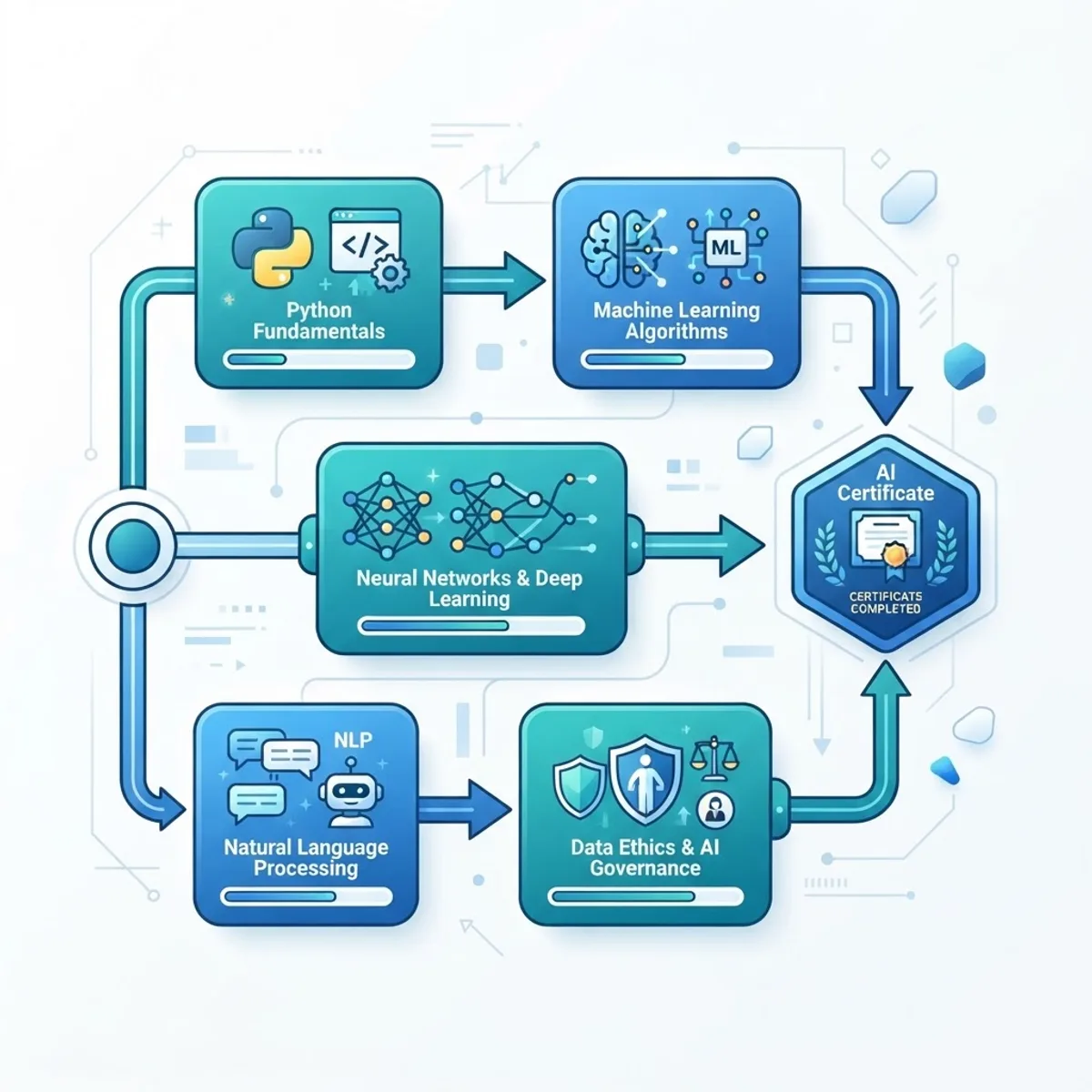
The curriculum focuses on applied competencies rather than heavy mathematical proofs. While specific course names evolve, continuing-studies AI certificates in Canada consistently cover the following core modules.
- Foundations of AI and machine learning: supervised and unsupervised learning, core algorithms, and where each applies.
- Data preparation and analysis: cleaning, transforming, and exploring datasets, the work that consumes most real AI projects.
- Programming for AI: typically Python and common libraries used to build and test models.
- Model evaluation and deployment: measuring accuracy, avoiding overfitting, and moving models into use.
- Responsible and ethical AI: bias, privacy, transparency, and regulatory awareness.
- Applied capstone projects: solving a realistic problem end to end to build a portfolio piece.
The emphasis on ethics and deployment is important. Many self-taught learners can train a model but cannot explain its risks or integrate it safely, and that gap is exactly what employers pay to close.
Program Format: Online vs In-Person Learning
Continuing-studies programs are designed around adult schedules, so flexibility is a defining feature. Most AI certificates are delivered online or in a hybrid model, letting you study evenings and weekends while working full time.

| Factor | Online / Live-Virtual | In-Person / Hybrid |
|---|---|---|
| Schedule flexibility | High | Moderate |
| Networking with peers | Moderate | High |
| Commute required | No | Yes |
| Hands-on lab support | Screen-shared | Direct, in-room |
| Best for | Busy remote professionals | Local learners who want structure |
According to a widely cited Google mobile study, 53% of visitors abandon experiences that are slow or inconvenient, and the same impatience applies to learning: adults choose the format that fits their life. Live-virtual delivery has become the default for good reason, but if you value face-to-face networking, a hybrid option may pay off in career connections.
Cost, Duration, and Admission Requirements
Continuing-studies AI certificates in Canada generally run part time over several months to about a year, depending on how many courses you take at once. Costs vary by institution and course load, so always confirm current tuition on the official York University School of Continuing Studies website before budgeting.
| Attribute | Typical Range for Canadian AI Certificates |
|---|---|
| Duration | 6 to 12 months part time |
| Tuition | Several thousand dollars, paid per course or program |
| Prerequisites | Usually none technical; basic computer literacy expected |
| Prior coding | Helpful but often not mandatory |
| Credential | Professional certificate, not a degree |
Most continuing-studies programs are intentionally accessible, so a computer science background is rarely required. That openness is a major reason these certificates attract career changers who would never qualify for a graduate AI degree on day one.
AI Career Opportunities in Canada
Demand for AI talent in Canada continues to outpace supply. LinkedIn's Emerging Jobs research has repeatedly listed artificial intelligence specialist and machine learning engineer among the fastest-growing roles, with year-over-year hiring growth reported in the double digits. The Government of Canada has also invested heavily through its national AI strategy, fueling roles in Toronto, Montreal, and beyond.

Graduates typically target roles such as:
- Data analyst applying machine learning to business questions.
- AI or automation specialist building and maintaining models.
- Product or project manager leading AI initiatives.
- Business intelligence developer turning data into decisions.
A certificate alone rarely lands a senior machine-learning engineering job, but combined with a portfolio and prior domain experience, it credibly opens the door to entry and mid-level AI-adjacent roles. Companies delivering artificial intelligence services increasingly value candidates who understand both the technology and the business problem it solves.
How to Enroll: A Step-by-Step Guide
Enrolling in a continuing-studies certificate is far simpler than applying to a degree program. Follow these steps.
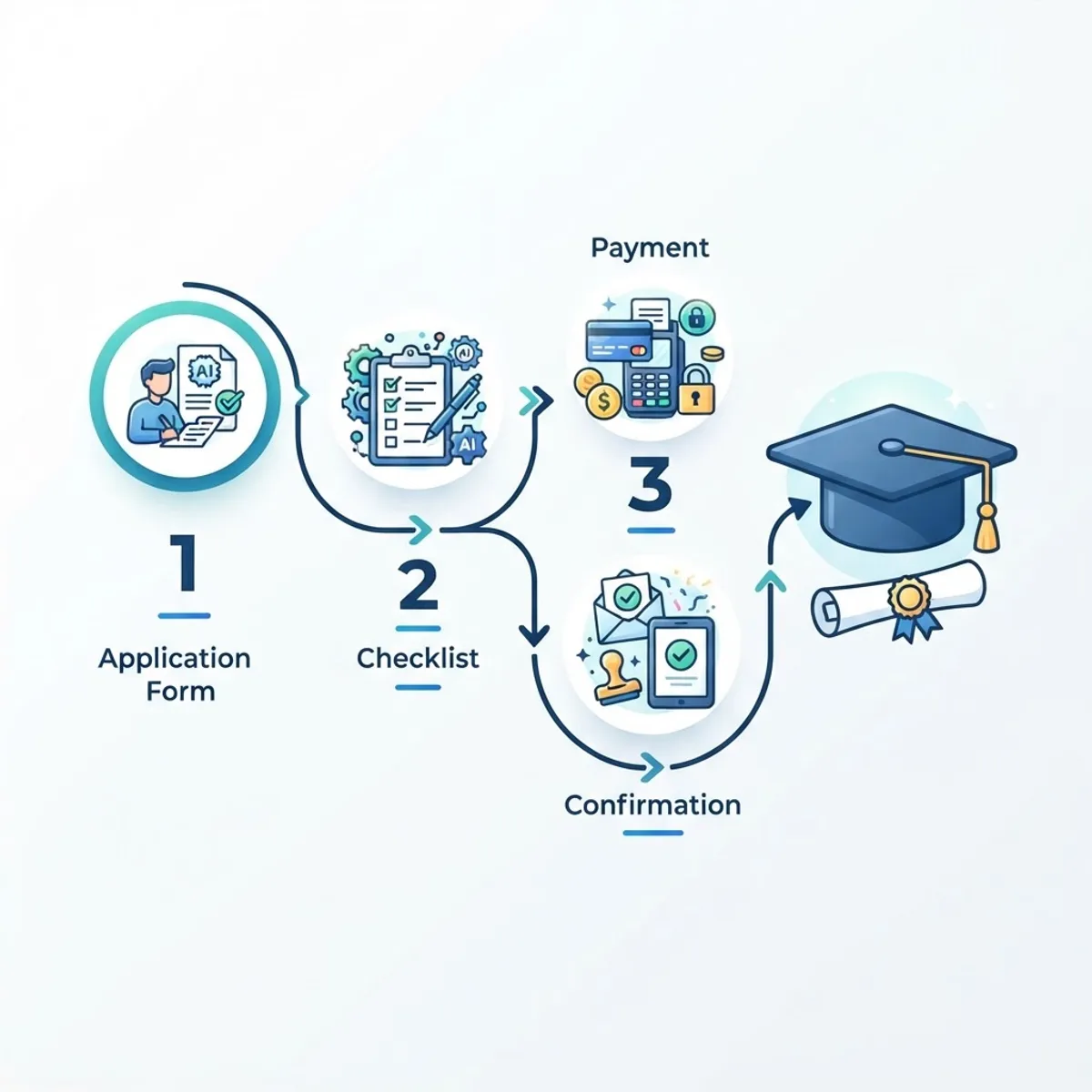
- Visit the official program page on the York University School of Continuing Studies website and confirm the current curriculum and tuition.
- Check start dates and prerequisites to ensure the schedule fits your work commitments.
- Create an account and complete the application form with your background details.
- Register for the first course or the full certificate, depending on the payment structure.
- Submit payment and access the learning platform and orientation materials.
- Begin coursework, and plan roughly 6 to 10 study hours per week to stay on track.
Always verify details directly with the institution, since intake dates and pricing change each term.

Is the Certificate Worth It? An Honest Assessment
The honest answer is that value depends on your starting point and goals. If you are already employed and want to add AI capability, integrate it into your current role, or pivot into a data-focused position, a university-backed certificate offers three real advantages: structured curriculum, credible signaling to employers, and accountability that self-study rarely provides.
Where it falls short is depth. A certificate will not replace a graduate degree for cutting-edge research roles, and it cannot guarantee a job on its own. The strongest outcomes come from pairing the credential with a public portfolio and applying what you learn at work immediately. Teams at WebPeak consistently note that demonstrated projects matter more than the certificate alone during hiring.
Key Takeaways
- The York University School of Continuing Studies Artificial Intelligence Certificate is a part-time, applied credential for working adults, not a research degree.
- Curriculum centers on machine learning, data preparation, Python, model deployment, and responsible AI.
- Programs typically run 6 to 12 months and rarely require a technical background.
- AI roles remain among the fastest-growing jobs in Canada, supported by national investment.
- The certificate delivers the most value when combined with a portfolio and real on-the-job application.
Frequently Asked Questions (FAQ)
Do I need coding experience to start an AI certificate?
Usually no. Most continuing-studies AI certificates are designed for beginners and introduce programming, often Python, from the ground up. Basic computer literacy and comfort with math help, but prior coding is typically recommended rather than required. Always confirm prerequisites on the official program page.
How long does the York University AI certificate take to complete?
Most Canadian continuing-studies AI certificates take about 6 to 12 months part time, depending on how many courses you take per term. Because they are built for working professionals, you can usually study evenings and weekends. Check the current schedule on the York University website for exact timelines.
Is an AI certificate enough to get a job in AI?
A certificate can open entry and mid-level AI-adjacent roles, especially when paired with a portfolio and relevant work experience. It is not a guarantee on its own and will not replace a graduate degree for advanced research jobs. Employers value demonstrated projects alongside the credential.
Is the AI certificate available fully online?
Many continuing-studies AI programs are offered online or in a hybrid live-virtual format, letting you study remotely while working. This flexibility is a core reason adults choose continuing education over full degrees. Confirm the specific delivery mode for the current intake before enrolling.
How much does a continuing-studies AI certificate cost in Canada?
Tuition varies by institution and course load but generally totals several thousand dollars, often payable per course. This is significantly cheaper than a graduate degree. Always check current, official pricing on the York University School of Continuing Studies website, since fees change each term.
Whether you enroll now or keep researching, focus on programs that pair strong fundamentals with hands-on projects, and apply your new skills at work immediately for the best return on your investment.