Confused about which options count as real AI? This guide breaks down the true applications of artificial intelligence with clear examples, data, and a simple test.
Which of the Following Is an Application of Artificial Intelligence
If you have ever faced a quiz, an interview, or a certification exam asking "which of the following is an application of artificial intelligence," you already know how tricky the wording can be. The answer options often mix genuine AI systems with ordinary software, and the difference is not always obvious. After years of building and reviewing AI-powered products, I have learned that the confusion usually comes from one gap: people know the buzzwords but not the underlying test for what actually makes something an AI application.
This guide fixes that. Instead of just listing correct answers, I will show you how to reason about any option so you can identify AI applications confidently, whether the choices are virtual assistants, self-driving cars, calculators, or spreadsheets. By the end, you will have a repeatable method plus real examples you can cite.
Quick Answer: Applications of artificial intelligence include virtual assistants (Siri, Alexa), recommendation systems (Netflix, Amazon), self-driving cars, chatbots, facial recognition, fraud detection, and medical diagnosis tools. Any system that learns from data, perceives its environment, or makes decisions without explicit step-by-step programming qualifies as an AI application.
What Counts as an Application of Artificial Intelligence?
An application of artificial intelligence is any real-world system that uses AI techniques to perform tasks that normally require human intelligence. This includes learning from experience, understanding language, recognizing images, making predictions, and adapting to new inputs without a programmer defining every rule in advance.
A Simple Definition
Artificial intelligence is the simulation of human intelligence in machines that are programmed to think, learn, and solve problems. An AI application is the practical deployment of that intelligence to solve a specific task, such as translating a sentence or detecting a fraudulent transaction.
The fastest way to decide if an option is an AI application is to ask one question: Does the system improve, adapt, or make decisions based on data rather than fixed instructions? A basic calculator always follows the same rules and never learns, so it is not AI. A spam filter that gets better at catching junk mail over time is AI, because it learns patterns from data. This single test resolves most exam questions instantly.
The Most Common Applications of Artificial Intelligence
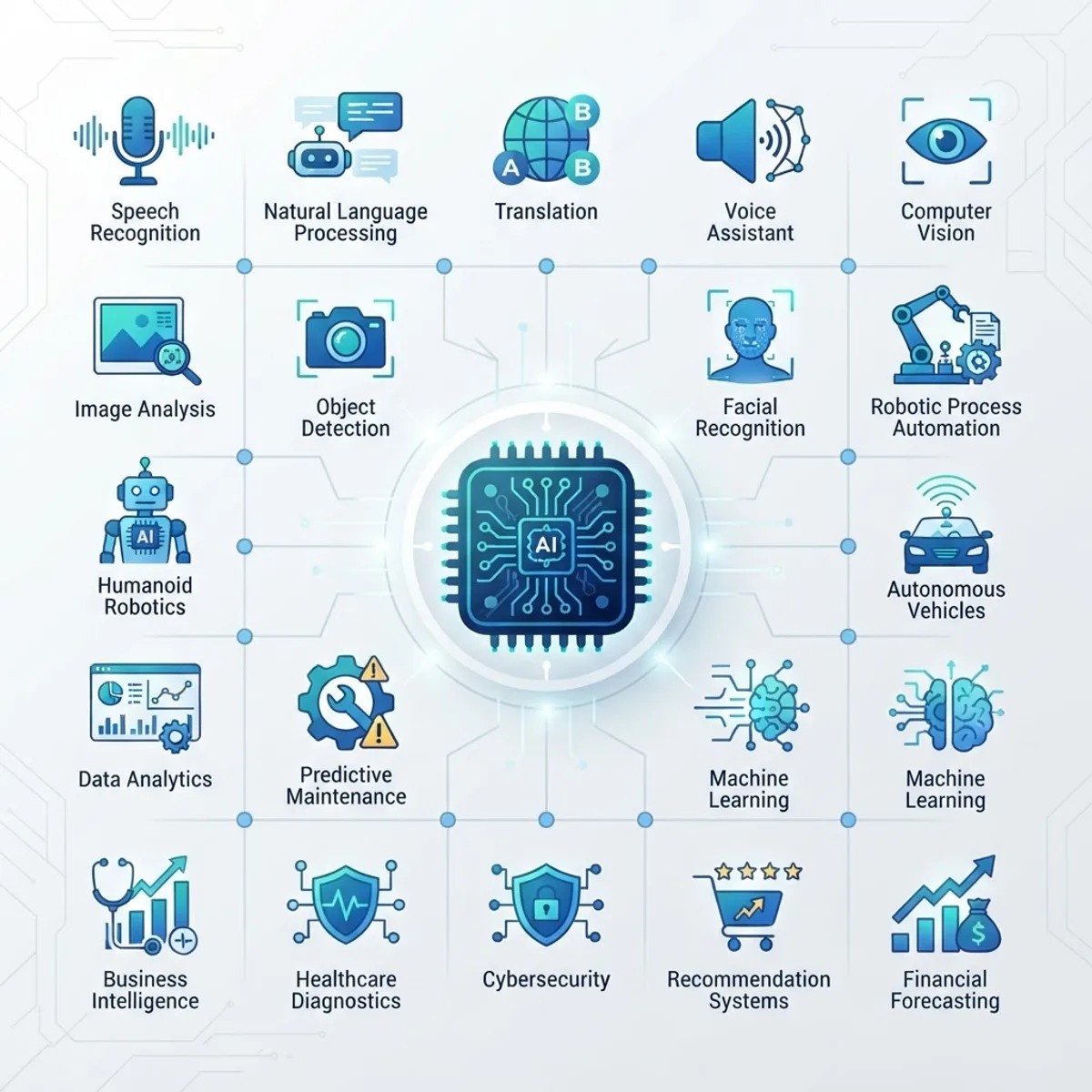
The most common applications of artificial intelligence are virtual assistants, recommendation systems, autonomous vehicles, healthcare diagnostics, fraud detection, and generative content tools. Each one uses machine learning, natural language processing, or computer vision to deliver results that feel intelligent.
1. Virtual Assistants and Chatbots
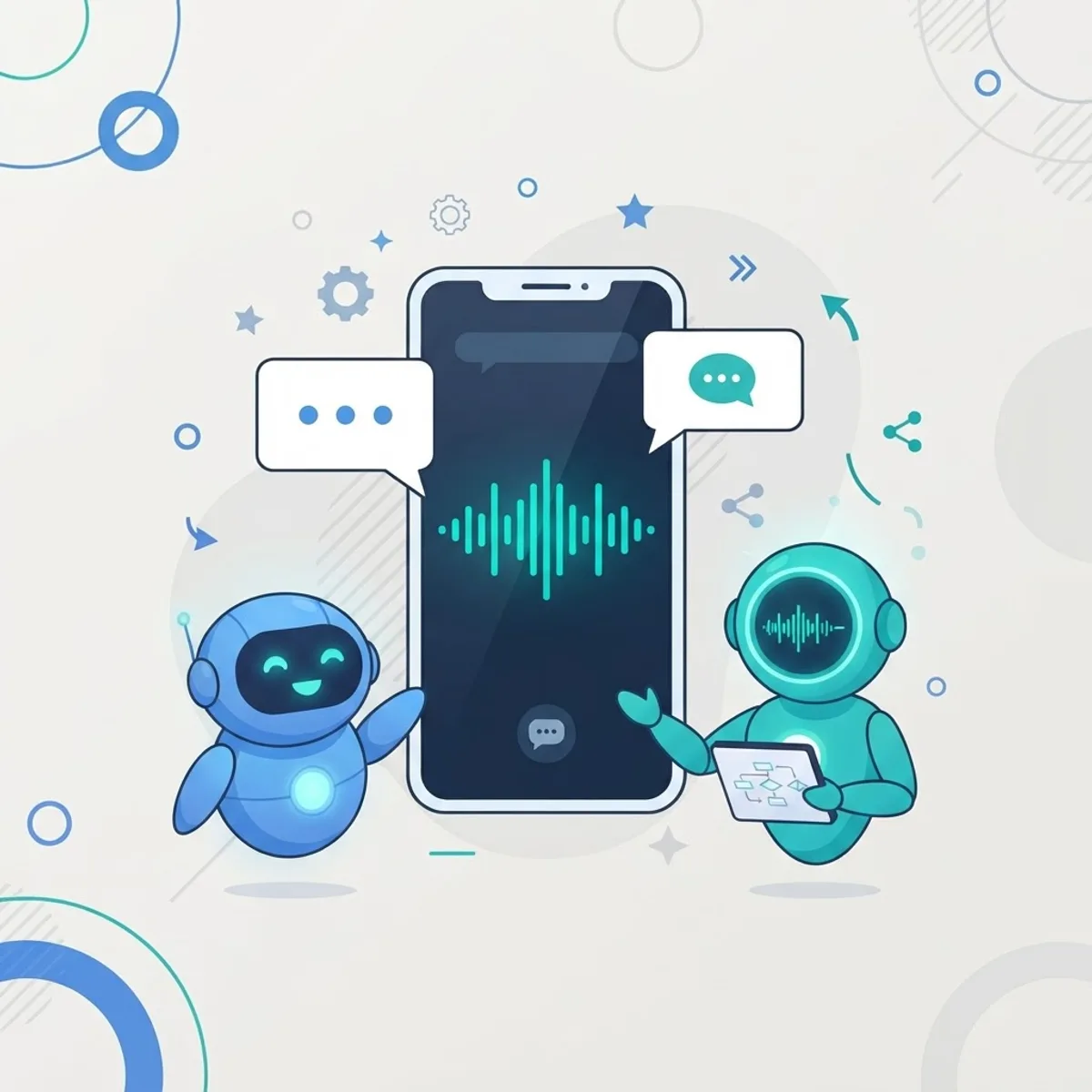
Siri, Alexa, Google Assistant, and modern customer-service chatbots are textbook AI applications. They use natural language processing (NLP) to understand spoken or typed requests and respond in a human-like way. According to Statista, the number of voice assistant devices in use worldwide was projected to reach roughly 8.4 billion, more than the global population. If a quiz option mentions a voice assistant or a smart chatbot, it is almost always the correct AI answer.
2. Recommendation Systems
When Netflix suggests your next show or Amazon recommends a product, that is AI at work. These systems analyze your behavior and compare it with millions of other users to predict what you will want next. Netflix has publicly stated that its recommendation engine influences around 80% of the content people watch on the platform, which shows how central this AI application has become to modern digital experiences.
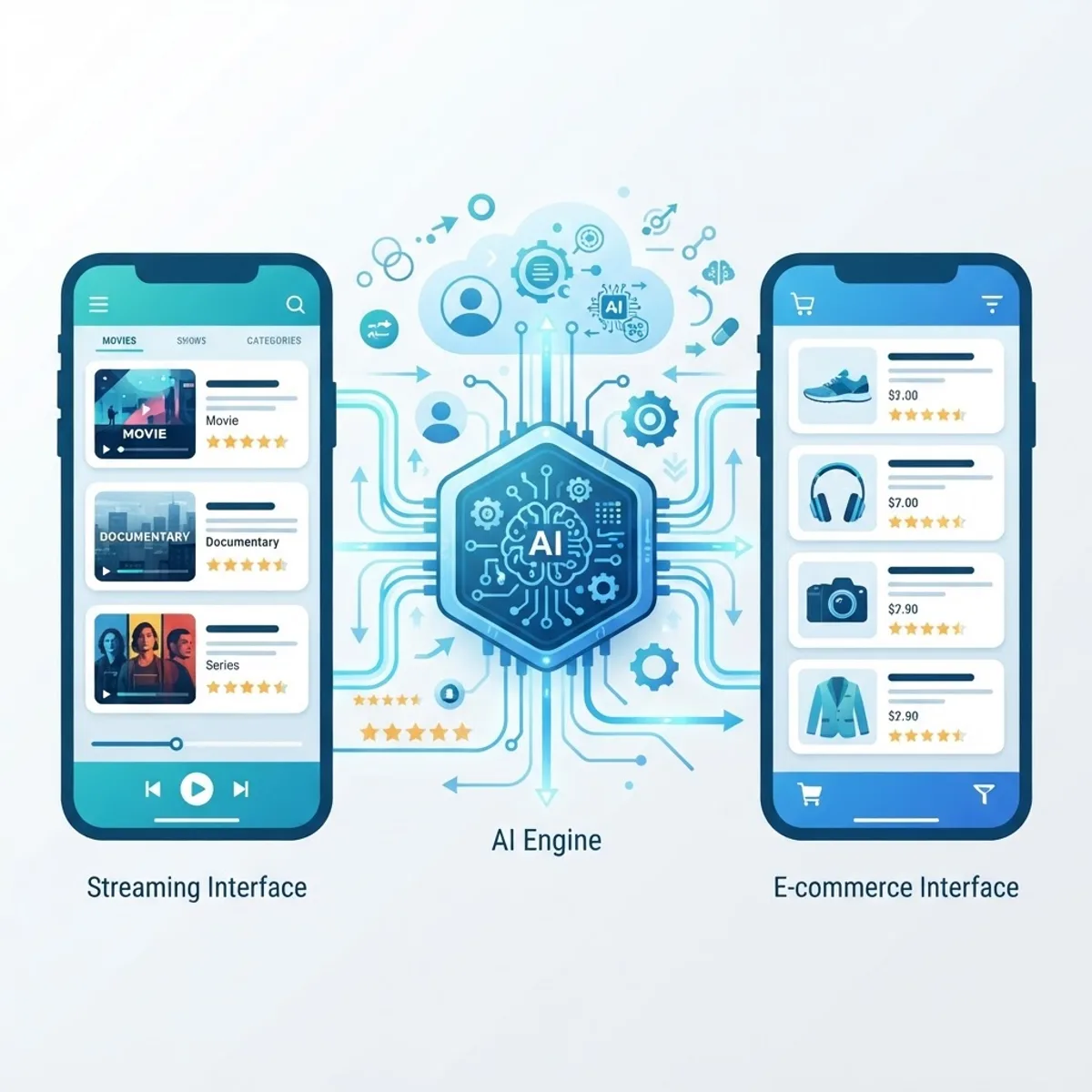
Recommendation systems rely on machine learning models that continuously retrain as new data arrives. That adaptability is exactly what separates them from a static "most popular" list, which is not AI because it never learns individual preferences.
3. Autonomous Vehicles
Self-driving cars from companies like Tesla and Waymo are among the most advanced AI applications in existence. They combine computer vision, sensor fusion, and deep learning to perceive roads, detect pedestrians, and make split-second driving decisions. If an exam lists "self-driving car" as an option, choose it with confidence.

The key AI signal here is perception plus decision-making in an unpredictable environment. No human writes a rule for every possible road situation, so the vehicle must learn and generalize from data, which is the essence of intelligent behavior.
4. Healthcare Diagnostics
AI applications in healthcare include tools that read X-rays, detect tumors in MRI scans, and predict patient risk. These systems are trained on huge datasets of labeled medical images and can flag abnormalities that are easy for the human eye to miss. Studies published in peer-reviewed journals have repeatedly shown AI models matching or exceeding specialist accuracy on specific diagnostic tasks such as detecting diabetic retinopathy.

What makes diagnostic software an AI application is pattern recognition learned from data, not a fixed checklist. This is a growing area where organizations partner with specialists like WebPeak's artificial intelligence services to build and deploy models responsibly.
5. Fraud Detection
Banks and payment processors use AI to spot fraudulent transactions in real time. The system learns what normal spending looks like for each customer and flags anything unusual, such as a sudden large purchase in a foreign country. Because fraud patterns constantly change, these models must keep learning, which firmly places fraud detection in the AI category.

6. Generative Content and Image Tools
Tools that write articles, generate images, or produce code from a prompt, such as ChatGPT and image generators, are among the newest and fastest-growing AI applications. They use large language models and diffusion models trained on massive datasets. Businesses increasingly use these tools to scale marketing, and teams often work with providers such as ZoneTechify's artificial intelligence services to integrate them into real workflows.
Comparison Table: AI Applications vs Non-AI Software
Use this table to tell genuine AI applications apart from ordinary programs when answering "which of the following" questions.
| System | Learns From Data | Adapts Over Time | Is It AI |
|---|---|---|---|
| Voice assistant (Alexa) | Yes | Yes | Yes |
| Netflix recommendations | Yes | Yes | Yes |
| Self-driving car | Yes | Yes | Yes |
| Fraud detection system | Yes | Yes | Yes |
| Basic calculator | No | No | No |
| Standard spreadsheet | No | No | No |
| Simple alarm clock | No | No | No |
| A static website | No | No | No |
The pattern is clear: if a system learns from data and adapts, it is an AI application. If it only follows fixed rules, it is regular software.
How to Tell If Something Is Really AI: A 4-Point Checklist
When you are unsure which option is correct, run each choice through this quick checklist:
- Does it perceive? Can it sense its environment through text, voice, or images (NLP, computer vision, speech recognition)?
- Does it learn? Does its performance improve as it sees more data?
- Does it decide? Does it make predictions or choices instead of just displaying stored information?
- Does it adapt? Does it handle new, unseen inputs without a human rewriting the rules?
If an option satisfies two or more of these points, it is almost certainly an application of artificial intelligence. A calculator fails all four. A chatbot passes all four.

The Future of AI Applications
AI applications are expanding into agriculture, education, cybersecurity, and creative industries. The direction is clear: AI is shifting from single-purpose tools toward general assistants that can reason across tasks. According to McKinsey research, generative AI alone could add trillions of dollars in annual value to the global economy, which means the list of "AI applications" will keep growing every year.
For businesses, the practical takeaway is not just recognizing AI on a quiz but knowing where to apply it. Whether you build in-house or partner with experts through platforms like ZoneTechify and WebPeak, the winners will be those who deploy AI to solve concrete, measurable problems.
Key Takeaways
- An AI application is any system that learns from data, perceives its environment, or makes decisions without explicit step-by-step programming.
- Clear examples include virtual assistants, recommendation systems, self-driving cars, fraud detection, healthcare diagnostics, and generative tools.
- Calculators, spreadsheets, and static websites are not AI because they only follow fixed rules and never learn.
- Netflix reports its recommendation engine drives about 80% of watched content, and voice assistant devices number in the billions.
- Use the 4-point checklist (perceive, learn, decide, adapt) to identify AI in any list of options.
Frequently Asked Questions (FAQ)
Which of the following is an application of artificial intelligence?
Common correct answers include virtual assistants like Siri and Alexa, recommendation engines like Netflix and Amazon, self-driving cars, chatbots, facial recognition, and fraud detection. Any option that learns from data and makes decisions without fixed rules is an AI application. A calculator or spreadsheet is not.
Is a chatbot an application of artificial intelligence?
Yes, a modern chatbot is an application of artificial intelligence. It uses natural language processing to understand user messages and generate human-like responses. Advanced chatbots also learn from conversations to improve over time, which clearly qualifies them as AI rather than simple rule-based scripts.
Is a calculator an example of artificial intelligence?
No, a basic calculator is not artificial intelligence. It follows fixed mathematical rules and always produces the same output for the same input. It cannot learn, adapt, or make decisions from data. AI requires learning or reasoning, which a standard calculator does not perform at all.
What are the four main types of AI applications?
The four common categories are natural language processing (chatbots, translation), computer vision (facial recognition, medical imaging), machine learning prediction (recommendations, fraud detection), and robotics and automation (self-driving cars, drones). Each type applies AI to a specific real-world problem using data-driven models rather than hardcoded instructions.
How can I quickly identify AI in a multiple-choice question?
Ask whether the option learns from data, perceives its surroundings, or makes decisions on its own. If it does any of these, it is an AI application. If it only follows preset rules like a calculator or alarm clock, it is ordinary software and not the correct AI answer.
Final Thoughts
The question "which of the following is an application of artificial intelligence" is really testing whether you understand what makes a system intelligent. Once you focus on learning, perception, and decision-making rather than surface-level features, the correct answers become obvious. Bookmark the 4-point checklist, remember the real-world examples, and you will never second-guess an AI question again.