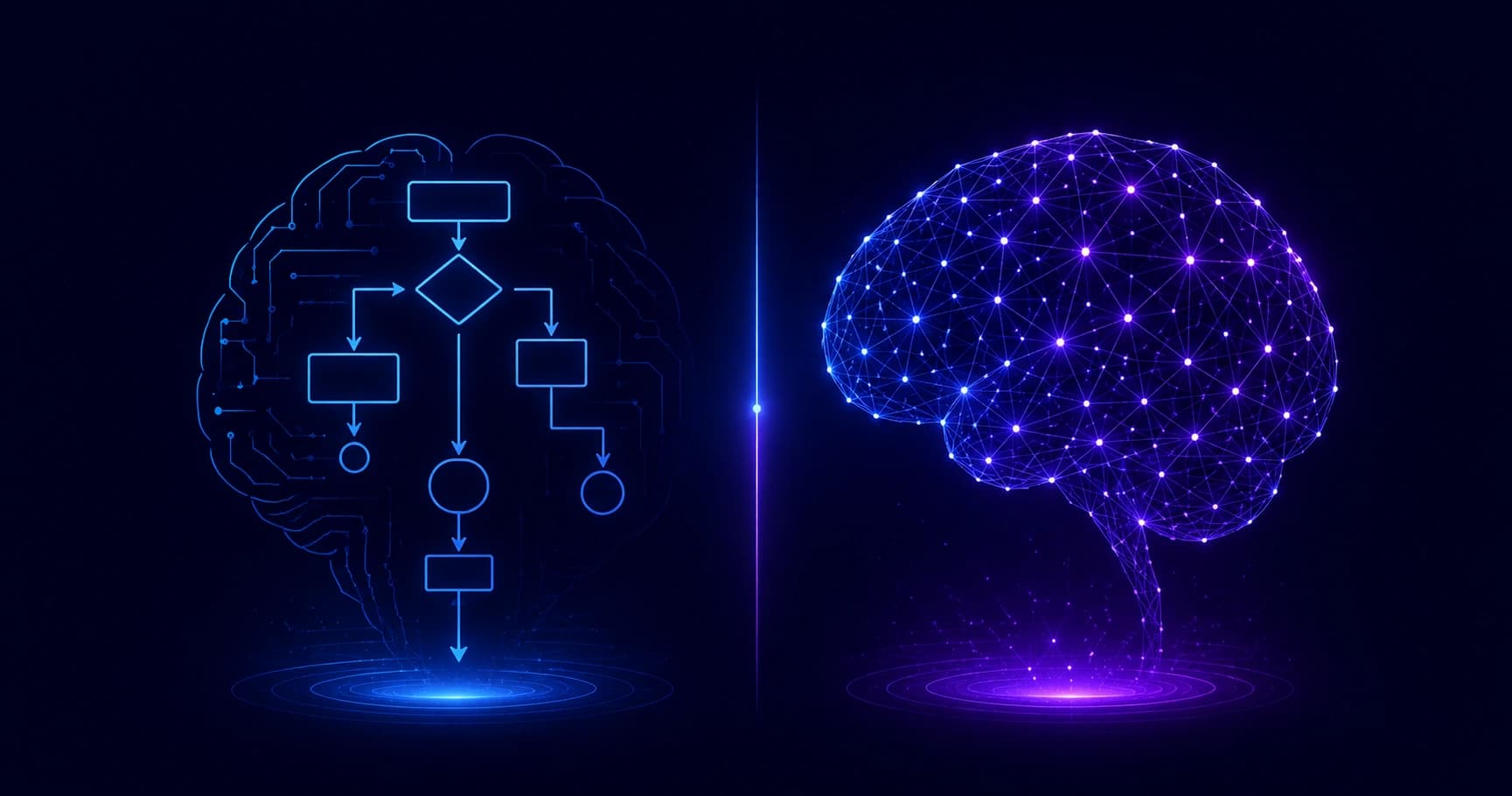
Symbolic AI follows rules a human wrote; machine learning discovers rules from data. This guide breaks down that core difference and shows when each approach wins.
What's the Biggest Difference Between Symbolic Systems and Machine Learning
Every few months a client asks us to "add AI" to a workflow, and the first real question we ask is not which model to use. It is whether the problem should be solved with rules a human writes or patterns a machine discovers. That single decision changes cost, accuracy, maintenance, and legal exposure more than any model choice that follows.
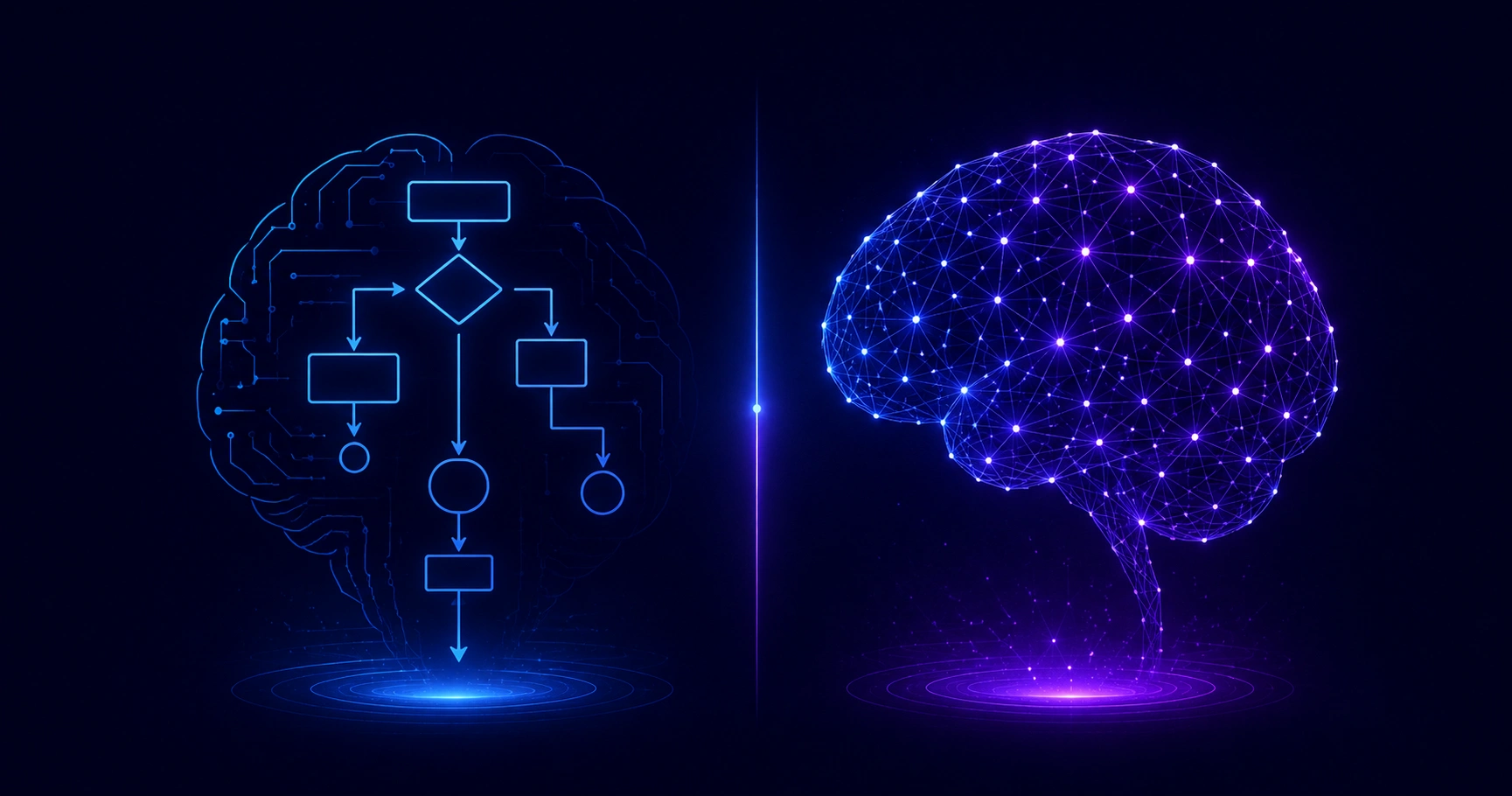
Quick Answer: The biggest difference is where the knowledge comes from. In symbolic systems, humans explicitly write the rules and logic the machine follows. In machine learning, the machine derives its own rules statistically from example data. Symbolic AI is authored and auditable; machine learning is trained and probabilistic.
The Core Distinction in One Sentence
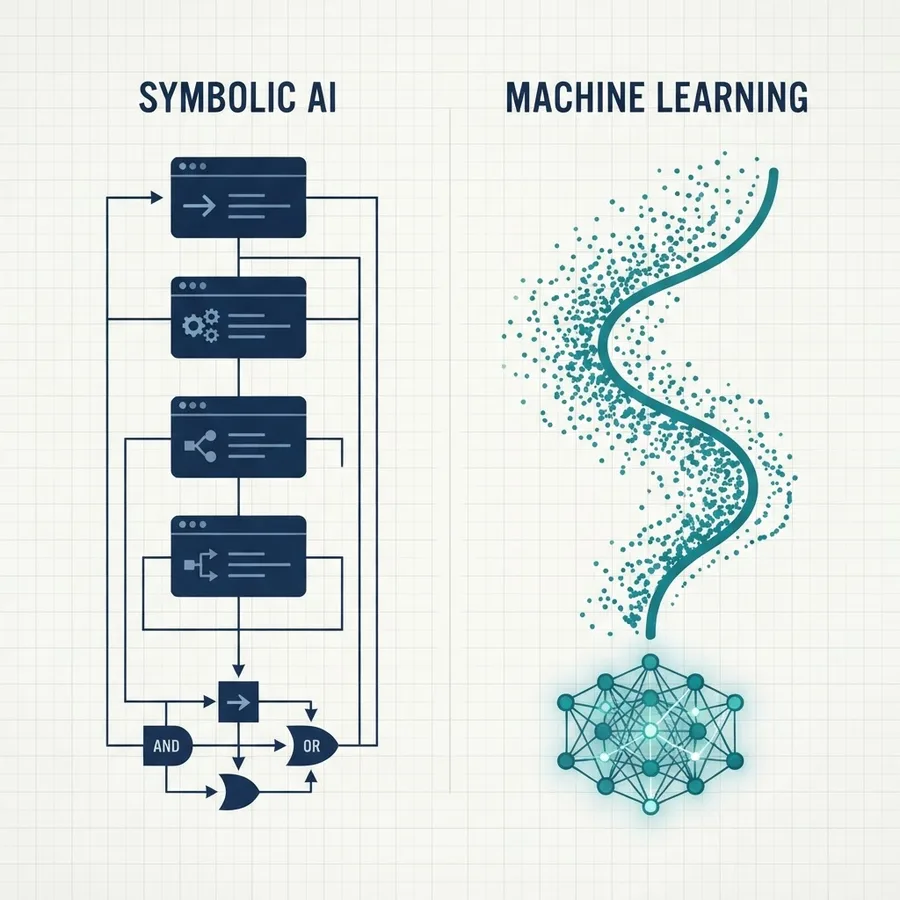
Symbolic systems encode knowledge before runtime; machine learning extracts knowledge from data at training time.
That is the difference everything else flows from. A symbolic system knows nothing it was not told. A machine learning model knows nothing that was not statistically present in its training data. Neither is smarter in the abstract. They fail in opposite directions, which is precisely why the choice matters.
Symbolic AI (also called rule-based AI, classical AI, or GOFAI): an approach where knowledge is represented as explicit symbols, facts, and logical rules, and conclusions are reached by applying those rules through an inference engine.
Machine learning: an approach where an algorithm adjusts internal parameters based on example data so that it minimizes error on a task, producing a statistical function rather than a written rule.
How Symbolic Systems Actually Work
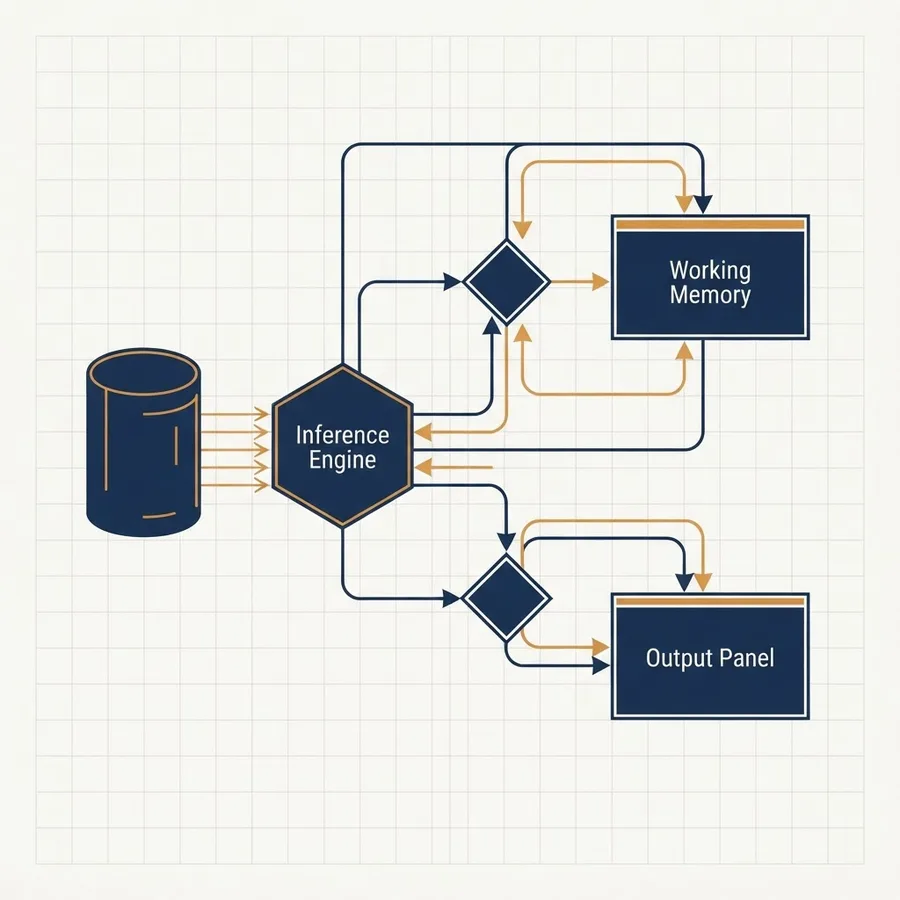
A symbolic system has three separable parts, and understanding this structure explains both its strengths and its ceiling.
- A knowledge base containing facts and rules, usually in IF-THEN form or as formal logic statements.
- An inference engine that chains rules together, either forward (from facts toward conclusions) or backward (from a goal toward supporting facts).
- A working memory holding the current case being evaluated.
Because knowledge lives in a separate, human-readable layer, you can change one rule without retraining anything. In a tax calculation engine we maintained, a legislative change meant editing four rules in an afternoon. The equivalent change in a trained model would have required relabeling historical data that no longer reflected the new law at all.
Symbolic systems dominate wherever correctness is defined by policy rather than by observation: payroll rules, drug interaction checks, aviation checklists, accounting validation, and access control. In these domains the correct answer is not something you discover in data. It is something a regulator or expert has already declared.
The Symbolic Ceiling: The Knowledge Acquisition Bottleneck
Symbolic AI hits a wall when the knowledge cannot be written down. Nobody can enumerate the rules that distinguish a cat from a dog in pixels, or the rules that make one sentence sound natural and another awkward. This is called the knowledge acquisition bottleneck, and it is what stalled the 1980s expert system boom. Systems grew to thousands of rules, then became brittle: rules conflicted, edge cases multiplied, and maintenance costs outran the value delivered.
How Machine Learning Actually Works
Machine learning inverts the flow. Instead of writing rules and applying them to data, you supply data plus desired outputs and let an optimization process search for a function that maps one to the other.
The practical consequence is that your engineering effort moves from authoring logic to curating data. In production ML projects we have run, roughly 70 to 80 percent of effort goes into data collection, labeling, cleaning, and evaluation, with model architecture a comparatively small slice. Anyone budgeting an ML project as mostly modeling work will run out of budget.
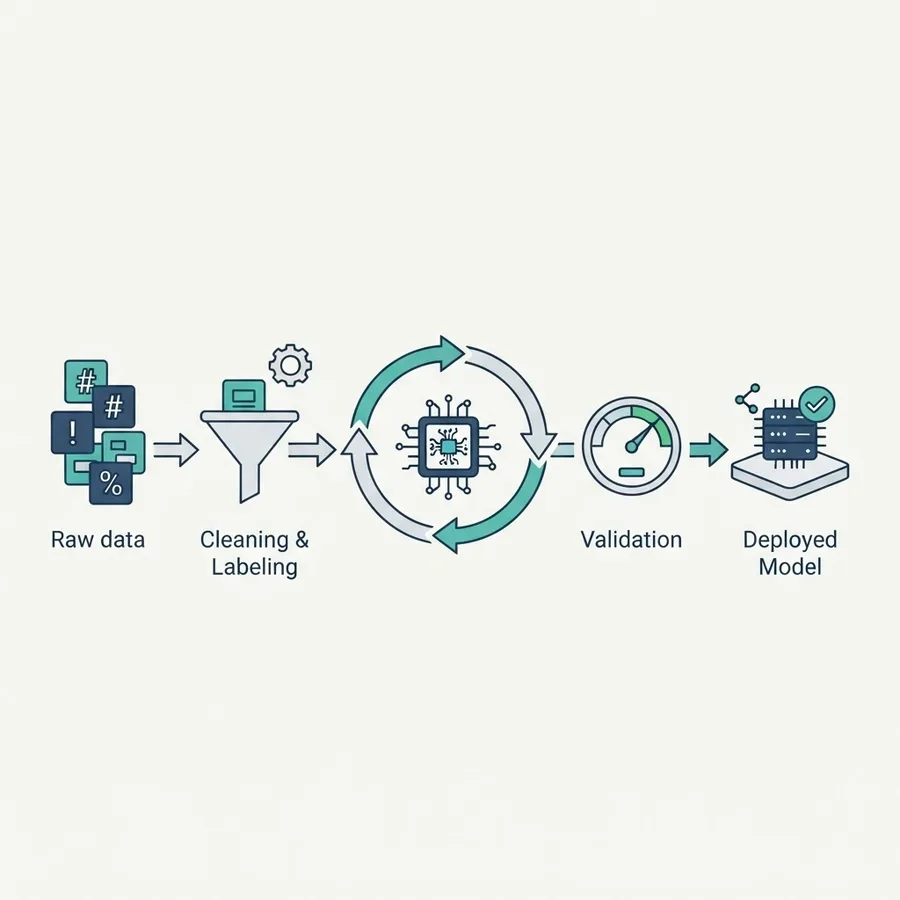
Machine learning wins wherever the pattern is real but unspeakable: image recognition, speech transcription, fraud detection on high-volume transactions, recommendation, demand forecasting, and natural language. According to Stanford's AI Index, machine learning systems have surpassed human baselines on benchmark tasks including image classification and reading comprehension, results that decades of hand-written rules never approached.
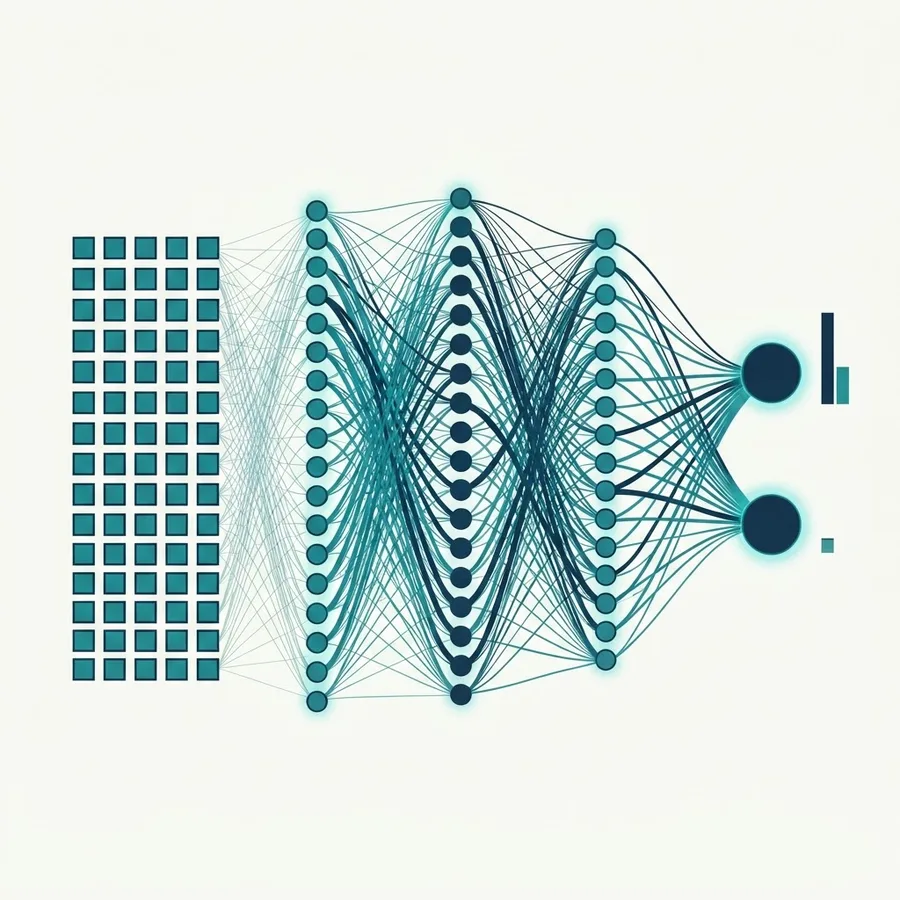
The Machine Learning Ceiling: You Cannot Argue With a Statistic
A trained model gives you a number, not a reason. It has no concept of a rule it must never break, which is why models confidently produce outputs that violate obvious constraints. It also degrades silently when reality drifts away from the training distribution, and it inherits whatever bias the data carried. Google's own guidance on responsible AI stresses that training data reflecting historical inequity produces models that reproduce that inequity, because the model has no mechanism to know a pattern is unjust rather than merely frequent.
Side-by-Side Comparison
| Dimension | Symbolic Systems | Machine Learning |
|---|---|---|
| Source of knowledge | Written by human experts | Derived from training data |
| Data required | None or minimal | Large, labeled, representative |
| Explainability | Full: rule trace shows every step | Limited: needs post-hoc tools |
| Handling ambiguity | Poor: unforeseen input breaks it | Strong: generalizes from patterns |
| Updating behavior | Edit a rule, deploy immediately | Retrain, revalidate, redeploy |
| Guarantees | Can prove a constraint always holds | Statistical accuracy only |
| Failure mode | Fails loudly on unknown input | Fails quietly with confident errors |
| Best-fit problems | Policy, compliance, calculation | Perception, language, prediction |
| Cost driver | Expert time to author rules | Data collection and compute |
| Scaling with more data | No improvement | Generally improves |
Explainability: The Difference That Decides Real Projects
Explainability is where the theoretical difference becomes a business constraint.
With a symbolic system, when a loan is declined you can print the exact rule chain: this applicant failed rule 14 because debt-to-income exceeded the threshold defined in policy section 3. That output is a defensible audit artifact.
With a model, you get a score and an approximation of which features mattered. Under the EU AI Act, systems used in credit scoring, employment, and other high-risk categories carry documentation, transparency, and human-oversight obligations. Teams working in regulated domains often keep a symbolic layer specifically because it produces the paper trail compliance requires.
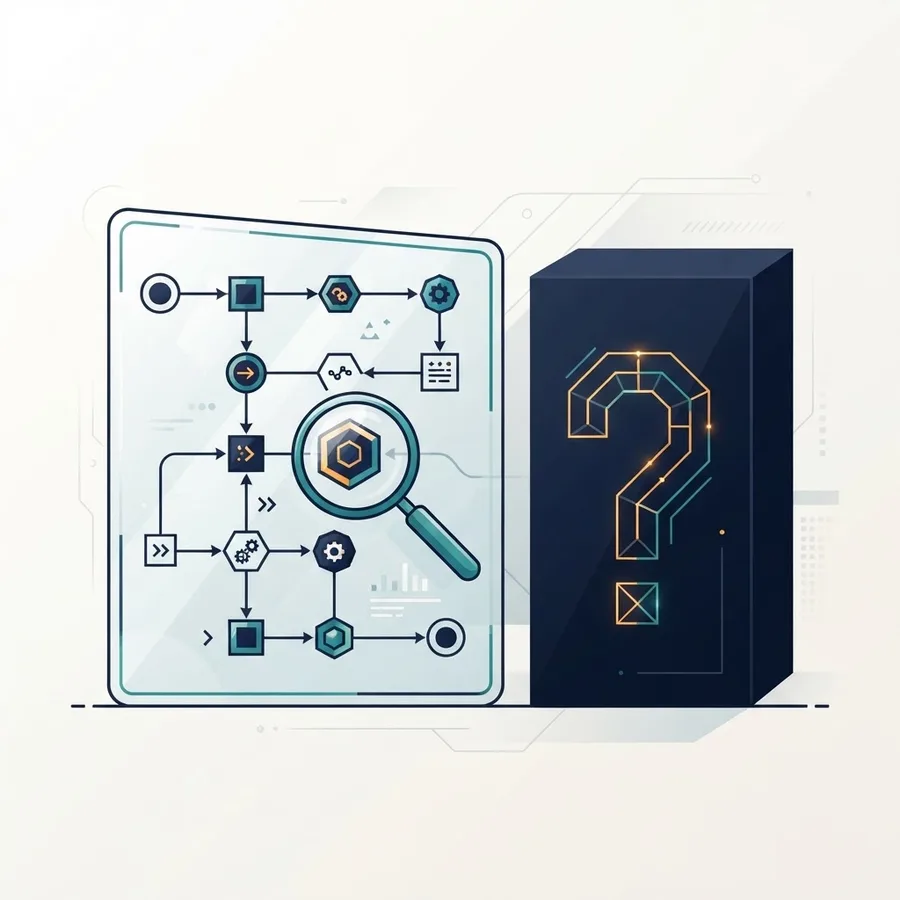
Neurosymbolic AI: Why the Debate Is Ending
The most useful production systems now combine both, and this is the shift worth internalizing.
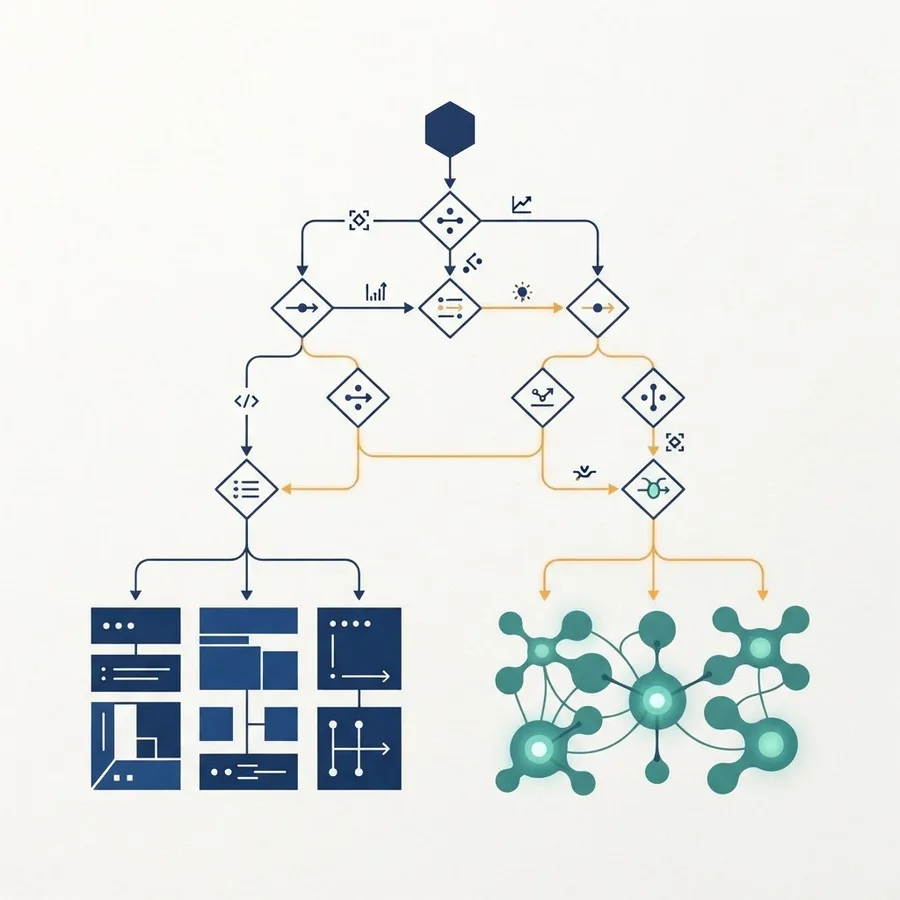
A neurosymbolic system uses machine learning for perception and symbolic logic for reasoning and constraint enforcement. A document processing pipeline we built reads scanned invoices with an ML extraction model, then passes every extracted field through symbolic validation rules that check arithmetic, tax logic, and vendor terms. The model handles messy visual input; the rules guarantee no invoice with impossible totals reaches the ledger.
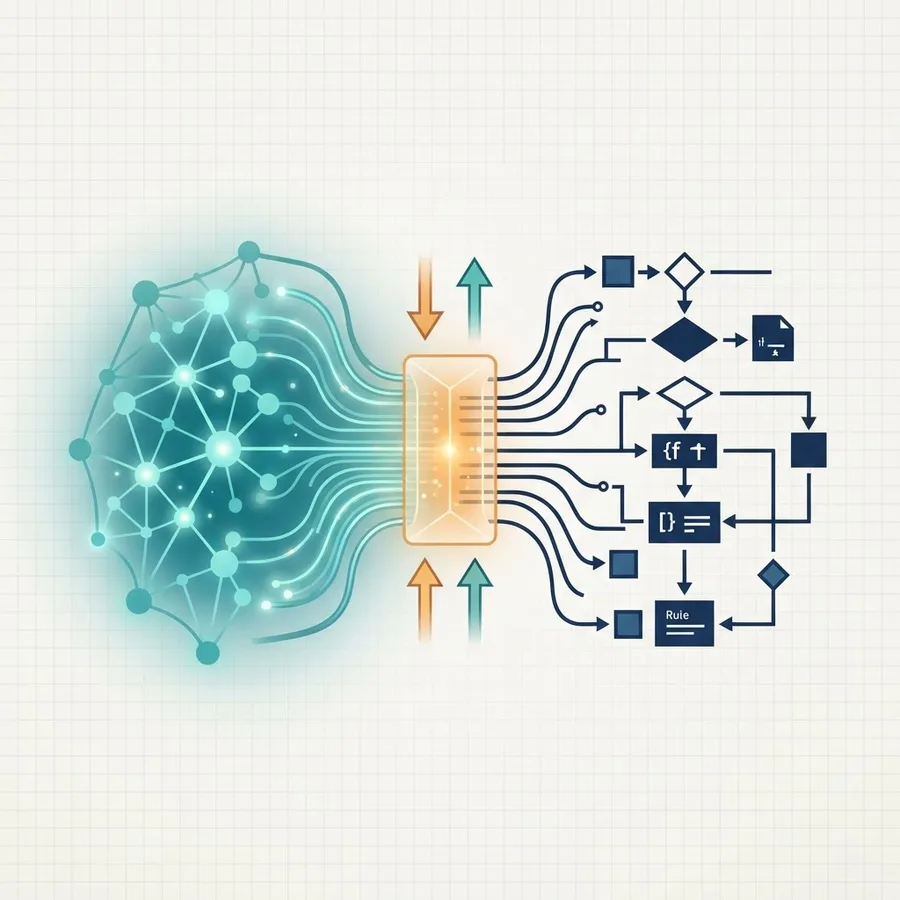
The same architecture appears in modern LLM applications. Retrieval-augmented generation grounds a model in a curated knowledge source; tool calling hands arithmetic and lookups to deterministic code; guardrails apply hard rules to outputs. Each of those is symbolic scaffolding around a statistical core. Teams building this kind of layered architecture, including the specialists behind ZoneTechify and WebPeak, increasingly treat rules and models as complementary components rather than competing philosophies. If you are planning a hybrid build, our artificial intelligence services team can help map which layer belongs where.
A Practical Decision Framework
Use this sequence before writing any code.
- Can a domain expert write the rules in under a week? If yes, build symbolic. It will be cheaper, faster, and auditable.
- Is the correct answer defined by policy or by observation? Policy means symbolic. Observation means machine learning.
- Do you have thousands of labeled examples that mirror production conditions? Without them, machine learning will underperform a simple rule set.
- Must every decision be explainable to a regulator or customer? Keep a symbolic layer in the critical path.
- Do the rules change faster than you can retrain? Frequent policy churn favors symbolic representation.
- Is input unstructured, such as images, audio, or free text? Machine learning for extraction, symbolic for validation afterward.
The most common expensive mistake we see is applying machine learning to a problem that was already fully specified. If a policy document defines the answer, training a model to guess that answer adds error, cost, and opacity for no gain.
Key Takeaways
- The biggest difference is knowledge origin: symbolic knowledge is authored by humans; machine learning knowledge is derived from data.
- Symbolic systems are fully explainable and updatable by editing rules, but cannot handle knowledge nobody can articulate.
- Machine learning generalizes from messy real-world data but produces probabilistic outputs and can fail confidently.
- The knowledge acquisition bottleneck ended the 1980s expert system boom; data dependency is the modern equivalent constraint.
- Machine learning systems have surpassed human baselines on benchmarks like image classification, per Stanford's AI Index.
- The EU AI Act imposes transparency and oversight duties on high-risk systems, which strengthens the case for symbolic components in regulated workflows.
- Neurosymbolic architectures, including RAG and tool calling, are now the default for serious production systems.
- Choose by asking whether the answer is defined by policy or discovered in data.
Frequently Asked Questions (FAQ)
Is symbolic AI outdated?
No. Symbolic AI is unfashionable but heavily deployed. Tax engines, medical drug-interaction checks, access control, and compliance validation all run on rules because those domains need provable correctness. Modern LLM applications also rely on symbolic layers for guardrails, tool calling, and validation around the model.
Which is better, symbolic AI or machine learning?
Neither is universally better. Symbolic AI wins when experts can articulate the rules and decisions must be auditable. Machine learning wins when patterns exist in data but nobody can describe them, such as image or speech recognition. Most strong production systems combine both rather than choosing one.
Are large language models symbolic or machine learning?
Large language models are machine learning systems, specifically deep neural networks trained on text. They manipulate language that looks symbolic but contain no explicit rule base or inference engine. Any hard guarantees in an LLM product come from surrounding symbolic components like validators, retrieval systems, and tool calls.
Can you use symbolic AI and machine learning together?
Yes, and this is the recommended pattern. Use machine learning to interpret unstructured input such as documents, speech, or images, then apply symbolic rules to validate and constrain the result. This gives you the flexibility of learning with the guarantees and audit trail of explicit logic.
How much data do I need before machine learning makes sense?
It depends on task complexity, but for tabular classification you generally want thousands of labeled examples that genuinely reflect production conditions. Below that, a well-written rule set usually outperforms a model. Representativeness matters more than raw volume, since unrepresentative data produces confidently wrong predictions.
Why do machine learning models fail in ways rules do not?
Rules fail loudly on inputs they do not cover, so you notice immediately. Models always output something, even for inputs far outside their training distribution, so failures arrive as confident wrong answers. Detecting that requires active monitoring for data drift and accuracy decay in production.